Custom push-up paper tubes are paperboard containers with a movable bottom disc that raises a solid product without a twist mechanism. They are commonly considered for lip balm, deodorant, solid perfume, balm, and other low-water solid formulas, but every project requires physical sizing, formula-compatibility, hot-fill, oil-resistance, and user-experience validation before production.
Who Benefits from Custom Push-Up Paper Tubes? ↑
These tubes are primarily evaluated by clean-beauty brands, independent personal-care companies, private-label manufacturers, product developers, packaging buyers, and small-batch creators. The strongest use case is not simply “replace plastic with paper.” It is to create packaging that visibly supports a natural or low-waste brand position while remaining practical for filling, shipping, storage, and everyday application.
Typical candidates include solid deodorant, lip balm, solid perfume, salve, lotion bars, and selected solid skincare formulas. Suitability is never determined by the product name alone. Oil content, water activity, pour temperature, melting behavior, finished-product weight, storage conditions, and expected application pressure all affect performance.
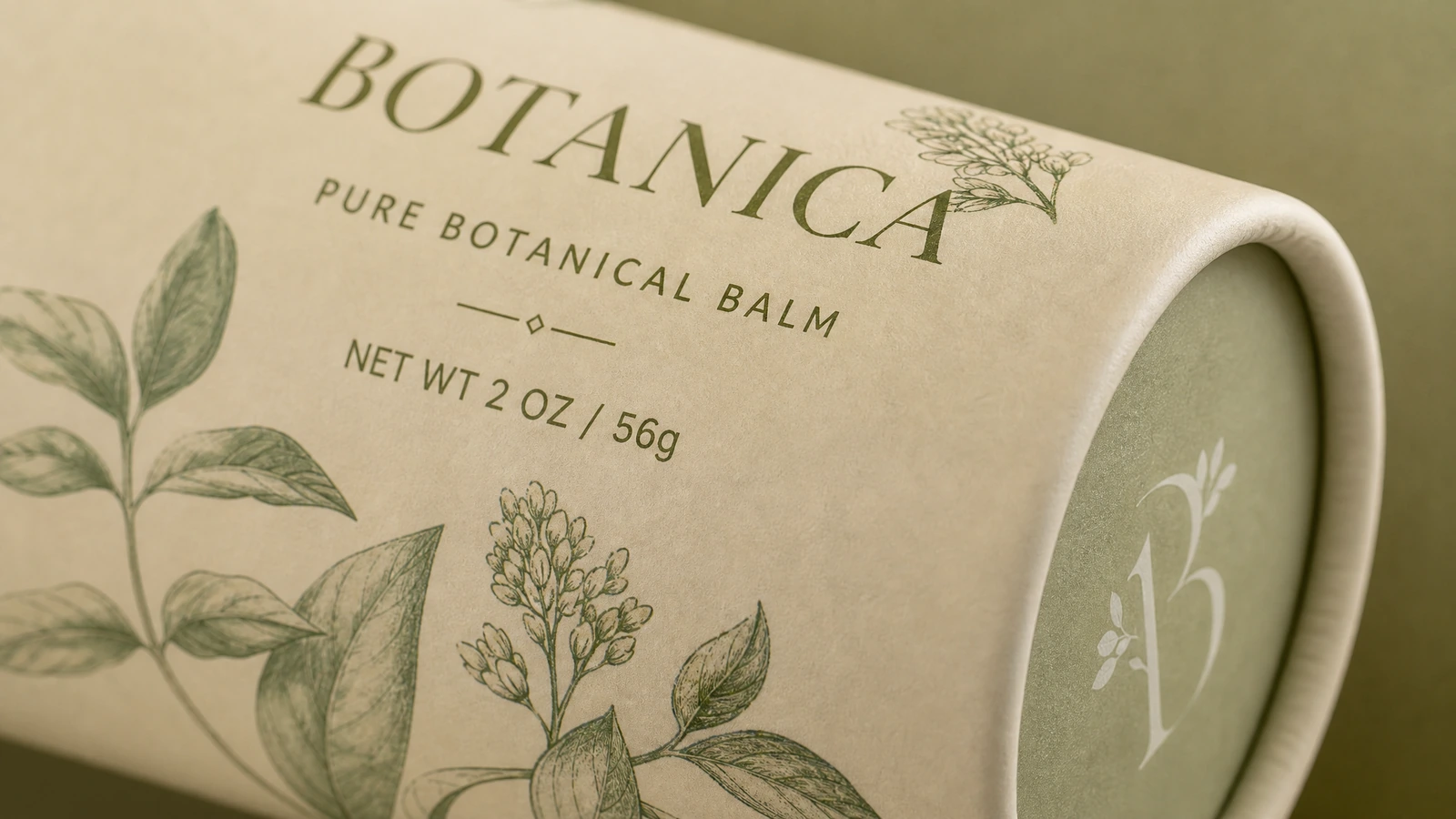
Market interest is supported by broader packaging trends. Future Market Insights estimates the global push-up paperboard tube market at USD 1.4 billion in 2025 and projects USD 2.1 billion by 2035, representing a 4.2% CAGR. These are third-party market estimates rather than supplier sales data, but they indicate sustained commercial attention to the format. See the push-up paperboard tube market forecast[1].
Why Do Paper Push-Up Projects Fail—and How Can the Risk Be Reduced? ↑
Problem: A paper tube may look correct when empty yet perform poorly after filling. The product can slide back during application, the bottom disc can tilt, oil can migrate into the paper, a softened formula can become messy, or the tube can lose rigidity in humid conditions.
Agitation: These failures reach the customer at the most visible moment: use. Public feedback includes complaints that a deodorant stick would not remain raised without a finger supporting the base. Other users report difficulty pushing a cold product and mess after a formula becomes warm. Such feedback appears in a long-running paper deodorant tube user discussion[2].
Solution: Treat the package and formula as one dispensing system. Instead of approving an empty visual sample, validate the tube with the intended formula, filling method, storage environment, cap fit, transport load, and application motion. A successful project balances disc friction, wall structure, liner choice, formula hardness, product adhesion, and the consumer’s ability to raise only a small amount at a time.
- Use the actual formula—or the closest controlled equivalent—for compatibility testing.
- Record the real fill temperature and cooling process rather than relying on a generic “hot-fill compatible” statement.
- Check the tube after heat, cold, humidity, upright storage, side storage, and repeated use.
- Test whether the disc remains level and supports the product during application.
- Inspect the outside paper for oil shadows, seam staining, softening, or delamination.
- Confirm that sustainability wording matches the complete material structure, including liner, adhesive, ink, and decoration.
Table of Contents ↑
Table of Contents
What Is a Custom Push-Up Paper Tube? ↑
A push-up paper tube is a cylindrical paperboard package with an internal movable disc at the bottom. The consumer presses this disc upward to expose a solid product. Unlike a twist-up container, the package does not rely on a threaded screw mechanism to raise and retract the contents.
The format can be developed with kraft or printed outer paper, a structural paperboard body, a fitted cap, a bottom push disc, and an inner barrier selected for the formula. A supplier example from GreenWay describes FSC-certified paper and a food-grade vegetable-wax liner, illustrating one possible market construction—not a guaranteed specification for every custom tube. Review that example through the lined kraft push-up container specification[3].
FSC sourcing can help substantiate responsible-fiber claims, but certification must be verified for the actual paper, converter, chain of custody, and claim intended for the finished package. The FSC explains its paper and packaging framework on its certified paper and packaging guidance[4].
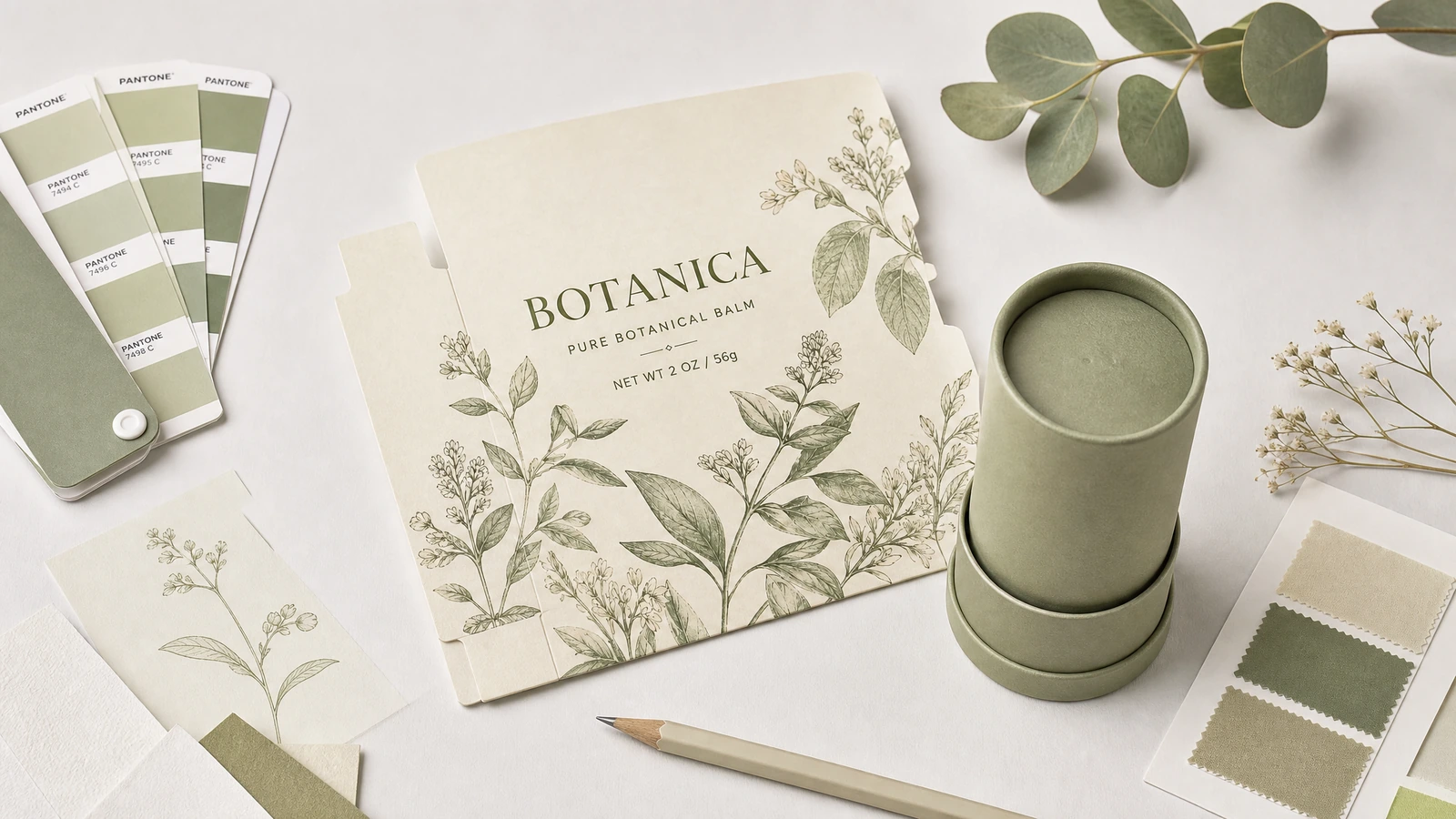
Capacity must not be inferred from an external diameter or a catalog label. It is determined by the usable internal dimensions, wall and liner construction, disc position, headspace, product density, filling condition, and acceptable exposed product height. Any final capacity or loaded quantity must therefore be established with physical dimensions, the actual loading state, and sample validation.
How Do You Specify and Validate the Right Tube? ↑
- Define the formula. Record whether it is anhydrous or water-containing, its major oil and wax characteristics, fill temperature, cooling behavior, melting range, and intended shelf life.
- Define the use experience. Decide how much product should be exposed per push, how firmly the user will apply it, and whether one-way manual dispensing is acceptable.
- Measure the product system. Establish usable internal diameter, fill height, disc travel, cap clearance, and external dimensions. Final capacity must be determined by physical dimensions, the loaded state, and filled-sample testing.
- Select a provisional structure. Compare paper grades, wall construction, seam execution, liner chemistry, adhesive, cap fit, and disc tolerance. Do not assume that a visually similar tube has the same barrier or compostability profile.
- Build functional samples. Fill them using the planned production process. Empty samples are useful for graphics and fit, but they cannot prove oil resistance, dispensing reliability, or loaded strength.
- Run environmental tests. Evaluate heat, cold, humidity, repeated opening, repeated pushing, side storage, and transport vibration under conditions relevant to the product’s distribution route.
- Approve claims and artwork. Verify every certification, disposal statement, ingredient-contact statement, and “plastic-free” claim against the bill of materials and available documentation.
If a tube will have direct food contact, or if a buyer uses food-contact requirements as the safety framework for a personal-care package, the relevant paper, liner, adhesive, and ink must be assessed individually. The FDA’s food-contact substances guidance[5] explains the regulatory pathway; it does not automatically certify a finished tube.
Which Customization Choices Affect Performance and Appearance? ↑
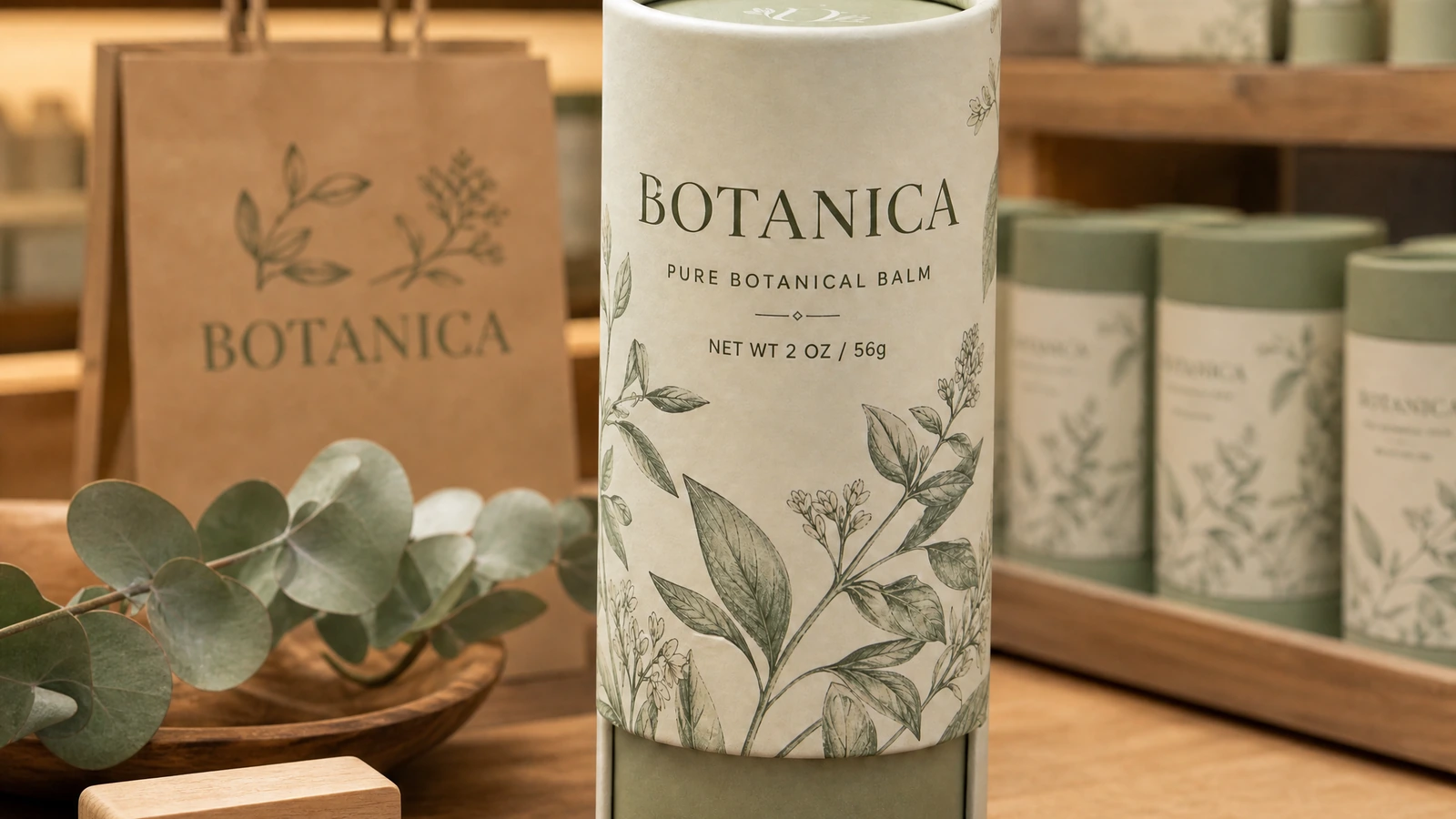
Customization extends beyond logo placement. The paper color, print process, coating, decorative finish, seam visibility, cap overlap, disc construction, and inner liner can change both the visual result and the package’s end-of-life profile.
| Decision Area |
Possible Direction |
What Must Be Verified |
| Outer appearance |
Natural kraft, white, black, or printed wrap |
Color consistency, rub resistance, legibility, and brand-color tolerance |
| Graphics |
CMYK, spot color, minimalist branding, or full-wrap artwork |
Dieline, seam position, cap overlap, barcode size, and curved-surface readability |
| Decoration |
Matte effect, foil detail, embossing, or localized accents |
Material composition, recyclability impact, registration, cracking, and abrasion |
| Inner surface |
Grease-resistant or wax-based barrier concepts |
Migration documentation, oil resistance, fill-temperature response, and disposal claim |
| Bottom mechanism |
Paper push disc with friction fit |
Disc flatness, force consistency, tilt resistance, and product support |
| Cap and base |
Paper cap and formed base geometry |
Retention force, repeated opening, dust protection, and dimensional stability |
The table is a specification framework, not a list of verified features for SKU NSKU-795-02. Each selected construction, finish, and performance claim remains subject to quotation, documentation review, prototyping, and testing with the intended formula.
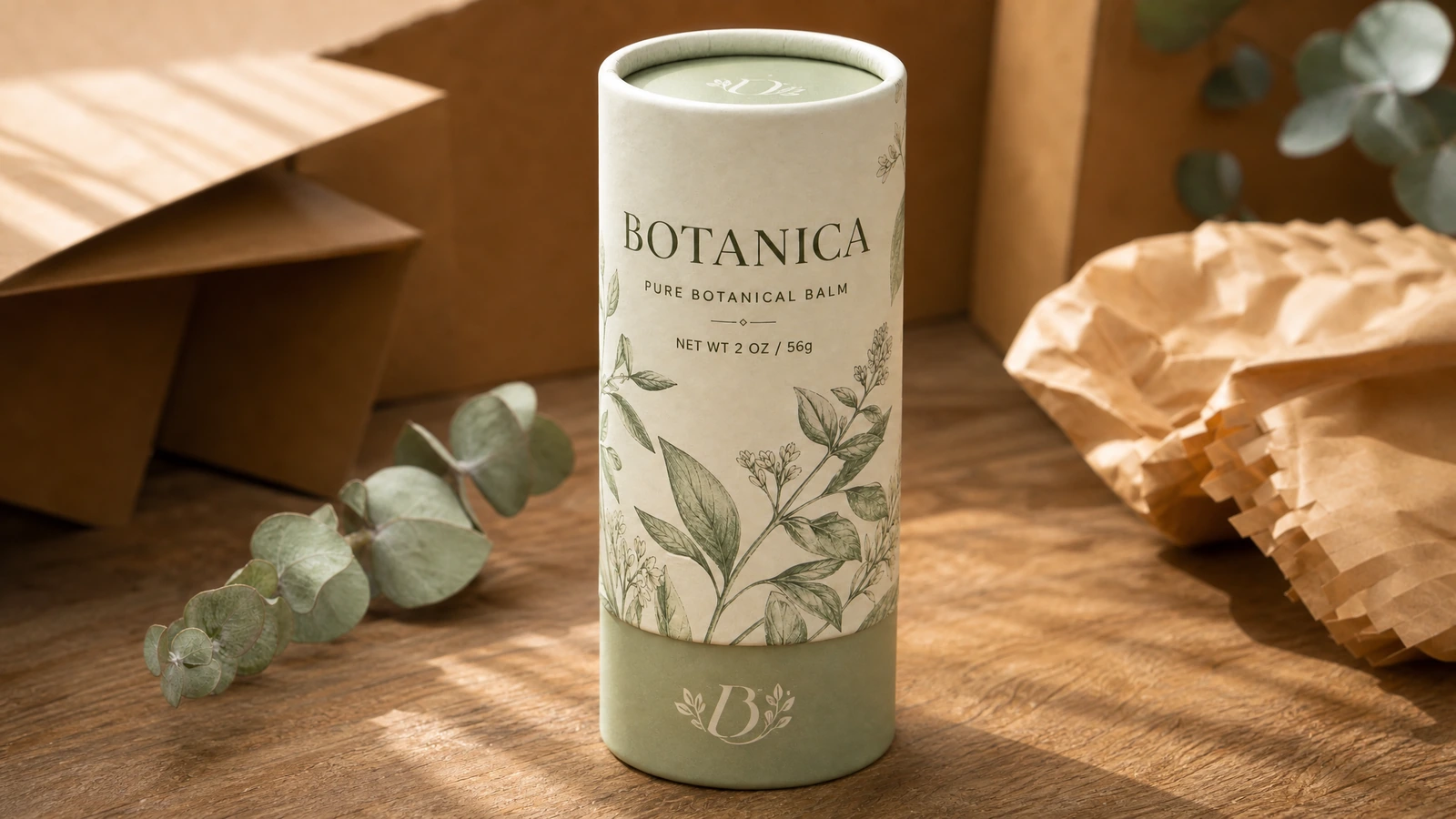
Artwork should be checked at final size on the curved package. Small text that appears clear on a monitor may become difficult to read near the seam or cap edge. The preflight should confirm bleed, safe zones, overprint, image resolution, color mode, barcode quiet zones, regulatory copy, seam placement, and whether decoration crosses moving or overlapping components.
Push-Up, Twist-Up, Plastic, or Metal: Which Should You Choose? ↑
| Packaging Type |
Best-Fit Priority |
Primary Advantage |
Primary Trade-Off |
| Paper push-up tube |
Visible paper-based or low-waste positioning |
Simple manual mechanism and strong natural-brand expression |
One-way dispensing, formula sensitivity, and possible push-back during use |
| Paper twist-up tube |
More familiar dispensing and a polished presentation |
Controlled raising and, depending on design, easier retraction |
More complex structure; some versions include non-paper components |
| Plastic stick container |
Moisture resistance, precision, and mature high-volume filling |
Reliable mechanism and broad formula tolerance |
Weaker fit for brands seeking to eliminate conventional rigid plastic |
| Metal container |
Durability, premium feel, or refill concepts |
Strong barrier and long service potential |
Higher weight, different filling constraints, and a different environmental trade-off |
| Stock paper tube with label |
Early formula and market testing |
Fewer structural decisions before validation |
Limited sizing, barrier, and visual differentiation |
No option is universally sustainable or technically superior. The choice depends on formula protection, distribution, application behavior, end-of-life infrastructure, brand claims, and the evidence available to support those claims. An industry comparison notes that push-up designs communicate a stronger zero-waste position, while twist-up formats prioritize convenience and a polished experience. See the push-up versus twist-up comparison[6].
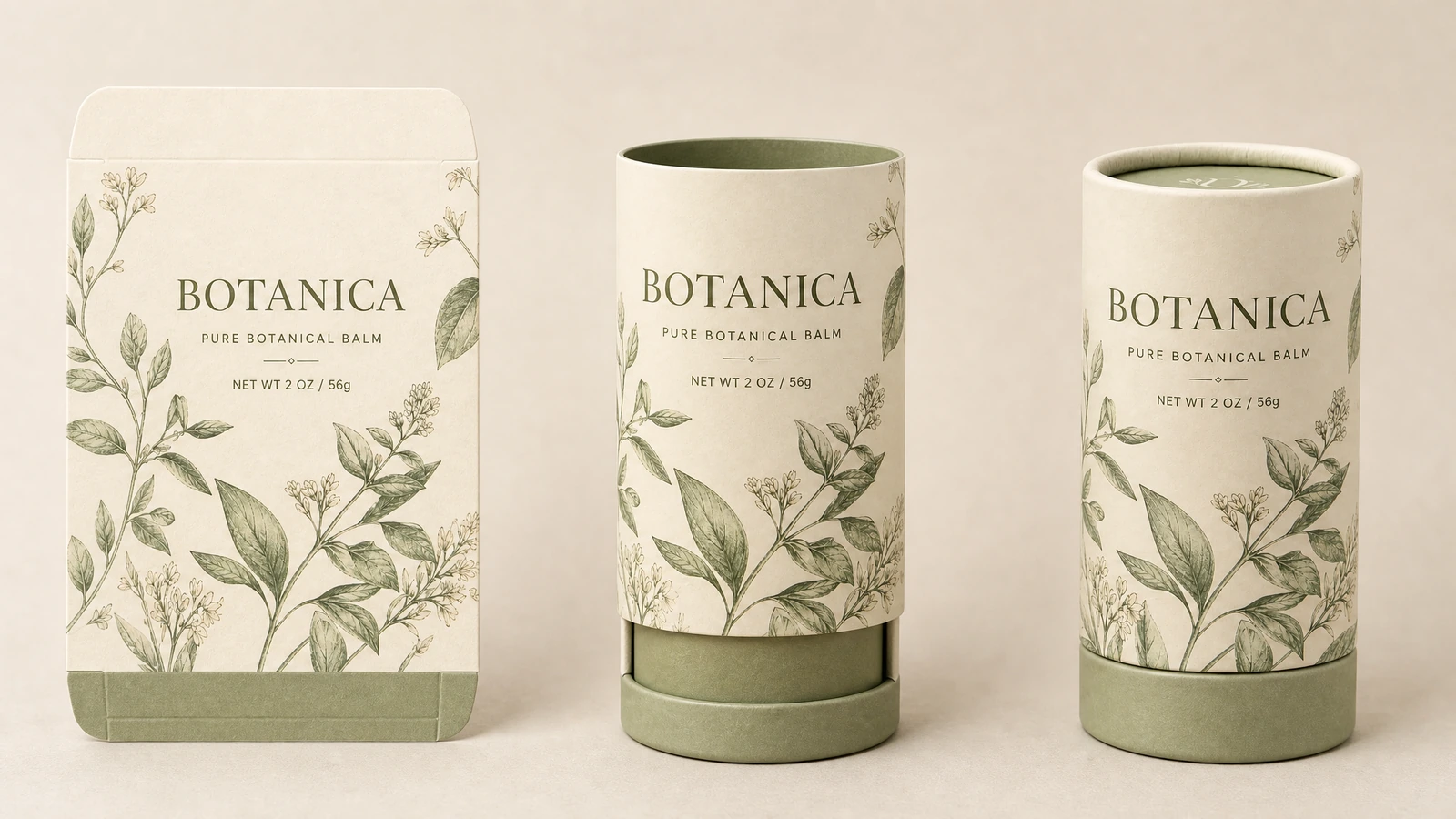
A typical project workflow can include material selection, paper conversion, tube forming, cutting, edge finishing, printing or wrap application, liner integration, push-disc assembly, cap fitting, inspection, and packing. The exact manufacturing route depends on the approved construction. Published packaging guidance warns that an empty prototype can fit correctly yet fail after it carries the product’s weight, reinforcing the need for filled validation. See the paper tube prototype guidance[7].
What Should a Professional Buying and Inspection Plan Include? ↑
A purchase specification should separate measurable acceptance criteria from marketing language. “Premium,” “durable,” and “eco-friendly” are not inspection standards. Dimensions, tolerances, materials, test conditions, visual limits, sampling rules, and required documentation are.
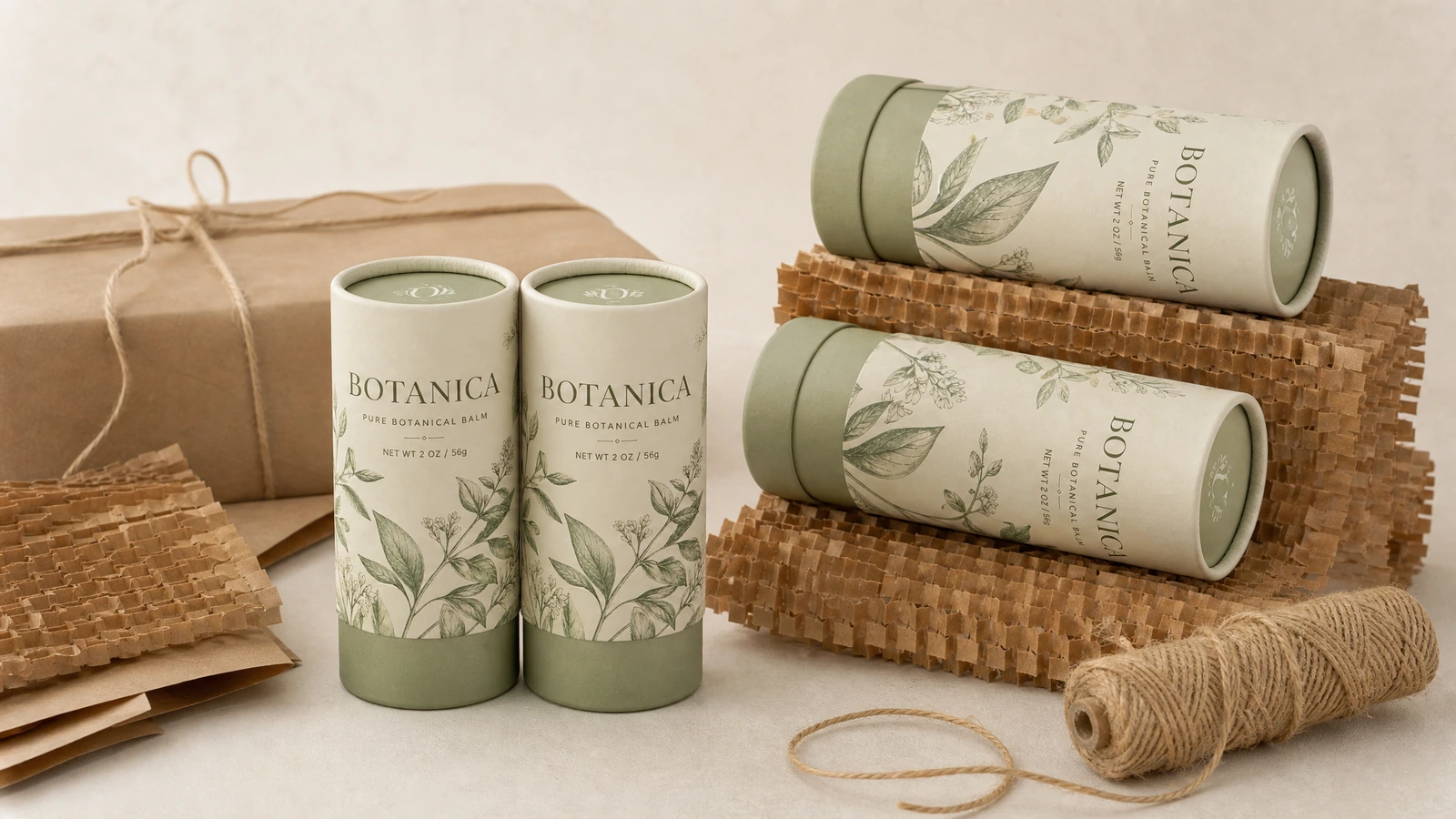
- Dimensional inspection: internal and external diameter, overall height, cap overlap, disc position, roundness, and wall consistency.
- Mechanism inspection: initial push force, repeated push behavior, disc tilt, product support, and cap retention.
- Visual inspection: print registration, color variation, seam alignment, dents, edge damage, glue marks, and liner defects.
- Formula testing: oil migration, staining, odor transfer, softening, adhesion, and package response at the real fill temperature.
- Environmental testing: heat, cold, humidity, compression, vibration, and representative shipping simulation.
- Documentation review: material declaration, applicable food-contact documents, FSC chain-of-custody evidence where claimed, and substantiation for recycling or composting language.
TAPPI publishes standardized methods for paper and paperboard properties, including caliper, basis weight, tensile behavior, moisture, and bursting strength. The applicable methods should be selected for the agreed failure model rather than cited as a vague quality badge. The TAPPI paperboard thickness method[8] is one example of a measurable material-control reference.
Disposal instructions also require precision. The U.S. EPA reported an 80.9% recycling rate for paper and paperboard containers and packaging in its 2018 dataset, but that category-level statistic does not guarantee acceptance of an oil-stained, coated, or composite cosmetic tube. Local acceptance and package cleanliness still govern disposal. See the EPA’s containers and packaging statistics[9].
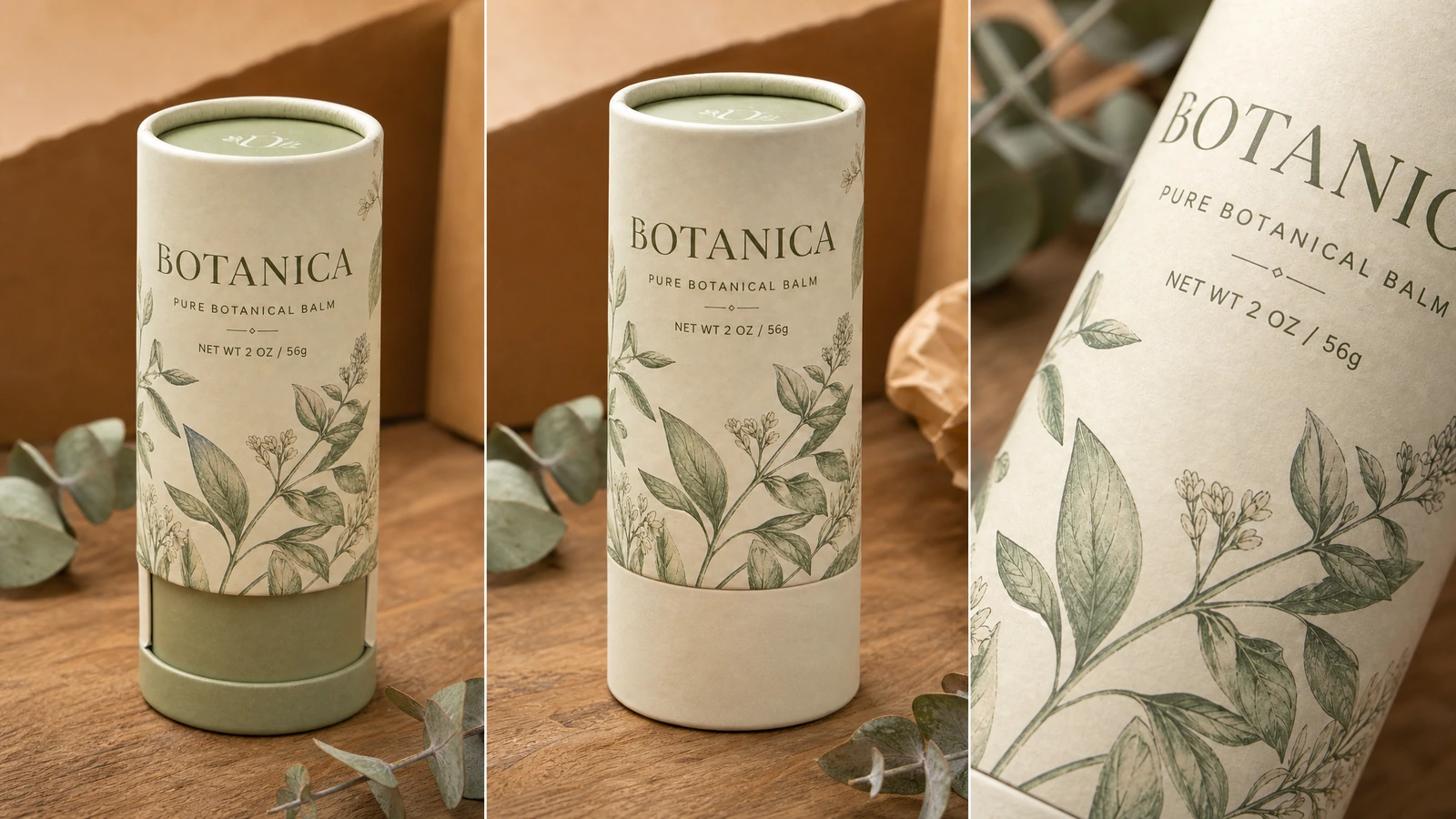
Shipping approval should include end protection, carton arrangement, compression exposure, humidity control where relevant, and inspection after representative transport. Reorders should reference the approved sample, artwork version, material declaration, color target, dimensional record, inspection plan, and formula version. A formula change can invalidate an earlier packaging approval even when the artwork and external size remain unchanged.
What Are the Key Procurement Takeaways? ↑
- The push-up paperboard tube market is projected to expand steadily. — USD 1.4 billion in 2025 to USD 2.1 billion in 2035, with a 4.2% CAGR (Source)
- EU packaging rules now place greater emphasis on waste reduction and recyclable design. — Regulation (EU) 2025/40 entered into force on February 11, 2025 and generally applies from August 12, 2026 (Source)
- Paper-packaging recycling statistics cannot be applied automatically to used cosmetic tubes. — U.S. paper and paperboard containers and packaging recorded an 80.9% recycling rate in the EPA’s 2018 dataset, while coatings and product contamination still affect local acceptance (Source)
- Barrier performance must be matched to the intended product and shelf-life target. — Paper-tube barrier systems can be offered at different protection levels, but the chosen construction must be tested with the actual formula (Source)
The EU’s official packaging-waste overview provides the effective dates and policy context for the PPWR through its packaging waste regulation overview[10]. For barrier planning, Sonoco’s industry guidance describes low, medium, and high barrier approaches for paper tubes, but those examples remain supplier-specific and do not establish the performance of this product. Review the paper tube barrier guidance[11].
How Should You Start a Custom Push-Up Tube Project? ↑
Begin with the formula and real use conditions—not decoration alone. Supply the intended product type, formulation characteristics, fill process, target dimensions, artwork, destination markets, disposal claims, and test expectations. The project should then move through structural sampling, filled compatibility testing, print approval, quality criteria, shipping validation, and documented final approval. Request a project-specific quotation and filled-sample validation plan for your custom push-up paper tubes.





The information below is required for social login
Sign In
Create New Account