Custom reverse tuck end boxes are folding cartons with top and bottom flaps that close in opposite directions. Their efficient one-piece structure is well suited to lightweight retail products, but the final board, dimensions, locks, finishes and inserts should be validated with the actual product before production.
Who Benefits Most From Reverse Tuck-End Cartons?↑
These cartons are commonly considered by cosmetics, personal-care, supplement, confectionery, tea, coffee, candle, craft and small-accessory brands. They can support retail display, product launches, event gifts, subscription programs and secondary packaging for jars, tubes, bottles or blister packs.
A reverse tuck-end carton is especially relevant when a buyer wants a printable branded box that can ship flat and be erected at the packing station. Typical decision-makers include DTC founders, e-commerce operators, packaging buyers, retail product managers and independent makers. Their priorities are usually fit, artwork accuracy, packing efficiency, board stiffness, closure performance and predictable replenishment—not the structure’s name alone.
The format is intended primarily for lightweight or moderate product configurations. Any capacity, weight limit or quantity-per-carton decision must be determined by the physical product dimensions, loaded condition and sample validation. Fragile, heavy or high-value products may require an insert, a stronger bottom style, corrugated construction or a separate shipping container.
A Good-Looking Box Still Fails If It Does Not Fit, Close or Pack Efficiently↑
Problem: A brand can approve attractive artwork and still receive cartons that pinch the product, leave excessive movement, refuse to close flush or place important text across a score or seam.
Agitation: Those errors multiply during fulfillment. Operators may need to force each tuck flap, correct misfolded dust flaps or add unplanned tape. A carton that opens under handling can damage the product, while a slightly inaccurate dieline can clip regulatory text or move a logo away from the intended display panel. One coffee-roasting discussion described reverse-tuck secondary packaging as more expensive and requiring “twice, if not three times” the work per bag in that specific workflow; this is a useful warning that erection speed and total packing labor must be tested rather than assumed. See the original coffee packaging discussion[1].
Solution: Build the specification around the packed product. Confirm internal dimensions, board grade, closure geometry, artwork placement and packing sequence; then test a physical structural sample before committing to the production quantity. Pricing, minimum order quantity, production time, unit weight and available factory certifications remain quotation or verification items because no manufacturer-specific procurement facts were provided for this product.
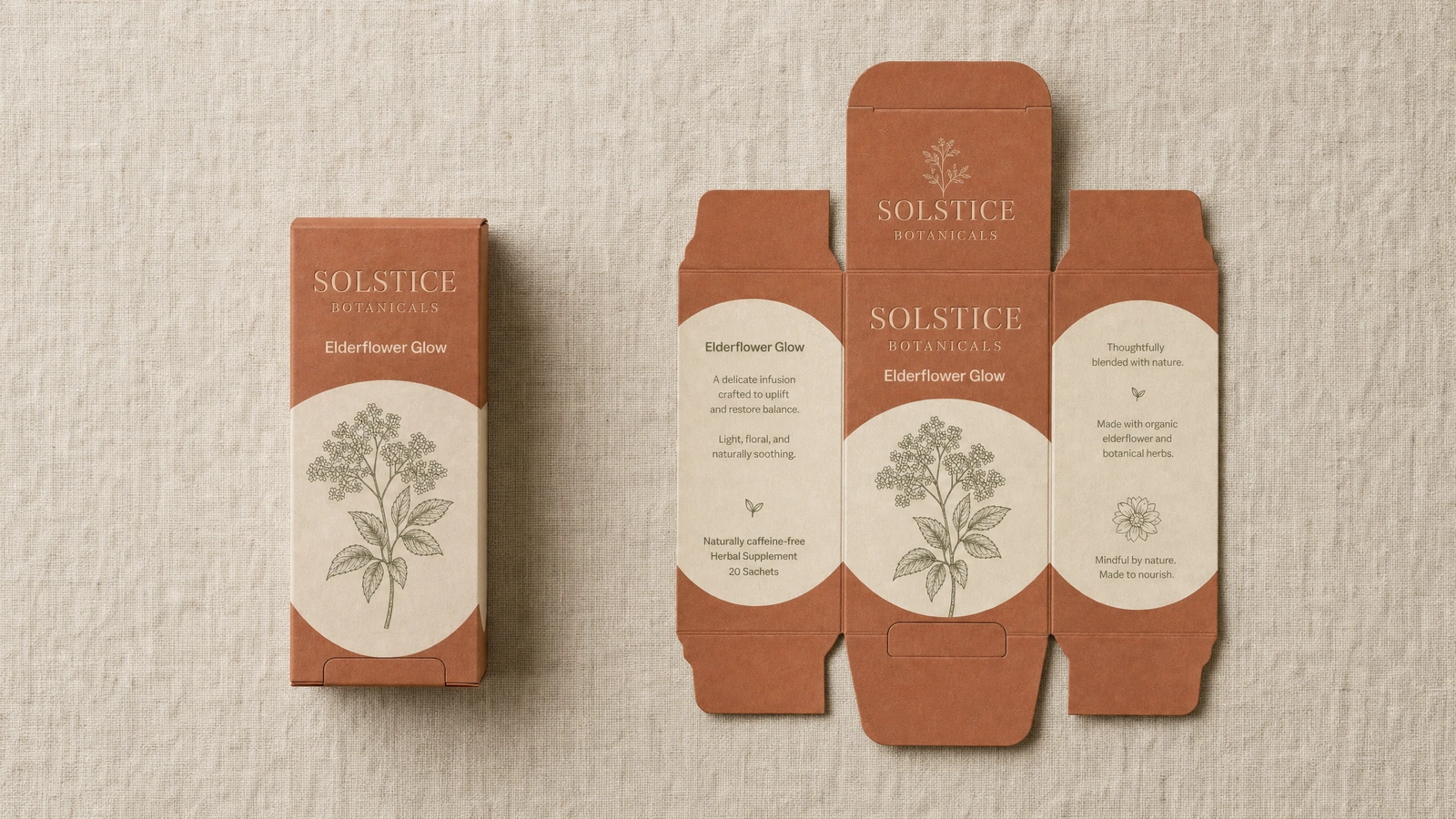
Table of Contents
What Is a Custom Reverse Tuck End Box?↑
A reverse tuck end, or RTE, box is a one-piece folding carton whose top and bottom closure panels swing in opposite directions. One main tuck flap enters toward one panel while the flap at the other end enters toward the opposite panel. The carton is normally supplied flat with its side seam joined, then squared and closed during packing.
The opposite flap orientation distinguishes RTE from straight tuck end construction, where both main tuck flaps close in the same direction. Industry guidance describes the opposing RTE closures as capable of creating a more robust closure against accidental opening, although closure performance still depends on the board, crease quality, flap geometry and loaded product. The structural explanation is illustrated in this folding-carton style guide[2].
RTE layouts can use paperboard efficiently because opposing flaps may nest economically on a printed sheet. That can help control material usage at suitable production volumes. It does not automatically make the carton stronger than every alternative, however. A packaging specialist’s explanation notes that the reverse orientation primarily supports sheet-layout efficiency rather than adding inherent structural stability.
The format provides broad printable panels for branding, product information, instructions and required labeling. Potential structural additions include slit locks, thumb notches, perforations, hang tabs, windows and custom inserts. Every addition changes the dieline, packing behavior, recyclability profile or price and therefore belongs in the approved specification.
How Do You Specify the Right Size, Material and Artwork?↑
1. Measure the packed configuration. State dimensions as internal Length × Width × Height. Length and width describe the opening; height runs from the internal bottom to the opening rim. Measure the actual product with any pouch, cap, label, insert or protective wrap in place. The established L × W × H convention is explained in CCL Healthcare’s carton measurement guide[3].
Do not convert a product’s nominal dimensions directly into a production dieline. Clearance depends on its shape, loading direction, surface friction, dimensional variation and whether workers or automation will fill the carton. The correct allowance must be established through a structural sample with the real product.

2. Select board by function. Common commercial choices include SBS for a bright print surface, FBB for a balance of stiffness and surface quality, recycled board for cost or recycled-content objectives, and kraft or unbleached board for a natural appearance. Public product specifications show 14 pt, 18 pt and 24 pt cardstock as examples available in this category, but those are competitor options rather than verified specifications for this SKU. See the cited reverse tuck material options[4].
Board caliper cannot be chosen from product weight alone. Carton span, grain direction, scores, humidity, stacking, closure design and insert geometry all affect performance. Request a physical sample whenever stiffness, corner protection or repeated opening matters.
3. Define the surface system. CMYK graphics, spot colors, aqueous coating, UV coating, matte or gloss lamination, soft-touch effects, foil, embossing, debossing and spot UV are possible industry options. Availability, color tolerance, rub resistance, recyclability and price must be confirmed during quotation. A plastic window or film laminate may also change the disposal route, so “paper-based” should not automatically be presented as equivalent to a mono-material recyclable package.

4. Prepare artwork on the approved dieline. Assign the front, back, side, top and bottom panels before design begins. Keep logos, barcodes, warnings and small text away from cuts, creases, glue areas and panel edges. Outline or package fonts, embed high-resolution images, define process and spot colors clearly, and identify any white ink, foil, varnish or window layer separately.

A Controlled Workflow Turns a Dieline Into a Production-Ready Carton↑
- Submit the product brief: identify use, internal dimensions, packed configuration, sales channel, display orientation and shipping method.
- Review structural options: decide whether standard RTE, reinforced locks, an insert, a stronger bottom or another carton style is more appropriate.
- Approve the dieline: verify panel names, grain considerations, glue flap, dust flaps, tuck direction and opening sequence.
- Complete artwork preflight: inspect bleed, safe zones, color definitions, image resolution, barcode quiet zones and required legal copy.
- Evaluate a physical sample: load the actual product, close both ends, check panel bulge, opening force, label readability and pack-line ergonomics.
- Approve a production proof: document the accepted dimensions, board, print version, finishes and visible color expectations.
- Validate finished cartons: compare production samples with the signed specification and approved sample before releasing the order for packing.

This workflow separates three approvals that buyers often confuse. A 3D rendering checks visual orientation, a flat proof checks print content, and a physical sample checks fit and function. None replaces the others. If color is commercially critical, define whether approval will rely on process-color expectations, a physical color proof or a specified spot color.
Which Carton Style Best Matches the Product and Sales Channel?↑
| Option |
Primary advantage |
Important limitation |
Best-fit decision signal |
| Reverse tuck end |
Efficient folding-carton layout with access at both ends |
Not a substitute for a load-bearing shipping box |
Light retail product, cost and board efficiency matter |
| Straight tuck end |
Both flaps close toward the same side, supporting a clean principal panel |
May use sheet area differently from RTE |
Premium shelf presentation is the priority |
| Auto-lock or snap-lock bottom |
More supportive bottom configuration |
More complex construction and quotation |
The product needs stronger bottom support or faster erection |
| Rigid box |
High presentation value and protection |
Higher material use, storage volume and cost |
Luxury or high-value presentation outweighs efficiency |
| Corrugated carton |
Improved cushioning and distribution protection |
Different surface, thickness and dimensional requirements |
Transit protection is more important than a thin folding-carton profile |
The comparison is directional rather than a universal ranking. Industry guidance identifies easy assembly and lower material use as RTE advantages while warning that heavy products may require sealing tape and that the reversed opening can affect front-panel presentation. Review the original RTE versus STE comparison[5].
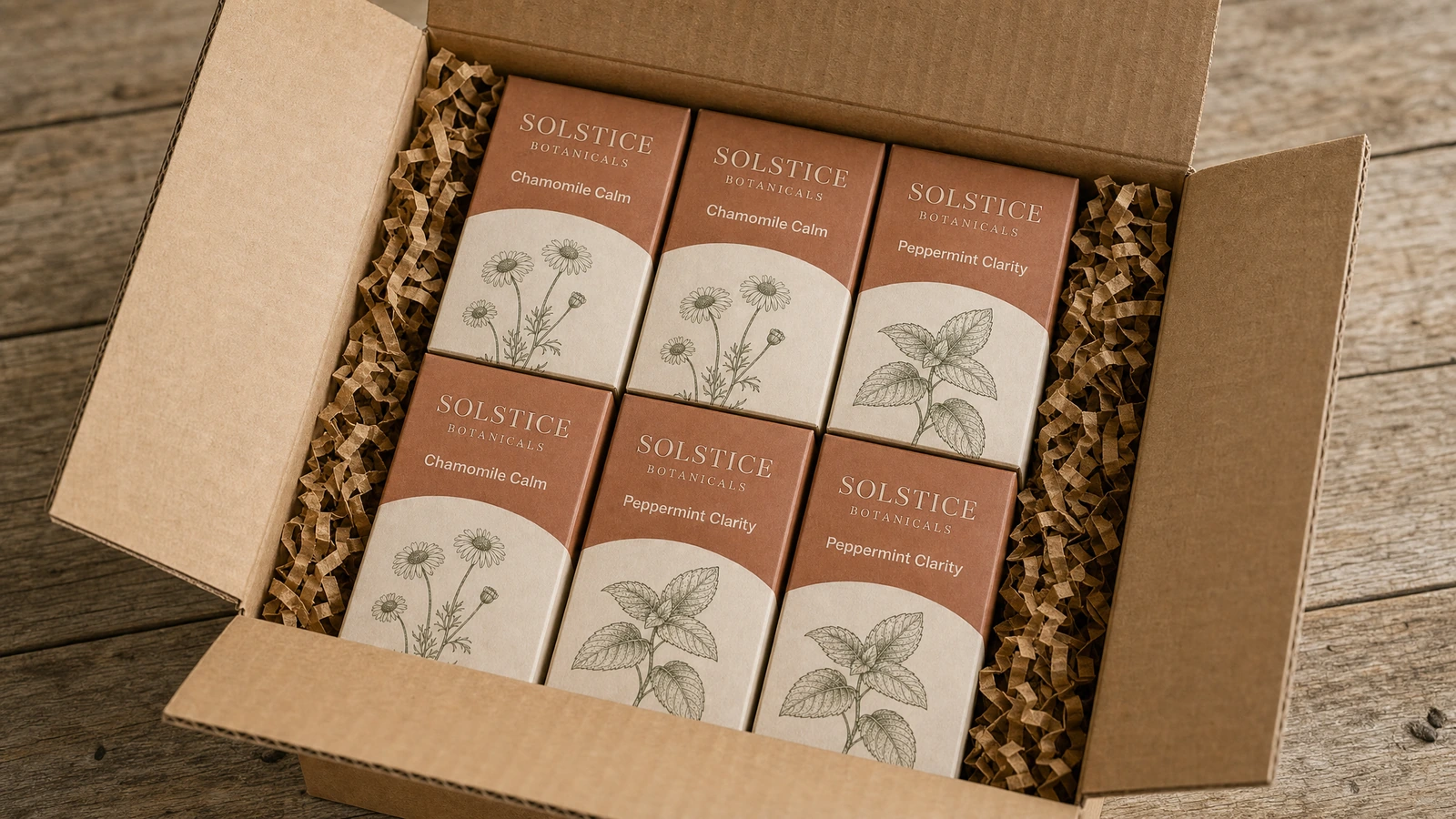
For direct-to-consumer orders, remember that a folding carton may be the branded product package but not the shipping container. Distribution protection should be evaluated as a complete system: product, insert, RTE carton, void fill if needed and outer shipper.
How Do You Control Quality, Compliance and Replenishment Risk?↑
Inspect function first. Confirm internal dimensions, squareness, score alignment, side-seam adhesion, dust-flap folding, tuck engagement and whether the packed carton sits flush. Open and reclose samples when repeated access is part of the use case. Adhesive guidance identifies low tack, delayed folding, weak scoring and board-tension issues among causes of flap pop-open defects; these are process variables to discuss with the converter. See the folding-carton adhesive practices[6].

Inspect print against the approved standard. Check small text, registration, barcode readability, scuffing, coating consistency, foil placement and glue contamination. Record an acceptance method before production rather than debating subjective color or finish expectations after delivery.
Separate branding from regulatory approval. In the United States, cosmetics information may need to appear on the outer container, which can be a box or folding carton. The principal display panel must carry required identity and net-quantity information as applicable; review the FDA’s cosmetics labeling guide[7]. Pharmaceutical and OTC projects require application-specific legal review.
Do not describe a standard reverse tuck closure as FDA-compliant tamper-resistant packaging by itself. FDA guidance states that paperboard cartons sealed only by gluing end flaps are not capable of meeting the cited tamper-resistant packaging requirements, although qualifying technologies may be developed. Consult the agency’s tamper-resistant packaging guidance[8].
Qualify environmental claims. Unlaminated paperboard may be recyclable in many programs, but windows, films, barrier layers, foils, adhesives, contamination and local collection rules can change the outcome. FSC claims require eligible material, chain-of-custody controls and correct trademark use; FSC explains the applicable pathway for certified paper packaging[9]. FSC availability for this SKU remains unverified and must not be promised before supplier documentation is reviewed.
Plan packing, transport and replenishment together. Flat cartons should arrive protected from crushing, moisture and score damage. Before repeat ordering, retain the approved dieline, artwork revision, physical reference sample and written material specification. Reconfirm any changed product dimensions, labels or inserts because a small product revision can invalidate the previous fit.
What Should a Buyer Remember Before Requesting a Quote?↑
- The U.S. folding-carton market is projected to expand through 2036. — USD 15.6 billion in 2026 to USD 24.0 billion in 2036, with a projected CAGR of 4.4% (Source[10])
- Global folding-carton demand is forecast to grow in both volume and value. — 52.4 million tonnes valued at USD 132.8 billion in 2025, rising to 63.1 million tonnes and USD 159.6 billion in 2030 at constant prices (Source[11])
- RTE performance must be approved in the packed condition. — Capacity, load suitability and fit depend on physical dimensions, the loaded state and sample validation.
- A rendering cannot approve structure. — Use a physical sample to test insertion, clearance, closure, board feel and packing labor.
- “Secure closure” is not the same as transport or tamper-evident certification. — Validate the complete packaging system and application-specific regulatory requirements.
- Commercial terms remain open. — MOQ, production time, unit weight, pricing, tooling, certification availability and shipping terms are pending quotation or supplier verification.
A Physical Sample Is the Fastest Route to a Defensible Specification↑
Custom reverse tuck end boxes combine printable branding space, flat storage and material-efficient folding-carton construction. Their value depends on disciplined specification: measure the complete product, select board by function, protect critical artwork, test the packing sequence and document acceptance criteria. When the product is heavy, fragile, frequently accessed or subject to regulated labeling, compare alternative structures and verify the complete pack rather than relying on generic RTE claims.
Request a custom quotation and physical sample review based on your product dimensions, packed configuration, artwork and destination.





The information below is required for social login
Sign In
Create New Account