Custom two-piece tin boxes combine a separate lid with a formed metal body to create durable, reusable packaging for confectionery, tea, cosmetics, candles, gifts, collectibles, and promotional products. Dimensions, lid fit, artwork, coatings, inserts, compliance requirements, quantity, unit weight, production time, and final pricing must be confirmed through quotation, physical sampling, and application-specific testing.
Who Benefits Most from Custom Two-Piece Tin Packaging? ↑
These tins suit brands that need packaging to do more than contain a product. Food and beverage teams may want a protective, printable secondary or direct-contact container. Cosmetics, candle, and personal-care brands often need a compact presentation format with a premium metallic appearance. Gift, promotional, subscription, and collectible programs benefit from packaging that customers may retain for storage after the original product is used.
The format is especially relevant when shelf presentation, opening experience, reuse, and resistance to ordinary handling matter. It is less suitable when the purchasing decision is controlled only by the lowest unit price, when an exceptionally lightweight package is required, or when the product needs a closure performance that has not been verified with a physical sample.
From Packaging Uncertainty to a Sample-Verified Specification ↑
Problem: Buyers frequently begin with a reference image and approximate dimensions, but those inputs do not define internal clearance, lid engagement, artwork position, coating compatibility, insert tolerances, or transit protection.
Agitation: If these details remain unresolved, a visually attractive tin can still fail commercially. The product may not fit, the lid may feel too tight or too loose, artwork may cross formed edges, colors may differ from expectations, or finished tins may arrive scratched or dented. Food-contact projects add another layer: the coating, ink, product chemistry, contact conditions, and destination-market requirements must be evaluated together.
Solution: Convert the concept into a controlled specification. Establish the real product dimensions, choose a lid and body configuration, preflight the artwork, approve a representative sample, define inspection criteria, and validate the shipping pack before production. This process treats appearance, function, compliance, and logistics as connected decisions rather than separate purchasing tasks.
Contents
What Is a Custom Two-Piece Tin Box? ↑
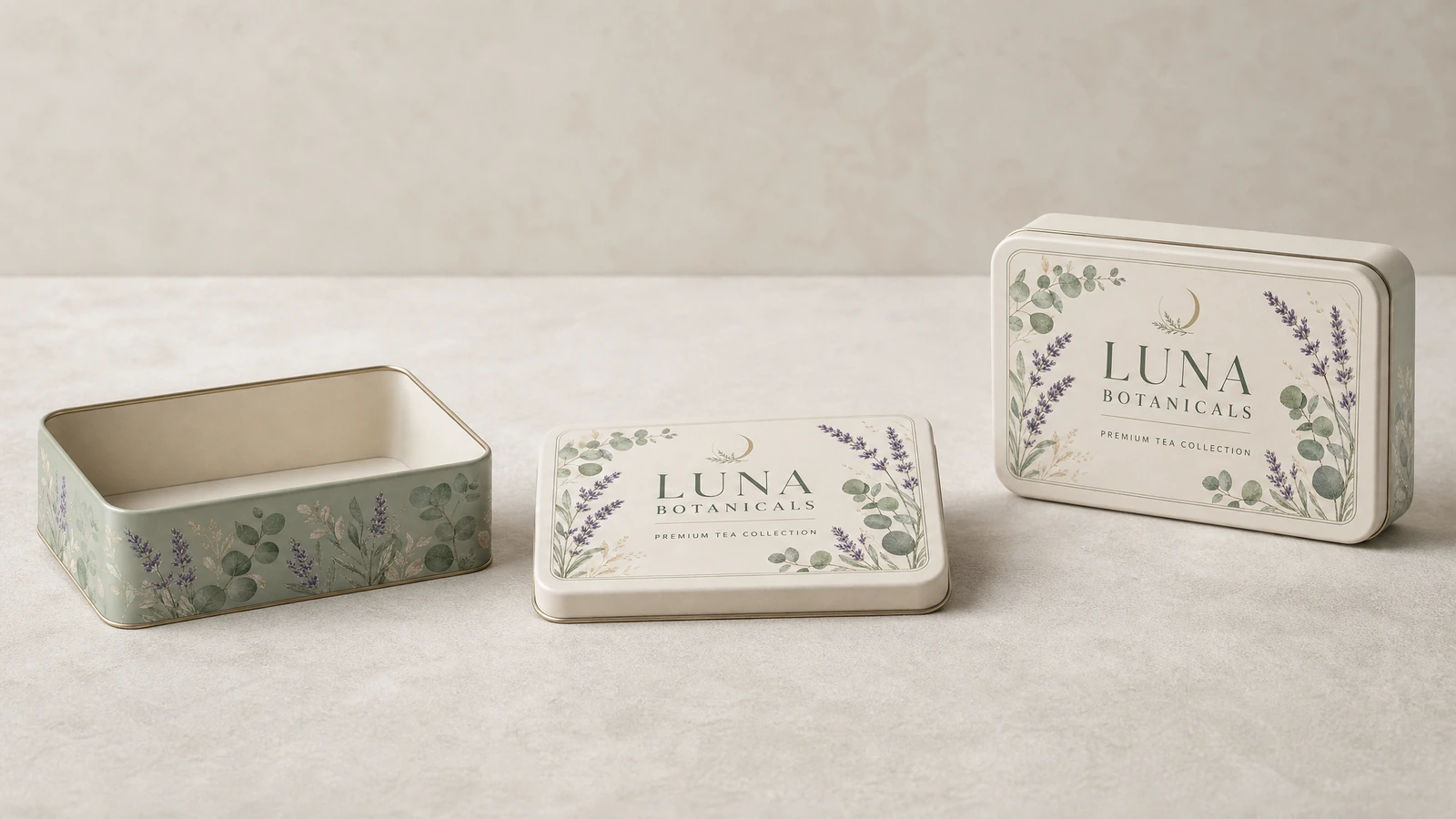
In its conventional packaging sense, a two-piece tin container has an integrated body and bottom plus a separate lid. Drawn construction removes the vertical side seam found on many three-piece cans, producing a smooth outer surface with fewer interruption points. Industry guidance describes this as a seamless two-piece structure[1].
Decorative packaging terminology is not always used consistently. Some suppliers use “two-piece tin box” more broadly for any metal base-and-lid set, including shallow slip-cover formats. The purchasing specification should therefore describe the actual structure rather than relying on the product name alone. It should state whether the body is drawn, how the lid engages, whether the container is intended to be leak-resistant, and whether direct food contact is expected.
Tinplate is coated steel rather than solid tin. Published technical literature identifies two-piece cans as economical and hygienic in appropriate applications, with a large printable area because there is no side seam. The same literature also discusses coating migration and corrosion risks, showing why structure alone does not establish suitability for a specific product. These distinctions are summarized in a peer-reviewed metal-packaging review[2].
Neither “metal” nor “tinplate” automatically means airtight, rustproof, or food-safe. Those outcomes depend on the closure, coating, forming quality, product chemistry, storage conditions, and verified test results. Any such performance requirement must be written into the project brief and confirmed by sampling or testing.
How Should Size, Fit, and Label Readability Be Defined? ↑
Start with the physical product rather than a desired outside box size. Record the product’s maximum length, width, height, and orientation under its actual packed condition. Include wrappers, trays, cards, accessories, or protective layers. If several items will be loaded together, the required capacity and arrangement must be established by physical packing trials; they must not be inferred from nominal dimensions alone.
Next, distinguish external dimensions from usable internal dimensions. Formed corners, lid overlap, rolled edges, internal coatings, and inserts may reduce usable space. The lid also needs an intentional engagement allowance. Too little clearance can make opening difficult or damage artwork at the contact area, while too much clearance may produce rattling, accidental opening, or unstable stacking.
Readability should be assessed on the formed tin, not only on a flat dieline. Small text placed near corners, beads, lid shoulders, curls, or embossing may distort after forming. Required warnings, ingredients, lot coding, and brand marks need sufficient clear space. A printed physical sample is the appropriate decision point when text size, contrast, or barcode performance is commercially important.
Which Surface Treatments and Closure Options Support the Brand Experience? ↑
Common decorative directions in the supplied research include CMYK printing, spot colors, gloss or matte varnish, metallic effects, hot stamping, embossing, and debossing. Each choice changes cost, tooling, appearance, and production complexity. Spot colors may be preferable when a critical brand color cannot be acceptably represented through process printing, but the permitted color difference must still be documented and approved against a physical reference.
Embossing raises selected areas, while debossing recesses them. Both can add tactile hierarchy, but the formed metal has practical limits. Fine lines, large solid raised areas, or features too close to an edge may deform, crease, or lose definition. The decoration guide should therefore identify the intended visual effect without assuming that every paper-packaging treatment transfers directly to metal. Available methods and their tradeoffs are outlined in a tin-box customization guide[3].
The default closure for many decorative two-piece tins is a slip or friction-fit lid. Alternative configurations may include deeper slip covers, window lids, hinged lids, screw tops, or back-buckle and clasp arrangements. These are not interchangeable. A hinged or back-fastened structure should be treated as an alternate configuration rather than assumed to be part of a standard separate-lid tin. Opening force, retention, tamper evidence, leak resistance, and repeated-use durability all require application-specific verification.
How Should Artwork Be Preflighted Before Sampling? ↑
Artwork preflight should begin only after the structure and dieline are confirmed. The production file should separate cut, fold or forming references, embossing, spot colors, varnish masks, white layers, and variable markings where applicable. Raster imagery must be suitable for the intended print size, fonts should be packaged or converted appropriately, and important content should remain inside the supplier-confirmed safe area.
Metal alters color perception because reflectivity, white underprint, coating, and varnish affect the finished appearance. A screen proof can confirm layout and spelling, but it cannot establish the final metallic effect or exact production color. For brand-critical work, approve a physical color target and record which surfaces, lighting conditions, and measurement method govern acceptance.
Preflight should also flag artwork that crosses the lid-body break. A continuous pattern may look aligned in a rendering but shift with normal lid rotation or manufacturing tolerance. If alignment is essential, the supplier must evaluate whether the selected structure can control it. Otherwise, the design should deliberately separate the lid and body graphics.
How Does a Controlled Sample Move into Production? ↑
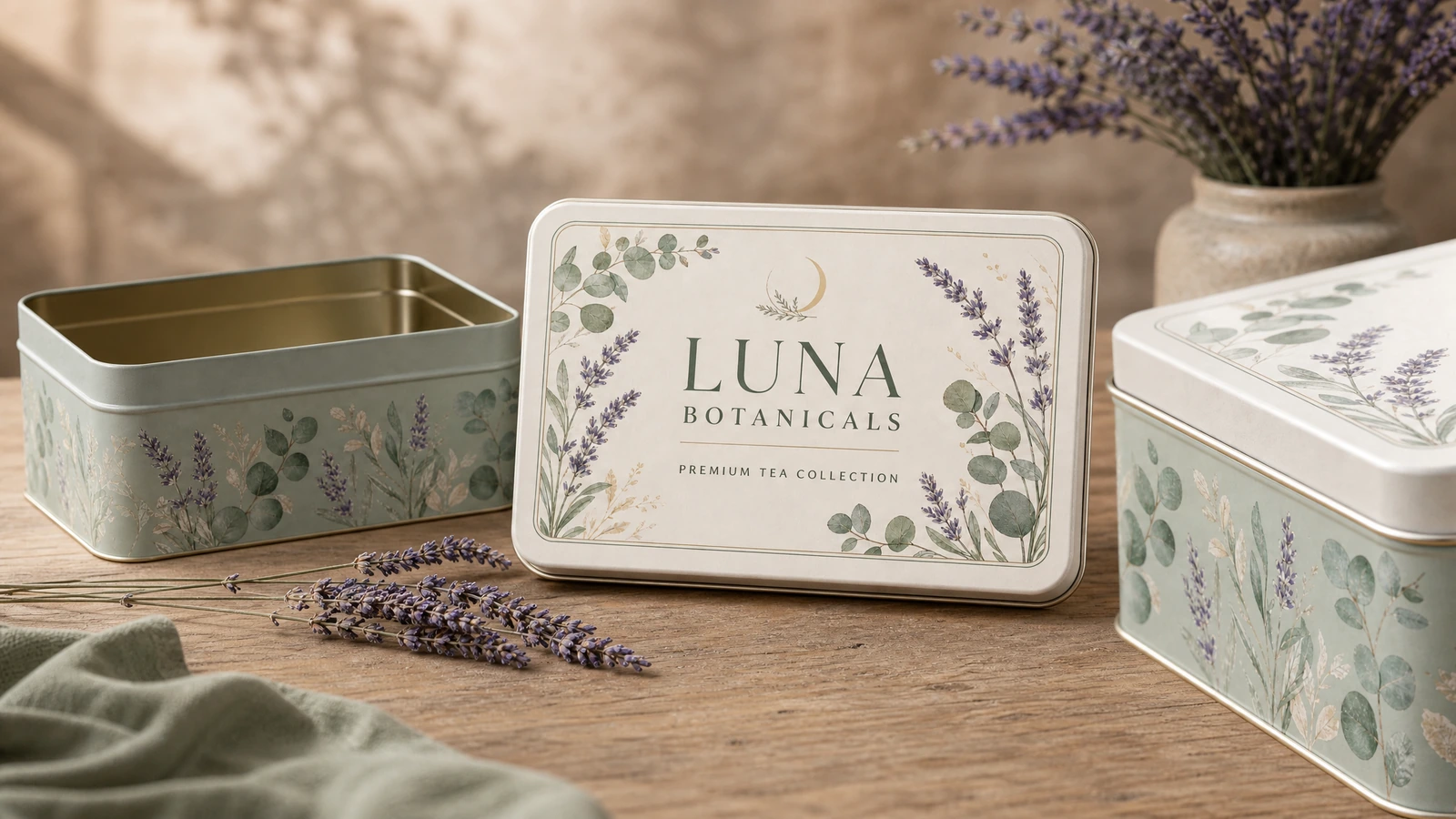
A disciplined workflow normally moves from specification to structural review, artwork proofing, physical sampling, sample approval, production, inspection, and packing. The exact methods depend on the chosen structure and decoration. Typical operations described in the research include tinplate selection, flat-sheet printing and coating, cutting, drawing or stamping, edge forming, lid production, assembly, inspection, and packing.
The approved sample should be evaluated with the real product, insert, label, and opening sequence. Record dimensions, lid feel, artwork position, color reference, visible surface quality, edge safety, and any functional requirement. Photographs and signed specifications help prevent a subjective approval from becoming the only production reference.
No SKU-specific minimum order quantity or production time has been provided for NSKU-796-02. Both remain quotation-dependent and must be confirmed after size, structure, tooling, print method, finish, quantity, compliance scope, and packing requirements are known. Industry sourcing guidance shows why these variables affect both MOQ and scheduling, but its published ranges are not a commitment for this product. The relevant dependencies are discussed in a bulk tin-packaging sourcing guide[4].
How Should Fit, Finish, Coating, and Safety Be Inspected? ↑
Inspection criteria should be agreed before production. Visual checks can cover dents, scratches, rust spots, print registration, color consistency, varnish coverage, emboss definition, contamination, and sharp edges. Dimensional checks should address the agreed critical measurements rather than every possible dimension. Functional checks may include lid opening and closing, retention, product fit, stacking, insert fit, and repeated-use behavior.
Dents near a rim or closure area deserve special attention because they may affect container integrity rather than appearance alone. The Canadian Food Inspection Agency publishes a structured guide for recognizing and classifying metal-container defects[5]. Although decorative tins are not automatically hermetic food cans, the guide illustrates why defect location and severity should be evaluated rather than reduced to a generic “pass” or “fail.”
Coating inspection is especially important when the contents may contact the metal. Pinholes, blisters, incomplete coverage, or damage can expose metal and create migration, corrosion, flavor, appearance, or leakage risks. Technical discussion of craters, fisheyes, solvent pops, metal exposure, and corrosion is available in a metal can coating-defect analysis[6].
For direct food contact, a generic “food-grade” statement is insufficient. The buyer should identify the food type, contact duration, temperature, filling process, destination market, and required migration conditions. The U.S. FDA explains that food packaging and its components can be food-contact substances that require authorization for their intended use. Compliance must therefore be supported by documentation and testing applicable to the finished configuration, following the FDA food-contact framework[7].
How Can Packing and Shipping Protect the Finished Tins? ↑
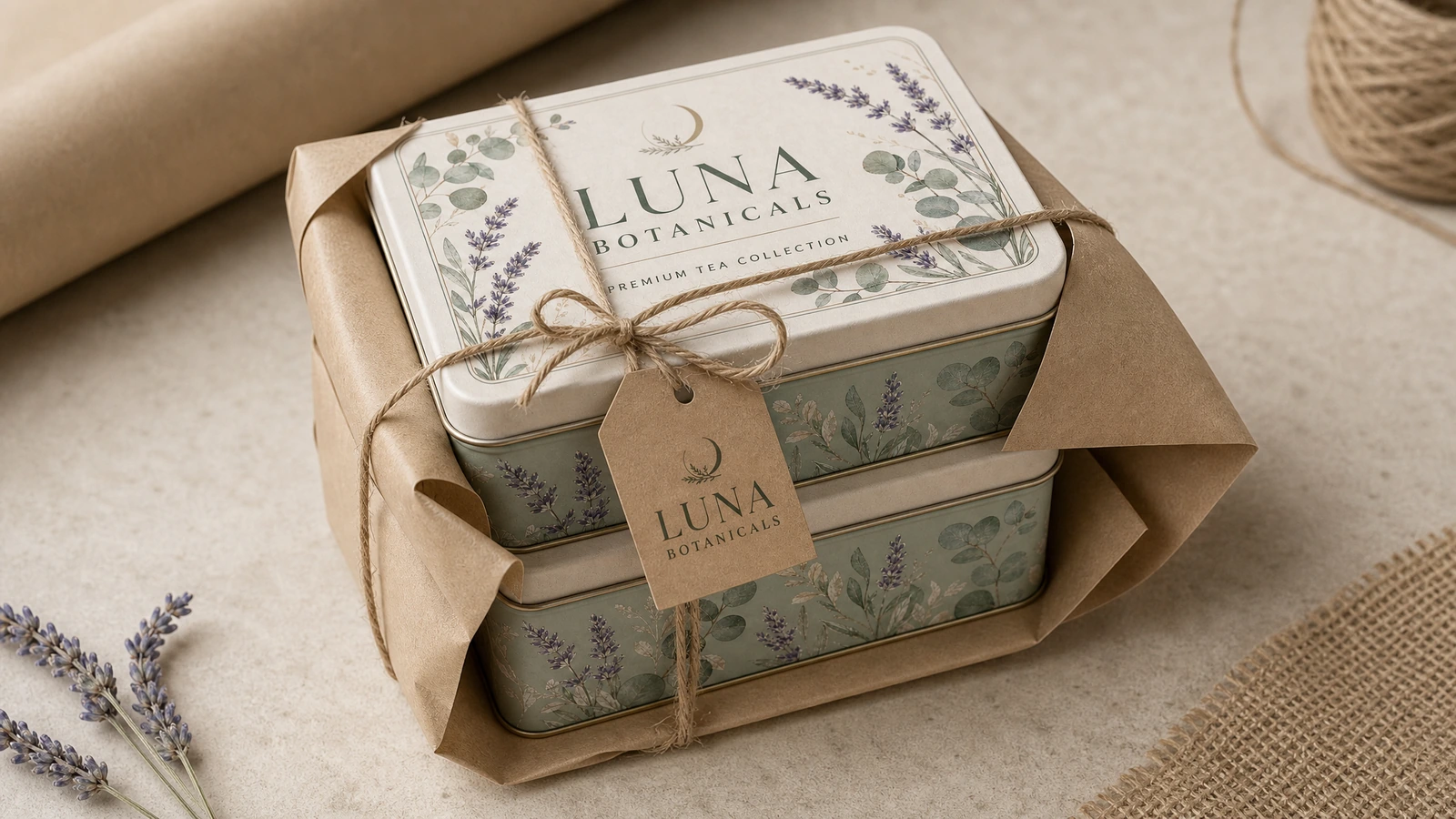
Metal packaging is durable in ordinary use but can still be scratched or dented when unprotected units rub, drop, or experience concentrated compression. Export packing should be developed around the actual tin shape, decoration, carton count, pallet pattern, transport mode, and retail presentation standard. Possible protective components include interleaving, sleeves, partitions, trays, corner protection, and suitably specified outer cartons, but the final system must be selected and tested for the project.
Unit weight has not been provided for NSKU-796-02. It must be measured from the approved production-equivalent sample and stated with the exact configuration, including any insert or accessory. Shipping weight, carton dimensions, pallet utilization, and delivered cost should not be estimated from another tin’s dimensions.
The final pack should be reviewed for both distribution and unpacking. Excessively tight cartons may transfer impact to the tins, while loose cartons permit movement and abrasion. A pre-shipment inspection can verify carton condition, count, labels, palletization, and selected finished-product attributes. If the package is intended to support repeat purchase, the unboxing sequence and reusable condition after first opening should also be assessed with representative samples.
How Do Two-Piece Tins Compare with Other Packaging Formats? ↑
| Format |
Primary Strength |
Key Limitation |
Best-Fit Decision Context |
| Two-piece tin |
Smooth formed body, strong visual presence, reuse potential, broad decoration options |
Tooling, weight, dent risk, and lid performance require careful evaluation |
Premium food, cosmetics, candles, gifts, collectibles, and promotions |
| Three-piece metal can |
Greater flexibility for some heights, dimensions, and closure systems |
Vertical side seam may interrupt graphics and adds another structural area to control |
Larger or specialized containers where dimensional flexibility is important |
| Rigid paperboard box |
Premium presentation with lighter material and extensive paper finishing options |
Less resistant to moisture, crushing, and long-term reuse than metal in many conditions |
Luxury sets, retail presentation, and projects prioritizing paper-based construction |
| Folding carton |
Efficient shipping and comparatively simple converting |
Lower perceived permanence and less resistance to repeated handling |
High-volume secondary packaging and cost-sensitive retail programs |
| Plastic container |
Lightweight and adaptable to many molded closure concepts |
Material perception, scratching, and end-of-life considerations vary by resin and region |
Applications prioritizing low weight, visibility, or specialized molded functionality |
The best format depends on the whole system rather than one material claim. Compare delivered cost, filling method, required barrier, decoration, damage risk, storage space, user experience, compliance, and end-of-life pathway. A reusable tin can provide lasting brand exposure, but only if customers receive it in good condition and find the size and closure useful.
What Should a Complete Purchasing Brief Contain? ↑
| Decision Field |
Information to Provide |
Verification Method |
| Product and application |
Contents, contact type, filling process, storage conditions, destination market |
Application review and compliance assessment |
| Dimensions |
Real packed-product measurements, orientation, clearance, insert requirements |
Physical fit sample |
| Structure |
Body type, lid depth, closure style, opening feel, stacking requirement |
Structural sample and repeated opening test |
| Material and coating |
Requested substrate, interior and exterior coating, product compatibility |
Documents plus application-specific testing |
| Decoration |
CMYK or spot colors, varnish, metallic effects, embossing, debossing |
Artwork proof and representative physical sample |
| Quality criteria |
Critical dimensions, appearance limits, fit, coating, edge, and packing requirements |
Approved inspection plan |
| Commercial details |
Required quantity, delivery destination, target date, packing preference |
Project-specific quotation and schedule |
| Logistics |
Carton, pallet, labeling, retail presentation, and handling requirements |
Packing trial and shipment validation |
A structured brief reduces assumptions, but it does not replace sampling. Final capacity, the number of products that fit, loaded performance, unit weight, opening behavior, coating suitability, and transit condition must be determined from the real configuration and validated before full production.
What Are the Key Takeaways for Packaging Buyers? ↑
- Custom two-piece tin boxes serve a growing premium and specialty packaging market. — The specialty tin cans market was reported at USD 683 million in 2026 and projected to reach USD 979.4 million by 2036 (Source)
- Steel packaging has an established recovery pathway, but recycling results depend on local collection systems. — The U.S. EPA reported 1.6 million tons of steel packaging recycled in 2018, equal to 73.8% of generation under that historical dataset (Source[8])
- Food-contact suitability is an application decision, not an automatic material property. — Coating, ink, food type, temperature, contact duration, destination market, and migration testing must be reviewed together.
- Capacity and product count cannot be promised from nominal dimensions alone. — Both depend on actual product dimensions, loaded condition, closure clearance, inserts, and physical sample verification.
Build the Tin Around the Product, Not Around an Assumption ↑
A successful two-piece tin project starts with the real product and ends with a verified packaging system. Structure, dimensions, lid fit, artwork, coating, inspection, and shipping protection must work together. When these decisions are converted into measurable specifications and approved through representative samples, the tin can deliver the premium presentation, protection, and reuse experience that buyers expect.
Submit your product dimensions, intended use, quantity, destination, and artwork requirements to request a project-specific quotation and sampling plan.




The information below is required for social login
Sign In
Create New Account