Custom perfect-bound magazines combine editorial pages with a glued, square spine for a book-like presentation. Plan your edition around its readers, then confirm paper, finished thickness, cover layout, proofing, and delivery requirements before production. Pricing, minimum order quantity, available finishes, and production timing require a project-specific quotation.
For brand teams, independent publishers, associations, and creative studios, a magazine is more than a collection of printed pages. It brings stories, photography, interviews, and advertising into a publication readers can browse, share, and retain. Perfect binding deserves consideration when that publication needs a square-spine presentation rather than a stapled fold.
A brand lookbook may prioritize photographic detail and cover feel. A member publication needs comfortable reading and a repeatable specification. An independent art magazine may need a physical sample before its publisher commits to a selling price. These projects share a format, but their purchasing decisions should not start with an identical paper recommendation.
The problem begins when an attractive screen layout becomes the entire production brief. Important content can disappear toward the binding, paper can feel different from expectations, and an apparently affordable print price can exclude proofing or transportation. Discovering those differences after approval leaves fewer ways to protect the budget or publication date.
The practical solution is to approve a complete specification, not just a PDF. Establish what the sample must demonstrate, what the quotation includes, and what must happen before production begins. This turns subjective requests such as “premium quality” into decisions that can be reviewed.
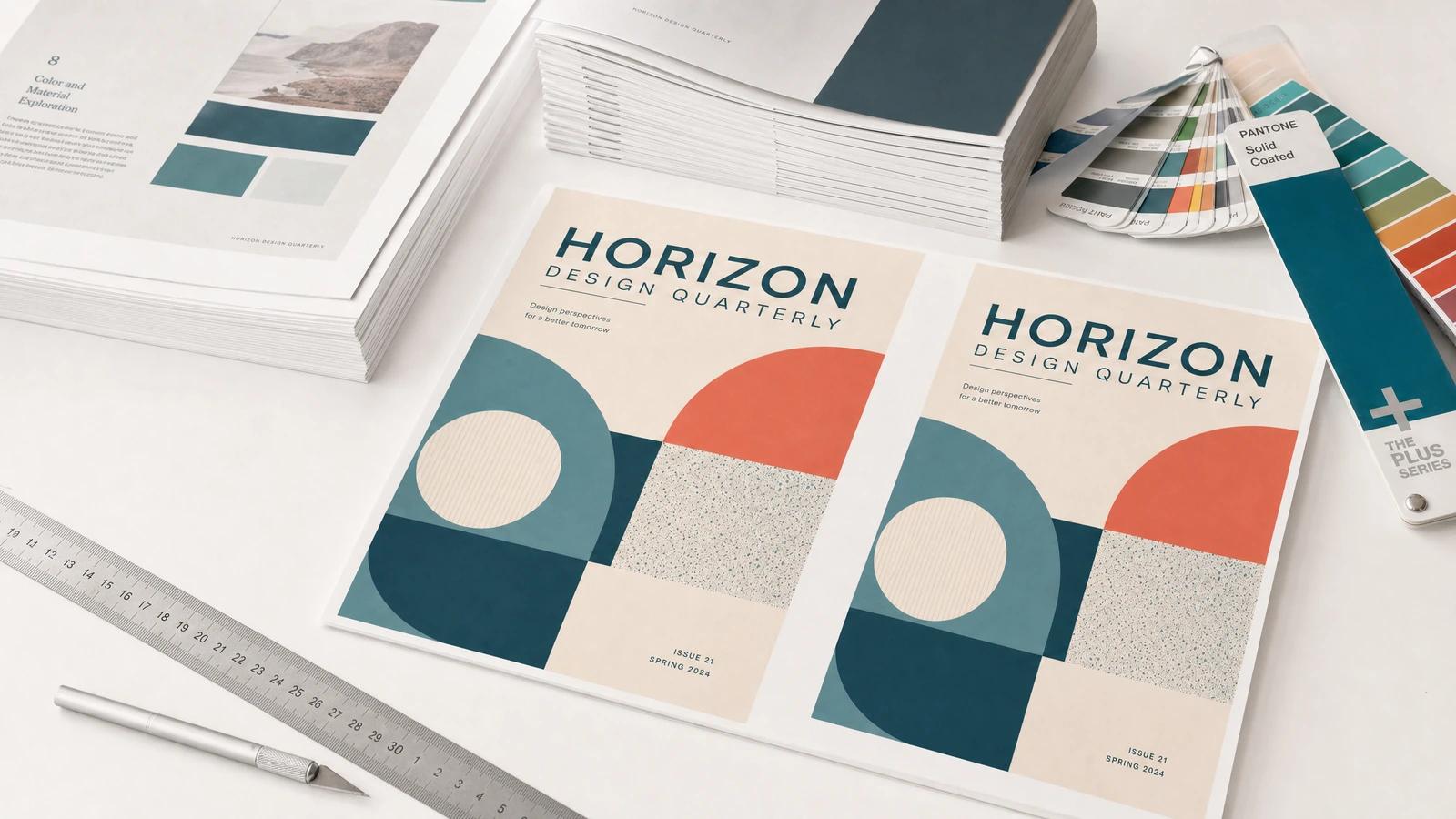
Explore your magazine printing decisions
What makes a perfect-bound magazine different? ↑
Perfect binding secures the page block into a cover with adhesive, producing a square spine. Unlike saddle stitching, it does not use staples through a central fold. The distinction matters for publications intended to sit on shelves: a sufficiently wide spine can carry identifying artwork, while the overall format resembles a paperback. The underlying binding comparison[1] also makes clear that ordinary perfect binding is not a lay-flat construction.
Do not treat “perfect-bound” as a guarantee of a particular adhesive, opening behavior, or durability result. If PUR adhesive is a procurement requirement, identify it explicitly and obtain confirmation for the proposed paper combination. A generic binding name is not sufficient evidence of the exact construction.
Page count alone cannot establish compatibility. Finished thickness depends on the selected stock and the complete page block. Binding capacity must be determined from physical dimensions, the assembled configuration, and sample validation. Confirm the production page-count rules and spine template before completing the cover; a threshold borrowed from another printer is not a specification for this product.
Choose dimensions around readability, not appearance alone ↑
Begin with a representative spread containing the hardest material to reproduce comfortably: dense editorial text, captions, an advertisement, or a photograph crossing the gutter. Assess it at the intended finished size. A reduced format is not a useful saving if the reader must struggle with the type or the designer must rebuild every spread.
Market references include Letter at 8.5 × 11 inches, Digest at 5.5 × 8.5 inches, and A4 or A5 formats. Treat these as starting points for quotation, not confirmed production options. State dimensions as width × height, identify orientation, and distinguish the trimmed publication from artwork that includes bleed.
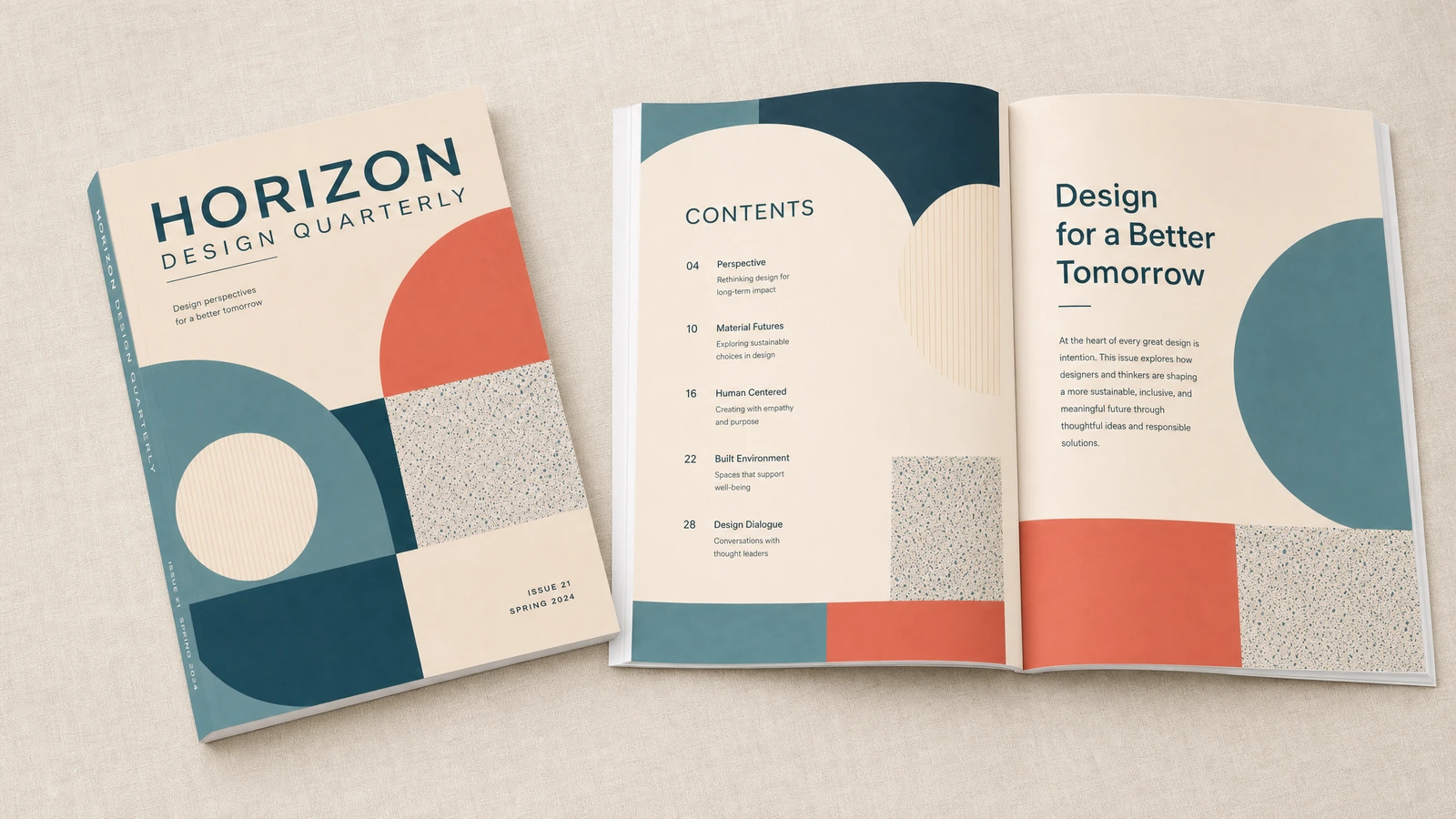
Review the inner margin separately from the outer trim safety area. Faces, captions, page numbers, and advertiser contact details should not rely on visibility deep inside the binding. For image-led editions, identify every crossover spread before proofing rather than assuming alignment on screen represents the opened physical magazine.
Record interior pages and cover pages separately in the brief. Ask how the production team counts them and whether the chosen printing and binding method requires particular page increments. Saddle-stitch conventions should not automatically become universal rules for every perfect-bound workflow.
Match paper and cover finishes to the reading experience ↑
Choose cover and interior stock as a combination. Industry guidance commonly distinguishes gloss for image-led work, matte or silk for sustained reading, and uncoated paper for a more natural editorial feel. These are useful directions for sampling, not guarantees about your artwork. The magazine paper guide[2] provides a starting framework for comparing those choices.
| Purchasing priority | Option to evaluate | What the sample should establish |
|---|
| Photography and illustrated features | Gloss or silk coated interior paper | Shadow detail, image appearance, and reflections under reading light |
| Long articles and member communications | Matte or silk interior paper | Comfortable text contrast and acceptable show-through |
| Literary or independent editorial identity | Uncoated interior paper | Paper tone, texture, and artwork appearance on that surface |
| A distinctive cover experience | Gloss, matte, or soft-touch treatment | Handling marks, opening behavior, and finish compatibility |
| Selective visual emphasis | Foil or spot UV, subject to feasibility | Placement, registration, and interaction with the cover design |
These are options to discuss, not an available-stock list for this product. Obtain the exact paper designation and agreed weight before ordering. Where quotations use different paper-weight systems, request a consistent specification rather than comparing the numbers without their stock categories.
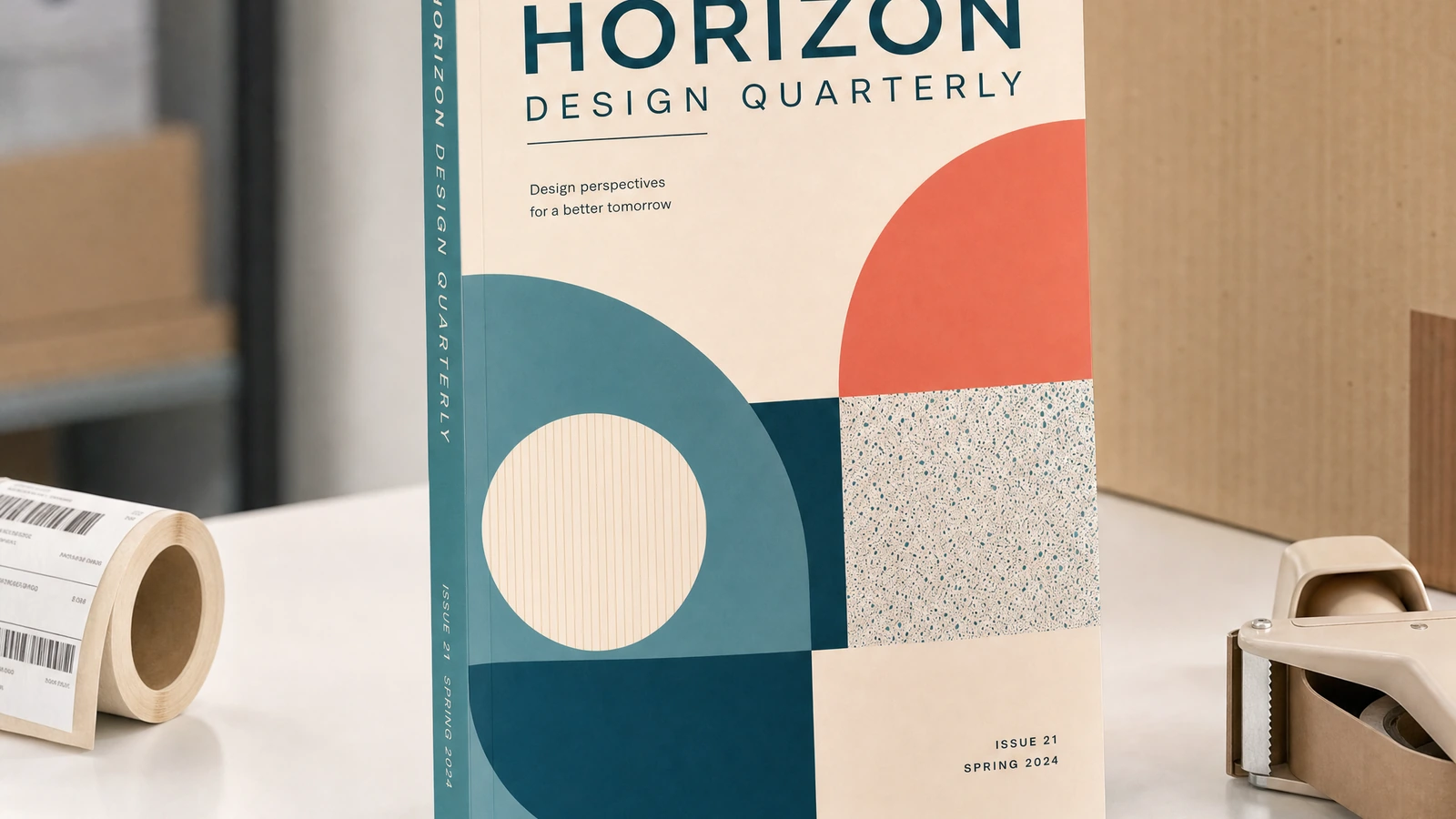
For this product, the relevant construction choices concern the cover, spine, and adhesive binding—not back fasteners. Do not add clips, snaps, or other fastening hardware to the specification. A decorated cover also needs its own sample review: a visual finish reference cannot establish resistance to rubbing, peeling, or cracking.
How should you prepare artwork for preflight? ↑
Preflight checks the production suitability of the file, including bleed, images, fonts, and color setup. As a general reference, PrintingCenterUSA describes 0.125-inch bleed and an optimal image resolution of 300 dpi in its file-preparation guidance[3]. Use the selected production template as the controlling instruction rather than assuming every supplier accepts identical settings.
- Lock the geometry. Confirm trim dimensions, bleed, inner margins, and the final spine width before exporting cover artwork.
- Organize the files. Prepare interior pages in reading order and a separate cover file where required. Do not supply imposed printer spreads unless requested.
- Inspect placed images. Check resolution at final reproduction size, especially cropped photographs, supplied advertisements, and enlarged artwork.
- Confirm color handling. Obtain the required CMYK profile and export instructions. Do not apply a generic conversion simply because another printer recommended it.
- Check text and assets. Embed fonts and resolve missing links. Review small text, captions, and page numbers in the exported PDF.
- Recheck the export. Compare the final PDF with the approved page plan, including intentional blank pages and front-to-back sequence.
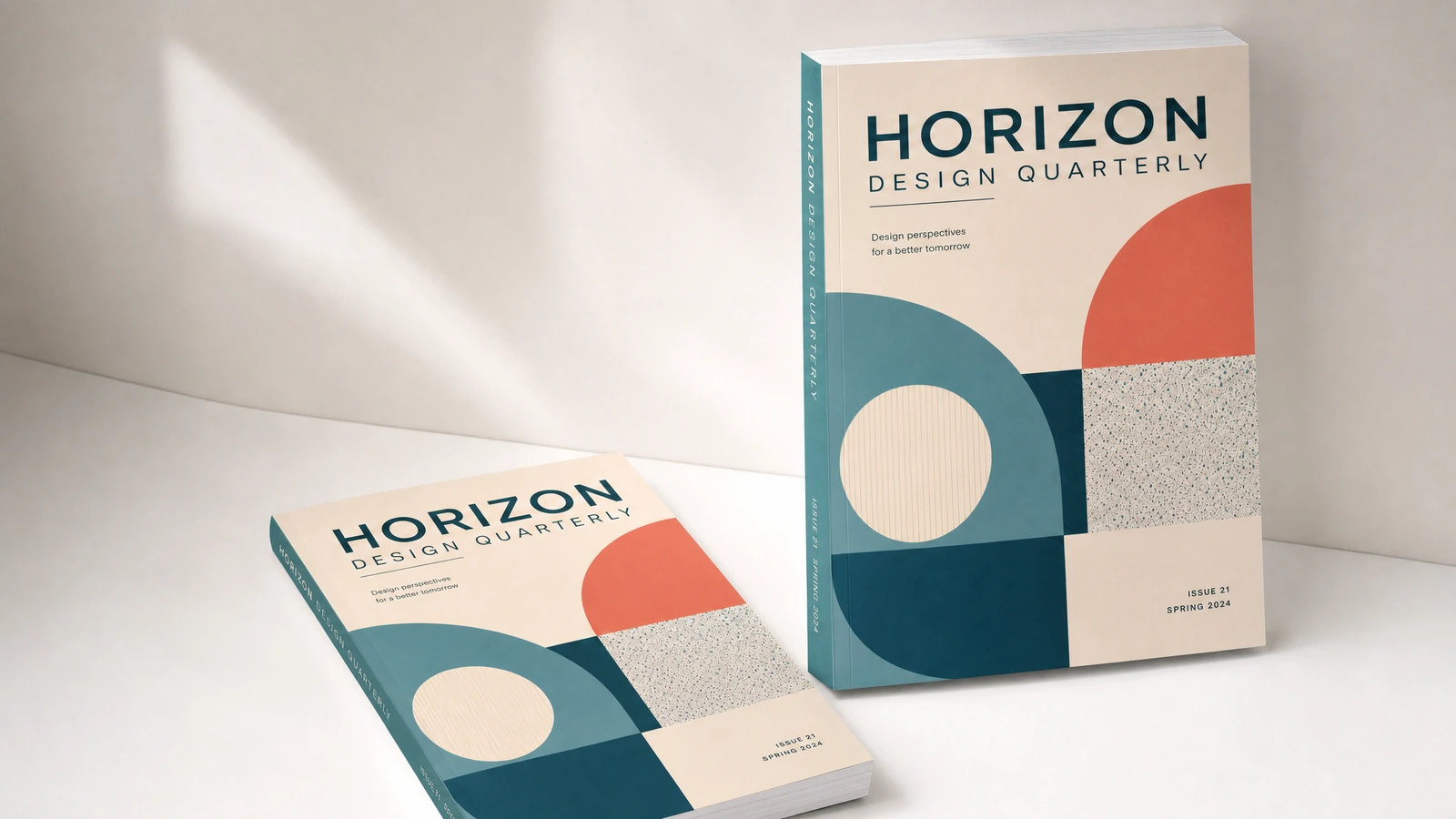
PDF/X-1a and PDF/X-4 appear in the industry preparation guidance, but the accepted export preset remains workflow-specific. The print-production setup guide[4] reinforces the value of resolving document setup before submission. Confirm the requested preset rather than treating either format as an automatic approval.
For publications assembled from outside contributors, use one submission checklist and resolve exceptions before final assembly. A contributor’s “print-ready” label does not confirm compatibility with the chosen job. If the edition includes QR codes, test the destination and scan the printed sample before release.
Build production timing around approval milestones ↑
Digital and offset printing are production routes, not quality rankings. Short runs often favor digital production, while longer runs can spread offset setup costs across more copies. The magazine production overview[5] describes this distinction. Ask which route is proposed for the actual specification rather than choosing from a universal quantity cutoff.
Build the schedule backward from the date magazines must be available to readers. Separate artwork readiness, preflight corrections, proof approval, printing, binding, finishing, packing, and transit. “Production complete” and “delivered to the event” are different milestones, particularly for international shipments.
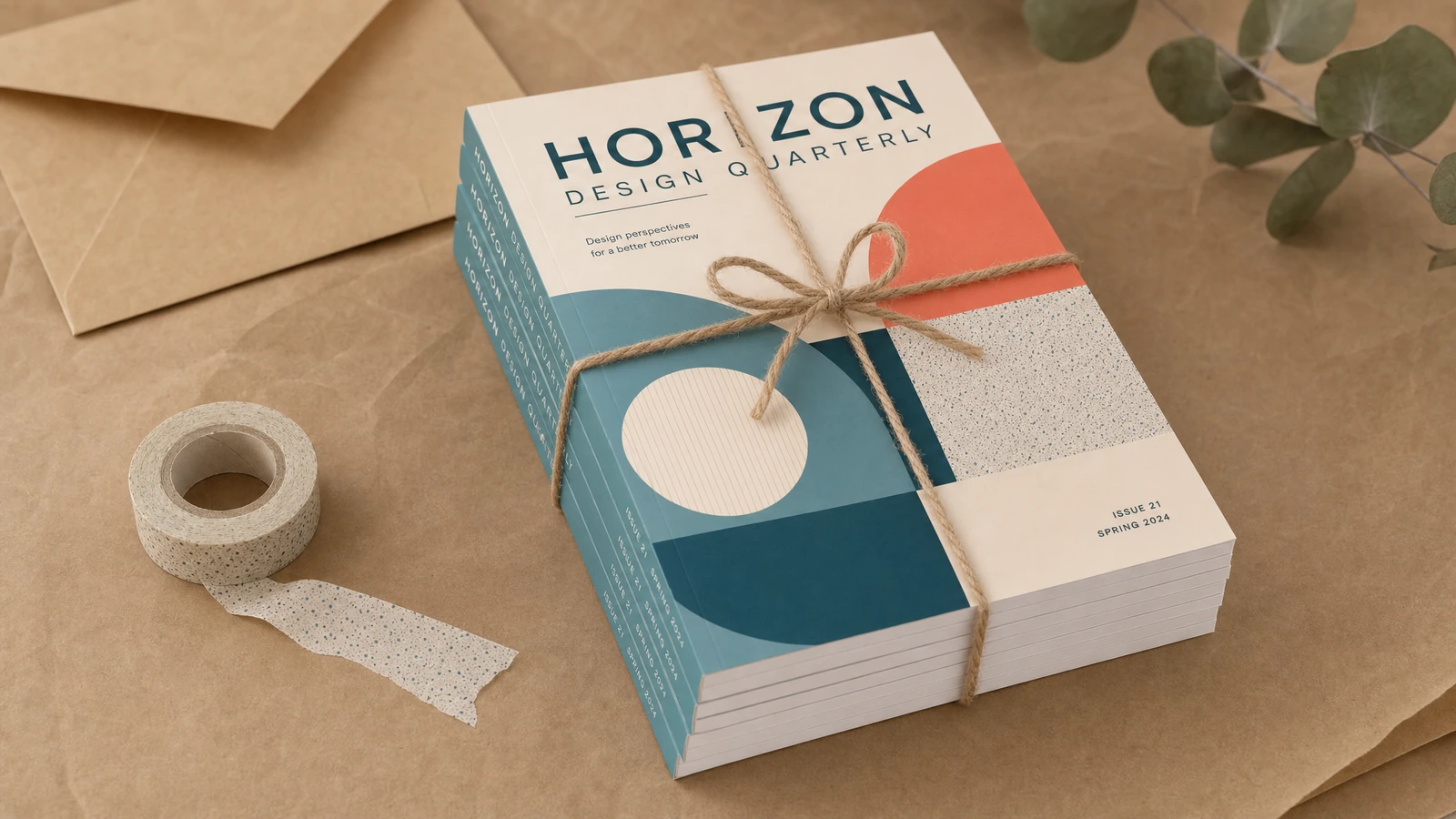
Before approving a schedule, establish which events release the job into production. Unresolved stock selection, an unapproved proof, or a revised cover can change the plan. Keep the approved file version and its approval record together so an earlier attachment cannot be mistaken for the release file.
No product-specific production time or rush availability is established here. Both require quotation confirmation, including the assumptions behind them. If the launch date is fixed, identify it as a required arrival date and obtain a delivery assessment that includes proofing and transport rather than borrowing a competitor’s published turnaround.
Make quality acceptance specific and testable ↑
A digital proof helps review layout and sequence; it does not physically demonstrate cover feel, opening resistance, or the appearance of ink on the chosen stock. For a color-critical or sales edition, request a physical proof or sample and establish what it represents. A sample produced differently from the final run needs explicit limits on what its approval means.
| Inspection area | Recommended acceptance review | Evidence to retain |
|---|
| Content and sequence | Check missing, duplicated, reversed, and unintended blank pages against the approved PDF | Approved file version and page checklist |
| Color and image detail | Compare critical images with the agreed reference under consistent viewing conditions | Approved physical reference and written criteria |
| Trim and positioning | Inspect borders, page numbers, cover centering, and crossover imagery | Sample photographs and agreed tolerances |
| Binding | Check page security, spine shape, glue buildup, and normal opening behavior | Construction sample and inspection notes |
| Cover finish | Inspect for peeling, cracking, scuffing, and surface inconsistencies | Finish sample and agreed handling-test method |
This is a proposed acceptance checklist, not a report of completed factory testing. Sampling quantities, numerical tolerances, durability methods, and pass criteria must be agreed before production. Avoid turning a visual inspection into an unsupported claim of measured performance.
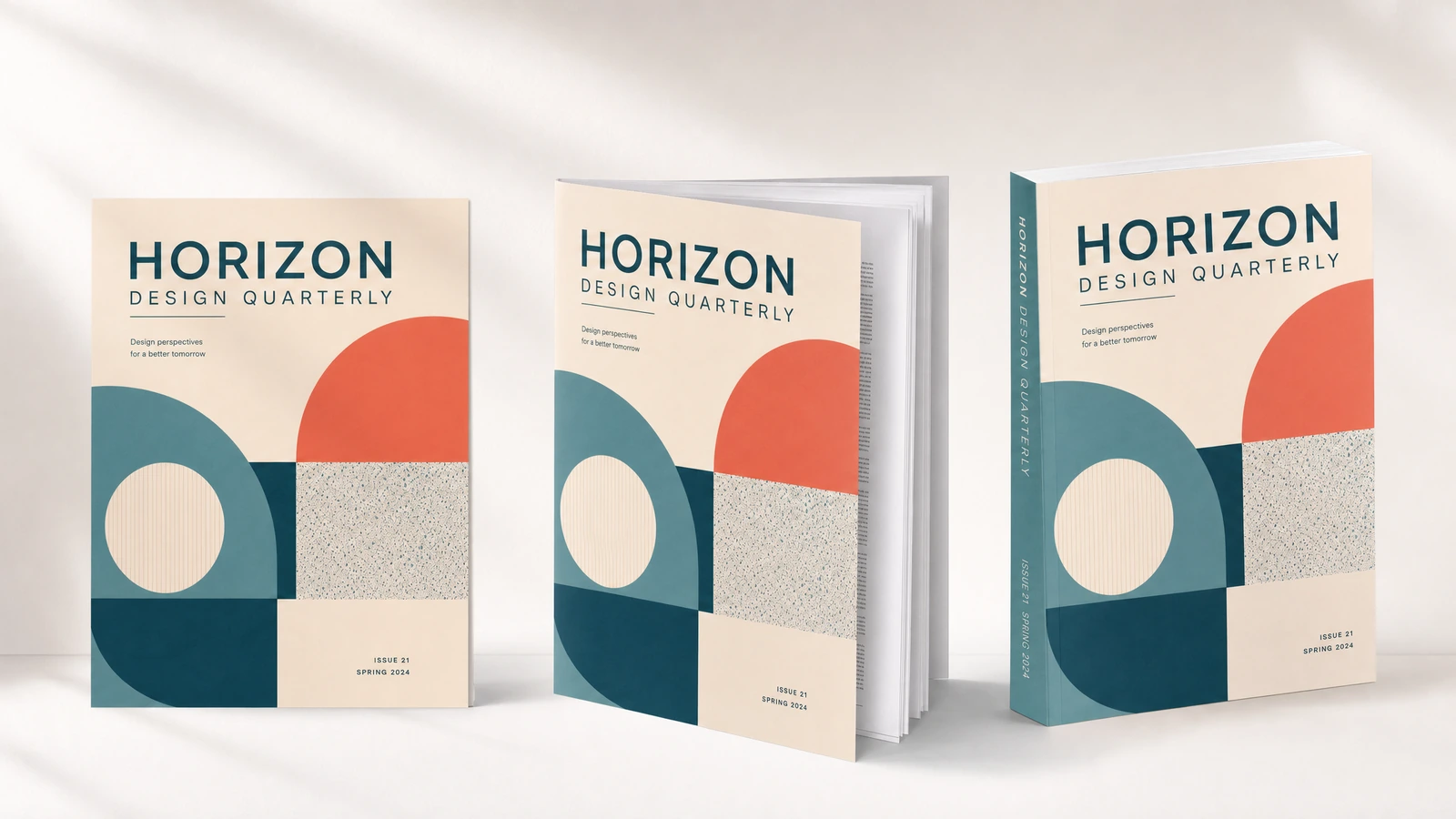
Color-management credentials should be checked for the facility and scope involved. The G7 color-management resource[6] concerns calibration and consistency; it is not evidence that this product or its supplier holds certification. It also does not replace inspection of binding, trimming, or cover condition.
Environmental claims need equally specific evidence. FSC states that magazines may carry an FSC label only when produced and labelled under a valid chain-of-custody certificate. Its paper and print requirements[7] distinguish certified production from an unsupported paper claim. Certification and labelled-product availability remain unconfirmed for this item. Do not infer recycled content, carbon neutrality, or finished-product recyclability from paper appearance alone.
Compare binding and purchasing models fairly ↑
Compare alternatives against the same reader experience and distribution plan. A thinner stapled issue, a square-spine edition, and a print-on-demand publication can all be sensible purchases, but they solve different problems. Changing the binding or stock to reach a target price changes the product being compared.
| Route | Reason to consider it | Trade-off to resolve |
|---|
| Perfect-bound edition | Book-like presentation and potential spine identification | Thickness compatibility, gutter visibility, and sample-approved construction |
| Saddle-stitched edition | A thinner publication with an economical folded-and-stapled structure | Paper-dependent thickness limits, creep, and no square spine |
| Wire-O or spiral alternative | Desk reference use where flat opening matters | A different appearance and construction from this product |
| Print-on-demand purchasing | Testing demand or ordering around individual sales | Per-copy cost, available specifications, and fulfilment suitability |
Print-on-demand describes an ordering and fulfilment model, not a binding method. For example, Blurb’s magazine service[8] illustrates a creator-oriented alternative. Its options should be assessed separately rather than transferred into this product’s specification.
Similarly, Lulu’s magazine offering[9] is relevant when on-demand publication is central to the business model. A platform suited to individual orders does not automatically provide the best landed cost or finish selection for a coordinated bulk launch.
For comparable quotations, hold quantity, page count, trim, paper, color, and binding constant. Break out proofs, finishing, packaging, transport, and any applicable import charges. Then evaluate an alternative quantity or stock as a separately identified option. This preserves visibility into what actually produces a saving.
Protect delivery and simplify the next issue ↑
Specify whether the magazines travel to one receiving address, several event locations, or individual readers. Subscriber mailing is a separate service requirement, not an automatic inclusion in printing. Addressing, sorting, wrapping, inserts, and delivery handoffs should be identified before the cover and shipment plan are finalized.
Packaging should be reviewed against the actual magazine and journey. Ask how exposed corners, cover surfaces, and movement inside cartons will be managed. Copies per carton, packed weight, and package compatibility must be determined from physical dimensions, the loaded configuration, and packing-sample validation—not from a generic photograph.
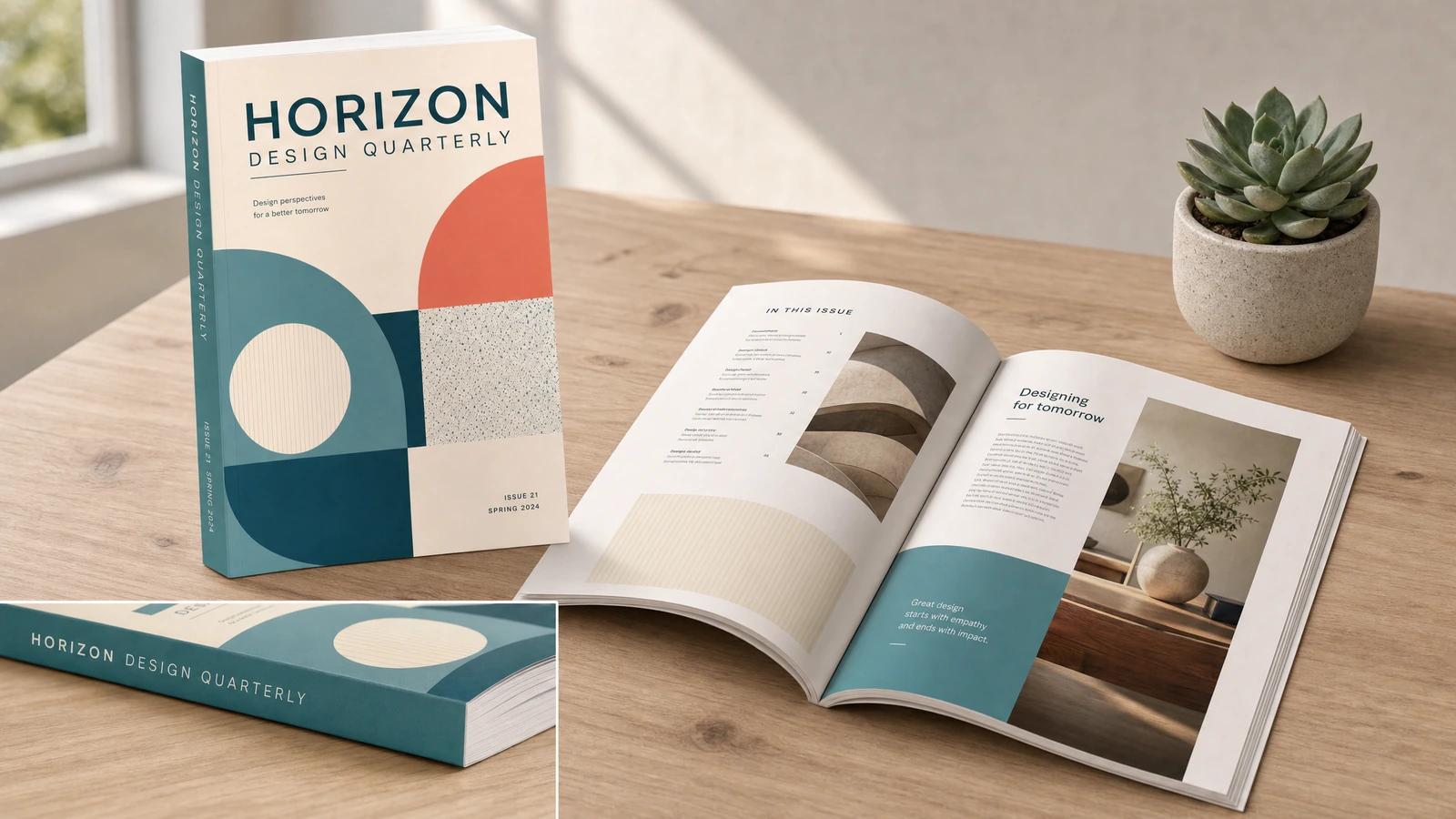
Agree on the evidence and process for reporting defects or transit damage. Photographs, affected quantities, carton condition, and the approved reference can help distinguish a file issue from a production or shipping problem. Response periods, replacement arrangements, refunds, and responsibility for transport costs must come from the agreed order terms; no automatic remedy is promised here.
For recurring editions, retain the final specification, approved PDF, physical reference, finish details, and packaging record. On the next issue, identify changes before reusing the previous setup. A new page count or paper choice requires a renewed spine check; a repeat title does not mean an unchanged physical product.
Key takeaways for a purchase-ready specification ↑
- Select perfect binding for the intended presentation. Confirm thickness suitability and opening behavior instead of relying on a generic page-count threshold.
- Approve artwork and physical characteristics separately. A layout proof and a construction sample answer different purchasing questions.
- Compare complete quotations. Keep specifications identical and make proofing, finishing, packing, and delivery costs visible.
- Make claims traceable. Require relevant certification evidence and agreed test results before treating quality or environmental language as verified.
- Keep commercial terms explicit. Product-specific MOQ, production timing, unit weight, and available options require confirmation in the quotation.
Turn your editorial concept into a clear quotation request ↑
A successful perfect-bound edition begins with a brief that connects design to purchasing: who will read it, how it will be used, what the physical sample must demonstrate, and where it must arrive. That clarity makes paper choices, proof approvals, and price comparisons more useful than a broad request for the cheapest magazine.
Request a project-specific quotation for Custom Perfect-Bound Magazines with your quantity, trim size, interior and cover page counts, paper preferences, artwork status, delivery destination, and required arrival date.




The information below is required for social login
Sign In
Create New Account