Custom booklet printing turns a compact, folded format into a practical sales tool, event program, training guide, catalog, or keepsake. Define the page count, finished size, paper, artwork, proofing method, and delivery deadline before requesting a quote for your saddle-stitched booklet.
Who benefits most from a custom booklet?↑
Marketing managers use booklets for product catalogs, lookbooks, brand stories, and trade-show handouts. Event planners need programs that are easy to distribute and attractive enough to keep. Schools, churches, nonprofits, and associations use them for guides, directories, workbooks, and welcome packs. Designers, photographers, comic artists, and self-publishers often choose the format for zines, portfolios, and short creative editions.
Industry research identifies catalogs, magazines, directories, manuals, ceremony programs, and educational materials as common booklet applications. custom booklet use cases[1] The shared requirement is not simply “more pages”; it is a physical document that guides a reader through a message in a deliberate sequence.
What problem does a well-planned booklet solve?↑
Problem: A loose stack of flyers, a crowded PDF, or a hurried office printout can make a professional message feel fragmented.
Agitation: A missing bleed, low-resolution image, RGB file, incorrect page count, or late proof approval can create white edges, blurry images, color surprises, binding misalignment, or an avoidable deadline crisis. Industry guidance repeatedly identifies these file-preparation failures as common causes of rework. prepress risk guidance
Solution: Treat the booklet as a controlled production project. Lock the purpose and reading path first, then confirm specifications, prepare a print-ready PDF, approve a proof, inspect the finished pieces, and protect them during shipping.
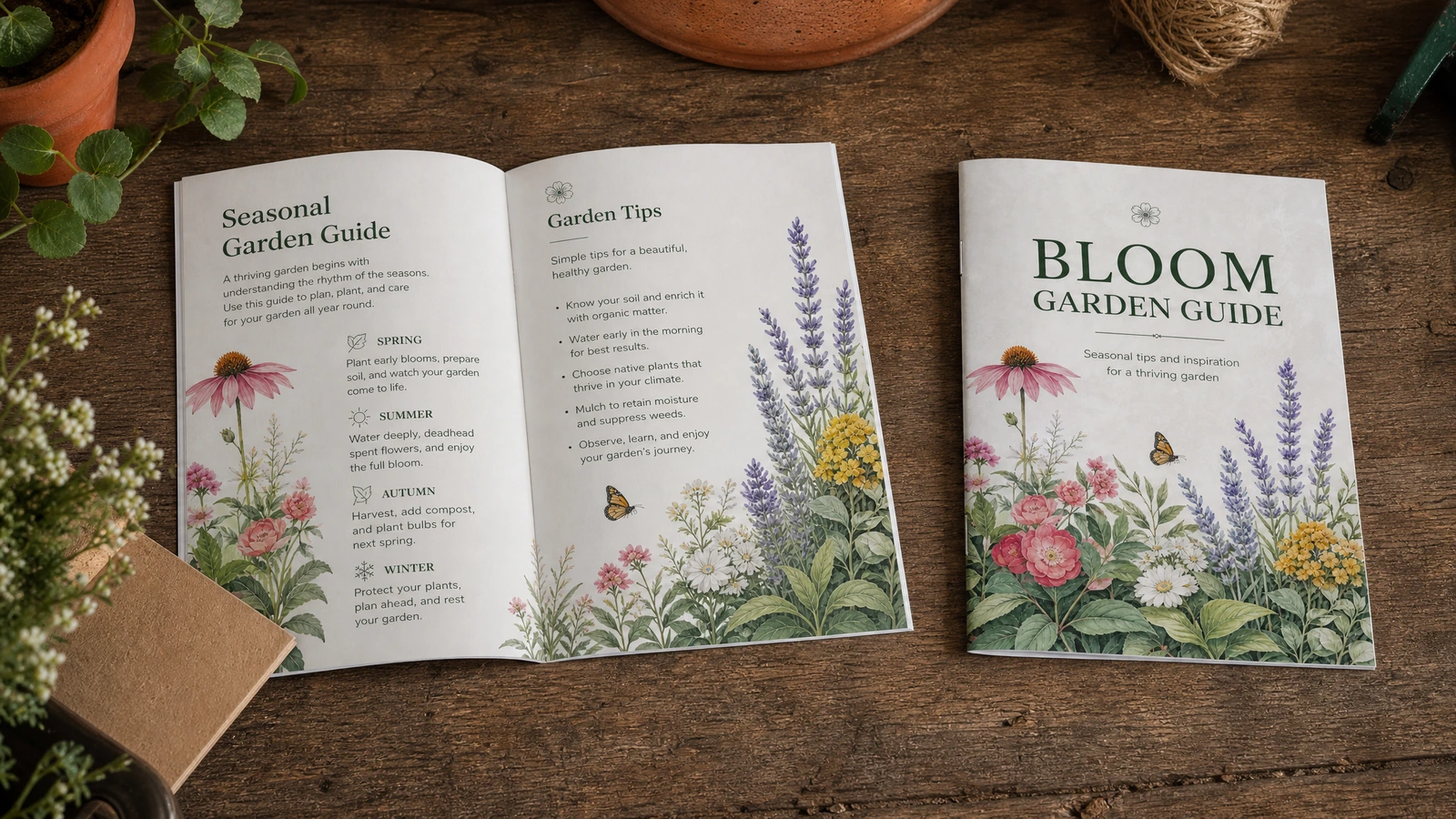
Table of Contents
What is a custom saddle-stitched booklet? ↑
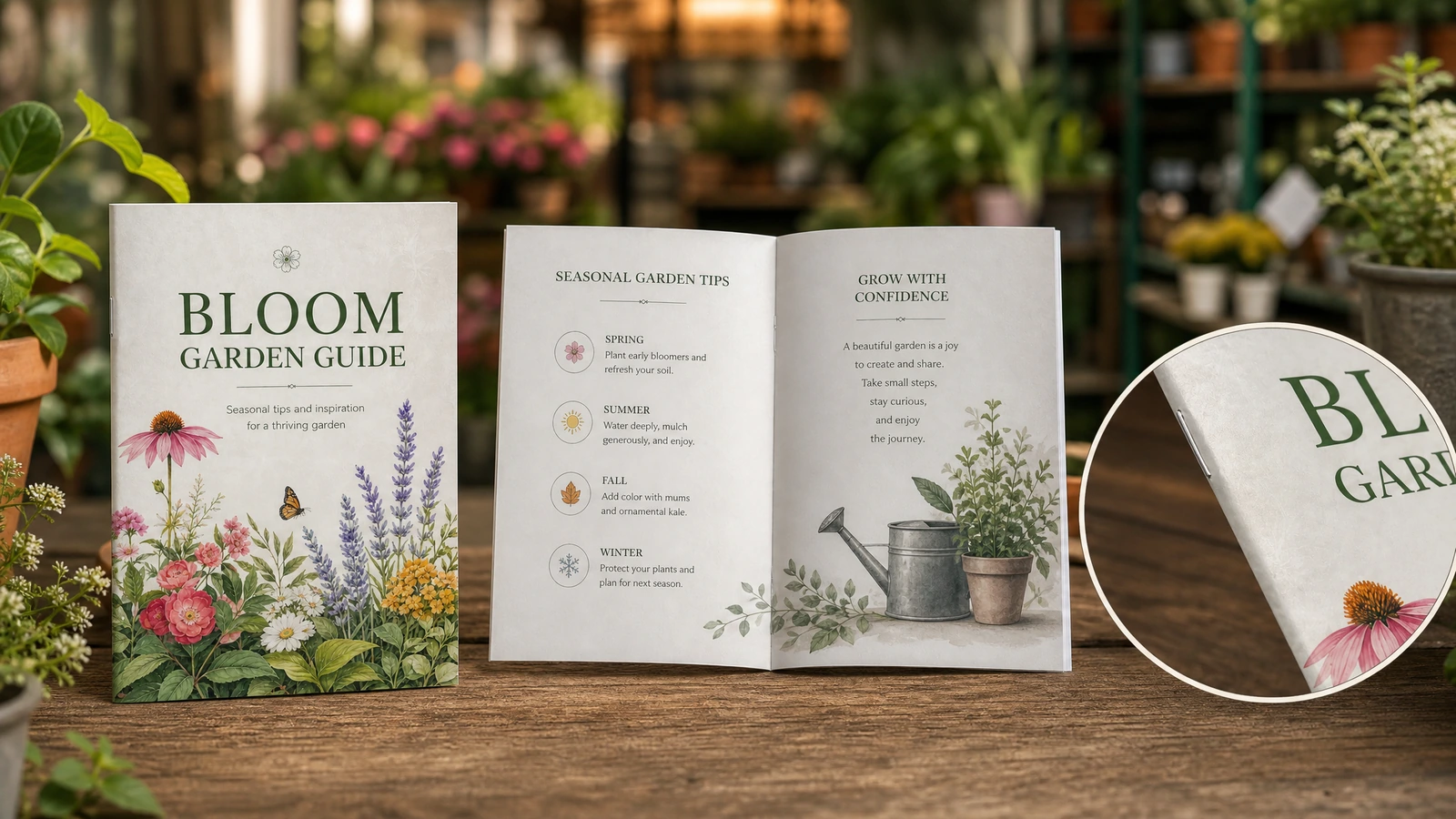
A saddle-stitched booklet is made from folded sheets that are nested and secured through the center fold with staples. The format is compact, economical for thinner documents, and naturally suited to sequential reading. It works well when the reader should move from an opening message to supporting details, product pages, instructions, or a closing call to action.
Page planning matters because each folded sheet creates four pages. Saddle-stitched files therefore normally use a total page count divisible by four. Covers are generally included in that count, so an eight-page booklet contains the front cover, inside front cover, interior pages, inside back cover, and back cover. If the content is short, a useful filler page, contact page, notes page, or blank page is safer than forcing an irregular count.
For thicker documents, perfect binding may be more suitable because it creates a glued square spine. Wire-O or spiral binding is useful when a manual or workbook must stay open hands-free. The correct choice depends on page count, paper thickness, opening behavior, and the reader’s environment—not on appearance alone.
Which specifications control readability and cost? ↑
Start with the finished size. Common commercial formats include 8.5 × 11 inches for catalogs and reports, 5.5 × 8.5 inches for compact programs, landscape variants, and square formats such as 6 × 6 or 8 × 8 inches. Standard sizes usually fit press sheets efficiently, while custom dimensions can change layout, imposition, postage, and pricing.
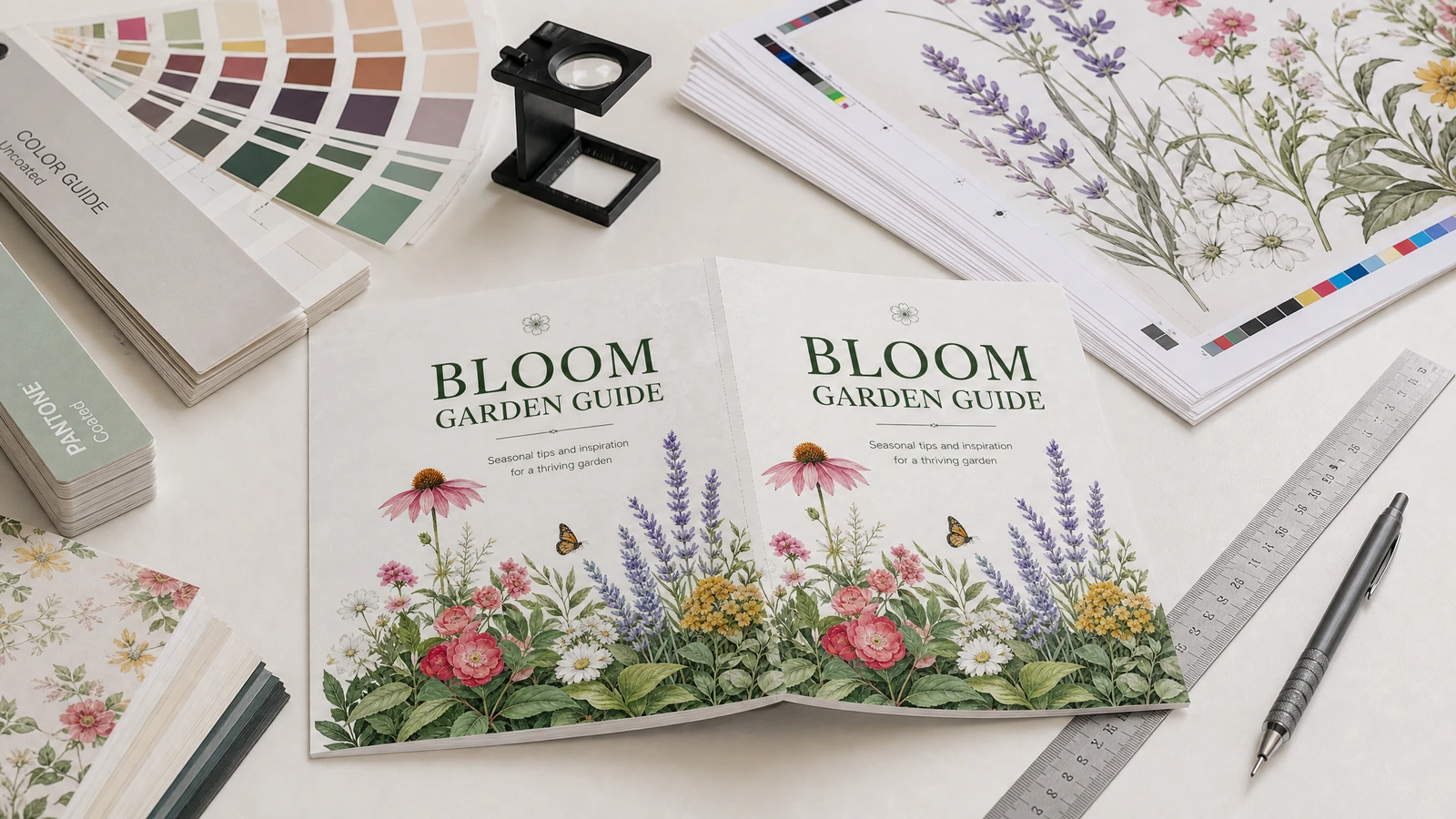
Match the paper to the reading task. Gloss stocks emphasize saturated photography and product imagery. Matte or uncoated stocks reduce glare and are more comfortable for text-heavy guides, worksheets, and writing areas. A heavier cover can add structure, but thickness affects folding, creep, postage, and binding behavior. Industry guidance commonly places interior stocks around 70–100 lb text and covers around 80–100 lb cover or 10–16 pt cardstock; confirm the exact combination with the printer for the selected page count.
Budget is driven by quantity, page count, size, color coverage, paper, finishing, binding, proofing, and shipping. Published market references place booklet projects broadly around $2–$25 per copy, with saddle stitch generally below perfect binding and Wire-O. booklet cost guidance[3] These are planning references, not a quotation for this product.
How should a booklet move from artwork to finished copies? ↑
- Define the job: State the audience, purpose, quantity, finished size, page count, orientation, binding, paper, finish, delivery address, and in-hand date.
- Build the reading path: Assign a role to every page. Use the cover to establish the promise, the opening spread to orient the reader, interior pages to prove or explain, and the final page to provide contact or next-action information.
- Download the correct template: Confirm trim, bleed, safe area, spine or gutter allowances, and whether the printer requests single pages in reading order.
- Prepare the PDF: Use CMYK artwork, embedded fonts, 300 dpi imagery where possible, and a page count divisible by four for saddle stitch.
- Upload and preflight: Review warnings for missing fonts, low-resolution images, incorrect bleed, transparent objects, and page-order problems.
- Approve the proof: Check text, pagination, image crops, color intent, page direction, and critical alignment before production begins.
- Produce and finish: The production route may include digital or offset printing, folding, collating, stapling, trimming, optional coating, and packing.
- Inspect and document: Open cartons immediately, record defects with photographs, compare the delivered quantity and specification with the approved proof, and retain the job files for repeat ordering.
For color-sensitive work, ask whether the production environment follows a documented calibration practice. The G7 framework is designed to improve visual similarity across print processes by controlling gray balance and neutral tone curves. G7 color-management reference[4] A proof remains important because a screen, digital proof, and production press can present color differently.
How can file preflight prevent expensive rework? ↑
Use a short, repeatable checklist rather than relying on visual confidence:
- Use the finished trim size, not the unfolded sheet size, for page layout.
- Add 0.125 inch (3 mm) bleed on all sides when required by the selected template.
- Keep logos, faces, page numbers, and critical text inside the safe area; allow additional gutter space near the fold.
- Submit single pages in reading order unless the printer explicitly requests printer spreads.
- Verify that the total page count is a multiple of four.
- Check image resolution, CMYK conversion, overprint settings, transparent effects, and embedded or outlined fonts.
- Print a small home mock-up to confirm page turns, orientation, fold direction, and the relationship between cover and interior pages.
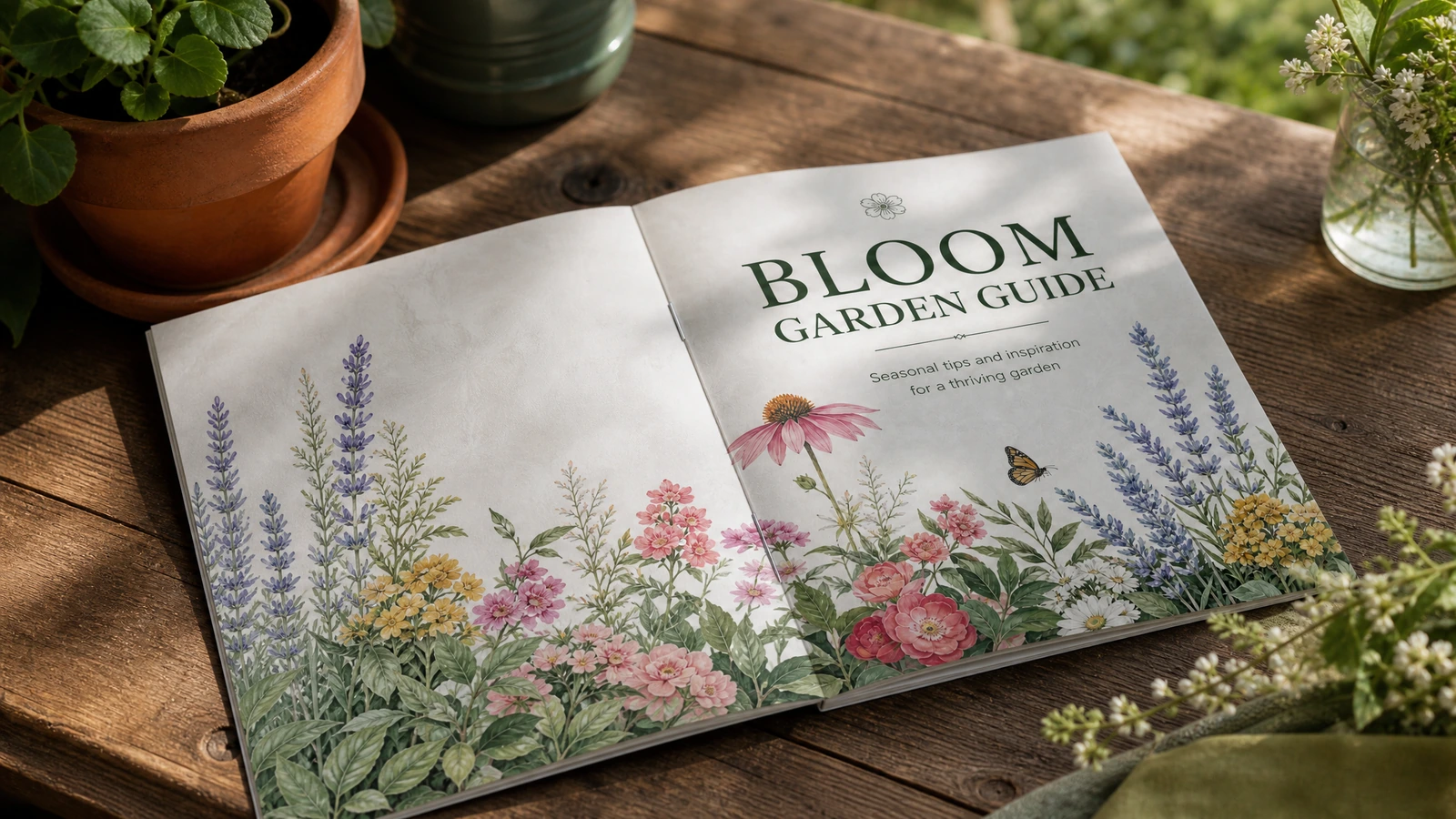
Bleed is not a decorative setting: it gives trimming tolerance so a full-bleed background does not leave a white edge. Quiet areas protect important content from the fold and staples. Templates from the selected printer should take priority over generic online advice because equipment, trim tolerance, and finishing requirements vary.
Which binding and production route fits the job? ↑
| Option | Best fit | Trade-off to consider |
|---|
| Saddle stitch | Thin catalogs, programs, zines, brochures, and short manuals | Page count must normally be divisible by four; thicker books can develop creep or binding stress |
| Perfect binding | Thicker catalogs, manuals, and documents needing a square spine | Usually adds production steps, cost, and turnaround compared with saddle stitch |
| Wire-O or spiral | Workbooks, training materials, and documents that must lie flat | Mechanical binding changes the visual style and may require additional gutter allowance |
| Digital printing | Short runs, versioned content, and test quantities | Unit economics may improve at larger quantities through volume discounts |
| Offset printing | Longer runs with stable artwork and color requirements | Setup and scheduling can be less efficient for very small quantities |
The practical selection rule is simple: choose the binding that matches thickness and opening behavior, then choose the production method that matches quantity and deadline. A low unit price is not a saving if the format cannot open comfortably, the pages creep into the gutter, or the shipment arrives after the event.
Published comparison data illustrates why quotes must be specification-specific: one reference compares 100 copies of an 8.5 × 11 inch, 16-page, full-color saddle-stitched booklet at $296.14 from PrintingCenterUSA against substantially higher chain-store prices. published price comparison[5] The figure is an example, not a standing price.
Turnaround should be measured from proof approval, not merely from cart submission. Some published references describe approximately 2–6 business days after file approval for standard booklet work, excluding shipping, weekends, holidays, and proof time. booklet turnaround reference[6] For an event, build a buffer and obtain the in-hands date in writing.
What should be checked before acceptance? ↑
Inspect a representative sample from every carton. Confirm the delivered quantity, finished size, paper feel, cover finish, page order, image sharpness, color consistency, trim position, staple placement, fold accuracy, and absence of scratches, crushed corners, scuffing, or loose pages. Open several copies rather than approving only the top copy.
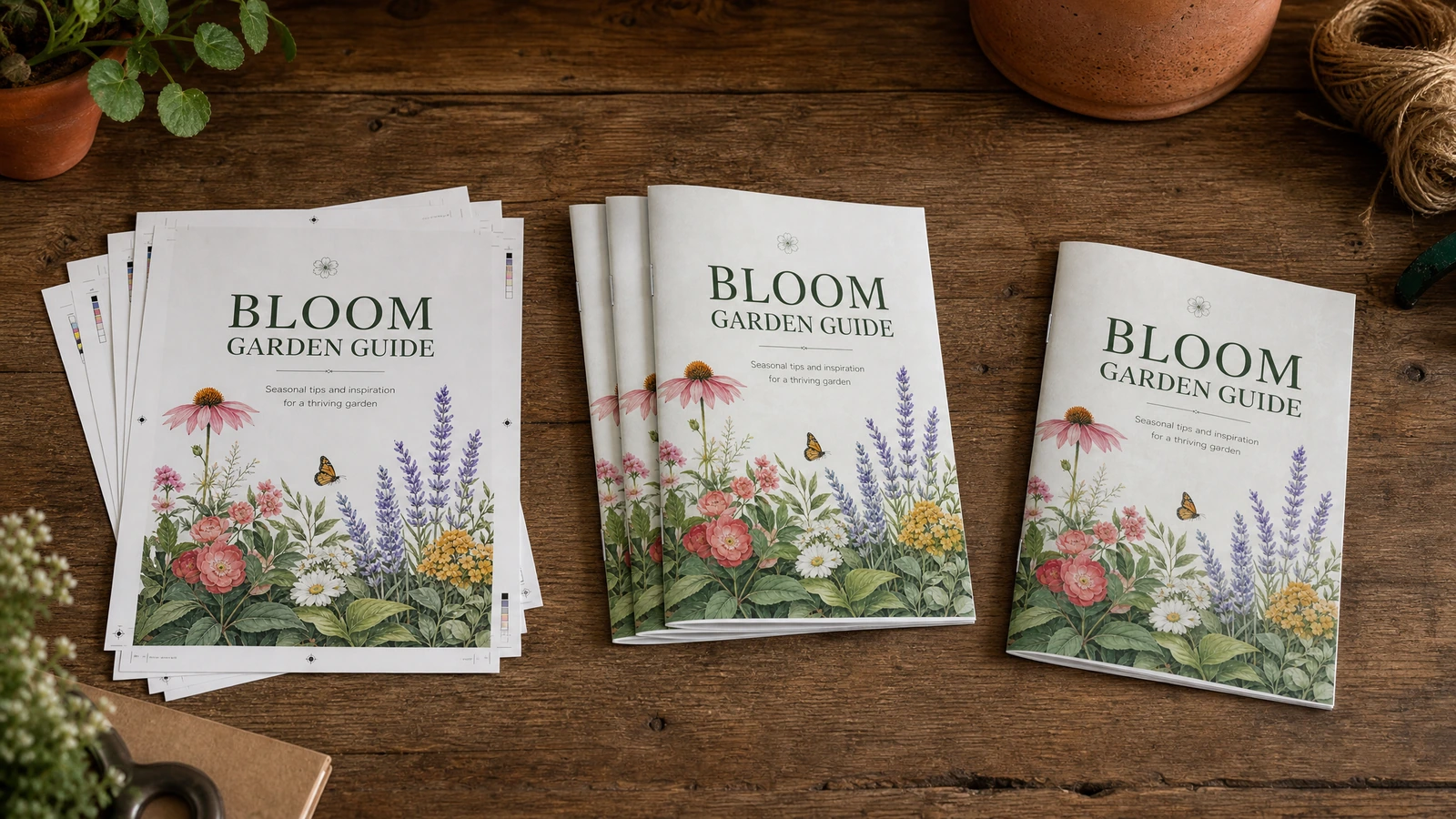
ISO 16763:2016 covers quality requirements and tolerances for bound products, including books, magazines, catalogs, and brochures, across cutting, folding, assembly, and binding. ISO 16763:2016[7] Use the standard as a quality vocabulary when documenting a production concern; acceptance still depends on the approved specification and proof.
If the booklet contains sensitive personal, medical, or regulated information, add a data-handling review to the purchasing process. Keep approved files, proof emails, packing records, and defect photographs together so a reprint or correction can be evaluated quickly.
How can paper and compliance choices support the project? ↑
Ask whether certified or recycled paper is available for the selected specification. FSC chain-of-custody printing can support paper traceability and use of FSC-certified materials when the printer and paper combination qualifies. FSC paper-and-print guidance[8] Confirm the exact label eligibility before printing environmental claims on the booklet.
Environmental compliance also affects process selection. EPA guidance addresses air permitting for printing facilities and VOC controls, while state rules may impose additional requirements. EPA printing-facility guidance[9] For European distribution, printed products under HS code 49 were reported as excluded from the EUDR scope, but paper sourcing and destination-specific obligations still require confirmation. EUDR scope update[10]
How should packaging, transport, and repeat orders be managed? ↑
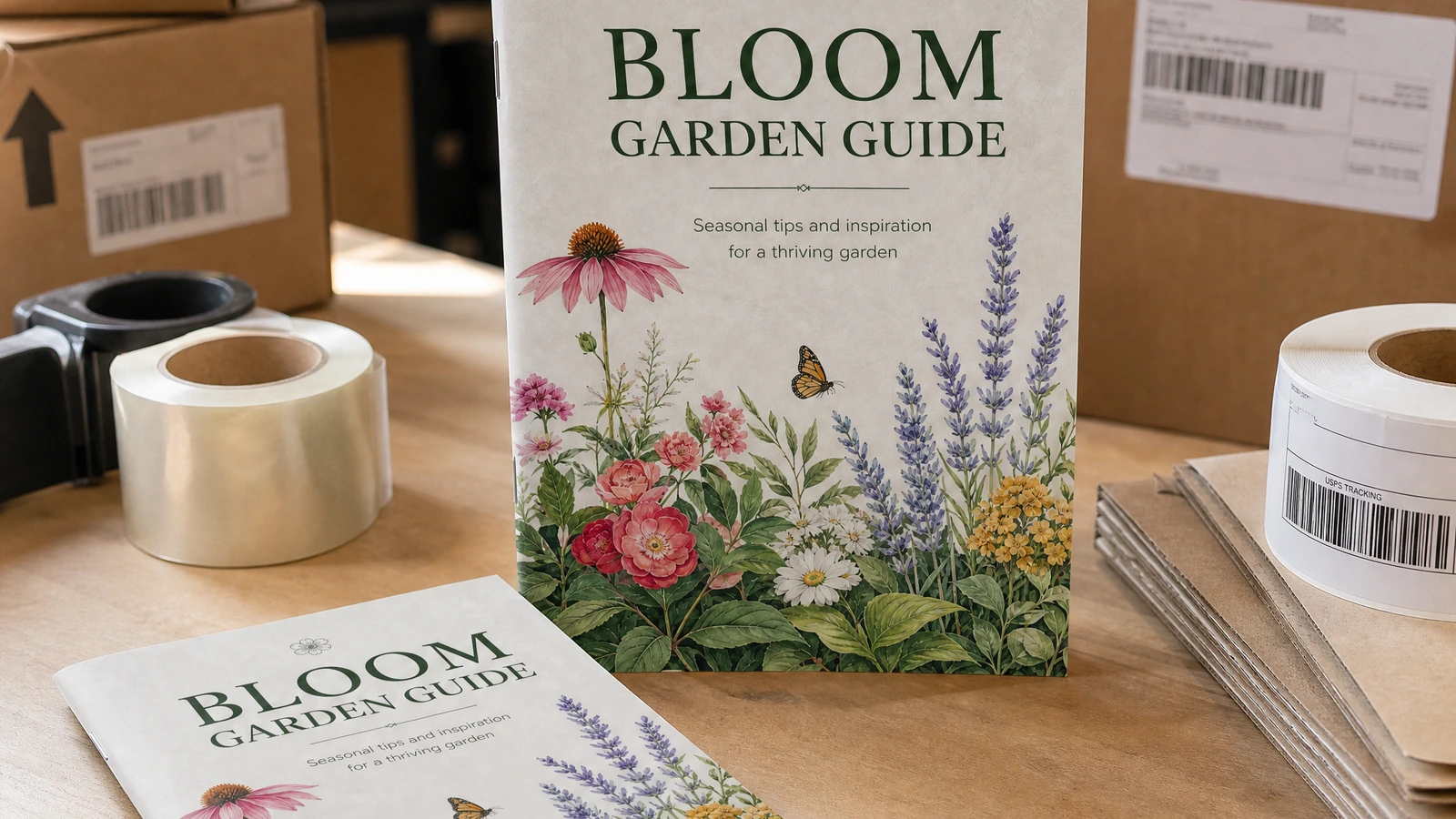
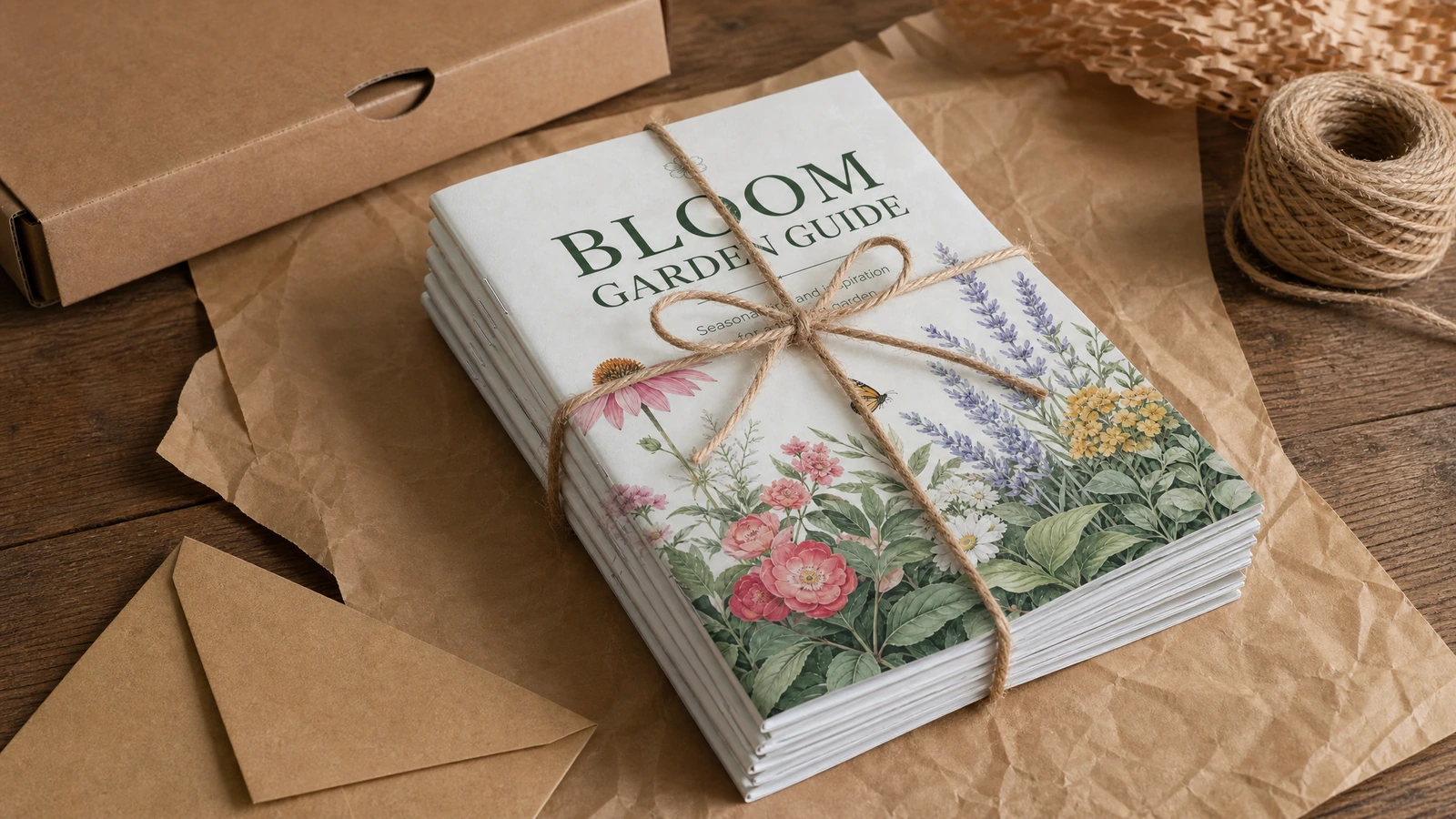
Request packaging that protects corners and prevents abrasion. Label cartons with the project name, quantity, and destination. For a time-sensitive event, separate the production deadline from the shipping deadline and retain tracking details. On arrival, inspect before distributing or mailing the booklets.
Repeat purchasing becomes easier when the approved PDF, paper choice, finish, binding, quantity, proof, and delivery notes are archived together. Keep a version identifier on the artwork so a revised catalog cannot be confused with the approved edition. If content changes frequently, ask whether digital production or staged releases reduce obsolete inventory; the best choice is determined by the project’s actual quantity, version frequency, and deadline.
What should a buyer remember? ↑
- Custom print demand has a measurable growth base. — The U.S. custom printing market was valued at $6.10 billion in 2023 and is projected to reach $12.235 billion by 2030 at about 10.5% CAGR (Grand View Research).
- Saddle stitch is a folded-sheet format, so page planning is structural. — Plan a page count divisible by four and verify the final binding limit with the selected printer.
- Proof approval controls the production clock. — Treat proof review as a formal gate and reserve time for corrections, shipping, and inspection.
- Price comparisons only work when specifications match. — Quantity, size, pages, paper, color, finish, binding, and delivery can materially change the quote.
- Sustainability claims require traceable inputs. — Use FSC or recycled-paper language only when the paper, printer, and labeling requirements are verified.
What is the next step? ↑
A successful custom saddle-stitched booklet starts with a disciplined brief: purpose, audience, size, page count, paper, binding, proof method, quality checks, packaging, and deadline. Prepare the artwork against the selected template, request a specification-based quote, approve the proof carefully, and keep the production record for the next edition.
Request a custom booklet specification review and quote for your project.




The information below is required for social login
Sign In
Create New Account