Custom printed acrylic keychains turn logos, characters, artwork, and campaign graphics into lightweight branded merchandise. A successful order depends on more than an attractive design: buyers should define the application, approve dimensions and cut lines, preflight artwork, compare complete landed-cost quotes, and establish a written quality benchmark before bulk production.
Who Uses Custom Acrylic Keychains—and for Which Scenarios?↑
These products are commonly considered by brand merchandise managers, event marketers, retail buyers, creator teams, school organizations, nonprofit fundraisers, and promotional-product distributors. Typical projects include character merchandise, convention giveaways, fan-club items, membership gifts, branded bag charms, fundraising keepsakes, and retail accessories.
The commercial context matters because the buyer is rarely purchasing an isolated decoration. A retail buyer needs a repeatable item with suitable packaging. An event manager works backward from a fixed arrival date. A creator may prioritize faithful character details, while a distributor needs specifications that can be presented clearly to an end client. The supplied industry research places custom promotional items within a broad commercial market.PPAI industry data[1]
Before requesting a price, identify the intended audience, distribution method, expected service conditions, budget framework, target arrival date, and final approver. These answers determine whether the project should emphasize visual impact, portability, retail presentation, or conservative everyday-use protection.
Where Do Acrylic Keychain Projects Go Wrong—and How Can You Reduce the Risk?↑
Problem: Buyers often begin with a PNG, social-media avatar, or complex illustration but no production brief. They may not know how transparency, small lettering, narrow lines, gradients, cut margins, hole placement, or reverse-side content will translate from a screen to a physical object.
Agitation: An unresolved detail can affect several decisions at once. Reducing the size may make text unreadable. Moving the attachment hole can change the hanging orientation. Choosing two-sided content without specifying how the reverse should read can produce an unexpected result. Comparing only headline unit prices can conceal differences in sampling, hardware, packaging, freight, taxes, and revision handling. If several stakeholders approve different files, the factory-facing version may no longer match the brand owner’s version.
Solution: Convert the creative request into a controlled procurement record. Define the application, identify non-negotiable brand elements, specify the front and back, mark transparent areas, approve the outline and hole position, select hardware and packaging, and retain one dated approval file. Treat unverified MOQ, production time, unit weight, tolerances, material grade, and test performance as quote, sampling, or testing items rather than assumed capabilities.
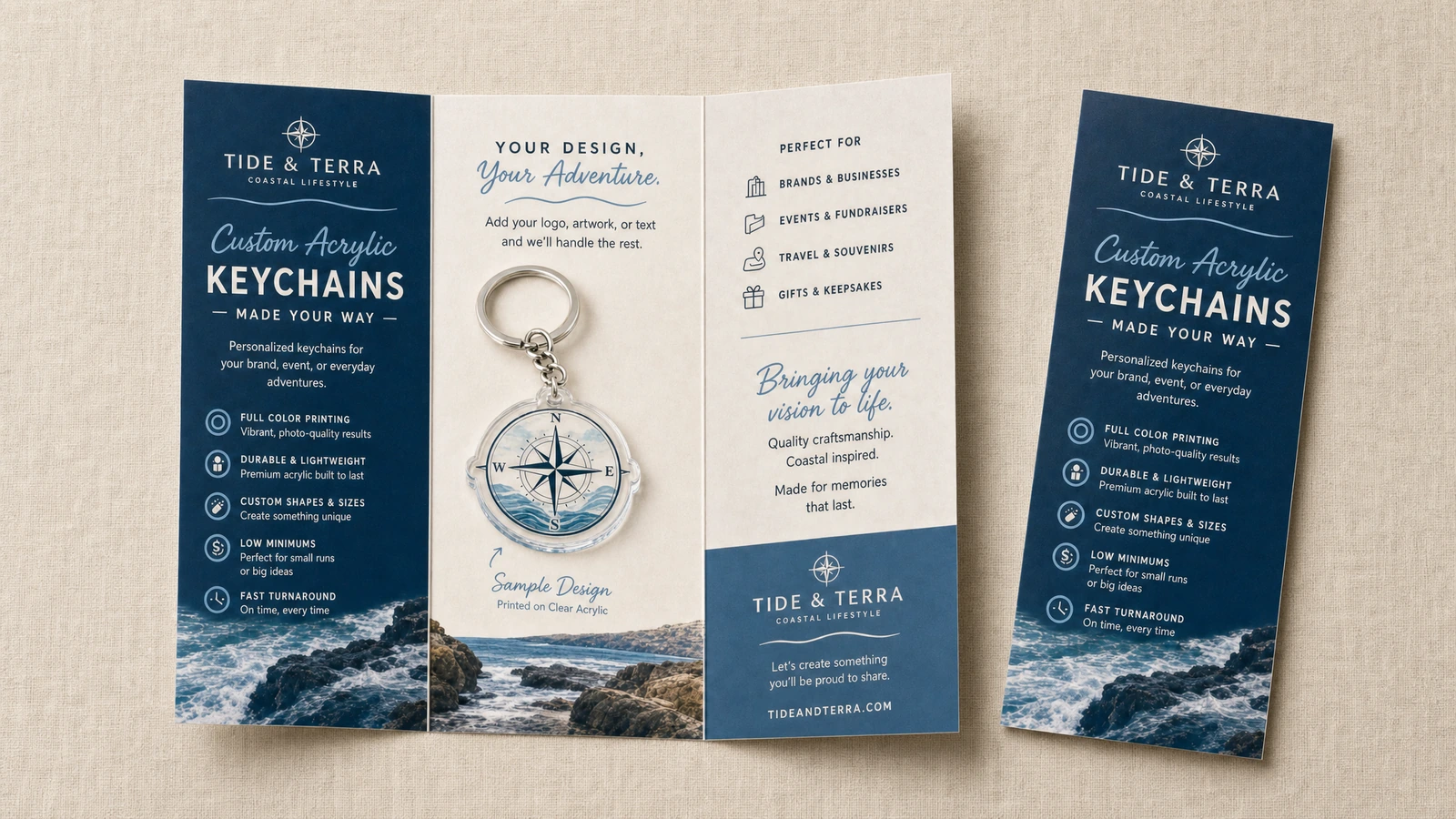
Table of Contents
What Is a Custom Printed Acrylic Keychain?↑
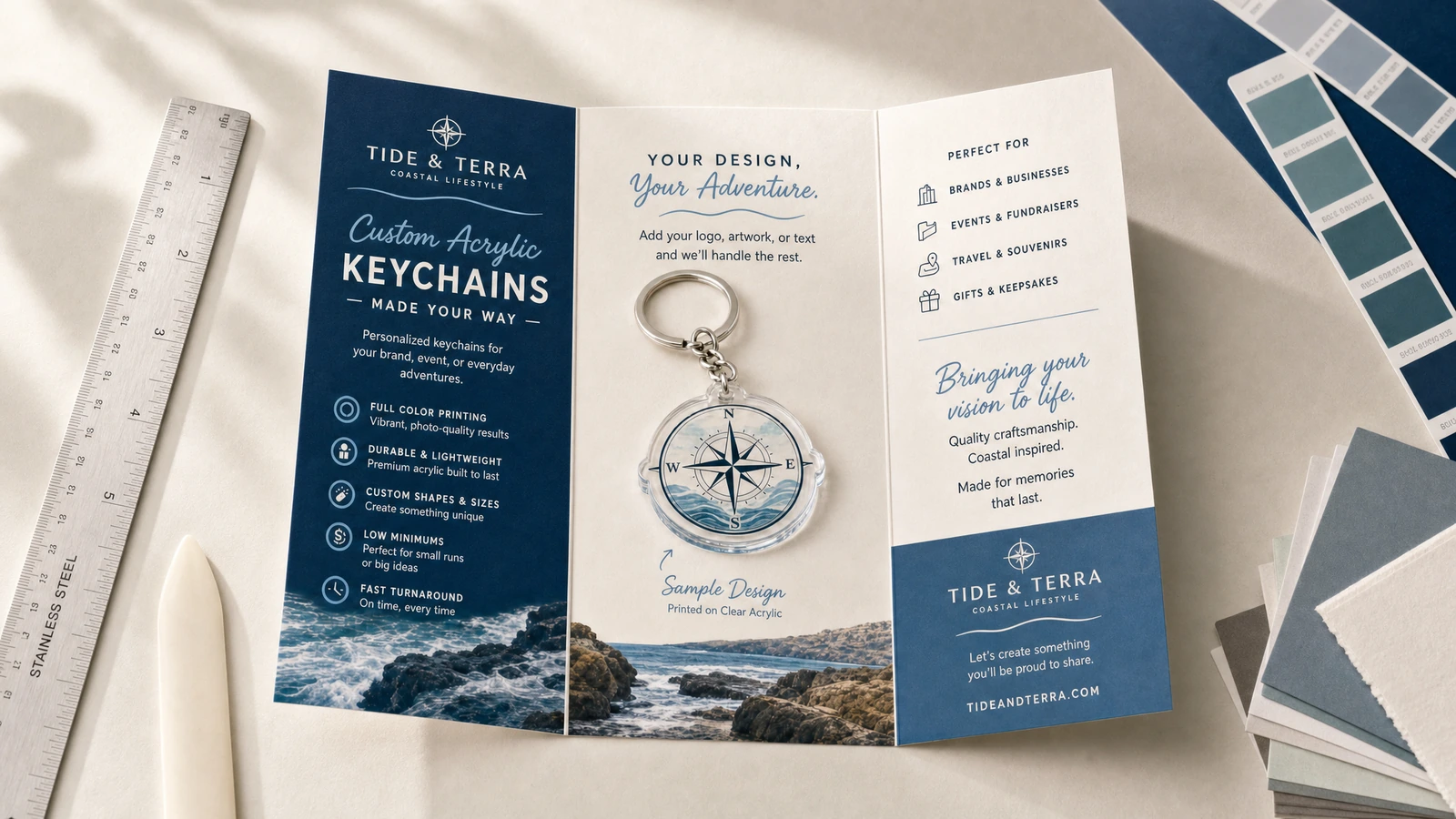
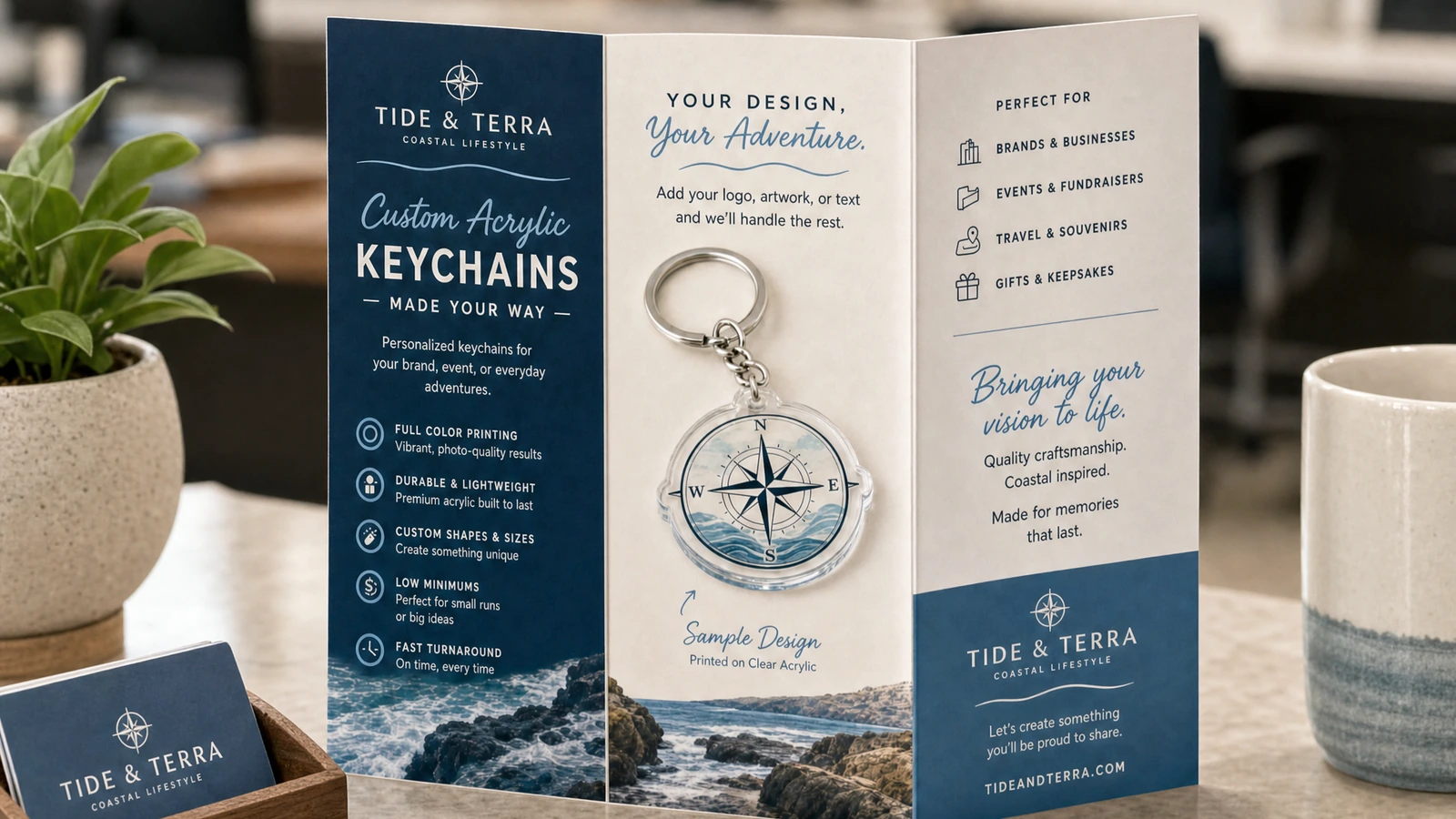
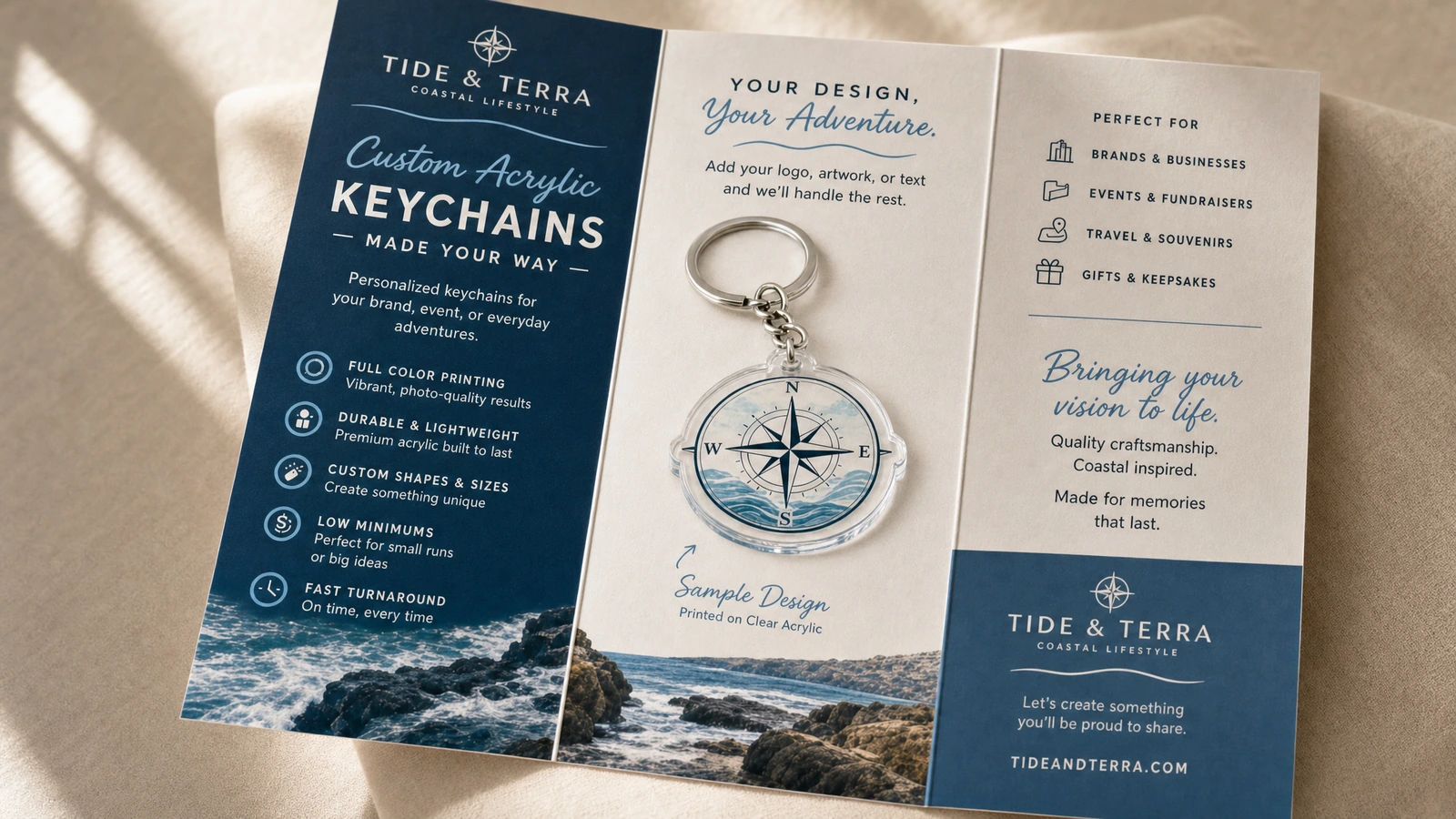
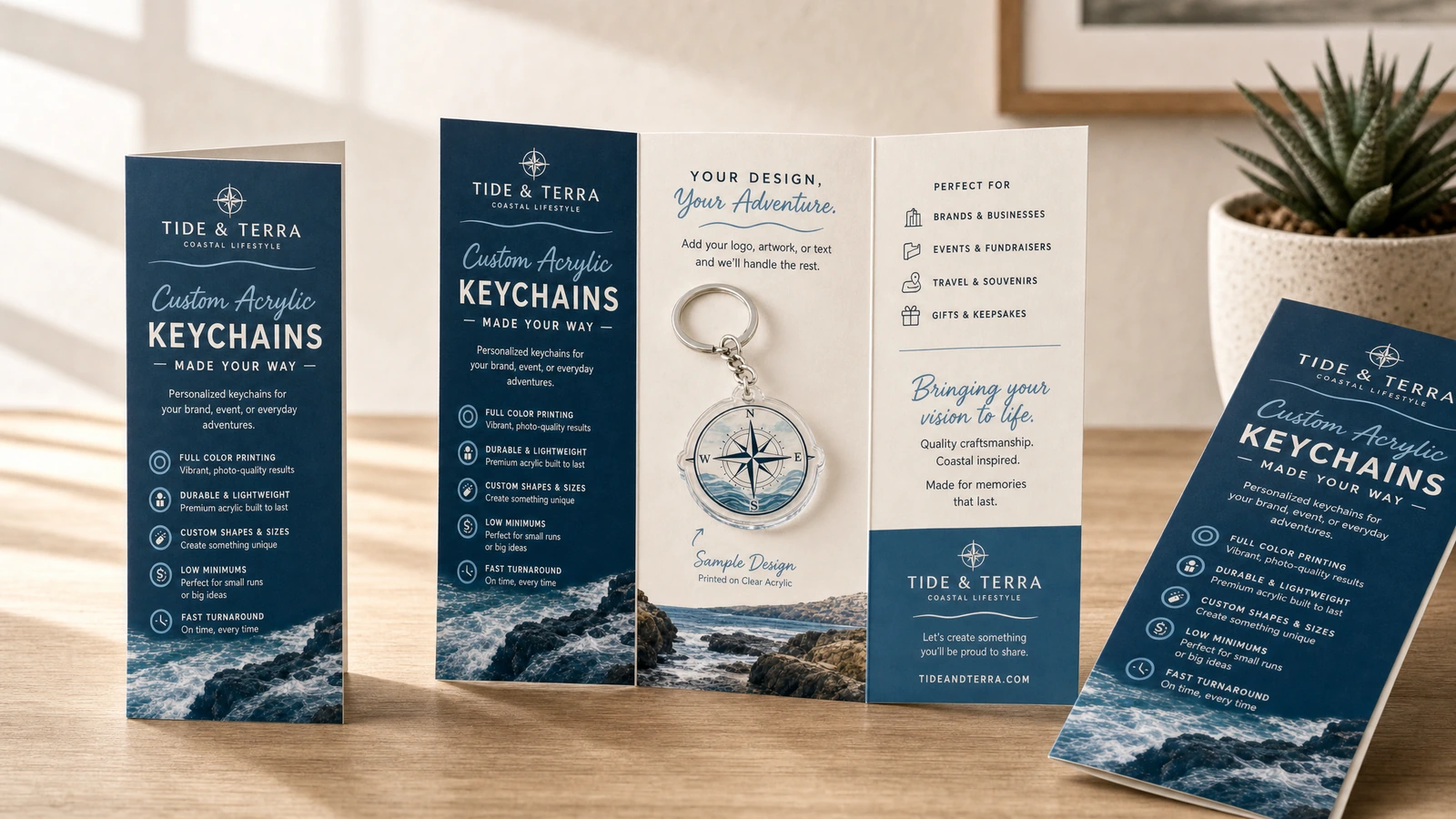
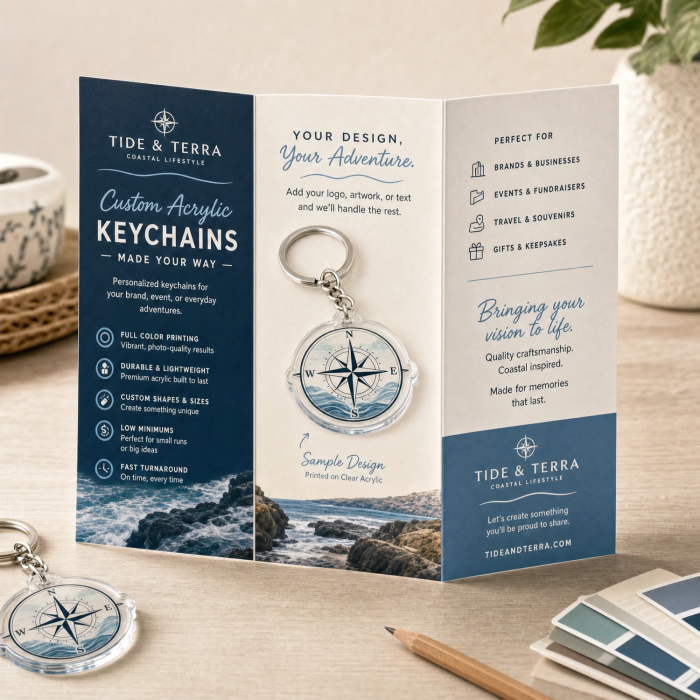
A custom printed acrylic keychain is a personalized hanging accessory made around an acrylic body, printed artwork, an attachment point, and selected connecting hardware. The product identity covered here is Custom Printed Acrylic Keychains, with provisional reference NSKU-756-01.
The acrylic component may carry a logo, illustration, text, photograph, pattern, or combined visual system. Its outer contour can follow the artwork or use a simpler geometric boundary. Information may appear on one or both sides, subject to the production method confirmed during quoting and sampling. Hardware can influence appearance, hanging direction, weight distribution, and compatibility with keys, bags, displays, or retail presentation.
Do not use the word “acrylic” as a complete material specification. A procurement record should identify the proposed sheet or resin, thickness, finish, print construction, exposed or protected decoration, and any requested compliance documentation. ASTM D788-21 is identified as a classification covering ABS and other thermoplastic materials; therefore, a generic reference to it should not be treated as proof of a particular acrylic grade or finished-keychain performance.ASTM D788-21[2]
Market references in the supplied research mention 1-inch, 1.5-inch, and 2-inch formats. These are comparison points, not confirmed available sizes for this provisional SKU. The final dimensions, thickness, printable area, hole geometry, and tolerance must be confirmed in the supplier’s quote and approved sample. Any capacity, load suitability, or number of keys carried is determined by physical dimensions, loading conditions, hardware selection, and sample validation.
How Do You Turn Artwork into a Production-Ready Order?↑
- Define the commercial use. State whether the item is intended for retail, an event, a giveaway, a membership package, a school campaign, or creator merchandise. Include the requested arrival date and the person authorized to approve changes.
- Prepare the best available artwork. Supply the source file when possible. If only a raster image is available, provide the highest-resolution version without watermarks or unnecessary compression. Label front artwork, back artwork, transparent regions, background elements, and content that must not be trimmed.
- Identify protected brand details. Mark required logos, approved colors, copyright lines, character features, spelling, and orientation. Do not rely on a verbal instruction such as “make the back the same” when mirroring or reading direction could change the result.
- Request feasibility feedback. Ask the supplier to flag small text, thin lines, narrow projections, isolated transparent details, gradients, and semi-transparent effects before pricing is finalized. These elements should be assessed through artwork review or sampling rather than promised without evidence.
- Approve a dimensioned proof. The proof should show overall dimensions, cut contour, safe area, front and back, hole position, print orientation, hardware, and packaging. Record the approval date and version identifier.
- Use a physical sample when risk justifies it. A sample is especially valuable for licensed artwork, color-sensitive branding, small type, unfamiliar hardware, retail presentation, or a design whose balance cannot be judged confidently on screen.
- Freeze the production version. After approval, changes to artwork, quantity, attachment, packaging, destination, or delivery requirements should trigger a written review of price and schedule impact.
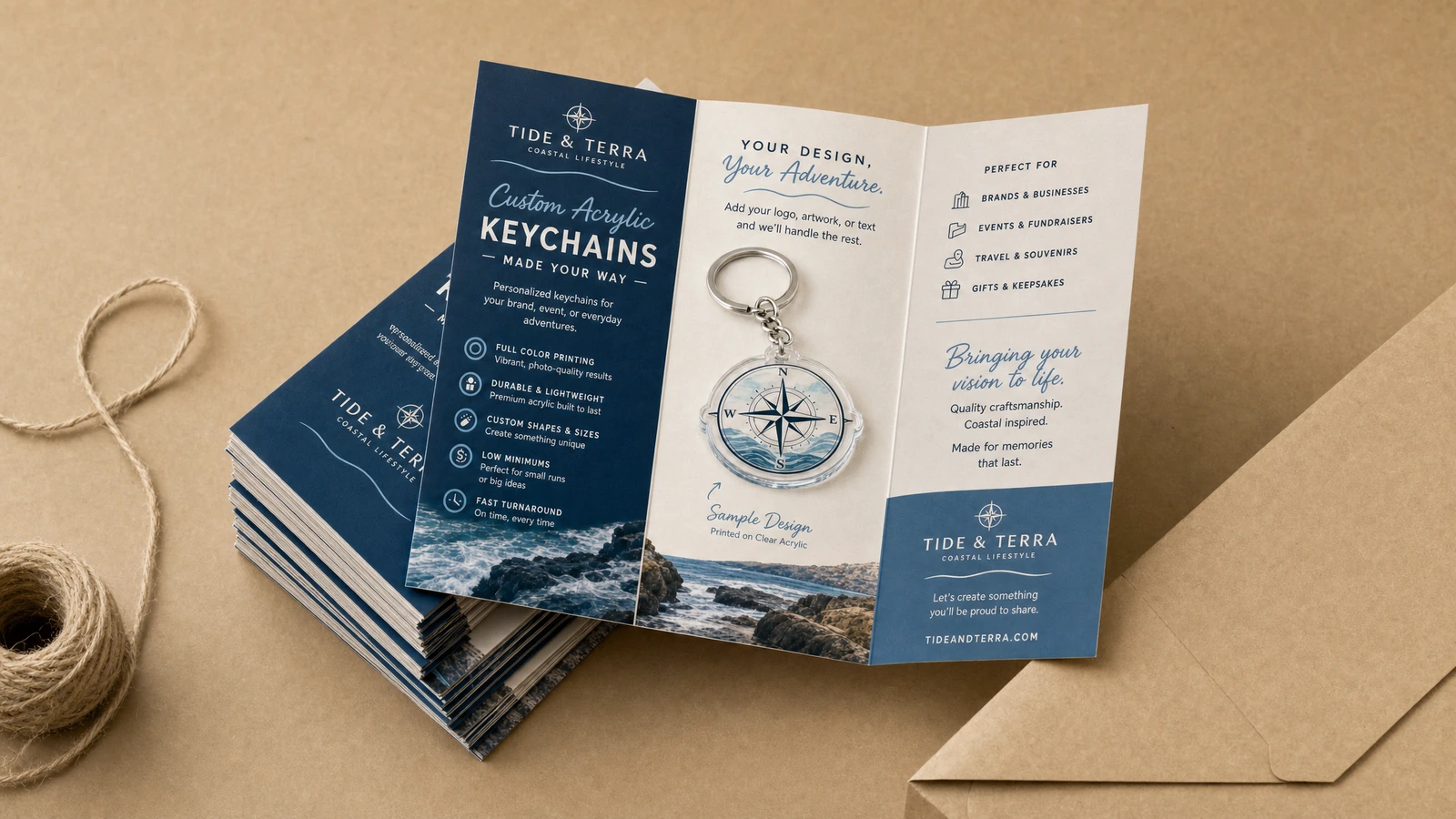
A disciplined workflow separates confirmed information from open items. For example, “front artwork approved” is a confirmed status, while “color will match the monitor” is not an acceptance criterion. Replace subjective language with an approved reference, sample, or agreed inspection method.
Which Size, Print Layout, Surface, and Attachment Should You Choose?↑
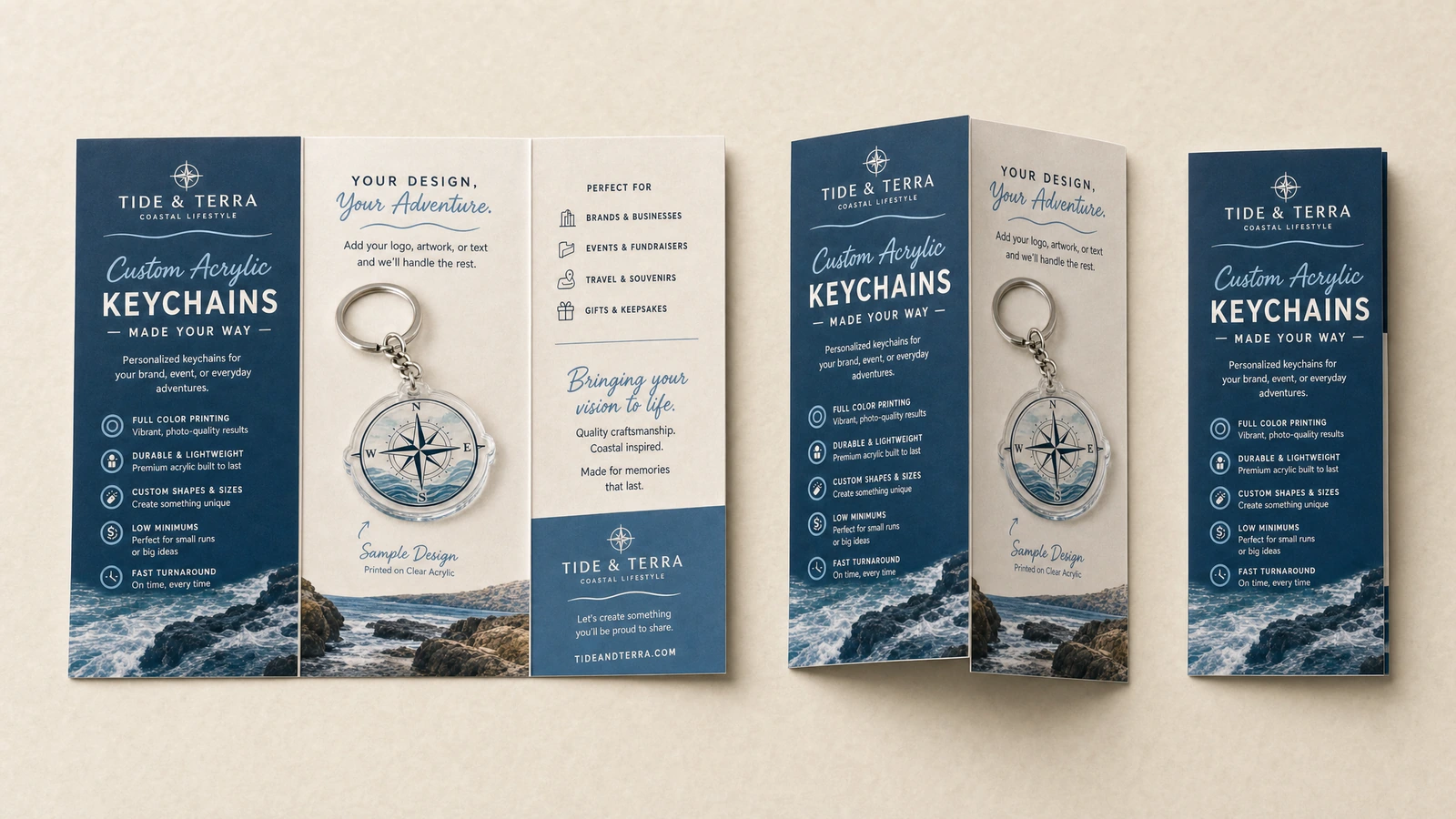
The right configuration follows the use case. A compact design may suit a subtle bag accessory but can compromise lettering. A larger silhouette may preserve detail but change portability and perceived weight. A decorative attachment may strengthen the theme, while a conventional ring may be easier for a broad promotional audience. None of these choices should be made independently of the artwork and final use.
| Decision |
Evaluate |
Approval Evidence |
Common Risk |
| Overall size |
Artwork detail, text, portability, display impact |
Dimensioned proof or physical sample |
Small type or an unexpectedly large accessory |
| Outer contour |
Narrow projections, corners, balance, safe margin |
Approved cut-line overlay |
Fragile-looking areas or unintended cropping |
| One- or two-sided layout |
Reverse reading direction and information hierarchy |
Separate front-and-back proof |
Mirrored text or an incorrect reverse image |
| Surface construction |
Desired appearance and whether decoration is exposed |
Named construction plus sample review |
Assuming scratch or fade resistance without testing |
| Attachment and hole |
Hanging direction, balance, intended object |
Hardware image, dimensions, and assembled sample |
Tilting, poor orientation, or unsuitable connection |
| Packaging |
Bulk distribution, gifting, barcode, retail display |
Packing specification and packed sample |
Scuffing, mixed variants, or added repacking labor |
The table is a comparison framework, not a list of confirmed factory options. Each requested construction, finish, attachment, and packaging method remains subject to quotation and sample approval.
Supplier positioning also differs. Zap Creatives is presented in the supplied research as a broad custom-keychain provider with acrylic and other options, so buyers should verify the exact acrylic construction rather than infer it from the wider catalog.Zap Creatives[3] Vograce presents keychains across several material categories, which makes material-specific quote comparison important.Vograce[4] Sticker Mule operates across a broad promotional-product catalog, so its convenience should be compared with acrylic-specific configuration and approval needs.Sticker Mule[5]
Do not turn competitor claims into requirements without confirming relevance. Instead, issue the same brief to every candidate and compare equivalent dimensions, artwork treatment, hardware, packaging, quantity, sampling, freight basis, tax handling, production assumptions, and delivery checkpoints.
How Should Samples and Bulk Quality Be Evaluated?↑
A sample is useful only when it is tied to explicit acceptance criteria. Before approval, inspect the overall dimensions, cut contour, printed position, front-and-back orientation, text readability, transparent zones, hole placement, edge appearance, attachment assembly, and packaging. Photograph the accepted sample under consistent lighting and retain the approved digital file beside it.
Visual comparison should recognize that screens, lighting, substrates, print methods, and surface constructions affect perceived color. If brand color is critical, ask what reference and comparison method will be used. Do not convert an untested visual expectation into a claim of exact color matching.
Durability concerns should be translated into defined tests. The supplied review material reports scratches, perceived fragility, cracking, fading, and hardware concerns, but those observations do not establish performance for this product. Ask the supplier to state the proposed material and construction, then agree on a relevant test method, sample count, acceptance threshold, and reporting format. Until results exist, scratch resistance, drop performance, weather exposure, chemical resistance, wash resistance, and service life remain unverified.
For bulk inspection, use the approved sample or proof as the reference. Check a documented selection across cartons rather than viewing only the top layer. Record quantity, variant mix, visible print position, contour, hole placement, hardware assembly, protective-film status when applicable, packaging, and labels. Any numerical tolerance or sampling plan must be agreed in writing; none is verified for NSKU-756-01 in the supplied factory data.
Safety and compliance should be market- and use-specific. Request documents that apply to the actual material, coating, hardware, packaging, intended user, and destination. A logo on a certificate, an unrelated medical-system certification, or a generic “eco-friendly” label does not establish finished-product compliance. The FTC’s promotional-items guidance is a useful reminder that marketing statements should be supportable rather than broader than the available evidence.FTC promotional-item guidance[6]
What Should a Comparable Quote and Approval Record Include?↑
A useful quote states what is included, excluded, and still awaiting confirmation. Send every candidate the same request and ask for a line-by-line response covering:
- Product identity and artwork version
- Finished dimensions, thickness, contour, and printable area
- Front and back construction
- Material description and requested documentation
- Hole location and attachment hardware
- Quantity tiers and variant allocation
- Sampling or setup charges, if applicable
- Packaging, labeling, barcode, and retail-display requirements
- Freight basis, destination, insurance, duties, and tax treatment
- Proof, sample, production, inspection, and dispatch checkpoints
- Change-control procedure after approval
- Remedy process for shortages, damage, or nonconforming goods
MOQ, production time, unit weight, available thicknesses, dimensional tolerances, packaging quantities, price, and freight are not present in the verified factory data. They must therefore be supplied in the quotation or validated through sampling. Avoid substituting competitor numbers, review anecdotes, or generic market ranges for the actual offer.
Keep a single approval log containing the artwork file name, revision date, approver, proof, sample images, specification sheet, quotation, packaging reference, destination, and agreed changes. When a repeat order is placed, revalidate any element that may have changed instead of assuming that a previous result automatically applies.
This record supports both receiving inspection and repeat purchasing. It also reduces the chance that an old file, different attachment, or outdated address will be used during replenishment.
Key Takeaways for Lower-Risk Procurement↑
- The supplied industry report frames promotional products as a large commercial category. — $217.9 billion in reported 2022 US industry activity (Source[7]).
- Moderate-difficulty search terms can remain practical targets for focused commercial content. — KD scores from 15 to 30 in the supplied benchmark framework (Source[8]).
- Established custom-product domains make specification-level comparison more useful than generic supplier comparison. — Multiple recognized domains appear in the supplied competitive landscape (Source[9]).
- Artwork approval should cover more than the printed image. — Dimensions, contour, safe area, front, back, hole position, hardware, and packaging belong in the same controlled record.
- Any capacity or load suitability must be validated in the intended configuration. — The result depends on physical dimensions, loading state, attachment choice, and sample testing.
- A complete landed-cost comparison is safer than a headline unit-price comparison. — Include sampling, setup, hardware, packaging, freight, insurance, duties, taxes, and revision impact where applicable.
Ready to Build a Clearer Acrylic Keychain Brief?↑
Custom printed acrylic keychains can serve retail, event, creator, fundraising, and promotional programs, but dependable procurement starts with controlled information. Define the application, prepare the artwork, document the configuration, compare complete quotes, approve a verifiable reference, and inspect against that reference. This approach replaces unsupported assumptions with decisions that designers, buyers, approvers, and suppliers can evaluate consistently.
Send your artwork, intended use, quantity, packaging needs, destination, and target arrival date to request a specification-led quote for provisional SKU NSKU-756-01.




The information below is required for social login
Sign In
Create New Account