SEO title: Custom Flat Fridge Magnets for Brands, Gifts & Events
Meta description: Plan custom flat fridge magnets for promotions, photos and events. Compare materials, prepare artwork and define sample checks before requesting a quote.
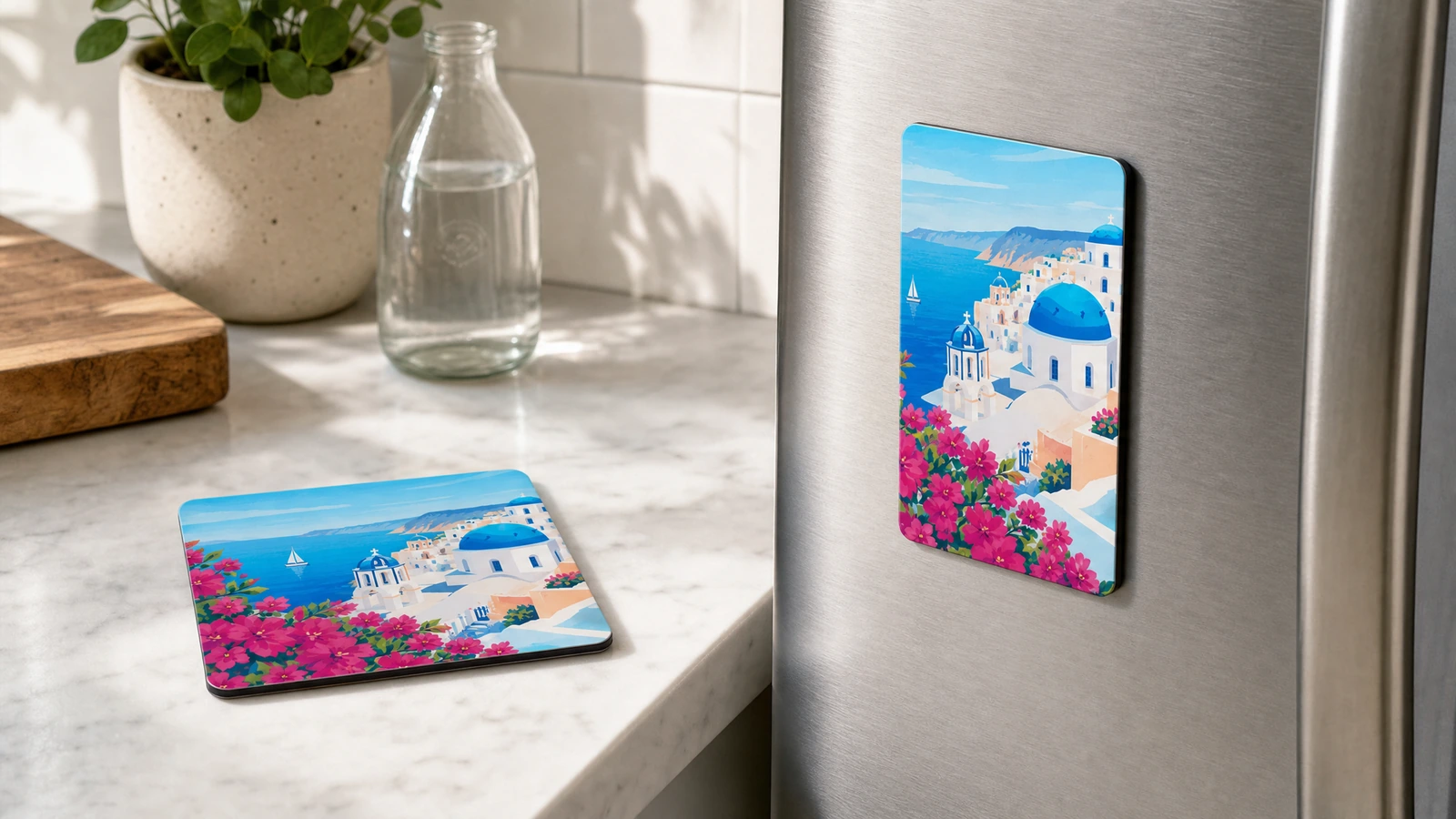
Custom flat fridge magnets combine printed artwork with a flexible magnetic backing for display on compatible surfaces. For a successful order, match the design to its viewing size, confirm the surface accepts magnets, and approve a physical sample for print quality, flatness and intended holding performance.
Product: Custom Printed Flat Flexible Fridge Magnets
Category: Custom Magnets > Custom Flat Fridge Magnets
Provisional reference: NSKU-738-01
Content reference date: September 21, 2026
Put your message where customers and guests can find it ↑
A local service business needs contact details that remain easy to find. A wedding planner needs a date guests can read without searching through messages. An illustrator needs merchandise that reproduces artwork clearly. These applications share a practical requirement: the printed information must work at its actual display size.
- Business promotions: Prioritize the business name, service and preferred contact method rather than squeezing an entire brochure onto a small magnet.
- Events and celebrations: Give the date and names visual priority; keep supporting details separate when space is limited.
- Photo gifts and souvenirs: Choose a crop that preserves faces, landmarks or other meaningful details.
- Creator merchandise: Evaluate each design separately for narrow cut shapes, small lettering and consistency across a collection.
Avoid a giveaway that disappoints before it gets displayed ↑
A magnet can look convincing in a screen preview yet arrive with unreadable text, an unexpected crop or a backing that does not suit the intended surface. For a dated event, discovering those problems after delivery leaves little room to correct them. For a business, an unusable giveaway means the message never reaches its intended display location.
The solution is a specification-led order: define the surface, artwork, dimensions and intended use before comparing prices. Then separate what a digital proof can establish from what requires a physical sample. This page provides that purchasing framework; it does not claim unverified production capacity, certifications or tested performance for this product.
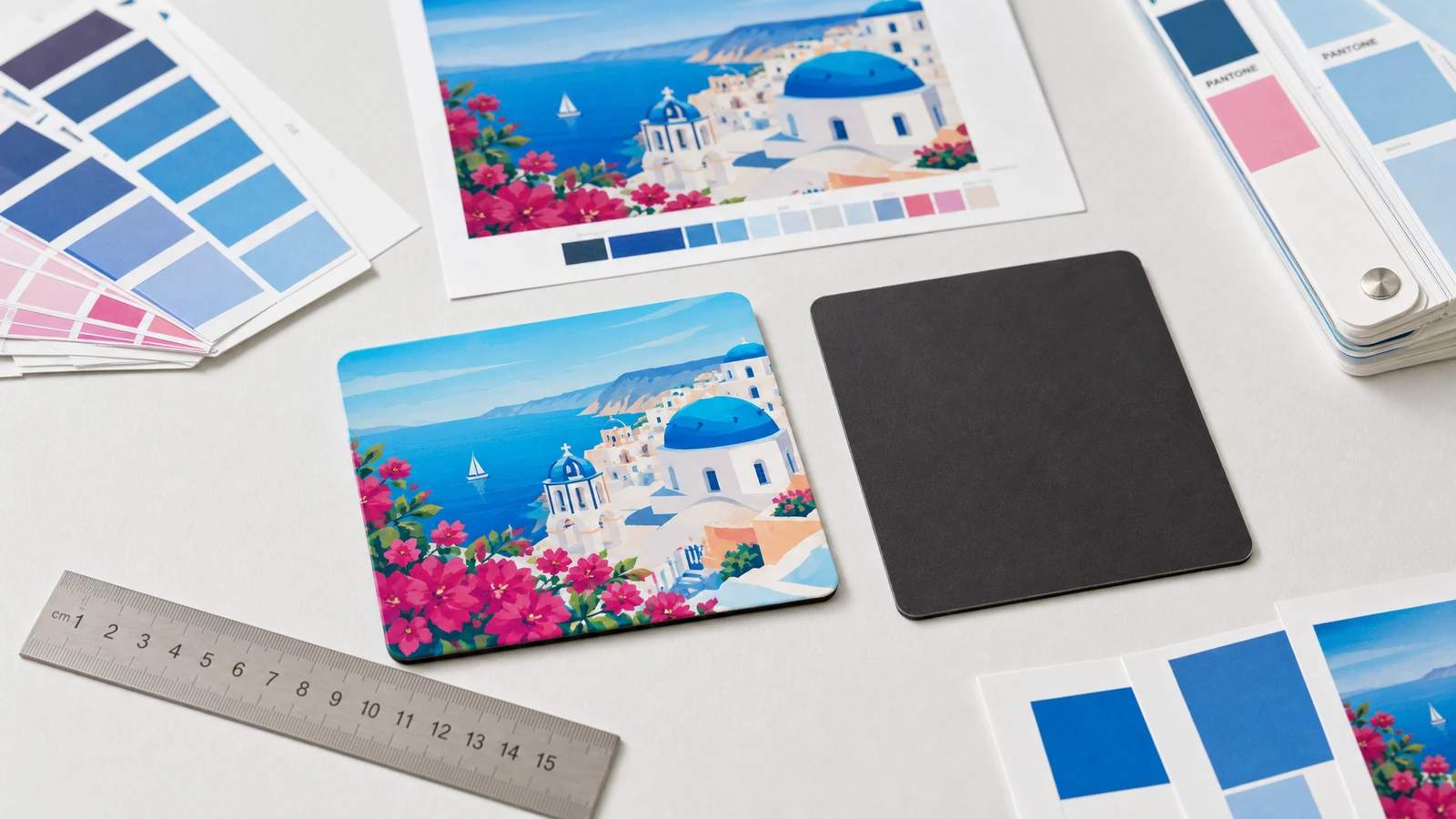
Explore the buying guide
What makes a flat flexible fridge magnet different? ↑
This product belongs to the printed flexible-sheet category, not rigid button magnets, acrylic ornaments or raised resin souvenirs. The design is carried on a flat printed face, with flexible magnetic material behind it. The exact face material, protective finish and magnetic-sheet specification for this reference remain subject to quotation and sample approval.
Layer descriptions matter because magnetic backing thickness and finished thickness are not interchangeable. A printed face and protective layer contribute to the finished structure without establishing magnetic performance. A manufacturer's component breakdown[1] illustrates this distinction; its specifications belong to that manufacturer's products, not this provisional reference.
A useful specification therefore identifies the magnetic layer separately from the printing and finish. Descriptions such as “premium,” “thick” or “strong” are not substitutes for an agreed construction and a sample checked in the intended application.
How do you choose a size that keeps the message readable? ↑
Start with the content rather than the lowest-priced footprint. A simple symbol requires a different layout from a calendar, photograph or contact card. Print a paper mockup at final size and examine it at the distance from which someone will normally view the refrigerator or locker.
| Illustrative layout | Size example, inches | Main approval question |
|---|
| Compact artwork or photo | 2 × 2 | Does the crop preserve the essential subject? |
| Business contact card | 3.5 × 2 | Can the name and preferred contact detail be read easily? |
| Square souvenir design | 3 × 3 | Are small captions still useful at final size? |
| Photo-led or information-led layout | 4 × 6 | Is the additional space improving clarity rather than adding clutter? |
These are planning examples drawn from the supplied market material, not confirmed available sizes for this product. Specify finished width and height in a consistent unit, and request confirmation of feasible dimensions and cutting tolerances before approving artwork.
For a custom outline, review the usable printed area rather than only the bounding rectangle. Narrow sections can leave little room for lettering or contact with the display surface. If the design includes a QR code, verify its destination and test scanning from a printed sample at the proposed size.
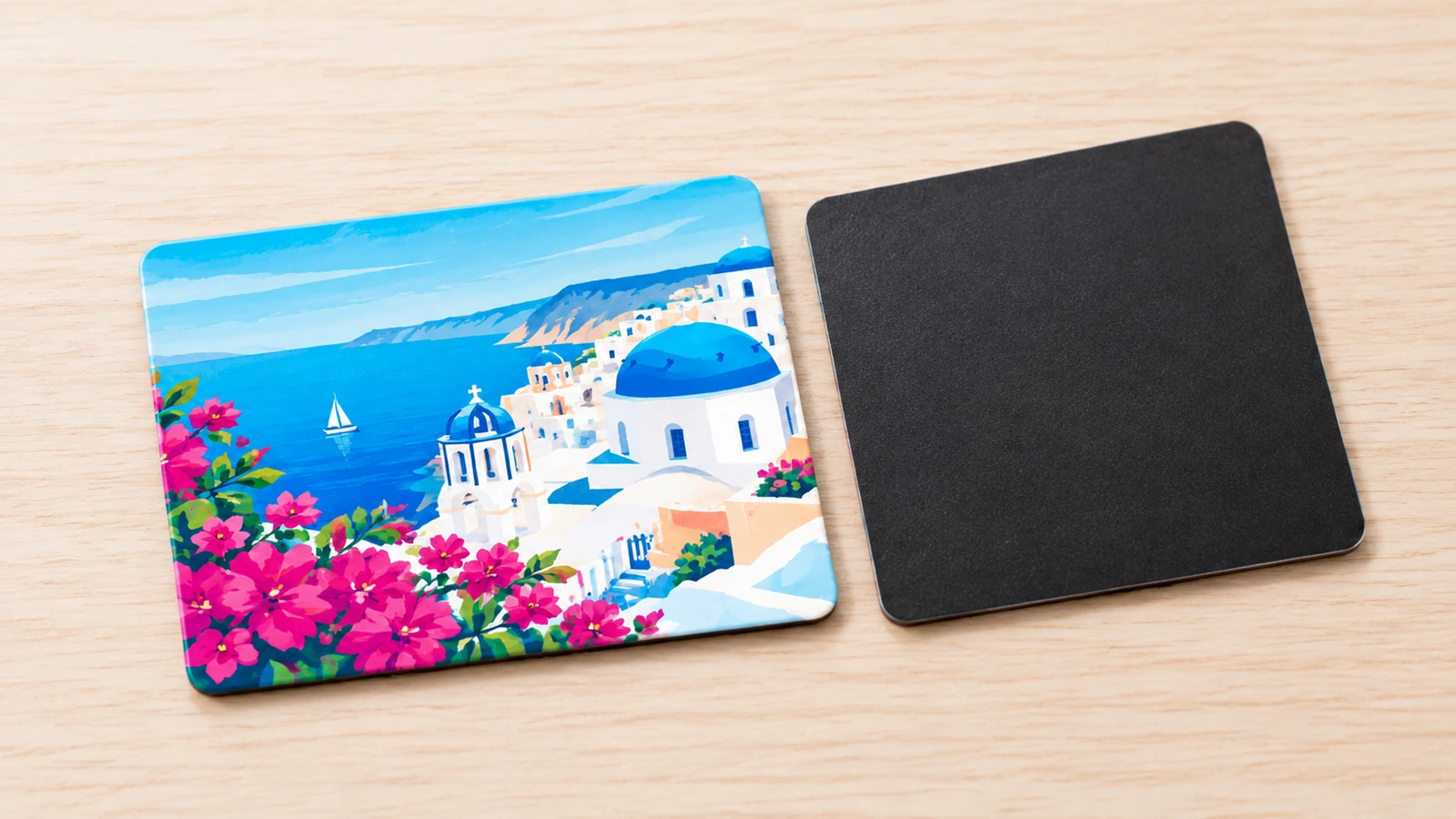
Which surface, finish and backing should you specify? ↑
Check the intended appliance before ordering. Stainless steel is not a universal compatibility label: magnetic response varies with the material and finish. Whirlpool's appliance guidance[2] explains why some refrigerator surfaces accept magnets while others do not. Test the exact display location with a known magnet, then evaluate the proposed product sample there.
Specify the magnetic backing, not a generic fastener
The relevant attachment method for this product identity is flexible magnetic backing. Pin backs, clips, suction fittings and separate rigid magnet inserts are not confirmed options. If the intended surface is unsuitable, treat a different attachment method as a separate product decision rather than assuming an adhesive workaround is included.
Review the printed face and protective finish together
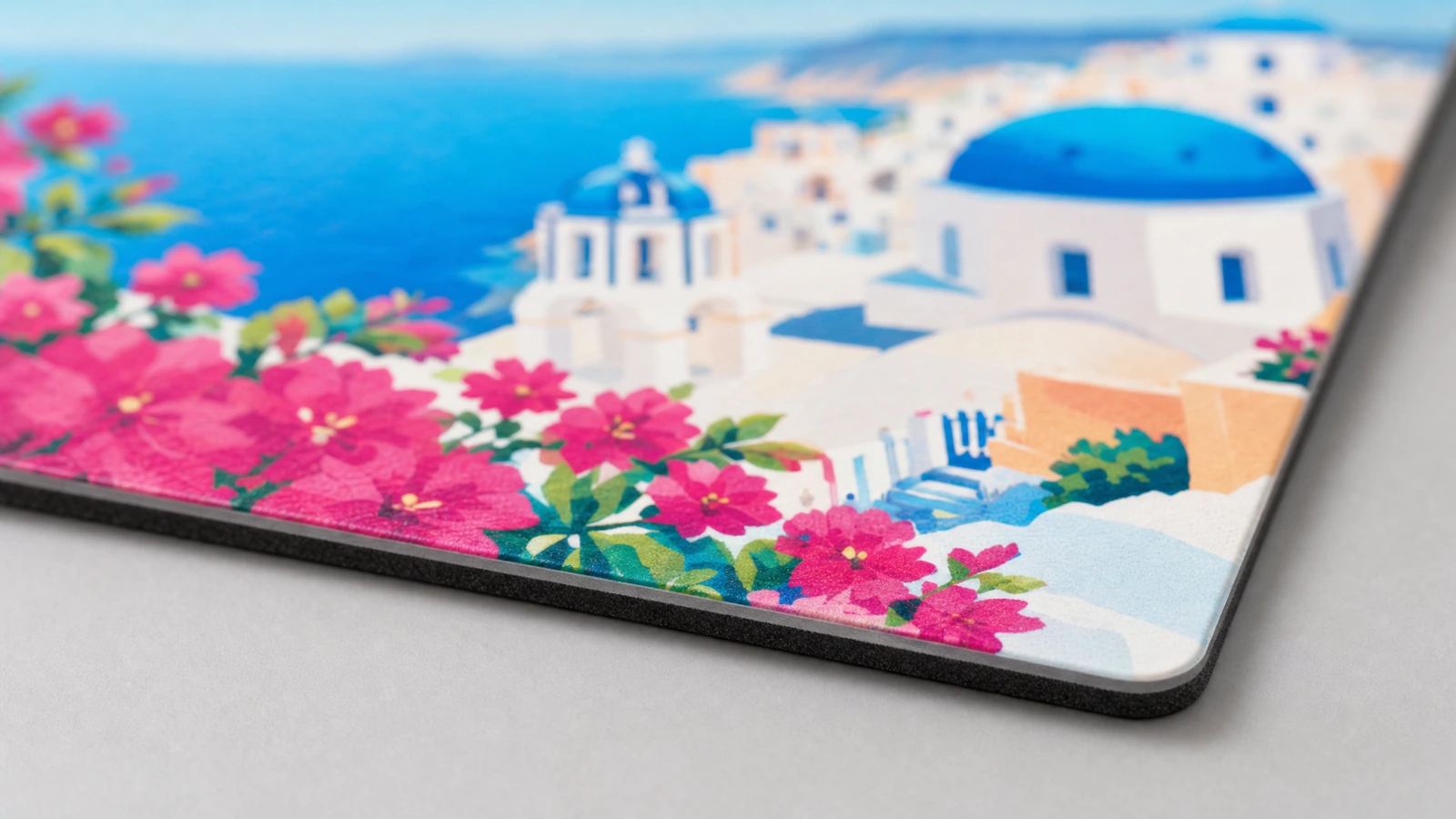
The supplied research describes paper and vinyl print faces, with protective finishes used by different suppliers. Ask which construction is proposed and what care conditions it supports. Gloss and matte appearances should be judged from samples, particularly when reflections could interfere with small text or photographs.
Water resistance is not the same as permission to soak the product. For example, Banners.com's care guidance[3] distinguishes protected everyday use from submersion. This product has no supplied water-resistance test result, so splash exposure, cleaning and edge protection remain sample-validation items.
How should artwork be prepared before approval? ↑
Supply the original artwork rather than a screenshot of a preview whenever possible. The research identifies 300 ppi at final size as a common preparation target for raster images, not a guaranteed acceptance specification for this order. Have the actual file checked against the selected printing process and final dimensions.
- Confirm the finished outline. Separate the intended cut boundary from the artwork so the production team can identify each clearly.
- Use the assigned template. Obtain the required bleed and safe-area instructions; do not borrow measurements from a different supplier's template.
- Review critical content. Check names, dates, contact information, spelling, image crops and any QR destination.
- Clarify color expectations. Confirm the requested color workflow and identify brand colors or photographs that need special attention.
- Approve a specific file version. Keep the approved proof identifiable so later edits cannot be mistaken for the production file.
A digital proof is useful for layout, content and cut-position review. It cannot establish the feel of the finish, magnetic holding performance or exact appearance of printed color. If those factors determine acceptance, request a physical sample and document what it must demonstrate.
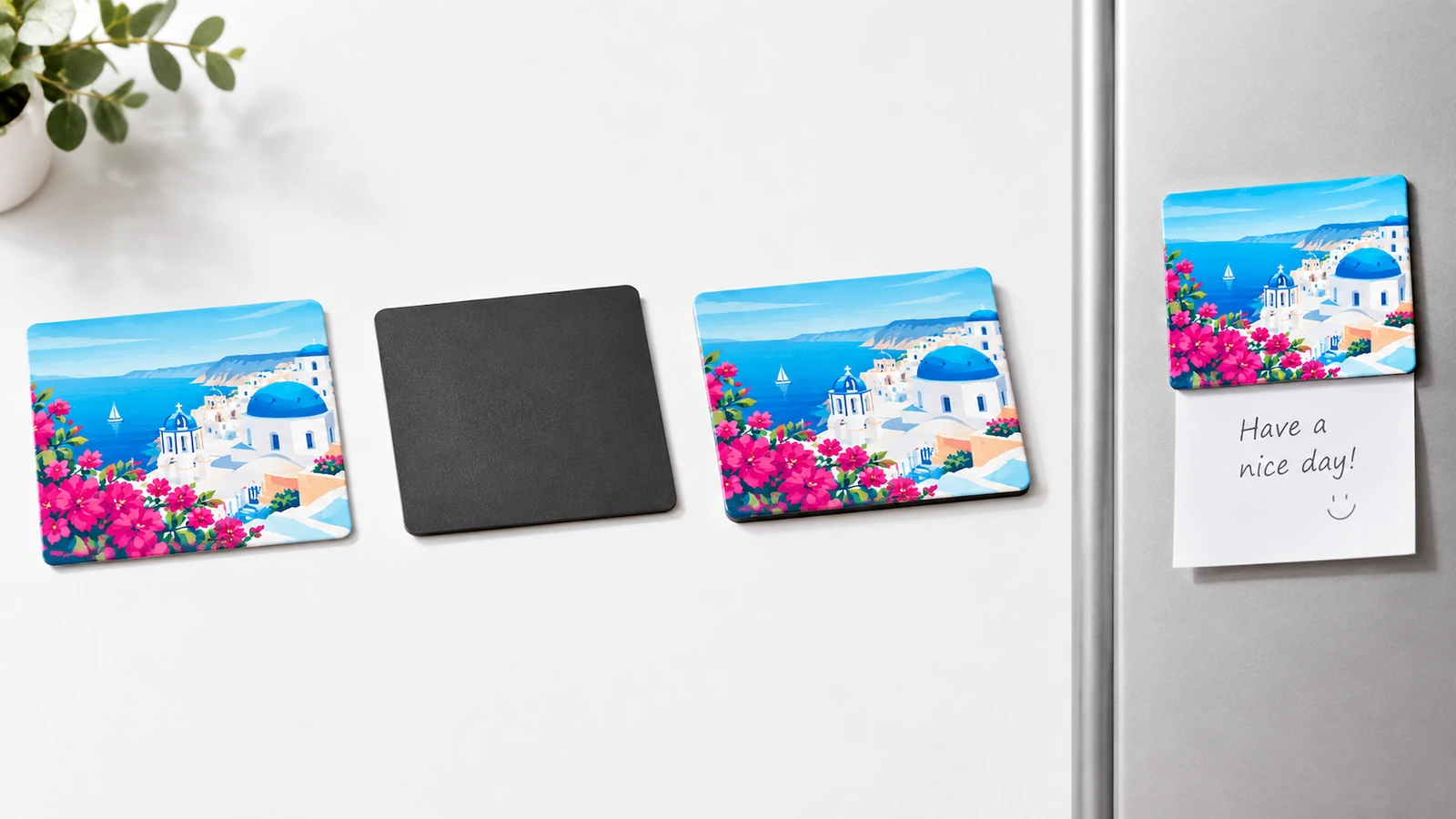
Which production checkpoints should the order define? ↑
The research describes printing, protective finishing, bonding to magnetic material and cutting as common operations. Their sequence depends on the construction and whether magnetic sheet arrives ready for conversion. This is a general process description, not evidence of a particular factory's equipment or production method.
For purchasing purposes, link each stage to an approval record:
- Before printing: Confirm the artwork version, dimensions, material description and agreed color reference.
- Before committing to the run: Establish whether a physical sample is required, what it costs and which characteristics it represents.
- Before dispatch: Review the agreed inspection evidence, design quantities and packing requirements.
Keep proof preparation, sampling, production and transit separate in the schedule. A production estimate is not an arrival commitment, and the start condition should be explicit: artwork approval, payment, material confirmation or another agreed event. No product-specific MOQ, production time or unit weight has been provided; each remains a quotation item.
For repeat designs, confirm whether the quotation covers identical construction or a proposed substitution. A visually similar face can conceal a changed backing or finish. Record any substitution before approval rather than discovering it when comparing deliveries.
How can sample checks become clear acceptance criteria? ↑
“Looks good” is too vague to resolve a disagreement after delivery. Agree on the characteristics to inspect, the checking conditions and the response to a failure. Keep the approved physical sample as the reference where appearance and handling matter.
| Check | Proposed verification method | Record before approval |
|---|
| Size and cut position | Measure the finished piece and compare its outline with the approved proof. | Dimensions, agreed tolerances and any crop variation. |
| Print and readability | Review lettering, image detail and color against the agreed reference. | Acceptable appearance and any approved limitations. |
| Flatness and bonding | Inspect for curling, lifted corners and separation between layers. | Sample condition and agreed rejection criteria. |
| Magnetic performance | Test the finished sample on the intended surface under the intended load. | Surface, loading arrangement, observation period and result. |
| Cleaning and finish | Evaluate the proposed cleaning method on the sample. | Permitted care method and observed changes. |
| Back surface | Inspect for roughness and trapped debris before placement. | Surface condition and handling instructions. |
These are proposed purchasing checks, not completed tests or a certified protocol. Sampling quantity, observation periods and pass/fail limits must be agreed for the order. No numerical acceptance tolerance or tested performance is available for this reference.
Holding capacity, paper count and any supported load depend on the physical dimensions, loading condition and sample validation. A material pull rating should not be converted into a promise about how many sheets a finished design can hold. Test decorative self-support separately from holding additional items.
Do not approve “scratch-free,” “fade-proof” or a stated service life without relevant evidence. Cleaning the display surface and backing is a sensible handling step, but it does not create a no-damage guarantee. Likewise, a brief sample inspection cannot establish years of durability.
How should packing and delivery protect the approved result? ↑
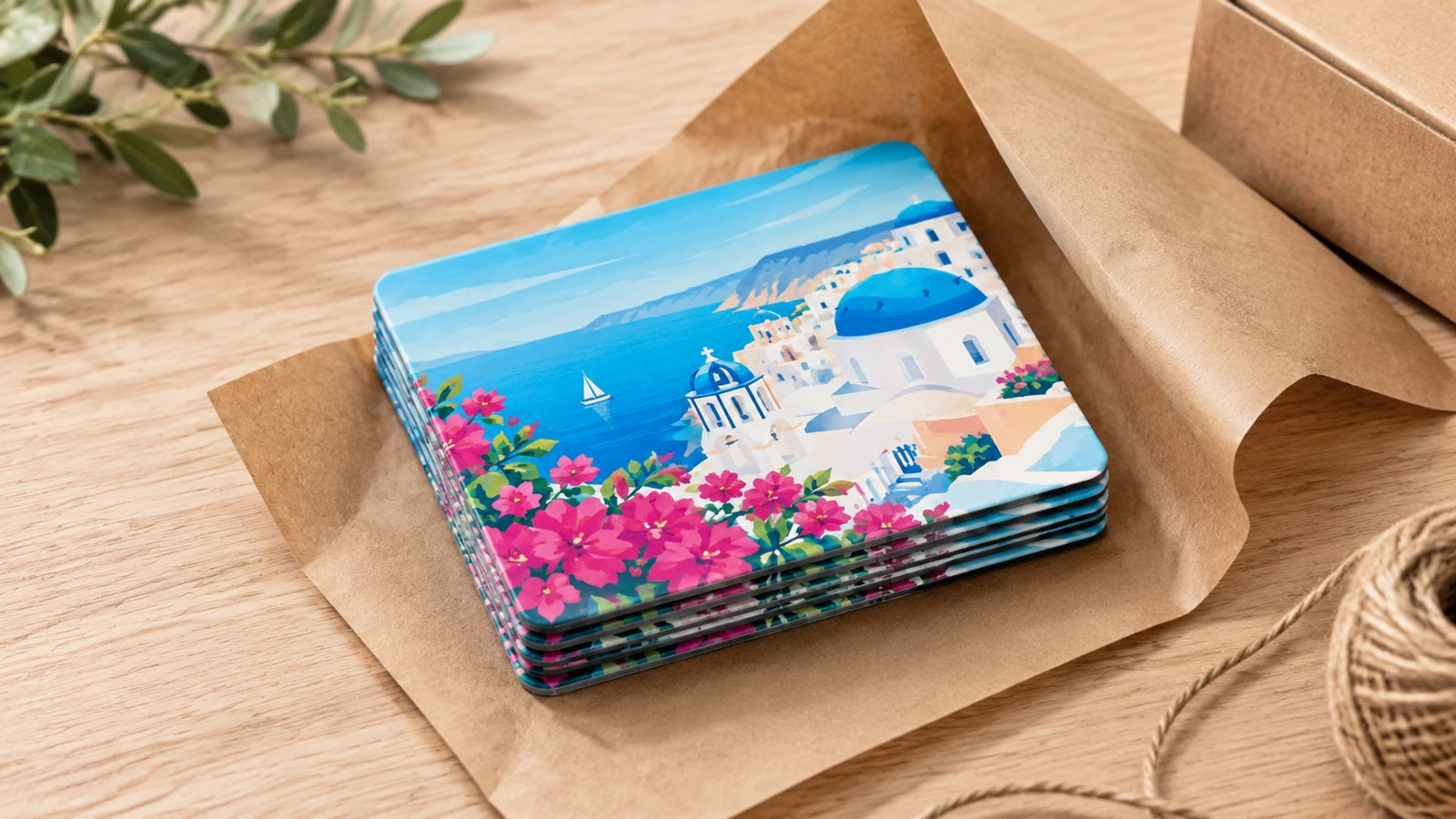
Specify packing around the distribution route. Bulk event handouts, retail merchandise and individual mailed gifts have different presentation needs. Ask how the proposed packing will keep pieces flat, protect printed faces and separate designs without assuming individual bags, retail cards or any particular pack quantity are included.
For mailed pieces, assess the complete assembled pack rather than the magnet alone. Packed dimensions, weight and handling conditions need confirmation. A flat format does not establish postage eligibility or a fixed shipping cost, and there is no verified unit weight for this product.
Request separate production and transit estimates, the dispatch location and the delivery destination used for pricing. Before committing to a dated campaign, clarify what happens if proof revisions, sampling or shipping changes affect the schedule. Obtain written defect and replacement terms rather than assuming free reprints or refunds.
For reorders, retain the artwork version, cut outline, construction, finish, packing details and approved sample. Check dates, contact information and QR destinations again before release. Compare the repeat sample with the retained reference whenever materials or production arrangements change.
Which format and quotation best fit your project? ↑
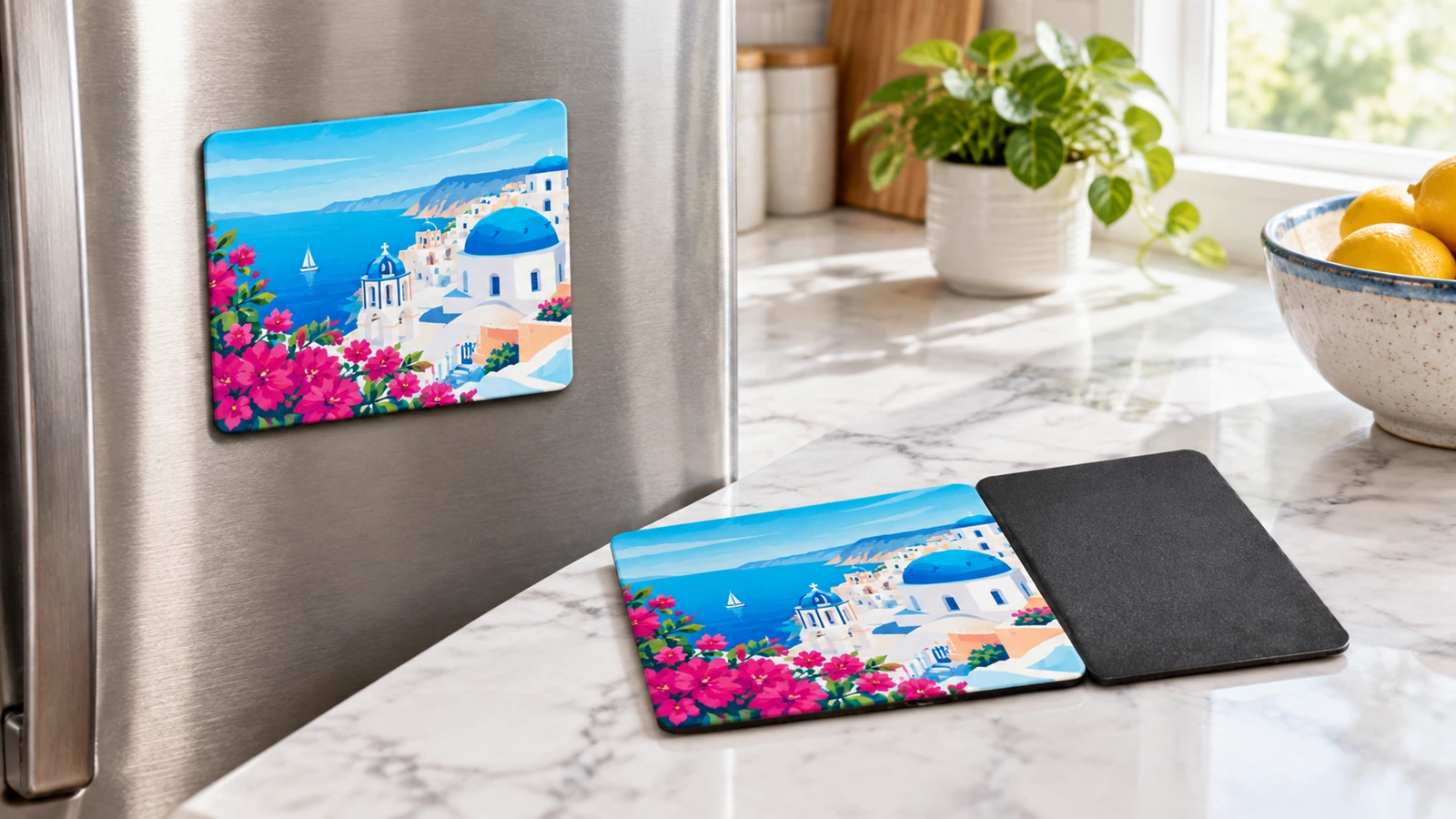
Compare products by construction and purpose rather than the shared word “magnet.” Flat flexible print, rigid photo magnets and raised souvenirs create different visual and handling experiences. A review of a domed magnet with a separate insert does not establish the performance of a printed magnetic sheet.
| Format to compare | Reason to consider it | Boundary to verify |
|---|
| Printed flat flexible magnet | A flat printed format for contact details, photos and promotional artwork. | Actual backing, flatness, printing and intended surface performance. |
| Paper-faced laminated magnet | A print-led construction to evaluate for photos or information layouts. | Edge protection, moisture exposure and bonding. |
| Epoxy-domed magnet | A raised glossy appearance when a flat face is not essential. | Different profile, construction, cost and sample requirements. |
| Acrylic or button-style magnet | A rigid format when that handling experience is preferred. | Attachment components, packing needs and design limitations. |
| Molded PVC or metal magnet | A molded or metal appearance rather than a flexible printed sheet. | Tooling, detailing, schedule and overall quotation. |
These are category comparisons, not an available-option list for NSKU-738-01. Alternative constructions require separate confirmation; their pricing, reviews and durability claims should not be transferred to the flat flexible product.
Compare complete costs, not isolated unit prices
Keep dimensions, design count, construction and packing consistent across quotations. Ask whether artwork work, samples, setup, cutting and delivery are included or separate. When comparing quantity tiers, use the same specification; otherwise a lower unit price may reflect a changed product rather than a volume saving.
Clarify whether the minimum quantity applies per design or across the order. Creator collections and event variations can change the commercial calculation even when the total quantity stays the same. No competitor's advertised starting price or minimum establishes the terms for this product.
Keep safety and environmental claims product-specific
Identify the intended users and how the product will be marketed before deciding which safety evidence is required. Do not assume that every fridge magnet is a toy, or that every promotional magnet is exempt. A design involving detachable components needs review of those components, not just the printed face.
Request relevant material documentation for the actual construction and destination market. No REACH, RoHS, Proposition 65 or other compliance status is established here. Recycled content, biodegradability and recyclability are also unverified: a statement about one layer cannot substantiate the complete product. Any recycling instructions need a confirmed local acceptance route.
Keep the essential buying decisions clear ↑
- Define the construction before comparing offers. Record magnetic backing, printed face and protective finish separately.
- Approve useful artwork at final size. Check crops, lettering and any QR code on a physical print rather than relying on an enlarged screen preview.
- Require application-specific holding checks. Supported loads and paper counts depend on physical dimensions, loading condition and sample validation.
- The US magnet rule has a defined scope, not a blanket fridge-magnet exemption. — For covered subject magnet products, loose or separable magnets fitting entirely within the small-parts cylinder must have a flux index below 50 kG² mm²; toys are addressed under a separate toy-safety framework (Source[4]).
- Keep commercial commitments explicit. MOQ, production time, unit weight, price and shipping terms require a product-specific quotation; no verified values were supplied.
Turn your design into a quote-ready magnet brief ↑
A clear brief connects the intended display surface with readable artwork, a defined construction and observable sample checks. It also gives everyone the same basis for discussing price, timing, packing and repeat orders—without relying on unrelated ratings or unsupported performance claims.
Request a product-specific quote for NSKU-738-01 with your artwork, proposed dimensions, quantity per design, intended surface, packing preference, destination and required arrival date.




The information below is required for social login
Sign In
Create New Account