Custom Flat Child-Resistant Zipper Mylar Pouches combine a flat pouch format with a child-resistant closure concept and custom branding. Specify the dimensions, film, zipper, sealing process and artwork together. Final suitability depends on physical samples, product compatibility and testing that covers the selected configuration—not the Mylar name alone.
Product reference: NSKU-798-02. Category: Custom Plastic Bags / Custom Mylar Pouches. This product brief identifies the flat zipper pouch format; dimensions, material construction, finishes, minimum order quantity, production time and unit weight remain subject to quotation and sample confirmation. No product-specific laboratory report or factory performance data is supplied here.
Who is this format for? Packaging buyers, brand owners and contract packers evaluating a printed, reclosable pouch for regulated retail products. Potential applications include cannabis products where lawful and selected supplements or household products, subject to product-specific suitability. These are application categories for assessment, not confirmation that this pouch is suitable for every substance.
The procurement problem: A convincing digital mockup does not establish whether the filled pouch will close correctly, display required information clearly or remain usable after repeated opening. If those decisions are postponed until after printing, the consequences can include unusable stock, filling-line adjustments and customer complaints.
The practical solution: Approve the package as a complete system. Start with the contents and destination market, establish a measurable specification, then evaluate physical samples before releasing production. Keep appearance approval separate from functional acceptance so an attractive finish cannot conceal an unresolved closure or sealing issue.
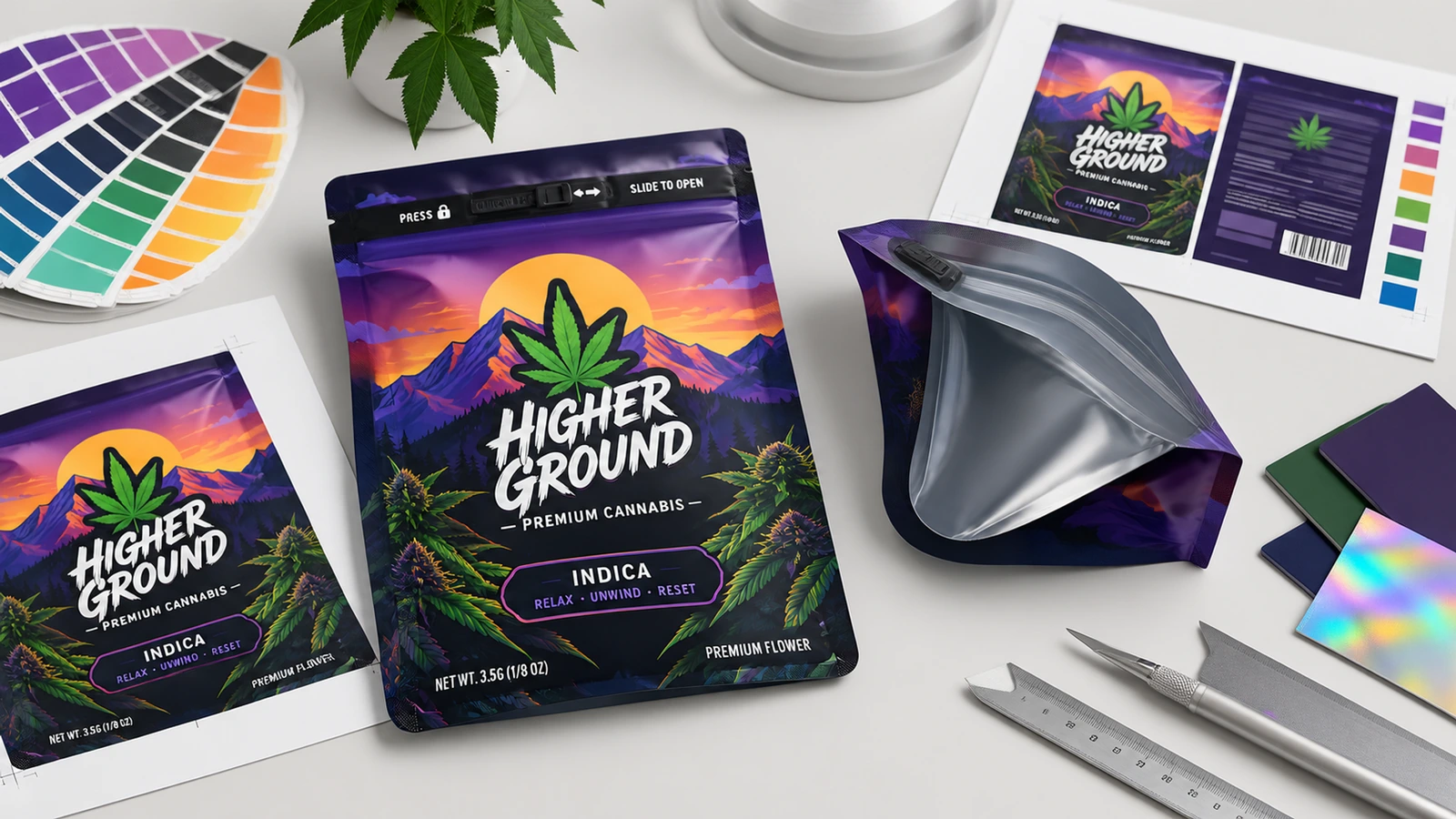
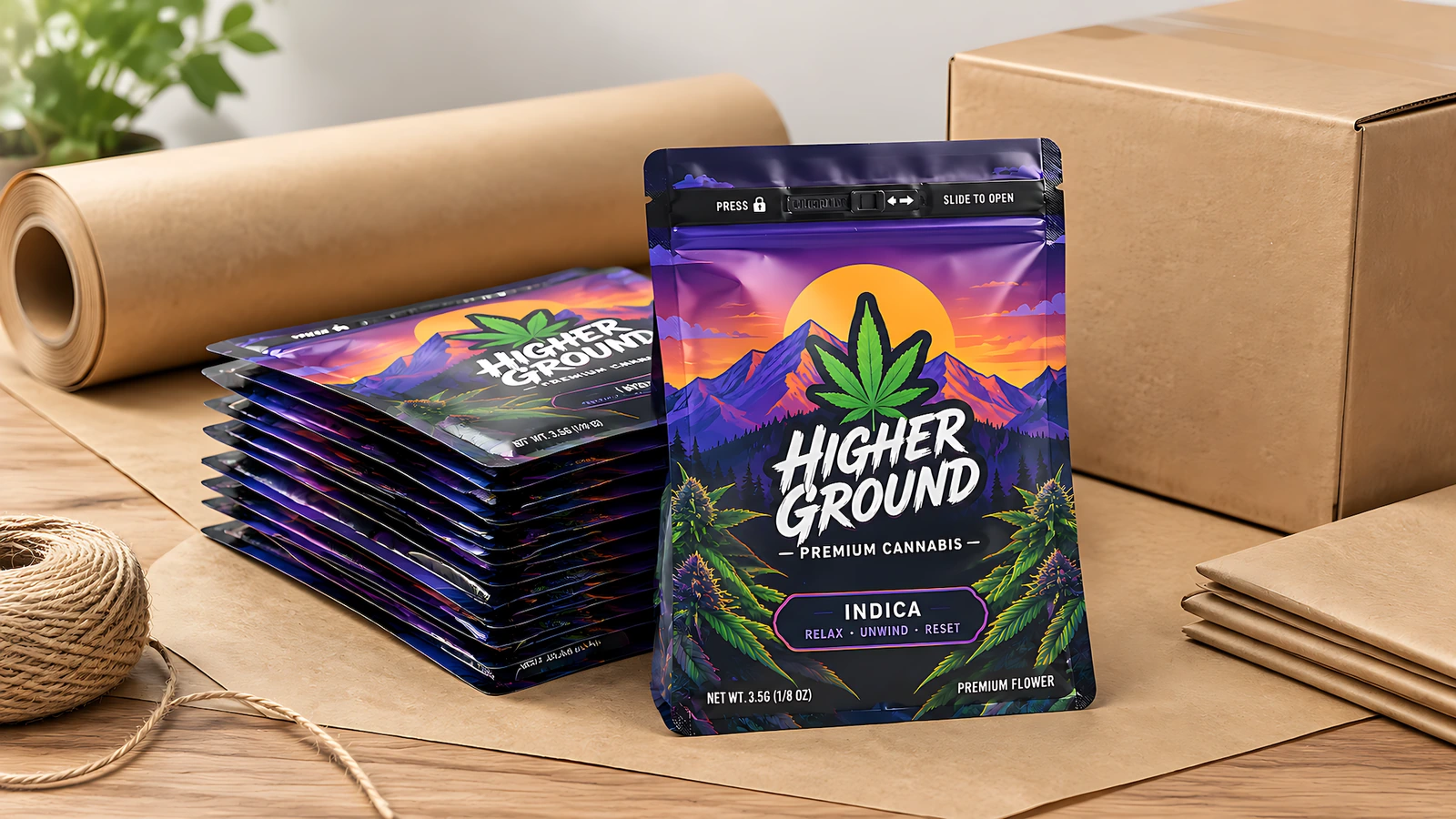
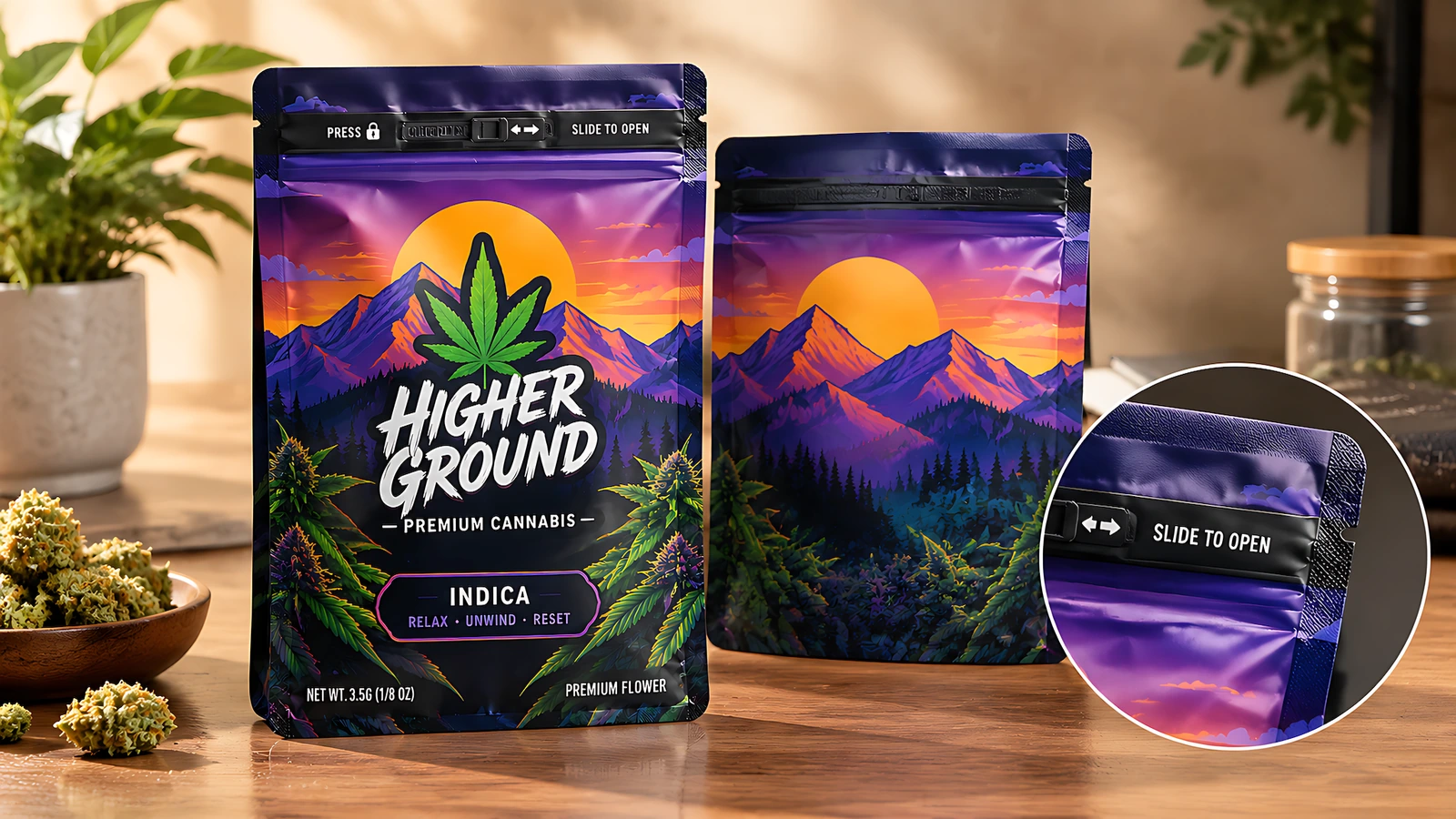
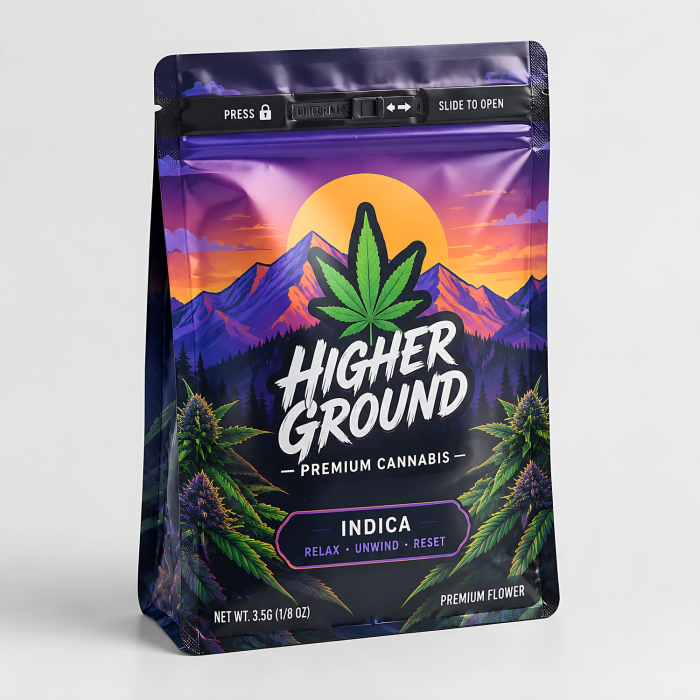
Illustrative concept: procurement context only. Images do not establish available finishes, dimensions, certification or tested performance.
Explore this product brief
What makes a flat zipper pouch child-resistant? ↑
“Flat” identifies the pouch format, not a stand-up base or a guaranteed filling capacity. “Mylar” does not establish the complete laminate specification. “Child-resistant” concerns access to the contents through the package as a whole. A zipper description cannot, by itself, establish that a finished pouch meets an applicable performance requirement.
There is no CPSC approval of this product implied by its name. The agency does not approve or certify individual packages, and ASTM D3475 classifies closure types rather than certifying their performance, as explained in the CPSC special packaging guide[1].
Separate three functions in your brief: resistance to child access, evidence of initial opening, and protection against moisture, oxygen or odor transfer. A tamper-evident feature does not automatically prove child resistance. Likewise, a closure intended to resist child access does not establish odor containment or shelf life.
Testing must address children and the applicable adult panel under 16 CFR §1700.20[2]. Request the complete report, including sample identification and configuration. An adult demonstration at a sales meeting is useful for discussing instructions, but it is not a substitute for the required testing.
Begin regulatory review with the product category and intended market. Cannabis requirements must be checked by jurisdiction rather than inferred from a general packaging claim. For example, California distinguishes packaging that remains child-resistant throughout use from certain single-use arrangements; its Department of Cannabis Control guidance[3] explains that distinction. It does not establish requirements elsewhere.
How do you specify size, finish and readable artwork? ↑
Start with usable space, not a nominal weight label
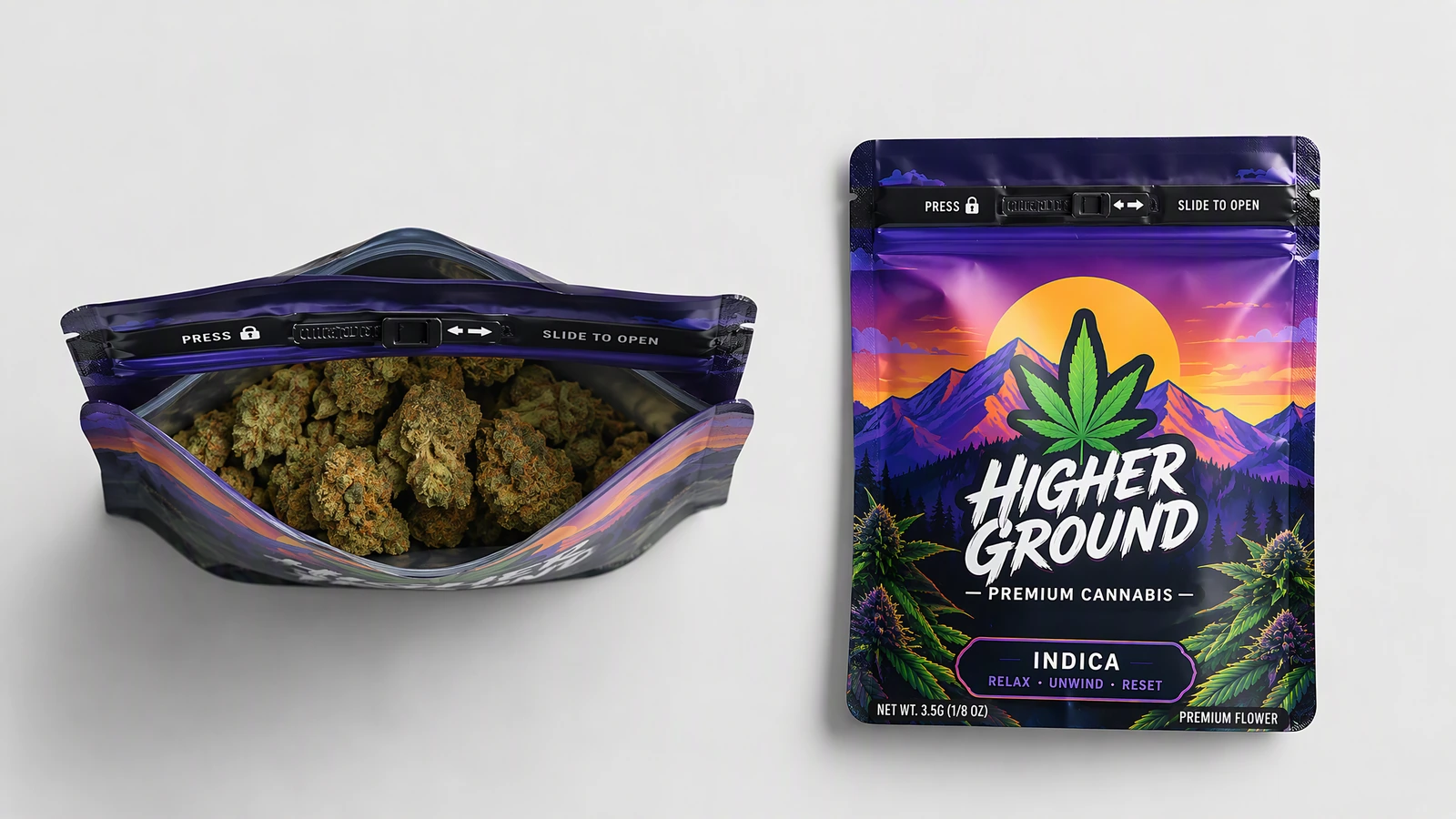
Provide the actual product dimensions, physical form, intended loading condition and filling method. State whether the contents are loose, individually wrapped or otherwise supported. Capacity, supported load and the number of items that fit must be determined from physical dimensions, loading condition and sample validation; none is established for this product reference.
Record external width and height separately from the usable area below the zipper. Allow for seal margins, closure placement and the space needed to fill and reclose the pouch without trapping material in the track. A familiar-looking pouch size is not a substitute for a fill trial with representative contents.
| Specification field | What the buyer should define | Status for NSKU-798-02 |
|---|
| Pouch format | Flat pouch; confirm the final seal layout | Flat format identified; drawing pending |
| Dimensions | External and usable dimensions in mm | Pending quotation and physical sampling |
| Film construction | Each layer, contact surface and intended contents | Pending material specification |
| Thickness | Single-wall thickness in µm, with agreed tolerance | Pending quotation and measurement |
| Closure | Zipper model, position and operating instructions | Exact mechanism and report coverage pending |
| Print and finish | Artwork version, color reference and surface requirement | Pending feasibility and sample approval |
| Commercial terms | Quantity by design, schedule, unit weight and delivery basis | MOQ, production time and unit weight not established |
These fields make quotations comparable without turning another supplier’s specifications into promises for this pouch. Thickness must describe one wall, not the combined front and back. Material substitutions require explicit review rather than acceptance under the same general product name.
Choose surface treatment and closure access together
Matte, gloss, soft-touch, spot effects and metallic decoration appear in the wider market, but availability for this configuration needs confirmation. Treat them as quotation requests, not included features. Assess a physical sample for both visual appearance and the ability to locate and operate the intended opening points.
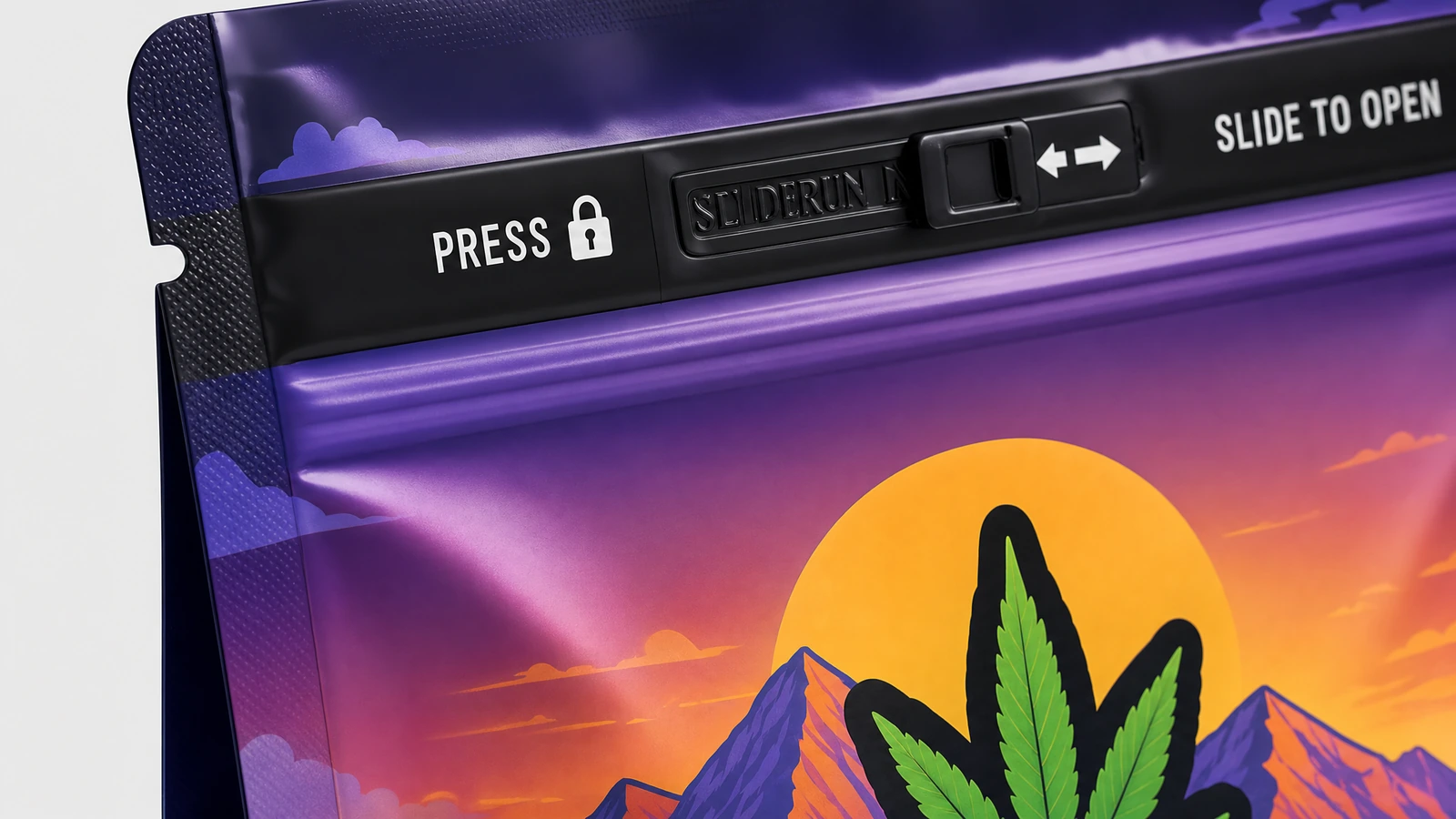
For this pouch, the relevant “back closure” detail is the reverse-side presentation and access to the zipper—not a pin, clip or garment fastening. Request front, back and closure-detail views. The opening diagram must match the selected mechanism; generic instructions for a different zipper can confuse users even when the artwork looks professional.
Preflight the information before approving the decoration
Reserve space for required warnings, contents information, batch identification and opening instructions before placing decorative elements. Review both panels at actual print size. Keep critical text out of seals and closure areas, and assess whether surface glare or low contrast makes the information harder to read.
Confirm the drawing, artwork revision, orientation, print boundaries and variable-information areas as one approval package. Any requested window or change in opacity needs separate suitability review. Do not assume a clear area is compatible with the intended product’s light-protection needs or destination-market requirements.
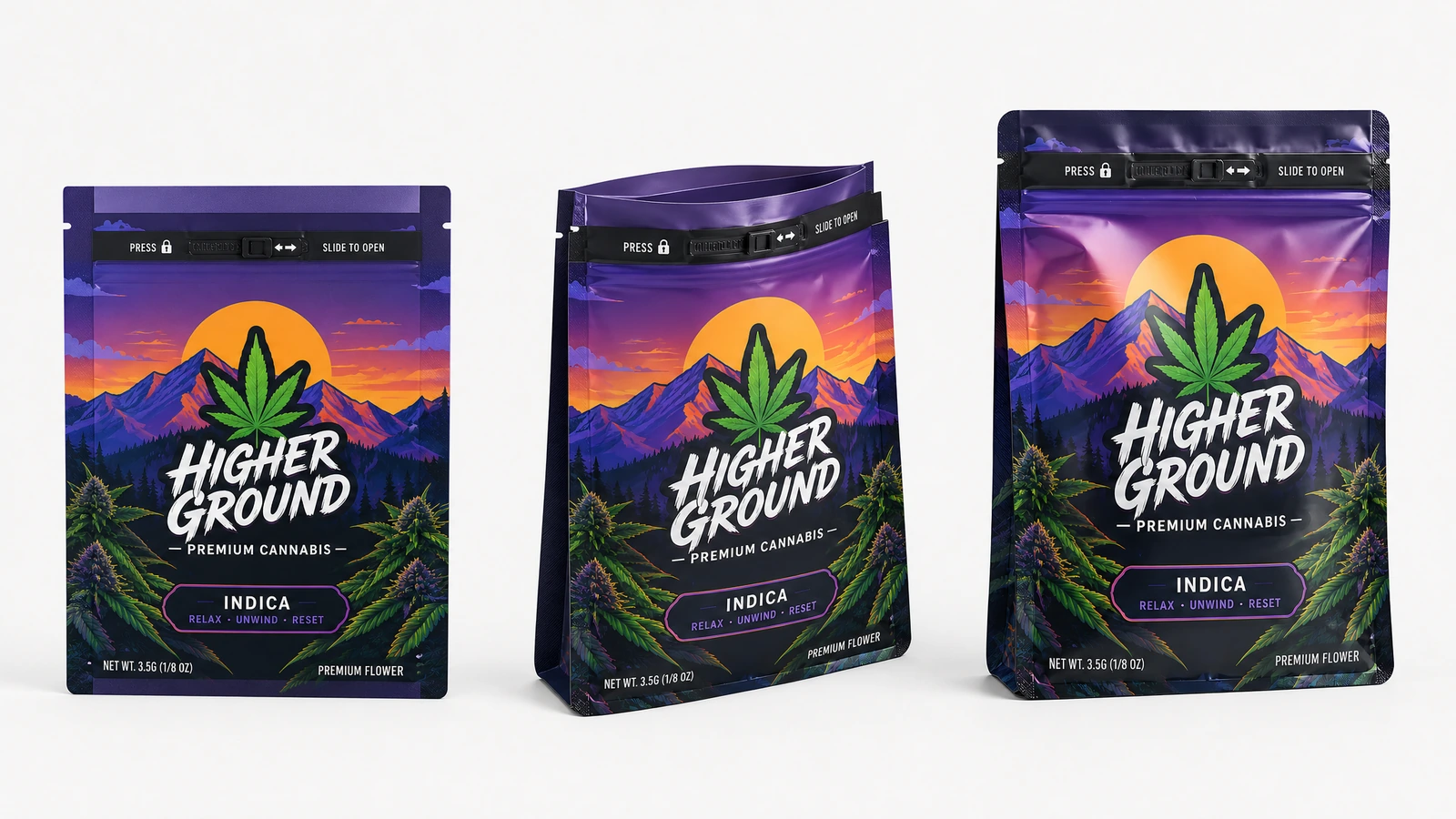
A digital proof establishes layout intent; it does not establish color on the selected substrate, tactile feel, sealing behavior or opening performance. Record which decisions the proof approves and which remain dependent on a physical sample. This prevents an artwork sign-off from being mistaken for full product acceptance.
How should sampling and production approval work? ↑
The following is a proposed purchasing workflow, not a claim about completed factory procedures. Its purpose is to turn a broad request for custom child resistant mylar bags into a configuration that can be quoted, sampled, assessed and reordered with a clear record of what was approved.
- Define the application. Identify the contents, destination market, filling process and expected pattern of use. Resolve whether the packaging needs to maintain child resistance after repeated access.
- Establish the construction. Agree on the pouch drawing, film specification, single-wall thickness, exact closure and initial sealing arrangement. Keep unconfirmed features visibly marked as pending.
- Evaluate physical samples. Check fill fit, handling, usable label area and the selected opening instructions. A sample with different film or closure components cannot settle every question about the production configuration.
- Review the evidence. Match laboratory documentation to the proposed package. Ask the testing provider whether configuration differences require further evaluation before relying on an existing report.
- Approve artwork and commercial terms. Record quantities by design, accepted samples, agreed inspection criteria, charges and the event that starts the production schedule.
- Release and verify the order. Check supplied packaging against the approved specification, then validate the actual filling and sealing setup before routine use.

Ask the quotation to distinguish printing setup, sampling, testing, production and transport. Digital and gravure printing can involve different setup costs and order economics, but no method, minimum quantity or lead time is confirmed for this SKU. Public supplier ranges should not be presented as this product’s price or delivery promise.
Keep production time separate from sample development, report review and transit. Also identify what happens if the sample fails a fit or closure check: which specification will change, which approval must be repeated and how the schedule will be revised. A clearly defined approval sequence is more useful than an unsupported “fast turnaround” claim.
Which checks belong in your acceptance plan? ↑
Set acceptance methods and limits before ordering. The inspection plan should distinguish a visual defect from a functional failure, identify how samples are selected and state how nonconforming material will be handled. There is no supplied rejection rate, guaranteed cycle life or batch test result for this pouch.
| Inspection area | Proposed evaluation | Evidence to retain |
|---|
| Dimensions and thickness | Measure against the approved drawing and single-wall specification | Measurement records and instrument identification |
| Zipper attachment and operation | Inspect track alignment, attachment areas and opening/reclosing behavior | Sample identity, observations and any force measurements |
| Repeated use | Evaluate wear over the expected use pattern | Agreed cycle count, method and observed changes |
| Seal integrity | Use an agreed seal-strength or leak test suited to the package | Method, conditioning, results and acceptance limits |
| Print and finish | Compare with the approved reference and evaluate rubbing or adhesion | Artwork version, comparison record and defect photographs |
| Contents compatibility | Evaluate contact materials and the intended filled application | Relevant declarations and compatibility findings |
The appropriate method depends on the construction and application. A visual check alone cannot establish leak tightness, and a successful seal test cannot establish child resistance. Similarly, a laboratory result for another supplier’s pouch must not be reported as this product’s performance.
Validate sealing without inventing machine settings
Request sealing guidance for the selected construction, then validate it on the intended filling equipment. Temperature, dwell time and pressure must be established through the actual setup; no universal setting is specified here. Include cleanliness of the seal area and zipper track in the trial, especially when the contents can leave particles behind.
Odor containment should be a test objective, not an automatic “smell-proof” promise. Evaluate the assembled, filled package, including seams, closure ends and the initial seal. Where barrier measurements are needed, specify oxygen or water-vapor transmission test conditions and reporting units. No barrier value or shelf-life duration is established for this SKU.
Make adult usability part of the review
Check whether the instructions clearly identify the correct gripping points and reclosing action. Treat difficulty experienced by intended adult users as useful design feedback rather than evidence of stronger child resistance. Do not promise universal ease of opening, and do not resolve a usability problem by recommending that customers damage the closure.
Material documentation also needs a defined scope. A broad “food-grade” description does not replace evidence relevant to the contact layer, contents and intended conditions of use. Persistent unexpected odor, visible delamination, damaged zipper attachments or inconsistent seals should trigger investigation before the affected packaging is filled.
When is a flat pouch the right purchasing choice? ↑
Choose the format around product protection and presentation, not simply the appearance of a competitor’s pack. A flat pouch is a candidate when the intended contents, filling process and display arrangement suit a flexible format. It should not be purchased on the assumption that it will stand independently or protect delicate contents from compression.
| Format to evaluate | Reason to consider it | Trade-off to resolve |
|---|
| Flat CR zipper pouch | Printed flexible packaging with reclosure as part of the brief | Validate fill fit, closure access and protection during handling |
| Stand-up CR pouch | A base-supported retail presentation | Different geometry and specification; not this flat-pouch SKU |
| CR glass or metal container | A rigid format where compression protection matters | Compare weight, handling, closure system and total delivered cost |
| CR plastic bottle or tube | A shape suited to specific contents or loading requirements | Verify compatibility, barrier needs and the complete closure configuration |
| CR carton or blister arrangement | Structured presentation or individually organized contents | Assess the entire system, including any necessary inner barrier packaging |
This is a selection framework, not a price ranking. Delivered cost depends on the actual specification, quantity, testing needs and shipping arrangement. Compare alternatives using the same contents, intended use and acceptance requirements; otherwise, a cheaper quotation may simply exclude work included in another offer.
Plan packing, shipment and repeat orders before the first purchase
Agree how empty pouches will be packed to protect their surfaces and closures. Request carton identification that connects the shipment to the artwork revision and production lot. Shipment quantities, carton dimensions and gross weight need order-specific confirmation rather than estimates derived from an unrelated pouch.
For replenishment, retain the approved sample, drawing, material specification, closure identification and artwork file. A reorder using the same design is not necessarily identical if the film, zipper, seal layout or production conditions have changed. Require those changes to be disclosed and assessed before treating the new batch as equivalent.
Do not add recyclable, recycled-content or reduced-plastic claims without evidence for the selected structure and the relevant disposal context. No recyclability assessment or recycled-content percentage is supplied for this pouch. Any material change proposed for sustainability reasons must also be assessed for compatibility, closure operation and applicable test coverage.
What should buyers remember before ordering? ↑
- Child and adult performance are separate requirements, not a single safety score. — Minimum effectiveness is 85% before demonstration and 80% after demonstration for the applicable child test, with at least 90% senior-adult use effectiveness for the applicable adult test (Source[4]). These are regulatory criteria, not measured results for NSKU-798-02.
- Size and loading claims require a filled sample. — Determine usable capacity and item fit from actual dimensions, loading condition and sample validation.
- Commercial terms remain open. — MOQ, production time, unit weight, pricing and available finishes require a configuration-specific quotation.
- Inspection should cover distinct failure modes. — Establish separate checks for dimensions, closure attachment, repeated use, seals, printing and compatibility.
- Repeatability depends on controlled specifications. — Preserve the approved sample and document changes rather than relying on the product name or artwork alone.
Build your quotation around an approved configuration ↑
Custom Flat Child-Resistant Zipper Mylar Pouches should be evaluated as a specific package for specific contents. The next purchasing decision is not which unsupported performance claim sounds strongest, but which dimensions, closure, material and approval requirements belong in the quotation. That approach keeps sample decisions, commercial commitments and acceptance criteria connected.
Request a configuration-specific quote for NSKU-798-02 with your product dimensions, loading condition, destination market, artwork, quantity by design and required delivery date.




The information below is required for social login
Sign In
Create New Account