Custom clear PVC backpacks combine visible storage with personalized branding. Start with the intended school, workplace or event policy, then specify finished dimensions, material, shoulder-strap construction and artwork. Approve a physical sample before bulk ordering: transparency alone does not establish venue acceptance, carrying performance or chemical compliance.
SEO title: Custom Clear PVC Backpacks | Bulk Order Planning
Meta description: Plan custom clear PVC backpacks for school, work or events. Compare dimensions, logo placement, sample checks and the details needed for a bulk quote.
For school purchasing teams, workplace administrators, event organizers and promotional buyers: the right specification depends on what people will carry and where they will use the bag. A classroom backpack, an employee checkpoint bag and an event giveaway should not automatically share the same dimensions or construction.
A clear bag can look suitable in a catalog yet create problems after delivery. The finished shape may conflict with an entry policy, the artwork may obstruct visibility, or the shoulder connections may not suit the intended load. Discovering those issues after printing leaves the buyer managing replacements, delayed distribution or unusable stock.
The practical solution is to turn those concerns into purchasing decisions before production. Separate mandatory requirements from optional styling, review the assembled sample rather than a rendering alone, and agree on inspection criteria. For this product, dimensions, thickness, available customization, pricing, minimum order quantity and delivery timing remain subject to quotation and sample confirmation.
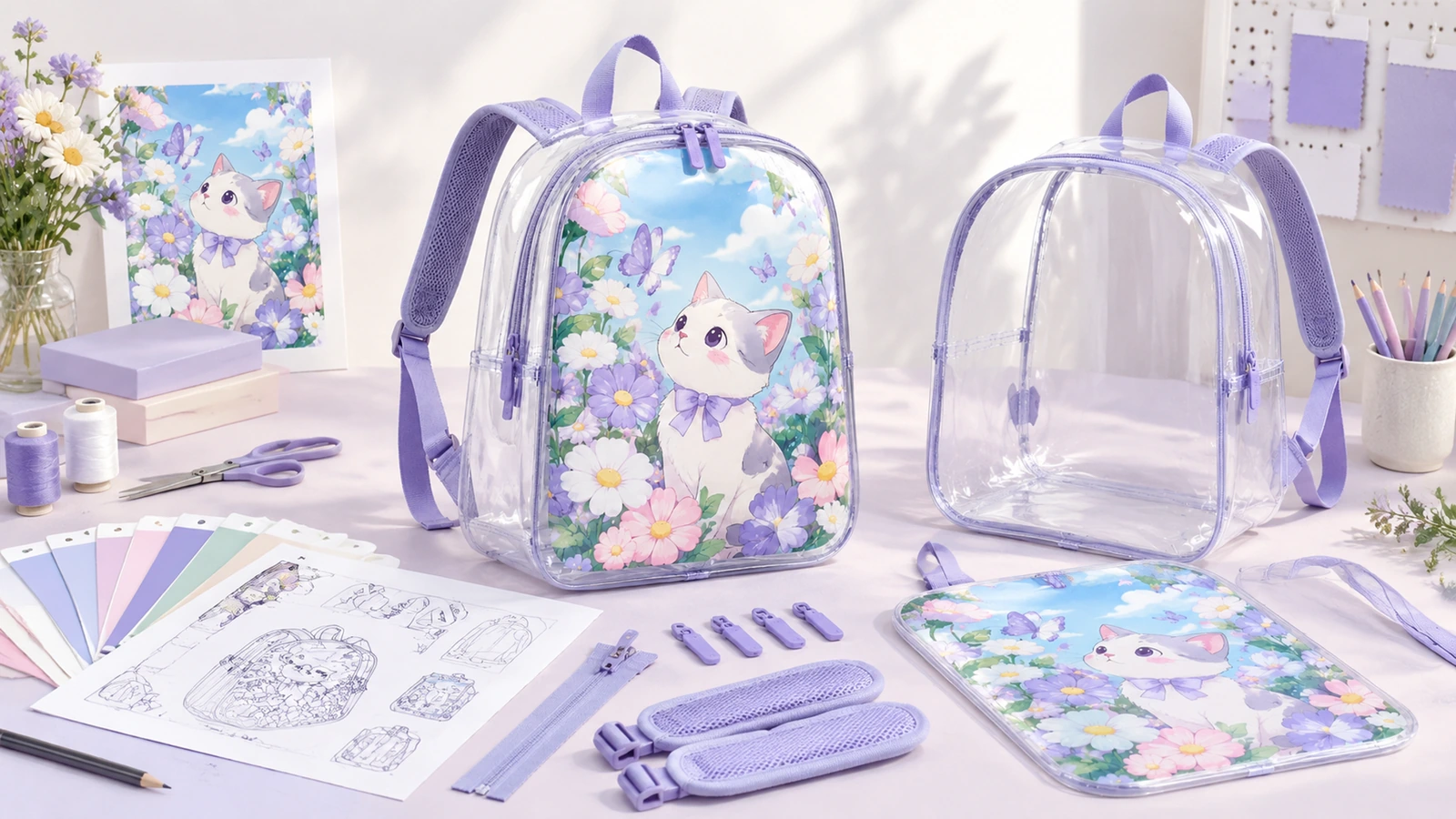
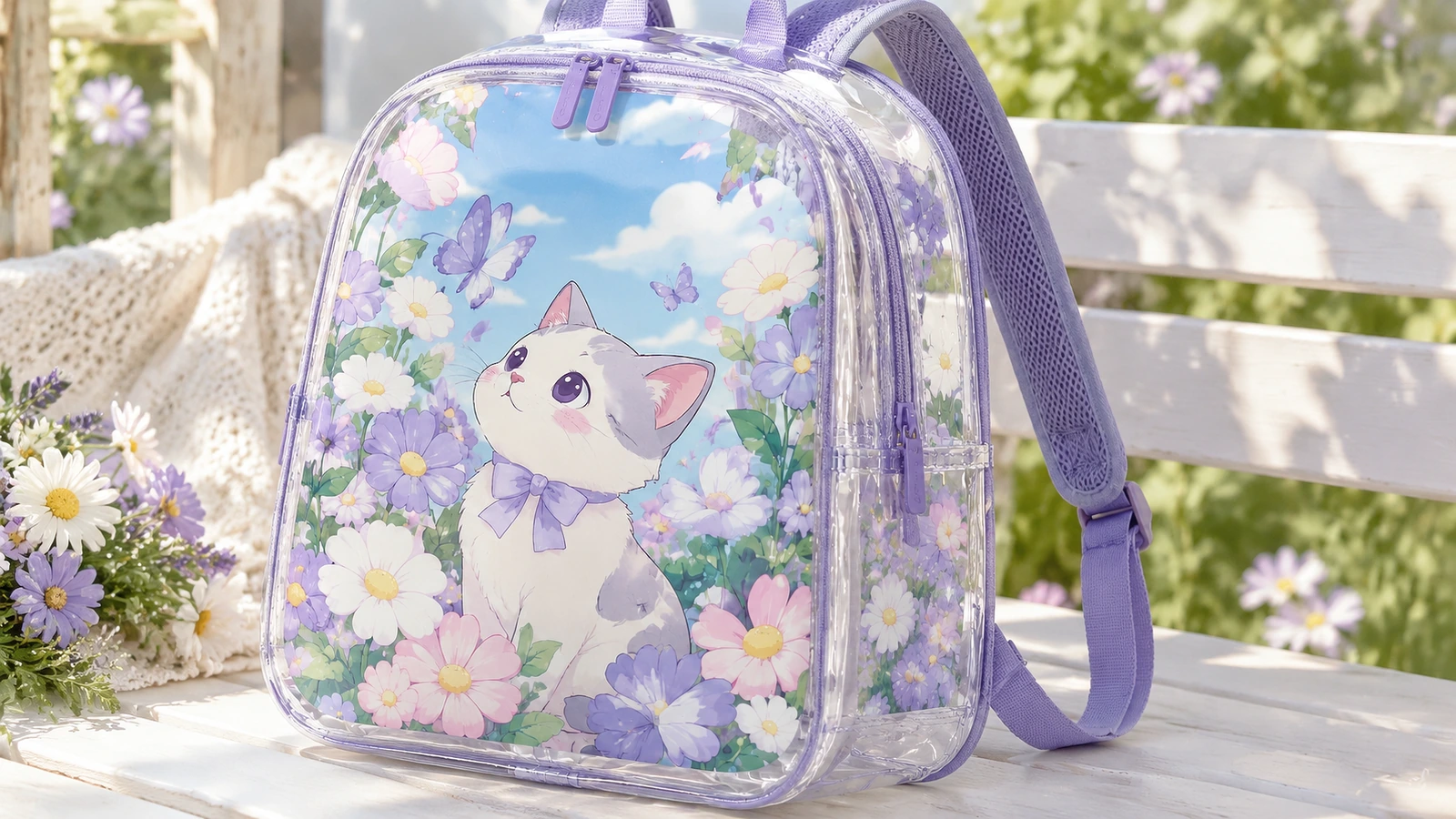
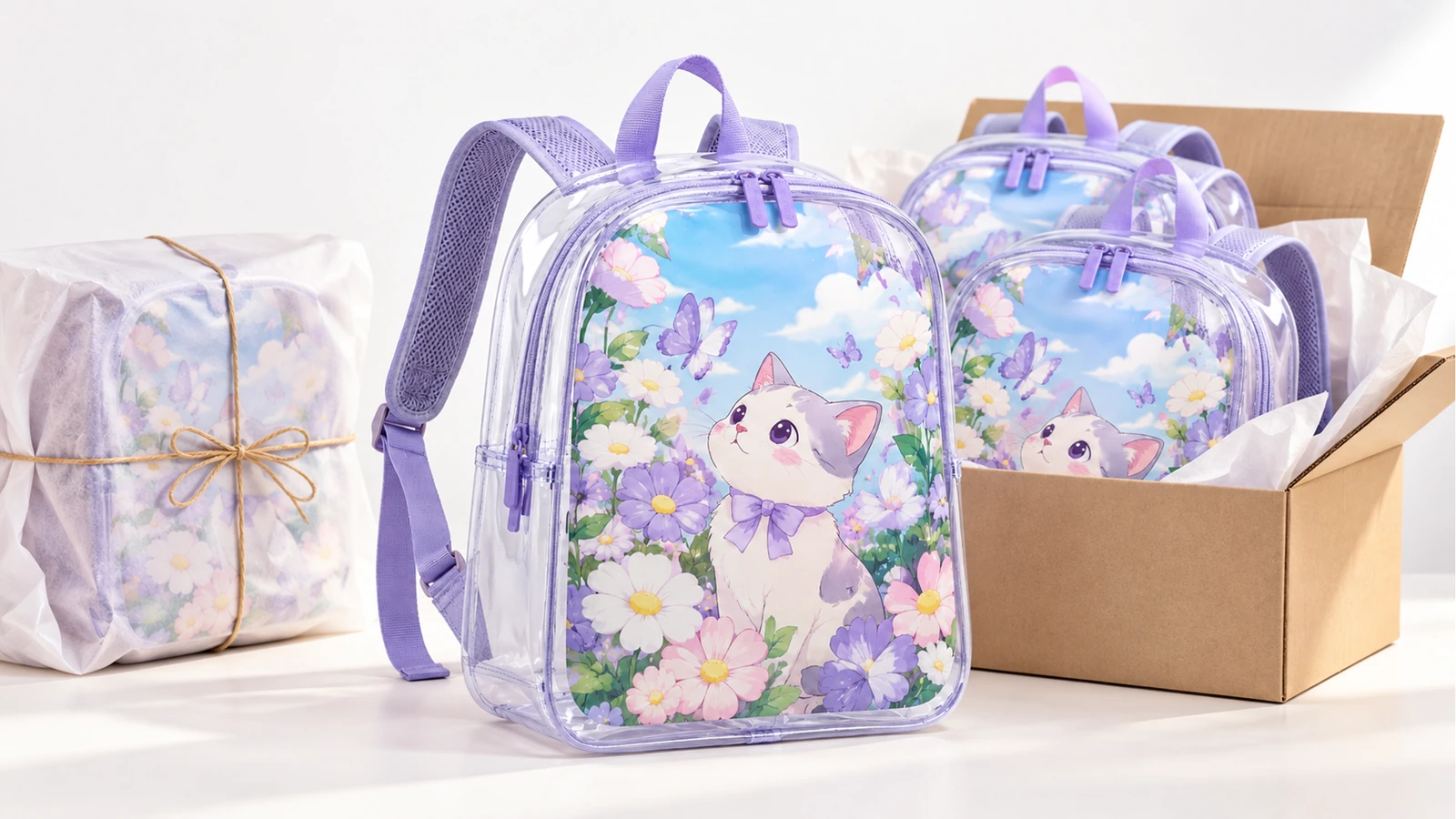
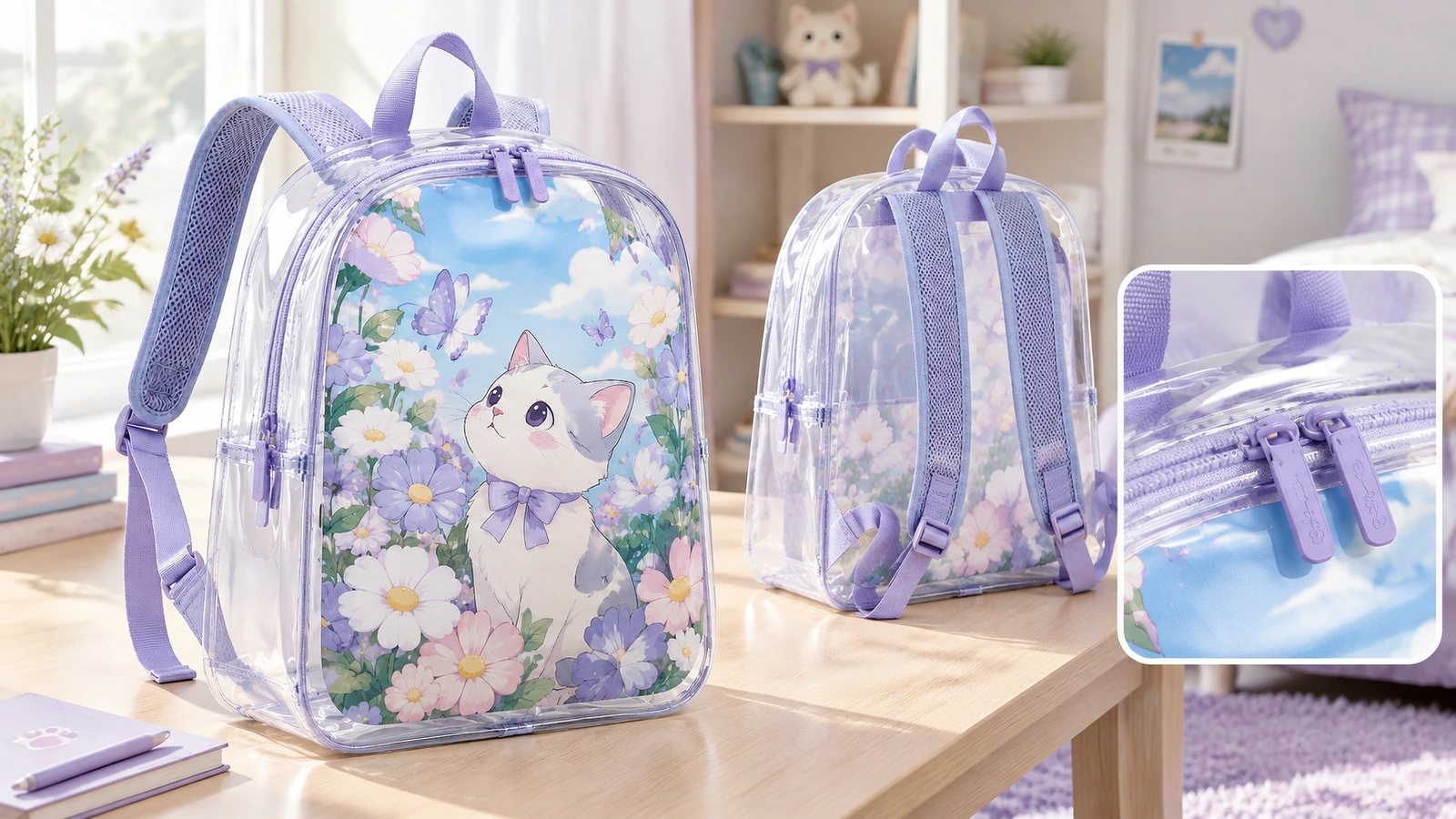
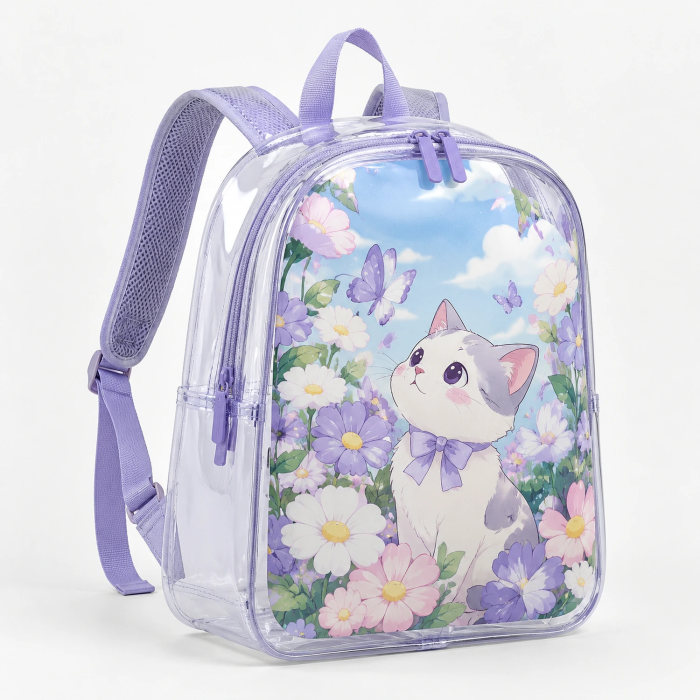
Illustrative concepts show purchasing scenarios, not confirmed configurations, capacity or venue approval.
Product purchasing guide
What defines this customizable backpack? ↑
Custom Clear PVC Backpacks belong to the Custom PVC Bags category within Custom Plastic Bags. The provisional product reference is NSKU-791-03. The product identity describes a transparent PVC backpack intended for customization; it does not establish a particular pocket layout, closure, thickness, unit weight or tested carrying limit.
For procurement, distinguish a structured shoulder-strap backpack from a drawstring bag. Research on transparent bags includes both, but their closures, load paths and quoted costs are not interchangeable. A low price for a simple cinch bag is not evidence of the price of an assembled backpack with adjustable straps and additional compartments.
Capacity, carrying load and the number of items that fit must be determined from actual finished dimensions, the loading arrangement and physical sample validation. A photograph containing books or a laptop is not a fit guarantee. For school orders, check the intended contents in the sample with the closure fully operated.
How do you specify dimensions and visibility? ↑
For an NFL event brief, the published clear-bag limit is 12 × 6 × 12 in; the policy gives the metric equivalent as 30.5 × 15.25 × 30.5 cm. It includes clear backpacks within the permitted dimensions, limits logos to one side and prohibits obstructive hardware or decoration. These are policy references, not this product’s confirmed dimensions or approval. See the NFL Clear Bag Policy[1].
Check the bag format before developing the artwork. Ocean Springs School District, for example, lists clear backpacks among prohibited items for its athletic events while allowing specified clear totes. That distinction demonstrates why a transparent material does not establish permission to enter. Consult the district’s clear-bag requirements[2].
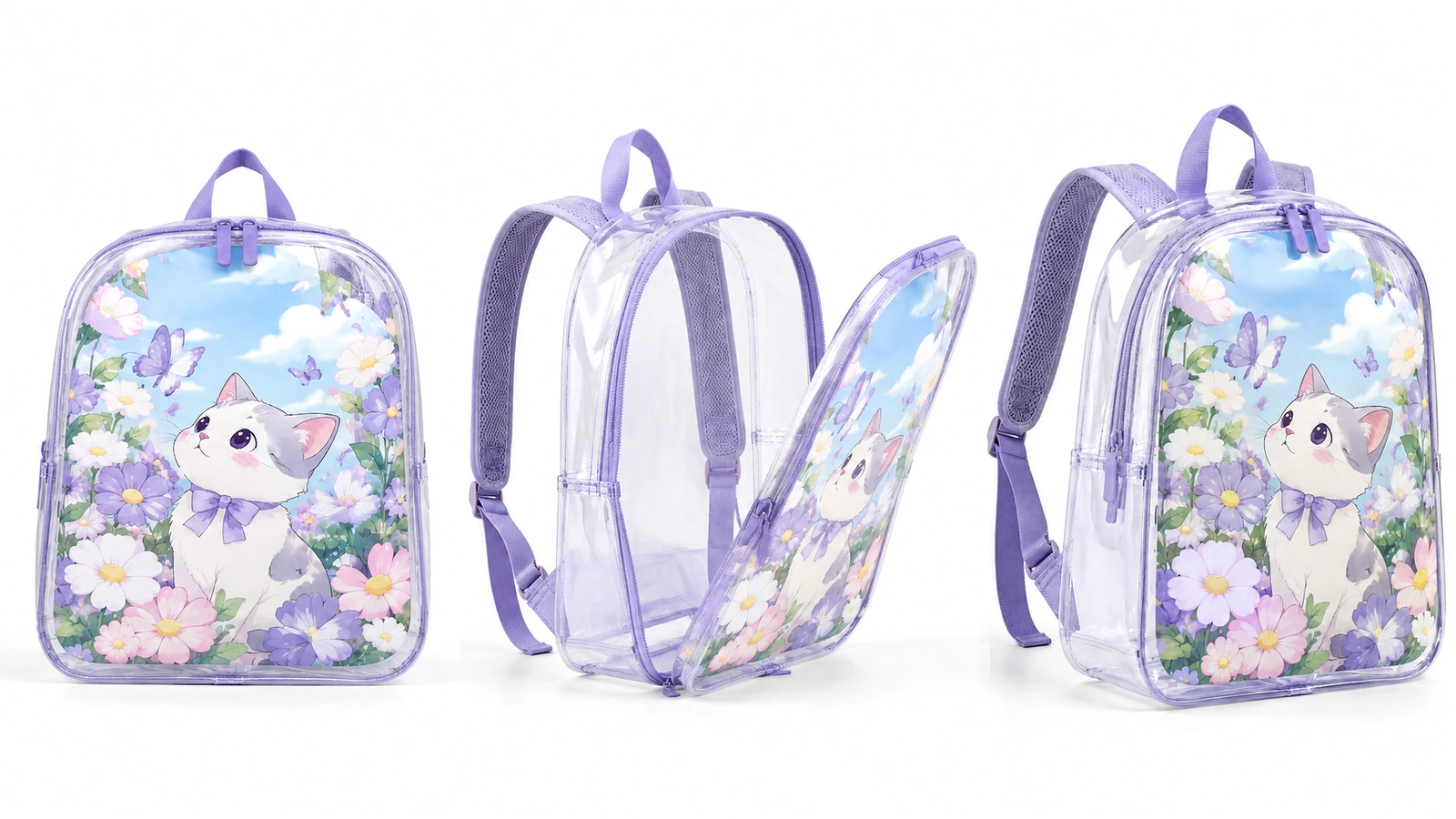
Write width, depth and height explicitly on the drawing. Measure the assembled exterior rather than relying on cutting dimensions, and document protruding pockets, edging and hardware. Check both the empty shape and the intended loaded condition; a sample that changes shape when filled needs a corresponding review.
| Purchasing scenario | Requirement to establish | Sample check |
|---|
| School daily use | District policy, intended contents and privacy-pouch rules | Fit, closure access and comfort with the proposed load |
| Event distribution | Permission for backpacks, exterior limits and decoration restrictions | Finished envelope and visibility through all relevant panels |
| Workplace use | Employer rules for compartments and permitted contents | Inspection access and practical organization |
| Promotional campaign | Recipient use, branding priorities and distribution deadline | Artwork visibility and suitability for the intended activity |
These are separate specification paths, not claims that a single configuration meets every policy. Record the applicable policy and its review date in the purchasing brief so later design changes can be checked against the same requirements.
Which surface and strap details belong in the brief? ↑
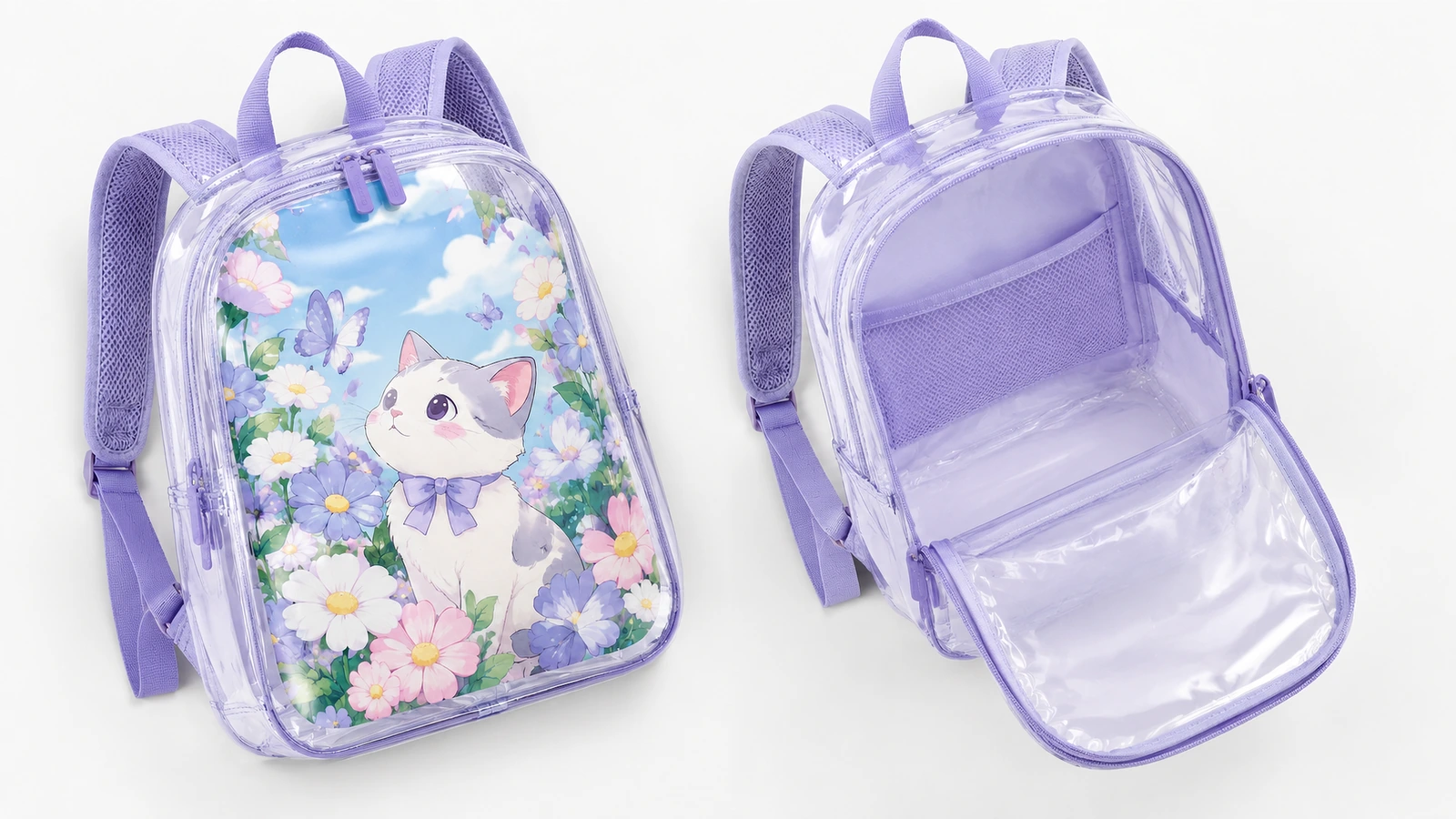
Separate the transparent panels from the colored components. Specify the requested appearance of the front, back, bottom and pockets, then list preferred webbing, zipper and binding colors. Treat tinted film, frosting, opaque inserts and decorative plates as policy-review items rather than automatic upgrades.
For branding, distinguish an event-specific reference from a universal rule. The Super Bowl LVIII graphic specifies a logo no larger than 3.4 in wide × 4.5 in high on one side. Use that as a documented reference when relevant, not as proof of acceptance at every future event. The dimensions appear in the official logo-placement graphic[3].
Back-side details deserve their own review. Request drawings of shoulder-strap attachment points, adjusters, reinforcement and the carry handle. Check whether these components obscure the transparent back. Padded straps, wider webbing or reinforced corners are options to evaluate through quotation and sampling, not confirmed features of this provisional product.
Do not select material by thickness alone. Request a stated film thickness and agreed tolerance, together with the proposed construction. If low-temperature use or repeated folding matters, define those conditions for testing. No cold-crack resistance, anti-yellowing performance, low-odor formulation or service life has been established for this product.
How do you prepare artwork for sample approval? ↑
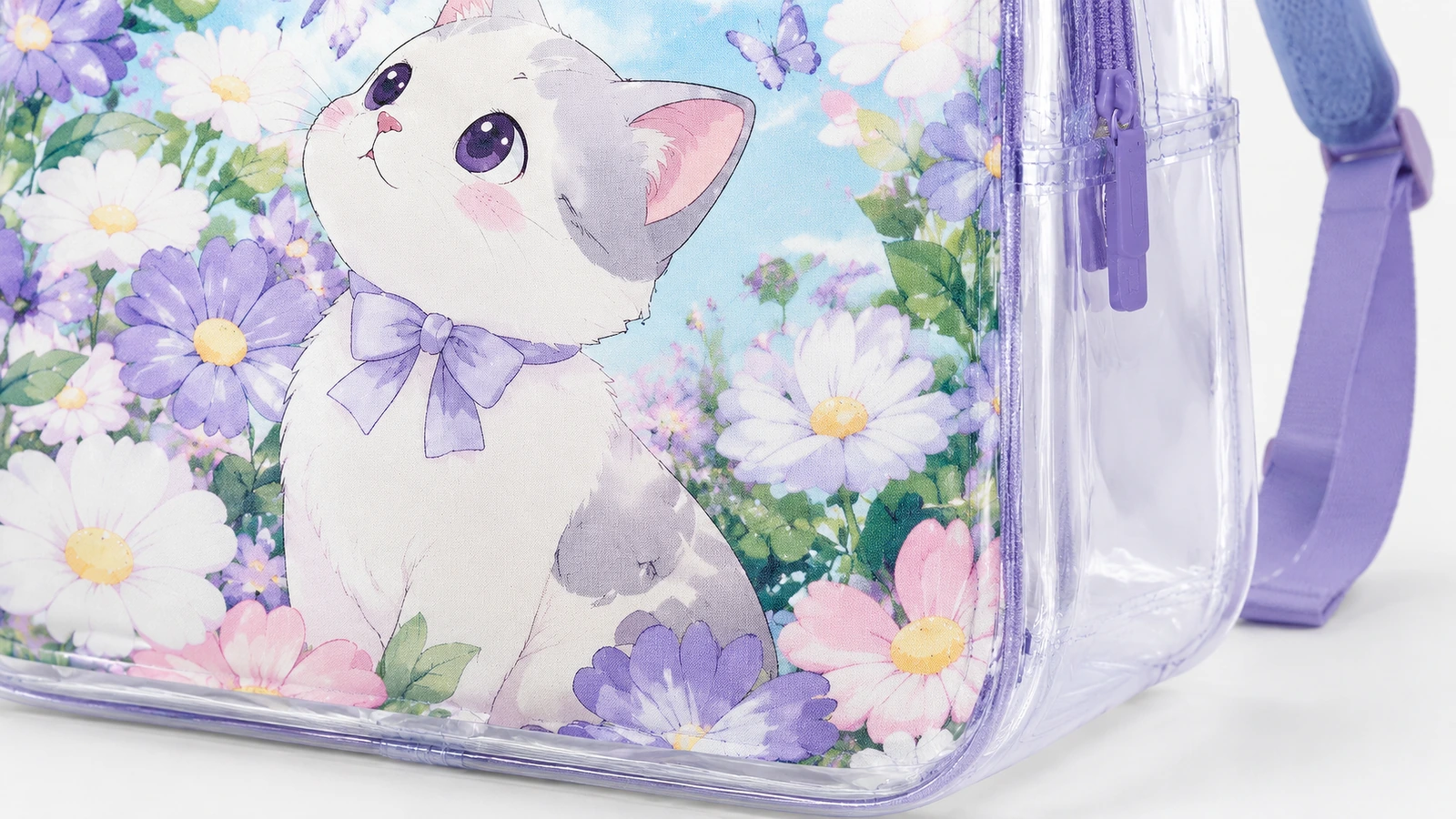
An artwork proof should show the whole backpack, not just an isolated logo. Include the print position, finished print dimensions, requested colors and the surrounding seams or pocket edges. Confirm which file requirements the selected printing process needs before approving the layout.
- Locate the branding. Mark the intended panel and viewing direction on the same drawing used for the bag dimensions.
- Review obstruction. Check how the logo, its background and nearby trim affect visibility into the assembled bag.
- Confirm process suitability. Ask which printing method is proposed for the selected film and artwork; do not assume every method is available.
- Inspect a physical print sample. Review legibility, color, adhesion and any distortion of the transparent panel.
- Control revisions. Keep the approved artwork version with the sample photographs and signed specification.
The research identifies screen printing, digital or UV printing and heat-transfer approaches across different suppliers. That is a list of processes to discuss, not a capability statement for this product. A visually attractive proof does not demonstrate adhesion or establish that the production process will leave the film undamaged.
A documented production sequence protects the order ↑
Use the following sequence as a proposed purchasing workflow. It is not a claim about an existing factory line, machinery, production capacity or turnaround time. Each stage should leave a document or sample that the buyer can inspect before the next commitment.
- Build the request for quotation. Provide use case, destination, quantity, required arrival date, requested dimensions, artwork and relevant policy.
- Resolve construction choices. Review film, seams, strap attachments, zipper arrangement and packaging with the supplier.
- Develop the sample. Assess the proposed materials and decoration on an assembled bag rather than treating a digital mockup as production approval.
- Approve the specification. Record dimensions, appearance, testing requirements and acceptable deviations against the reference sample.
- Confirm the commercial schedule. Establish when production timing starts, what approvals it depends on and which shipping steps are excluded.
- Inspect before release. Compare the shipment with the signed requirements and resolve deviations before dispatch.
Welding and sewing appear in the supplied market research, but neither should be selected solely because it sounds stronger. Ask how the proposed seams and strap connections handle the intended use. The relevant evidence is the approved construction and its test results, not an unverified process label.
What should quality inspection verify? ↑
Convert each intended benefit into an acceptance check. Visual inspection, physical performance testing and chemical testing answer different questions. None should be substituted for another, and a factory-management certificate would not establish the chemical compliance of the finished bag.
| Inspection area | Proposed method | Evidence to retain |
|---|
| Dimensions and film | Measure the finished exterior and film against agreed values | Measurement record linked to the sample or shipment |
| Shoulder attachments and seams | Evaluate lifting and carrying with the agreed representative load | Load, method, conditions and observed damage |
| Closure operation | Operate the zipper empty and with the intended contents | Agreed cycle count and findings on snagging or separation |
| Printing and clarity | Inspect adhesion, distortion and visibility with dark contents behind the panel | Sample photographs and agreed appearance criteria |
| Odor and packed condition | Review a sample after agreed sealed-storage conditions | Condition, observations and corrective action if needed |
| Chemical requirements | Obtain applicable testing for the specified materials and components | Laboratory report, sample identification and applicable certification |
The table proposes what to verify; it reports no completed tests. Agree on sampling, defect categories and acceptance limits before inspection. Carrying performance remains dependent on actual dimensions, loading conditions and sample validation rather than an assumed universal weight rating.
Define the chemical scope before requesting certificates
Children’s-product classification and phthalate restrictions are not identical questions. Federal phthalate restrictions described by CPSC apply to children’s toys and child care articles; a school backpack does not enter those categories merely because a child uses it. Determine the applicable scope from the intended product and use, following CPSC phthalates guidance[4].
For products classified as children’s products, accessible-component lead requirements need a separate review. The manufacturer or importer issues the applicable Children’s Product Certificate; a laboratory report supports that process but is not itself the certificate. See CPSC total-lead guidance[5].
Printed decoration also needs correct classification. CPSC distinguishes surface coatings from printing inks that become part of the substrate. Avoid applying a coating rule to every ink without reviewing the actual construction, as explained in CPSC lead-in-paint guidance[6].
California Proposition 65 concerns exposure warnings; it is not a product approval certificate. A warning does not by itself establish a safety-standard violation, and a material concentration result does not automatically answer the exposure question. Resolve the assessment and any required labeling before distribution using the official Proposition 65 explanation[7].
Keep reports traceable to the specified film, colors and relevant finished-product components, including decoration and hardware. No product-specific chemical report or certification has been supplied for this item. “Phthalate-free,” “non-toxic” and equivalent claims therefore remain unsubstantiated rather than available selling points.
Which buying route fits your project? ↑
Compare quotations with the same use case and acceptance requirements. A stock bag with added printing and a new structural design are different purchasing routes. An alternative material is a separate specification, not an interchangeable version of this PVC product.
| Route | Reason to consider it | Main constraint | Question for the quotation |
|---|
| Existing backpack with added branding | The available structure may already suit the brief | Dimensions and component choices are restricted | Does the actual stock configuration meet the intended use? |
| Custom PVC construction | The brief requires changes to shape, panels or straps | Development and sample approval must be included | Which requested changes are feasible and what do they cost? |
| Revised PVC specification | Daily use or environmental conditions need closer evaluation | Thickness alone does not establish durability | What sample tests will validate the proposed construction? |
| Separate TPU alternative | The buyer wants a material comparison | Different material, processing and commercial terms | How do comparable samples perform under the same conditions? |
This comparison deliberately excludes competitor prices and lead times. Those figures belong to other products and suppliers and cannot establish this item’s cost, minimum quantity or delivery commitment.
Ask for separate treatment of artwork setup, sampling, material changes, inspection or laboratory work, packaging and freight. Confirm the shipping basis and which duties or destination charges are excluded. Compare the resulting landed-cost scope, not just the advertised unit price.
For everyday use, include comfort and privacy in the decision. Check strap adjustment on the intended user and verify whether any proposed privacy pouch is permitted. Do not solve privacy concerns with an opaque insert that defeats the policy the bag was purchased to meet.
Plan packaging, delivery and repeat orders together ↑
Review packing alongside the finished sample. Decide how the bag will be folded or supported, how printed surfaces will be protected and what labeling the recipient needs. Inspect a packed sample for persistent creases, rubbing, trapped moisture and the agreed odor acceptance criteria.
Freight estimates should use confirmed carton dimensions, gross weight and packing quantity. A lightweight bag does not necessarily produce a low transport charge when the shipment occupies substantial space. Unit weight and carton data for this product remain to be measured; no freight saving is claimed.
Keep production readiness, dispatch and arrival as separate milestones. The required event or distribution date should inform the quotation, but it is not proof that the order can arrive on time. Include sample approval, testing, freight and destination handling in the schedule review.
For repeat purchasing, retain the approved artwork, reference sample, material specification, inspection record and packaging instructions. Ask for review of substitutions before a reorder proceeds. A familiar product name alone does not confirm that the film, hardware or print process remains unchanged.
Key takeaways for a clearer purchasing decision ↑
- The NFL reference is an entry-policy limit, not this product’s specification. — 12 × 6 × 12 in, subject to the policy’s other requirements and venue guidance (Source).
- Children’s-product lead requirements require their own scope review. — 100 ppm accessible-component total-lead limit, subject to applicable provisions (Source).
- Federal phthalate limits are not a blanket rule for every backpack. — 0.1% per restricted phthalate in accessible plasticized components of covered children’s toys and child care articles (Source).
- Use the assembled sample as the purchasing reference. — Validate dimensions, loading, closure operation, printing and packed condition against agreed criteria.
- Commercial and performance details remain open. — Obtain a product-specific quotation and sample evidence rather than borrowing another supplier’s specifications.
Turn your requirements into a sample-ready brief ↑
A useful bulk order starts with the intended user, the applicable policy and the contents the bag must accommodate. From there, the purchasing brief can connect construction, branding, testing and delivery without relying on unsupported approval or durability claims.
Request a quotation for NSKU-791-03 with your quantity, destination, required arrival date, intended use, requested dimensions, logo artwork and applicable policy.




The information below is required for social login
Sign In
Create New Account