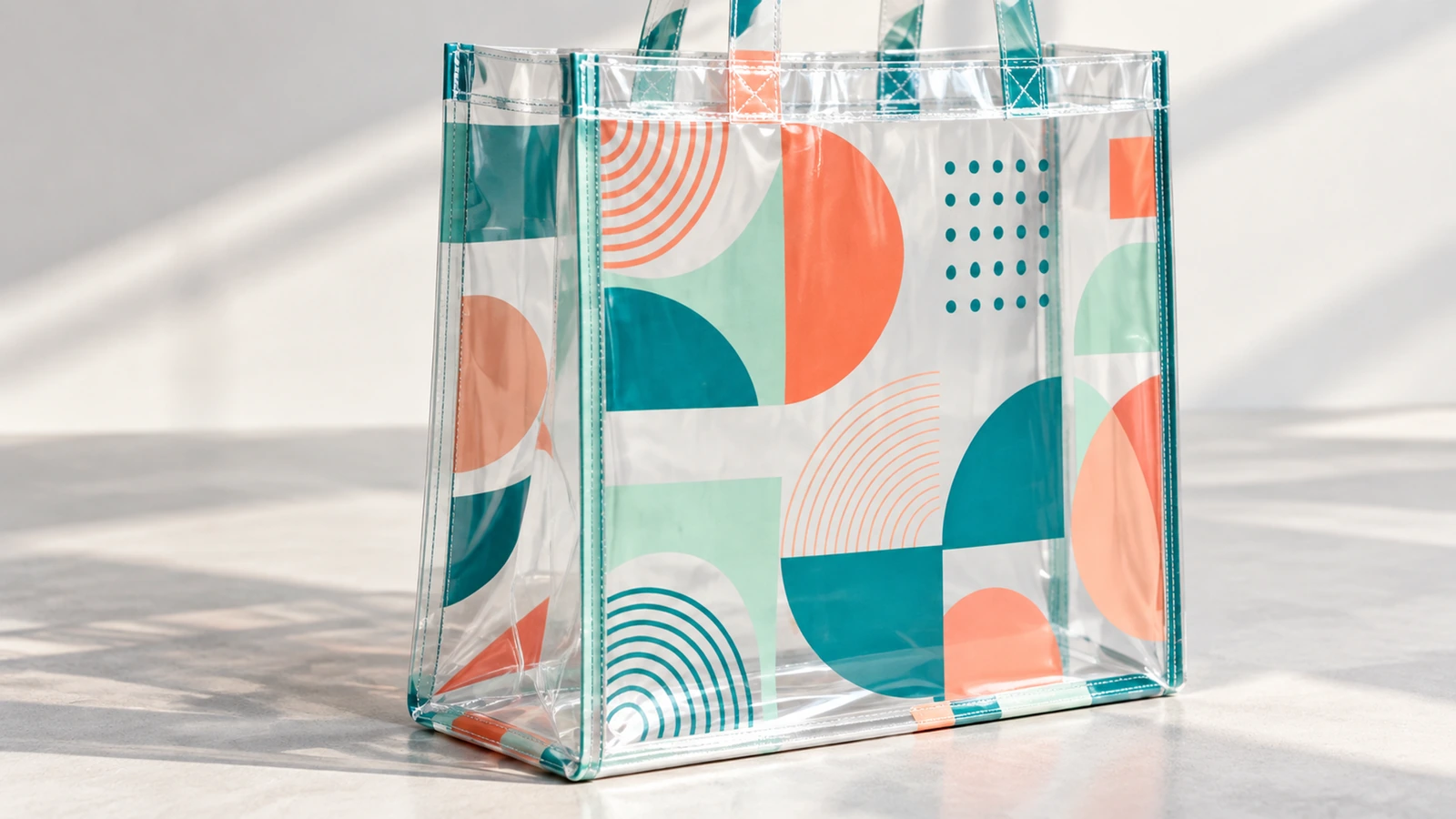
Custom clear PVC tote bags combine visible contents with personalized branding for event giveaways, retail packaging and corporate gifts. A useful purchasing specification covers finished dimensions, film thickness, handle construction, artwork, closure and destination requirements—not simply whether the bag looks transparent.
For event organizers, promotional distributors and retail buyers, the right tote starts with its intended use. A conference gift bag, a beauty presentation bag and a bag intended for venue entry need different specifications. Treat appearance, carrying requirements and entry restrictions as separate decisions before approving a design.
Product reference: Custom Plastic Bags > Custom PVC Bags > Custom Clear PVC Tote Bags. Provisional SKU: NSKU-791-02. Dimensions, thickness, available construction options, minimum order quantity, production time, unit weight and testing status remain subject to quotation, sampling or testing. No product-specific factory measurements or certification reports are supplied for this reference.
A transparent bag can look suitable in a photograph yet disappoint when delivered: the logo obscures the contents, the handles pull against weak attachment points, or the packed shape differs from the approved drawing. For a dated event, discovering those problems after printing leaves little room for replacement.
The practical solution is to approve the bag as a complete system: film, seams, handles, closure, decoration and packing. Define what the sample must demonstrate, then use that approved specification to assess the production order. This makes price comparisons more meaningful and prevents attractive catalog descriptions from becoming unsupported purchase commitments.
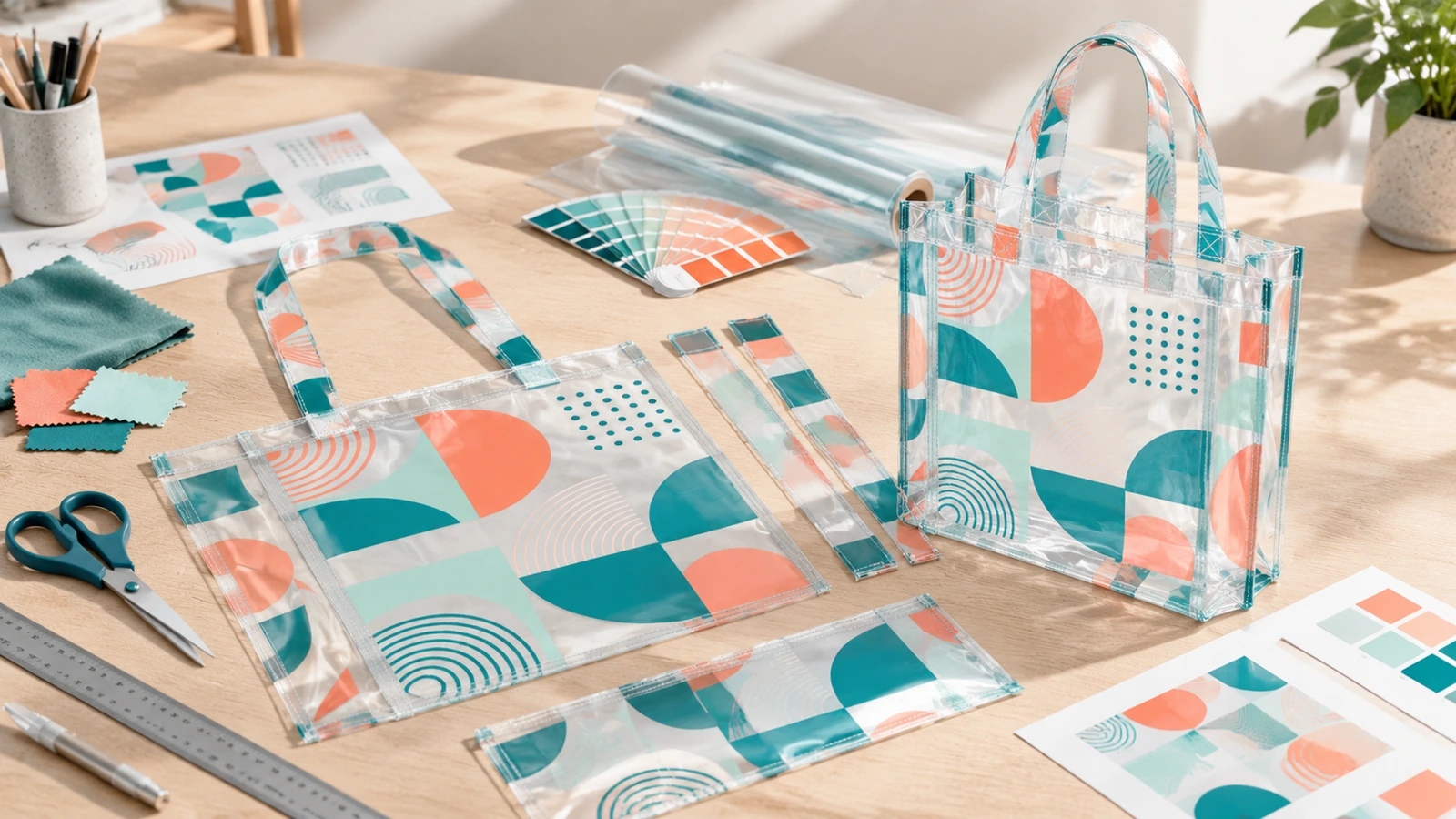
Explore the buying guide
What defines a useful clear PVC tote specification? ↑
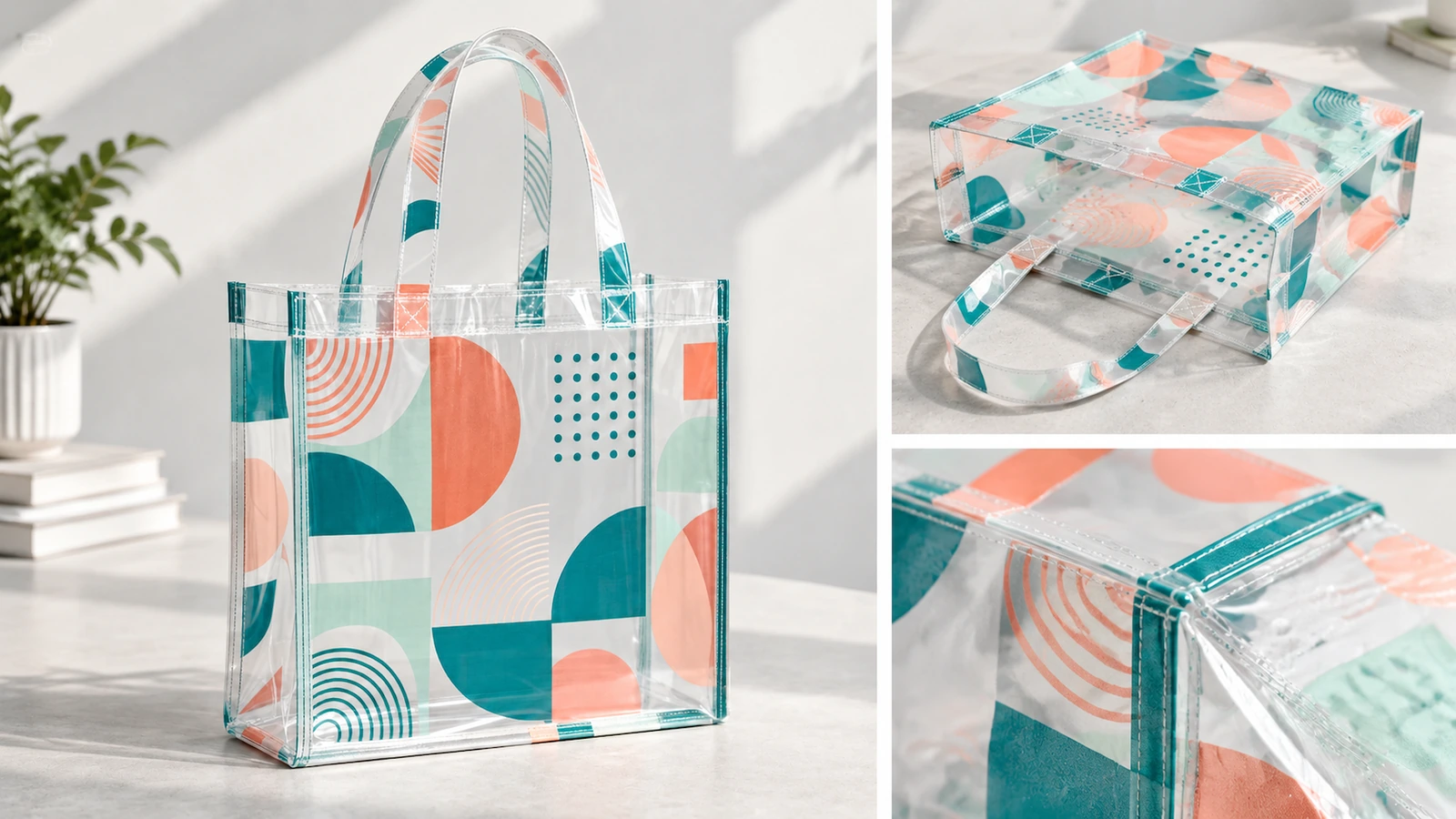
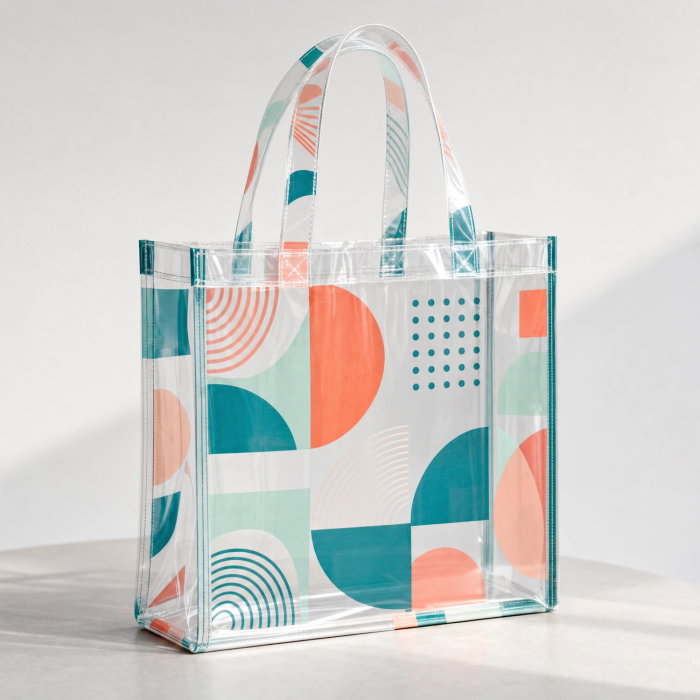
A clear PVC tote is a handled bag with a transparent PVC body. Customization may involve the body dimensions, trim, handle arrangement, closure or printed branding. These are specification choices to discuss, not confirmed features of this provisional product.
Transparency serves different purposes. Retail packaging displays the contents; a welcome pack lets recipients identify enclosed materials; a venue-entry bag must be assessed against an organizer’s rules. None of those uses establishes a tested carrying capacity, a service life or permission to enter a particular event.
| Purchasing field | What to specify | Current status |
|---|
| Finished size | Width × height × depth, measurement points and tolerances; inches and centimeters | Pending drawing and sample approval |
| PVC film | Thickness in mm, appearance and formulation requirements | Pending material selection |
| Handles and closure | Attachment method, handle dimensions and requested opening style | Pending feasibility review |
| Decoration | Artwork, print position, colors and permitted coverage | Pending print sample |
| Carrying performance | Intended contents and agreed acceptance procedure | Pending loaded-sample testing |
| Commercial terms | Quantity, setup costs, testing, packing, freight and delivery milestones | Pending quotation |
This table is a request-for-quotation framework, not a list of established factory capabilities. Keep the same fields in every supplier inquiry so differences in price can be traced to differences in the proposed bag.
How can dimensions and visibility reduce entry uncertainty? ↑
For a documented reference, the NFL’s Super Bowl LVIII guide specifies clear bags within 12 × 6 × 12 inches, gives metric dimensions of 30.5 × 15.25 × 30.5 cm, limits logos to one side and sets a logo maximum of 3.4 inches wide × 4.5 inches high. It also prohibits hardware or decoration that conceals the bag. These are event-policy specifications, not this product’s verified dimensions or certification. See the official clear-bag diagram[1].
Check venue-specific requirements before ordering or attending, as directed by the NFL policy[2].
On the purchasing drawing, label width, height and depth rather than relying on an unlabeled sequence of numbers. Define how the finished bag will be measured and agree tolerances that do not permit an oversized result. A nominal dimension at a policy maximum leaves no allowance for positive manufacturing variation.
Review visibility with the intended contents inside. Dark tint, dense printing, opaque pockets and decorative attachments can change how easily the interior can be seen. Keep a venue-oriented design separate from a retail design that uses broader decoration.
Usable capacity, carrying load and the number of items that fit depend on physical dimensions, the loading arrangement and sample validation. Do not convert an external-size drawing into a guaranteed packing capacity.
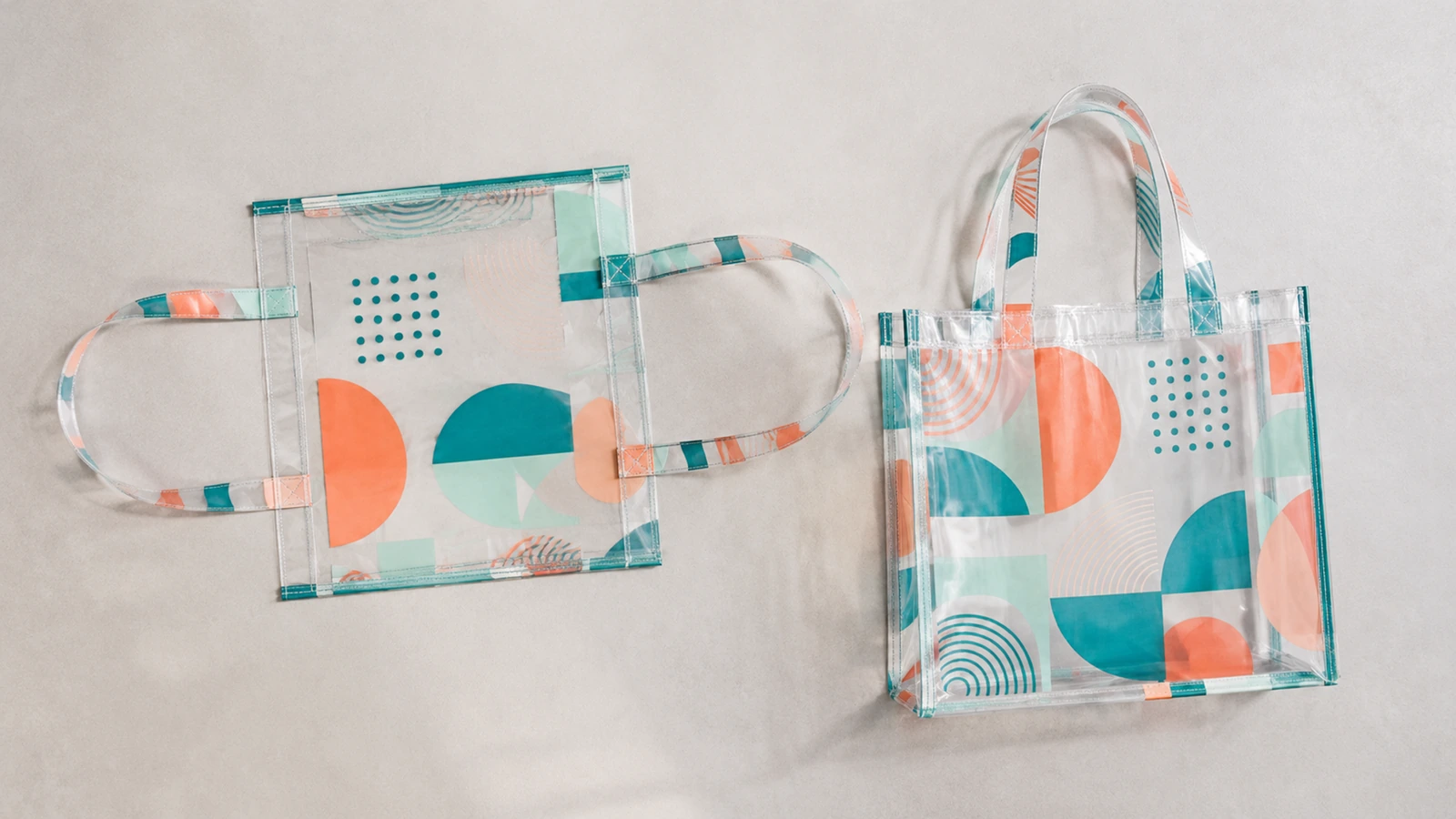
Which surfaces, handles and closures suit your application? ↑
For a visibility-led application, request an uncolored transparent body sample. Frosted or tinted surfaces may be considered for retail presentation, but they should not be treated as equivalent to a fully transparent venue-oriented design. Examine the material under consistent lighting rather than judging clarity from a heavily edited image.
Film thickness belongs in the specification, but thickness alone cannot establish durability. The handle attachment, seam construction and repeated bending points also need evaluation. Ask for a sample that represents the proposed combination rather than selecting film from one sample and judging carrying performance from another.
| Configuration to evaluate | Purchasing purpose | Sample checkpoint |
|---|
| Open top | Accessible loading for handouts or retail presentation | Item retention during intended handling |
| Zipper closure | A closable opening for personal belongings | Operation, attachment and access with contents inside |
| Snap closure | A simple fastening option | Opening force, local stress and obstruction |
| Webbing handles | Grip and attachment options for the intended use | Comfort, stitching and stress around the attachment |
| PVC self-material handles | A coordinated transparent appearance | Flexing and tearing at concentrated load points |
These configurations are candidates for quotation and sampling. Availability, cost and performance are unconfirmed. Any rear-facing fastening detail should be reviewed as part of the closure, not assumed to be an additional standard feature.
How should artwork and purchasing files be checked? ↑
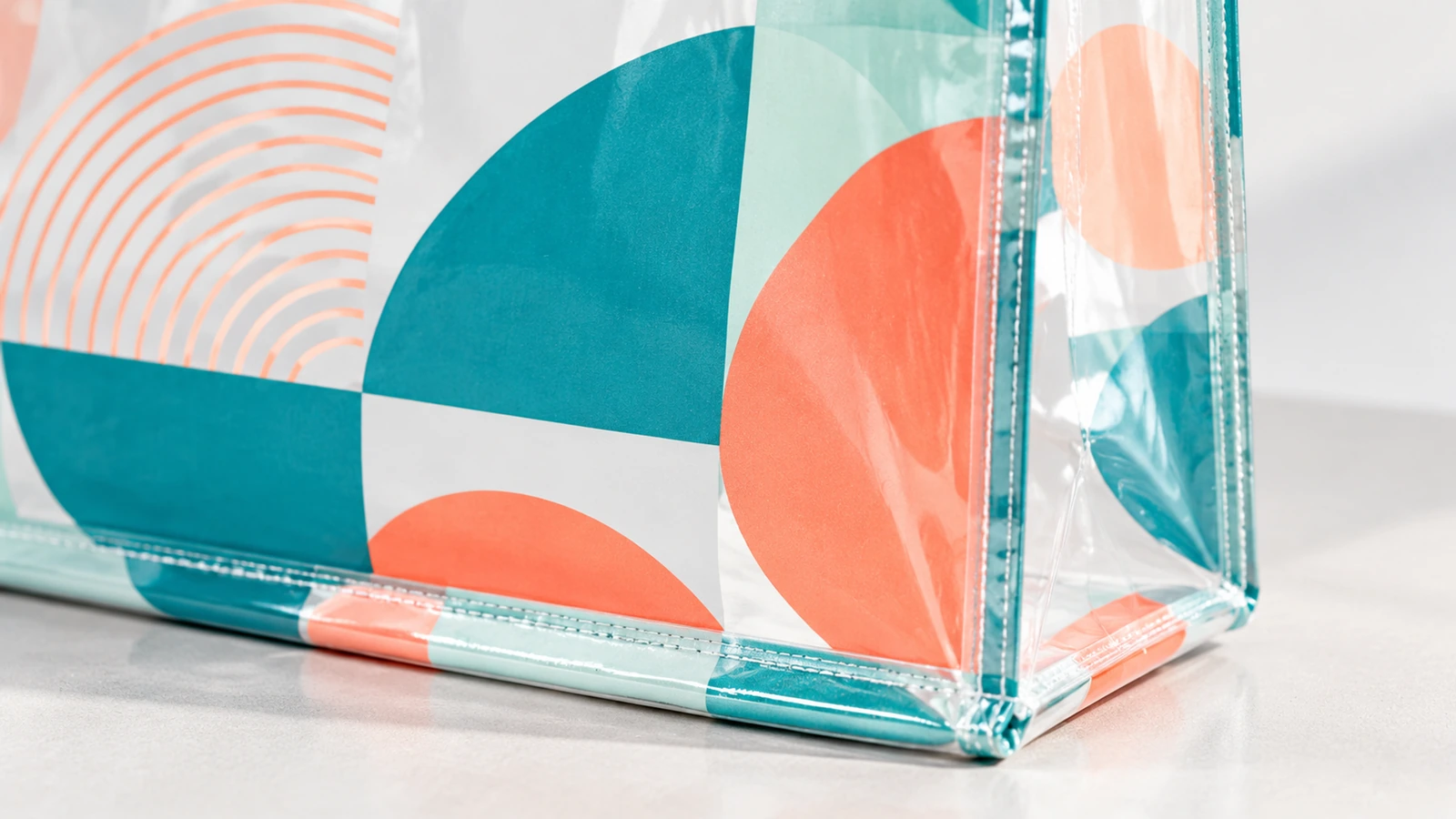
Submit artwork with its intended print dimensions and position. A logo file without placement instructions does not show how much transparent area will remain. The approval drawing should identify the printed side, alignment reference and any relationship between the graphic, trim and seams.
Screen printing and multicolor processes appear in the supplied market research, but suitability for this bag remains unconfirmed. Request a proposed process based on the artwork and selected PVC formulation. Ink adhesion and resistance to rubbing need assessment on the actual material, not just on a digital mockup.
Use brand color references as targets for sampling, not promises of perfect reproduction. A transparent substrate and the objects behind it can affect perceived color. Agree viewing conditions and an acceptable printed reference before approving production.
- Artwork file: retain the approved design revision and intended reproduction size.
- Placement drawing: show the print boundary, orientation and reference edges.
- Application record: include the event policy or retail presentation brief.
- Approval record: distinguish digital layout approval from physical print approval.
- Change record: document revisions to artwork, ink, film or construction.
A correct logo file does not compensate for the wrong physical layout. Review the complete bag with its trim and closure visible so the approved graphic cannot later be interpreted independently of the construction.
How do you move from sample approval to production? ↑
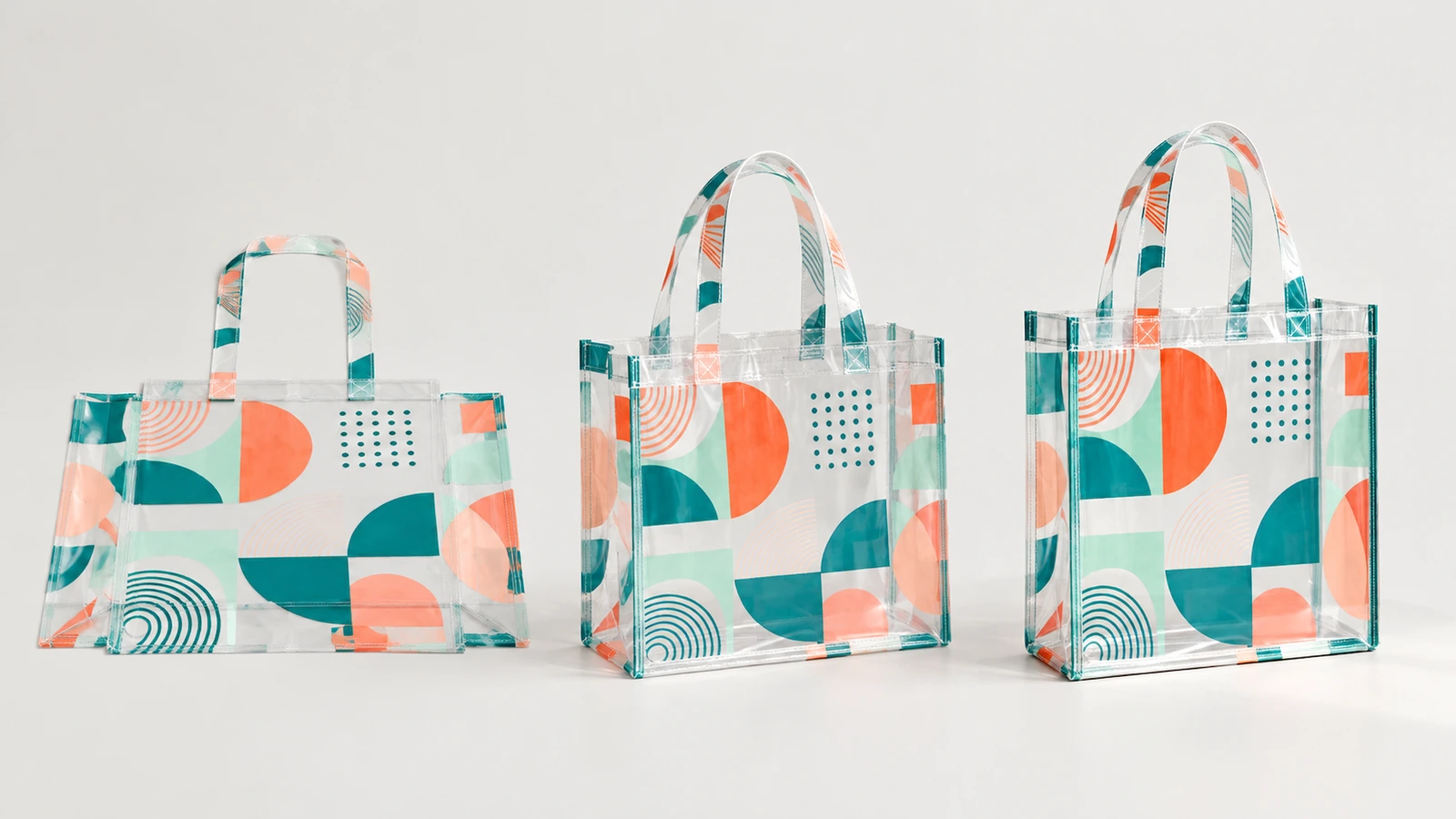
Separate concept approval, sample approval and production authorization. A digital rendering establishes the intended appearance. A physical sample is needed to assess the proposed film, handle construction, closure and print. Neither step establishes a delivery date unless the schedule is separately confirmed.
- Define the application. Record destination, intended users, contents, quantity and required arrival date.
- Resolve the specification. Confirm dimensions, film, construction, artwork and packaging in the quotation.
- Review the sample. Check appearance and handling against the agreed brief; document corrections.
- Approve a reference. Retain the accepted sample and corresponding specification revision.
- Authorize production. Confirm the schedule, inspection plan and treatment of any material substitution.
- Release the shipment. Review agreed inspection evidence, quantities and packing information.
Any change after sampling should be assessed for its effect on appearance, testing and timing. A different film formulation, ink system or handle attachment may need renewed evaluation. Matching the artwork while changing the material does not preserve the entire approved product.
Work backward from arrival, not merely the planned production finish. Sampling, revisions, testing, manufacture, inspection and transport are separate stages. This product has no verified sample lead time or production time; supplier-specific estimates elsewhere in the market are not commitments for this order.
Which checks belong in the acceptance plan? ↑
Replace broad requests such as “good quality” with observable acceptance criteria. Define the measurement method, sample selection, test conditions and treatment of failures before production. Do not describe sampling as full inspection; they are different levels of coverage.
| Checkpoint | Proposed evaluation | Evidence to retain |
|---|
| Dimensions and film | Measure agreed locations and compare with approved tolerances | Recorded readings and specimen identification |
| Appearance | Inspect clarity, scratches, creases, cloudiness and color against the reference | Consistent-lighting photographs and defect records |
| Handles and seams | Assess lifting and repeated handling with an agreed load and procedure | Test conditions and observed failure points |
| Closure | Check operation and attachment using an agreed cycling procedure | Functional inspection record |
| Print | Check placement, color, adhesion and rubbing resistance | Approved print reference and test record |
| Odor and aging | Agree conditioning and evaluation for the intended storage and use | Conditions, observations and any laboratory findings |
These are proposed checks, not completed tests. No carrying-load rating, cycle count, odor-clearance period or resistance to yellowing is established for this product. Visual inspection and odor assessment also cannot replace chemical analysis.
For U.S. chemical requirements, classify the intended product before choosing a test package. The specified phthalate restriction covers children’s toys and child care articles, not automatically every adult tote or every children’s accessory. Its threshold is more than 0.1% (1000 ppm) of each restricted phthalate in an accessible plasticized component. The eight substances are DEHP, DBP, BBP, DINP, DIBP, DPENP, DHEXP and DCHP. Applicable testing and certification should follow that classification, as explained in CPSC phthalate guidance[3].
California requires a separate exposure and warning assessment; passing a concentration test does not by itself settle that question. DEHP appears on the Proposition 65 list for cancer and reproductive toxicity. See the OEHHA DEHP entry[4]. No warning determination or compliance claim is established for this SKU.
For EU distribution, include a REACH restricted-substance assessment in the purchasing brief, covering relevant plasticizers and PVC lead restrictions. Request reports with identified samples, methods, results and a documented connection to the proposed materials. A generic supplier declaration should not be treated as proof for an unidentified production batch.
How should buyers compare materials and supply routes? ↑
Compare quotations against the same intended use. A stock bag with a printed logo and a newly specified construction are not equivalent offers. Likewise, a different transparent material should be evaluated as a new material choice rather than assumed to retain the PVC sample’s appearance or performance.
| Option | Reason to investigate | What remains to verify |
|---|
| Stock clear PVC bag with decoration | An existing shape may suit a straightforward branding brief | Available quantity, dimensions, print restrictions and actual schedule |
| Custom PVC construction | The project needs changes to size, handles, trim or opening | Feasibility, sampling costs, minimum quantity and production timing |
| Clear TPU alternative | The brief calls for a comparison of flexibility, odor or cold-weather behavior | Material identity, sample performance and quoted cost difference |
| PEVA alternative | The buyer wants another material route assessed | Clarity, construction, printing and application suitability |
| Opaque fabric tote | The priority is everyday branding rather than visible contents | Whether an opaque bag is compatible with the intended event |
Do not adopt a universal TPU price premium or lifespan multiplier from supplier articles. Obtain comparable quotes and samples. A material name alone does not establish chemical compliance, cold resistance, recyclability or entry acceptance.
Separate unit price from setup, sampling, testing, special packing and freight. Also state whether duties and destination delivery are included. A lower bag price can be outweighed by charges omitted from the comparison or by a delivery method that cannot meet the event schedule.
For environmental claims, distinguish intended reuse from demonstrated environmental benefit. Do not label this product biodegradable, widely recyclable or environmentally preferable without supporting evidence. Local collection acceptance and any recycled-content claim need separate confirmation; changing to TPU or PEVA does not automatically resolve those questions.
How can packing and reorder records protect consistency? ↑
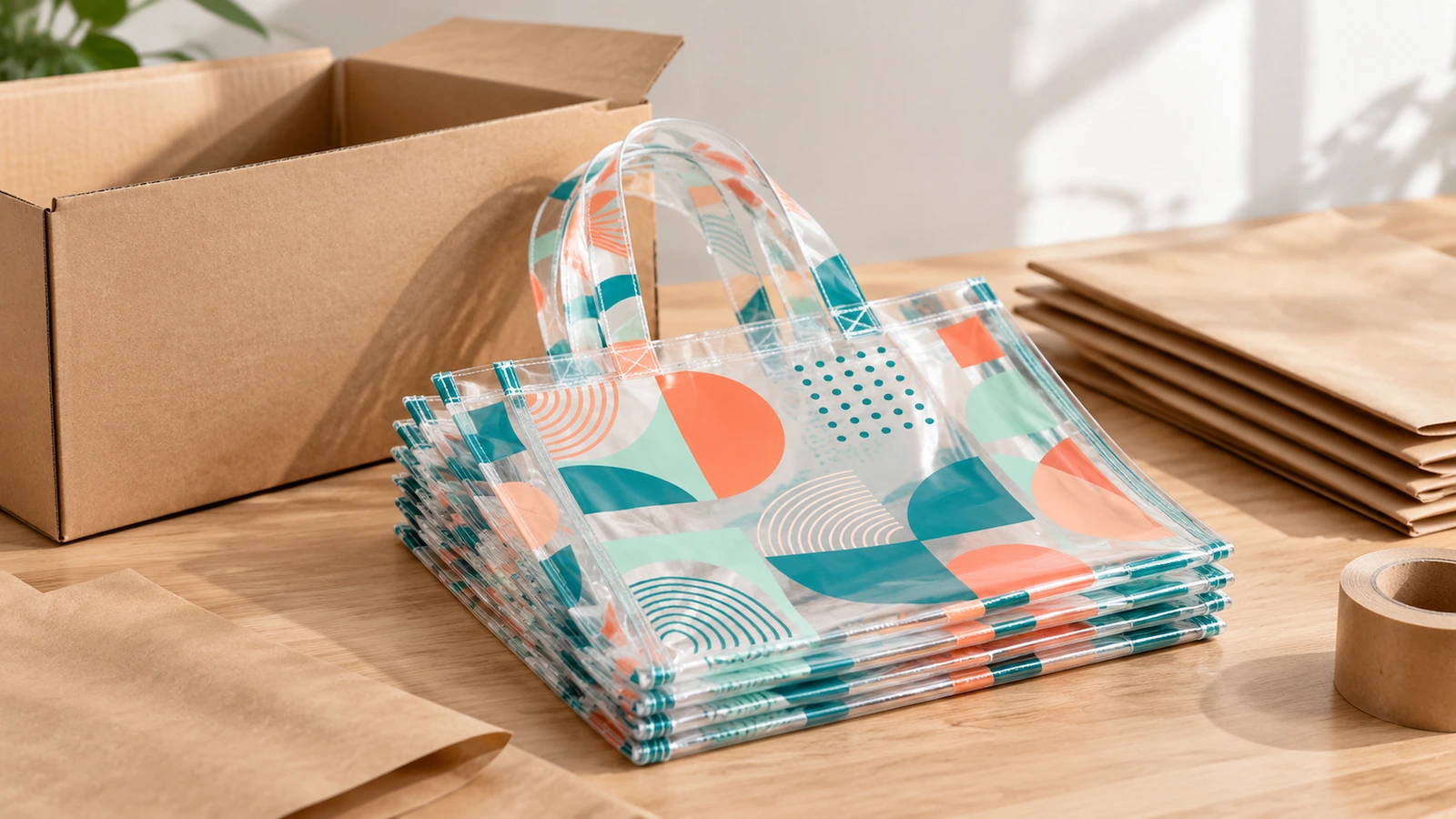
Transparent surfaces make packing damage conspicuous. Specify how finished bags will be protected from rubbing, hard folds and contact with abrasive objects. Review individual protection and carton arrangement with the supplier rather than assuming the packing used for a photograph represents shipment conditions.
Carton quantity, dimensions, net weight and gross weight remain to be confirmed. These figures are needed for freight comparison, but they should come from the proposed packing arrangement rather than a competitor’s listing. Retain loading photographs and establish how shortages or transit damage will be documented.
For care instructions, start with gentle wiping, a damp cloth and air drying, subject to sample confirmation. Avoid presenting solvent cleaning or machine washing as approved methods. Do not call the complete bag waterproof without testing its seams, closure and attachment points.
Store the approved sample, material specification, artwork revision, inspection records and packing details together. On a reorder, ask whether the film, ink or construction has changed. An unchanged product name is not evidence of an unchanged formulation or manufacturing result.
What matters most before placing an order? ↑
- Children’s-product lead requirements are distinct from the narrower phthalate scope. — The accessible-component total-lead limit is 100 ppm, subject to applicable exceptions (Source[5]).
- Approve the finished configuration. — Dimensions, visibility, artwork, handles and closure should be evaluated together.
- Keep performance claims conditional until tested. — Capacity, carrying load and item fit depend on physical dimensions, loading arrangement and sample validation.
- Compare complete commercial offers. — MOQ, production time, unit weight, price and packing remain unverified for this reference.
- Preserve the evidence behind repeat orders. — Retain the approved sample, specification revision and relevant inspection and material records.
Turn your requirements into a quote-ready brief ↑
The strongest purchase brief connects the intended experience with measurable acceptance criteria: what the bag should display, how it will be carried, where it will be used and what evidence is required before shipment. That creates a practical basis for selecting custom clear PVC tote bags without relying on unsupported durability, compliance or delivery claims.
Request a specification-based quote for NSKU-791-02 with your quantity, destination, required arrival date, intended contents, artwork and any venue-policy link.




The information below is required for social login
Sign In
Create New Account