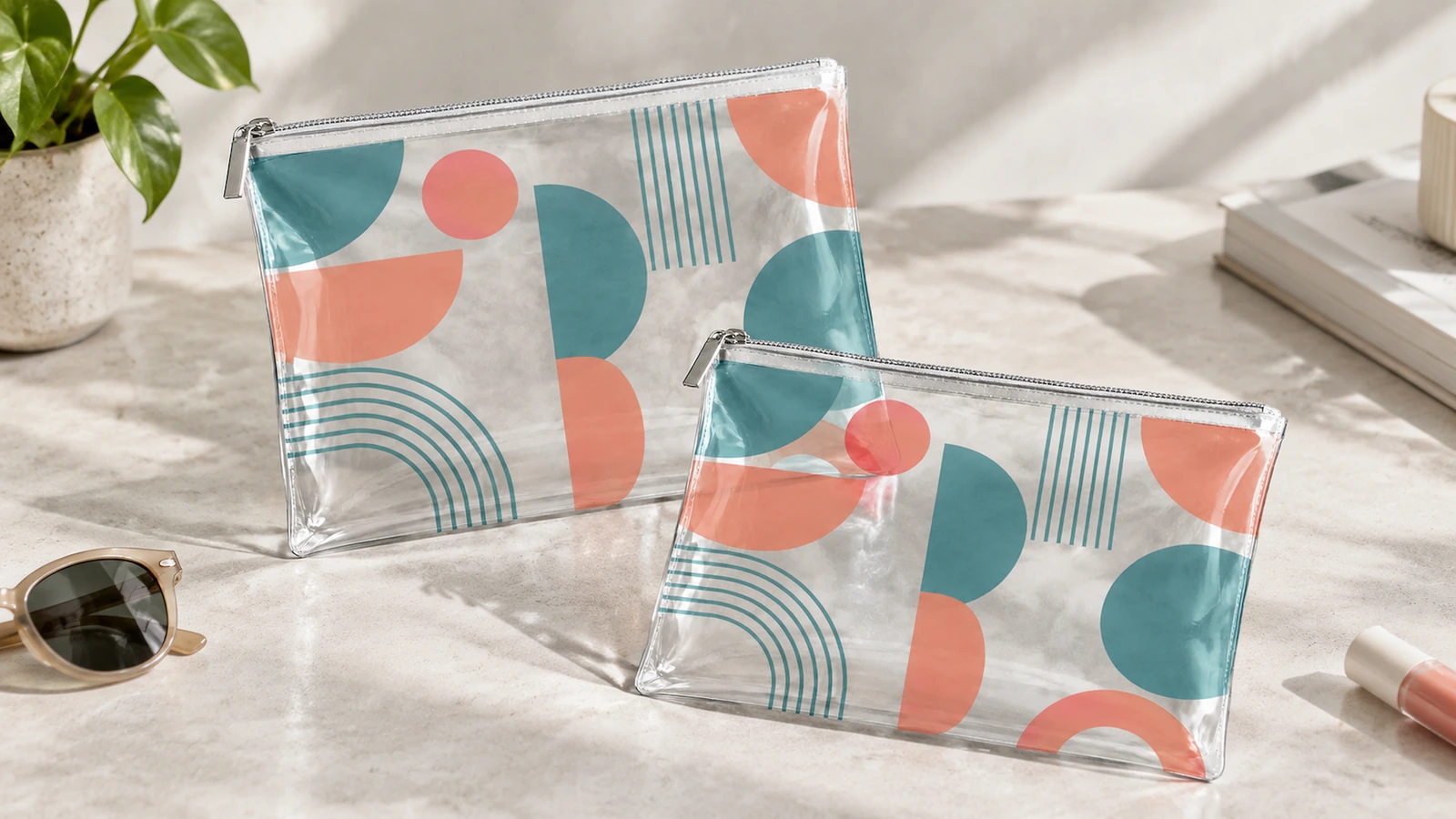
Custom clear PVC zipper pouches combine visible product presentation with a zippered opening for cosmetics, promotional kits, and small accessories. Specify the usable interior, film thickness, closure, and artwork together, then approve a filled sample. Pricing, minimum order quantity, production timing, and performance require project-specific confirmation.
Product category: Custom Plastic Bags / Custom PVC Bags. Product reference: NSKU-791-01. The guidance below separates customization requests from confirmed specifications: no product-specific factory test results, certifications, minimum order quantity, production time, or unit weight have been supplied for this reference.
Make the contents visible without losing your brand identity ↑
For beauty brands, the pouch can form part of a gift-with-purchase presentation around individually packaged products. For event buyers, it can organize welcome materials or promotional accessories. For jewelry sellers, it offers a visible presentation format, but transparency alone does not establish anti-tarnish protection or suitability for prolonged contact with a particular finish.
Each application needs a different brief. A cosmetic kit requires clearance around bottle caps and enough opening space for removal. An onboarding kit needs readable cards and accessible cables. Jewelry packaging needs attention to card corners, surface contact, and movement during delivery. Capacity and item count must be determined by actual product dimensions, loading arrangement, and sample validation.
A good-looking pouch should also work when filled ↑
A clear bag can look convincing in an empty product photograph yet disappoint when packed. The closure may strain around a bottle, a printed logo may disappear against the contents, or the presentation may arrive creased. These are different problems, so choosing a thicker film without checking the complete construction is not a complete solution.
The commercial consequence is avoidable rework: repacking kits, replacing unsuitable pouches, or revising launch materials after approval. A more useful starting point is the actual set of contents, the intended handling pattern, and a written acceptance checklist. Evaluate the pouch as a finished package rather than approving its appearance in isolation.
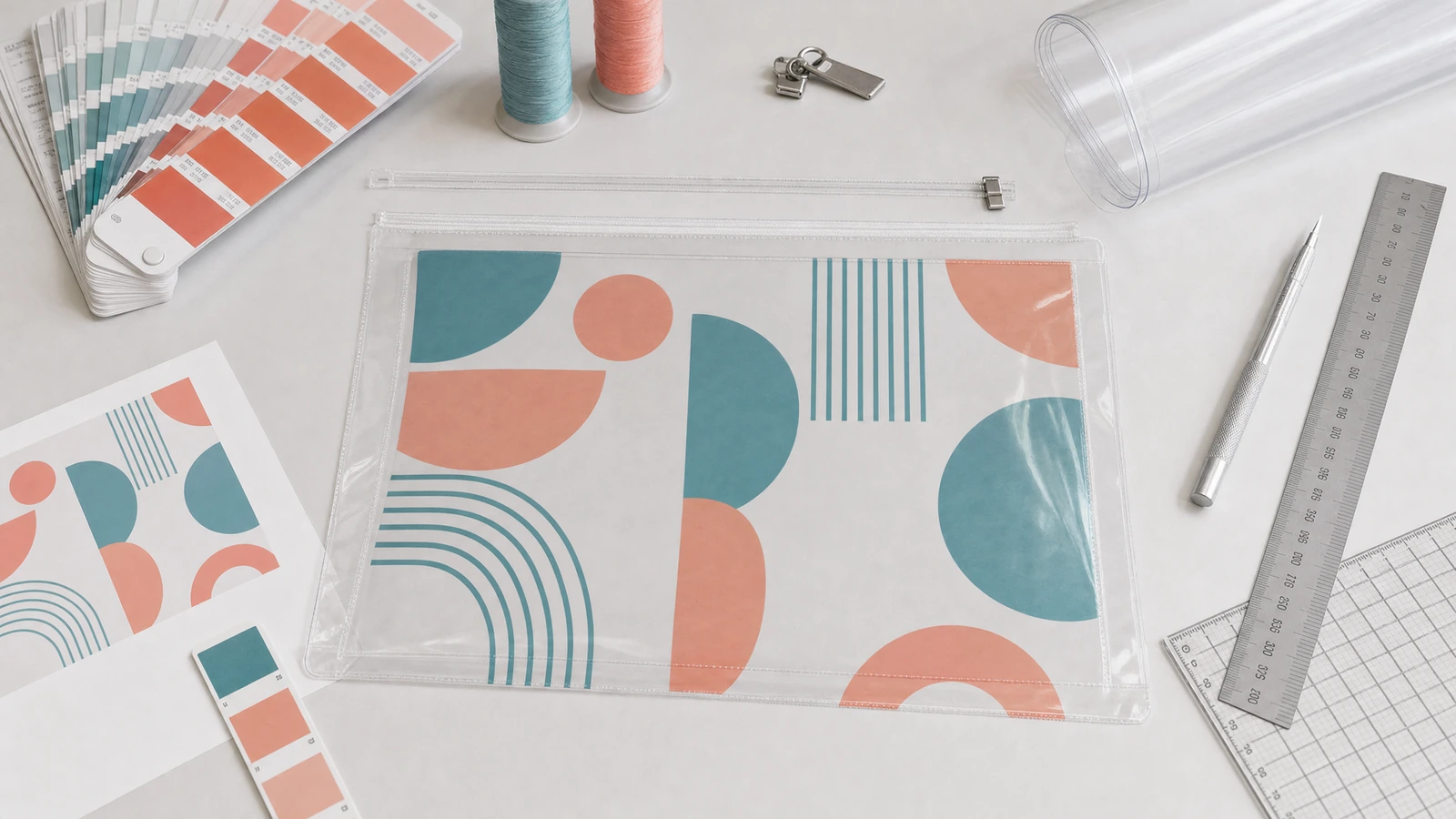
Explore specifications, sampling, and buying considerations
What exactly are you specifying? ↑
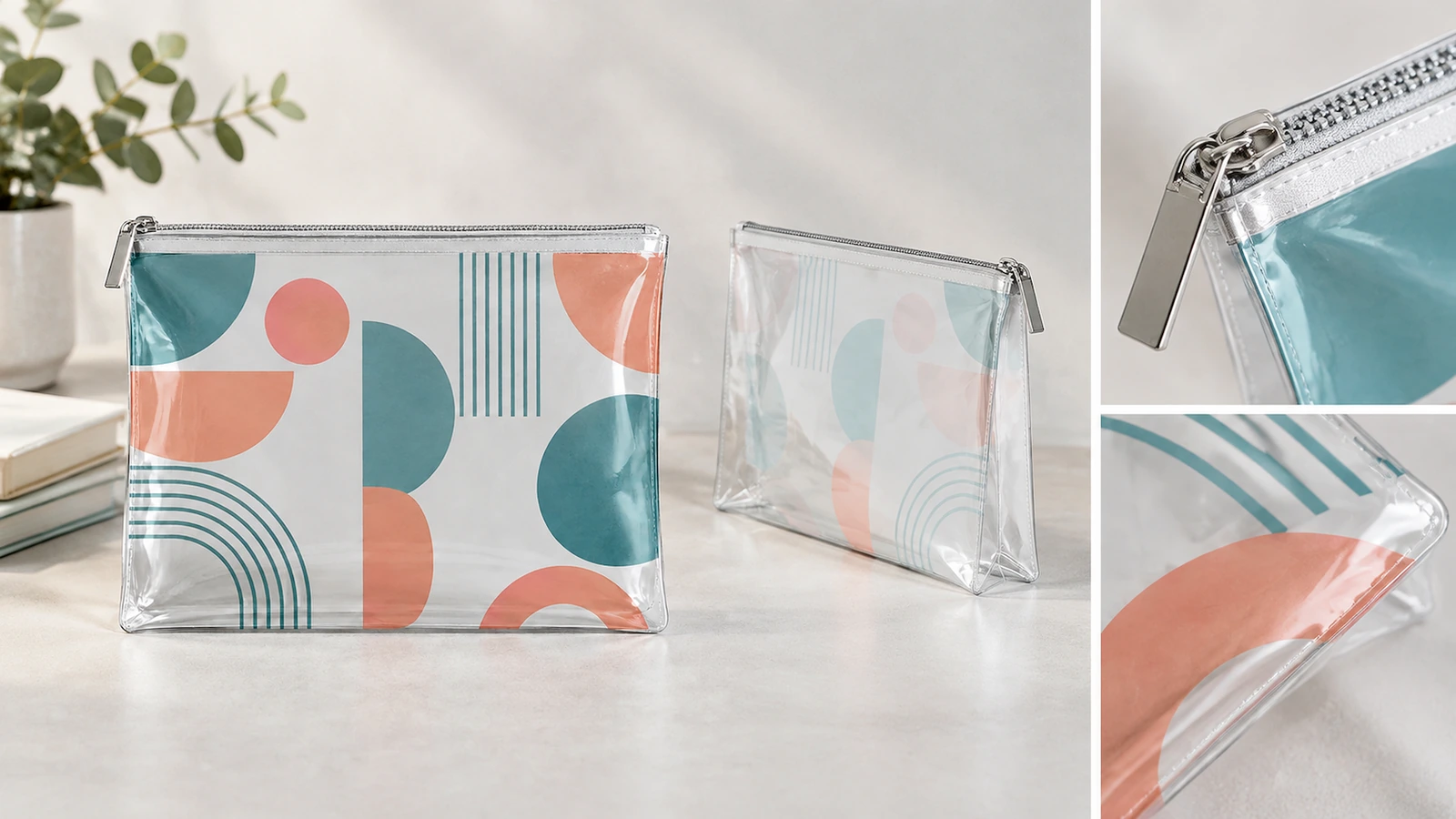
A clear PVC zipper pouch is a transparent polyvinyl chloride bag with a zippered opening. The category includes different film formulations, closures, and seam constructions. A slider-operated resealable profile and a toothed zipper should not be treated as interchangeable: identify the required closure with a photograph, drawing, or physical reference.
“Custom” should describe the agreed changes, not imply unlimited manufacturing options. Dimensions, film, print, zipper color, and finishing may be quotation variables, but availability must be established for this project. Likewise, a surface that can be wiped does not establish a watertight finished bag. Closure ends, seams, and any attachment points need separate consideration.
How do you confirm fit and readable branding? ↑
Begin with the contents in their intended selling or gifting arrangement. Measure bottles with caps fitted, jewelry with its display card, and folded items as they will actually be packed. Specify both external dimensions and the usable interior. Seam allowances, zipper placement, and any gusset should appear on the drawing rather than being absorbed into an ambiguous overall measurement.
| Specification field | What to record | How to evaluate it |
|---|
| Finished dimensions | Width × height × depth, where applicable, in mm | Compare the finished sample with the approved drawing and agreed tolerances |
| Usable interior | Clear space inside seams and below the closure | Fill with the actual products in the intended arrangement |
| Opening | Usable opening and closure position | Insert and remove the largest item without forcing it |
| Film thickness | Single-wall thickness in mm or μm, with tolerance | Measure agreed locations rather than estimating by touch |
| Brand visibility | Print position and clear viewing area | Review against the real contents, both filled and empty |
These are fields to complete, not confirmed dimensions or tolerances for this product. Use a consistent unit system across the inquiry, drawing, sample record, and order. If a supplier uses “gauge,” request its stated conversion rather than assuming that different catalogs use the term identically.
Readable branding needs its own check. A light logo can become difficult to distinguish against pale packaging, while a large opaque print may hide the products the clear pouch is meant to display. Review the layout with the actual kit behind it. Any fitted quantity or capacity remains dependent on physical dimensions, loading, and sample validation.
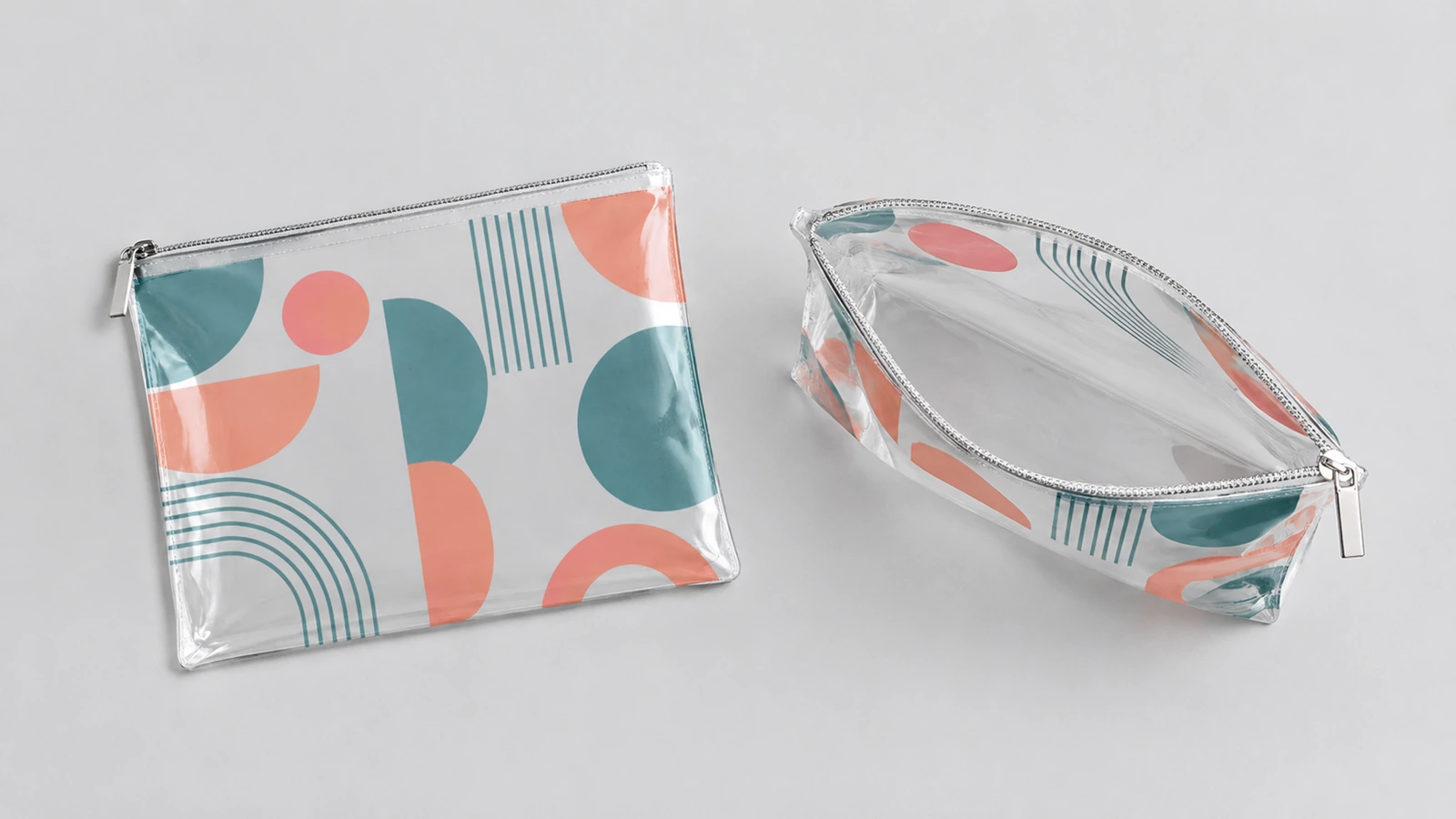
Which surface and attachment details belong in your brief? ↑
For a product sold as clear, establish the viewing area that must remain transparent. If a frosted treatment, colored trim, or opaque printed panel is requested, show its boundaries on the artwork. Evaluate the resulting visibility and hand feel on a physical sample; a screen rendering cannot establish surface texture, scratch appearance, or fold marks.
A rear clip or other attachment is not a confirmed feature of this product. If your application needs one, present it as a separate feasibility request. Define where it connects and how the pouch will be handled. Its attachment strength and any carrying load require an agreed test on the proposed construction, not an assumption based on the hardware’s appearance.
The simplest brief may need no attachment at all. Separating essential features from optional requests makes quotation comparisons clearer and avoids approving decorative hardware before its effect on packing, surface contact, and handling has been evaluated.
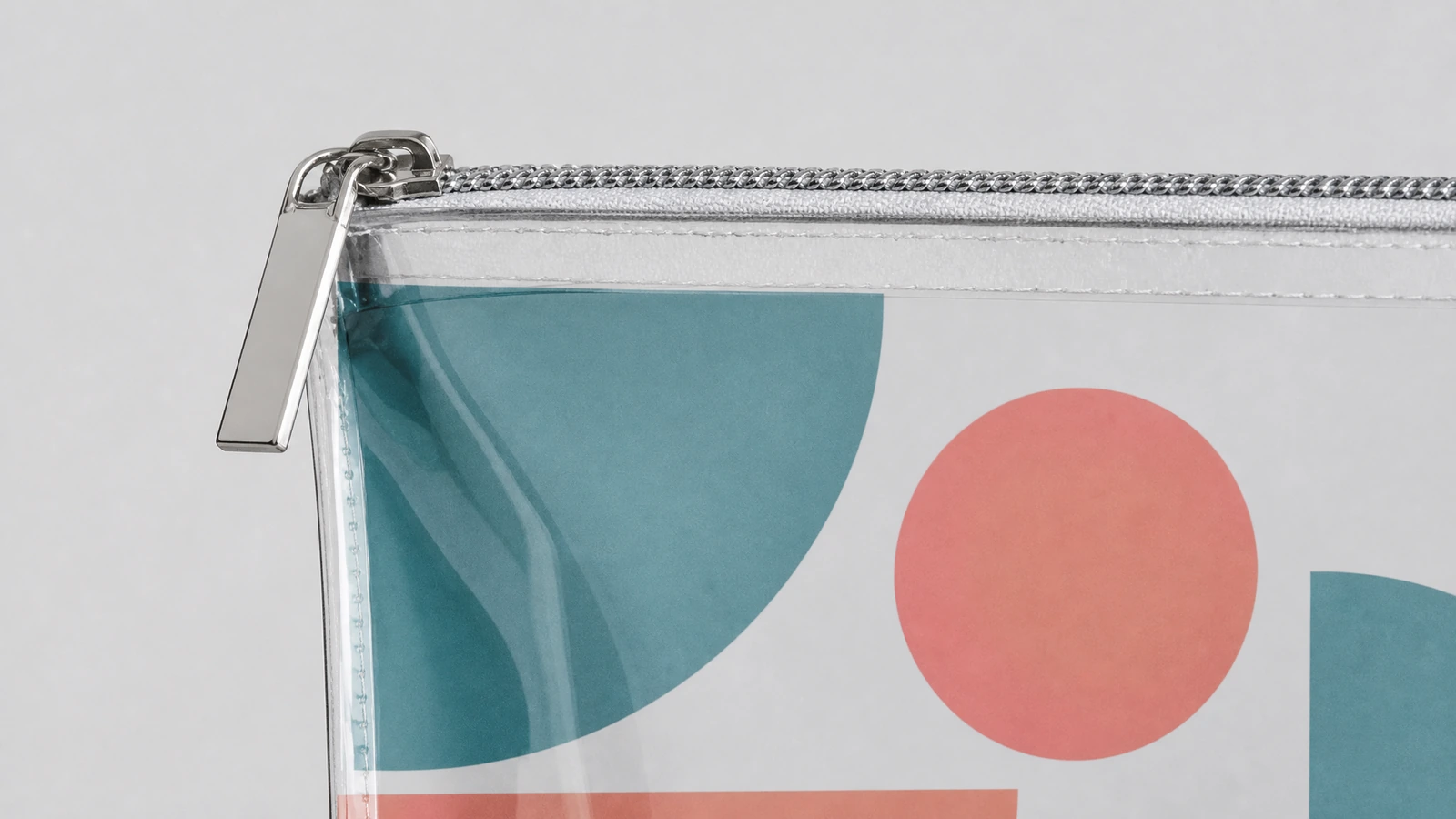
How should artwork be checked before sampling? ↑
Supply the logo file, intended print size, placement, and color references together. Ask the proposed producer to confirm file suitability and printable boundaries before preparing a physical sample. Screen printing, UV printing, and foil effects appear in market offerings, but that does not establish that every method is available or appropriate for this product reference.
- Check scale: review small lettering and fine lines at their intended finished size.
- Check background: assess whether transparent areas or the packed contents change the logo’s appearance.
- Check separation: identify any proposed white underprint rather than leaving opacity undefined.
- Check placement: keep critical artwork away from seams, folds, and closure interference.
- Check references: distinguish requested color matching from an approved physical color sample.
A digital proof establishes layout, not ink adhesion or rub resistance. Approve the printed sample separately and record the inspection method for print wear. If the zipper pull also carries branding, review that component independently; acceptance of the bag artwork should not automatically approve a different print or marking process on hardware.
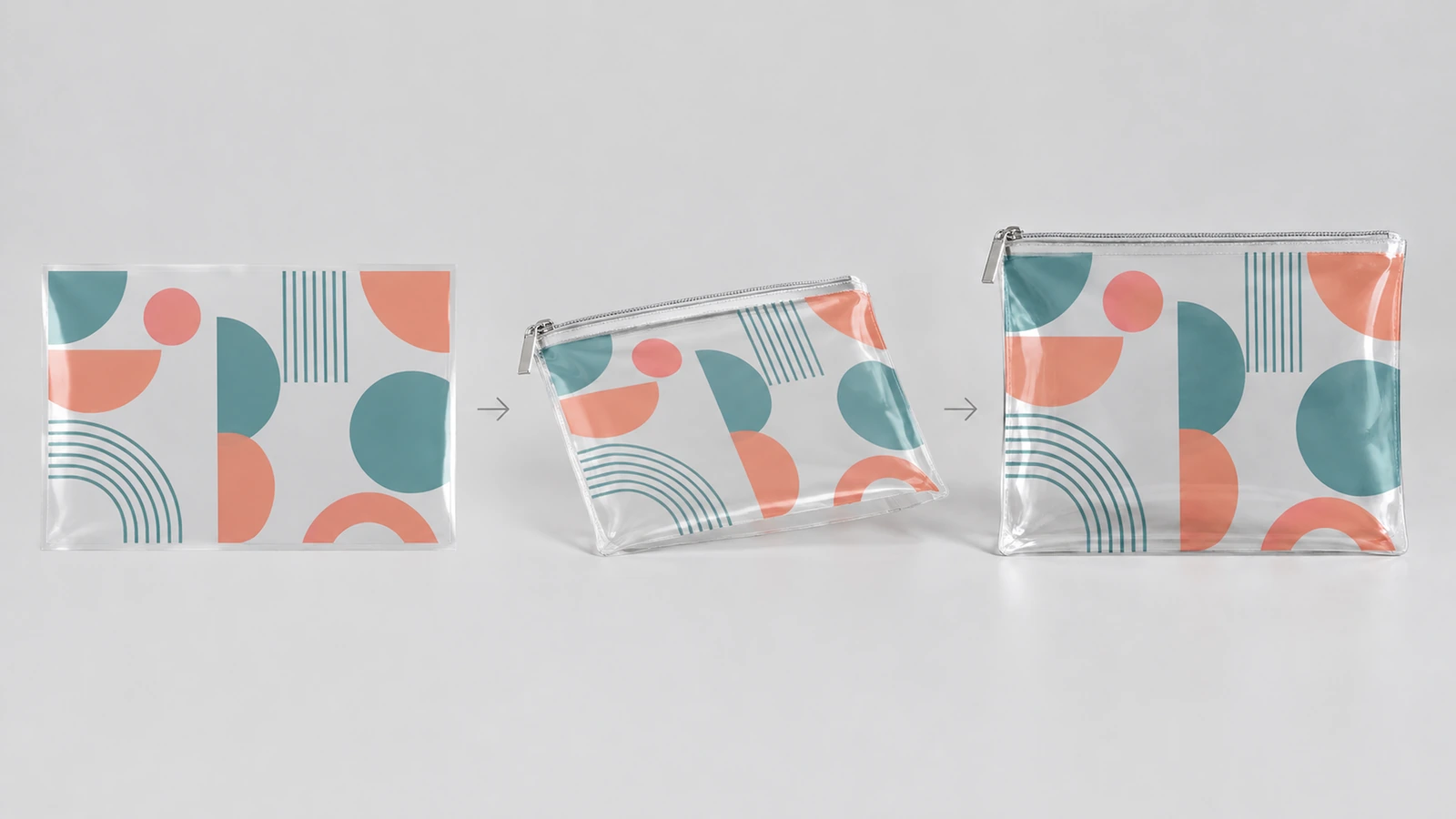
What should happen between the brief and production approval? ↑
A useful approval sequence connects every decision to a record. The following is a proposed purchasing workflow, not a claim about an existing factory process or turnaround time.
- Define the application. Record contents, intended users, sales destination, packing method, and required arrival date.
- Confirm quotation scope. Establish the proposed film, construction, closure, print method, packaging, and separate charges.
- Review the drawing and proof. Resolve dimension definitions, printable areas, colors, and optional features.
- Evaluate a physical sample. Perform the filled-fit, opening, appearance, and agreed performance checks.
- Freeze the approved specification. Retain the sample reference, artwork revision, component details, and acceptance criteria.
- Authorize production against that version. Confirm schedule assumptions and inspection arrangements in writing.
Clarify whether the sample uses the proposed production film, zipper, and print process. A sample made from substitute materials can help assess shape, but it should not be treated as evidence of final odor, appearance, or durability. Record every substitution and identify what still needs approval.
Separate sample preparation, production, inspection, and transportation when discussing timing. A dispatch date is not an arrival date. This product has no verified lead-time commitment in the supplied information, so obtain a written schedule tied to the agreed approval and payment conditions rather than borrowing a competitor’s advertised turnaround.
Turn quality expectations into sample checks ↑
Words such as “durable,” “premium,” and “heavy duty” do not define acceptance. Identify the failure modes that matter to your application and agree how to check them. Film thickness, zipper operation, seam integrity, print appearance, and packed presentation should be evaluated separately so that one favorable result does not conceal another weakness.
| Inspection area | Proposed check | Evidence to retain |
|---|
| Closure operation | Open and close empty and filled samples using an agreed cycle count | Test conditions, completed cycles, jamming, detachment, or opening failures |
| Seams and corners | Inspect before and after agreed filled-handling tests | Photographs and a defined pass/fail criterion |
| Film consistency | Measure thickness and review clarity, creases, and scuffs | Measurement locations, readings, and appearance reference |
| Odor | Assess after an agreed sealed-storage and opening procedure | Storage conditions, assessment timing, and findings |
| Print | Review placement, readability, color, and agreed rub testing | Approved print sample and inspection record |
| Leakage claims | Test the finished construction only against a defined intended exposure | Method, duration, orientation, and observed leakage paths |
No pass result or test threshold is claimed here. Set the sample count, conditions, and acceptance limits before testing. A supplier’s advertised zipper cycle figure or seam-strength value for another pouch cannot be transferred to this configuration.
Odor assessment is a presentation check, not a chemical compliance test. A mild-smelling sample does not prove the absence of restricted substances, and a noticeable smell does not identify a particular chemical. Keep sensory acceptance and laboratory documentation as separate requirements.
If the pouch will encounter cold storage, prolonged light exposure, or repeated folding, include those conditions in the test brief. For jewelry, request contact compatibility checks rather than relying on an “anti-oxidation” label. For toiletries, test with securely closed products; the pouch is not a substitute for a suitable primary container.
Compare complete specifications, not isolated unit prices ↑
Market listings mix stock pouches with added logos, fully customized structures, miniature accessory bags, and larger travel organizers. Their advertised prices are not interchangeable. Compare the same finished size, film specification, closure, artwork, quantity, testing scope, and packing arrangement before deciding which quotation offers better value.
| Route to compare | Question it can help resolve | What still needs confirmation |
|---|
| Stock clear pouch with added branding | Can an existing shape meet the brief? | Usable dimensions, print area, stock status, and sample suitability |
| Custom PVC construction | Does the project need a different layout or structure? | Manufacturing feasibility, setup charges, minimum quantity, and approval schedule |
| TPU alternative | Would another clear material better meet the requested hand feel? | Like-for-like cost, clarity, odor, closure construction, and performance tests |
| EVA alternative | Is a softer or frosted presentation acceptable? | Actual visibility, surface marking, fold appearance, and finished specification |
| PE or OPP packaging route | Is a simpler inner-packaging format sufficient? | Closure type, display expectations, handling needs, and any contact requirements |
Alternative materials are comparison candidates, not confirmed options for this SKU. Do not assume a material change automatically establishes food-contact suitability, better environmental performance, or longer service life. Compare samples under the same intended conditions and review documentation for the complete construction.
Request an itemized commercial offer covering unit price, printing setup, tooling where applicable, sampling, testing, protective packaging, and transport. Specify the trade terms and which destination charges are excluded. Minimum quantities may depend on design and color splits, so state the breakdown rather than providing only a combined order total.
For a limited launch, first determine which requested changes are essential. Removing an unnecessary feature may simplify the proposal, but no saving should be assumed until quoted. Price, MOQ, production time, and unit weight remain unverified for this product; none should be inferred from another supplier’s listing.
Match documentation to the intended market and use ↑
Start by distinguishing secondary packaging for closed cosmetic containers from direct contact with food or cosmetic contents. Ordinary pouch specifications do not establish suitability for direct-contact applications. Where such contact is intended, request the applicable material authorization, supporting test documentation, and use conditions for the actual formulation and complete construction.
For California sales, assess exposure to relevant listed substances rather than treating PVC as automatically prohibited or automatically compliant. Warning obligations and applicable exceptions require a product-specific assessment; a chemical-content result alone does not resolve every exposure question. Refer to OEHHA Proposition 65 guidance[1].
For European orders, identify the applicable REACH and persistent-organic-pollutant requirements and determine whether the item is being supplied as packaging or as a reusable product. Food-contact claims require their own assessment. Do not assemble unrelated certificates into a blanket compliance claim or assume a report for unprinted film covers the zipper, ink, and accessories.
Ask for the report number, laboratory, issue date, tested sample identification, covered components, methods, and results. Match these to the proposed materials and manufacturing records. “Phthalate-free” requires a defined substance scope and supporting evidence; neither the PVC name nor a material substitution establishes that claim by itself.
Environmental statements need the same discipline. Do not describe the finished pouch as universally recyclable, biodegradable, or environmentally preferable without evidence supporting the specific wording. Identify an actual collection route before making a recycling claim, and do not equate possible reuse with a demonstrated environmental benefit.
Protect the presentation through delivery and reordering ↑
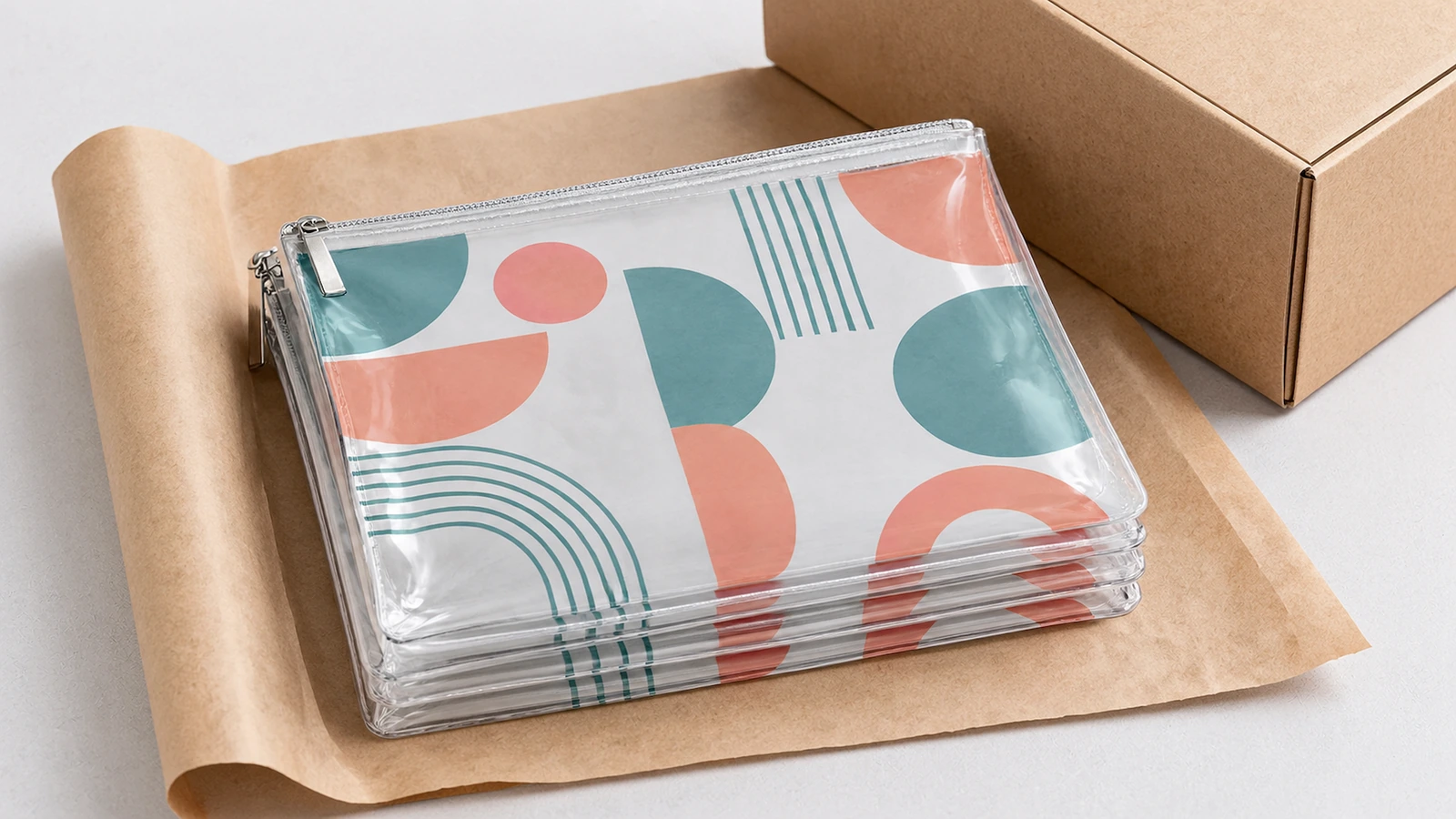
Approve protective packing alongside the pouch. Request a trial arrangement that limits rubbing, pressure marks, and unwanted folding during shipment. Individual protective sleeves, interleaving, and carton layout are options to evaluate, not confirmed inclusions. Inspect unpacked samples after the agreed transport simulation or trial delivery.
Agree how defects will be documented and resolved before placing the order. Distinguish dimensional errors, closure failures, seam damage, printing deviations, and shipping damage. The purchasing record should identify the responsible party, evidence required, and remedy arrangements without assuming a warranty or replacement policy that has not been offered.
For reorders, retain the approved drawing, artwork revision, physical sample reference, material description, closure specification, and packing instructions. Require notice of component or formulation substitutions. A matching photograph is not enough to establish that the new batch matches the previously approved construction.
Key takeaways for a clearer purchasing decision ↑
- Fit comes from the loaded sample, not the product photograph. Record usable interior dimensions and validate capacity, item count, and closure clearance with the actual contents.
- Travel-liquid rules do not certify this pouch. — The standard allowance is one quart-size bag per passenger, with individual containers limited to 3.4 ounces or 100 milliliters (Source[2]). Actual pouch suitability must be checked separately.
- Children’s-use classification changes the chemical review. — For covered children’s toys and child care articles, each of eight restricted phthalates must not exceed 0.1% (1,000 ppm) in accessible plasticized components (Source[3]). This rule does not automatically classify an adult cosmetic pouch as a covered article.
- Performance promises need configuration-specific evidence. Agree closure, seam, print, odor, and handling checks before approving bulk production.
- Commercial terms remain project-specific. Obtain the MOQ, production schedule, unit weight, and complete cost breakdown in the quotation.
Start with a specification that can be sampled ↑
The right pouch connects visible presentation with a workable opening, appropriate construction, and documented acceptance criteria. Set the brief around the contents and destination market, then resolve appearance, performance, and commercial terms through quotation and sampling.
Request a project-specific quote for NSKU-791-01 with your contents, dimensions, quantity breakdown, artwork, destination, and required arrival date.




The information below is required for social login
Sign In
Create New Account