Custom returnable poly mailers use separate outbound and return adhesive strips so customers can reseal the original bag for an eligible return. Specify the usable dimensions, opening path, artwork and label area together, then validate the complete pack with your actual merchandise before approving production.
For apparel brands, ecommerce packaging buyers and fulfillment teams: Custom Dual-Seal Returnable Poly Mailer Bags are a packaging option for non-fragile soft goods sold through a mail-back returns process. They are especially relevant when the customer needs to open a shipment, inspect or try the item, and potentially send it back in the same packaging.
Category: Custom Plastic Bags > Custom Mailing Bags. Product reference: NSKU-709-02, provisional. Final dimensions, film construction, printing options, minimum order quantity, production time and unit weight remain subject to quotation and sample confirmation; no product-specific factory test results are available for this reference.
A return can become unnecessarily difficult when the original bag is destroyed during opening. The customer must find another package, work out how to close it and position a new shipping label. Meanwhile, a warehouse that mistakes the second adhesive strip for extra outbound reinforcement can use up the return closure before the parcel leaves.
The answer is not simply another strip of glue. It is a coordinated design: an identifiable outbound seal, a protected return seal, an opening path that preserves the bag body and instructions that remain visible after opening. That combination addresses packaging friction without claiming to reduce merchandise returns, eliminate damage or replace your returns policy.

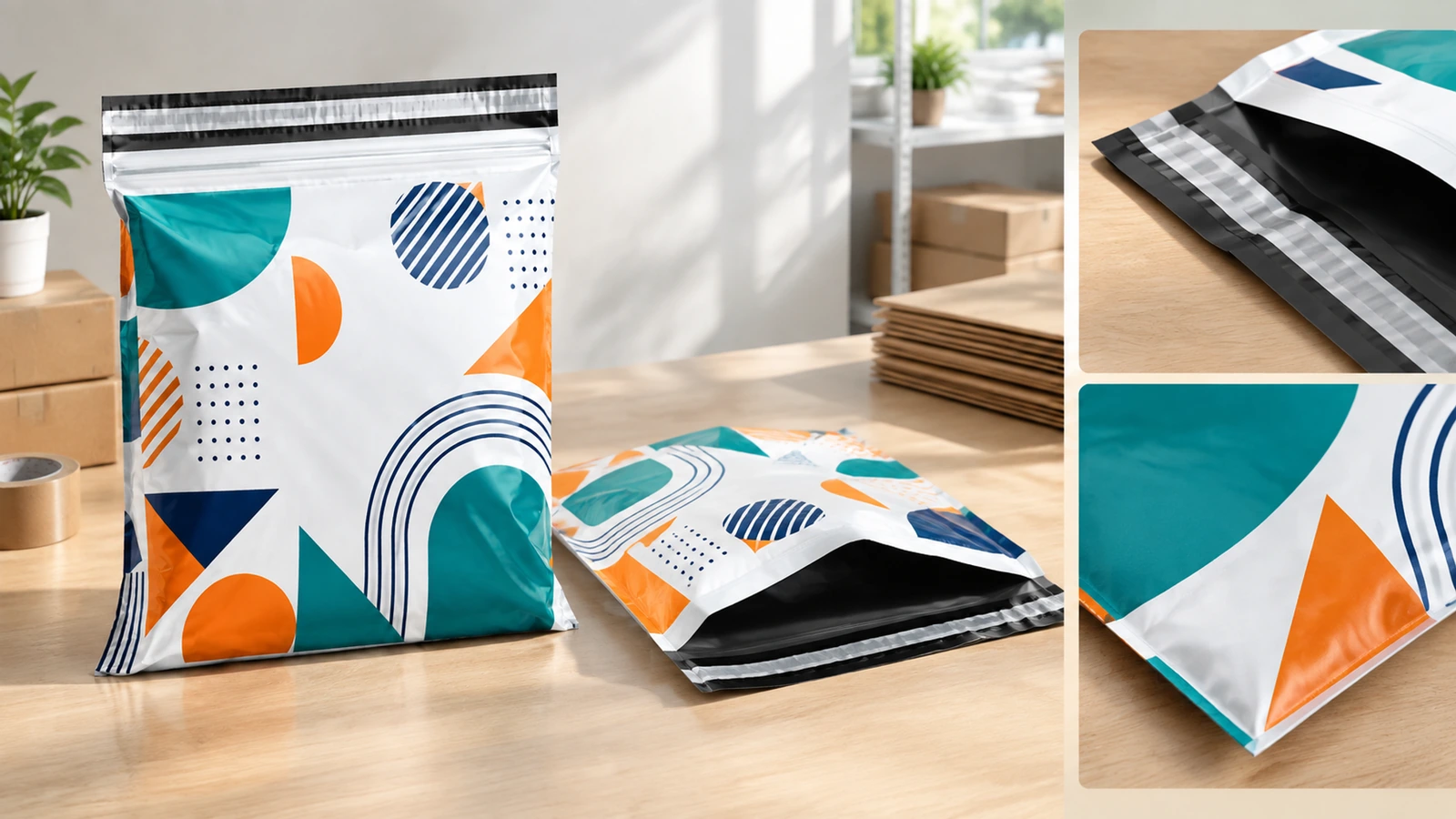
Illustrative application concept. Merchandise fit and suitability require physical sample validation.
On this page
What makes a mailer returnable? ↑
A returnable mailer preserves a fresh closure for the return journey. This product identity specifies dual adhesive seals: one for dispatch and another for the customer. The opening feature must separate the used closure from the remaining usable bag without damaging the return adhesive or the space needed to repack the merchandise.
The broader category is established for non-fragile ecommerce shipments. PAC Machinery’s returnable mailer description[1] identifies apparel and soft goods as applications and lists a 2–4 mil thickness range for its own products. Those specifications illustrate the category; they are not confirmed options or performance ratings for NSKU-709-02.
Returnable does not mean indefinitely reusable. Plan this dual-seal format around an outbound shipment and a possible return, not repeated opening and resealing. A multi-trip bag requires a different closure, an agreed service life and a collection or inspection system. Likewise, a return seal is not a prepaid return label or automatic authorization to return merchandise.
How do you specify dimensions and readable instructions? ↑
Measure the merchandise in its packed condition, including the thickest fold, tags and any protective inner packaging. Record width, length, thickness and packed weight rather than relying on descriptions such as “hoodie size.” Customers may not reproduce the original warehouse fold, so the return fit must be checked separately from the outbound fit.
| Specification field | What to record | Why it matters |
|---|
| Bag dimensions | Outside width and length, with flap inclusion stated | Prevents different measurement conventions from being compared as equivalent |
| Usable space | Internal fit before and after opening | The remaining bag must accommodate the returned product |
| Closure allowance | Flap geometry and unobstructed adhesive contact area | Overfilling can wrinkle the return closure or trap fabric |
| Film thickness | Nominal thickness, unit and agreed tolerance | Separates the requested specification from a vague durability claim |
| Reading and labeling areas | Opening instructions, return instructions and shipping-label positions | Critical information must survive folding, sealing and labeling |
Use consistent units across drawings and quotations. One mil equals 0.001 inch, or 25.4 µm. Capacity, load suitability and garment count depend on actual item dimensions, loading condition and sample validation; no fit quantity or maximum payload is established for this product.
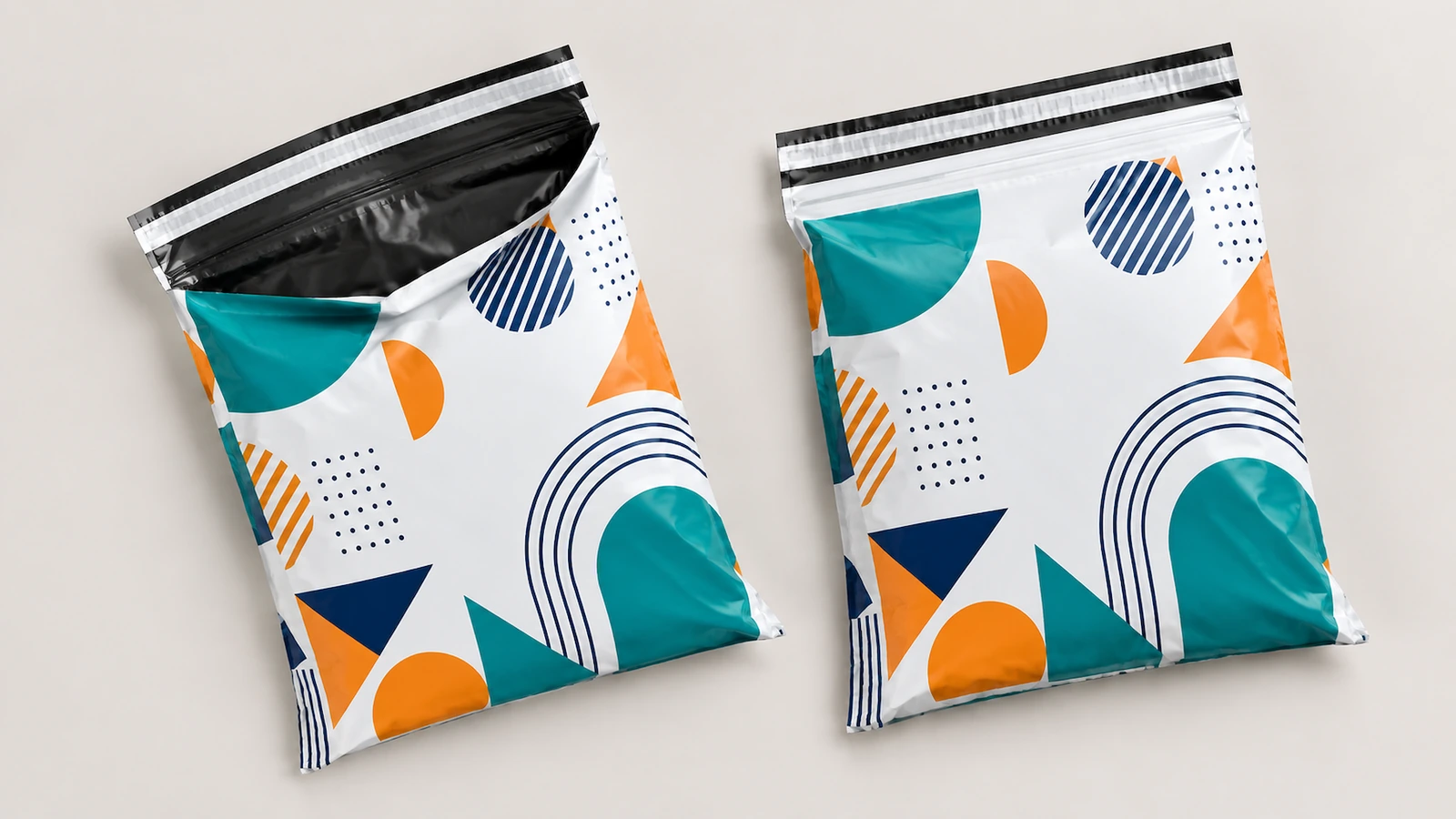
Evaluate instructions on a filled bag, not only a flat artwork proof. A prominent logo should not hide the opening cue, while the return instruction must remain on the retained portion of the package. Reserve a flat label area that does not bridge the tear path or cover the unused adhesive liner.
How should the surface and rear closure work together? ↑
For this mailer, the relevant rear fastening is the adhesive flap, not a buckle or mechanical clasp. The design brief should distinguish the outbound and return liners visually and verbally. Avoid relying on “top strip” or “bottom strip” alone, because handling orientation changes; identify each strip by its function.
Treat exterior color, interior opacity, print coverage and label adhesion as separate approval items. An attractive film color does not establish privacy, and a smooth-looking surface does not prove that a shipping label will remain attached. Specify the appearance you want, then evaluate a representative sample with your actual label stock.
A useful category caution comes from Uline’s S-17232 specification[2]: its 3 mil product has water-resistant material, but the supplier explicitly excludes the seal from that description. Do not turn a film property into a promise that an entire sealed package is waterproof.
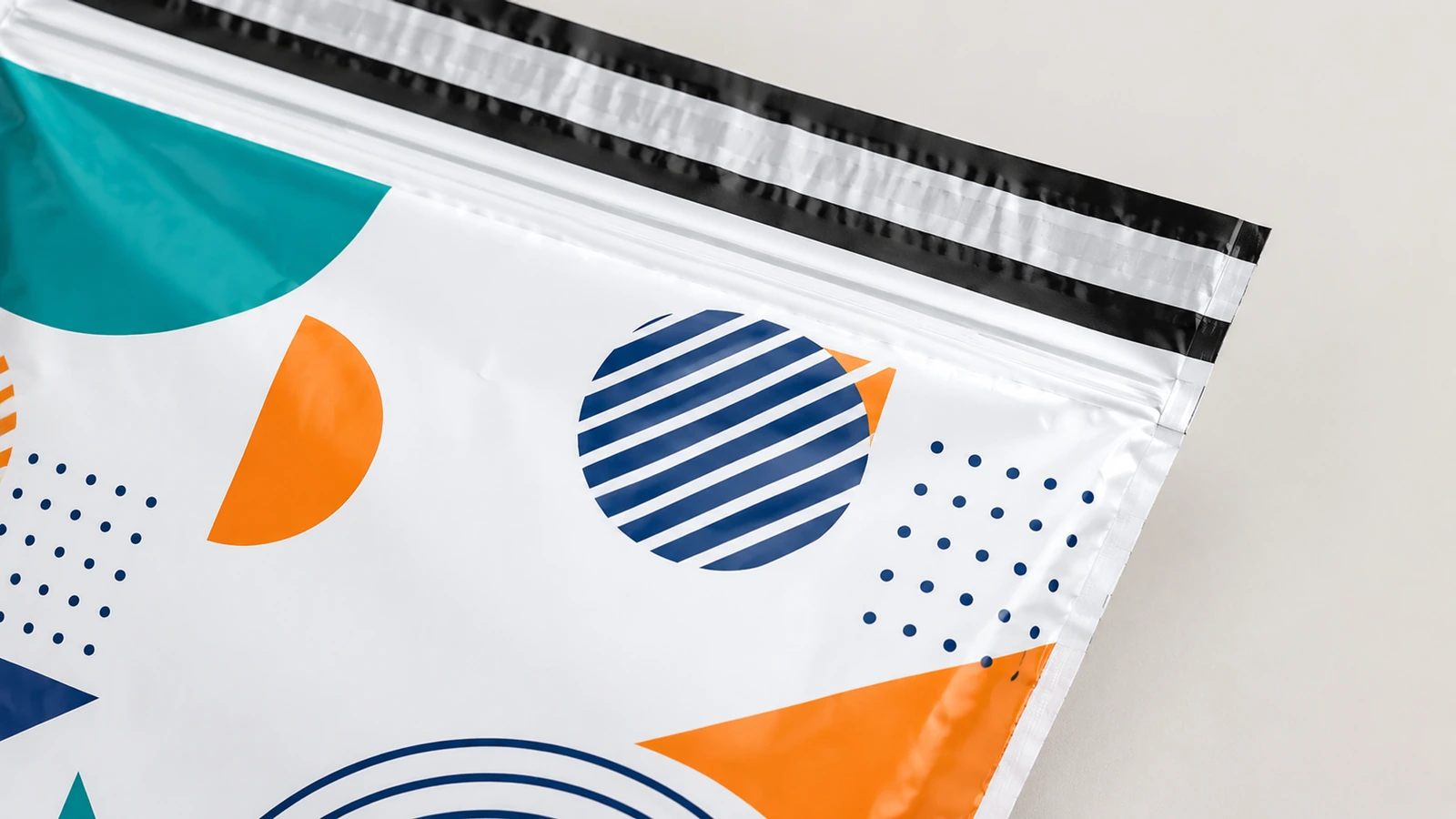
Any requirement for tamper evidence also needs separate evaluation. A second unused seal does not by itself establish theft resistance. Confirm what opening damage should remain visible and whether the opening feature still lets a legitimate customer preserve the bag for return.
What should artwork preflight verify? ↑
Build artwork around the approved bag drawing. The logo, instructions and label zones must account for seams, folds, adhesive contact areas and the part removed during opening. Do not approve a visually balanced layout if the shipping label will cover the return instructions in normal use.
- Opening cue: Make the intended opening path unmistakable and avoid competing arrows near the side seams.
- Seal identification: Clearly distinguish the dispatch closure from the closure reserved for returns.
- Print detail: Check small lettering, fine logo elements and contrast on the selected film.
- Return label area: Keep the replacement label readable without leaving conflicting outbound routing information exposed.
- Claims and warnings: Verify the wording and supporting documents before incorporating environmental marks or safety text.
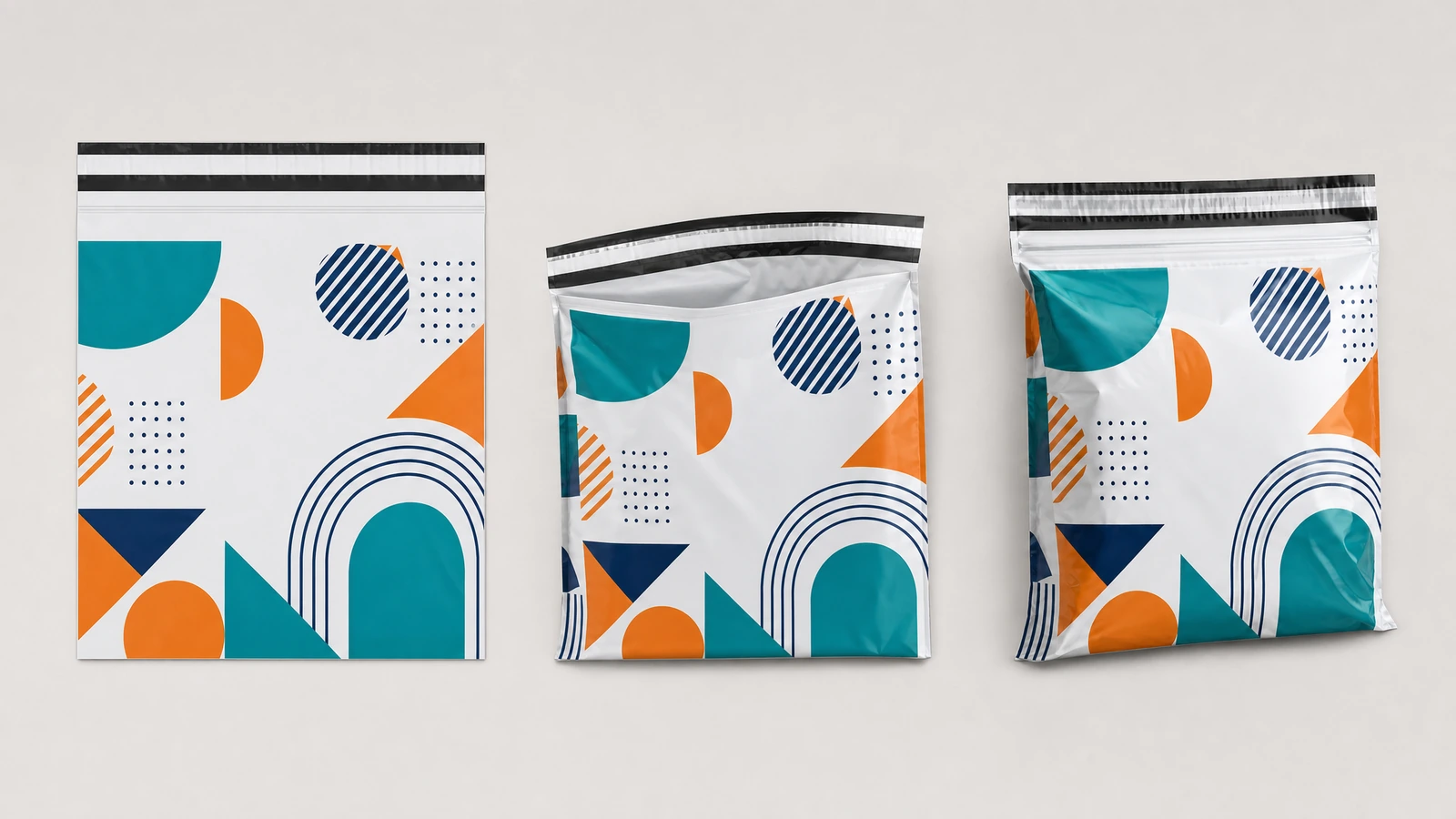
Use the digital proof to approve content and placement, then use the physical sample to assess color, opacity, detail and handling. These approvals answer different questions. If the selected print process cannot reproduce a small symbol reliably, revise the artwork before bulk production rather than accepting a screen image as evidence.
How do you move from a brief to production approval? ↑
The following sequence is a proposed procurement workflow, not a statement of completed factory work or available production equipment. Each approval should identify the sample or document reviewed so that the final purchase specification has a clear reference.
- Define the shipment. Supply packed merchandise dimensions, weight, hard-edge risks, destination markets and the intended return method.
- Confirm the construction proposal. Review usable dimensions, film, flap arrangement, opening feature and the two adhesive closures.
- Approve the artwork. Resolve printing, operating instructions, label zones and any required warnings.
- Evaluate representative samples. Pack, seal, open, repack and return-seal the merchandise; investigate failures before approval.
- Freeze the order specification. Record the accepted sample, artwork revision, tolerances, inspection requirements, packing method and commercial terms.
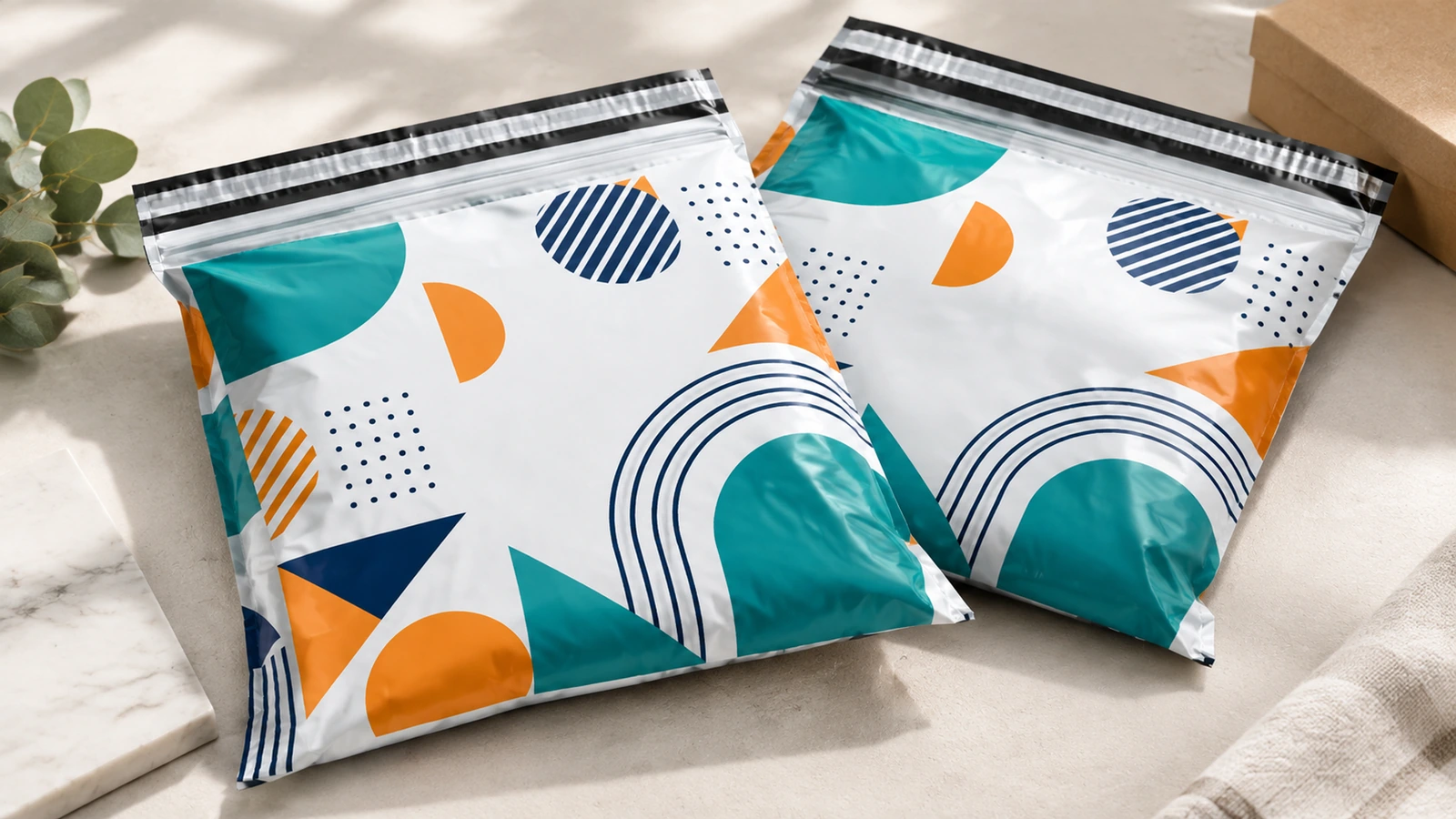
For manual packing, the dispatch procedure should remove only the designated outbound liner. The customer sequence is then: open along the marked path, repack the eligible item without obstructing the closure, and use the reserved return strip before applying the return label. A damaged bag or contaminated adhesive needs an alternative packaging route.
If automatic packing is intended, include the equipment model and required supply format in the inquiry. Roll or fan-fold compatibility cannot be inferred from a product photograph, and another supplier’s machine-compatible product does not establish compatibility for this specification.
What should sample testing and acceptance cover? ↑
Test the complete return sequence rather than approving the unused bag alone. An outbound package may seal neatly while leaving too little usable space after opening. Similarly, a fresh return adhesive may perform differently after storage, transit exposure or contact with dust and clothing fibers.
| Check | Proposed verification method | Acceptance record |
|---|
| Dimensions and film | Measure agreed locations against the drawing and thickness specification | Measured values, agreed tolerances and sample identity |
| Seams and puncture risk | Pack representative merchandise and assess stressed seams and hard contact points | Loading condition, procedure and observed damage |
| Opening path | Open a sealed sample using the printed instructions | Whether the bag body and return closure remain usable |
| Return adhesive | Reseal after agreed storage and environmental conditioning | Closure contact, lifting, wrinkles and any agreed measured results |
| Printing and labels | Check legibility, print rub and label attachment on filled samples | Approved appearance, label stock and scan observations |
| Transport performance | Use an agreed transit trial or appropriate package test with actual contents | Package condition and merchandise condition after the trial |
Agree the sample quantity, conditioning, equipment and pass/fail criteria before testing. These are proposed checks, not completed results, certified performance or a universal acceptance standard. Film thickness alone cannot substitute for seam, closure and loaded-package evaluation.

Keep failure observations specific. Record whether a tear began at a seam, a hard product edge or the opening feature; whether adhesive contact was obstructed; and whether the label peeled from printed or unprinted film. That detail supports a targeted specification change instead of an unsupported instruction to make everything thicker.
Which packaging option fits your return model? ↑
Choose packaging by the protection needed and how returns actually travel. A dual-seal bag is not automatically the best choice for a low-return shipment, a fragile product or a business already using packaging-free return drop-offs.
| Option | Where it fits | Main purchasing caveat |
|---|
| Custom dual-seal poly mailer | Branded soft-goods shipments with customer mail-back returns | Validate both closures and usable space after opening |
| Standard single-seal poly mailer | Soft-goods dispatch without a built-in return closure requirement | Returning customers may need another package or additional closure material |
| Paper mailer | Applications prioritizing a paper packaging route | Check moisture exposure, total package weight and return closure construction |
| Box or protected packing system | Merchandise needing rigidity, cushioning or crush protection | Assess the complete protective pack, not just its outer container |
| Multi-trip reusable mailer | A managed collection and reuse system | Requires its own durability evidence, recovery process and operating economics |
Recycled content is a material specification, not a separate closure mechanism. It may be considered alongside the chosen format, subject to confirmed availability and documentation. Compostability is a different end-of-life claim and must not be inferred from recycled content or the ability to use a bag for a return.
Compare quotations on the same dimensions, film specification, adhesive arrangement, artwork and delivery basis. Separate sampling, print setup, packaging and freight from the unit price. Public prices for ordinary printed mailers may exclude the dual-seal construction and cannot establish a price floor for this product.
The cost case also depends on actual use. A return-ready design may avoid an additional return bag when the original remains serviceable and the customer uses it correctly. Balance that possibility against the added purchase cost, unused stock and handling requirements; no savings percentage or processing-time reduction has been verified here.
How should recycling and compliance claims be handled? ↑
Recycling instructions must address the finished package. How2Recycle’s plastic mailer guidance[3] states that US Store Drop-off recycling is for pure polyethylene films and that paper labels must be fully removed from plastic mailers. Most plastic films are not accepted through ordinary curbside programs. Local acceptance and the complete package construction still matter; PE resin identification alone is not recycling approval.
Ask separately about resin composition, any post-consumer recycled content, supporting documentation and the intended disposal instruction. Do not print an unqualified recyclable, biodegradable or compostable claim because a similar-looking competitor uses it. A proposed recycled-content percentage must be supported for the actual supplied construction.
Environmental artwork also changes over time. In its April 23, 2025 announcement, GreenBlue explained its revised Store Drop-off label[4], removing circular arrows in response to uncertainty around California’s recycling-claim rules. Use authorized, current artwork where applicable rather than copying an older symbol.
Carrier suitability, destination-market packaging obligations and warning requirements belong in the approval brief. Distinguish an outer shipping mailer from an inner retail poly bag. Do not treat a supplier’s thickness chart as a universal postal rule, or print “USPS approved” without applicable supporting evidence.
What belongs in the shipping and reorder specification? ↑
Confirm the supply format, units per pack, carton identification and storage instructions before dispatch. Keep batch references connected to the approved artwork and construction. Receiving staff should be able to distinguish sizes and revisions without opening every bundle or confusing an old return instruction with the current one.
Separate production time from transport time, and define the event that starts the production schedule. Minimum order quantity, production time, unit weight and shipping terms are not yet verified for NSKU-709-02. Record them in the quotation and order confirmation rather than borrowing figures from another supplier or assuming a repeat order will match a previous schedule.
Retain an accepted sample for comparison with later deliveries. Reorders should reference the same drawing, artwork revision and material requirements, with any proposed changes identified before approval. Actual return feedback—misused liners, torn openings, poor fit or unreadable labels—should inform the next revision.
What should buyers remember? ↑
- Returns represent a substantial ecommerce packaging use case. — An estimated 19.3% of online sales were expected to be returned in 2025, according to the October 15, 2025 NRF and Happy Returns release (Source[5]). This is market context, not evidence that a mailer reduces returns.
- Approve the return sequence, not just the empty bag. — Usable space, opening behavior and the reserved closure need evaluation with actual merchandise.
- Keep commercial terms and product evidence separate. — Quoted specifications and test records must establish this product’s capabilities; competitor listings cannot do so.
- Match protection to the contents. — A flexible outer bag does not replace the rigid or cushioned protection required by vulnerable merchandise.
Build the return journey into the specification ↑
A useful returnable mailer combines brand presentation with a practical second closure. The buying decision should rest on the approved fit, a clear opening path, readable instructions and documented acceptance criteria—not a generic promise of durability or sustainability.
Request a specification-based quote for NSKU-709-02 by sending your packed product dimensions and weight, order quantity, artwork, destination market and required delivery date.




The information below is required for social login
Sign In
Create New Account