Custom screen printed t-shirts are cotton tees decorated by pressing ink through one mesh screen per color, then heat-curing the full ink film. The method suits team, event, and staff orders with simple spot-color artwork. Quantity, color count, dark-garment underbase, and print locations set the price. Cure quality and blank quality set how long the shirts last.
Who Orders Screen Printed Tees, and What Are They Really Buying? ↑
Most buyers are not shopping for one shirt for themselves. They are organizers. Typical buyers include an HR lead building onboarding kits, a coffee shop owner outfitting staff, and a site manager replacing crew shirts. Others are PTA and booster club volunteers ordering spirit wear, 5K or family-reunion organizers, and bands preparing tour merch. Market data supports this mix. Mordor Intelligence estimates that commercial and promotional uses, meaning uniform programs and event merchandise, made up about 54.40% of custom t-shirt printing revenue in 2025. It also estimates that screen printing held about 40.45% of the market by technique that year Mordor Intelligence[1].
The blank matters as much as the ink. One Washington bulk printer says Gildan Heavy Cotton is the usual choice for construction crews and budget team orders. The same printer says Bella+Canvas 3001 and Next Level 3600 are typical for corporate events and company-culture shirts NW Custom Apparel[2]. Buyer priorities fall in roughly the same order across buyer types. The first question is whether the shirts will arrive before the event. Next comes whether they will match the approved proof, then whether the blank suits the setting. Unit price comes after all three.
Individual creators and gift buyers make up a smaller share. If you need one or two dozen photo-style shirts, digital printing is usually the better recommendation.
Why Do Bulk Tee Orders Fail After Delivery or the First Wash? ↑
The most common failure is not normal wear. One California print shop calls cracking, peeling, and fading "the number one complaint about custom printed apparel." It explains that properly cured plastisol should survive 50+ washes. When a print cracks early, the usual causes are under-curing, an overly thick ink deposit, or hot washing and drying French Press Custom[3].
Other failures add to the damage:
- Method switched without notice. In one BBB complaint, a buyer specified screen printing for a small order and the shop changed the method. The buyer called it "bait and switch." Another buyer received "a plastic iron on shirt" BBB complaint file[4].
- Colors that miss the proof. A buyer of almost 200 shirts reported "rounds and rounds of wrong colors printed that did not match my approved proof" BBB proof complaint[5].
- Crooked prints. A reviewer found that over 10% of a 40+ piece order was slanted or skewed, and worried the shirts would not arrive in time for the event Trustpilot review[6].
- Blank quality that drifts between orders. An asphalt crew that had bought Gildan 50/50 tees for 12 years reported that its last two orders felt scratchy and looked thinner in black. Collars also pilled faster Reddit r/SCREENPRINTING[7].
Each of these failures lands against a fixed event date, so a reprint often arrives too late.
For our Custom Screen-Printed Cotton T-Shirts (provisional SKU NSKU-777-01), every one of those failure points is written down before production starts. The quote names the decoration method, and we do not switch to another method without your written approval. It also lists the ink system, the cure target, the blank style and fabric weight, the PMS references, and the print placement in inches. We confirm minimum quantity, production time, and unit price in that written quote rather than publishing fixed numbers. We do not promise wash performance in advance; we verify it on a pre-production sample.
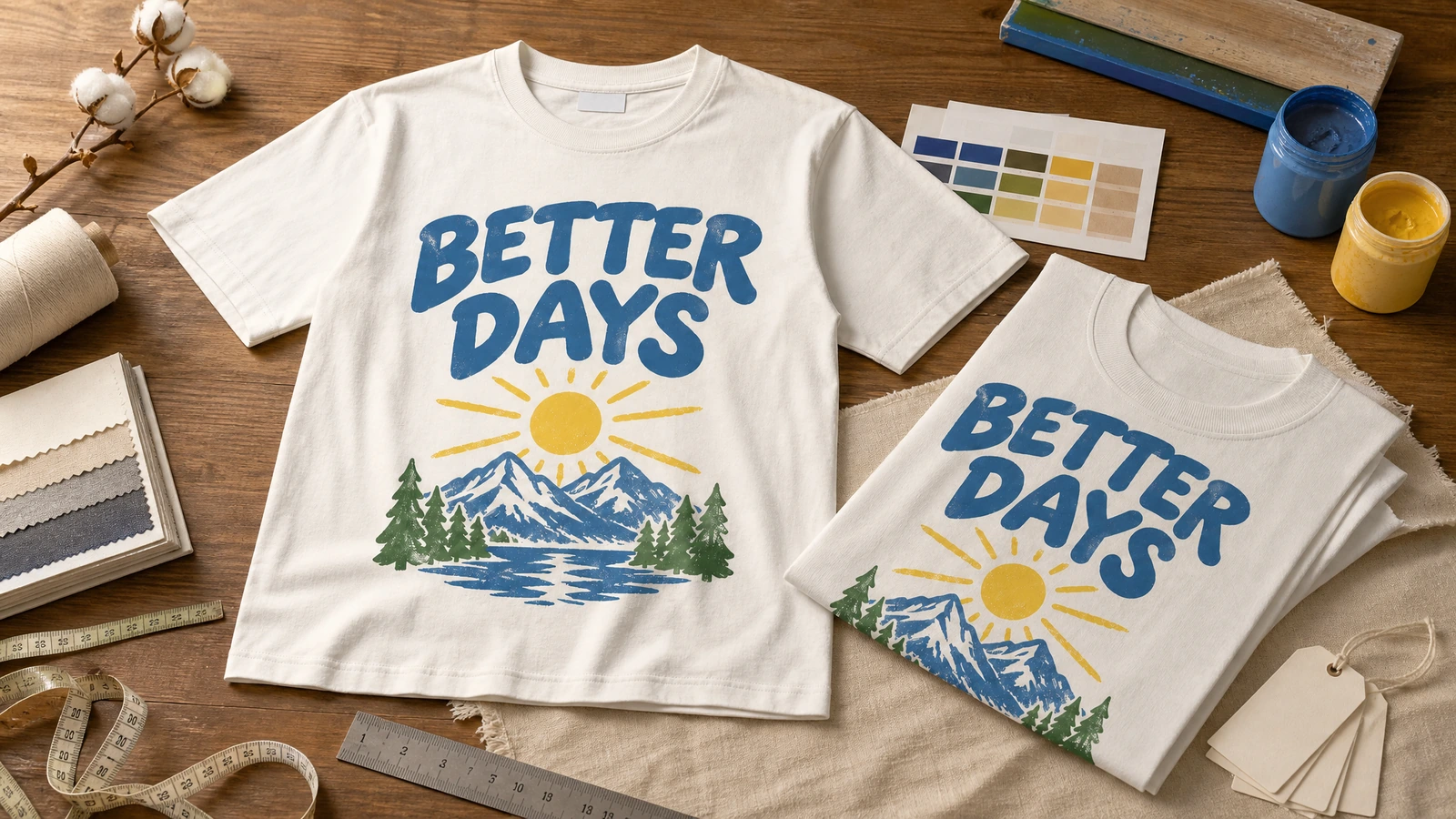
Table of Contents
What Is Screen Printing, and When Is It the Right Method? ↑
Screen printing uses one stencil screen for each ink color. Ink is pressed through the mesh onto the shirt. The shirt then passes through a dryer so the whole ink film fuses, not just the surface. Lawson, an ink and equipment supplier, gives a typical plastisol fusion range of 300–330°F. It names 320°F (160°C) as a common labeled cure point and advises against going above 350°F. Lawson also calls the wash test "the ultimate and definitive test" of whether the ink is cured Lawson Screen & Digital[8]. A print can look dry and still be under-cured underneath. That is why it cracks once it is stretched or washed.
Cost follows the screens. Custom Ink says that for 48 or more shirts with a 1–3 color design, screen printing is almost always cheaper. It puts setup fees at about $25–$35 per screen or color, spread across the order Custom Ink[9]. On dark shirts, a white underbase usually counts as one extra screen. Minimums are set by each shop, not by any national rule. One comparison lists 12 pieces at small single-color shops, 24 at mid-size shops, and 48–72 at automatic-press operations NW Custom Apparel MOQ guide[10]. Below a shop's minimum, or for photographic gradients, DTG or DTF is normally the better fit.
How Do You Order Screen Printed Tees Without Reprints? ↑
Step 1: Lock quantity, sizes, and the in-hands date
Start with four details: total quantity per design, a size breakdown, the split between youth and adult sizes, and the date the shirts must be worn. Quantity tells you whether screen printing is economical at all. The date tells you whether there is time for a physical sample. Collect sizes through a form, and agree on a size-exchange window before the event. Wrong sizing is one of the most common complaints in public reviews.
Step 2: Size the print for readability
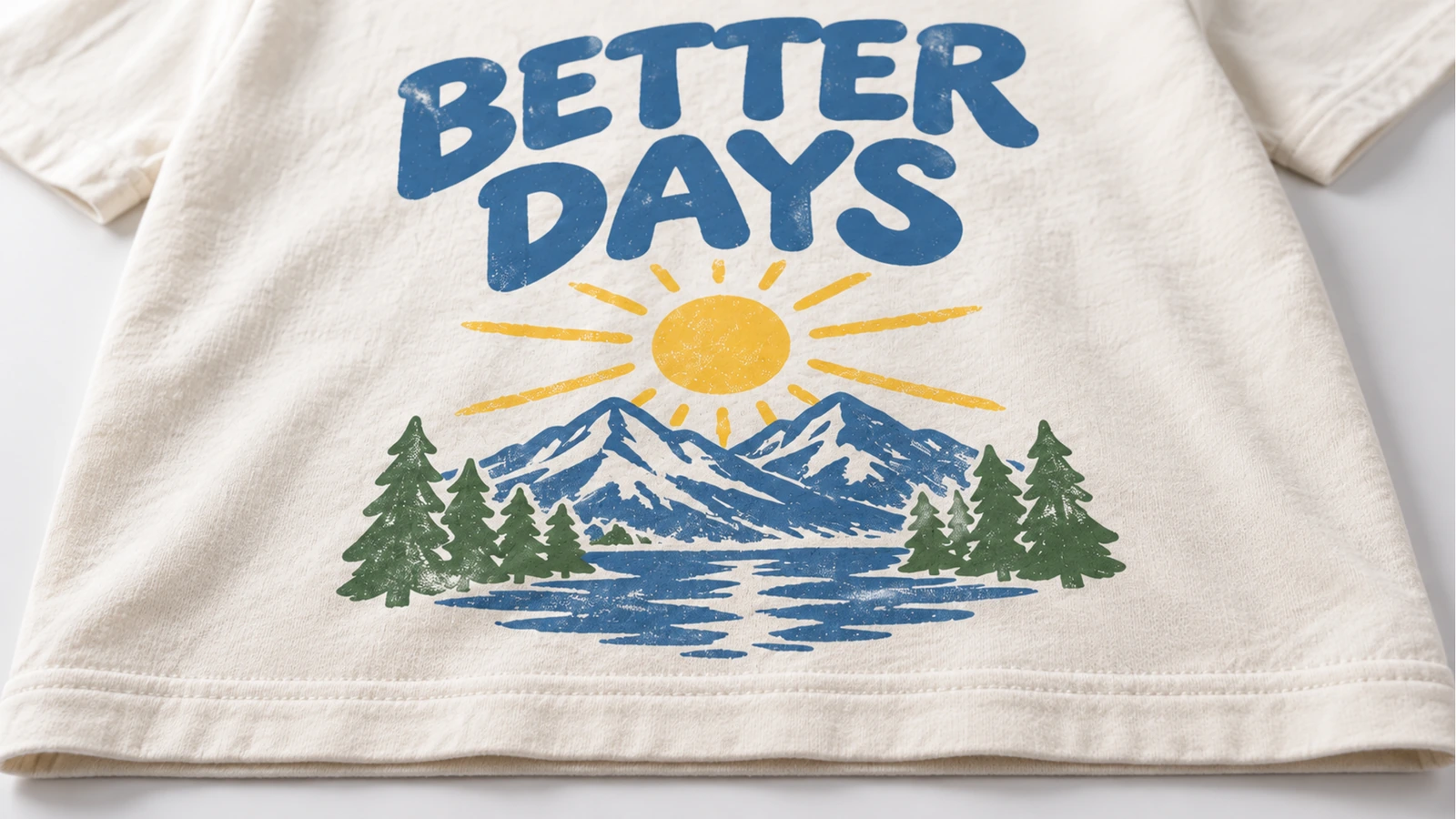
Print width and height are set on the proof in inches. Check them against the smallest size in the run, because the same artwork sits differently on a youth small and an adult 3XL. Fine lines and small text that look clear on a monitor can fill in on knit cotton. How far away a logo stays readable depends on the actual print size and the garment. We confirm it on the sample instead of assuming it from a mock-up.
Step 3: Choose ink finish and print locations
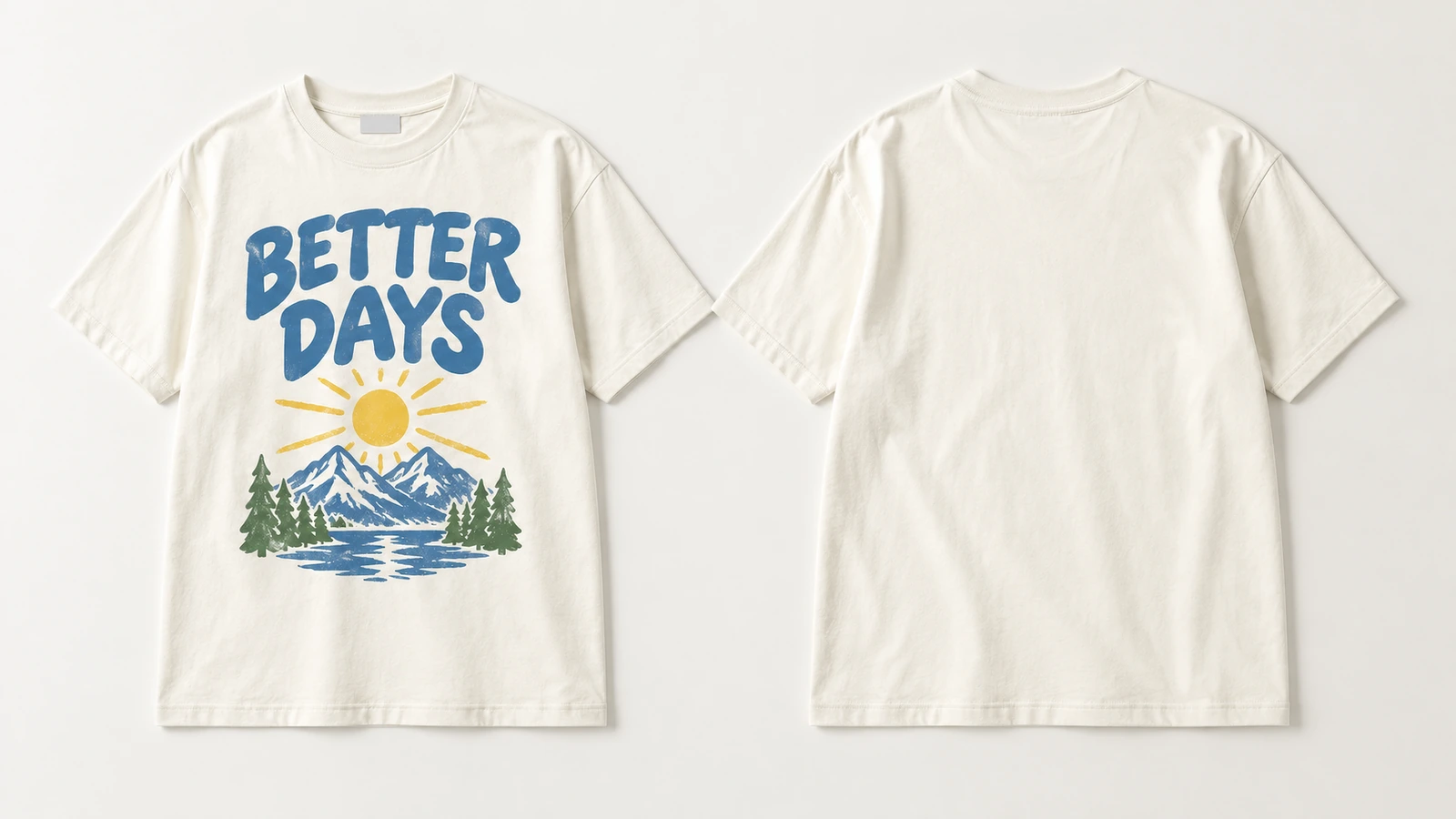
The ink system changes both hand-feel and durability. Plastisol gives strong opacity on dark fabrics. Water-based and discharge inks give a softer hand on suitable cotton. Specialty effects such as puff or metallic add screens and testing. Some buyers find that a large solid plastisol area feels heavy. Reducing solid ink coverage or choosing a softer ink system helps. Each extra print location, such as the back, a sleeve, or the nape, adds its own setup and press pass. Threadbird's published contract rates show the pattern for prints on customer-supplied blanks. At 100–199 pieces, a print costs $3.50 without underbase and $4.00 with it. Each added color costs $0.55, and an extra location costs $2.00 per piece Threadbird[11]. Treat those figures as a market reference, not our price.
Step 4: Preflight the artwork file
Your artwork file should be in vector format (AI, EPS, PDF, or SVG) with fonts outlined. It should also state the number of spot colors and give a PMS code for every brand color. Without a PMS number, a shop asked to match "this blue" from a JPEG can only approximate it Three Layer[12]. Before you pay, confirm that you own or are licensed to use every logo. School, team, character, and brand marks are high-risk, and public complaints show orders rejected after payment over rights issues. Approve a dimensioned PDF proof that lists colors, placement, and the blank. Do not approve from a design-tool screenshot.
Step 5: Approve a sample, then run production
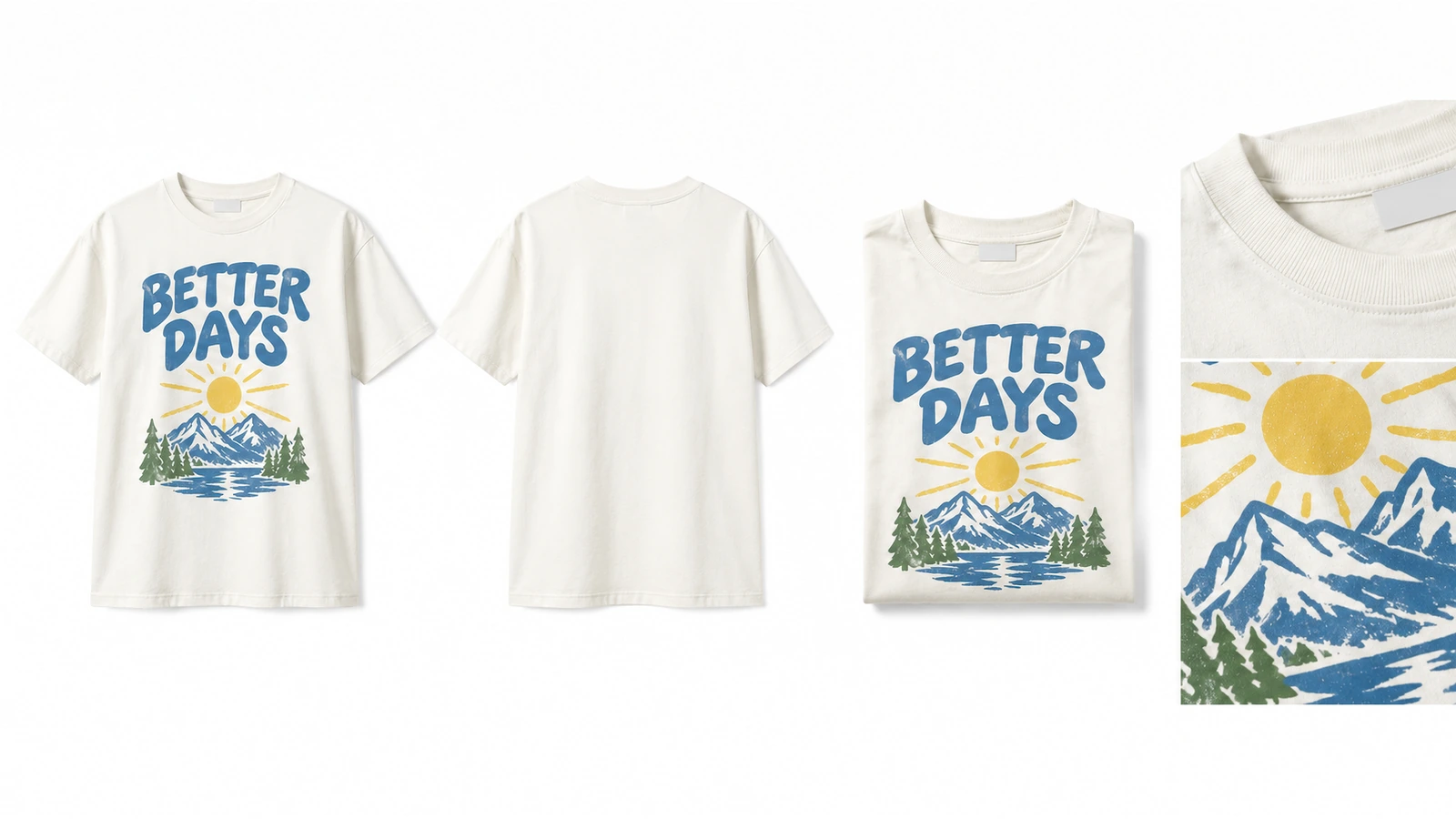
Production follows a fixed sequence. First the blanks are sourced and one screen is exposed per color. Then the inks are mixed to the approved PMS references, and the underbase and colors are printed in registration. Finally, each piece passes through the dryer at the cure temperature in the ink's technical data sheet. For NSKU-777-01, we record the approved sample, the cure target, and the wash-test result before bulk printing begins. The production schedule starts after proof approval, so design revisions do not eat into print time.
Which Decoration Method Fits Your Quantity and Wash Load? ↑
| Method | Best-fit order | Color handling | Reported wash durability (IEHK[13]) | Watch-outs |
|---|
| Screen printing | Larger runs of one design, simple logos | One screen per spot color; underbase on darks | 50+ washes when properly cured | Setup per color; weak for photos |
| DTG | About 1–24 pieces, photo art | Full color at flat cost | About 30–50 washes | Darks need pretreatment; unit cost stays high |
| DTF | Small to mid runs, mixed fabrics | Full color | About 50–100 washes if pressed correctly | Film hand-feel; edge lift if under-pressed |
| Heat transfer vinyl | Names, numbers, a few pieces | Limited colors | About 20–40 washes | Peels and cracks; low breathability |
Published wash counts can differ by roughly a factor of two between sources, because test conditions, inks, and laundering vary. The ranking is consistent, though: properly cured screen prints sit at the top, and basic heat transfers at the bottom. For 24–50 pieces, ask for quotes on both screen printing and a digital method, since color count and PMS requirements can flip the answer. For high-polyester performance fabrics, DTF or sublimation usually fits better than cotton-focused methods. For small logos on polos or workwear, embroidery is the usual alternative.
What Drives the Price per Shirt? ↑
The unit price is built from several parts: the blank, the print per location, setup per color, the underbase, and extras such as rush service and freight. Color count drives setup hardest. One 2026 guide puts each added color at about $25–$75 in setup, so a 6-color logo can cost $150–$450 in setup alone Arklavo[14].
| Published source | Scope | Reference price | Blank included? |
|---|
| Merchylo[15] (updated Oct 2026) | Gildan 5000, one location, 1 color | $8.22 at 24–35 pcs; $4.63 at 300+ pcs | Yes, shipping included |
| Heart & Hook[16] (2026) | Typical screen-printed shirt | $9–$17 per shirt | Yes |
| Custom Ink (2026) | 48+ pcs, 1–2 colors, standard cotton | Can fall well under $10 | Yes (illustrative) |
| Threadbird | Contract print, 100–199 pcs, no underbase | $3.50 per print | No, customer-supplied |
These are figures published by different shops at different dates. They are not a national price list. Do not compare a print-only rate with an all-in rate. Your NSKU-777-01 quote lists the blank, print per location, screens, underbase, rush, and freight as separate lines, and it states how long the quote stays valid. Reviewers often complain that prices changed after a quote expired, or that orders were split into separate shipping charges. A dated, itemized quote prevents both. Any change to artwork size, color count, or blank is priced in writing before production.
How Should You Inspect and Accept a Bulk Order? ↑
PRINTING United Alliance notes that if a print cannot withstand 5 to 6 washings, the most likely cause is that the ink film received too little heat. Many large programs run in-line wash tests to confirm prints survive at least 5–6 washes before shipping. The same note says plastisol prints will eventually wear and fade no matter how well they are cured PRINTING United Alliance TGB-01[17]. For a laboratory reference, AATCC TM61 is a 45-minute accelerated test that approximates about five typical home launderings AATCC TM61[18].
| Checkpoint | Acceptance method | Evidence you receive |
|---|
| Ink cure | Full ink film reaches the ink's datasheet cure point, commonly 320°F for plastisol (Lawson) | Recorded dryer setting and temperature check |
| Wash durability | Sample and pulled pieces washed 5–6 times (TGB-01), or an agreed AATCC TM61 condition | Before-and-after photos |
| Color | Print compared with PMS references under agreed lighting | Signed color approval |
| Placement and skew | Inches from collar measured on an agreed sample, for example 10 pieces of a 200-piece run | Measurement log |
| Blank | Style, fiber %, oz/yd², and size specs checked against a retained blank | Spec sheet |
| Defect terms | Written defect definition, notice period, remake or cash refund | Order terms |
For NSKU-777-01, the specific wash count, sampling rate, and test condition are agreed in the quote and recorded during sampling. We do not quote them as fixed guarantees. Keep in mind that print durability and fabric shrinkage are separate issues. In a 25-cycle wash-and-dry test of promotional tees, most of the imprints that still looked nearly new were screen printed, while the cotton itself shrank noticeably Quality Logo Products[19]. Include care instructions with every order. One printer's guide recommends washing below about 86°F (30°C), inside out, on a gentle cycle, without bleach or fabric softener Printable Press[20].
Which US Compliance Checks Apply Before Shipping? ↑
| Requirement | What it covers | Applies to |
|---|
| Textile labeling, 16 CFR Part 303 (FTC[21]) | Fiber content, country of origin, RN or company name | Most textile apparel sold in the US |
| Care labeling, 16 CFR Part 423 | Permanent care instructions consistent with the decoration | Apparel |
| Flammability, 16 CFR Part 1610 (CPSC[22]) | Class 3 fabrics barred; plain-surface fabrics of 2.6 oz/yd² or more exempt from guaranty testing | General clothing |
| Children's lead (CPSC total lead[23]) | 100 ppm total lead in accessible components; separate 90 ppm limit for surface coatings | Products for ages 12 and under |
| PFAS (Fox Rothschild[24]) | California and New York restrictions in effect since January 1, 2025 | Apparel, especially treated blanks |
A printed design does not replace the fiber, origin, or care label. Kids' sizes need their own review. CPSC states that printing inks which become part of the substrate do not count as surface coatings under the paint rule, so the applicable lead limit depends on the specific ink and process CPSC Lead in Paint[25]. Ask for third-party test reports tied to each ink batch. Adult-line results do not automatically cover youth sizes. For PFAS, the restrictions mainly target garments and fabric finishes rather than ink. If you are ordering water- or stain-resistant blanks for California or New York, ask the supplier for a PFAS declaration. Which documents ship with NSKU-777-01 is confirmed per order in the quote.
How Do You Plan Delivery and Make Reorders Repeatable? ↑
Lead times are quoted in different ways, so ask exactly where the clock starts. Heart & Hook (source) describes standard turnaround as two to three weeks after artwork approval. Custom Ink publishes standard delivery at about two weeks to the door. Its Rush option takes one week for 15% more, and Super Rush takes three business days for 30% more Custom Ink help center[26].
Rush schedules squeeze quality-control time. Set the contract delivery date at five business days before your event, and keep logo rights review outside the rush window. Agree in advance that split shipments need your consent, and that matched sets count as delivered only when complete. Packing method, such as sorting by size and labeling cartons, is specified in the NSKU-777-01 quote.
To make reorders repeatable, keep a reorder master on file. It should hold the approved PDF proof, the signed physical sample, the PMS list, the ink system, and the blank style. Blank batches can change over time, as the crew example above shows. Wash-test any new blank lot before you approve a repeat order.
Key Takeaways for Bulk Screen Print Buyers ↑
- Screen printing is still the largest custom-tee technique — 40.45% market share in 2025 (Source)
- Commercial and promotional orders drive the market — about 54.40% of 2025 revenue (Source)
- Screen printing usually wins on cost at volume — 48+ shirts with 1–3 colors (Source)
- Cure is measured through the full ink film, not the surface — 300–330°F typical plastisol fusion (Source)
- Wash-test before shipping — at least 5–6 washes in common in-line checks (Source)
- Kids' sizes carry a separate lead limit — 100 ppm total lead in accessible components (Source)
- Treated blanks face state PFAS rules — California and New York restrictions since January 1, 2025 (Source)
Ready to Spec an Order That Holds Up on Event Day? ↑
Most screen print failures can be prevented before the order is placed. Choose screen printing for runs of simple spot-color designs, and choose a digital method for small or photographic jobs. Put the method, ink, cure target, PMS references, placement, blank, and wash test in writing. Then accept the order against a physical sample, not a screen preview. For NSKU-777-01, minimum quantity, production time, pricing, and test results are all confirmed in your written quote and pre-production sample.
Send your vector artwork, quantity by size, and in-hands date to request a written quote for NSKU-777-01.




The information below is required for social login
Sign In
Create New Account