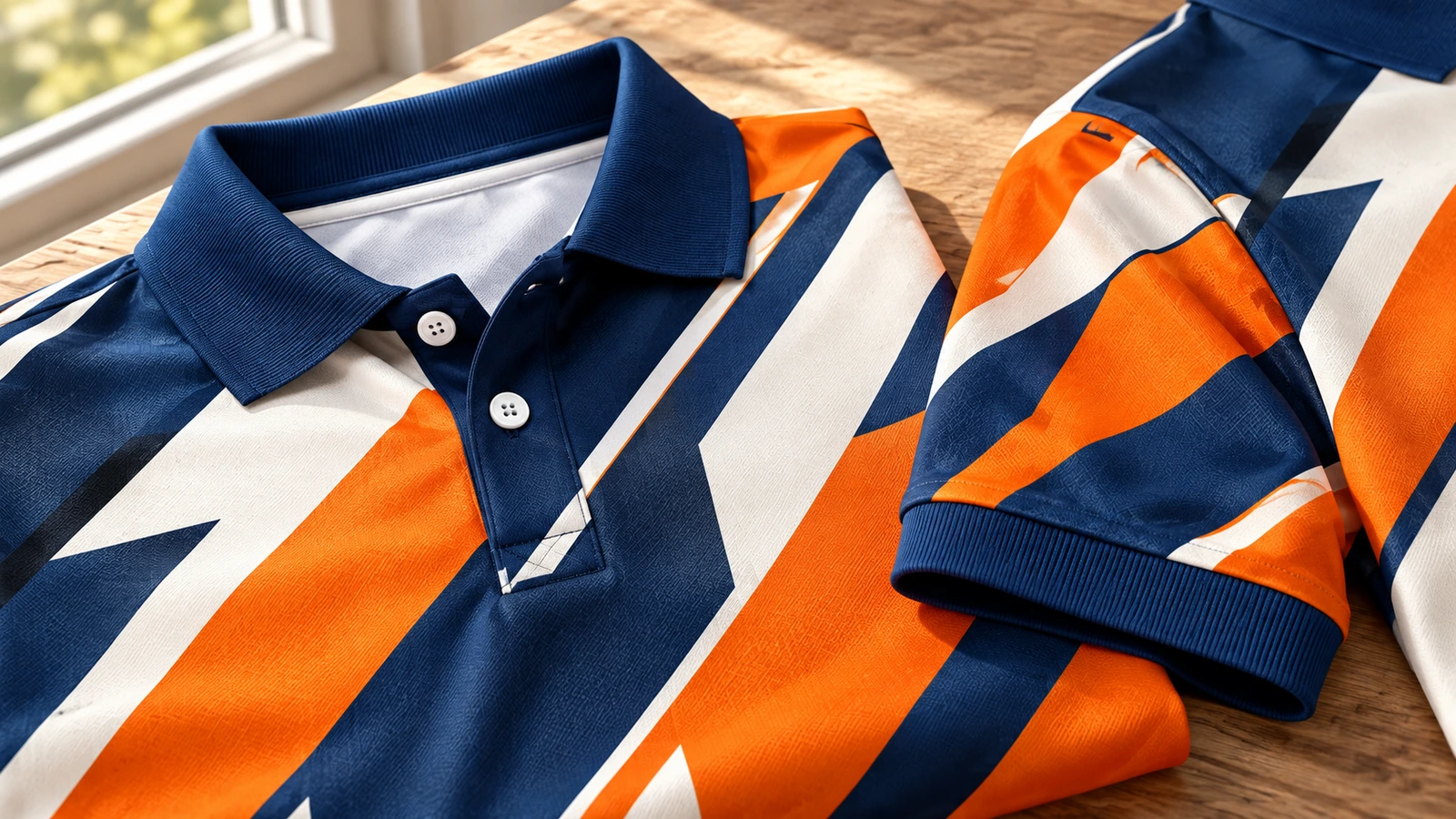
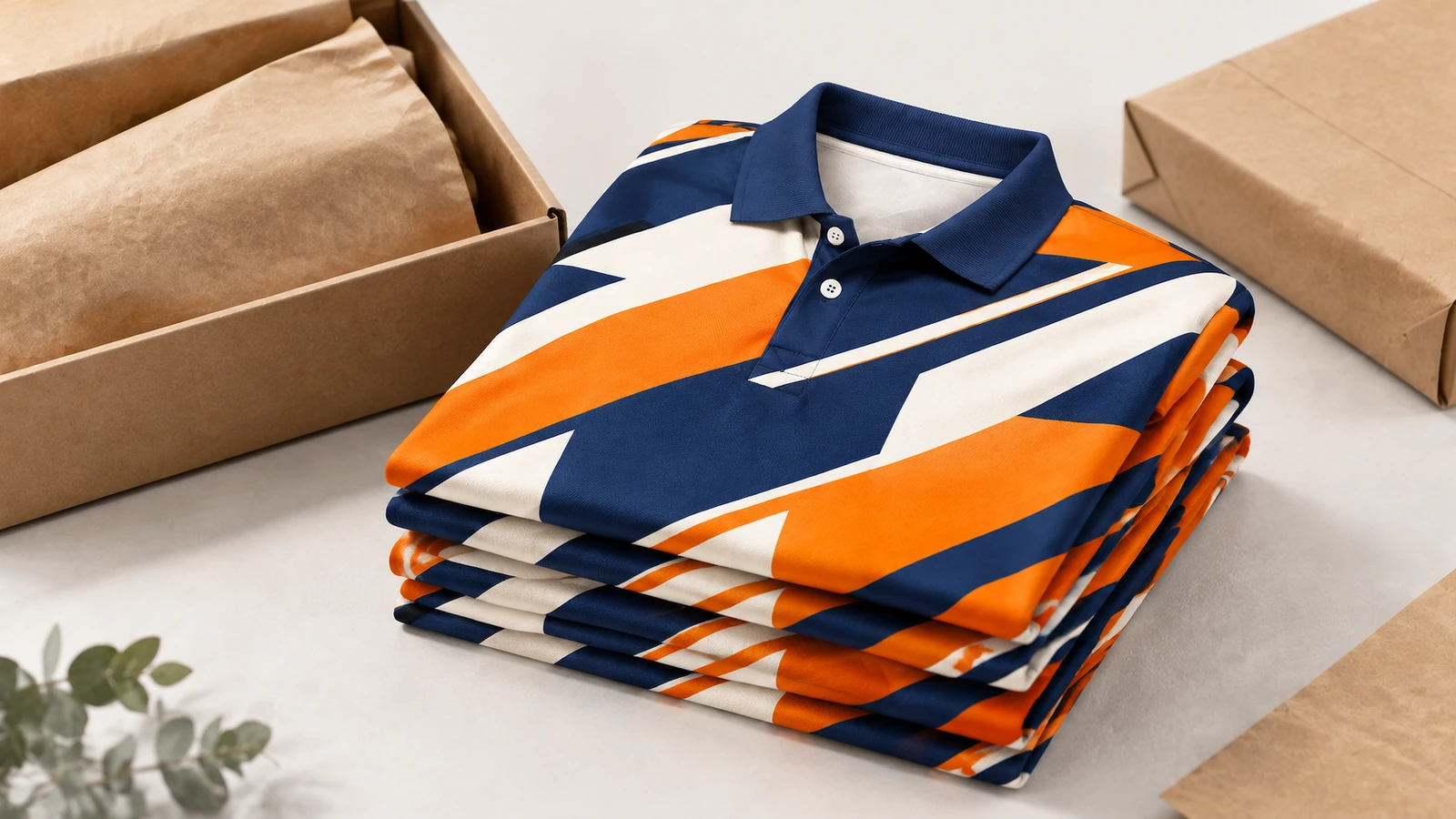
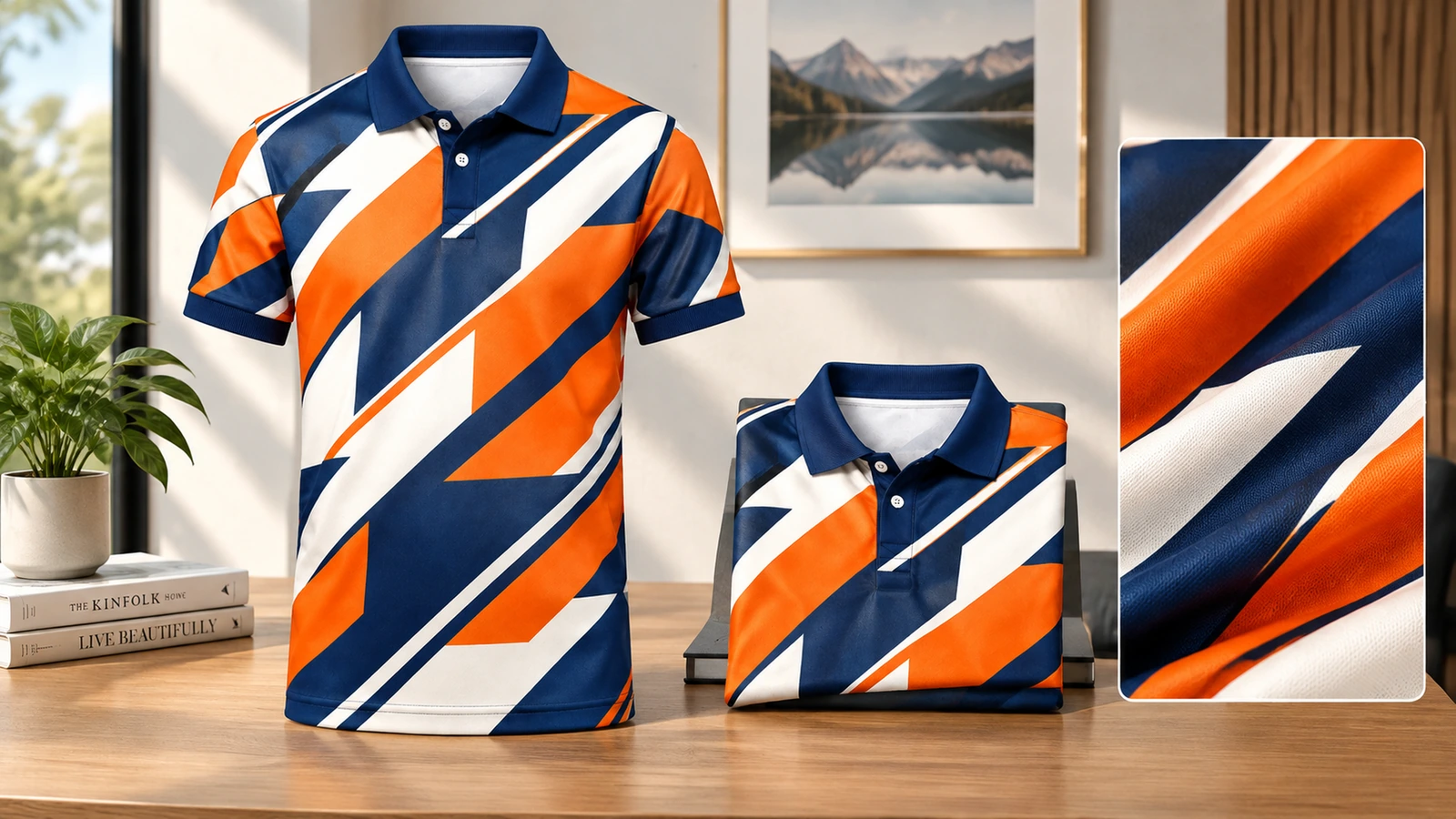
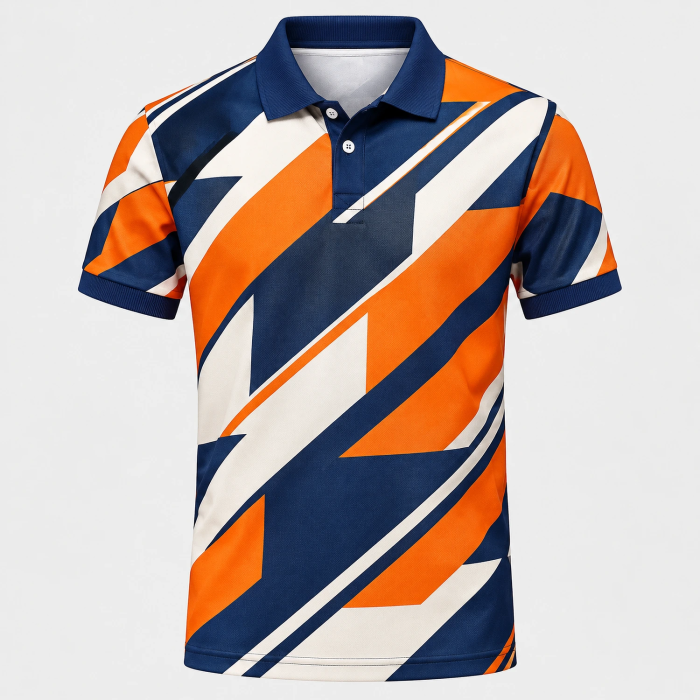
Custom sublimated polo shirts are polyester polos with the artwork dyed into the fiber using heat. Full-color designs, gradients and names can run across the front, back, sleeves and collar without a raised print layer. They perform best on light, polyester-rich fabric, with locked artwork and a signed physical sample.
Who Orders All-Over-Print Polos, and Where Do They Wear Them?↑
Most buyers are organizations rather than individual shoppers. Athletic directors, coaches and club managers want team colors, moisture management, and adult, ladies' and youth sizes in a single program. Momentec positions its Holloway FreeStyle polo as built for coaches, staff, and corporate teams[1]. Fortera's guide names sport teams, esports squads and event crews[2] as the natural fit.
A second group buys for events and light workwear. These include golf tournaments, trade-show crews, restaurants and service firms that need something sharper than a T-shirt and more expressive than an embroidered chest logo. SWAGO lists corporate teams, golf tournaments, restaurants and HVAC or landscaping companies[3] among typical buyers. The third group is small brands running limited drops, where the artwork is the product. Fexwear calls this small-batch, high-design production[4].
All three groups ask the same questions. Will the print survive washing? Can it work on our brand color? Will the sizes fit? Will it arrive before the event? This page answers those questions for the category and for our Custom All-Over-Print Polyester Polo Shirts (provisional SKU NSKU-752-02).
Why Do Sublimated Polo Orders Go Wrong, and How Do You Prevent It?↑
Problem: A mockup can look perfect on screen, but sublimation follows hard material rules that a mockup cannot show. A commercial printer on Reddit warned that on 50/50 polycotton the print "will look great until it's washed"[5], because the dye on the cotton threads rinses out. The same thread notes that pressing onto an already-sewn polo leaves "a void on the sides of the shirt, at minimum."
Pain: These failures usually show up after the team has worn the shirts, when reordering is slow and expensive. Fit is the second trap. One buyer who normally wears L–XL ordered 2XL for a slim fit and needed at least a 4XL[6], and the cost of returns ended the program. Changes after printing are also not simple edits. Customised Sportswear points out that a mid-order change "is a new order"[7], because printed panels cannot be recolored.
Solution: Treat the order as a specification, not a picture. Four rules prevent most failures:
- Choose polyester-rich fabric with a light base.
- Print flat panels before sewing.
- Collect the full size and name roster before artwork is locked.
- Approve a physical sample made from production fabric.
The sections below turn these rules into a step-by-step process.
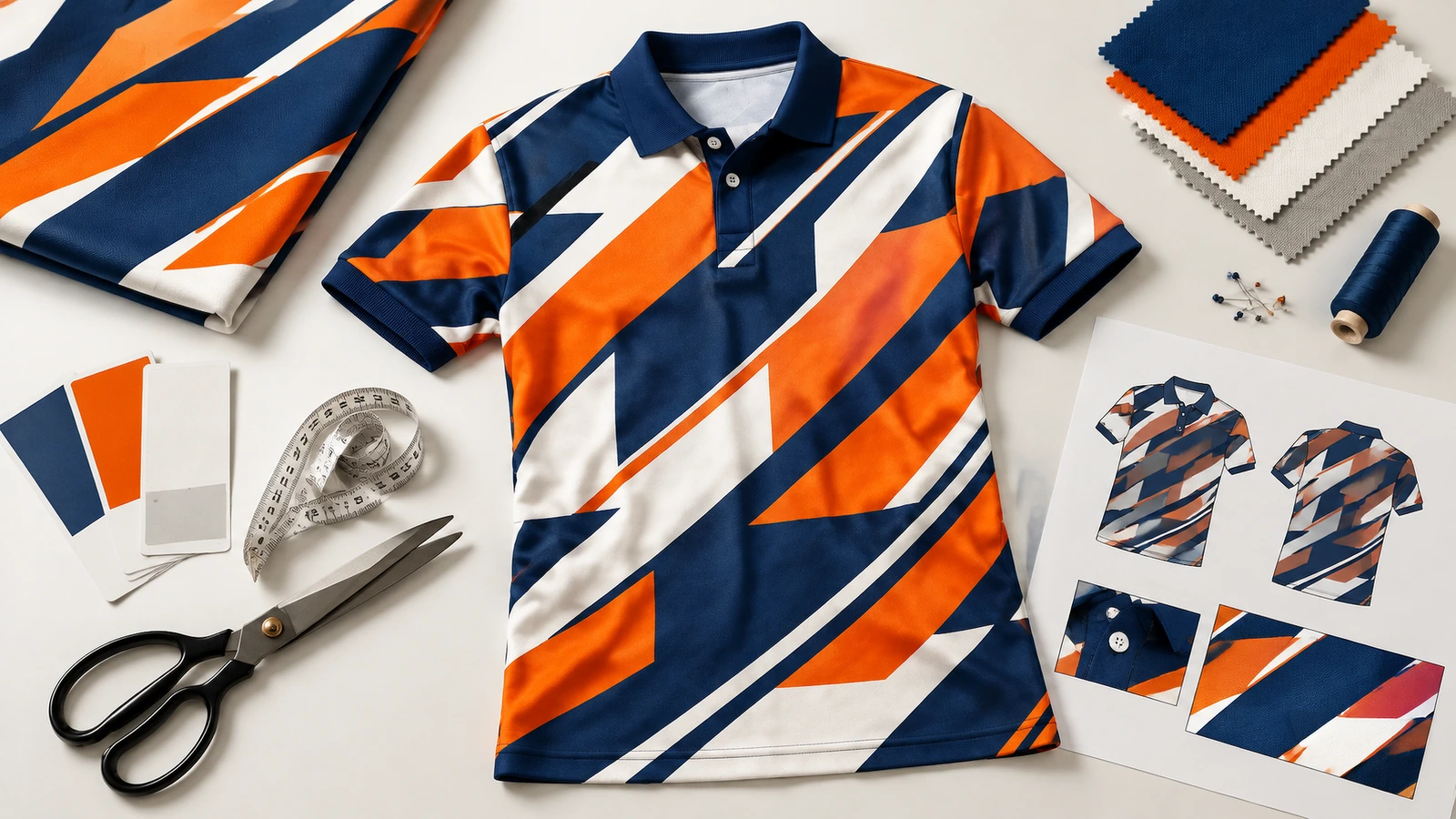
Table of Contents
What Is a Dye-Sublimated Polo, and What Can It Not Do?↑
Dye sublimation uses heat and pressure to turn solid disperse dye into a gas, which then enters polyester fibers. Customised Sportswear puts the reaction at around 200°C. At that point the color becomes part of the fabric instead of a layer on top, which is why a correctly sublimated polo does not crack or peel.
The same chemistry sets the limits. The dye bonds only with polyester, so cotton and cotton-rich polos fail. The dye is also translucent, so it cannot cover dark garments[8]. On navy or black bases, artwork looks muddy rather than bright. Sublimation also does not mean "never fades." Long UV exposure and aggressive washing can dull color over time, so any durability claim should be tied to fabric content and care.
There are two production routes:
- Print-cut-sew: each flat panel is printed and then the garment is sewn, so artwork can run seam to seam, including the collar and sleeves.
- Finished-garment pressing: the design is pressed onto a sewn blank. Momentec warns this route can expose imperfections[9] because the garment may not lie flat, and no two pieces look identical.
For any all-over design, specify print-cut-sew in writing.
Demand now extends beyond sportswear. Grand View Research estimated the dye-sublimated apparel market at USD 4.21 billion in 2022, projected to reach USD 10.67 billion by 2030[10] at a 12.3% CAGR. Emergen Research cites corporate programs that specify "sublimated polo shirts and performance tops"[11] as branded workwear. Research firms use different scopes, so their estimates should not be combined.
How Do You Order an All-Over-Print Polo Step by Step?↑
Step 1: Lock the roster, sizes and name readability
Start with people, not artwork. Collect every wearer's size and any name or number before design approval, because each personalized garment is a separate variable-data panel. Size charts vary widely between makers. Measure a sample against a polo the wearer already likes, comparing chest width, body length and sleeve length. Redwood Sports recommends ordering a sample to check fit and fabric[12] before a team order.
To check readability, view names and numbers at arm's length on the physical sample. Confirm contrast against busy backgrounds, and keep small text away from seams and the placket. Extended sizes may carry an upcharge, so ask for it on the quote.
Step 2: Choose the fabric surface, collar and placket
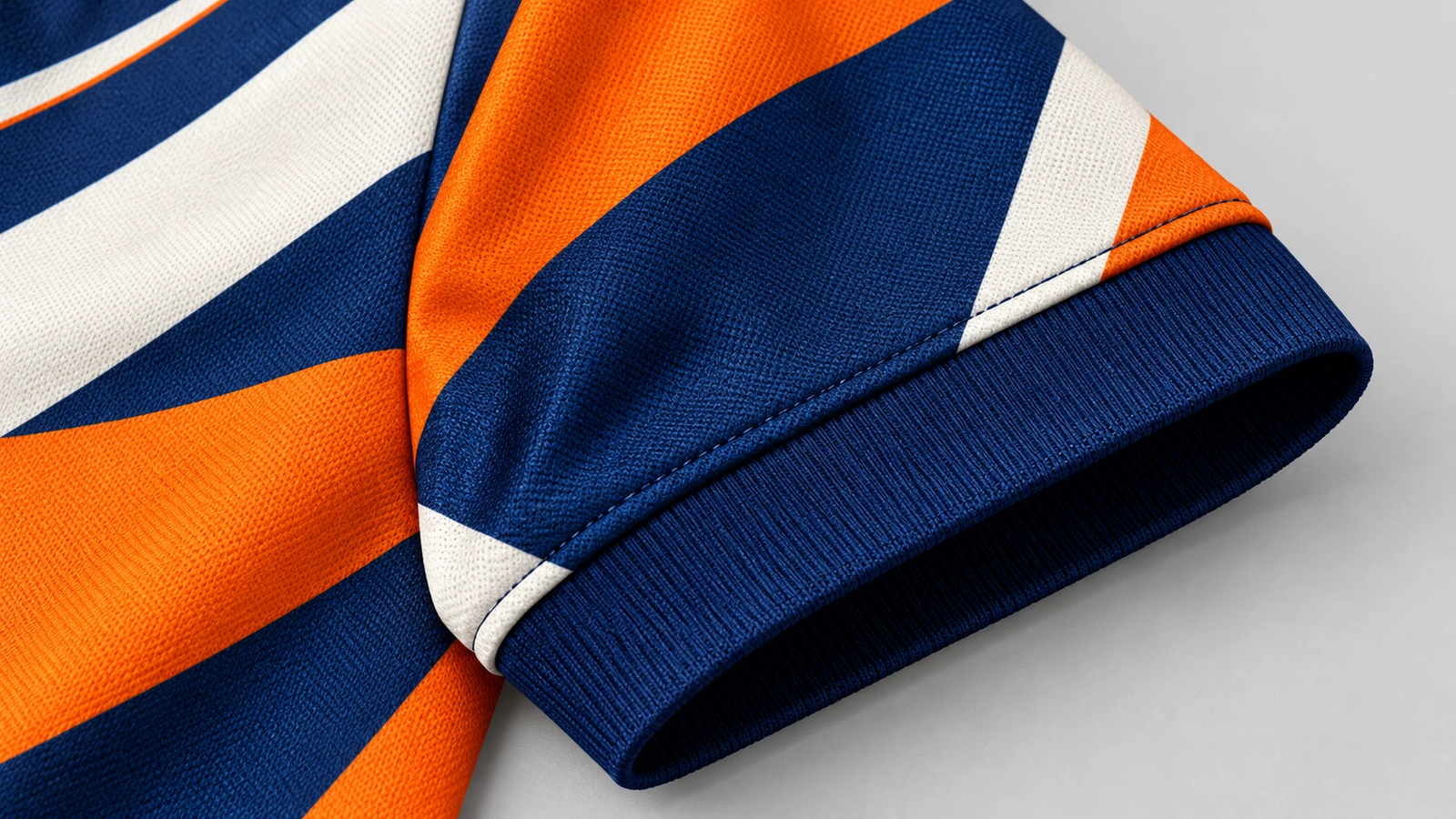
Fabric content affects color and wash life more than any other choice. TeckWrapCraft sets a practical floor: blends work only when polyester content is 65% or higher[13], and white or light 100% polyester performs best. Workwear Manufacturer estimates dye retention at about 95–98% on 100% polyester versus 75–85% on 65/35[14]. These are the vendor's own figures, not laboratory results.
| Fabric | Sublimation fit | Wear notes | Typical use |
|---|
| 100% polyester | Best color and wash life | Wicking, quick-dry, wrinkle-resistant | Teams, high-wash uniforms |
| Polyester/spandex | Excellent | Stretch and close fit | Golf, athletic, slim polos |
| High-poly blend (65%+ polyester) | Acceptable, but colors look duller | Softer hand | Office-leaning programs |
| Cotton or cotton-rich | Not suitable | Not applicable | Switch to embroidery or DTF |
The table ranks fabrics by how reliably they hold dye, not by comfort, which buyers should judge from swatches. Fortera and Spartan both use performance knits. Spartan lists 5.3 oz or 6 oz 92/8 polyester/spandex with 40+ UPF[15]. Surface texture also matters: smooth jersey, textured stripe and mesh-like knits each render fine lines differently.
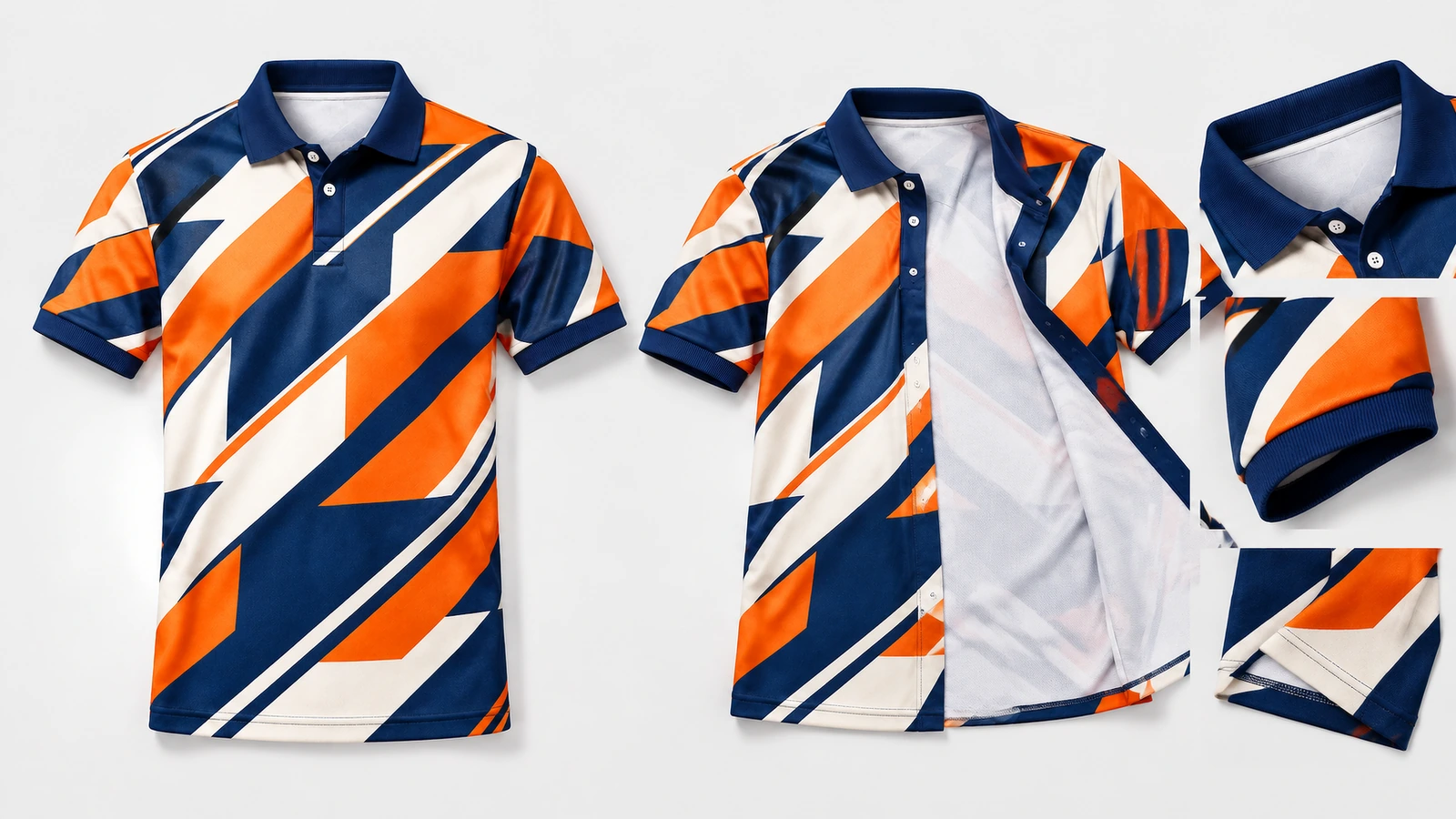
For the collar and placket, confirm three things. First, whether the collar is self-fabric (printable) or knit rib (usually solid). Second, the button count and finish. Third, whether the print must align across the placket opening. For NSKU-752-02, we confirm the exact polyester blend, fabric weight and trim options on the quote and the pre-production sample. We do not publish fixed values for these.
Step 3: Preflight the artwork files
All-over artwork is built on panel templates, not on a flat T-shirt mockup. BrandHK's all-over sublimation artwork guide[16] and Fortera's file rules set a useful baseline.
| Check | Requirement | Source |
|---|
| Raster resolution | Minimum 300 dpi at final print size | BrandHK |
| Bleed | Extend at least 10–15 mm beyond cut lines | BrandHK |
| File type | AI, EPS or SVG preferred; PNG/PDF at 300 DPI or higher | Fortera |
| Color | Approve on real fabric, not on screen | Customised Sportswear |
Before submitting files, convert text to outlines and keep logos as vectors where possible. Use the supplier's own template, because bleed values differ. The color row deserves the most attention. Customised Sportswear calls it the "screen-proof trap": saturated greens, oranges and deep blues look different once bonded into polyester. Brand-color approval should therefore happen on a printed swatch.
Step 4: Approve the sample, then produce
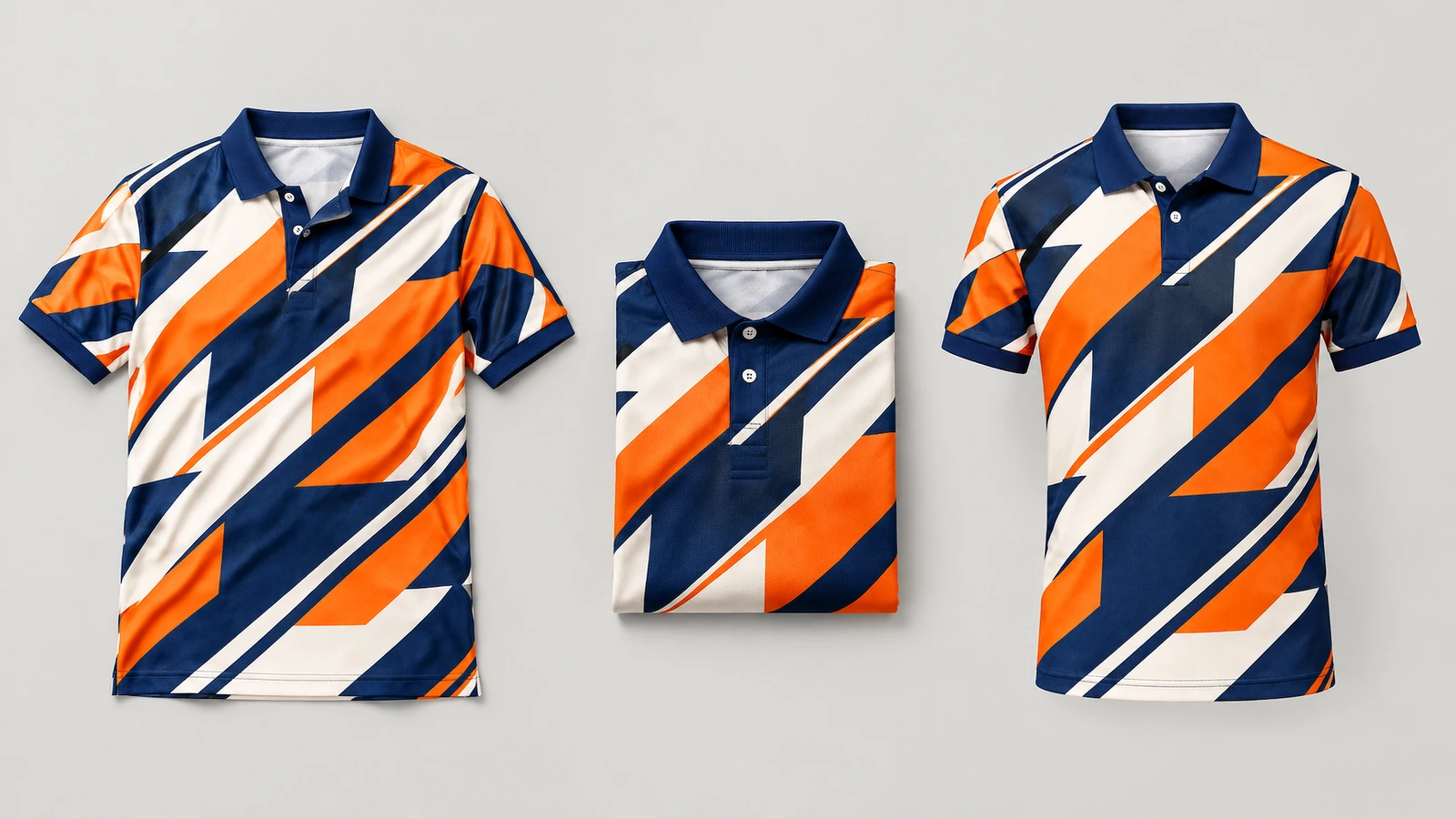
Published supplier timelines give buyers realistic benchmarks. Examples come from THE/STUDIO[17], Sportswear of Tomorrow[18] and Scrappy Apparel[19].
| Milestone | Public benchmark | Source |
|---|
| Digital mockup | Within 24 hours of order | Fortera |
| Physical sample | 10–15 days | THE/STUDIO |
| Bulk production | 2.5–4 weeks from artwork approval, plus shipping | Sportswear of Tomorrow |
| Pre-production + production | 5 + 15 business days; shipping extra | Scrappy Apparel |
These figures come from other suppliers and are not our commitments. For NSKU-752-02, production is scheduled after artwork review and sample approval, and the timeline is stated on the quote. Always separate production time from door-to-door delivery, then work backward from the event date.
On the press, Fexwear cites a typical range of 380–410°F (193–210°C). Exact settings depend on the fabric and should be verified against a calibrated thermometer, not the machine display. After printing, panels are cut and sewn, so the artwork continues across the side seams without gaps.
Sublimation vs. Embroidery vs. DTF vs. Overseas OEM: Which Fits Your Order?↑
Buyers are really comparing four production routes, not four polo styles. The table uses publicly listed figures from Scrappy, Spartan, Gandy Ink[20] and an Alibaba OEM listing[21]. These are reference points, not quotes.
| Route | Public price signal | Minimum order | Lead-time signal | Best fit |
|---|
| Full-panel sublimation (US) | $50.68 at 12 pcs to $27.69 at 500 (Scrappy); $80 at 1–11 to $35 at 1,000 (Spartan) | 12 pcs (Scrappy) | About 4 weeks (Spartan) | Teams, staff, full-color brand art |
| Embroidery | Same price as digital print up to 8,000 stitches (Gandy Ink) | 6 pcs, non-hat items | Not published for polos | Chest logos on cotton or blends |
| DTF / digital print | Same tier as embroidery for small art | 6 pcs | Not published | Small logos on existing cotton polos |
| Overseas OEM sublimation | $5.98 (2–199 pcs) to $2.89 (2,000+), freight and duty extra (Alibaba) | 2 pcs listed | 31–32 days | Private label after sampling |
Lower unit prices come with trade-offs. Spartan's curve shows small runs costing more than twice the 1,000-piece price, and OEM pricing excludes freight, duty and a paid sample. If you only need a chest logo, BrandHK states that panel sublimation is "unnecessary and cost-prohibitive," and embroidery or DTF is the better choice.
Check labels carefully. One "sublimated" polo listing[22] gives the material as polyester/cotton and the method as digital printing, which contradicts how sublimation works. Put the fiber percentage and the print method in the contract.
What Should You Verify Before Approving Bulk Production?↑
Quality inspection and test methods
Inspect bulk goods against the signed sample. Check color, artwork alignment across seams, collar and placket alignment, name spelling against the roster, size labels and stitching. When you need measurable colorfastness, ask the supplier for batch reports using recognized methods. The AATCC catalog[23] covers wash colorfastness (TM61), hot pressing (TM133) and dimensional change after laundering (TM135/TM150). ISO 105-P01[24] covers colorfastness to dry heat.
These standards measure performance. They do not tell a factory how to set up production. No single mandatory standard exists specifically for sublimated polos. Batch-to-batch variation in sheen or fabric weight is a known bulk risk, so record the approved fabric lot on the purchase order. For NSKU-752-02, test reports are a pending item and are agreed per order. We do not claim existing results.
US compliance points
Clothing textiles sold in the US fall under the 16 CFR Part 1610 flammability standard[25]. If youth sizes qualify as children's products, CPSC also requires permanent tracking labels[26], and a Children's Product Certificate where safety rules apply.
California's Health and Safety Code §108971[27] has restricted regulated PFAS in textiles since January 1, 2025. The total organic fluorine threshold is 100 ppm and falls to 50 ppm from January 1, 2027. Stain-repellent or water-repellent finishes therefore need documented compliance.
OEKO-TEX STANDARD 100[28] is voluntary. Claims should cite a real certificate number and product class. For recycled polyester, Textile Exchange's GRS guidance[29] generally requires at least 20% recycled content for supply-chain tracking and at least 50% for consumer-facing labels. NSKU-752-02 carries no certification claim unless one is documented on the quote.
Care, packaging and reorders
Good care instructions prevent fading that customers may mistake for a quality defect. Fortera advises washing below 30°C (86°F), inside out, then tumble drying on low or hanging to dry. Bendy Sports warns that chlorine bleach leaves permanent white spots[30], and that fabric softeners clog the fabric's moisture-wicking pores. Momentec notes that high heat reactivates sublimation inks and causes permanent cross-staining[31].
Pack each polo individually, labeled by size and name, with a printed care card so distribution is simple. For reorders, keep the signed sample, final panel files and color references on record, and quote reorders against that approved standard. This is the most reliable way to keep a second batch consistent with the first.
Key Takeaways Backed by Evidence↑
- The sublimated apparel category is large and growing. — USD 4.21 billion (2022) to USD 10.67 billion (2030), 12.3% CAGR (Source)
- Analysts name corporate polos as a growth use. — USD 6.10 billion in 2025, 9.2% CAGR forecast (Source)
- Fiber content sets the floor for print quality. — Blends need 65%+ polyester; 100% polyester performs best (Source)
- Order volume strongly affects unit price. — $50.68 at 12 pcs vs. $27.69 at 500 pcs, shipping excluded (Source)
- California PFAS limits apply to performance finishes. — 100 ppm total organic fluorine from 2025, 50 ppm from 2027 (Source)
- Recycled-polyester labels need verified content. — At least 50% recycled content for GRS consumer labels (Source)
Ready to Brief Your All-Over-Print Polo Program?↑
A successful sublimated polo order comes down to four decisions: polyester-rich light fabric, print-cut-sew construction, a locked size and name roster, and a signed sample made from production fabric. Everything else, including price tiers, lead time and test reports, should be written into the quote rather than assumed. For our Custom All-Over-Print Polyester Polo Shirts (NSKU-752-02), the fabric blend, weight, minimum order and production timeline are confirmed after artwork review and sampling.
Send your artwork, wearer roster and event date to request a quote and pre-production sample.




The information below is required for social login
Sign In
Create New Account