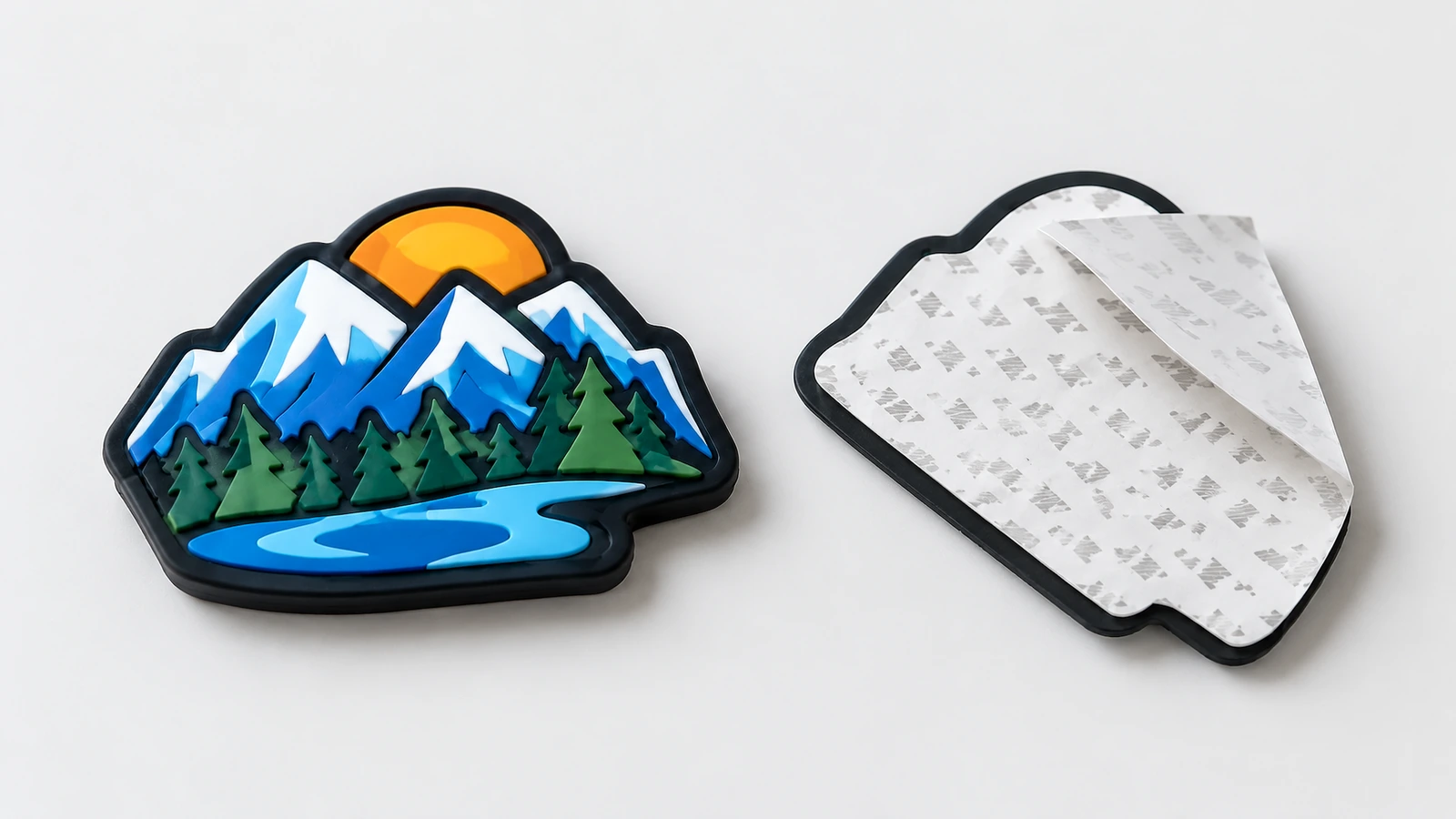
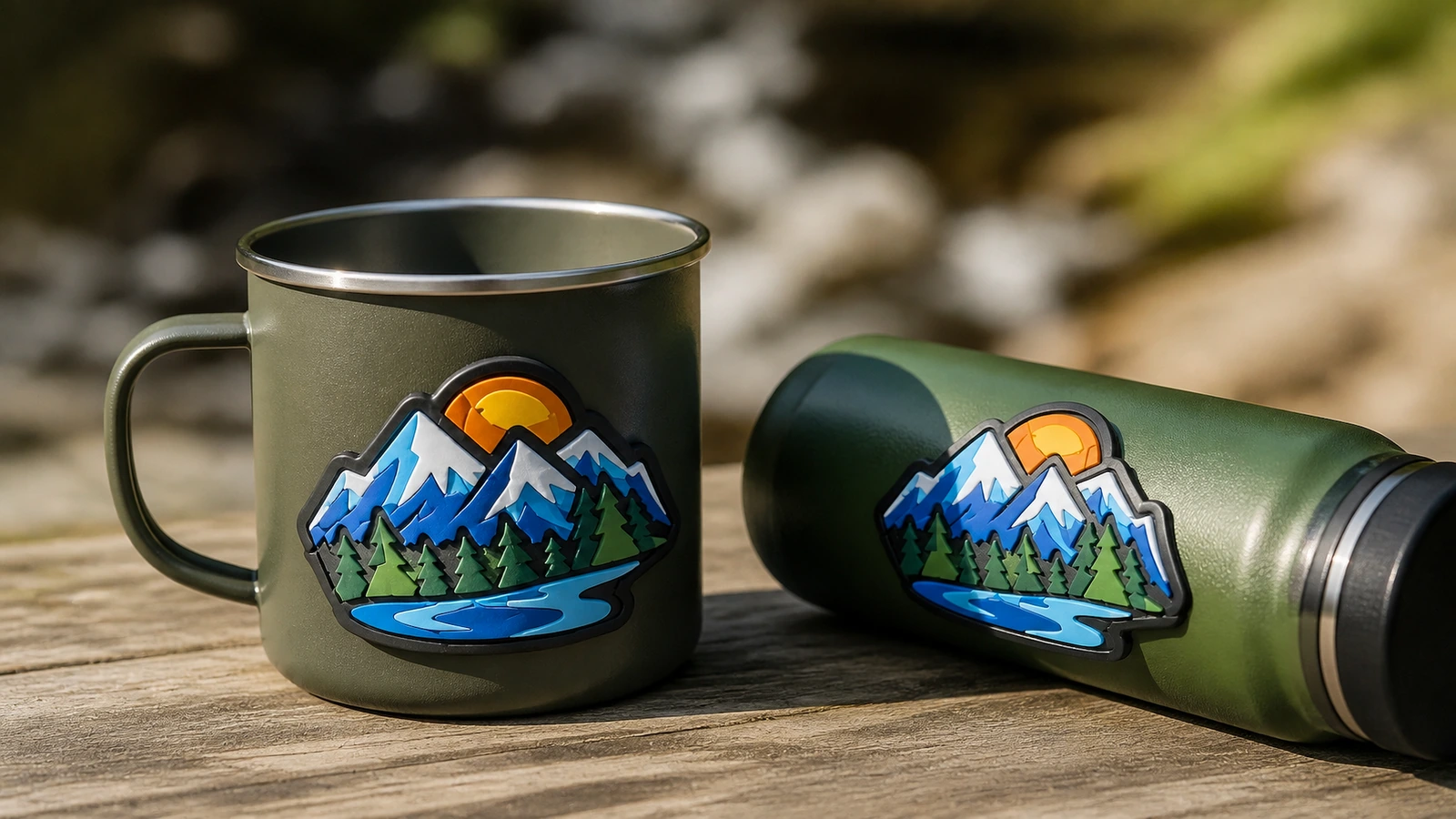
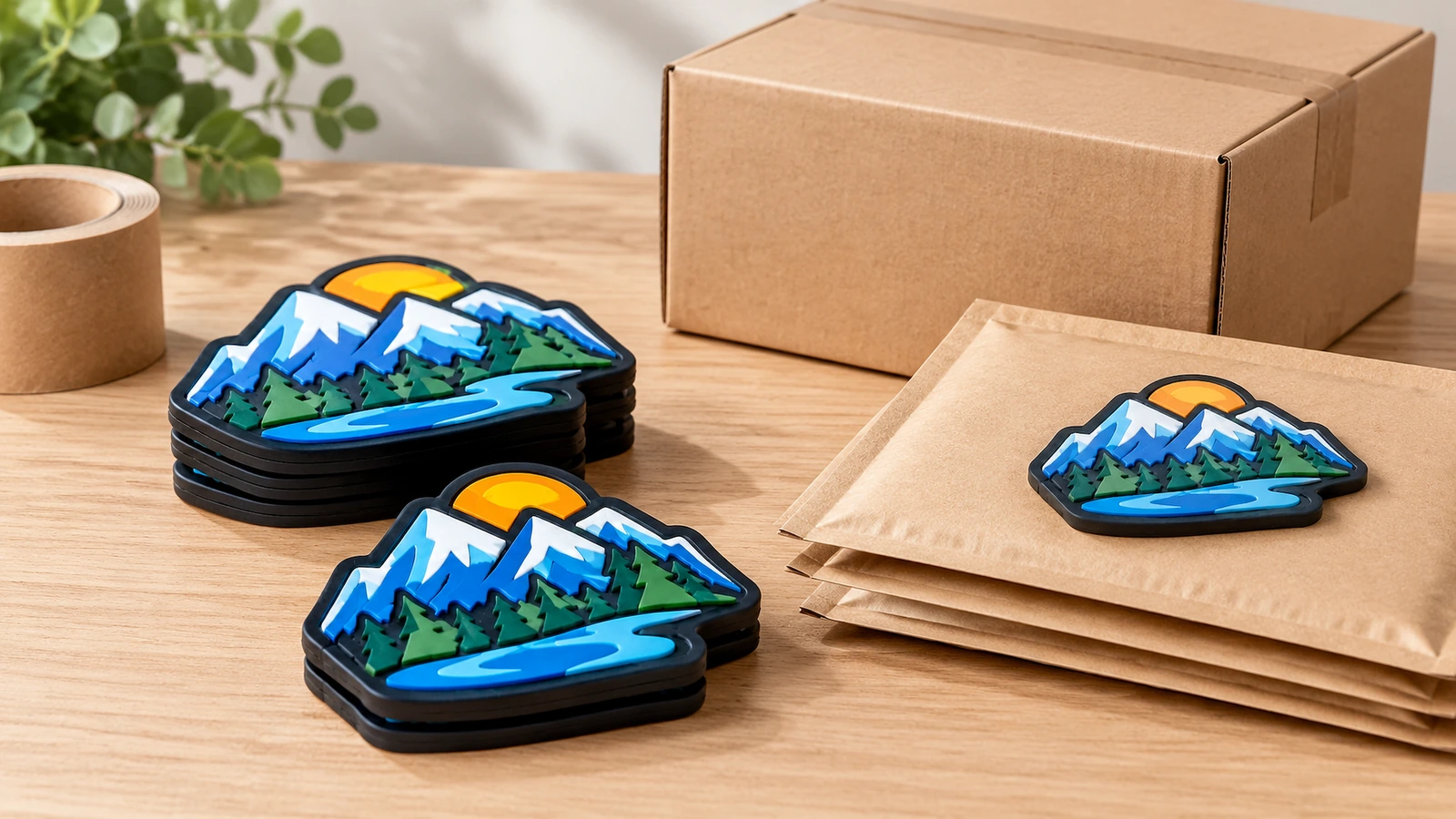
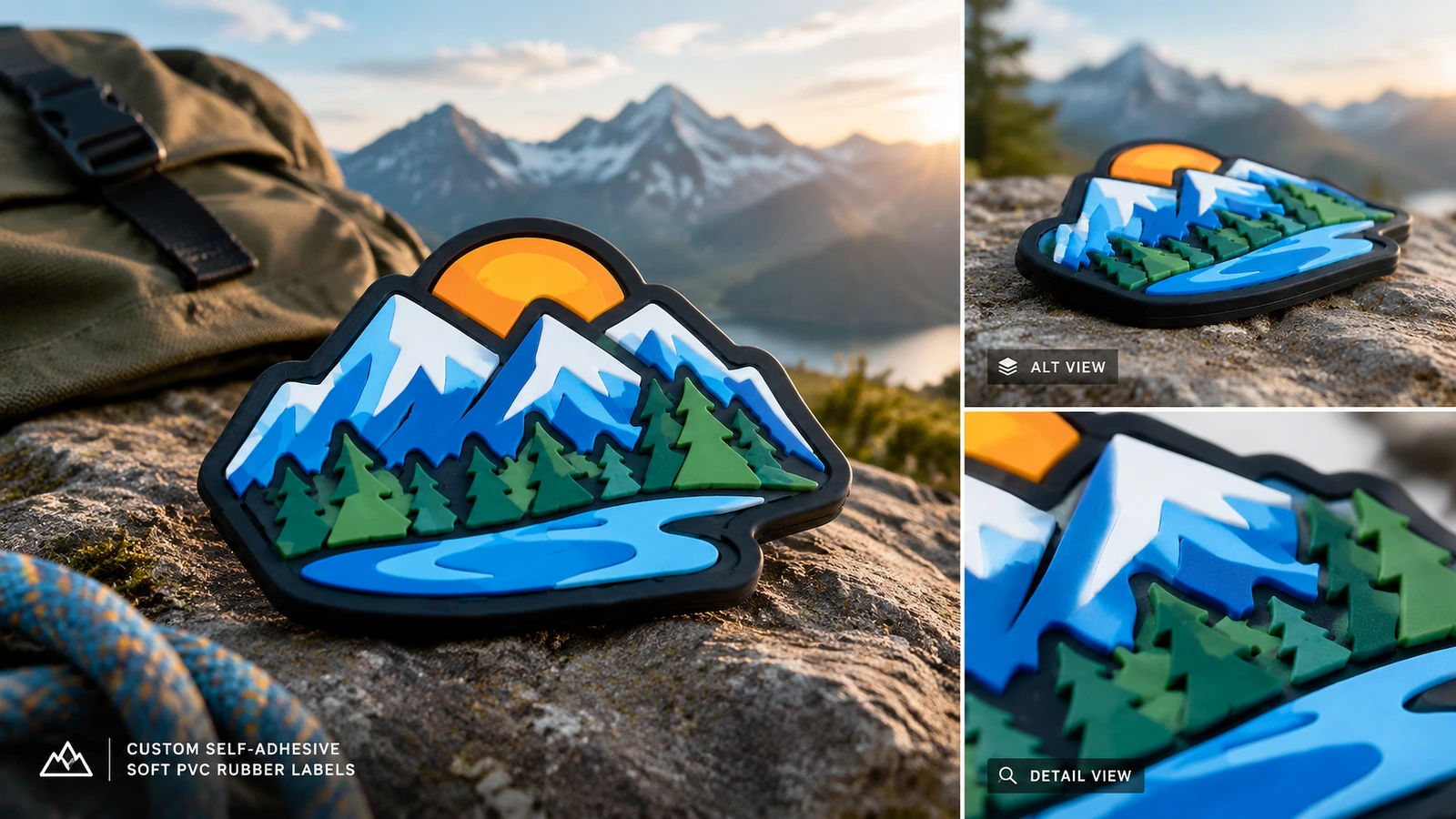
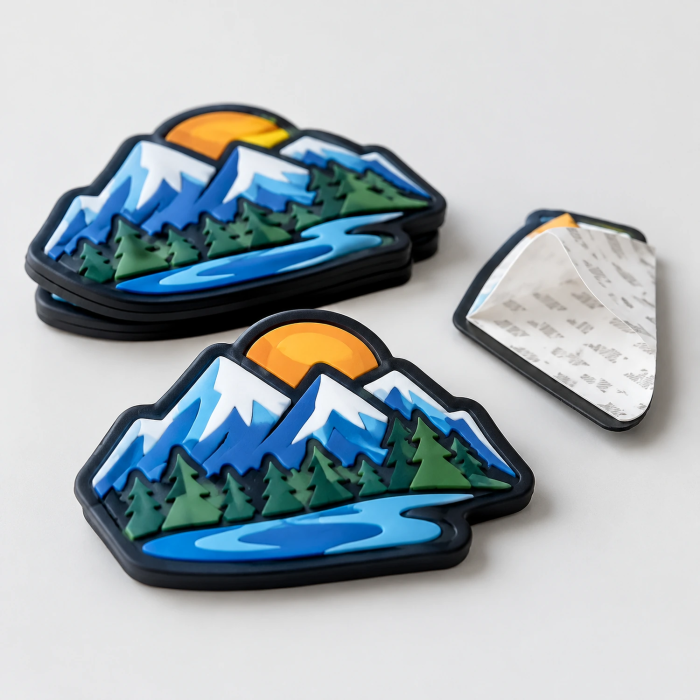
These custom rubber labels are molded soft PVC badges with a raised logo and a peel-and-stick back. They are designed for smooth, clean, non-laundered surfaces such as cases, bag panels, packaging and furniture. Before bulk production you approve a vector proof and a physical sample. Your quote lists the mold charge, minimum order, unit price and production time for your design.
Who Buys Custom Rubber Labels, and Where Do Peel-and-Stick Versions Fit? ↑
Three groups of buyers usually arrive at this product. Independent brand founders want a raised, dimensional logo so a first collection looks established rather than generic. Production and merchandise managers want a trim they can reorder each season without briefing a supplier from scratch. Makers and small shops want to try a 3D logo on a few items before they commit budget. All three are asking the same practical questions: will the label stay put on my product, and what will the first order cost once tooling is included?
This listing covers self-adhesive soft PVC rubber labels: a molded PVC badge with a raised logo and a pressure-sensitive adhesive back. The peel-and-stick format suits smooth, dry, non-laundered surfaces, including hard cases, coolers, bag panels, gift boxes, retail packaging, furniture and equipment housings. Label Yourself publishes prices for similar labels and describes them as suitable for "clothing, furniture, and more"[1], which shows how widely buyers use the format.
Two kinds of buyer should look elsewhere. If you need identification molded into tires, hoses, mats or insulating PPE, you need a vulcanizable label. Rubber Labels USA explains that its labels are "generally applied during the vulcanization process"[2], which involves different chemistry and a different ordering process. If the label will go on a garment that is washed often, a stuck-on badge should not be your primary label. GB Labels advises that on fabrics customers should "go for a sew-on or iron-on option wherever possible"[3]. For apparel, ask at the quote stage whether a sew-channel variant is available. Do not assume the adhesive version will survive laundering.
Why Do First Rubber Label Orders Go Over Budget or Fail? ↑
The problem: rubber labels are molded, so costs begin before the first piece exists. Cruz Label says its mold fee "typically starts at $150"[4]. That fee pays for 3D CAD mold work and does not give you ownership of a physical mold. Molds are recycled 12 months after your last order, so a late reorder pays the fee again. On the same FAQ page, Cruz quotes about 2.5 weeks for sampling and 3–4 weeks for production of PVC and silicone labels. Minimum orders vary widely between suppliers. GB Labels states a 1,000-piece minimum for rubber labels. Label Yourself prices a 15×40 mm adhesive-backed rubber label at $2.59 each for 100 pieces plus a $75 setup charge, or $334 in total, falling to $0.62 each at 1,000 pieces.
Why it gets worse: several costs only appear after delivery. A supplier comparison compiled by SourcifyChina notes that "3M adhesive may weaken in about 1 year"[5]. Treat that as a procurement warning, not laboratory data. Artwork mistakes are expensive too. Cruz's return policy[6] allows no cancellations after artwork approval and requires factory errors to be reported within 7 days of receipt. Placement also matters. GB Labels warns that a raised label rubbing against skin "could cause irritation" even when no allergic reaction occurs. A cheap quote that leaves out mold ownership, sample approval and adhesion testing cannot be fairly compared with one that includes them.
How we address it: our ordering process is built around those failure points. You approve a vector proof before any mold charge. You approve a physical sample before bulk production starts. Your quote itemizes the mold fee, mold retention terms, minimum order, unit price and production time for your specific design. No factory test data has been published for this SKU yet, so adhesion, temperature resistance and aging are verified on your own surface during sampling rather than promised in advance.
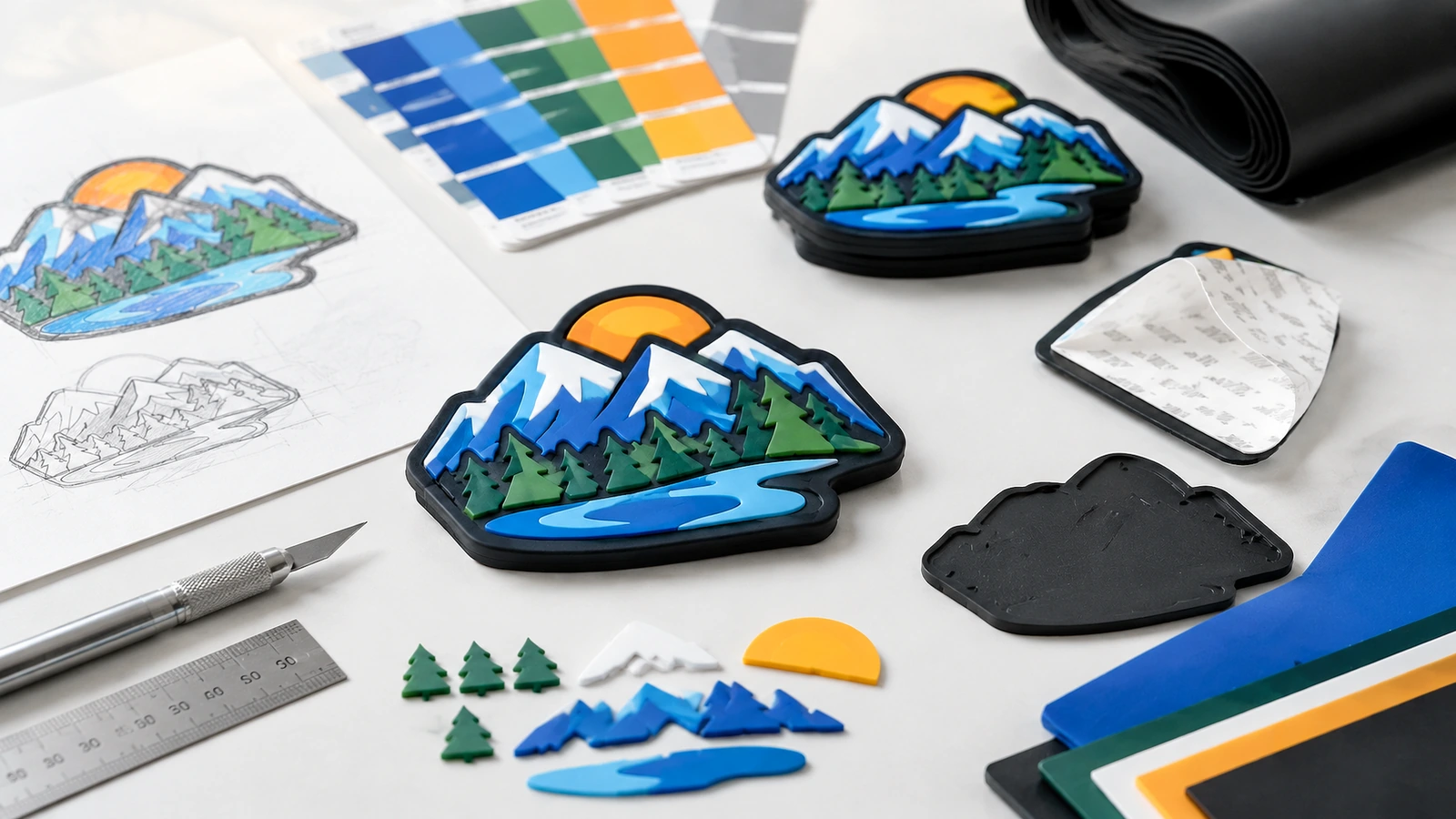
Table of Contents
What Is a Self-Adhesive Soft PVC Rubber Label? ↑
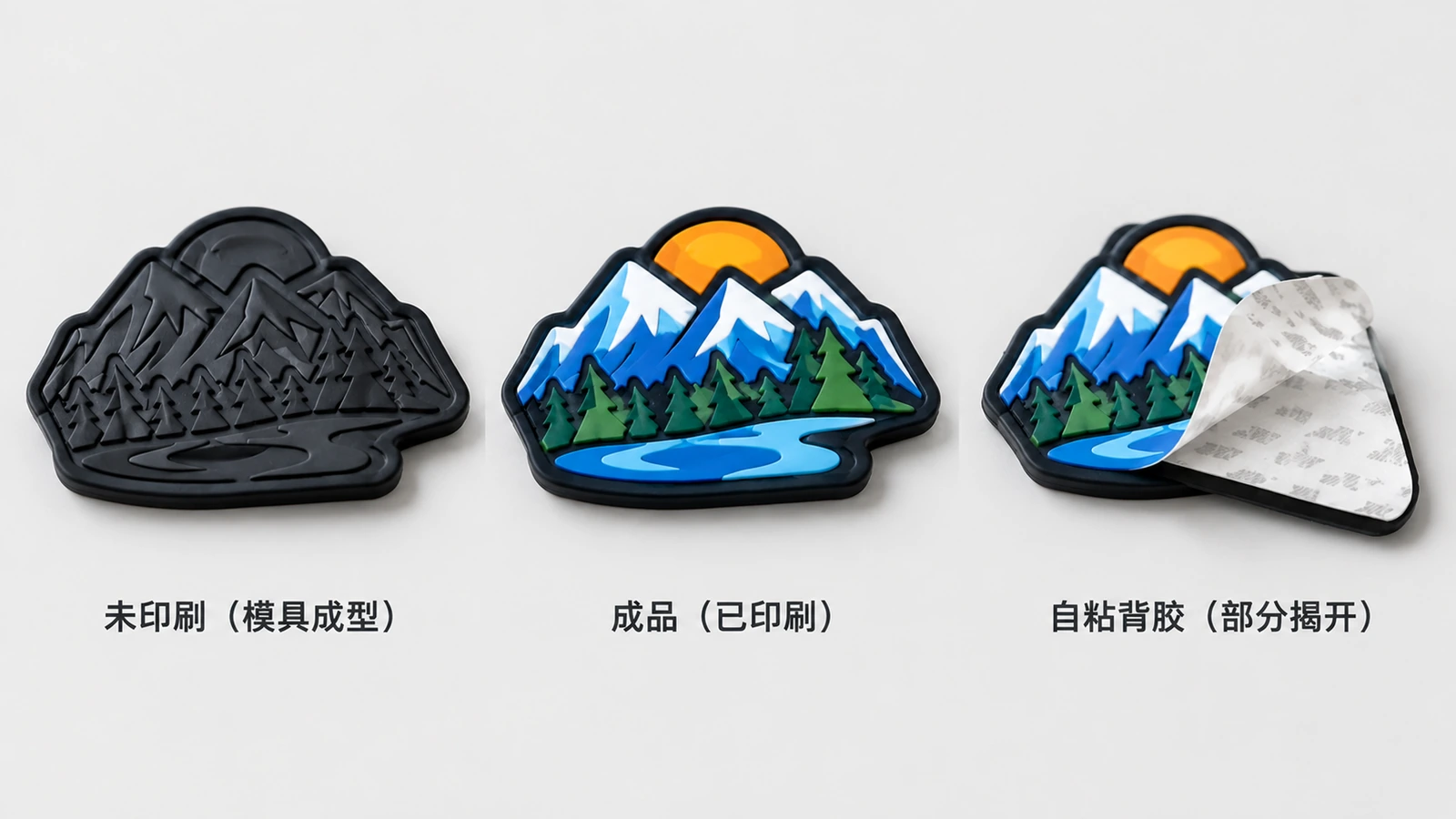
Soft PVC is polyvinyl chloride made flexible with plasticizers. It is poured or injected into a metal mold, cured, and then given an adhesive backing. Cruz Label places PVC and silicone in the same "rubber material category" and says the two "look almost identical." The differences matter, though. Silicone has more elasticity, better resistance to heat, cold, UV and ozone, and a higher price, while PVC "can be harder than Silicone"[7]. That trade-off makes soft PVC the cost-first choice for labels on rigid or semi-rigid surfaces rather than on stretch fabric.
The molding process sets the limits on color and detail. Monterey Company states that PVC "can only be produced in solid colors"[8] and recommends UV printing on PVC for designs that contain gradients. Each color is a separate fill area, so a logo with photographic shading or hairline strokes has to be simplified before tooling. Label Yourself also notes that its multicolored labels are made of rubber rather than silicone, which shows that the number of colors can decide which material a supplier offers.
Heat and aging limits need a test, not an assumption. One UK supplier, Perfect Labels, claims PVC labels resist heat "up to 45-50 degree Celsius"[9], compared with 200–250°C for silicone. That is a commercial claim rather than a standardized test result, and soft PVC formulations differ. A materials supplier comparison adds that PVC labels "may harden, crack, or fade over time"[10], especially with frequent washing or high temperatures. If your product will sit in a vehicle, next to warm equipment or in direct sun, include that exposure in the sample test plan.
How Do You Order a Molded Label Without Rework? ↑
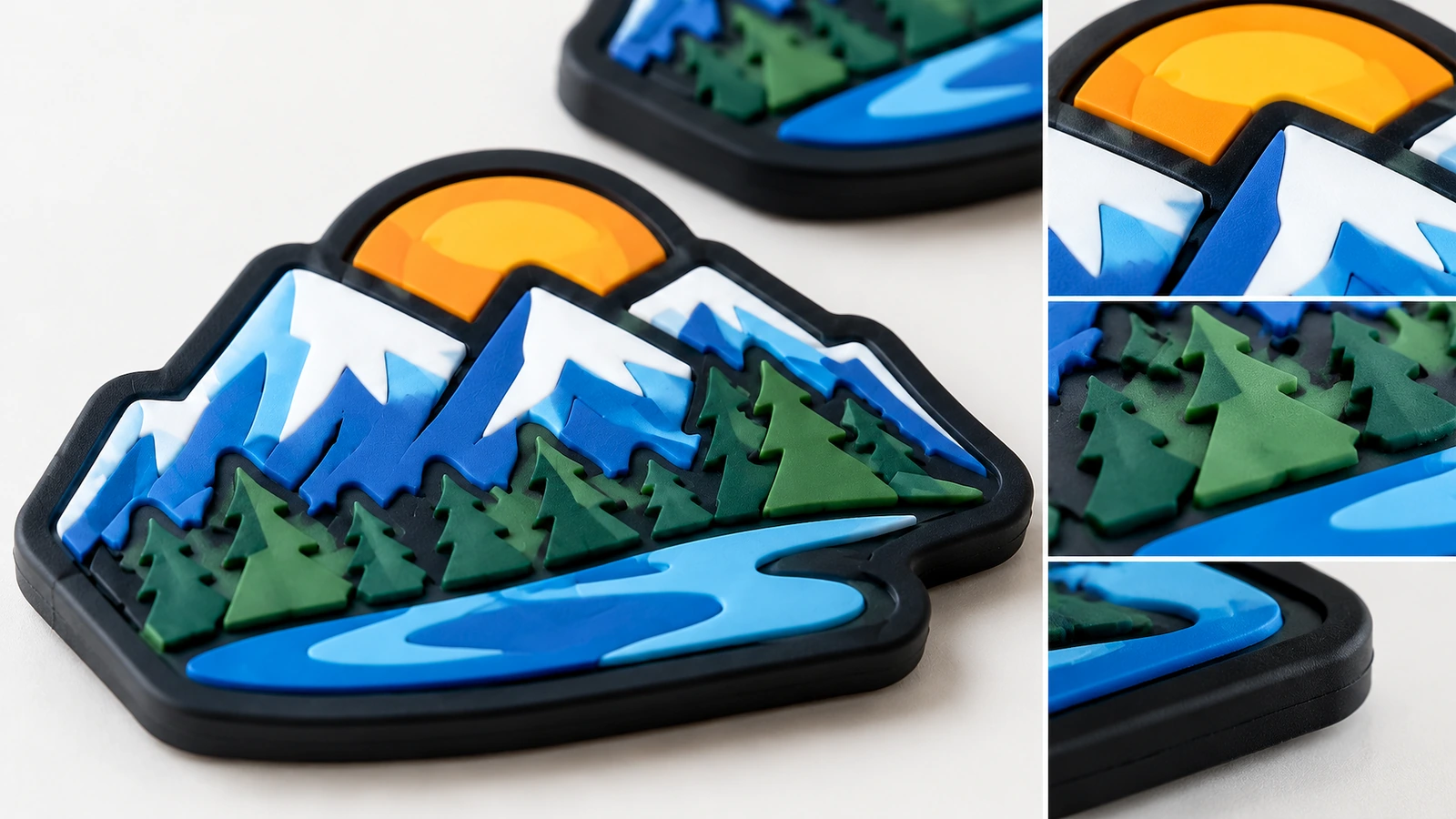
Most rework comes from artwork that ignores molding limits or from approving bulk production without a physical sample. The design rules below are public supplier references, not specifications for this SKU. Final dimensions, thickness and tolerances are confirmed on your proof and sample.
| Field | Public reference | Status for this label |
|---|
| Minimum line width | Not below 0.5 mm | Confirmed on proof |
| Base thickness | Preferably not below 0.7 mm | Confirmed on sample |
| Typical total thickness | About 2 mm | Quoted per design |
| Logo raise | About 0.5 mm | Quoted per design |
| Maximum size | Rectangle 22 × 15 cm; circle 15 cm diameter | Quoted per design |
| Colors | Solid Pantone fills, no gradients | Matched on physical sample |
| Artwork files | PDF, AI, EPS, CDR or layered PSD | Checked at preflight |
| Backing | Pressure-sensitive adhesive | Adhesion tested on your surface |
Cusmytrims publishes the line-width, base-thickness, overall-thickness and size limits above. It also states that prices "are not fixed"[11] because they depend on logo, size, color, material, shape, technique and quantity. Give these numbers to your designer before you request a quote. A 0.3 mm serif or an overly thin base is exactly the kind of detail that forces a mold to be recut.
- Describe the surface. Tell us the substrate (painted metal, ABS, coated canvas, board or wood), whether it is curved or textured, and the temperature range it will see. Peel-and-stick labels bond best to clean, smooth, dry surfaces. Surfaces that are washed, oily or constantly flexing need a different fixing method.
- Send vector artwork with Pantone Solid references. Cruz says it does not guarantee a 100% Pantone match "due to the differences in materials" (Cruz FAQ), so tell us which colors matter most.
- Approve the digital proof before paying the mold charge. Check size, stroke widths, color separation and logo raise on the proof. Changes at this stage cost nothing.
- Test a physical sample on your real product. Check color under daylight-type lighting, measure thickness, and leave the label on your product through several days of normal handling. A crafter on Reddit advised trialing one or two labels first: "I'd just avoid buying 500 of them up front."[12]
- Release bulk production only against the signed sample. Write color, thickness, adhesive type and acceptance checks into the purchase order.
- Inspect on arrival. Count, measure and peel-test immediately, because supplier claim windows can be short.
The lead time for this label is stated on your quote after proof approval. For comparison, public references range from Cusmytrims' 15–20 days of bulk production plus 5–7 days by FedEx or DHL, to Cruz's 3–4 weeks of production after roughly 2.5 weeks of sampling. Plan your launch around the date on your quote, not the fastest number you have seen online.
Soft PVC, Silicone or Another Method: Which Fits Your Product? ↑
Suppliers sell several different products under the name "rubber label." The table separates the options buyers most often compare at the quote stage.
| Option | Best fit | Main limitation | Public cost or MOQ anchor |
|---|
| Self-adhesive soft PVC (this label) | Smooth hard goods, cases, packaging, furniture | Adhesive aging; not for frequently washed items; solid colors only | $334 for 100 rubber labels incl. $75 setup (Label Yourself) |
| Sew-on soft PVC | Bag exteriors, caps, outerwear | Stiffer; can rub if placed against skin | About $3.12/pc at 100; $1.18/pc at 500 (Sienna Pacific) |
| Silicone, sew-on or adhesive | Sportswear, outdoor gear, stretch and skin-contact items | Higher unit price; still needs a mold | $645 for 100 incl. $50 setup (Label Yourself) |
| PVC or silicone heat transfer | Finished garments without stitching | Not for spandex or textured fabric; strict press settings | 500 pcs minimum for non-woven labels (Cruz) |
| Moldless TPU/UV digital 3D | Short runs, gradients, frequent artwork changes | Less rebound and wash life than molded silicone | No mold fee |
| Vulcanizable rubber label | Tires, hoses, mats, insulating PPE | Cannot be sewn or stuck onto apparel | Quoted per project |
Read the table by surface first and price second. Custom Clothing Labels' comparison chart lists PVC as not iron-on and unable to show gradients[13], which supports the advice above to simplify artwork. Sienna Pacific publishes PVC label prices from about $3.12 each at 100 pieces and $1.18 at 500. It also notes that an existing mold can be reused "and simply change the PVC colors"[14], which helps if you plan several colorways. Cruz's application guide states that PVC and silicone heat transfers "do not stretch"[15] and should not be used on spandex or textured substrates. Audley's comparison describes moldless TPU digital labels[16] as suitable for single-piece sampling, giving up silicone's rebound and long-term wash performance in exchange for no tooling. On Label Yourself's price list, 100 silicone labels at 15×40 mm cost roughly double the rubber version, so choose soft PVC when the surface does not stretch, does not get washed and does not need silicone's heat tolerance.
What Should Your Buying Checklist and Acceptance Tests Cover? ↑
When you compare quotes, put every supplier on the same columns: mold fee, mold retention period, mold ownership, minimum order, sampling time, bulk time, color tolerance, adhesive type and test scope. A quote that leaves any of these blank is incomplete, not cheaper. Once you have chosen a supplier, write the acceptance checks below into the purchase order so the signed sample becomes the measurable standard.
| Check | How to test | What to fix in your PO |
|---|
| Dimensions and thickness | Calipers on sampled pieces versus the signed sample | Tolerance agreed at sample approval |
| Line definition | Inspect fine strokes and small counters under magnification | No filled-in or broken details |
| Color | Compare with the signed sample under daylight-type light | Written visual or instrumental limit |
| Surface defects | Look for bubbles, flash, burrs and color bleed | Sampling plan and AQL levels per ISO 2859-1 |
| Adhesion | Apply to your substrate, allow dwell time, then peel by hand | Pass/fail defined on the sample |
| Exposure aging | Leave labels on product in sun, heat or cold as in real use | Bulk release only after the sample passes |
None of these checks needs a laboratory. What they need is a reference point, which is why the physical sample matters more for a 3D molded label than for a printed sticker. Adhesion and exposure aging are the two checks most specific to a peel-and-stick label. Run both on the real substrate rather than on a test card, and record the result alongside the sample so a future reorder can be judged against the same standard.
Compliance obligations come from the finished product, not from the badge alone. If the label goes on a textile product sold in the United States, it does not replace the legal label. The FTC's Textile Fiber Rule[17] still requires fiber content, the manufacturer or marketer name, and country of origin. Because soft PVC relies on plasticizers, children's items need particular care. CPSIA Section 108 prohibits more than 0.1% (1,000 ppm) of eight listed phthalates[18] in accessible plasticized components of children's toys and child care articles. Ordinary garment trims are not automatically covered, but a PVC label on a toy is.
For products sold in California, SATRA's September 2026 Proposition 65 high-risk list names plastics and rubbers[19] as phthalate risks and recommends none detected (below 0.005%) of each listed phthalate. That figure is laboratory guidance, not a statutory limit. RY Silicone points out that a specification reading only "phthalate-free PVC" is underspecified[20] unless it names the plasticizer system. The same source recommends silicone for parts above 80°C or in long-term skin contact. No test report has been published for this SKU yet. Ask for one with your quote, confirm that it covers the label material and color you are ordering, and budget for third-party testing if it does not.
Key Takeaways for Rubber Label Buyers ↑
- Budget for tooling before comparing unit prices. — Mold fees typically start from $150, and molds are recycled 12 months after the last order (Source)
- Minimum orders differ sharply between suppliers. — 100 pieces at one factory, 1,000 at another (Source; Source)
- Small runs still carry real cash outlay. — $334 for 100 rubber labels, including a $75 setup charge (Source)
- Adhesive is the long-term weak point. — 3M adhesive may weaken in about 1 year, per a supplier comparison (Source)
- Design within molding limits. — Lines at least 0.5 mm wide and base at least 0.7 mm thick (Source)
- Children's toys and child care articles have hard limits. — 0.1% (1,000 ppm) for each of eight phthalates (Source)
Ready to Turn Your Logo Into a Tested Sample? ↑
A self-adhesive soft PVC label is a cost-effective way to add a raised, durable-looking logo to cases, packaging, furniture and other hard goods, provided the surface suits adhesive and the artwork suits a mold. The risks are well documented: tooling fees, mold expiry, solid-color limits, adhesive aging and heat sensitivity. Each is handled by the same discipline: proof first, sample second, bulk only against a signed reference.
For reorders, keep the signed sample, the Pantone references and the mold retention terms from your quote together. A repeat order can then be matched to the original instead of re-approved from scratch. Ready to start? Send your vector logo, target surface and quantity to request a quote and sample for NSKU-638-01. The mold fee, minimum order, unit price and production time will be itemized for your design.




The information below is required for social login
Sign In
Create New Account