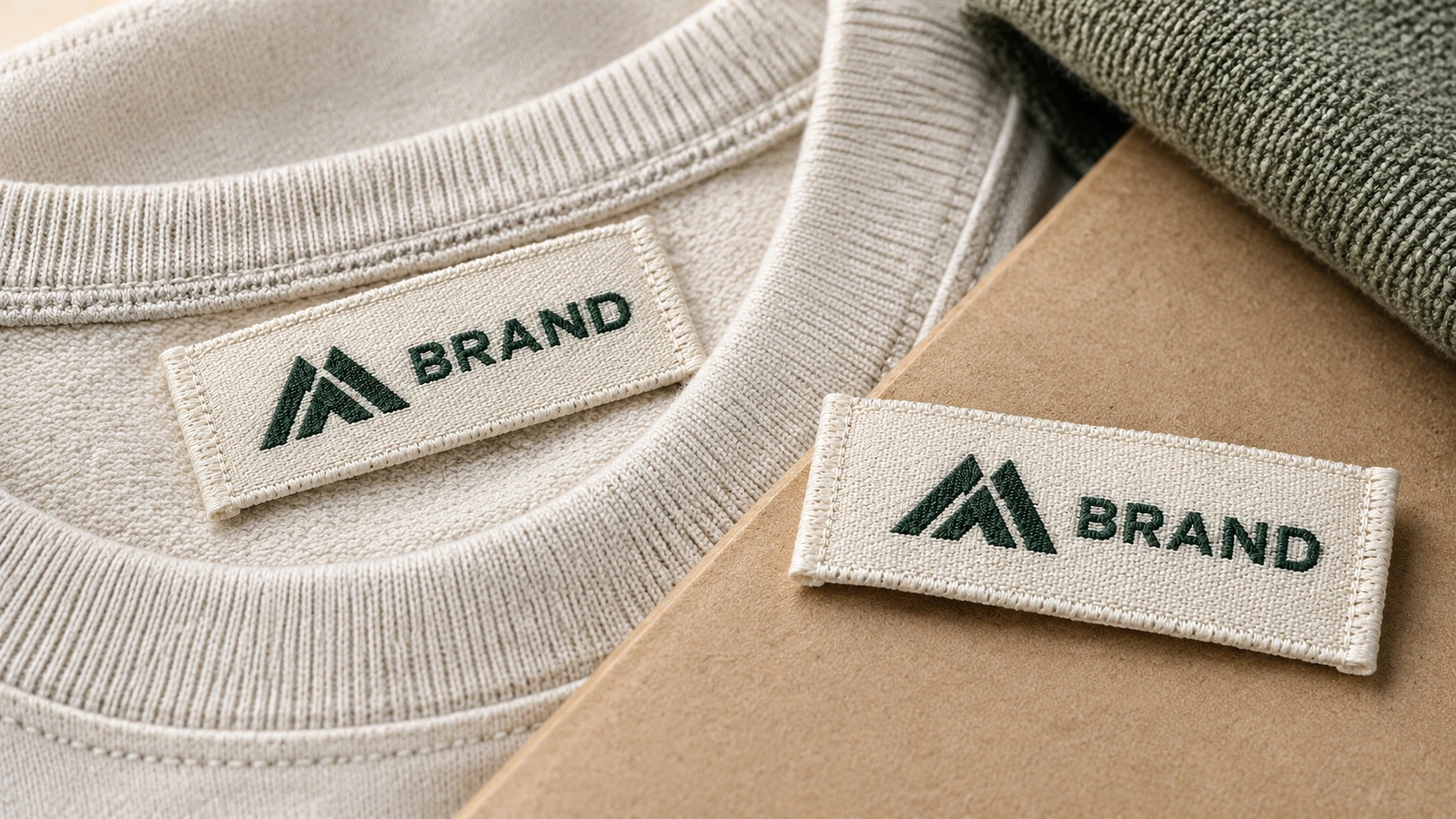
Custom woven tags are brand labels woven on a jacquard loom from dyed yarn, so the logo is part of the fabric instead of ink sitting on top. For a neck label, use damask, keep text at roughly 2 mm or larger, and approve a washed woven sample before production. Put fiber content, origin, and care data on a separate printed care label so the garment meets US labeling rules.
Who Orders Custom Woven Tags, and What Do They Need Them to Do? ↑
Most buyers are not label specialists. They are founders who want a product to read as a real retail brand. The largest group is small apparel brands and independent designers who buy blank garments and relabel them. Super Label Store[1] notes that most small clothing brands "do not manufacture shirts" and that many label suppliers start at 500 or 1,000 pieces. That threshold forces a new brand to stock labels before the design has been proven. This group wants a neck tag that looks retail-grade and does not itch.
The second group is makers and market sellers, including knitters, quilters, bag makers, and plush makers. They order small runs, choose simple fonts, and often sew the tags on by hand, so they need soft edges. Some of them avoid tags on purpose. One crocheter said she did not want handmade work "to look like it came from a factory" (r/crochet[2]). For these buyers, a small, quiet tag placed in the right spot works better than a large one.
The third group is garment factories and private-label producers. They need color that repeats across orders, several fold types, and side-seam care labels that stay legible. A smaller group of buyers orders tags for merchandise, uniforms, pet collars, and home textiles. They care most about a clear logo and wash durability, and fold terminology matters less to them. Custom Woven Fabric Brand Tags (provisional SKU NSKU-746-02) can be specified for all of these uses. MOQ, unit price, and production time are confirmed for each design in a written quote. We do not publish figures that have not been verified for your configuration.
Why Does a Cheap Woven Tag Cost More Than It Saves? ↑
Problem. The tag is the only part of a garment that rubs the neck all day. Jace Apparel[3] calls the "itch factor" "the number one complaint in customer returns," and links it to thick, sealed-edge tags sewn into lightweight tees. One streetwear founder compared a new supplier with earlier Alibaba labels that "felt terrible on the back of my neck" (r/streetwearstartup[4]).
Agitation. The worst failures tend to show up after the sale. One label maker explains that silicone softener washes out after 2–3 washes and exposes the untreated polyester underneath. Customers then say a garment was "fine when I bought them but became unwearable later" (YIMA Label[5]). Color is a second risk. One buyer described thread matching as "good, not excellent," because the supplier used "the closest thread they have, but maybe not exact to your rgb" (r/myog[6]). Small text is a third risk. In the same Jace Apparel test, a multi-line care block woven into a 2 cm tag came out blurred. Each of these problems leads to a reprint, a return, or a compliance gap.
Solution. We handle the tag as a written specification. Damask carries the logo. The edge finish is chosen for skin contact. Text is sized to what the loom can resolve. A woven sample is washed before you sign off, and legal text goes on a printed care label. Every value that depends on your design is confirmed at quote and checked at sample, including color count, MOQ, and lead time.
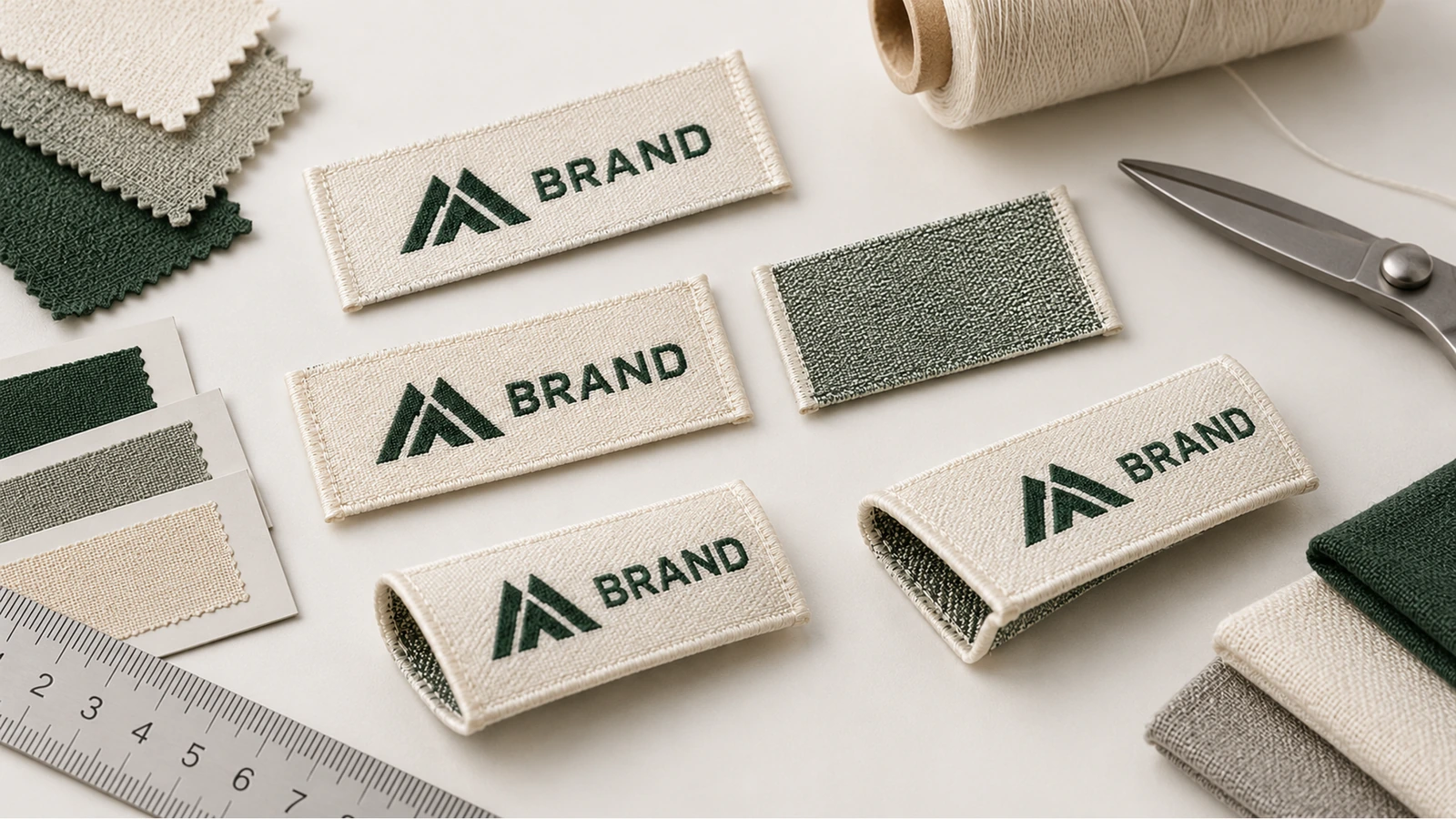
Table of Contents
What Is a Custom Woven Tag, and Where Are Its Limits? ↑
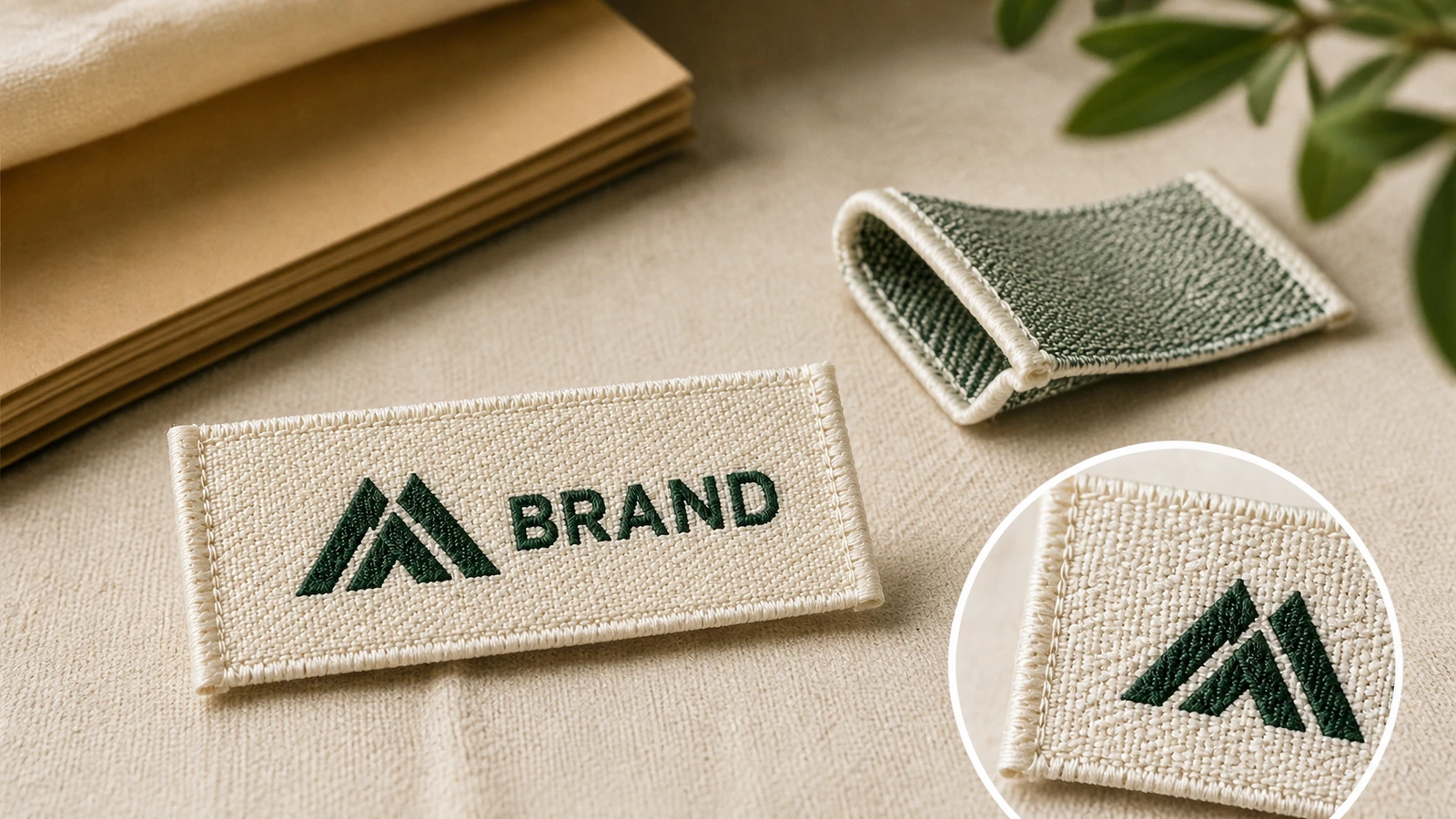
A jacquard loom interlaces dyed yarns so that the design becomes the structure of the fabric. Because there is no ink layer, nothing can crack or peel off, and durability depends on the yarn, the weave density, and the edge finish. Dutch Label Shop[7] caps a single woven label at 12 colors, counting shading, black, and white. It recommends printing for designs with "multiple rows of small text or laundry symbols."
Three weaves cover most orders. Damask has the highest thread density, the finest detail, and the softest hand, and it costs the most. Satin is smooth and glossy, which makes it a good base for skin-contact or care text. Taffeta is thinner, cheaper, and dries quickly. However, Wunderlabel[8] notes it can feel scratchy against skin and lasts less well than satin or damask. Yarn is commonly offered at 50, 75, or 100 denier. A lower denier means finer yarn and sharper detail.
Resolution is the main hard limit. Jace Apparel's comparison puts minimum legible damask text at about 2 mm, compared with 0.5 mm for printed labels (source[3]). Gradients and photographic images have to be converted into solid color blocks. Design guidance relayed by Clothing Labels UK[9] recommends keeping artwork at least about 1.5 mm from the cut edge. High contrast and fewer colors give the most reliable results.
How Do You Specify, Proof, and Approve a Woven Tag Step by Step? ↑
Step 1: Separate the brand tag from the legal label
The woven tag carries the brand name, logo, and size. Fiber content, country of origin, company identity, and care instructions usually go on a printed satin care label at the side seam. Under the FTC Care Labeling Rule[10], a care label must be permanent and must stay legible for the useful life of the product. If you relabel blanks, be aware that removing the original label also removes this information, and in the US it has to stay on the garment[1].
Step 2: Choose the fold from the seam position
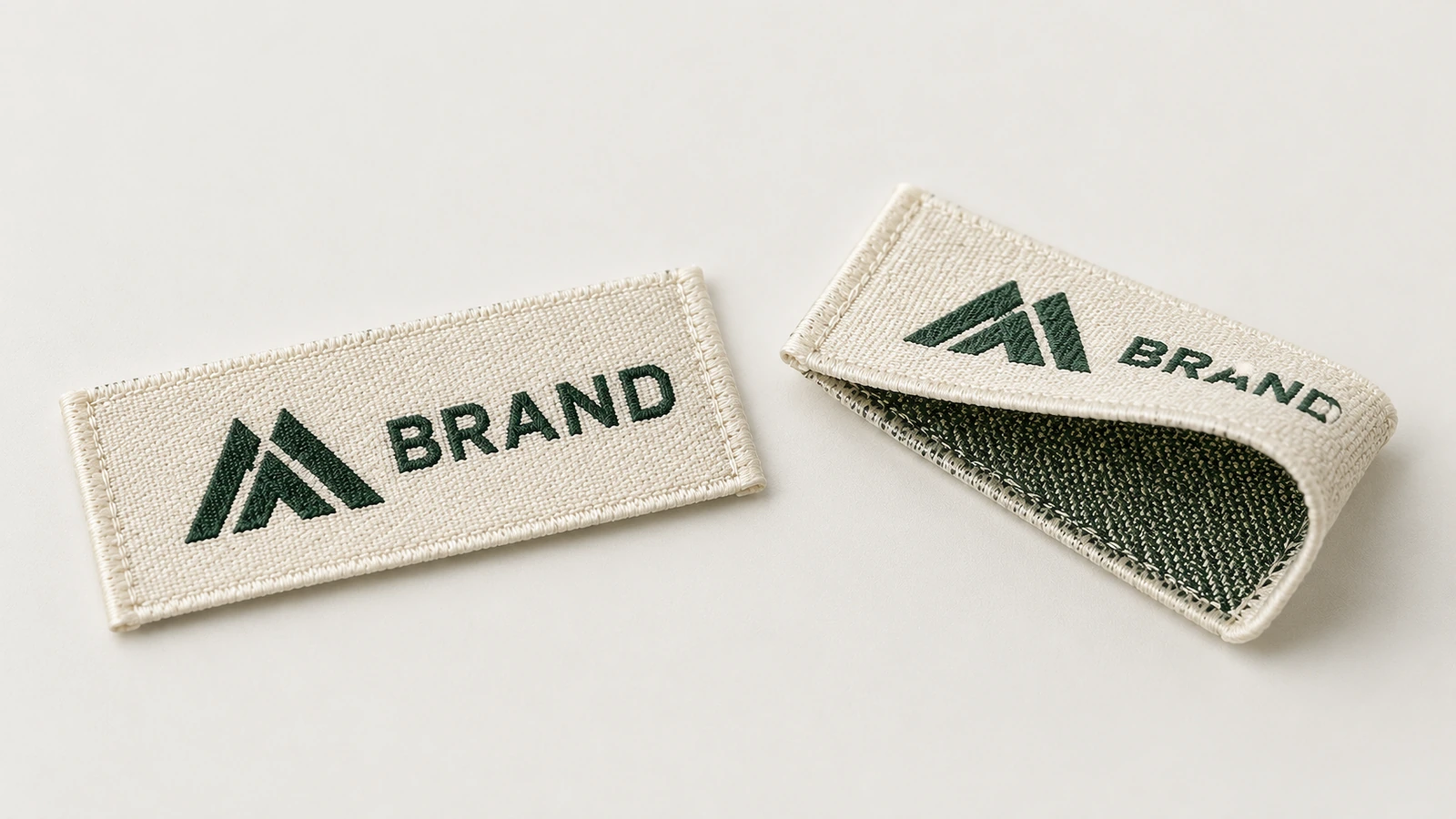
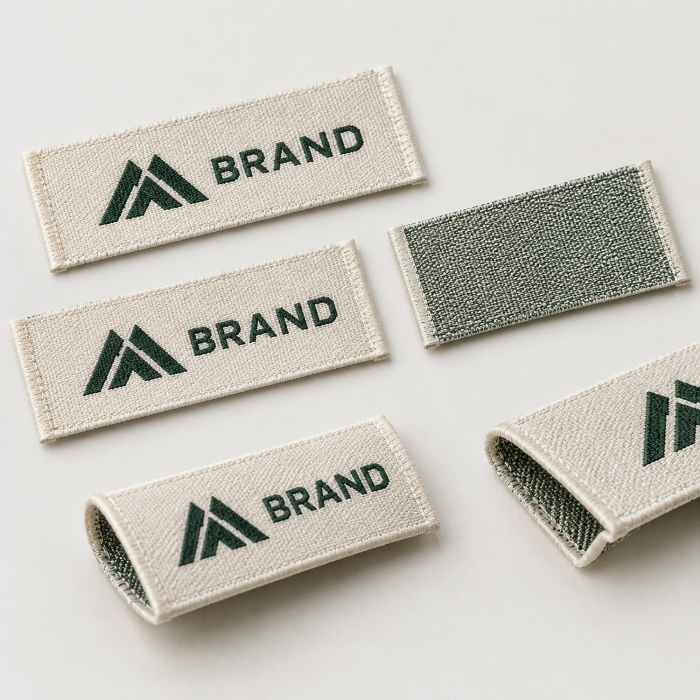
A center fold suits neck labels because it hides both raw ends in the seam. End folds or mitre folds suit side-seam flags. A straight cut suits flat sew-on placements, and a Manhattan or book fold gives a premium look. The fold sets the sewing allowance, commonly about 1/4 inch, and determines whether back-side text has to be mirrored (Custom Woven Labels design guide[11]). If comfort matters most, one founder suggests moving the woven tag to the side seam or hem and printing the neck label instead (r/streetwearstartup[12]).
Step 3: Set edge finish and backing
A hot cut seals the edge quickly but can leave hard corners. Ultrasonic cutting or folded-in edges are the usual choices for tags that sit against the neck. Iron-on backing has to be tested on your actual fabric, because stretch, textured, or brushed fabrics may not hold the adhesive. For children's garments and items washed often, sewing the tag on is the safer default. Which edge and backing we recommend for NSKU-746-02 is confirmed at the sample stage, not assumed.
Step 4: Preflight the artwork file
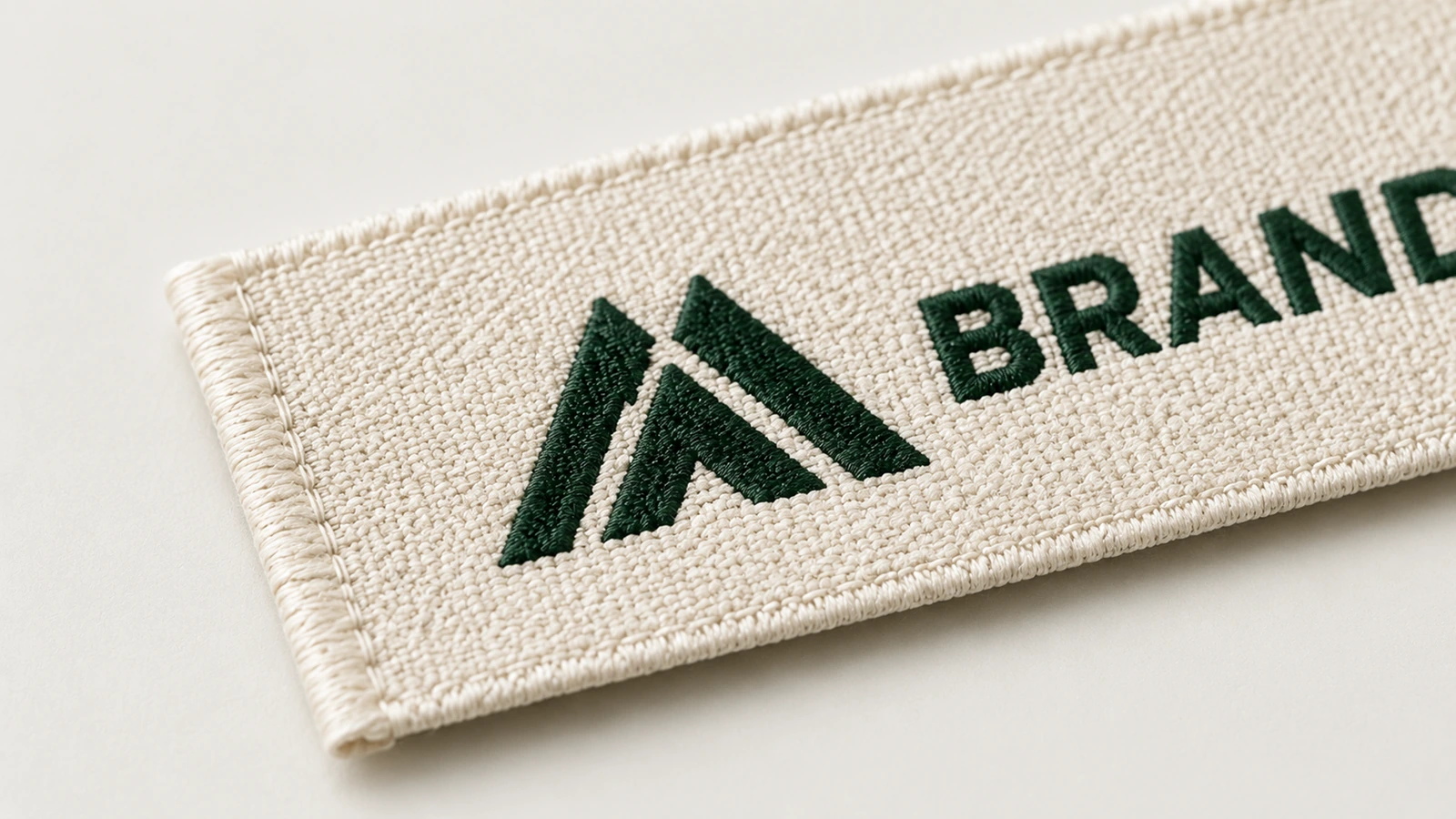
Send vector artwork (AI, EPS, or PDF) marked with the finished size, the fold, front and back views, and Pantone or thread-card references. Do not rely on RGB values. Before submitting, check that text and strokes meet the roughly 2 mm minimum, that nothing sits inside the edge margin, and that every gradient has been flattened into solid blocks. Matching is done to the nearest available thread, so a high-contrast palette tolerates small shifts better[6].
Step 5: Approve a digital simulation, then a woven sample
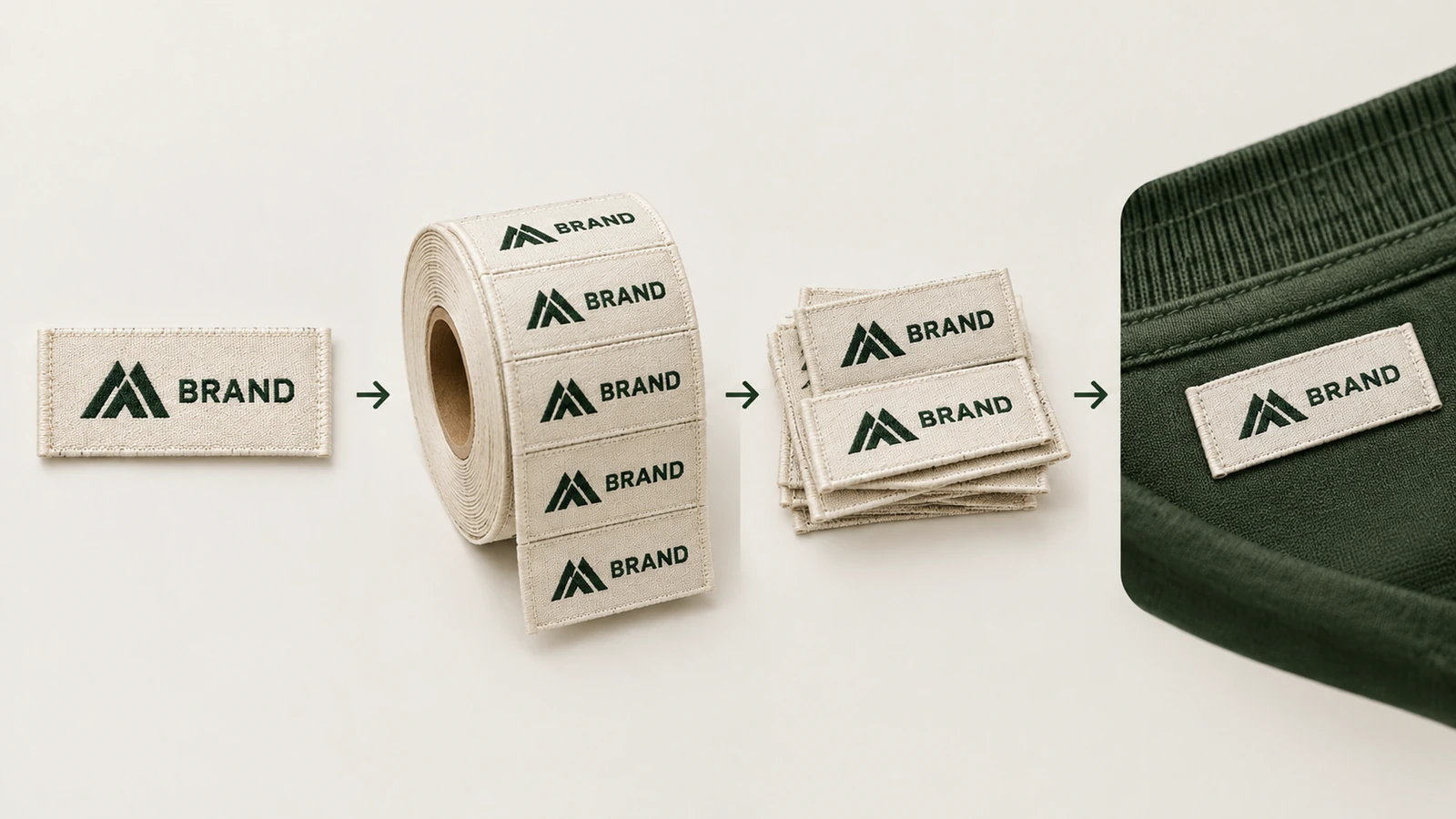
Approval happens in three gates. First comes a 1:1 digital weave simulation, then a physical woven sample that you wash, then written sign-off. The production clock starts at signed approval, not at your first inquiry. For reference, one supplier breaks its own process down as follows: artwork review about 1 day, loom setup 1–2 days, weaving 2–4 days, cutting and folding 1–2 days, and QC and packing about 1 day (AceAccessory[13]). Those figures are that supplier's own. The schedule for your order is stated in your quote.
Which US Labeling Rules Apply to the Garment Carrying Your Tag? ↑
US law has no product rule written specifically for woven tags. It regulates the information a garment has to carry. A woven tag can hold that information, but it cannot replace it.
| Required item | What it means | Rule |
|---|
| Fiber content | Generic fiber names and percentages by weight, listed in order of predominance | 16 CFR Part 303[14] |
| Country of origin | Written in English; for collared garments, on the inside center of the neck | 16 CFR Part 303 |
| Identity | Company name or RN number | 16 CFR Part 303 |
| Care instructions | Permanent and legible for the useful life of the product | 16 CFR Part 423 |
| Care symbols | When symbols are used alone, they must follow ASTM D5489-96c | ASTM D5489[15] |
The table explains why dense legal text usually belongs on a printed label. ISO 3758 symbols on their own do not satisfy the US rule. According to the FTC's Clothes Captioning guidance[16], care information may go on the reverse of a permanent label sewn at one end, as long as consumers can easily see both sides. Shoes, gloves, and hats are exempt from the care rule. The neck-placement convention for origin is summarized by Merch Mob[17]. A March 2025 AAFA petition[18] asked the FTC to allow digital care labels. Under current rules, a physical permanent label is still required.
Chemical certification is a separate, voluntary layer. OEKO-TEX STANDARD 100[19] covers only the items listed on a valid certificate. A certified accessory cannot be used to market an uncertified garment. NIST's compliance guide[20] draws the same line: regulations are mandatory, while standards are voluntary unless a regulation incorporates them. We make no certification claim for NSKU-746-02 unless a certificate number and product class can be shown.
Which Label Type Fits Which Job: Woven, Printed, Embroidered, or Heat Transfer? ↑
| Option | Construction | Fine detail | Skin feel | Wash durability (supplier claims) | Best use |
|---|
| Damask woven | Dense jacquard in dyed yarn | About 2 mm minimum text; roughly 8–12 colors | Soft body; edge depends on the cut | Yarn-dyed; "lifetime" per suppliers | Neck logo, premium apparel |
| Satin woven | Satin weave, glossy | Less detail than damask | Smooth, soft | Outlasts ink | Baby wear, care-label base |
| Taffeta woven | Plain weave, thinner | Coarser | Can feel scratchy | Below satin and damask | Seam allowances, bags, budget lines |
| Printed satin or cotton | Ink on tape | About 0.5 mm text; unlimited colors | High comfort | Fades after 30–50 washes per one supplier | Care, fiber, multilingual text |
| Embroidered | Stitches on twill | Poor at micro-text | Can be stiff and snag | Durable on a strong base | Hats, bags, outer badges |
| Heat transfer | Print fused to the garment | Sharp lines | No tag bulk | Depends on press settings | Activewear, tagless designs |
The table draws on supplier statements rather than a shared lab protocol, so treat the durability column as directional. The printed fade range and the 2 mm versus 0.5 mm text limits come from Jace Apparel[3], which says it referenced AATCC methods but published no report number. Label River[21] summarizes the trade-off this way: "if deadlines are tight, print first; if longevity matters, weave; if statement impact is the goal, embroider." Rapidtags[22] notes that heat-transfer durability depends on fabric match, temperature, and washing. For most brands, a hybrid works best: a damask neck tag with a printed side-seam care label.
| Channel | Public price or lead-time reference | Source |
|---|
| Online small-run store | 5 pieces from $43 at the smallest size | Super Label Store |
| Damask pricing guide | 50–100 pcs about $0.60–$1.50 each; 1,000 pcs about $0.15–$0.40 | Rush Patch[23] |
| Factory hub compilation | 1,000 pcs damask: China $0.04–$0.12, US $0.12–$0.30 | Apex Fashion Lab[24] |
These are public reference points from different channels, and they should not be averaged into a market price. Retail stores trade a higher unit price for very low minimums. Factory pricing assumes larger runs, separate freight, and more coordination. Pricing for NSKU-746-02 is pending a written quote based on your size, color count, fold, and quantity.
What Should Your Quote Request Include to Avoid Rework? ↑
| Field | What to specify | Status for NSKU-746-02 |
|---|
| Weave and yarn | Damask, satin, or taffeta; 50, 75, or 100 denier | Confirm at quote |
| Thread colors | Pantone or thread-card references; total count including background | Confirm at quote, verify at sample |
| Finished size and fold | Dimensions before and after folding; fold type | Confirm at quote |
| Edge finish | Hot cut, ultrasonic, or folded-in ends | Confirm at sample |
| Backing | Sew-on, iron-on, or combined | Test on your fabric |
| MOQ | Pieces per design | Pending written quote |
| Production time | Days counted from signed sample | Pending written quote |
| Wash and colorfastness | Home-wash cycles; wet-rub grade for dark tags | Pending test |
| Substance certification | Certificate number and product class | No claim until documented |
Every row above is a decision you should have in writing before production starts. Most public complaints trace back to a field that was left vague. One Trustpilot reviewer[25] set a 1.75-inch size, then found the upload had auto-detected 2.75 inches. Another said a 500-piece run arrived with the file changed. On the same platform, buyers describe waiting six weeks against advertised 10–14 day windows. To avoid this, state "no automatic resizing" in writing, and put a latest-arrival date in your order terms that includes a buffer for transit and customs.
How Do You Inspect a Delivery and Keep Reorders Consistent? ↑
Inspect each delivery before any garments are cut. Count the pieces, measure size and fold against the signed sample, and confirm that the construction is correct: woven rather than printed, and sew-on rather than iron-on. Then sew several tags into the real garment and run them through five home wash-and-tumble-dry cycles. After washing, check for shrinkage, hard edges, fraying, and whether the text is still legible. Dark tags on light garments need wet-rub colorfastness of grade 4–5 under ISO 105, because grade 4 alone can still stain sweat-exposed or pale fabric (Yunenx QC guide[26]). For NSKU-746-02, these are acceptance tests to be run on your sample. They are not published results.
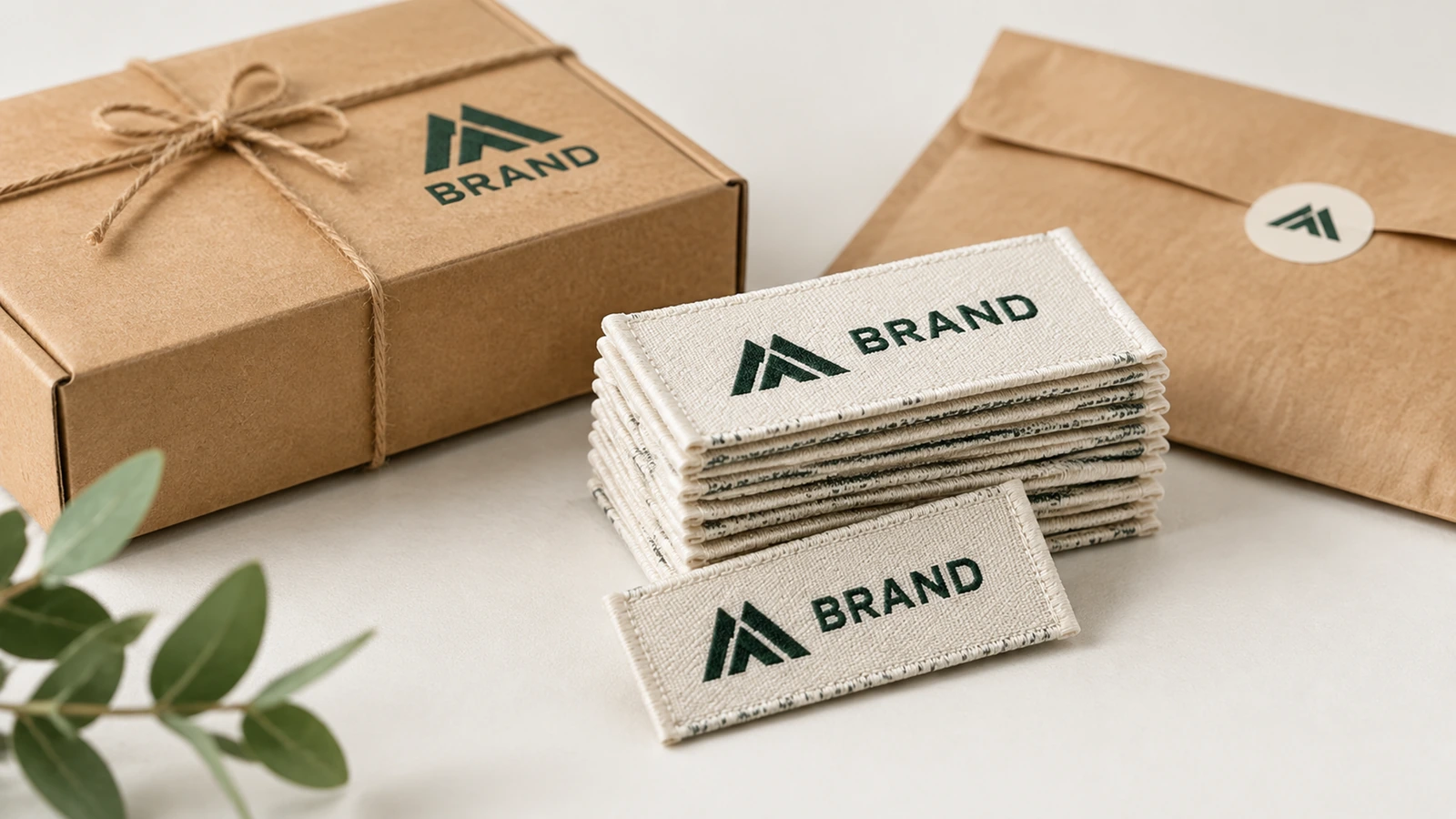
Repeat orders carry their own risk. One repeat buyer[27] of 5,000 woven labels praised the quality but marked the order down because labels that earlier arrived in two boxes of 2,500 came stacked in cellophane. That made counting harder and increased the risk of spills. Keep one approved tag from every lot, record the order number and thread references, and attach a photo of the previous lot to each reorder. Ask for tags bundled and labeled by design, size, and quantity so that receiving stays quick and short shipments are easy to spot.
Key Takeaways for Buying Woven Brand Tags ↑
- Woven labels are the largest custom clothing label type. — about $1.344 billion and 42.6% share in 2025 (Source)
- Weave resolution sets the text floor. — about 2 mm woven versus 0.5 mm printed (Source)
- Color count is capped. — up to 12 colors per woven label, including shading (Source)
- Factory softness can disappear quickly. — silicone coating leaches out after 2–3 washes (Source)
- US care labels must stay legible for the product's useful life. — 16 CFR Part 423 (Source)
- Symbol-only care labels must use the FTC-recognized version. — ASTM D5489-96c (Source)
- MOQ and production time for NSKU-746-02 are not yet verified. — stated per design in the written quote
Ready to Turn Your Logo Into an Approved Woven Sample? ↑
A good woven tag tells customers the garment is finished and intentional. A poor one ends up cut out or returned. The difference comes from decisions you can make in advance: damask for the logo, an edge that suits skin contact, text above 2 mm, legal data on a printed care label, and a woven sample that has been washed before you approve it. Custom Woven Fabric Brand Tags follow that sequence, and every MOQ, price, and lead-time figure is confirmed in writing for your exact configuration. Send your vector artwork, finished size, fold type, and quantity to request a quote and a woven sample.




The information below is required for social login
Sign In
Create New Account