Custom jute tote bags are natural-fiber shopping totes printed with your logo. They are usually screen printed in one to four bold colors on 200–450 GSM fabric. Orders that arrive right share three habits: a written spec covering size, GSM, handle, lining and print method; an approved physical sample; and a pre-shipment inspection against an agreed AQL.
Who Orders Custom Jute Totes, and What Do They Need From Them? ↑
Most buyers in this category are commercial. Marketing coordinators fill trade-show booths. Nonprofit teams pack gala and fundraiser gift bags. Association planners build member welcome kits. A second group is small brands, such as wineries, organic food shops, skincare labels and boutiques, that use the bag itself as packaging and want the rustic texture to read as "considered" rather than "cheap." Wedding and party hosts, plus small makers who buy low-minimum or blank totes for resale, complete the field. One home-show exhibitor summed up the typical promo brief: "Had them design bags with my logo, for a Home Show… They were able to full fill my order in time" (buyer review[1]).
These bags sell into a large channel that increasingly asks for proof. PPAI estimates that US promotional products distributor sales reached $27.1 billion in 2025, up 1.3% year over year (PPAI sales estimate[2]). ASI reports that the share of suppliers receiving inquiries about sustainability credentials rose from 71% in 2024 to 76% in 2025 (ASI research[3]). In practice, a buyer wants four answers on one page: will the logo read clearly, when will the bags arrive, will they look rustic without looking cheap, and what are the minimums and unit costs.
Why Do Jute Tote Orders Go Wrong, and What Prevents It? ↑
Jute behaves differently from cotton canvas. Its open weave, natural oils and moisture regain change how ink sits on the surface, how the bag smells and how long it lasts. Artwork that prints cleanly on canvas, such as thin strokes, small reversed text, gradients and tiny sponsor marks, breaks up on a coarse weave. Many buyers only find this out when the finished batch arrives.
These failures are documented. A Better Business Bureau complaint against a tote supplier that ranks on page one describes receiving 108 of the 240 bags ordered for a school fundraiser (BBB complaint file[4]). Odor is the most repeated product complaint. LeeLine Bags explains that jute batching oil is a petroleum-derived hydrocarbon with "a distinct diesel-like odor that lingers in the finished fabric." In the same article, the company reports its own Instron test (a supplier test, not a third-party lab result), in which warp tensile strength fell from 42.8 lb dry to 18.3 lb wet, a loss of roughly 57% (LeeLine jute fabric guide[5]). Construction also fails at stress points before the fabric itself. Szoneier notes that many failures "begin at the handle attachment, bottom seam, gusset corner, or top hem rather than in the centre of the fabric panel" (Szoneier construction notes[6]).
The fix is a controlled process. Treat the tote as a specified product. Freeze the dimensions, GSM, weave, handles and lining in writing. Size the artwork for the weave. Approve a physical sample made from bulk fabric. Then inspect quantity, print, seams, odor and moisture before any carton leaves. The rest of this page follows that sequence and shows where each cost and risk sits.
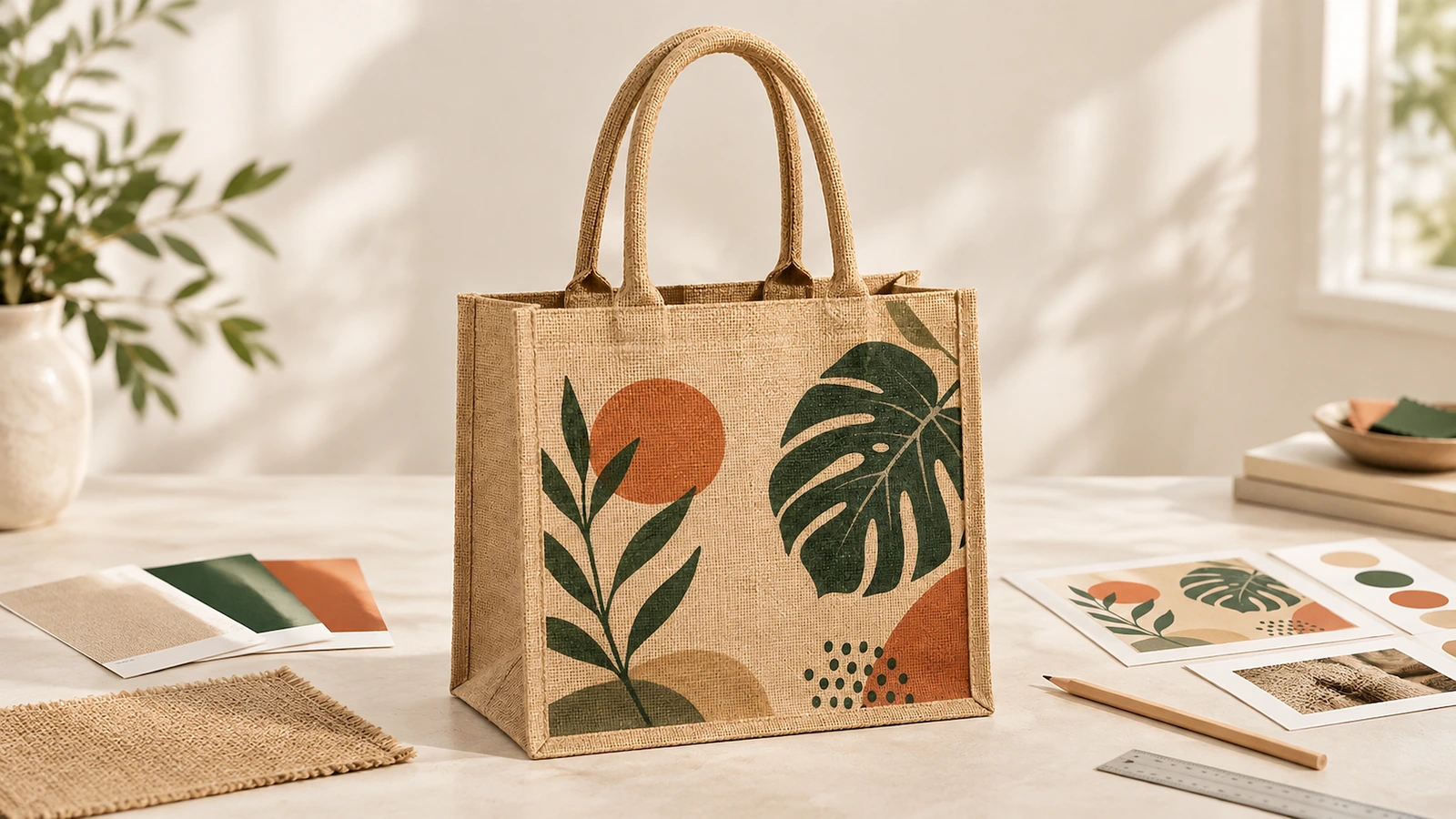
Table of Contents
What Exactly Is a Custom Jute Shopping Tote? ↑
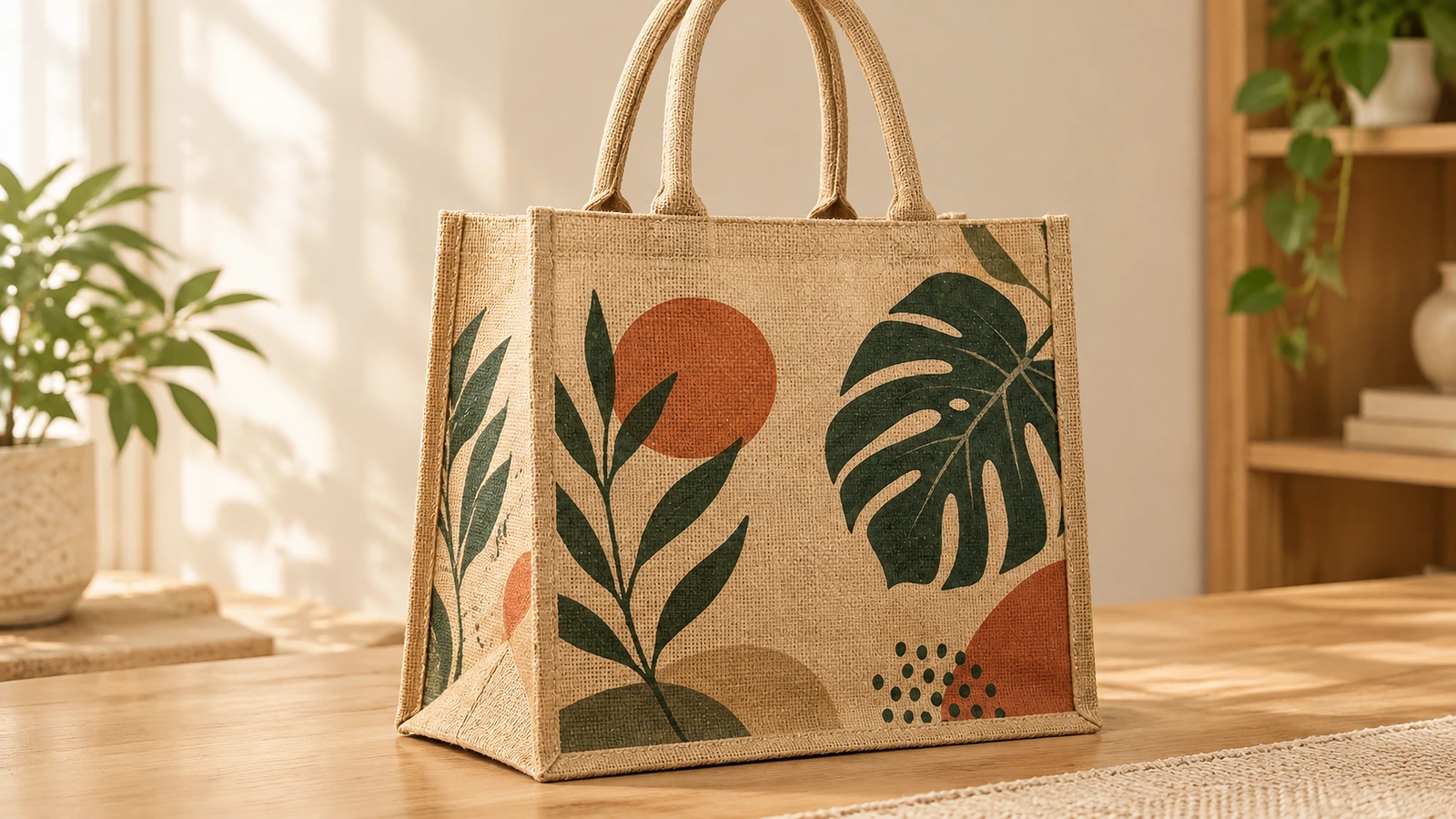
A custom jute shopping tote is an open-top carry bag sewn from woven jute (Corchorus). Your branding goes on by screen print, heat transfer, DTF, embroidery or a sewn-on patch. Raw fiber supply comes from very few places: FAO's 2024 bulletin puts 2023/24 world jute fiber output at about 292.5 thousand tonnes, of which Bangladesh produced 245.0 and India 23.6 (FAO statistical bulletin[7]). Expect natural shade variation between batches and occasional slubs in the yarn. These are traits of the fiber rather than defects, as long as they stay within the range of the approved sample.
Construction falls into three families. Unlaminated natural jute tells the simplest fiber story, but it absorbs moisture and should be spot cleaned. Laminated jute adds a coating, usually plastic-based, that improves body and moisture resistance. CottonToMaker advises buyers not to imply that a laminated bag is fully natural or biodegradable unless the material details support that claim. The same guide notes that buyers commonly review natural jute at around 260–340 GSM (CottonToMaker checklist[8]). Juco, a jute-cotton blend, has a smoother face that holds finer print.
| Spec field | What to state | Why it matters |
|---|
| Finished size | Width × height × gusset, with a stated tolerance | The flat panel size understates both capacity and printable area |
| Fabric | GSM or weave count; natural, dyed or laminated | Drives hand feel, body, cost and which claims you can make |
| Handles | Material, length and attachment stitch | Handle joints are usually the first point of failure |
| Lining | None, cotton, or PE/PP laminate | Trades moisture resistance against biodegradability wording |
| Decoration | Method, ink colors, print area and number of sides | Sets setup cost and the limits of legibility |
| Packing | Bags per carton, inner bags and carton labels | Controls moisture and count accuracy in transit |
| Compliance | Fiber content label and any certificates required | Supports US labeling rules and claim substantiation |
Every row in this table belongs on the purchase order. Capacity and load rating are left off deliberately. Both depend on the actual dimensions, how the bag is loaded and how the handles are built. Confirm them with a hang or pull test on the approved sample instead of relying on a catalog figure.
How Do You Order Custom Jute Tote Bags in Seven Controlled Steps? ↑
Step 1: Brief and spec. Start from the use case. A trade-show giveaway carried for one afternoon needs a different GSM and different handles from a grocery tote expected to last a season. Fill in the spec table above before you request prices. Quotes built on a vague brief cannot be compared with each other.
Step 2: Size the artwork for the weave. Ruixing recommends a minimum stroke width of about 1.5 mm for heavy-body screen printing on jute. It calls screen printing "the best choice for bold, 1-3 color logos directly on jute" (Ruixing printing guide[9]). Simplify the logo, enlarge small text and drop gradients. If the artwork needs fine detail, move it to a cotton pocket or a Juco panel.
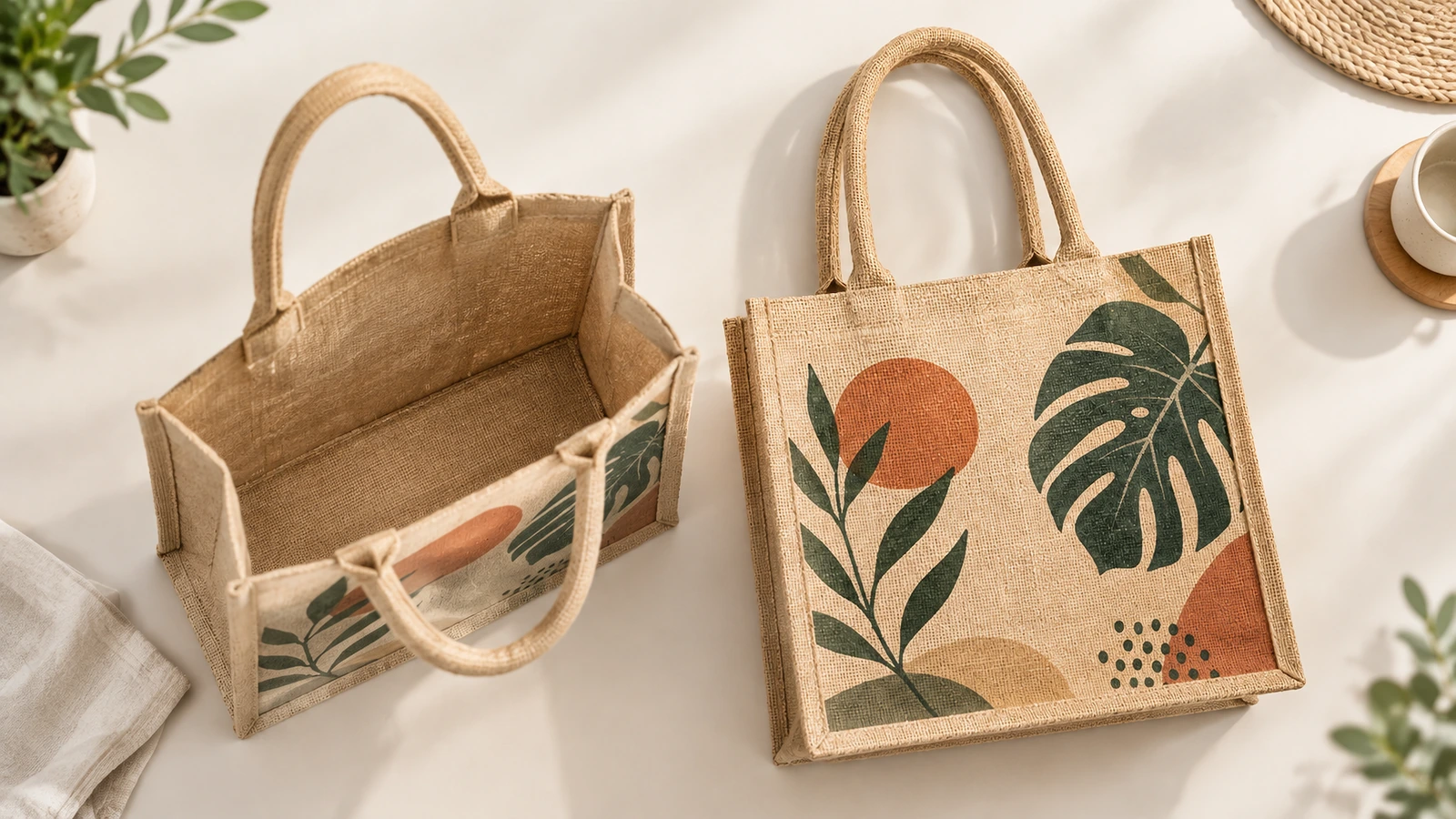
Step 3: Choose the surface and lining. Decide early whether the face will be natural jute, dyed jute, Juco or a cotton patch. Decide at the same time whether the interior is unlined, cotton-lined or laminated. Lamination helps when bags will meet damp produce or rain, while unlaminated jute keeps the end-of-life story simplest. Dyed fabric and edge-to-edge printing usually raise minimums, so confirm both at the quotation stage.
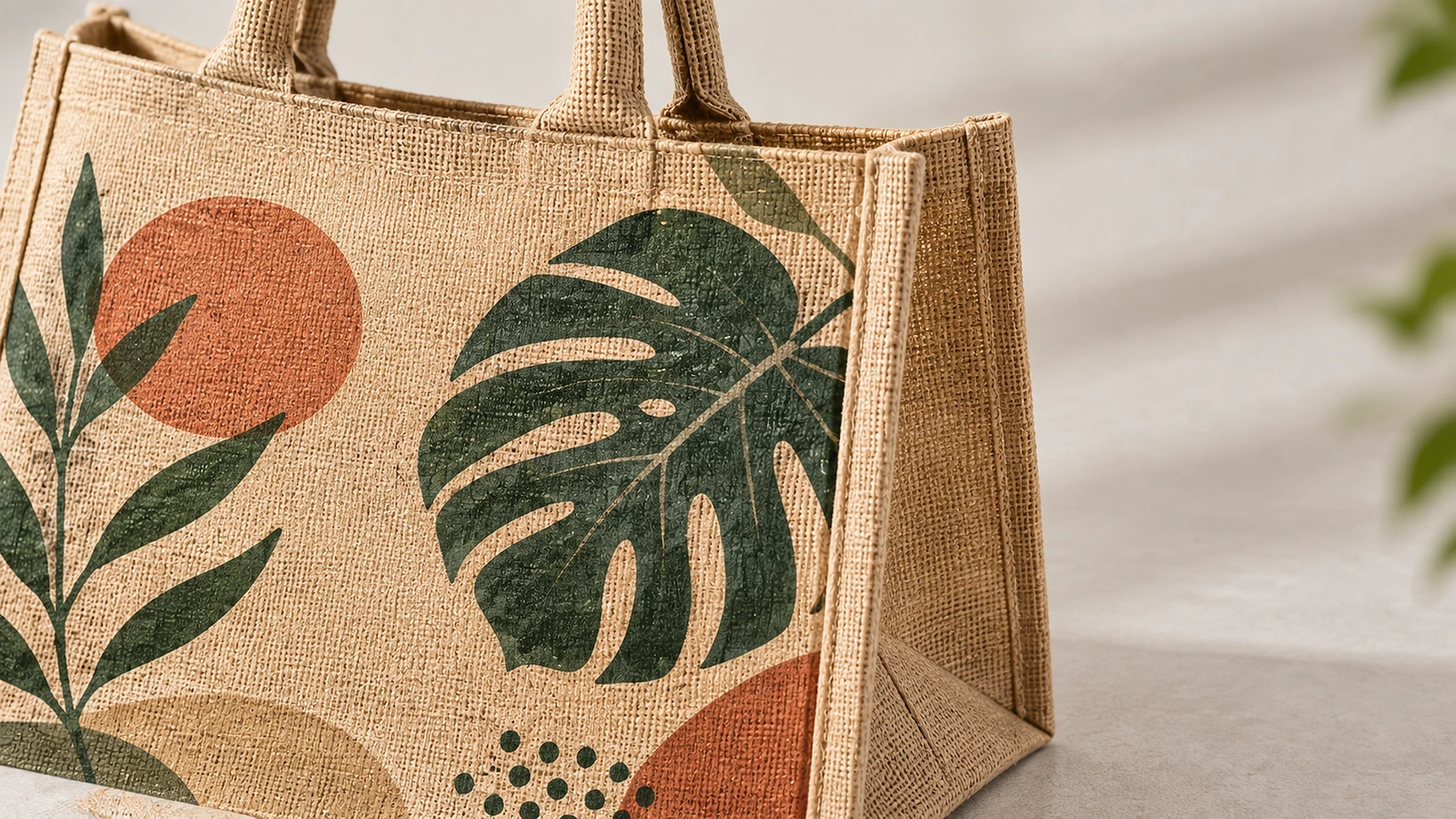
Step 4: Preflight the files. Submit vector artwork (AI, EPS or PDF) with Pantone or CMYK references, and mark the print sides and safe area. Apparel Boss notes that low-resolution files, missing bleeds and unapproved proofs "stall production before it starts." It advises ordering at least 6 to 8 weeks before an event (Apparel Boss lead-time guide[10]).
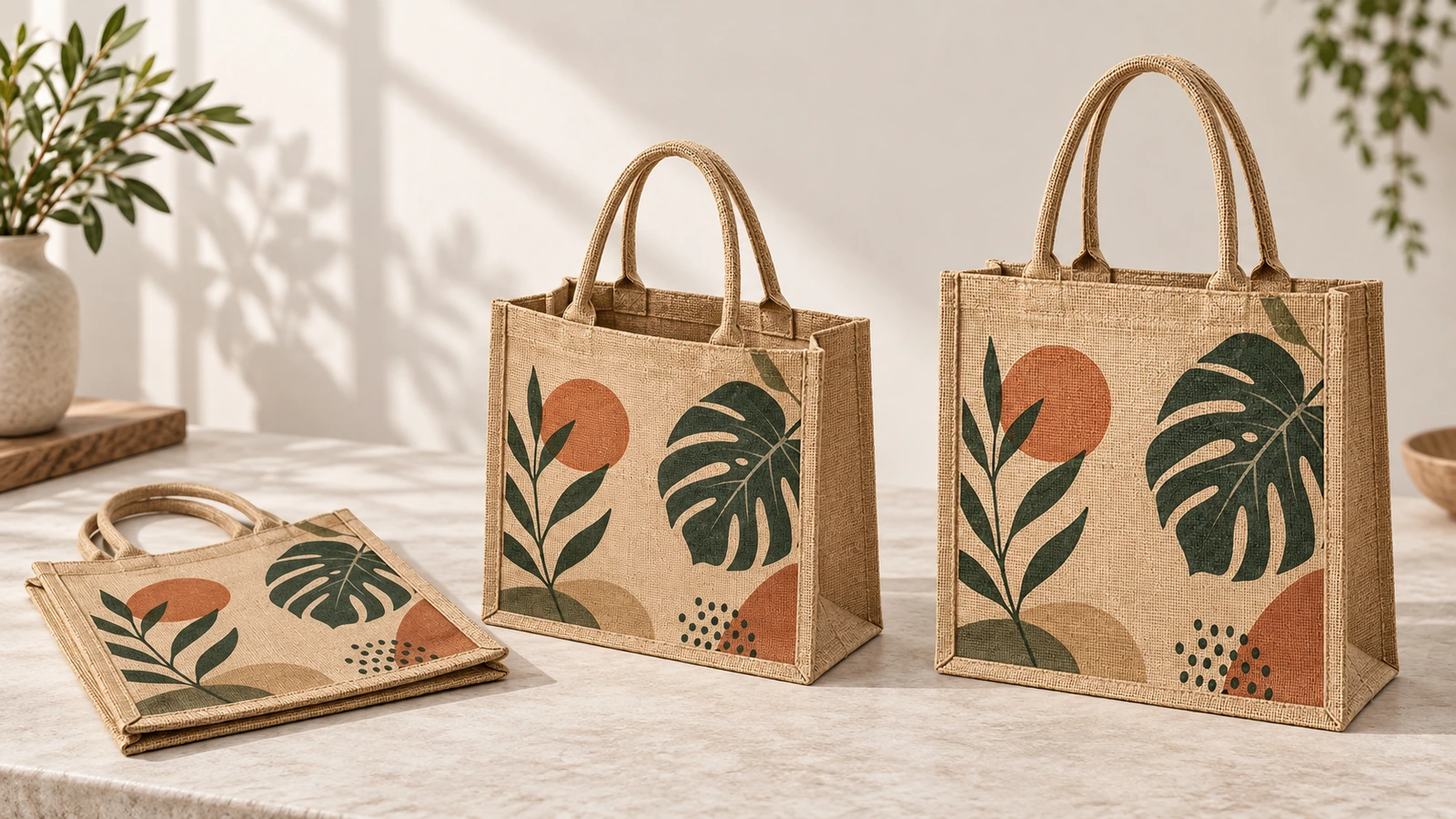
Step 5: Sample, then produce. Approve a digital proof first, then a physical strike-off printed on the same fabric lot as the bulk order. Published supplier ranges show what to expect. Bene Bags lists 7–10 days for samples and 20–35 days for bulk production, with a 40% deposit and the 60% balance due before shipment (Bene Bags terms[11]). US distributors that decorate stock bags quote much shorter windows: 4imprint says most custom tote orders arrive within 7 to 14 business days after proof approval (4imprint turnaround FAQ[12]). For our totes, sample and bulk timelines are confirmed in the quotation once your spec is frozen. The clock starts at written sample approval, not at your first inquiry. Panels are printed flat before sewing, and then the seams, gussets, handles and any lining are assembled.
| Decoration method | Best for | Watch-outs |
|---|
| Screen print (water-based or heavy-body) | Bold 1–4 color logos and larger runs | Each added color needs a new screen and setup; fine detail is lost |
| Heat transfer | Multicolor art and smaller runs | Requires a lower press temperature; edges can lift on a coarse weave |
| DTF | Full color on rough surfaces | Sample first to check edge fuzz and durability |
| Embroidery or leather patch | Gifts and premium retail | Longer lead time and higher unit cost |
| Cotton pocket or Juco panel | Photos, gradients and fine type | Changes the all-jute look of the bag |
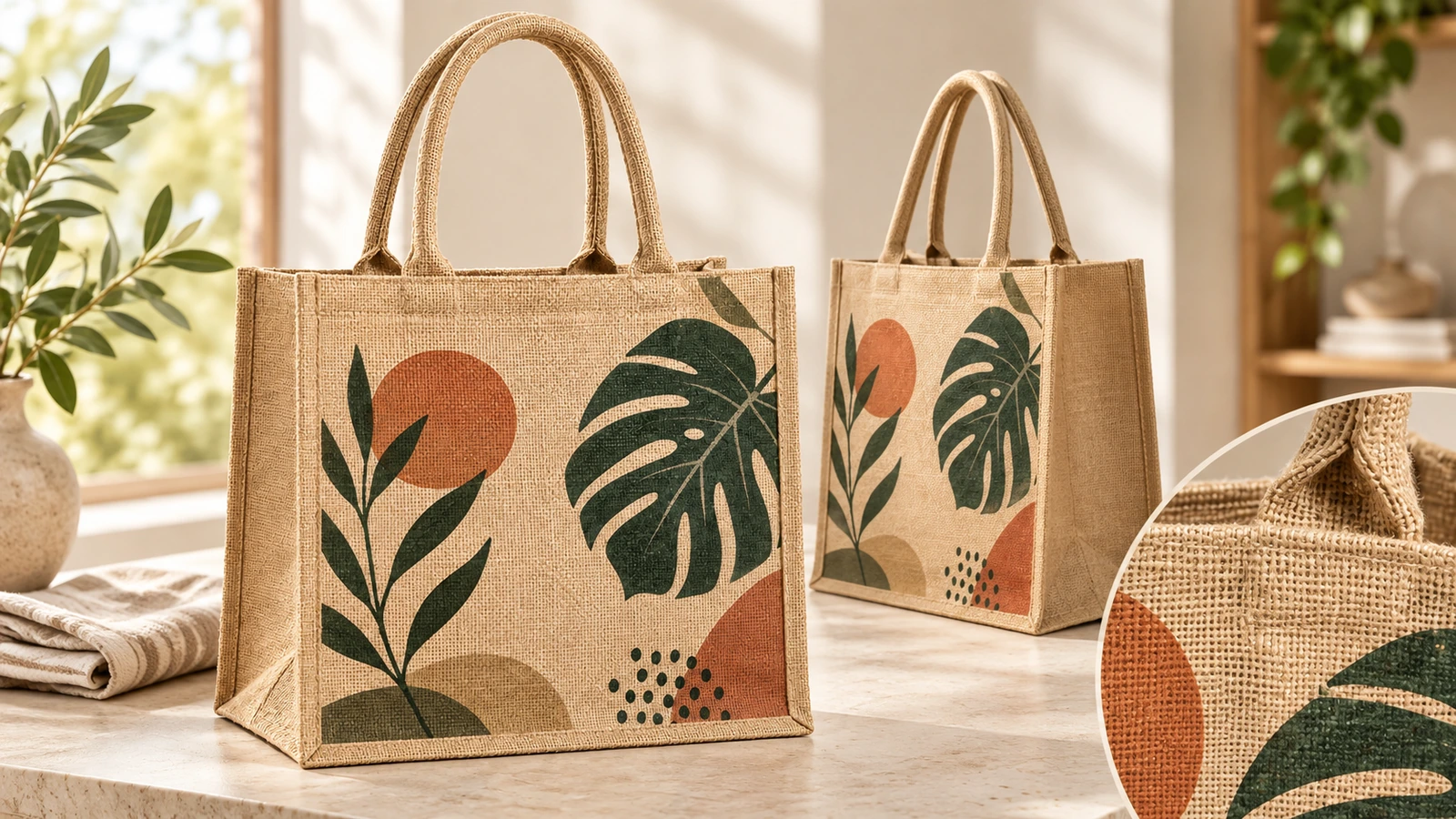
Aquaholic advises running transfer presses for jute at 140–160°C rather than the 160–180°C used for polyester, because excess heat scorches jute fiber (Aquaholic printing notes[13]). Whichever method you choose, judge it on a physical sample viewed in both daylight and indoor light, not on a digital render.
Step 6: Inspect before shipping. Sampling inspection by attributes commonly references ISO 2859-1 (Ecoicolor planning guide[14]), and promotional bag suppliers often quote AQL 2.5 for major defects. Write the AQL level into the purchase order and agree on defect classes in advance. The CottonToMaker checklist classifies strong odor, mold spots, wrong artwork and detached handles as critical, and oil stains, open seams and serious misprints as major. Add two simple checks. For odor, seal sample bags for 24 hours, then open them and smell. For strength, hang the handles at the load you intend to advertise.
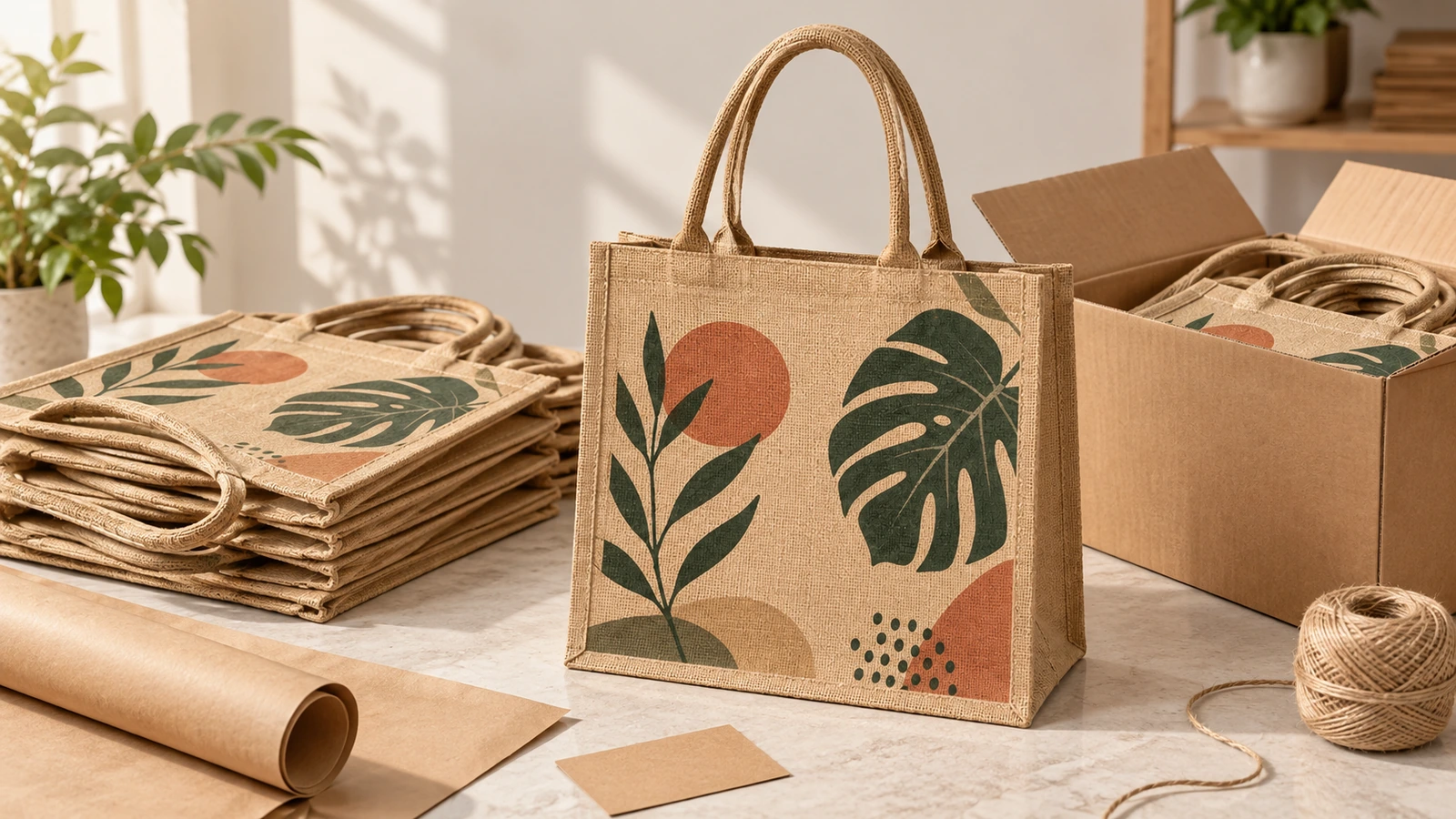
Step 7: Pack, ship and plan the reorder. Jute absorbs odor and moisture inside damp cartons, so require dry storage and moisture protection for ocean freight. Count and photograph the cartons on the day they arrive. Write short-shipment remedies and the in-hands date into the contract; the BBB record above shows why this matters. For reorders, keep a signed golden sample and record the fabric lot, ink references and carton spec, so the second run can be checked against a physical reference.
Which Sourcing Route Fits Your Quantity, Budget and Deadline? ↑
| Route | Published price signal | Typical minimum | Best fit |
|---|
| US promotional distributor | Under $5 each for many jute styles | Often 50 | Events of 50–500 bags with short deadlines |
| US decorated stock, mid-tier | About $6.42 at 100 down to $5.21 at 5,000 | 100+ | Branded retail and gala totes |
| Overseas custom production | $0.50–0.90 FOB plain; $0.80–1.30 FOB two-color | 500–1,000 | Large runs that can absorb ocean freight time |
| Laminated or Juco structured | Above plain jute; quoted per spec | Varies | Premium retail, wine and food gifting |
These prices cannot be compared at face value. Totally Promotional's category page says its customized jute totes "cost less than $5 each," with a minimum order of 50 (Totally Promotional listing[15]). Custom Earth Promos lists its large JB11 shopper (17" W × 14" H × 5.5" D, with a 10" × 7" imprint area) at about $6.42 for 100 units and $5.21 for 5,000 (Custom Earth Promos JB11[16]). Vadalo's indicative FOB table from India shows plain natural totes at $0.50–0.90 (MOQ 1,000) and two-color screen-printed totes at $0.80–1.30 (MOQ 500) (Vadalo manufacturing guide[17]). FOB prices exclude freight, duties, testing, inspection and the weeks a container spends at sea. Compare the landed cost per usable bag on your in-hands date instead.
A practical rule of thumb: below roughly 500 units, with an event only a few weeks away, domestic decorated stock wins on certainty. Above roughly 1,000 units, with a flexible date, a custom spec covering your own size, GSM, handles and lining usually justifies its sample and inspection costs. If the logo depends on photography or gradients, budget for a cotton panel or Juco rather than forcing it onto raw weave. For our Custom Jute Shopping Tote Bags, MOQ, unit price, unit weight and lead time are quoted per specification and confirmed through a pre-production sample. We do not publish fixed figures before your spec is set.
The environmental case depends on reuse. A 2025 life-cycle assessment from Bangladesh found that a single-use jute bag carries 313.41 g CO2-eq, against 56.7 g for an LDPE bag. After ten uses, however, the jute bag outperformed LDPE in most impact categories, and its littering-risk indicator was 0.65 compared with 29,566 for LDPE (peer-reviewed LCA[18]). So specify a bag that people will want to keep: an adequate gusset, comfortable handles and a design worth carrying. A tote thrown away after one event loses this advantage.
Which Labels and Environmental Claims Will Hold Up With US Buyers? ↑
Under the Textile Act rules, 16 CFR 303.16 requires textile fiber products to disclose generic fiber names with percentages by weight, the responsible company or its registered identification number, and the country where the product was made (16 CFR 303.16[19]). For a jute tote, "eco bag" printed on a hang tag does not count as a fiber disclosure.
The FTC Green Guides summary states that marketers "should not make broad, unqualified general environmental benefit claims like 'green' or 'eco-friendly'" (FTC Green Guides summary[20]). Specific, qualified statements can be defended, such as natural jute fiber, an unlaminated interior, or biodegradability with stated conditions. "100% biodegradable" on a laminated or PVC-lined bag cannot.
Each certificate proves one specific thing. OEKO-TEX STANDARD 100 tests textiles against a list of more than 1,000 harmful substances, and certificates are valid for one year (OEKO-TEX STANDARD 100[21]). It is not a biodegradability or carbon certificate. GOTS applies only when certified organic fiber and a certified supply chain are actually in scope. Ask for the certificate number and scope covering the exact item, and treat any certification as unconfirmed until the documents arrive.
For food-adjacent uses such as grocery totes, organic markets and gift boxes, the joint ECF/ECA industry specification for jute bags, published in 2026, requires batching oils, lubricants and printing inks to be food-grade, and it sets direct MOSH/MOAH limits (ECF/ECA specification[22]). The specification was written for coffee and cocoa sacks, but it is still a sensible benchmark for totes. Request vegetable-oil batching and hydrocarbon test reports, and do not promise customers that the bags are "odorless."
Key Takeaways for Jute Tote Buyers ↑
- US promotional products demand is large and still growing slowly — $27.1 billion in 2025 distributor sales, up 1.3% (Source)
- Sustainability questions are now routine in promo sourcing — 76% of suppliers received credential inquiries in 2025 (Source)
- Fine artwork breaks up on coarse jute — a minimum stroke of about 1.5 mm is recommended for heavy-body screen printing (Source)
- Moisture is the biggest durability risk — about 57% wet-strength loss in a supplier's own test (Source)
- Reuse decides the environmental case — 313.41 vs 56.7 g CO2-eq for a single use, with jute ahead in most categories after 10 uses (Source)
- Jute fiber supply is concentrated in Bangladesh — 245.0 of 292.5 thousand tonnes in 2023/24 (Source)
Get a Spec-Based Quote Before You Commit to a Date ↑
A jute tote program succeeds or fails on decisions made before production starts. Those decisions are a written spec, artwork sized for the weave, a physical sample made from bulk fabric, an AQL written into the purchase order, and claims that match the actual materials. Send us your target size, GSM, handle style, lining preference, artwork and in-hands date. We will reply with a written quotation stating MOQ, unit price and timeline, then prepare a pre-production sample for your approval before any bulk production begins. Request your jute tote quotation and sample.




The information below is required for social login
Sign In
Create New Account