Custom stitched non-woven tote bags are spunbond polypropylene totes printed with your logo. They are best suited to high-volume trade show, retail and community giveaways. Before production, specify fabric weight, handle stitching, ink contrast and an acceptance checklist. For your order, MOQ, unit price, production time and load rating are set only by a written quote and an approved pre-production sample.
Who Orders Custom Non-Woven Totes, and for What? ↑
Most buyers of custom stitched non-woven totes are not shopping for a fashion bag. They are marketing managers, event planners, promotional distributors, retail operators, and school or nonprofit coordinators. They need hundreds or thousands of logo bags delivered before a fixed date. The bag is one line inside a much larger budget. U.S. promotional products distributor sales reached $27.1 billion in 2025, up 1.3%, according to the PPAI Sales Volume Estimate[1]. Non-woven totes are not tracked as a separate category inside that figure.
Trade shows remain the anchor use case. A market summary from PW Consulting[2] puts non-woven polypropylene at roughly 53.8% of 2025 trade show and convention bag revenue, with North America as the largest region. Retail checkout giveaways, member gifts, school kits, charity drives and community events follow. These orders usually carry a one- or two-color screen-printed logo.
The recipient decides whether the bag gets a second outing. In an r/marketing trade-show thread[3], one marketer noted that totes "are mostly appreciated by women, because they always carry a bag, even if just to the gym or grocery." That reuse decision sets how many impressions your logo earns after the event. Unit price does not.
Why Do Budget Totes Fail on the Day That Matters? ↑
The most common failure shows up late and without warning. A buyer reviewing an economy non-woven tote on Trustpilot[4] wrote that "the white lettering on some rubbed off." The bags only "held up for my one-day event." A QA lead quoted by LeeLine Bags[5] traced this defect to curing ovens running below 160°C, where ink "simply sits on the surface." In one case a 5,000-piece batch was rejected after the curing tunnel dropped to about 140°C.
Color and contrast failures surface only when the cartons are opened. One Shopper Approved reviewer[6] realized too late that the tote was very dark and "our logo didn't show up quite as much as I'd like." An OEM guide from tiiocti[7] reports flexo color deviation of about ±8–12% on standard PP. That is enough to push deep navy visibly toward black.
Quantity problems make this worse. A complaint filed with the Better Business Bureau[8] describes receiving 108 bags against an order of 240. For event buyers, as Avecobaggie[9] puts it, "a missed date means the product is useless."
Each of these failures can be prevented at the specification stage instead of discovered at the loading dock. The rest of this page turns that evidence into a buying sequence:
- Lock fabric weight and stitching.
- Prove ink contrast on a physical sample.
- Write acceptance clauses for count, color and adhesion.
- Back-schedule from your event date.
This page does not publish factory test data. Your MOQ, pricing, production time and load capacity are therefore confirmed by quotation and sampling, never assumed.
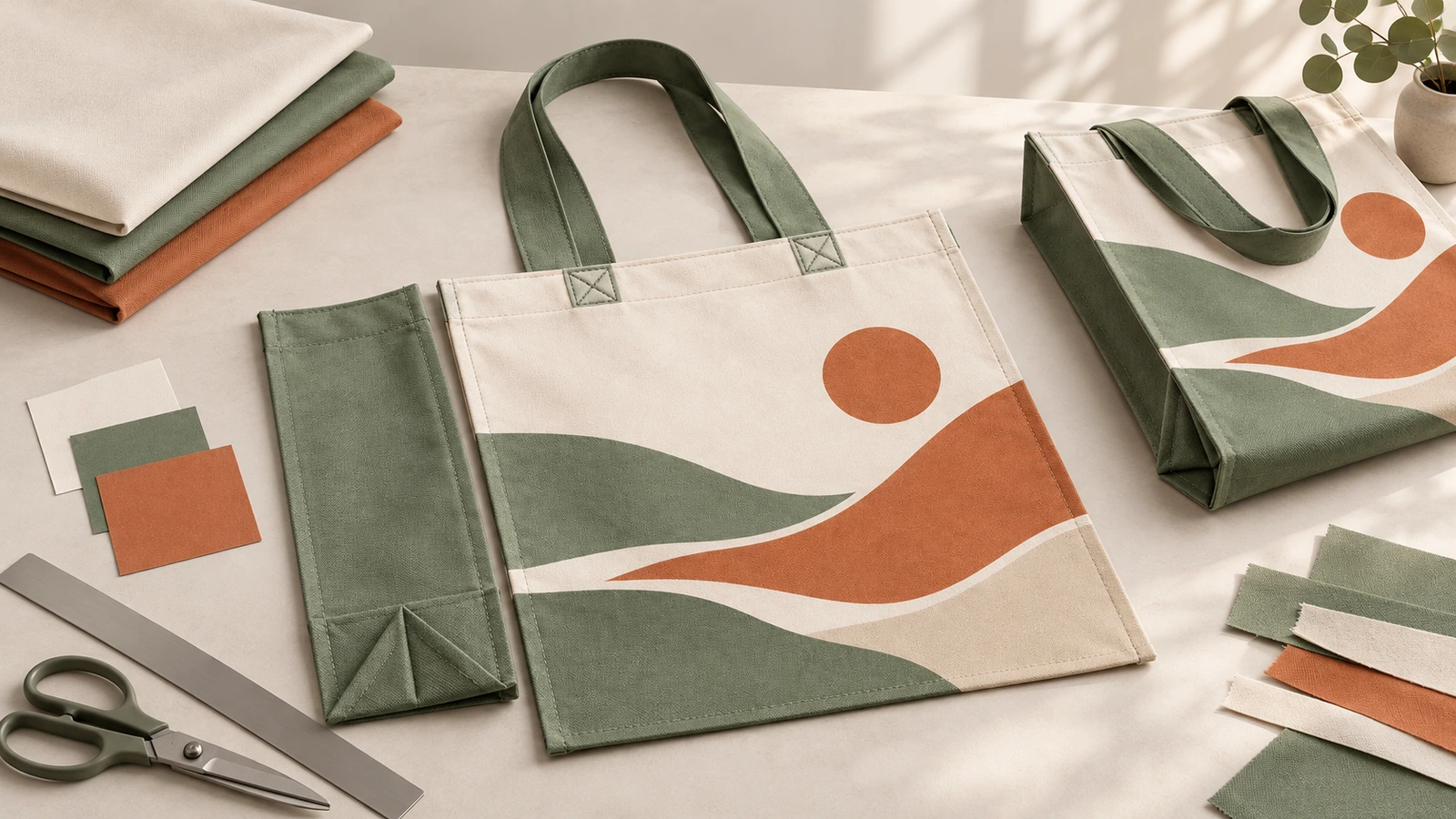
Table of Contents
What Is a Custom Stitched Non-Woven Tote Bag? ↑
A custom non-woven tote is a carry bag cut from spunbond polypropylene sheet. The filaments are bonded into a web rather than woven or knitted. Totally Promotional[10] describes these bags as made with bonded fibers to create a durable alternative to cotton and canvas.
Under the FTC's textile fiber rules (16 CFR Part 303)[11], the generic name for polypropylene fiber is olefin. Olefin is defined as at least 85% by weight of ethylene, propylene or other olefin units. Tote bags generally fall outside mandatory textile labeling. Even so, any fiber-content statement you choose to print must use the generic name and be accurate.
It is also a plastic product. The Kete Group raw material guide[12] states that "PP non-woven bags are not biodegradable." The claims that do hold up are reusable and, where facilities exist, recyclable. Copy that calls the bag biodegradable creates the compliance exposure covered later on this page.
"Stitched" matters because handle roots are where these bags break first. West Papier[13] double-stitches handles and hems because that is the most sensitive point of the bag. Heat-sealed or glue-only construction lowers cost but leaves less margin.
Two material limits also shape your artwork:
- Polypropylene is not suitable for sublimation printing[14].
- Ink does not soak in. 4OVER4[15] explains that on this bonded sheet ink "sits on the surface instead of soaking in." Colors therefore print brighter and flatter than the same file on cotton, and the material is heat sensitive.
Care instructions follow from that heat sensitivity. One 80G grocery tote listing reads "Spot clean and air dry. Do not iron."[16]
How Do You Specify Fabric, Print and Construction? ↑
Start with fabric weight. It sets cost, hand feel and the use case the bag can realistically serve. The bands below summarize supplier guidance; they are not results from a single laboratory comparison.
| GSM band | Typical positioning in supplier guides | Caveat |
|---|
| 40–60 g/m² | Light one-off giveaways; Kete cites about 3–5 kg | Manufacturer experience value, not a rated load |
| 80 g/m² | Default for U.S. promotional and trade-show totes | Stated loads vary widely by supplier and seam method |
| 100–120 g/m² | Heavier retail totes that stand upright; sewn 100 GSM cited at 20–30 lb | Sources use different units and constructions; do not merge them |
Read these figures as catalog claims, not ratings. ReuseThisBag[17] advises: "Treat GSM as a durability and lifespan indicator rather than a weight rating." It also notes that the same 80 GSM fabric performs differently when welded than when sewn. LeeLine's QA guidance is to "mandate an 80GSM minimum," because saving cents with 60 GSM raises the risk of failures in the field.
Load capacity for your bag depends on finished size, how it is loaded, and testing on the approved sample. To make GSM verifiable, write a test method and tolerance into the purchase order, for example 90±5 g/m². ISO 9073-1:2023[18] is the nonwoven method for mass per unit area. Kete reports specimens of at least 50,000 mm² and balance accuracy of ±0.1%.
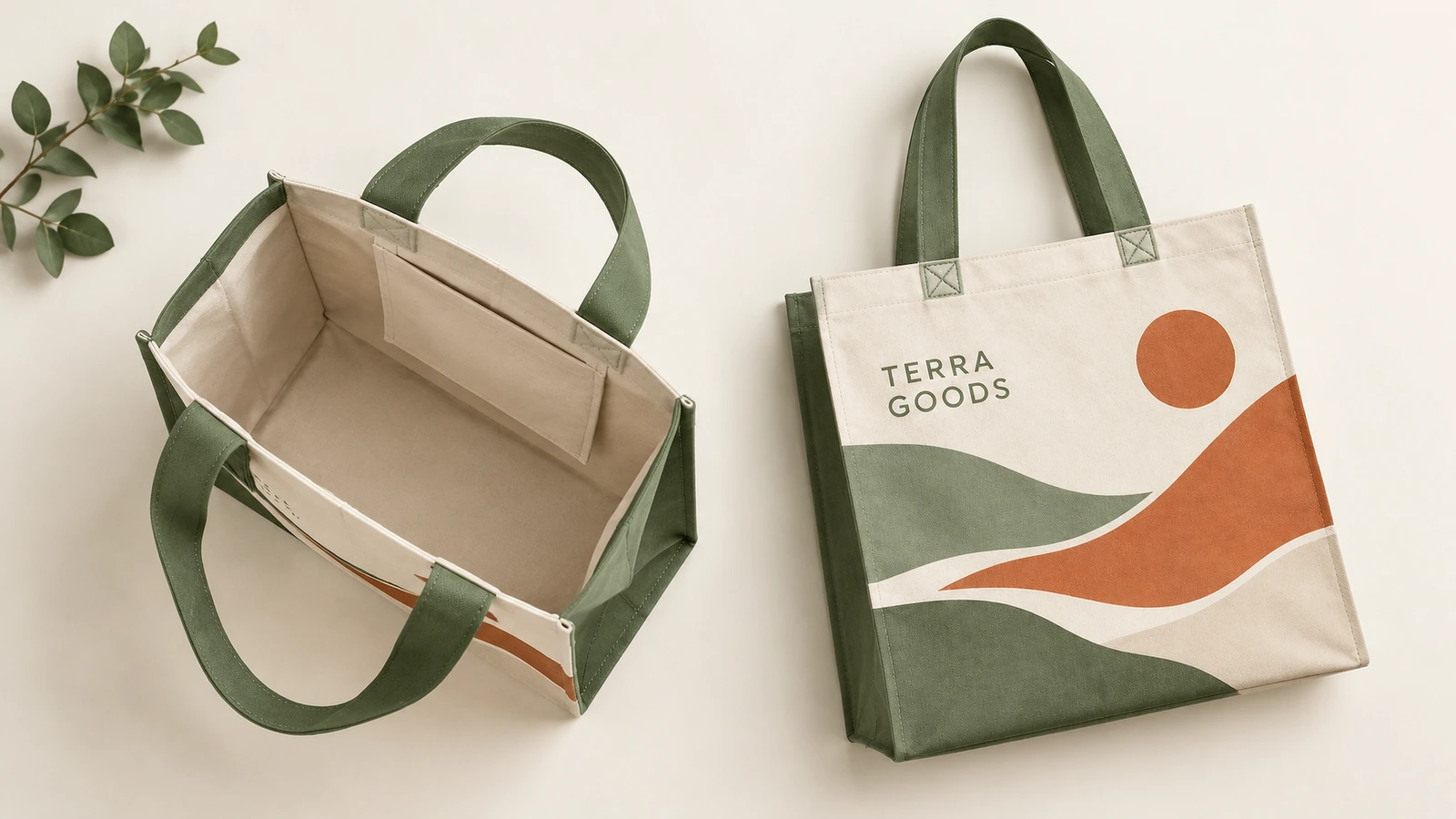
Size the logo to the printable area, not the whole bag face. Supplier print areas sit well inside the panel to clear seams and gussets.
Readability depends on contrast. On navy, black or forest-green fabric, ask for opaque ink and approve white or light colors on a physical swatch, not a screen mock-up. Thin strokes and small text that look clean on cotton can fill in on polypropylene, so test them at finished size on the real material.
Registration tolerance should be written down rather than assumed. PrintGlobe[19] treats misregistration of roughly 0.015625–0.0625 in as acceptable industry practice. If your design has tight color-to-color fits, state a stricter limit such as ≤1 mm. For adhesion, Tiger Textile[20] recommends corona-treating PP to a surface tension above 38 dynes/cm. That is a factory rule of thumb, not a national standard.
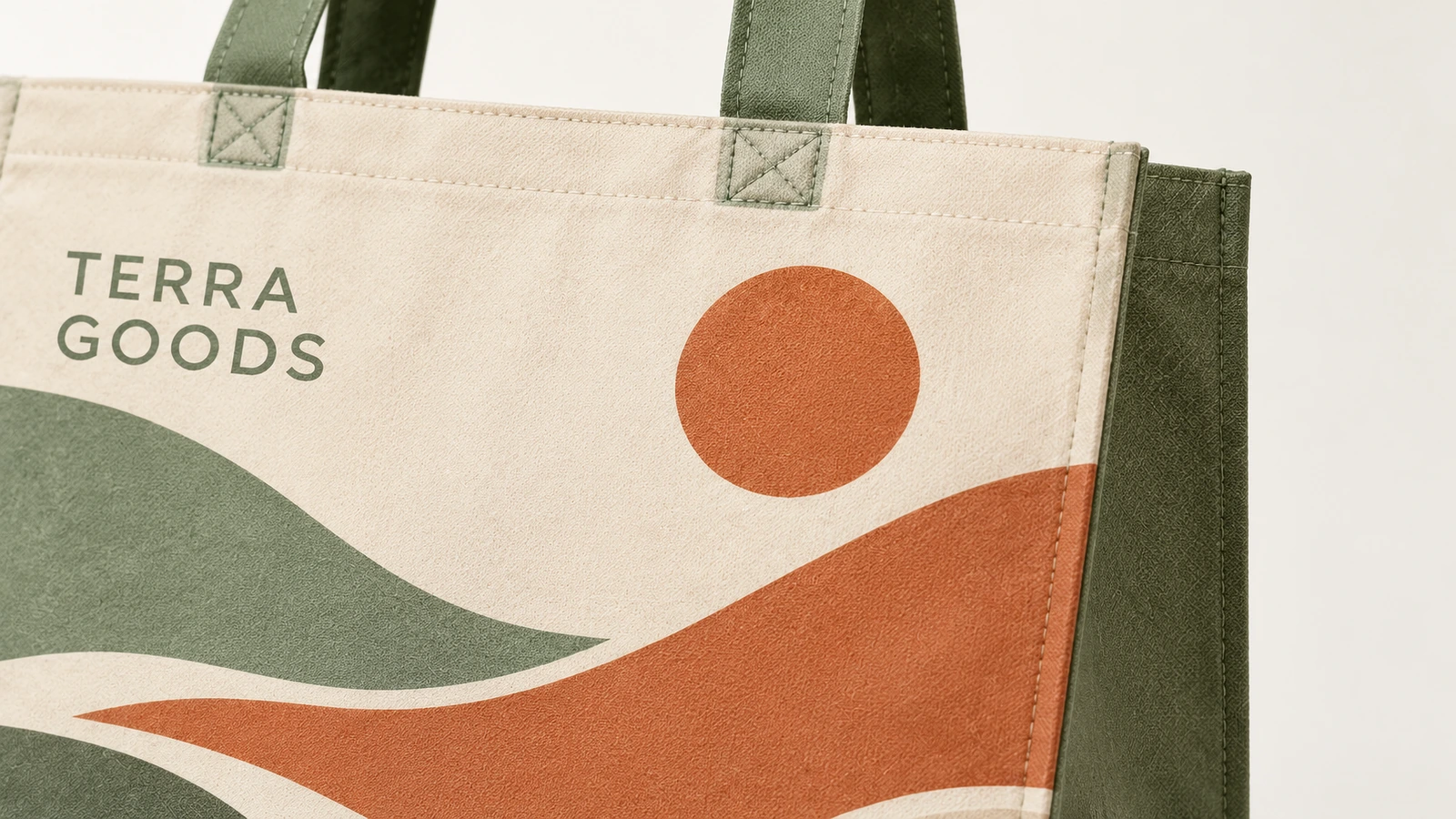
Surface finish is the next decision. According to NoWoBag[21], each finish suits a different print method:
- Plain spunbond suits screen printing.
- PP lamination adds water resistance and takes flexo or screen printing.
- Glossy BOPP film is used for photographic gravure prints.
An Alibaba supplier guide[22] estimates that lamination adds about 20–40% to cost. Laminated bags also feel stiffer and carry some delamination risk.
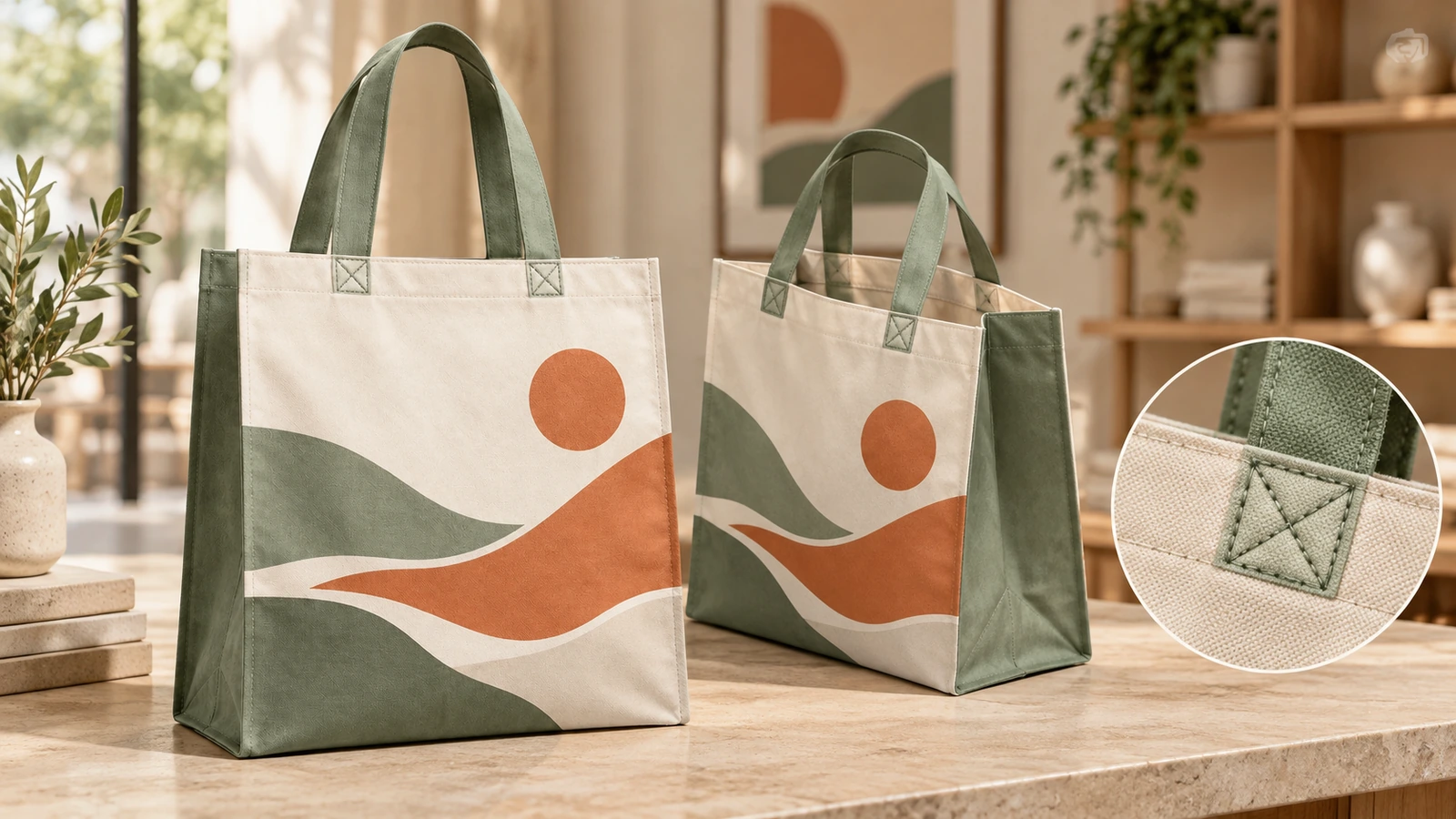
For attachment, choose between same-fabric stitched handles and webbing. Specify box or X stitching at each handle root, and state whether a gusset or a removable base board is included in the quoted price.
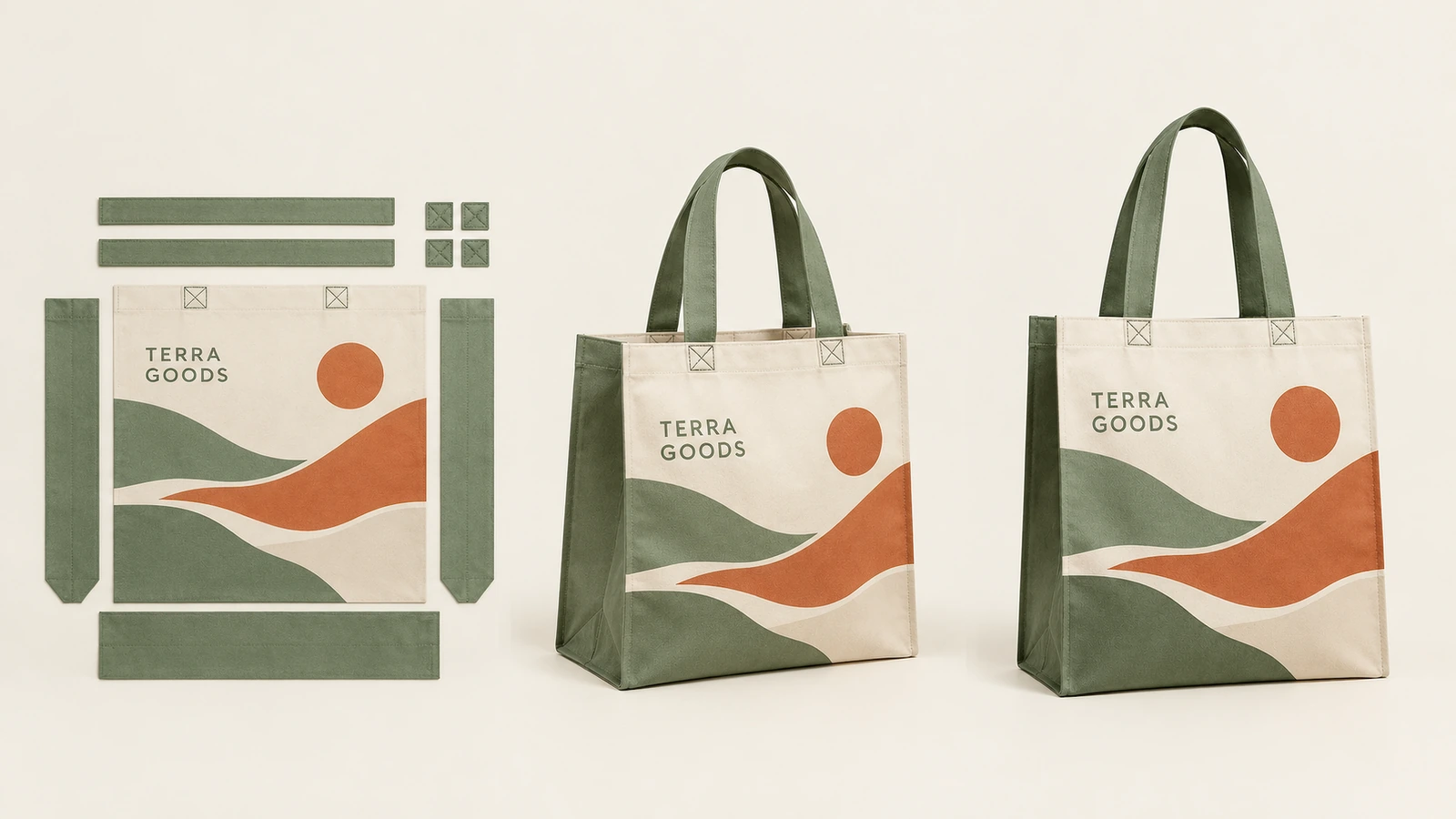
Preflight your artwork before requesting a proof. Run these checks:
- Supply vector files (AI, EPS or SVG) with all text converted to outlines.
- Name every spot color by Pantone reference.
- Prepare one file per print location.
- Confirm the color count matches the quote, because each added screen adds a setup charge.
- Flag any gradients early. They push you out of standard screen printing toward heat transfer or laminated full-color printing, which changes both MOQ and price.
How Do Sampling, Production and Inspection Protect Your Date? ↑
First decide which sourcing route you are on. Omaska[23] warns: "When a supplier tells you 'no minimum,' they're almost certainly in the stock-decoration business." A decorator prints on blank bags but cannot change the body.
As a working rule, fewer than three weeks to the event, simple artwork and fewer than about 500 pieces point to a domestic decorator. Custom dimensions, a different GSM, structural changes or more than about 1,000 pieces of one style point to OEM manufacturing.
On the OEM route, Szoneier[24] lists sampling at 5–7 days and bulk production at 25–30 days. Sample review should cover finished size, handle length and position, stitch density, reinforcement and logo placement.
JUNYUAN[25] estimates 35–50 days from order confirmation to delivery, including 20–35 days of sea freight. It advises starting 8–10 weeks before the event. Express or air shipping is faster but costs considerably more. None of these windows include artwork revisions, so add buffer for at least one re-sample whenever size or GSM changes.
Certificates do not replace inspection. NoWoBag notes that ISO 9001:2015 "indicates documented quality management processes." It does not show that your batch passes. Write the checks below into the purchase order so they become enforceable terms rather than marketing promises.
| Check | How to verify | Clause to write |
|---|
| Fabric weight | Weigh cut specimens per ISO 9073-1 | Agreed GSM with stated tolerance |
| Print adhesion | Rub test on cured prints, including near folds | No flaking, ghosting or transfer to clothing |
| Color | Compare to signed physical sample under the same light | Brand and deep shades locked to the approved sample |
| Registration | Measure color-to-color offset | Your stated limit, for example ≤1 mm |
| Handle seams | Static hang test at 1.5× intended load on samples | Box or X stitch at roots; no glue-only handles |
| Count and damage | Count cartons, weigh, photograph within 48 hours | Shortage tolerance, for example ≤2%, and defined damage |
| Moisture | Inspect for damp, odor or mildew on arrival | Moisture barrier and humidity cards for sea freight |
The thresholds above are suggested starting points, not industry standards. Agree them with your supplier and attach them to the proof sign-off. Define the claim window by defect type: hidden failures such as seam opening, ink loss or mold should not be excluded by a five-day "inspect on arrival" clause.
Packaging deserves the same attention. The same BBB file records a shipment where none of the bags could be saved because of mold, so sea-freight cartons need moisture protection and an inspection on arrival. Ask for split shipping addresses and a latest delivery date in writing before production starts.
For reorders, keep the signed sample, Pantone references and screen records on file. Setup costs are spread across volume: Avecobaggie notes that four-color plates cost "huge per unit" on 500 bags but "pennies" on 10,000. Reordering the same artwork recovers that saving.
Which Tote Option and Sourcing Route Fits Your Budget? ↑
Material choice should follow how many impressions you need per dollar. The table compares published price and durability signals; actual quotes vary with size, color count and freight.
| Option | Price signal | Durability signal | Best fit |
|---|
| 80 GSM PP, 1-color screen | $0.28–0.45 FOB at 1,000 pcs | Low; short-term use | Trade shows, one-day events |
| Laminated PP non-woven | About 20–40% above plain PP | Better water resistance; delamination risk | Outdoor events, grocery promotions |
| rPET non-woven | About 10–20% premium over standard PP | Supplier-rated above plain PP | Brands making recycled-content claims |
| 10 oz canvas | About $3.00 at 1,000 pcs | High | Retail merchandise, long-term gifts |
The 80 GSM figure comes from a 2026 factory price guide[26]. It assumes standard size, one-color one-side printing and no extras, priced FOB Shanghai or Ningbo. The rPET premium is from EcoBagFactory[27].
Pamusan[28] rates non-woven PP durability "Low," with best use "High-volume giveaways, short-term use." Its canvas pricing uses a different, delivered-cost basis, so do not combine its figures with FOB prices. If you need years of reuse, switch to canvas rather than adding GSM to non-woven.
| Sourcing route | Order-size signal | Timing signal | Trade-off |
|---|
| U.S. stock decoration | MOQ 12 for most non-woven styles | Days, with rush options | Cannot change bag body or GSM |
| U.S. rush printer | $1.87 at 150 to $1.52 at 2,500 pcs | 5 business days standard; rush capped at 500 | 5.5 × 5.5 in imprint area |
| Overseas OEM | Often 500–5,000 pcs | 35–50 days to delivery with sea freight | Lowest unit cost; needs inspection |
Totally Promotional's FAQ states that "the minimum order quantity for most of our non-woven tote bags is 12." rushIMPRINT[29] lists an 80 GSM reinforced-handle tote with a $50 setup charge. Pamusan places overseas factory MOQs at 500–5,000. Use the domestic routes to test a design or meet a tight date, and the OEM route when volume justifies plate costs and you need a custom structure.
What Can You Claim About Recycling, California and Imports? ↑
Environmental wording is regulated. Under the FTC Green Guides at 16 CFR 260.12[30], an unqualified "recyclable" claim requires recycling facilities available to at least 60% of consumers or communities where the item is sold. Coatings, laminations or mixed components that impede recycling make an unqualified claim deceptive. Safer wording is "reusable polypropylene (#5); check local drop-off." Together with Kete's statement that PP non-woven is not biodegradable, this rules out "100% biodegradable" copy.
California rules have changed. CalRecycle[31] states that effective January 1, 2026, covered stores may only provide recycled paper carryout bags, for a minimum charge of $0.10. Shoppers may still bring their own synthetic or cotton totes. Position a promotional non-woven tote as a giveaway or bring-your-own bag, not as a checkout-compliant product.
Chemical exposure risk usually comes from inks, transfer films and trims, not the spunbond fabric itself. A 2021 Proposition 65 notice[32] targeted DEHP in a clear PVC grocery tote from a tote retailer. It settled with a $500 civil penalty and $17,000 in total payments. For California-bound orders, request batch test reports rather than relying on a supplier's self-declared compliance.
For imports, CBP ruling NY N126028[33] (2010) classified a non-woven PP shopping tote under HTSUS 4202.92.3031 at a 17.6% general duty rate. Confirm the current rate, any temporary relief and any additional duties with your customs broker on the date of entry.
What Are the Key Takeaways for Buyers? ↑
- Non-woven totes sit inside a large promotional channel but are not tracked separately. — $27.1 billion U.S. distributor sales in 2025 (Source)
- Treat 80 GSM as the floor for event totes. — 80 GSM minimum; ink can fail when curing falls below 160°C (Source)
- Plain non-woven wins on cost per impression, not longevity. — $0.28–0.45 FOB at 1,000 pcs for 80 GSM single-color (Source)
- Back-schedule overseas orders from the event date. — 35–50 days to delivery; start 8–10 weeks ahead (Source)
- Unqualified "recyclable" claims need broad facility access. — 60% of consumers or communities threshold (Source)
- California checkout no longer relies on reusable totes. — recycled paper bags only, minimum $0.10, from January 1, 2026 (Source)
Ready to Scope a Tote That Survives Your Event? ↑
A custom stitched non-woven tote does its job when the logo stays readable, the handles hold through the event, and the full count arrives before doors open. That outcome comes from writing GSM, stitching, ink contrast and acceptance terms into the order, then proving them on a physical sample. It does not come from chasing the lowest unit price.
Your MOQ, unit price, production time and load capacity are pending quotation and sample testing, and are confirmed in writing before bulk production. Send your vector logo, event date, target quantity and intended contents to request a written quote and pre-production sample.




The information below is required for social login
Sign In
Create New Account