Plan custom hard enamel pins with a smooth, polished surface by defining production-ready artwork, dimensions, color references, metal and plating requirements, backing, proof approval, inspection criteria and packaging before requesting a formal quote.
Built for real purchasing scenarios: These customized pins suit brand merchandise, employee recognition, membership programs, fundraising campaigns, conventions, limited editions and creator storefronts. Buyers specify dimensions, colors, plating, attachment style, back stamp, backing card and individual packaging—rather than adapting a stock pin to an unsuitable campaign.
Problem: A digital illustration can look perfect on screen yet fail in metal. Narrow gaps close, small lettering becomes unreadable, nearby colors merge and a polished surface removes delicate detail.
Agitation: When those failures surface after mold production, the consequences extend beyond appearance. A revision can affect tooling, delivery dates, inventory economics and an event launch. Unclear defect standards, import responsibilities or intellectual-property rights create additional exposure once the goods have already been produced.
Solution: Treat the order as a controlled manufacturing project. Define the application, approve measurable specifications, review a production proof, document quality expectations and compare suppliers using total landed cost—not a promotional unit price.
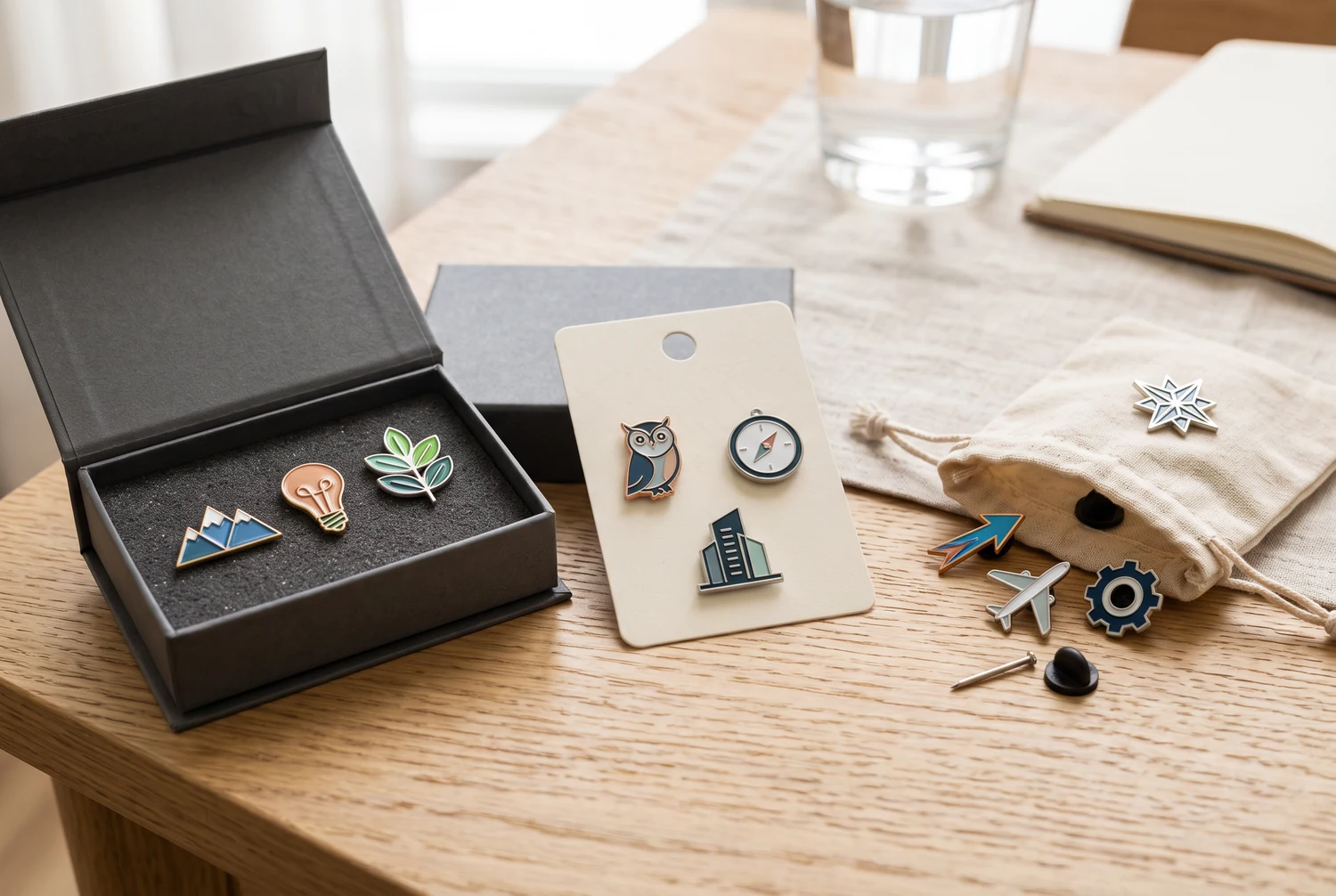
Table of Contents
What Makes a Hard Enamel Pin Different?↑
A hard enamel pin is a metal badge in which colored areas are filled and polished until they sit approximately level with the surrounding metal lines. The face is buffed to produce the smooth, reflective surface associated with jewelry-style pins. By comparison, soft enamel retains raised metal borders with recessed color areas.
The word "hard" describes the finished construction and feel—it does not provide a universal material, hardness or lifespan specification. Commercial products may use iron, brass, copper or zinc-alloy bodies with different color-fill systems and plating structures. A responsible quotation should therefore name the base metal, finished thickness, plating color, attachment and applicable testing requirements rather than relying on the process name alone.
A useful retail reference illustrates how concrete dimensions improve buyer confidence: the Pinsanity Black Knight product is listed at 1.35 inches tall and 2 mm thick, and its Amazon dataset reports a 4.9-star rating from 1,988 ratings. Those figures describe that specific finished product—not every custom order—but they demonstrate why size and thickness belong in a specification rather than remain visual assumptions. Amazon product measurements[1]
Where the process adds value
- Corporate identity: The level face and clean border present logos and brand colors without the pronounced texture of recessed enamel.
- Collectible merchandise: Polished plating, numbering, back stamps and presentation cards support a premium retail position.
- Recognition programs: Compact pins identify membership levels, service anniversaries or achievements without requiring a large wearable item.
- Event programs: Multiple designs form a series for attendee rewards, trading or sponsor recognition.
Where another process may be stronger
Hard enamel is not automatically the best option for every design. Soft enamel preserves stronger relief and may accommodate certain narrow metal details or specialty finishes more naturally. Die-struck pins create a formal, color-free metal appearance. Printed or UV-enhanced pins reproduce gradients, photographs and small tonal changes that cannot be separated into conventional enamel cells.

Judge readability at the intended physical size, not at a magnified design-screen view. Print the artwork at 100 % scale, place it at normal viewing distance and check whether letters, facial features and negative spaces remain distinct. There is no trustworthy universal minimum for every factory, metal or mold method; the supplier should mark its approved minimum line width and gap directly on the proof.
Build a Specification Buyers and Factories Can Verify↑
A controlled specification prevents the artwork, sales quotation and production proof from becoming three separate sources of truth. Create one approved sheet containing the commercial purpose, physical construction and acceptance requirements.
1. Lock the physical dimensions
State width and height in both millimeters and inches, identify which dimension controls and request a finished-thickness value. For an irregular silhouette, mark the measurement points. Also identify the front orientation so the attachment cannot be placed upside down or at an unstable balance point.
2. Separate face design from metal construction
List every color region, raised metal line, cutout, recessed area, engraved mark and printed overlay. If the design needs a gradient, shadow or tiny highlight, ask whether it will be simplified, screen printed or produced by UV printing. Do not approve a proof that silently converts artwork effects into unspecified production methods.
3. Choose plating and surface deliberately
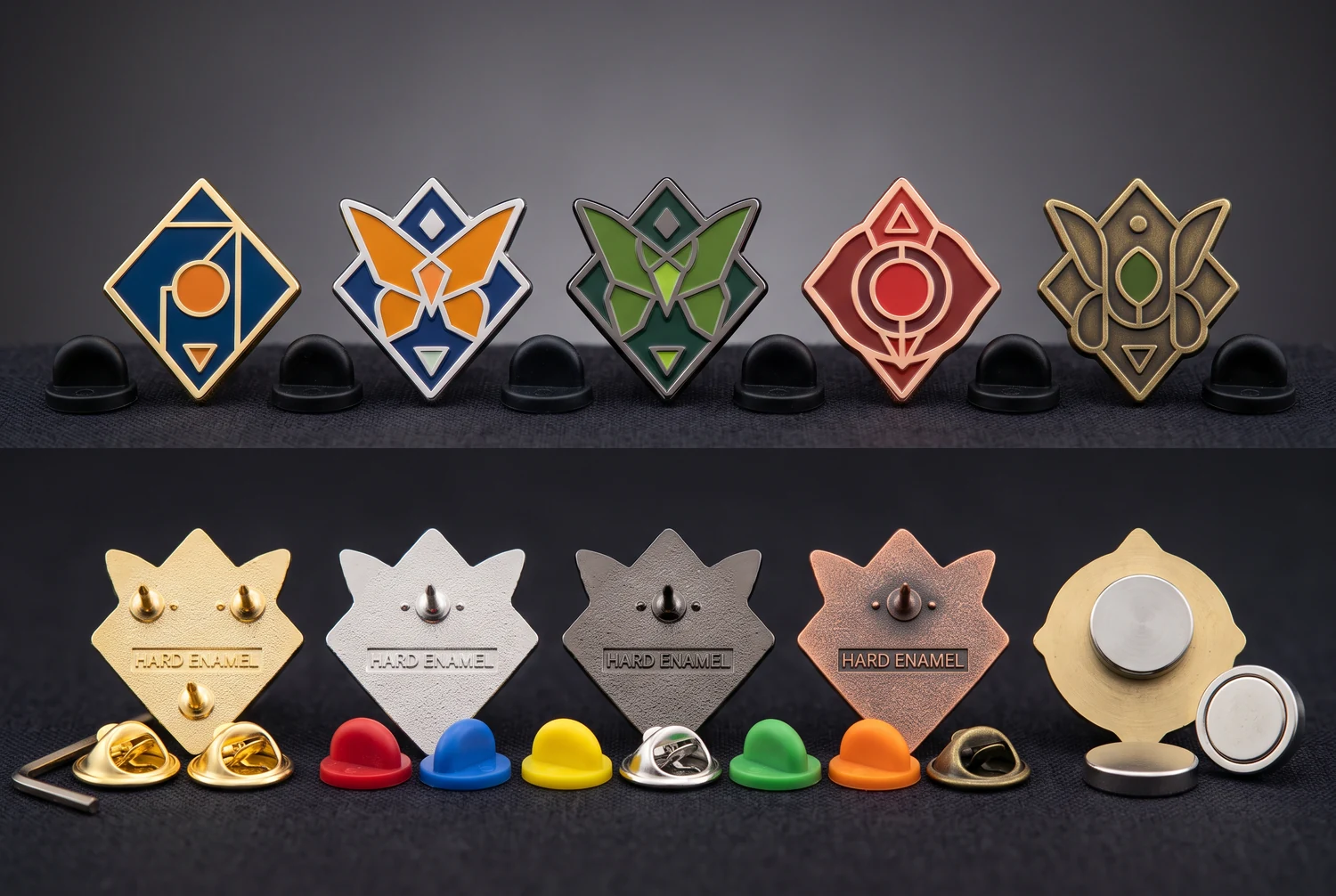
Common appearances include polished gold, silver, black nickel, copper and antique finishes. The final look depends on the combination of base metal, underlayers, plating and polishing—not merely the color name. Request a physical plating reference for color-critical programs and document whether the finish is polished, matte or antique.
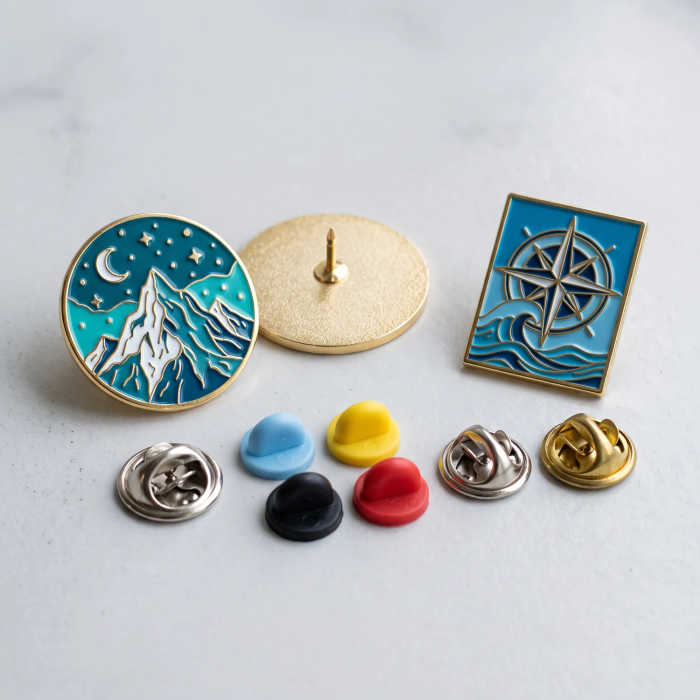
4. Select the attachment for the use case
| Attachment |
Primary advantage |
Important purchasing check |
| PVC or rubber clutch |
Comfortable, lightweight and easy to color-coordinate |
Check retention on the actual post and include spare backs where loss is foreseeable |
| Metal butterfly clutch |
Traditional appearance and compact profile |
Inspect spring action, burrs and plating consistency |
| Locking clutch |
Higher resistance to accidental removal |
Confirm release operation and additional thickness behind the fabric |
| Magnet |
Avoids piercing some garments |
Evaluate magnetic holding force, garment thickness and user restrictions |
| Two-post configuration |
Reduces rotation on larger or asymmetrical designs |
Verify post spacing against the backing card and intended fabric |
The attachment changes usability and safety, so it belongs in the sample review rather than as a last-minute accessory choice. A pin intended for a display board does not face the same retention requirements as one worn daily on a work uniform.
5. Define color with a production reference
RGB and CMYK screen values do not guarantee the same appearance in cured enamel. Specify a named physical color reference and agree on the evaluation conditions. Pantone explains that color appearance changes across materials and finishes and that physical and digital references help manufacturers work toward a shared target. Pantone color systems[2]
6. Record back and packaging requirements
State whether the back must be plain, textured, laser engraved, sequentially numbered or stamped with an authorized logo. Explicitly prohibit unapproved factory branding. For retail packaging, define card dimensions, paper specification, print sides, hole position, barcode, warning text, country-of-origin marking and bag or box configuration.
Move from Artwork to Delivery Without Avoidable Rework↑
Step 1: Issue a one-page project brief
Record the audience, application, required quantity, launch date, target budget, sales channel and destination country. Distinguish the "must arrive" date from the preferred ship date. If the pins will be sold rather than distributed, include the planned retail price and acceptable contribution margin.
Step 2: Establish artwork ownership
Use original work, documented commissioned rights, licensed material or content confirmed to be in the public domain. Purchasing factory capacity does not grant permission to reproduce a character, logo or illustration. The U.S. Copyright Office states that copyright owners control reproduction, distribution and preparation of derivative works, subject to statutory limitations. copyright ownership and permissions[3]
Step 3: Submit editable production files
Preferred deliverables commonly include AI, EPS or editable PDF artwork with outlined fonts and separate color regions. Adobe notes that vectors can be resized without the pixelation introduced by enlarging raster images, making them better suited to logos and line-based illustrations. vector artwork[4]
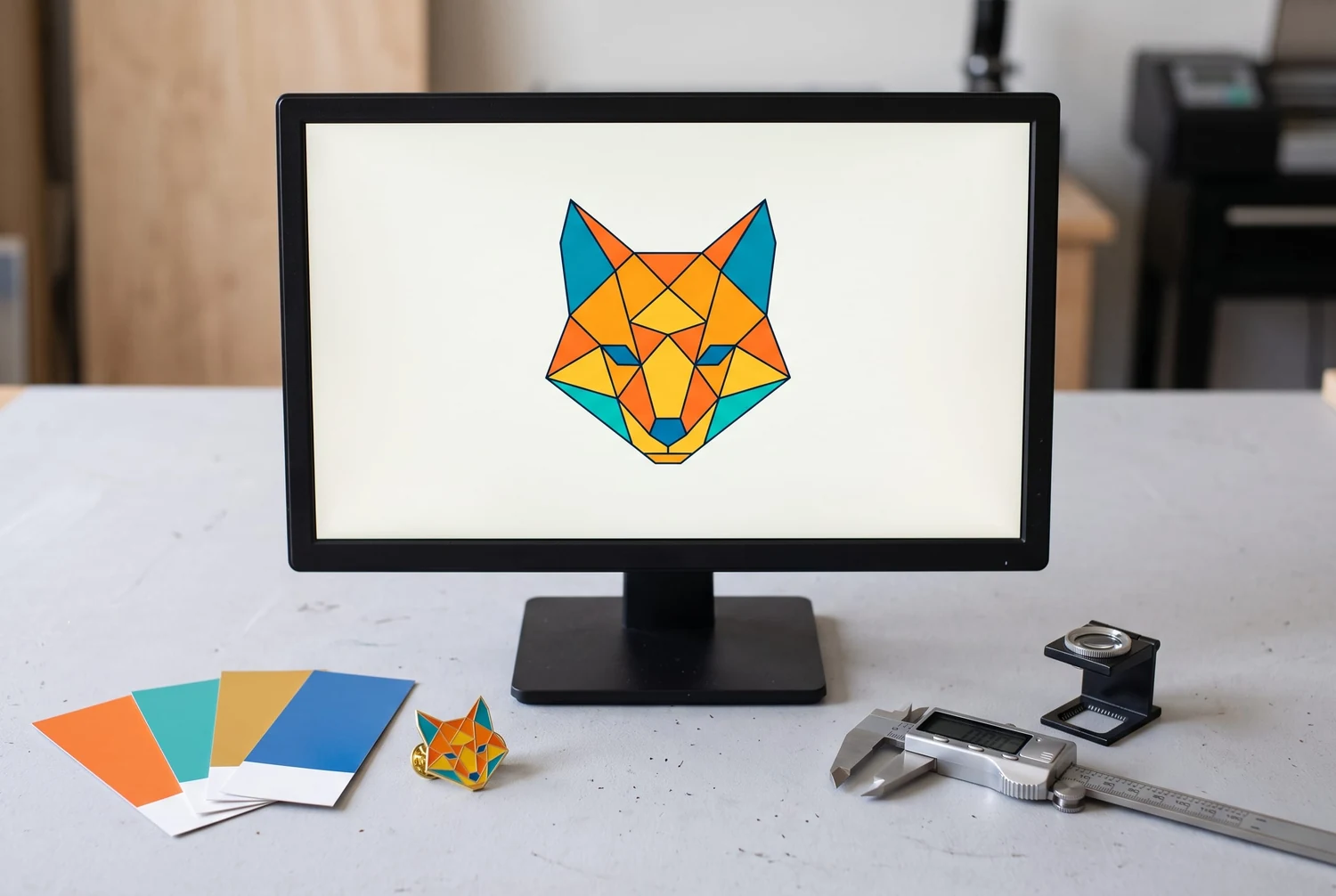
The preflight should identify open paths, overlapping shapes, unoutlined fonts, gradients, transparency, isolated islands and narrow negative spaces. Add a raster preview so the factory can compare the editable file with the intended composition. Name files by design, version and approval date to prevent an obsolete revision from reaching tooling.
Step 4: Compare equivalent quotations
Request the same process, dimensions, quantity, color count, plating, attachment, packaging and delivery terms from each supplier. Separate mold or setup charges, samples, unit production, packaging, freight, duty and taxes. A minimum-order claim should not be confused with low total cost: one established supplier currently lists a 25-unit minimum per design and a typical two-to-three-week production period after proof approval, but project-specific pricing and timing still require a formal quotation. published supplier specification[5]
Step 5: Review the proof as a manufacturing document
Confirm finished dimensions, metal-line treatment, fill colors, plating, orientation, attachment positions, cutouts, back marks and packaging. Require the supplier to identify every change made for manufacturability. Approval should be recorded by version number and date; an informal "looks good" message without an attached version creates ambiguity if the production differs from the intent.
Step 6: Decide whether a physical sample is necessary
A physical sample has the greatest value when the order uses strict brand colors, small text, skin tones, multiple platings, complex cutouts, unusual backings or a high retail price. Ask whether the sample uses final tooling and production materials. If it does not, document which characteristics may change in bulk production.
Step 7: Release production and manage the critical path
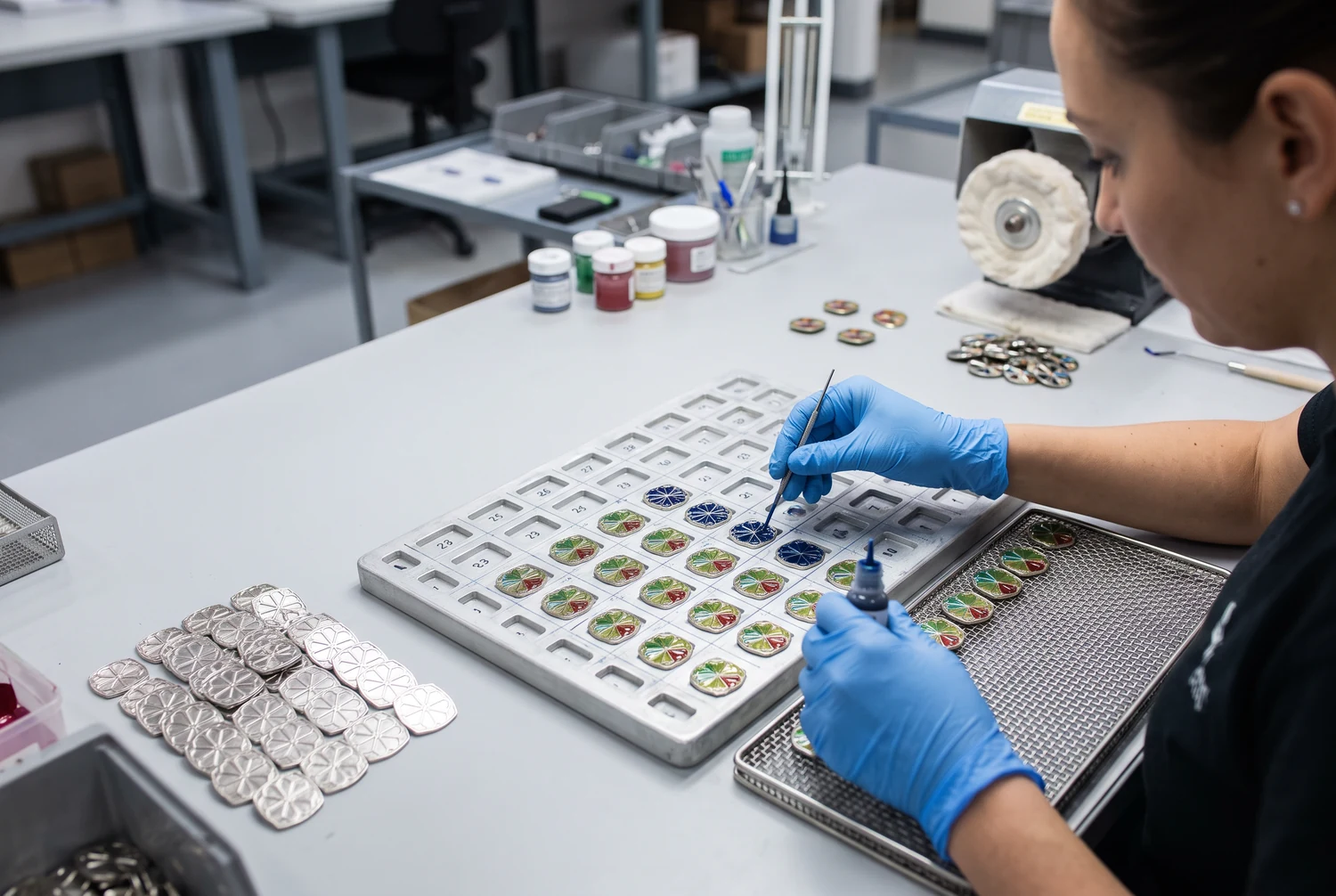
The practical sequence includes artwork review, proof approval, tooling, metal forming, plating, color filling, curing, polishing, inspection, packing and shipping. A manufacturer timeline guide estimates approximately two to four weeks from artwork approval to delivery and recommends beginning event orders six to eight weeks in advance to include refinement and contingency time. Treat these as planning references, not contractual guarantees. production timeline[6]
Schedule from final proof approval, not initial inquiry. Track proof completion, tooling release, bulk completion, inspection, dispatch and estimated delivery as separate milestones. A rush promise is useful only when it identifies which stage is shortened and whether sampling, curing or inspection changes as a result.
Compare Processes, Finishes and Suppliers by Intended Use↑
| Option |
Surface and visual result |
Strongest use |
Design constraint |
Cost question |
| Hard enamel |
Level, polished and reflective |
Corporate identity, collectible retail and recognition |
Polishing may reduce delicate lines or tiny details |
Are additional polishing, plating and sample costs included? |
| Soft enamel |
Raised metal with recessed color |
Textured artwork, promotional runs and specialty metal effects |
The recessed face may show wear differently |
Is an epoxy coating optional, included or unnecessary? |
| Die-struck |
Metal-only relief |
Formal, heritage and award programs |
No conventional colored enamel cells |
How do antique or dual-tone finishes affect price? |
| Printed or UV |
Flat graphic reproduction |
Gradients, photographs and very small tonal details |
Durability depends on ink and protective construction |
What abrasion or colorfastness evidence is available? |
| Hard enamel plus print |
Polished base with printed fine detail |
Complex premium artwork requiring controlled overlays |
Registration and print adhesion add inspection points |
Are setup, print passes and reject allowance itemized? |
This comparison shows why process selection should follow the artwork and business model. Choosing hard enamel solely because it is perceived as premium can produce a weaker result when the image depends on gradients, hairline features or deliberate relief.
Use a weighted supplier scorecard
| Evaluation area |
Suggested weight |
Evidence to request |
| Manufacturability and proof quality |
25 % |
Marked proof, documented changes and version control |
| Quality system and defect remedy |
25 % |
Acceptance rules, inspection record and remedy window |
| Landed price transparency |
20 % |
Itemized quotation with trade term and exclusions |
| Delivery confidence |
15 % |
Milestone schedule and dispatch method |
| Material and compliance documentation |
10 % |
Applicable declarations, laboratory reports and traceable product identity |
| Communication |
5 % |
Named owner, response history and written approvals |
The weights shift by project. An immovable event date may justify more emphasis on delivery, while a children's program demands stronger compliance evidence. Avoid scoring two sales websites as independent factories unless their contracting entities and manufacturing systems are verified separately.
Turn Subjective Quality Into an Inspection Standard↑
"High quality" is not an acceptance criterion. Create a defect catalogue from the approved sample and divide observations into critical, major and minor classes. The purchasing agreement should identify inspection timing, sample method, reporting format and the remedy for failed lots.
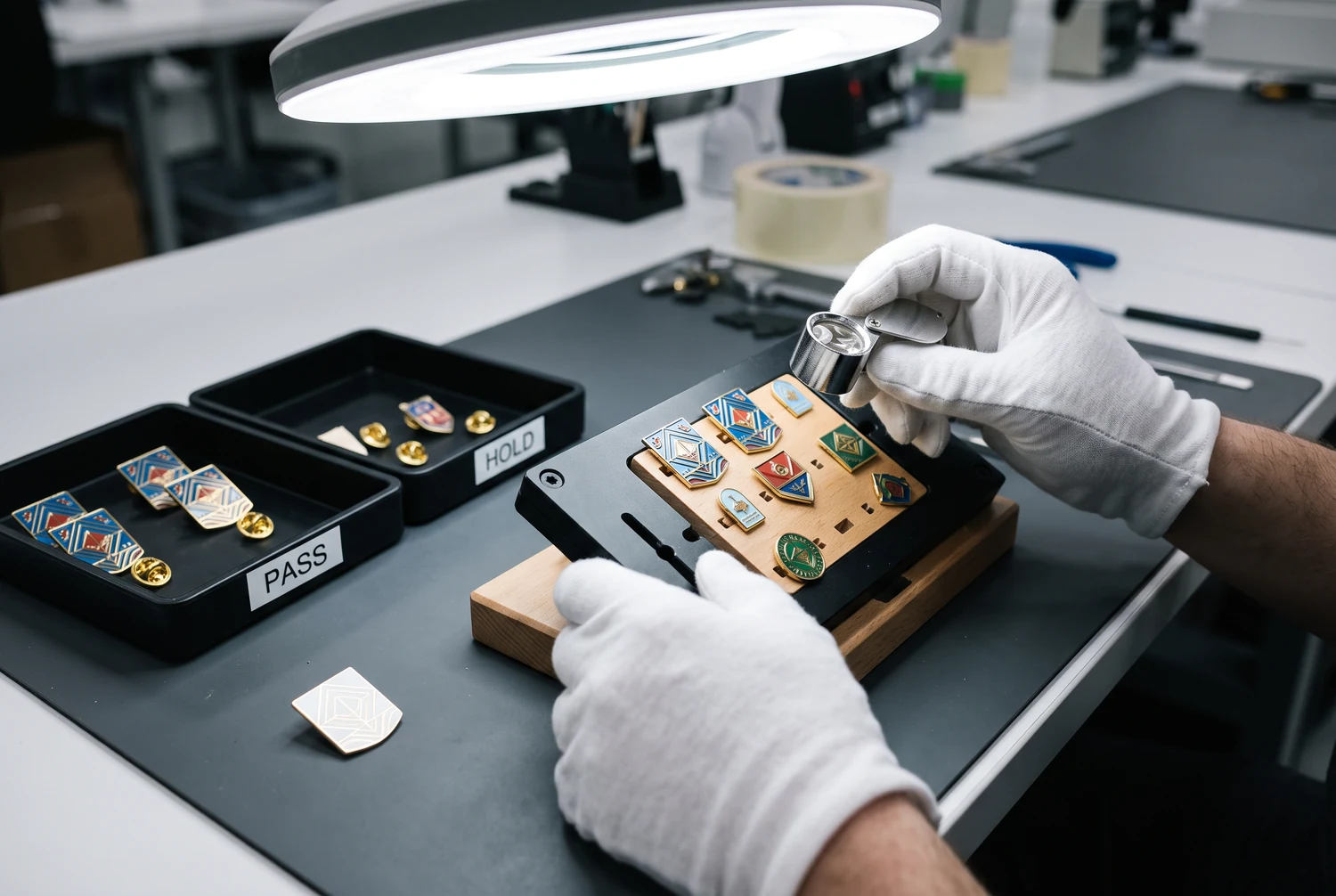
Front-face inspection
- Compare color cells with the approved proof and physical color reference.
- Check for missing fill, contamination, overflow, visible pits, scratches and uneven polishing.
- Confirm that metal borders remain distinguishable and required text is readable.
- Compare plating hue and gloss across pieces from different cartons.
Construction inspection
- Measure the controlling width, height and thickness with calibrated equipment.
- Check the silhouette for sharp edges, malformed cutouts and unintended deformation.
- Confirm post position, post alignment and attachment engagement.
- Test two-post products for spacing consistency and stable orientation.
Back and packaging inspection
- Confirm that only authorized back stamps, numbering and country marks appear.
- Check backing-card artwork, hole position, barcode readability and pack quantity.
- Verify that the pin cannot move freely enough to scratch another unit in transit.
- Reconcile inspected quantity, accepted quantity, seconds and shortages.
Compliance depends on intended users
An adult collectible and a product designed or marketed for children do not share the same regulatory obligations. For applicable children's products, the U.S. Consumer Product Safety Commission identifies a 100 ppm total-lead limit for accessible components and a separate 90 ppm limit for paint or similar surface coatings; testing and certification duties may also apply. Product classification, age grading, materials and applicable rules must be reviewed for the specific program. CPSC lead requirements[7]
Request reports that identify the tested product, material, color or component, test method, laboratory, issue date and result. A generic "lead-free" statement without a matching sample identity does not demonstrate that the ordered construction was tested.
Protect Margin With a Complete Landed-Cost Model↑
The lowest factory unit price is rarely the true economic comparison. Calculate cost per sellable unit after mold charges, samples, freight, duty, customs processing, packaging, inspection, defects and platform deductions.
Cost per sellable unit
= (tooling + samples + bulk production + packaging
+ inspection + freight + duty + clearance + other import charges)
÷ accepted sellable quantity
Then calculate contribution rather than surface markup:
Contribution per sale
= realized selling price
- cost per sellable unit
- fulfillment
- marketplace and payment fees
- advertising attributed to the sale
- expected return and replacement cost
Make delivery responsibility explicit
Record the named place and exact Incoterms rule in the purchase order. ICC explains that Incoterms 2020 rules allocate buyer and seller responsibilities and help reduce uncertainty, but they do not replace a complete sales contract. Incoterms 2020[8]
Do not treat DAP and DDP as interchangeable. Ask who arranges transport, acts as importer, clears the shipment, pays duty and handles a customs query. Record whether insurance, destination surcharges and residential or remote-area delivery are included.
Verify classification and current tariff treatment
Do not assign a tariff code from appearance alone. Classification may depend on base material, construction, function and other facts. The official U.S. Harmonized Tariff Schedule publishes current tariff rates and statistical categories, while final treatment should be confirmed for the actual product with a qualified customs professional. current U.S. tariff schedule[9]
Include channel costs before approving quantity
For Etsy sales, the official fee policy states a 6.5 % transaction fee on the displayed price plus charged shipping and gift wrapping; payment processing, listing, advertising and other applicable charges remain separate. Etsy fee policy[10]
A hypothetical $12 sale with a $2 factory cost does not establish an 83 % profit margin. Tooling allocation, freight, import charges, packaging, marketplace fees, advertising, rejects and fulfillment can materially reduce the contribution. Model at least three outcomes: planned sales velocity, slower sell-through with discounting, and a defect or replacement scenario.
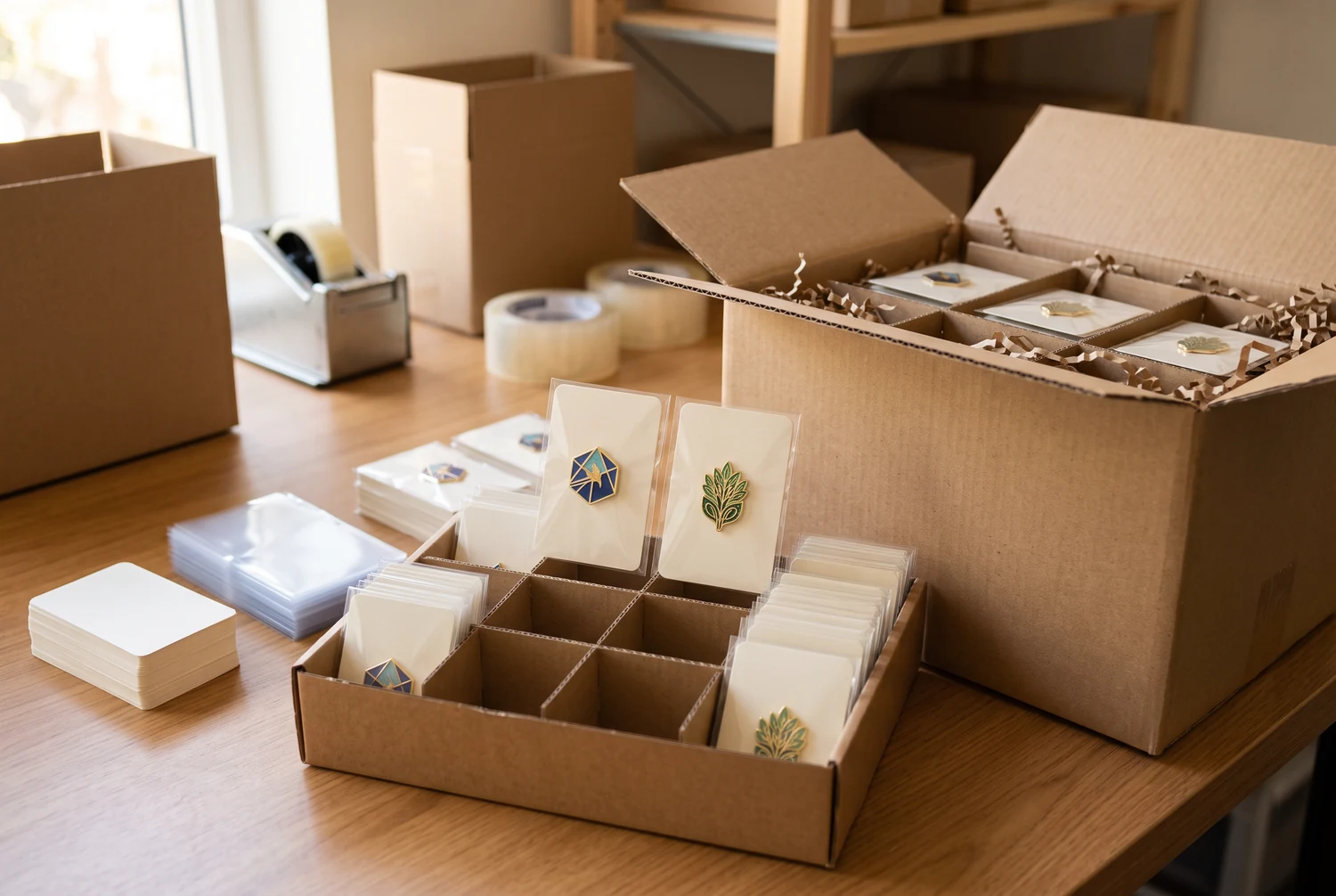
Design the reorder before the first shipment
Record the final proof, approved sample, tooling identity, color references, plating, attachment vendor, packaging files and inspection results in one product record. After arrival, log the accepted quantity, defect categories, sell-through rate, customer returns and reorder changes. Ask how long the mold will be retained and whether a repeat order carries a new setup charge.
This record prevents the next production run from relying on memory. It also reveals whether a lower quoted reorder price is offset by color drift, changed components or a weaker inspection outcome.
Key Takeaways for a Controlled Order↑
- Low minimum order availability does not eliminate setup or landed-cost exposure. — 25 units per design is one currently published supplier minimum (Source)
- Schedule from approved artwork and preserve a contingency window. — 2–4 weeks is a published planning estimate, with 6–8 weeks recommended before an event (Source)
- Children's-product lead requirements use two distinct limits. — 100 ppm total lead and 90 ppm for applicable surface coatings (Source)
- Marketplace margin must include fees beyond manufacturing. — Etsy's transaction fee is 6.5 %, with other possible charges separate (Source)
- Concrete dimensions communicate more than "premium quality." — One high-rated retail reference specifies 1.35 inches and 2 mm thickness (Source)
Convert the Design Into a Quote-Ready Brief↑
A successful custom hard enamel pin order begins before tooling. Match the process to the artwork, define measurable dimensions and construction, establish ownership rights, approve a version-controlled proof, document defect handling and calculate cost per sellable unit. This approach protects appearance, timing and margin without depending on unverified superlatives or an incomplete "from" price.
Request a custom hard enamel pin quote using your artwork, quantity, dimensions, delivery destination and required date.




The information below is required for social login
Sign In
Create New Account