SEO title: Custom Flyer Printing | Single-Sheet Promotional Flyers
Meta description: Plan custom flyer printing for promotions and events. Compare sizes, paper, finishes, artwork requirements, proofs, and delivery before requesting a quote.
Custom single-sheet promotional flyers put your offer, event details, or business message into a printed handout. Start with the distribution setting, choose a readable format, and confirm paper, artwork, proofing, and delivery requirements before ordering. Available specifications, minimum quantity, pricing, and production time require a project-specific quotation.
For a restaurant manager, the priority may be a clear promotion customers can take away. For a real estate agent, it may be property photographs with readable listing details. Event organizers need accurate dates, locations, and registration instructions; retailers need an offer that remains easy to understand after the customer leaves the counter.
A flyer that arrives after the event cannot do its job. Neither can a beautifully designed sheet with unreadable conditions, a cropped telephone number, or a paper surface that will not accept the handwritten information you intended to add. Those problems can turn an inexpensive print order into replacement costs and a missed distribution window.
The practical solution is to define the finished piece before comparing prices. Specify what the recipient must understand, how the flyer will be handled, and when it must be available for distribution. Then evaluate quotations against that same brief rather than treating every product called a “flyer” as equivalent.
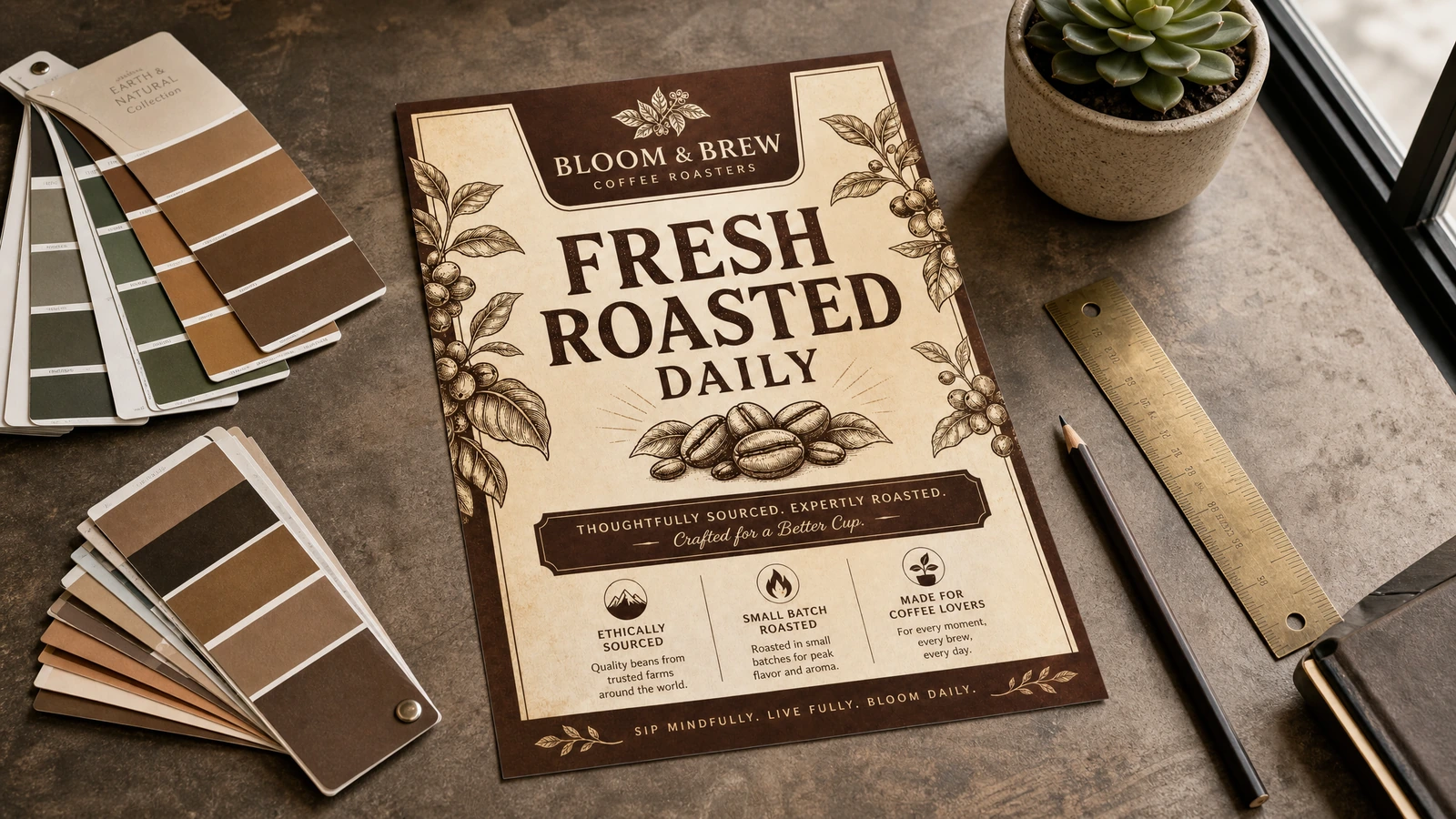
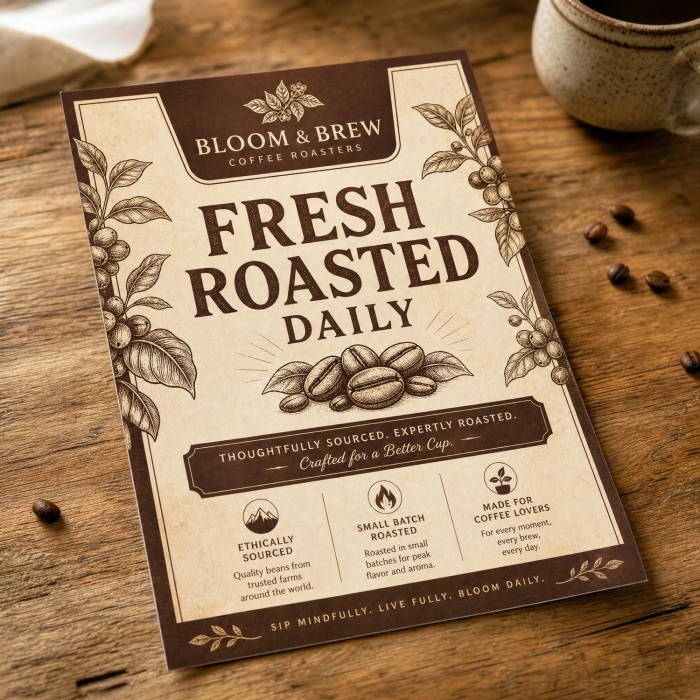
Illustrative application concepts, not photographs of completed customer orders or confirmed stock options.
Explore the flyer buying guide
What makes this a single-sheet promotional flyer? ↑
This product is a custom single-sheet promotional flyer within Custom Commercial Printing → Custom Flyers. Its purpose is to communicate a focused promotional message on an individual sheet, rather than across a bound booklet or a folded brochure.
A reverse-side design can provide supporting information without changing that single-sheet identity. However, printed sides, paper, dimensions, and finishing must be specified in the quotation. Folded layouts, die-cut shapes, specialty substrates, and other additional processes should be treated as separate requests, not assumed inclusions.
The product reference is NSKU-799-01, currently a provisional identifier. No product-specific factory measurements, certifications, minimum order quantity, production schedule, or unit weight have been supplied. The following specifications are purchasing guidance and reference configurations to discuss, not a confirmed manufacturing specification sheet.
How do you turn a campaign brief into print specifications? ↑
Begin with the action you want the recipient to take: visit a location, redeem an offer, register for an event, or request information. Give that action a clear place in the layout. A flyer carrying several unrelated messages makes it harder to decide what deserves the most space.
- Describe the distribution setting. Identify whether the piece will be handed out, placed on a counter, inserted into a shopping bag, or included in a mailing.
- Finalize essential content. Check the headline, offer conditions, contact details, location, and any expiry information before choosing the smallest suitable format.
- Identify handling requirements. State whether recipients need to write on the sheet, keep it for reference, or use it somewhere exposed to moisture.
- Define the purchasing boundary. Separate the print budget from artwork changes, samples, finishing, packaging, and freight.
- State the required arrival date. Include the destination and distribution deadline, not just the date you would like printing to finish.
If the flyer includes a QR code, decide what the destination page must do before approving artwork. Registration, offer redemption, and general website visits are different objectives. Tracking can help evaluate a campaign, but a scan count is not the same as a completed sale or an incremental sales increase.
Which size keeps your message readable? ↑
Common US reference formats include 4 × 6 in, 5.5 × 8.5 in, and 8.5 × 11 in, as shown in published flyer size options[1]. These are market examples to request, not confirmed available sizes for this product.
| Reference finished size | Useful starting point | Main readability check |
|---|
| 4 × 6 in | A short offer, event reminder, or compact handout | Keep the message focused; do not squeeze detailed conditions into tiny type. |
| 5.5 × 8.5 in | Counter promotions and handouts needing supporting details | Balance the main image, offer, contact information, and response instructions. |
| 8.5 × 11 in | Property information, schedules, or a more detailed promotional sheet | Use the additional space for hierarchy rather than unnecessary copy. |
Review the layout at its intended physical size. A design that looks spacious when enlarged on a monitor may feel crowded in the hand. Smaller dimensions can change production economics, but reducing sheet area does not establish an equivalent percentage saving on the finished order.
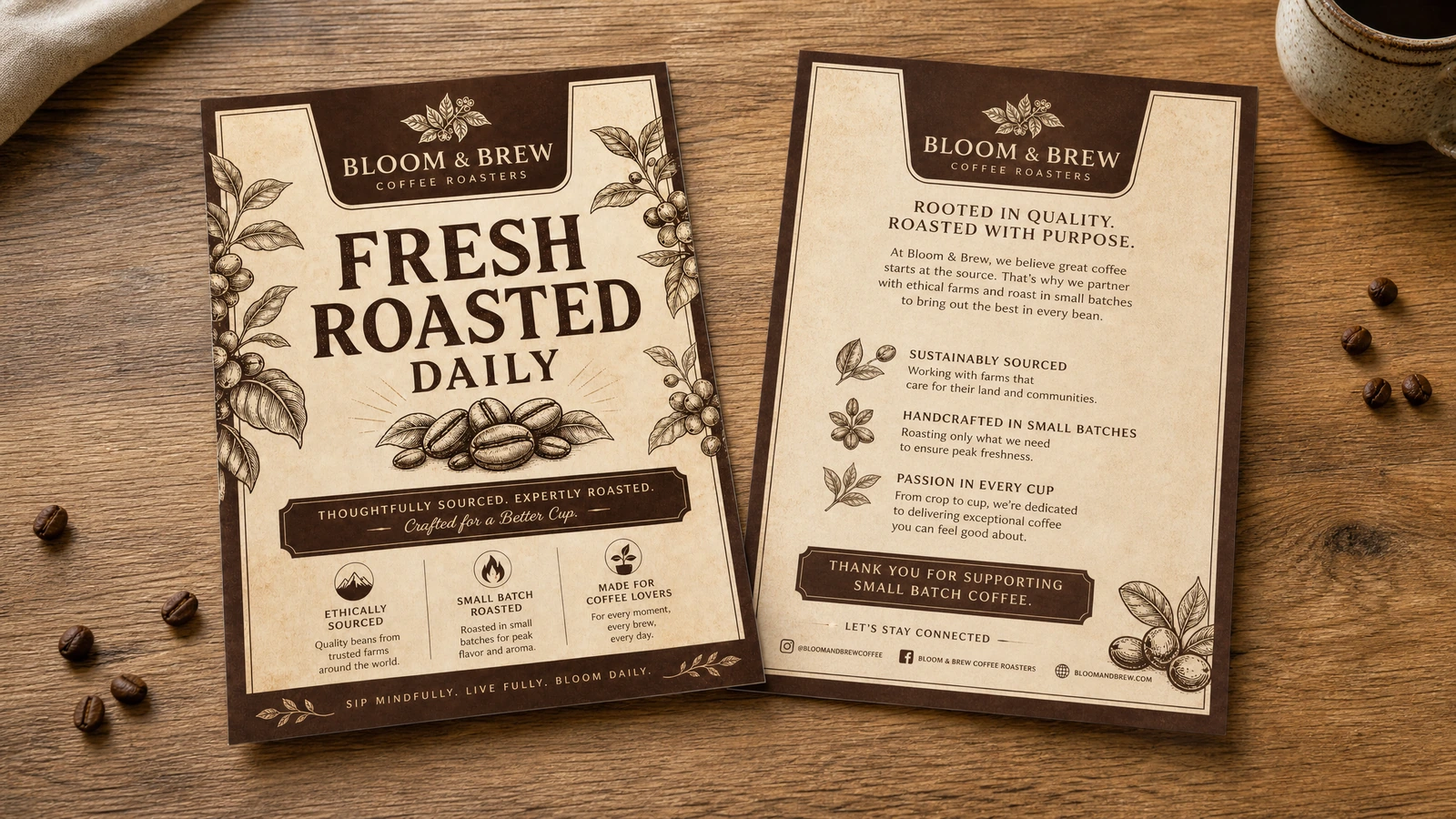
Allow space for the information that supports a decision: what is offered, where it applies, and what to do next. When the content does not fit comfortably, shorten the copy or request a larger format instead of shrinking every element.
Which surface and reverse-side treatment fit the job? ↑
Specify the surface separately from the paper weight. Gloss, matte, and uncoated describe different appearance and handling choices; they are not interchangeable descriptions of thickness. Likewise, a heavier sheet does not establish waterproofness or a particular outdoor service life.
| Option to discuss | Purchasing objective | Sample or quotation check |
|---|
| Gloss surface | Emphasize photographs and image-led promotions | Inspect reflections under the intended lighting and test any required writing. |
| Matte surface | A less glossy presentation for mixed text and images | Check the actual appearance; do not assume every matte treatment is writable or fingerprint-proof. |
| Uncoated surface | Provide a candidate for handwritten notes or coupon completion | Test the intended pen or stamp on the proposed paper. |
| Printed reverse | Separate the main promotion from supporting information | Confirm orientation, artwork order, and any coating on each face. |
| Unprinted reverse | Leave the back visually plain | Confirm that “unprinted” also meets any required surface condition. |
Commercial suppliers describe paper with different weight and thickness systems. Keep the full stock description in the quote; do not compare an isolated “lb” figure with a “pt” figure as though they measure the same property. Where tactile feel matters, request a physical sample rather than relying on a screen image.
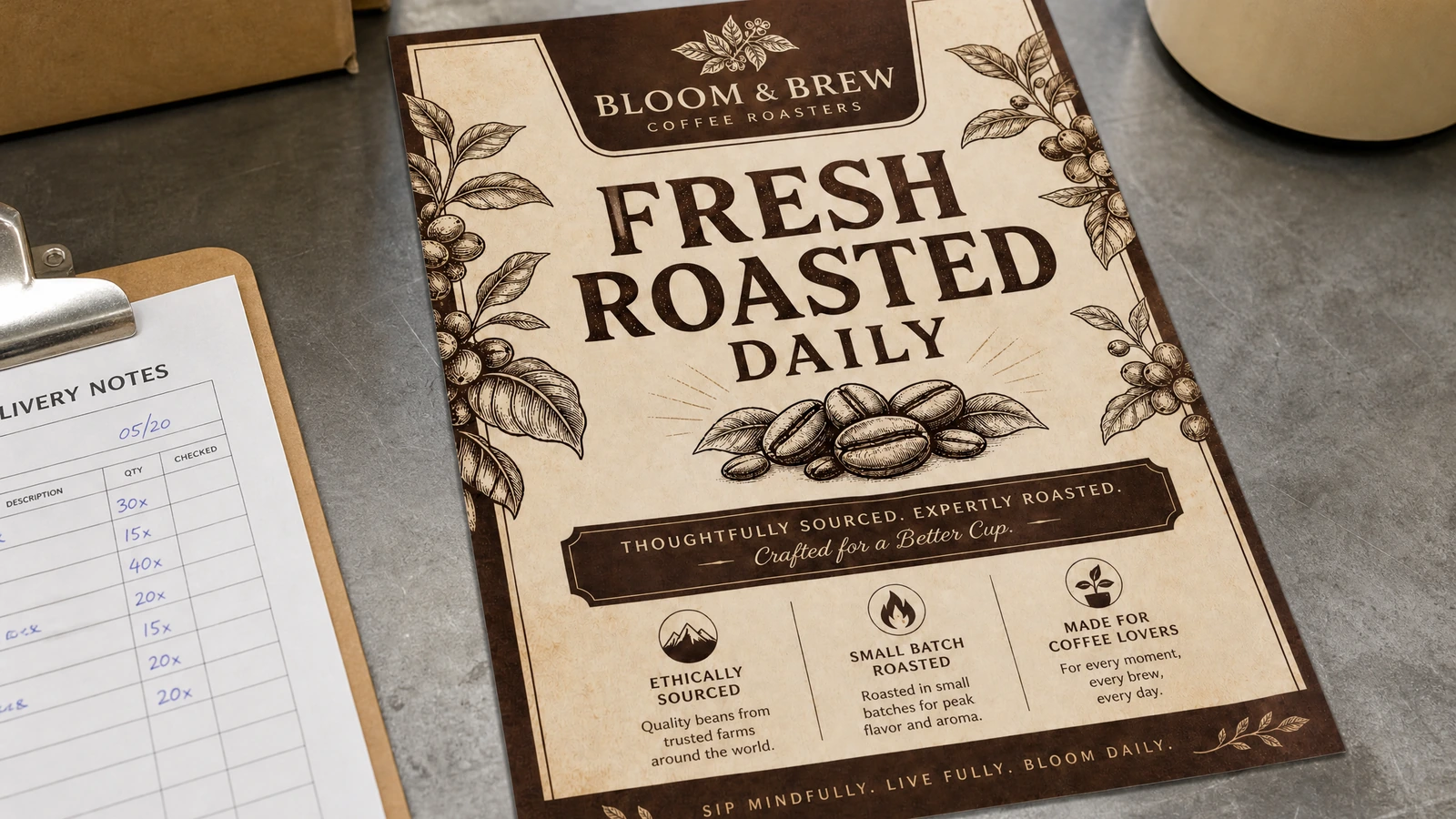
Back fasteners are not applicable to this single-sheet product. Pins, clips, magnetic backs, and adhesive mounting systems are not established specifications. For flyers, the relevant back-side decisions are printing, surface treatment, and whether a writable area is required.
How should you prepare artwork for review? ↑
A useful reference starting point is 300 ppi for raster images at final print size, CMYK preparation, 0.125 in bleed on each edge, and essential content at least 0.125 in inside the trim. These settings appear in commercial flyer artwork guidance[2]; the selected printer’s approved template takes precedence.
Bleed extends background artwork beyond the intended cut. The safety margin keeps important content away from that cut. Neither replaces the other. Check telephone numbers, small offer conditions, logos, and QR codes separately rather than assuming that a visually centered design is production-ready.
- Check effective image resolution. Review photographs after scaling them in the final layout, not just their original file properties.
- Confirm the PDF export requirements. Ask which PDF format, font handling, and transparency settings the production workflow accepts.
- Confirm color preparation. Use the requested profile and conversion approach rather than selecting a profile solely because it is familiar.
- Review both faces. Make the intended front, back, and reading orientation unmistakable.
- Check content independently. File preflight does not establish that prices, addresses, event information, or offer terms are correct.
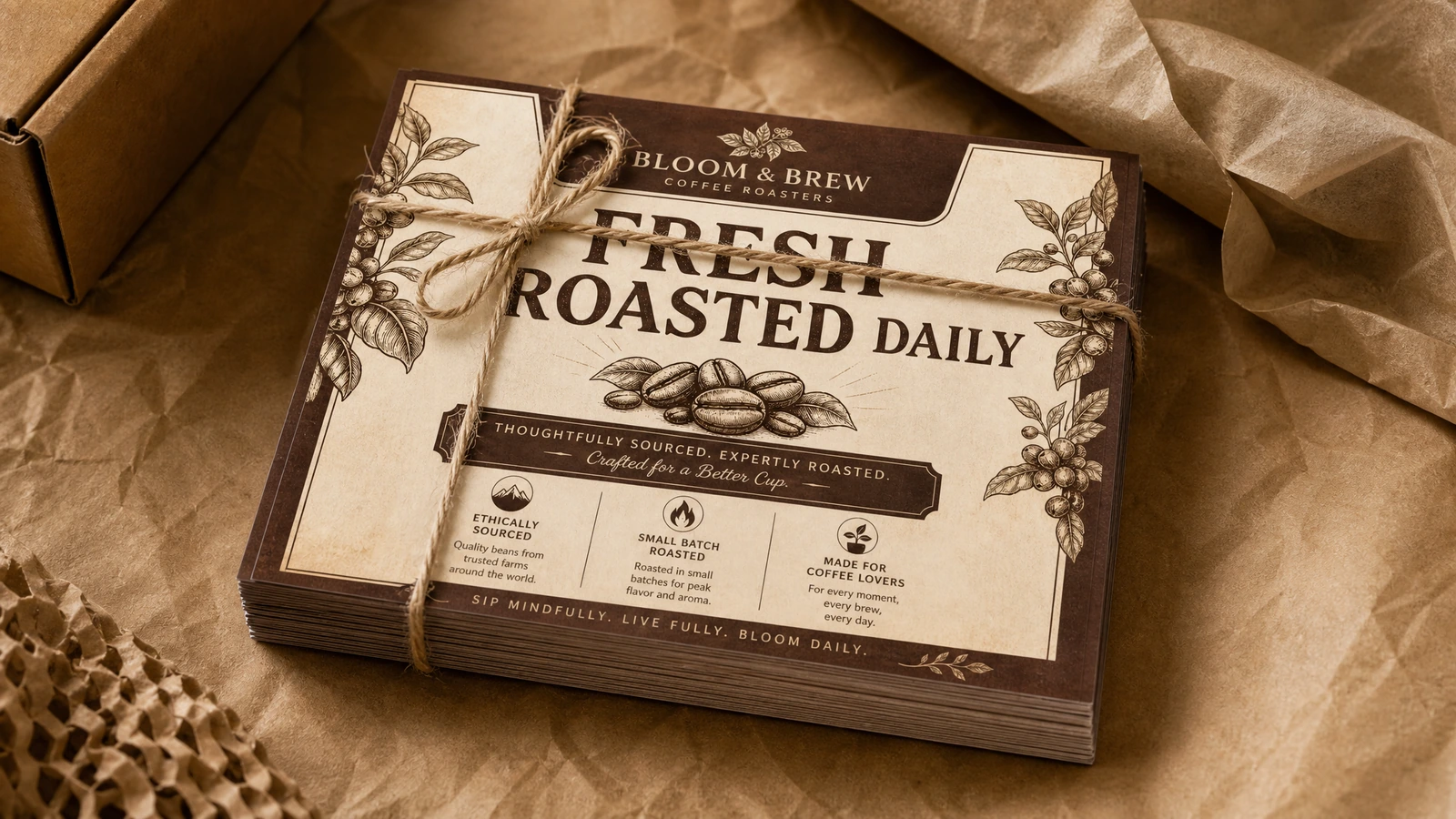
Screen appearance is not a physical color reference. If a brand color is critical, identify it in the brief and agree on the proofing method and acceptance reference before production. No numerical color tolerance or guaranteed screen-to-print match is established for this product.
How do proof approval and production affect your deadline? ↑
Separate artwork preparation, approval, production, and transport when building the schedule. UPrinting’s turnaround explanation[3] explicitly distinguishes production from shipping. A fast print option therefore does not, by itself, establish the arrival date.
The workflow to confirm is artwork review → proof approval → production → finishing and trimming → inspection → packing → dispatch. This describes the checkpoints your order should address; it is not evidence of a particular factory’s equipment, capacity, or internal procedures.
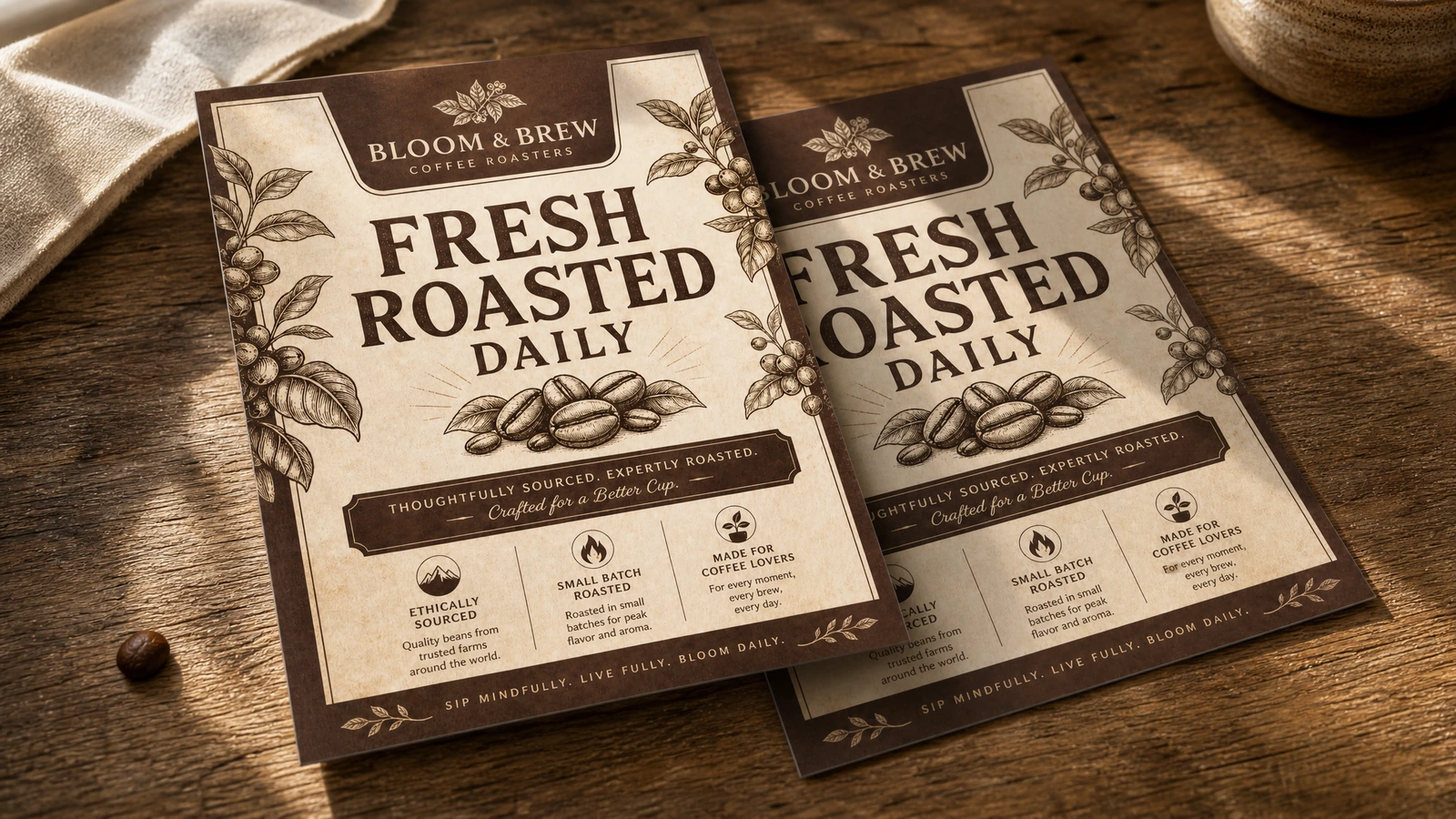
A digital proof is useful for checking layout and content. Where paper feel, finish, or color is decisive, request an appropriate physical sample or proof and confirm what it represents. A generic stock sample and a proof of your actual artwork answer different questions; availability, charges, and scheduling must be quoted.
For a fixed event, ask when production begins, what approval cutoff applies, and how a revised file changes the schedule. Also distinguish the estimated dispatch date from the expected arrival date and any expressly agreed delivery commitment. Do not transfer another supplier’s rush schedule to this product.
How can you compare quotations fairly? ↑
Use the same written specification for every quotation. A low headline price is not directly comparable when another offer includes a different sheet size, reverse-side printing, a heavier stock, proofing, or additional packaging. Compare the delivered order and its agreed conditions, not just a per-piece figure.
| Buying approach | When to evaluate it | Trade-off to confirm |
|---|
| Short-run digital production | Limited distribution or a campaign still being tested | Available stock, unit cost, proofing, and whether later runs will use the same process. |
| Larger-run commercial production | A settled design with a defined distribution plan | Total spend, setup economics, storage, and the risk of unused dated stock. |
| Local collection | A deadline where transport time is a major constraint | Actual collection availability, approved specifications, and the full price. |
| Specialty finishing or substrate | A specific visual or handling requirement | Separate feasibility review, samples, additional processing, and revised scheduling. |
These are purchasing routes rather than a ranking of suppliers. The economical choice depends on the approved configuration and distribution need. No fixed quantity threshold establishes when one production method becomes cheaper for this product.
Request the quantity, finished dimensions, stock description, printed sides, finishing, proof scope, packaging, freight, and applicable extra charges in the same quotation. Ask whether different artwork versions are priced separately and whether an order amendment changes the production slot.
Environmental requirements need product-specific evidence
If responsible sourcing is part of the purchasing brief, request documentation for the actual printed order. FSC’s paper and print guidance[4] connects certified printing with appropriate claims and evidence. A competitor’s certification does not establish certification for this product.
Keep certified sourcing, recycled content, and recyclability as separate requirements. Any recycled-content percentage needs supporting documentation; the finished construction and receiving recycling system need consideration before making a disposal claim. Destination-specific environmental or regulatory requirements must also be assessed separately. No blanket environmental compliance claim is supplied here.
What should you inspect before accepting the order? ↑
Agree on acceptance criteria before production, especially when color, trim alignment, or handwriting performance matters. A useful inspection record compares the delivered sheets with the approved specification and proof. It should describe observable differences rather than rely on broad terms such as “premium” or “professional.”
| Inspection area | Practical check | Reference to retain |
|---|
| Dimensions and trim | Measure finished sheets and inspect borders, alignment, and essential content near edges. | Approved dimensions and agreed cutting tolerance. |
| Artwork and color | Compare the design version, image detail, and critical colors with the agreed reference. | Approved artwork and applicable proof. |
| Paper and finish | Check the stock description, surface appearance, and feel against the selected sample. | Quoted stock and retained physical sample. |
| Writing and QR use | Try the intended pen or stamp and scan the finished printed code. | Agreed use requirements and correct destination. |
| Quantity and condition | Check bundles and inspect for creasing, wet edges, scuffing, or transit damage. | Packing information and delivery photographs. |
These are proposed inspection actions, not completed tests. No sampling plan, pass rate, abrasion result, moisture-resistance result, or dimensional tolerance has been verified for this SKU. If such a result matters to the purchase, define the test and acceptance limit during quotation and sampling.
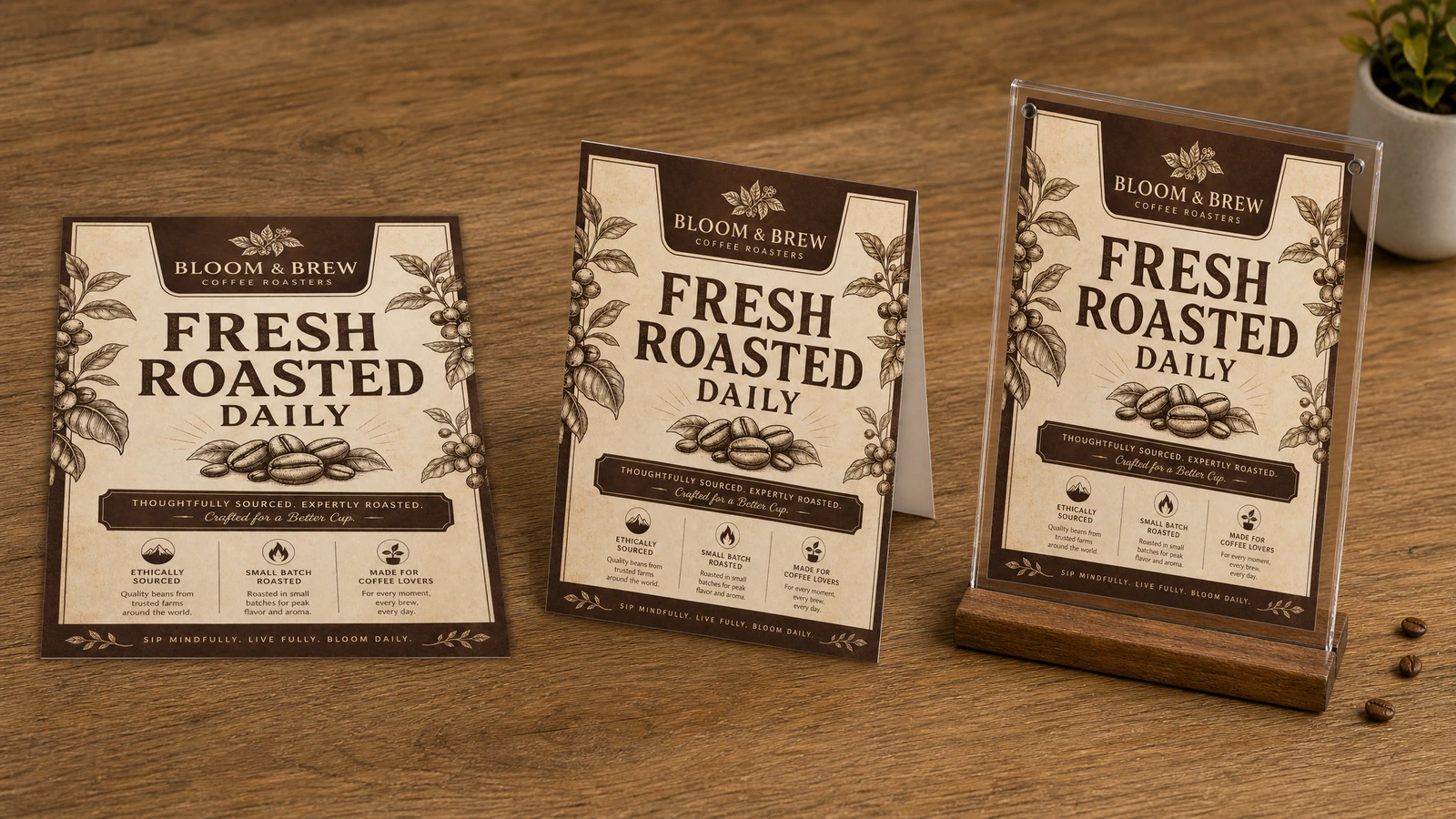
Confirm the procedure for reporting a discrepancy before dispatch. Retain the approved proof, order specification, packaging photographs, and clear images of affected sheets. The reporting period and available remedy should come from the agreed order terms; free reprinting, refunds, or automatic compensation are not assumed.
How should packaging and reorders be specified? ↑
Packaging deserves its own line in the brief. Ask how sheets will be bundled, protected against movement, and packed to reduce edge damage and moisture exposure during transport. A request for protective wrapping is not evidence of waterproof packaging, and no particular packaging construction has been confirmed for this product.
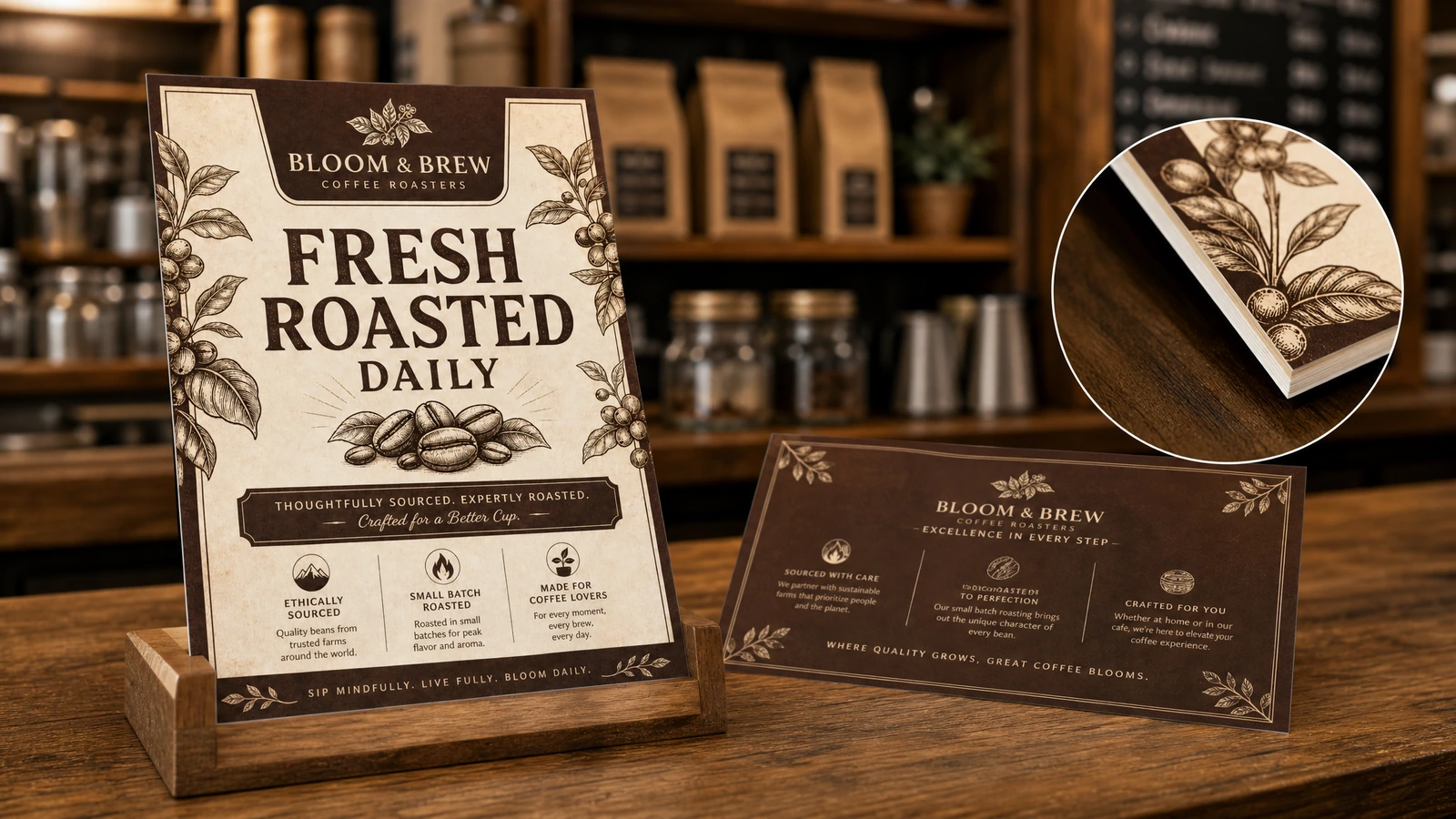
Coordinate receipt so cartons are not left exposed unnecessarily. Inspect the outer packaging before distributing the contents, and document visible damage while the packing arrangement is still intact. No carton capacity, bundle count, or shipping weight is established; these depend on actual sheet dimensions, packed configuration, and sample verification.
For repeat orders, retain the approved artwork version, stock description, finish, and a representative physical sample. Reconfirm the specification instead of assuming that a familiar product name guarantees identical paper or processing. Update expiring offers and destination links before releasing another run.
Clear specifications make purchasing easier ↑
- Choose the format around the message. Keep essential information readable at the finished physical size.
- Specify both faces independently. Printing, coating, and writing requirements are different decisions.
- Treat artwork settings as approval inputs. The selected production template governs the final file requirements.
- Compare the complete delivered order. Include proofing, finishing, packaging, and freight rather than relying on headline unit pricing.
- Separate evidence from expectations. MOQ, production time, unit weight, certifications, and performance remain unverified for this product.
- Make acceptance reviewable. Preserve the approved specification and define any required physical testing before production.
Start with a brief that can be quoted accurately ↑
A well-specified flyer order connects the campaign message with the physical sheet, the approval process, and the distribution deadline. That gives you a practical basis for comparing options without relying on unsupported speed, quality, or environmental promises.
Request a custom flyer printing quote with your artwork, preferred finished size, quantity, printed sides, paper and finish preferences, delivery destination, and required arrival date.




The information below is required for social login
Sign In
Create New Account