SEO Title: Custom Stamped Metal Keychains | Design & Ordering Guide
Meta Description: Plan custom stamped metal keychains for branded gifts and souvenirs. Compare finishes, review artwork, define quality checks, and prepare your quote.
Custom stamped metal keychains turn logos, names, and commemorative designs into impressions formed in metal. For a successful order, match the artwork to the production method, approve a physical sample, and define the finish, attachment, packaging, and delivery requirements before bulk production.
Give a property handover, company anniversary, or souvenir collection a recognizable finishing touch. A stamped design offers a tactile alternative to a printed graphic, with raised and recessed details making the metal itself part of the presentation.
For promotional buyers, the priority is consistent branding across an order. Retailers need a finish and package that suit their selling price. Hospitality teams need readable identifiers, while personal-gift buyers may prefer the individual character of hand-stamped lettering. These uses should not share an identical specification simply because they all involve a keyring.
A convincing digital mockup is only the starting point. Small lettering can become difficult to read, a reflective finish can obscure detail, and an attachment placed incorrectly can change how the design hangs. Discovering those differences after delivery can mean repacking, replacements, or missed distribution dates.
The practical solution is to settle appearance, construction, and acceptance criteria together. This guide explains what to include in your request and what to verify on the sample, without treating another supplier’s pricing, test results, or production schedule as a promise for your order.
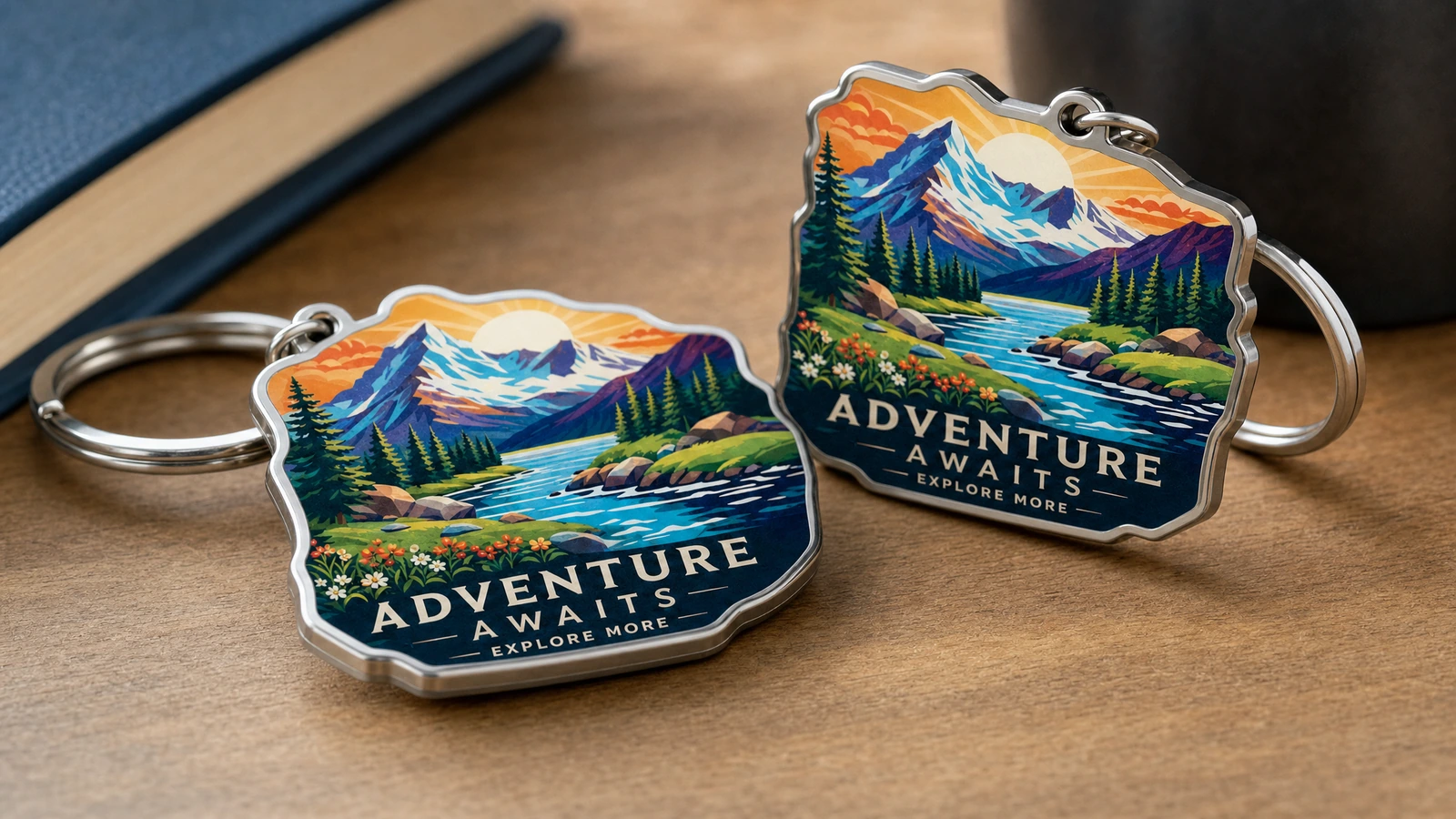
Product reference: Custom Keychains > Custom Metal Keychains. Provisional SKU: NSKU-755-02. Dimensions, materials, unit weight, minimum order quantity, pricing, and production time remain subject to quotation and sample confirmation. Illustrations show proposed configurations, not approved samples or completed factory tests.

Explore design, ordering, and quality decisions
What makes a stamped metal keychain different? ↑
In die striking, a custom die presses a design into metal to create raised and recessed features. This suits a predominantly flat keychain with visible relief rather than a fully sculpted figure. As a manufacturing reference, Jin Sheu describes brass or iron construction and contrasting polished details with recessed backgrounds in its die-struck keychain guide[1].
Hand stamping is a different purchasing proposition. Letters or symbols are impressed individually, so spacing and alignment may vary. That character can suit a personal keepsake, but it should not be assumed acceptable for a corporate logo that needs a consistent appearance throughout a batch.
Stamping describes how the metal is formed; enamel describes a color treatment. An all-metal design can use relief and surface contrast without color fill, while an enamel version may use recessed areas for color. State whether you want bare-metal visual contrast, filled color, or another proposed treatment rather than relying on the word “stamped” alone.
How do you keep the design readable at actual size? ↑
Start with the finished viewing size, not an enlarged logo on a screen. Identify the element that must remain recognizable: a brand symbol, property identifier, short message, or commemorative date. Supporting decoration should not crowd that element or force important lettering into an unverified production limit.
Ask the artwork review to establish minimum line width, spacing, lettering size, and relief depth for the proposed material and process. No universal minimum is confirmed for this product. If the design includes fine lettering, narrow gaps, or detailed outlines, make physical-sample readability an approval condition.
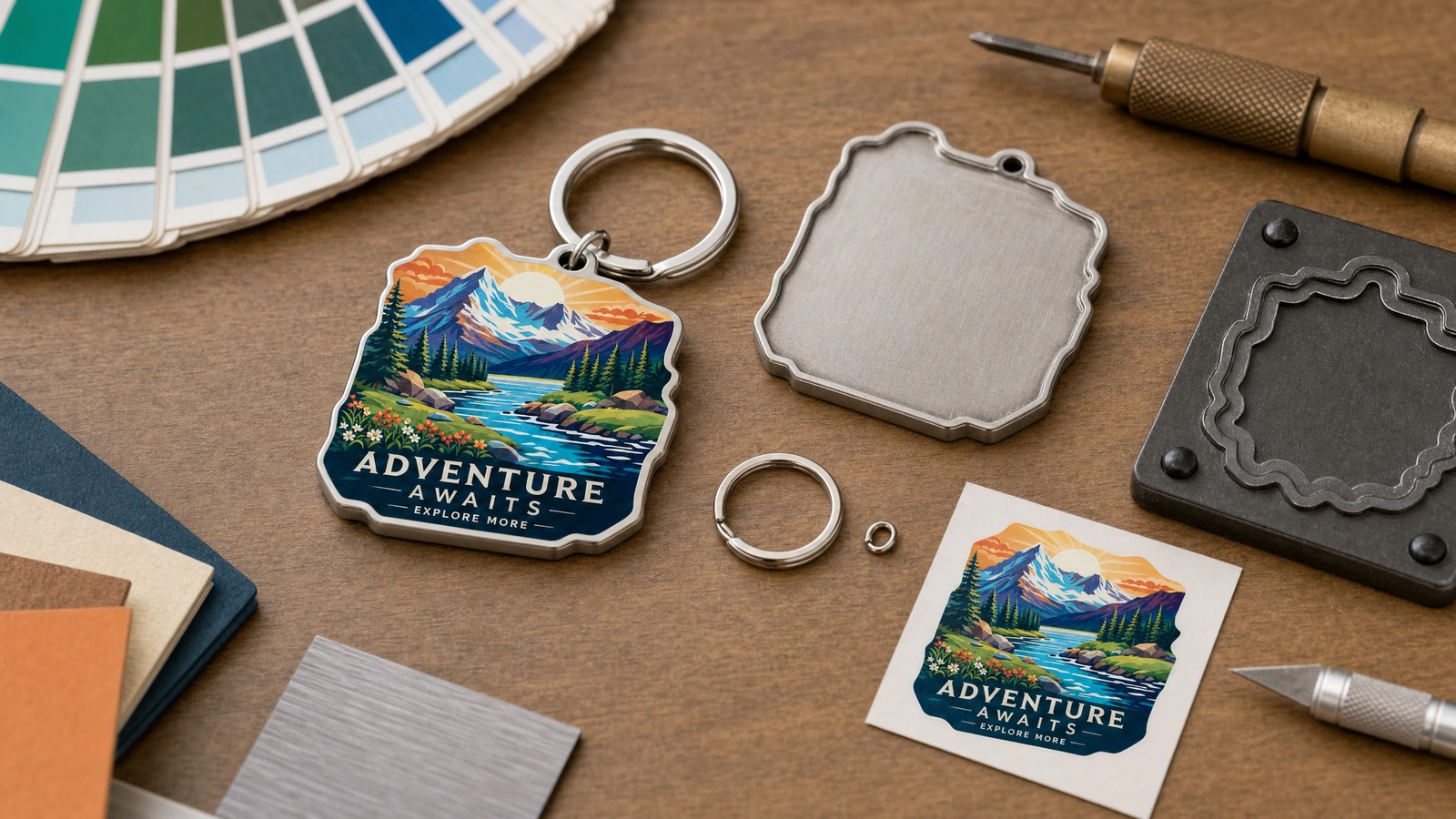
Specify the body dimensions separately from the attachment. Record thickness and hole position on the drawing, then assess the complete assembly in hand. A rendering cannot confirm actual weight, how the keychain hangs, or whether the connection obstructs the artwork.
| Specification field | Preferred unit or description | Approval basis |
|---|
| Body dimensions and thickness | mm | Dimensioned drawing and measured sample |
| Lettering, spacing, and relief | mm where applicable; raised or recessed | Artwork review and actual-size sample |
| Attachment geometry | Hole position, ring dimensions, connection type | Assembled sample and intended key arrangement |
| Finished unit weight | g, including the specified attachment | Measured sample; no confirmed value currently available |
These fields define what to measure; they are not published product specifications. Key capacity, load-bearing suitability, and fit depend on physical dimensions, the loaded arrangement, and sample validation. Do not infer them from a photograph.
Which material, finish, and attachment suit your application? ↑
Treat the base metal and surface finish as separate choices. A silver-colored appearance does not establish the underlying alloy, and an antique appearance does not establish coating thickness. Request the proposed material identification and finishing description in the quotation.
Brass, iron or steel, aluminum, and stainless steel appear in the supplied manufacturing research, but they should not be presented as interchangeable options with identical stamping behavior. Ask which material is suitable for the approved design. Likewise, do not automatically describe a zinc-alloy cast item as a sheet-metal stamped product.
For appearance, compare polished, matte, sandblasted, and antique-style samples where available. Review them under ordinary lighting as well as close-up photography. The decision is not simply which finish looks brightest: the logo and lettering must remain readable in the intended presentation.

Include the reverse face in the brief. State whether it should remain plain, repeat the artwork, or carry different information. Double-sided work requires its own review and quotation; it should not be assumed included in a single-sided price.
For the connection, identify the ring, chain, or clasp arrangement and its position relative to the design. Inspect the assembled sample rather than approving the decorative body alone. Surface wear, bent connecting parts, and poor ring closure are different failure modes and need different checks.
How should you prepare artwork for quotation? ↑
A useful artwork package communicates construction, not just appearance. Supply vector artwork when available, accompanied by a readable preview and the exact wording required. Keep the front and reverse clearly distinguished so that the quoted work matches the intended finished product.
- Define the outline: show the body shape, hole location, and orientation when attached.
- Identify surface levels: distinguish raised metal, recessed metal, and any proposed color-filled areas.
- Confirm text: check spelling, dates, punctuation, and the orientation of any reverse-side message.
- Flag difficult details: identify fine lines, small lettering, or closely spaced elements requiring feasibility review.
- Separate variable content: explain whether every piece is identical or names and numbers change.
- Include the purchasing brief: quantity by design, intended use, finish preference, packaging, destination, and required arrival date.
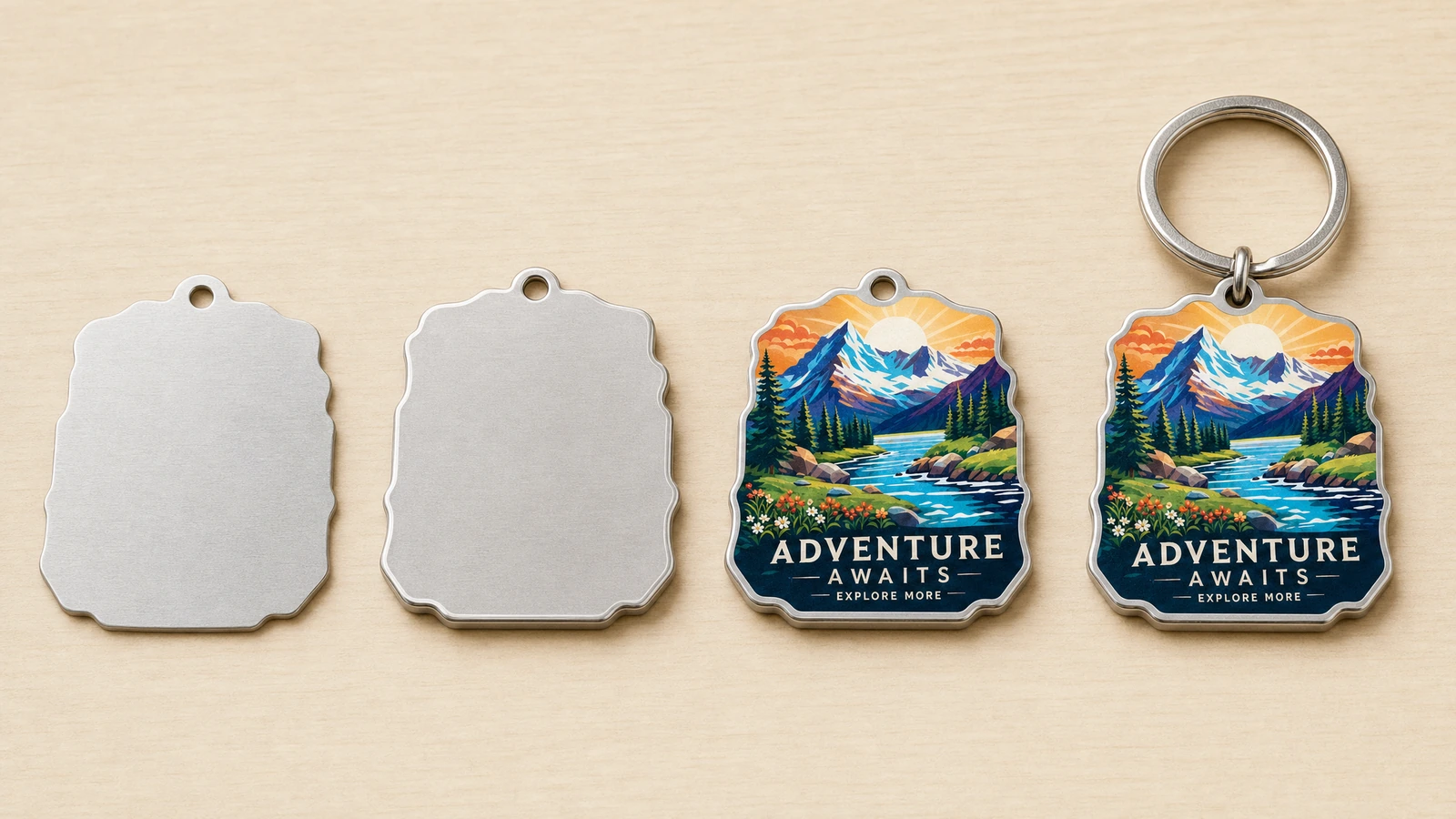
If a detail cannot reproduce clearly, approve a specific revision rather than accepting an undefined instruction to “make it work.” Possible decisions include simplifying the logo, removing secondary text, changing the body size, or evaluating another marking method. Each can affect appearance or cost.
Keep the approved artwork version with the quotation and sample record. A later change to a name, hole position, or reverse design should be reflected in those records before production proceeds. This gives both parties a clear reference if the delivered result differs from expectations.
What should happen between artwork approval and production? ↑
The supplied research describes a general sequence of design review, tooling, forming, finishing, assembly, and inspection. Sourcify distinguishes sheet-metal stamping from other keychain manufacturing routes in its keychain manufacturing overview[2]. The actual sequence and timing for an order still need confirmation.
- Review feasibility. Resolve the material, relief, outline, attachment, and difficult artwork features before committing to tooling.
- Confirm the commercial scope. Separate tooling, sampling, unit production, packaging, testing, and shipping charges.
- Approve the proof. Check dimensions, wording, design levels, front and reverse orientation, and connection position.
- Evaluate the physical sample. Assess readability, edges, finish, weight, and attachment behavior against the agreed brief.
- Authorize the approved configuration. Record accepted details and outstanding corrections before bulk production.
- Inspect and pack. Check the finished assembly and packaging against the sample and purchase requirements.
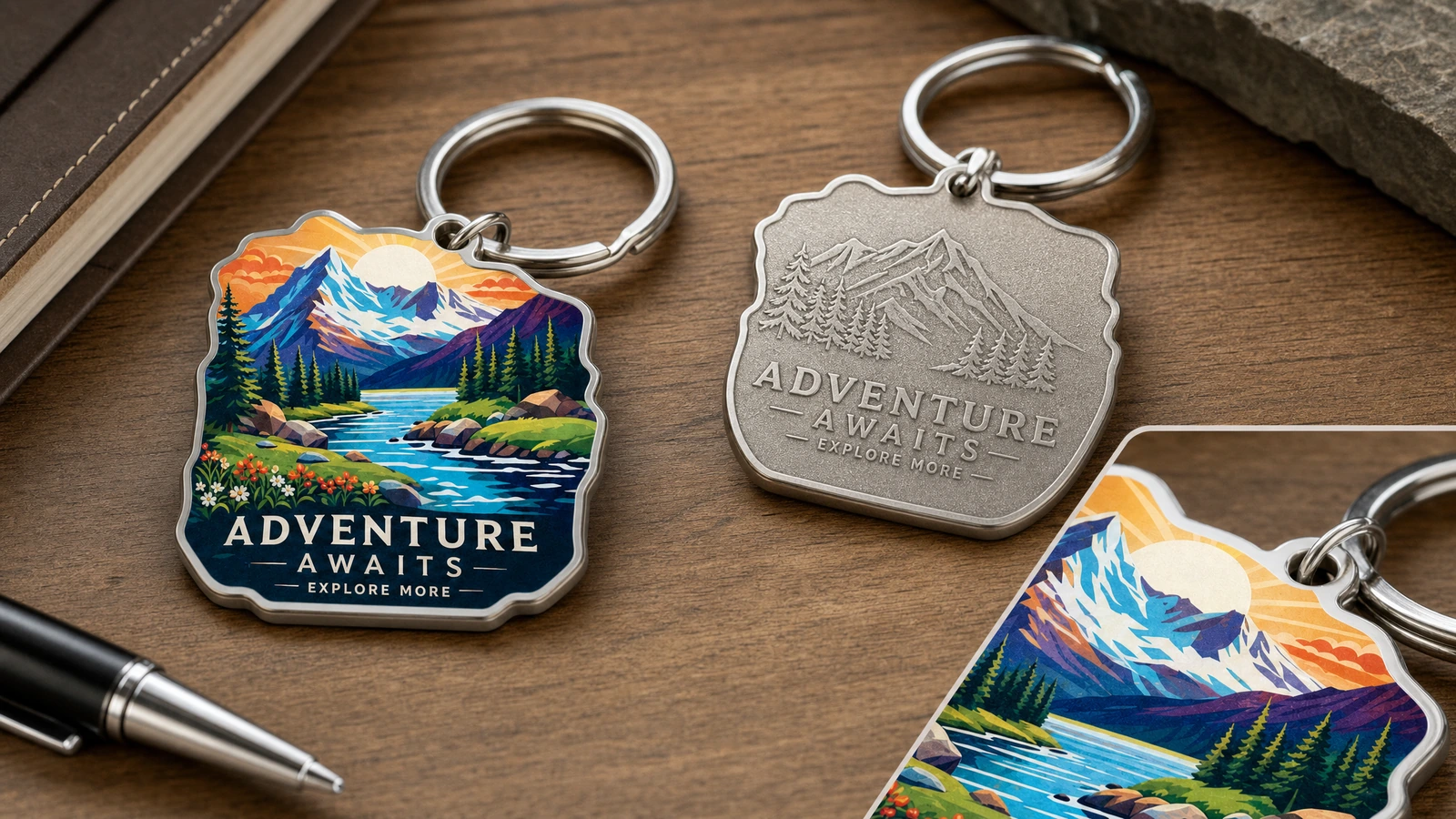
Request separate timing for artwork review, tooling and sampling, bulk production, and transport. Clarify which approval starts each stage and whether quoted days are working or calendar days. A production estimate is not an arrival guarantee, particularly when sample changes or destination formalities remain unresolved.
When is stamping the right purchasing choice? ↑
Choose the method around the design rather than treating one process as universally superior. The following buying guide separates repeated relief artwork, individual text changes, sculpted forms, and fine-line decoration.
| Method | Design direction | Purchasing trade-off | What to verify |
|---|
| Die-struck stamping | Repeated logos and predominantly flat relief | Custom tooling is part of the project | Relief clarity, tooling charge, sample agreement |
| Hand stamping | Personal lettering and handmade character | Individual impressions may vary | Acceptable alignment and depth variation |
| Die casting | Sculpted figures and more complex dimensional forms | Different construction and tooling requirements | Shape feasibility and vulnerable connection areas |
| Laser engraving | Names, serial information, and fine text | Marking does not reproduce the same raised relief | Contrast and actual marking appearance |
| Photo-etching | Detailed linework and shallow recessed decoration | Relief and thickness differ from other routes | Detail reproduction and edge appearance |
Use this comparison to select a sampling direction, not to assign automatic durability rankings. Material, finishing, geometry, and assembly still affect the outcome. A fine-line design that suits etching may need simplification for stamping, while a sculpted mascot may justify evaluating casting.
There is no verified price ladder or MOQ for this product. Ask for quotations at your intended quantities using the same specification. Compare the total order cost, not just the unit price, and check whether different quantities require changes to packaging, tooling allocation, or production arrangements.
Variable names and numbers deserve particular attention. Confirm how the changing information will be applied, whether it needs a separate operation, and how each version will be checked. Do not assume a shared logo tool makes every form of personalization equivalent in cost or timing.
Which quality checks should define acceptance? ↑
Translate descriptions such as “premium” and “durable” into observable criteria. Agree what will be checked, how it will be evaluated, and which defects are unacceptable before bulk production. The plan below proposes inspection items; it does not represent completed testing.
| Risk | Proposed verification | Record needed |
|---|
| Unclear or inconsistent impressions | Compare lettering and relief with the approved physical sample | Sample reference and inspection photographs |
| Sharp edges or burrs | Inspect the perimeter, hole, and connection areas | Documented edge acceptance criteria |
| Finish mismatch or deterioration | Visual review; coating and corrosion testing where specified | Finish specification and relevant test report |
| Loose or deformed hardware | Closure inspection and agreed pull or handling tests | Assembly description, method, and acceptance threshold |
| Damage during distribution | Review packing protection and agreed drop evaluation | Packaging specification and inspection outcome |
Sampling quantity, test conditions, and acceptance thresholds remain to be agreed. A photograph cannot establish attachment strength, and a sample with an attractive finish cannot establish batch-wide coating performance. Match each claimed result to the actual construction tested.
Separate corrosion methods from product guarantees
The research identifies salt-spray testing as a possible corrosion evaluation. ASTM B117[3] concerns the controlled test environment; simply naming it is not evidence that this keychain passed a test. ISO 9227 also appears in the research as a salt-spray method. Any requested report should identify the specimen, finish, exposure conditions, duration, and evaluation criteria.
No corrosion result, coating thickness, wear life, or attachment-strength result has been supplied for this product. Keep those items in the testing brief where needed. Do not convert another manufacturer’s result into a service-life promise for your chosen configuration.
Define safety and environmental claims by destination and use
Material safety is a procurement issue, not a decorative label. The supplied CPSC metal-keychain recall[4] documents why material evidence matters. It is historical context, not evidence of a defect in this product.
State the destination market, intended age group, and expected use before defining compliance requirements. Where relevant, have the applicable CPSIA, REACH, California Proposition 65, or state material requirements identified for the actual article. Jewelry-specific rules should not be copied automatically onto a functional keychain, nor should a functional description be treated as a blanket exemption.
Claims such as “lead-free,” “nickel-free,” “hypoallergenic,” or “compliant” require appropriate supporting evidence. Likewise, no recycled-content percentage or environmental certification is confirmed here. If these are purchasing requirements, include documentation and testing in the quotation scope rather than assuming them from the material name.
How do packaging, shipping, and reorders affect cost? ↑
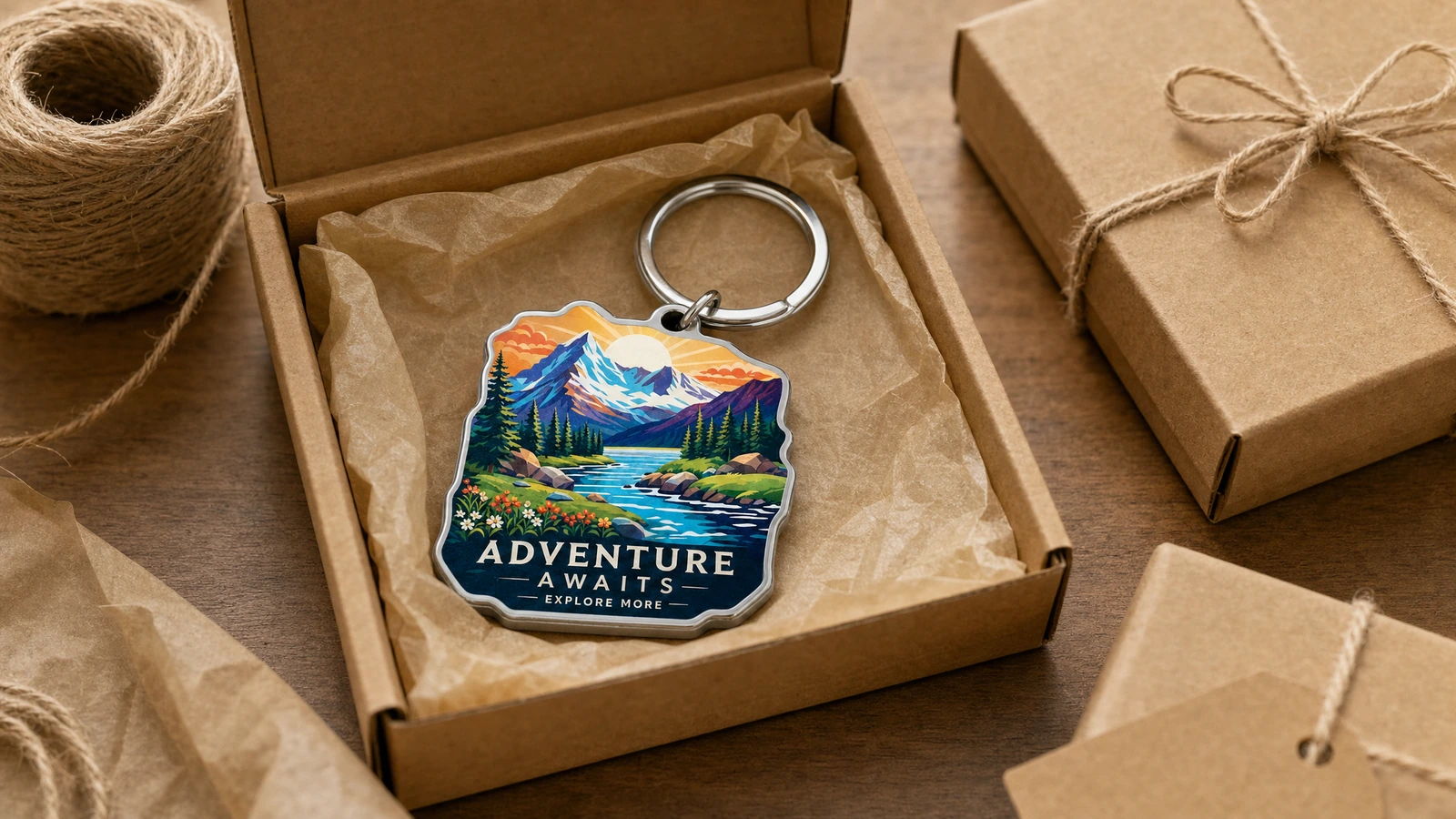
Packaging should match the handover experience. An individually protected item may suit distribution, while a presentation box may suit a client gift or retail display. Quote the proposed package alongside the keychain so that presentation costs are visible before artwork approval.
Review whether the attachment can rub against the decorative face during transport. Confirm packing quantity, package dimensions, and packed weight before comparing freight options. Neither finished unit weight nor shipping weight is established by the product illustration.
- Tooling and sampling: identify separate charges and the treatment of revisions.
- Production: specify quantity, finish, attachment, and whether reverse-side work is included.
- Packaging: separate individual protection from presentation and outer-carton costs.
- Delivery: clarify the destination, freight service, duties or taxes, and who is responsible for each charge.
- Defects: agree the reporting process, replacement or refund terms, and responsibility for return freight.
For repeat orders, retain the approved sample, artwork version, material and finish descriptions, attachment specification, and packing details. Ask about tool ownership, storage, and reuse charges; no retention period or free-reuse policy is confirmed for this product.
Include suitable care instructions with the final configuration. The supplied research recommends gentle cleaning and avoiding abrasive treatment or prolonged soaking. Confirm the care wording against the approved finish rather than promising that every metal or coating is maintenance-free.
What should you settle before ordering? ↑
- Published thickness guidance is not a confirmed SKU specification. — 1.5–4 mm is MicroMetal’s reference range for stamping; the thickness for this product requires drawing and sample approval (Source[5]).
- Appearance approval needs an actual-size reference. — Settle lettering, relief, front and reverse design, finish, and connection position.
- Commercial terms need a product-specific quotation. — MOQ, production time, unit weight, pricing, and tooling terms are not yet confirmed.
- Quality claims need defined evidence. — Agree inspection criteria and any required material, corrosion, or attachment tests.
- The order includes more than the decorative body. — Packaging, freight responsibilities, defect handling, and reorder records belong in the purchase agreement.
Turn your concept into a clear product brief ↑
The right stamped keychain starts with a clear purpose and ends with an approved assembly, not just an attractive rendering. A focused brief makes it easier to evaluate the design, compare quotations, and identify the decisions that still need a physical sample.
Request a quote for NSKU-755-02 with your artwork, quantity, preferred dimensions and finish, packaging needs, delivery destination, and required arrival date.





The information below is required for social login
Sign In
Create New Account