We use cookies to enable our websites to remember information, to help some website functionalities to work properly, to understand how you interact with and use our websites and to display you content and ads that are relevant and engaging for you.
By clicking Accept All you consent to the use of these cookie.
The store will not work correctly when cookies are disabled.
Quick answer: Custom key chains for business work best when each one is tied to a specific moment: a client's first week, an employee's service anniversary, a qualified conversation at a trade show, or the handover of a car or property. Plan the program by occasion first. Define who receives each keychain, what it should say, when it is handed over, and how you will measure whether it is still in use. Choose the product only after those decisions.
Most teams search for custom key chains for business because they have a deadline and a vague brief: "we need something with our logo." That brief produces the familiar result. A carton of identical keychains gets ordered for one event. Half of them are handed to people who will never buy, and the rest sit in a storage room until someone throws them out.
The cost is not only the wasted budget. A keychain is one of the few branded objects people physically carry every day, so it is a poor place to save on planning. If the wrong item reaches the wrong person, you lose a daily point of contact. If the right item reaches the right person at the right moment, you keep one for years. The difference comes from program design, not from the logo.
This guide is written for marketing, HR, and event teams. It maps where custom logo keychains create measurable business value and gives a step-by-step planning method for each audience. It also points out where to hand off to product decisions, such as material, finish, and artwork, so you avoid ordering before the strategy is settled.
What is a business keychain program?
A business keychain program is a planned, recurring set of imprinted keychains. Each design is linked to a defined audience and a defined handover moment, with a reorder trigger based on your own operating data, such as new hires per quarter, deals closed, or vehicles delivered. A one-off giveaway is different: it is bought for a single event and judged only by whether the box was empty at the end.
The category sits inside a large, stable channel. PPAI's latest distributor sales estimate put US promotional products at $27.1 billion, up 1.3%[1]. The Advertising Specialty Institute, measuring with its own method, reported a record $26.6 billion in annual sales[2]. The gap between the two figures is a useful reminder that industry totals depend on methodology. Your own program's success should be judged with your own data, not industry averages.
One detail matters for how you plan. Standards bodies treat keychains as functional objects rather than adornment. ASTM F2999[3], the adult jewelry safety specification, explicitly excludes items whose primary purpose is functional, naming keys and key chains. In practice, a keychain is judged on whether it works on a key ring every day. A gift that looks good on a desk but fails in a pocket does not earn its place.
Where do custom key chains for business deliver real value?
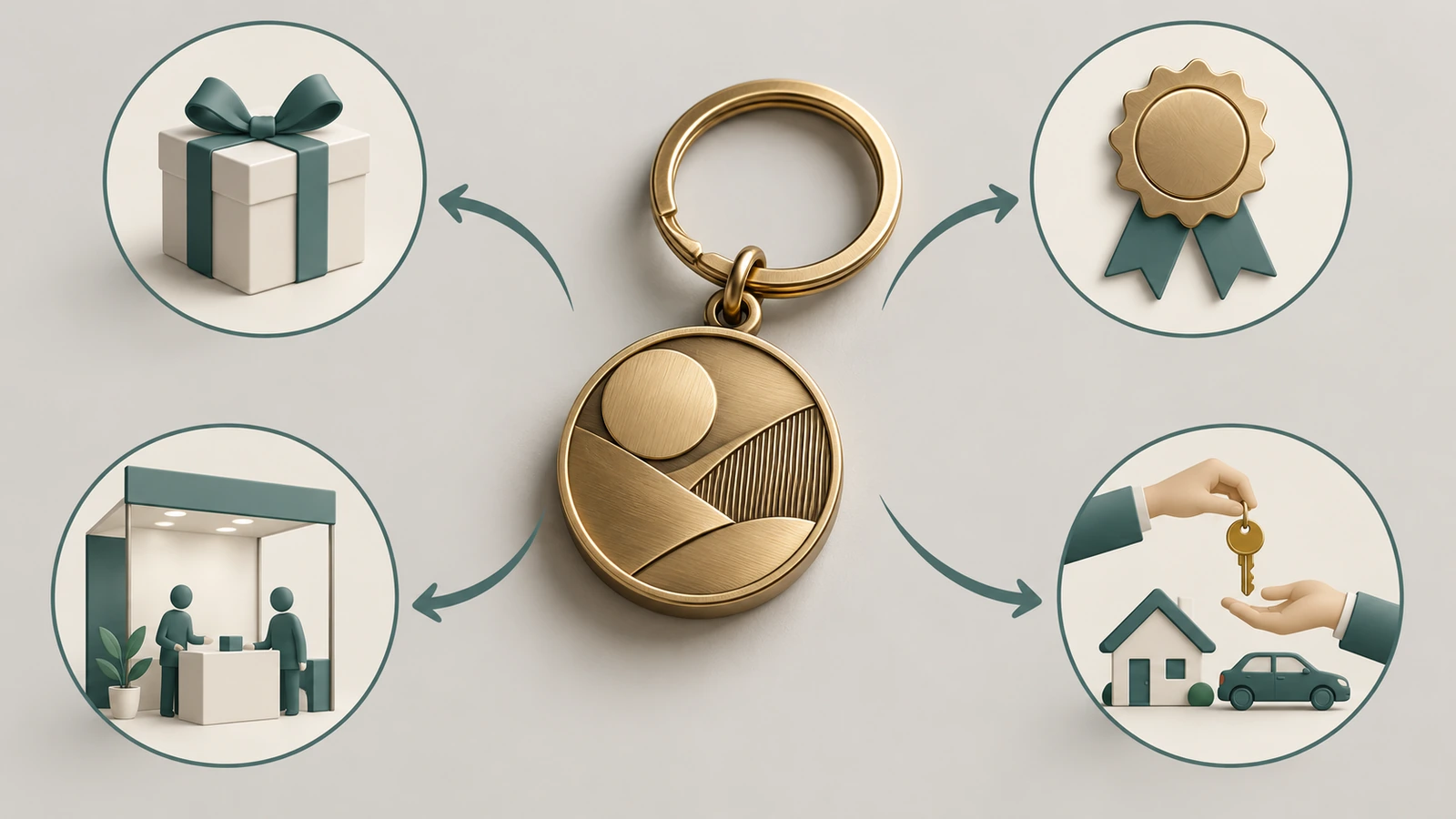
Across the occasions we see business buyers plan for, four use cases consistently justify the cost. They share one trait: the keychain arrives at a moment the recipient already associates with keys, access, or belonging. In each case it reinforces something real rather than adding clutter.
Client onboarding: making the first week tangible
B2B relationships often start with intangible deliverables such as a login, a kickoff call, or a statement of work. A keychain in the welcome kit gives the new account a physical marker of the relationship. It works best for retained-service businesses like agencies, managed IT, accounting firms, and coworking operators, where clients may literally receive building fobs or office keys.
Who receives it: named client stakeholders, not every contact on the account.
What to put on it: your mark, plus optionally a short line tied to the engagement, such as a founding year or a partnership date.
When: with the kickoff pack or the first in-person meeting, not with the invoice.
What to measure: whether onboarding-kit recipients renew or expand at a different rate from accounts onboarded without one. Compare cohorts over a full contract cycle.
Employee milestones: recognition people actually carry
HR teams use keychains for first-day welcome packs and service anniversaries. The value lies in personalization at low cost per person: a stamped year, initials, or a milestone mark turns a generic company item into individual recognition. Many years of milestone gifts end up in a drawer. A keychain sits on the ring someone uses to get into the office or their car every day.
Tier the designs. Use one standard keychain for new hires and a distinct variant for each milestone year. The design should make clear which milestone it marks.
Respect privacy. Avoid printing role titles or employee ID numbers on items that leave the building attached to house keys.
Plan quantities from HR data. Use hiring forecasts and anniversary dates from the HR system, so reorders follow headcount rather than guesswork.
Trade shows and events: from open bowl to earned gift
The weakest way to use imprinted keychains is a bowl on the booth table. The strongest is to hold them back for visitors who finish a demo, book a meeting, or join a product briefing. When the keychain is earned, it becomes a memory cue for a specific conversation rather than a souvenir of the venue.
Dealer and property handovers: the moment keys change hands
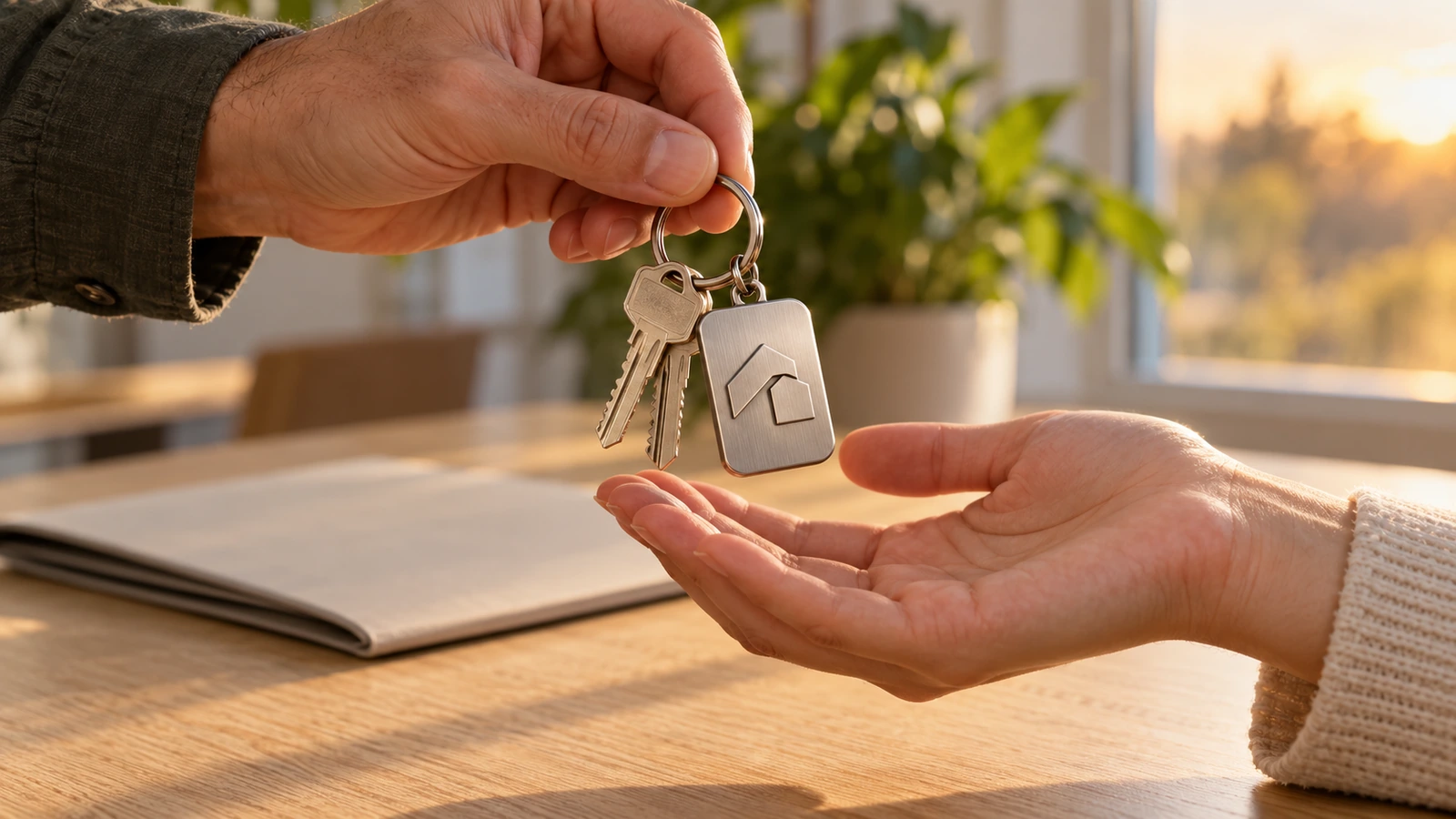
Car dealerships, real estate agents, property managers, and short-term rental operators hand over keys as part of the transaction. This is the most natural fit in the whole category, because the keychain has an obvious job from the first second. A good handover keychain carries the dealership or agency mark and points to the next service you want to provide: maintenance booking, property management, or a referral.
Security first: never put a customer's street address, unit number, or plate number on a keychain. If the keys are lost, the keychain should not lead a stranger to the door.
Durability matters more here than anywhere else. These keychains live on high-use rings for as long as the customer owns the car or lives in the home.
What to measure: service-department return rates, property-management retention, or referral mentions from buyers who received a handover keychain.
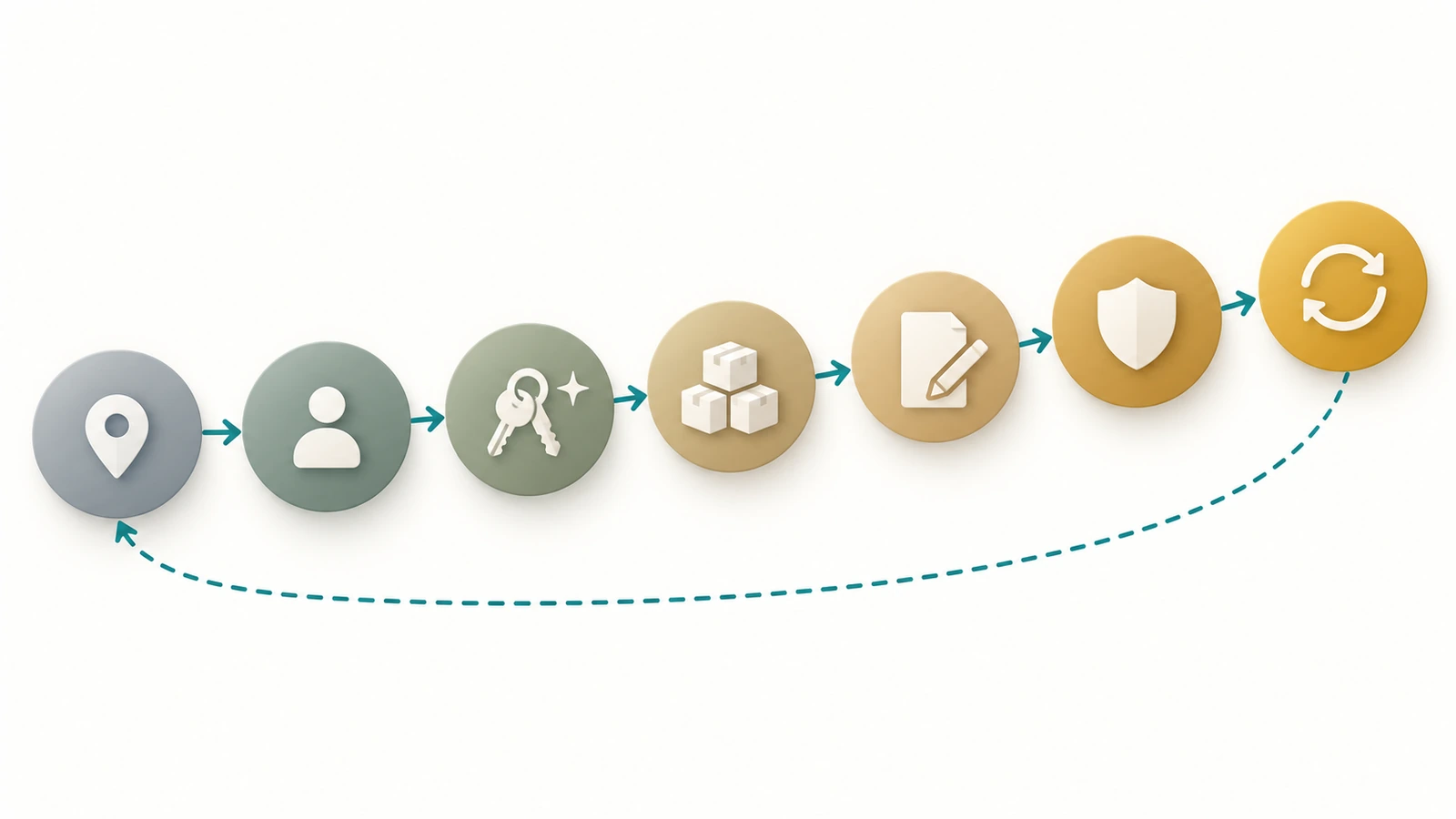
How to plan a keychain program in seven steps
This sequence keeps strategy decisions ahead of product decisions. Teams that reverse the order usually end up with one design forced to serve four audiences that need different things.
List your handover moments. Write down every point where someone joins, renews, celebrates, or receives keys. Keep only the moments where a physical object adds meaning; drop the rest.
Assign one audience and one goal per moment. For example, "new client stakeholders, reinforce the relationship" or "booth visitors who completed a demo, recall the conversation." If one moment has two goals, it needs two designs or a clear priority.
Decide the personalization level. There are three practical tiers: a single master design, a master design with a variable line (year, initials, location), or individually named pieces. Personalization raises perceived value but adds approval steps, so use it where the relationship justifies it.
Forecast quantities from your own records. Use this formula: planned occasions × expected recipients per occasion × a modest buffer for replacements and late additions. Base the inputs on your HR system, CRM, booth-scan history, or delivery logs. Then request a quotation; volume pricing depends on your exact specification.
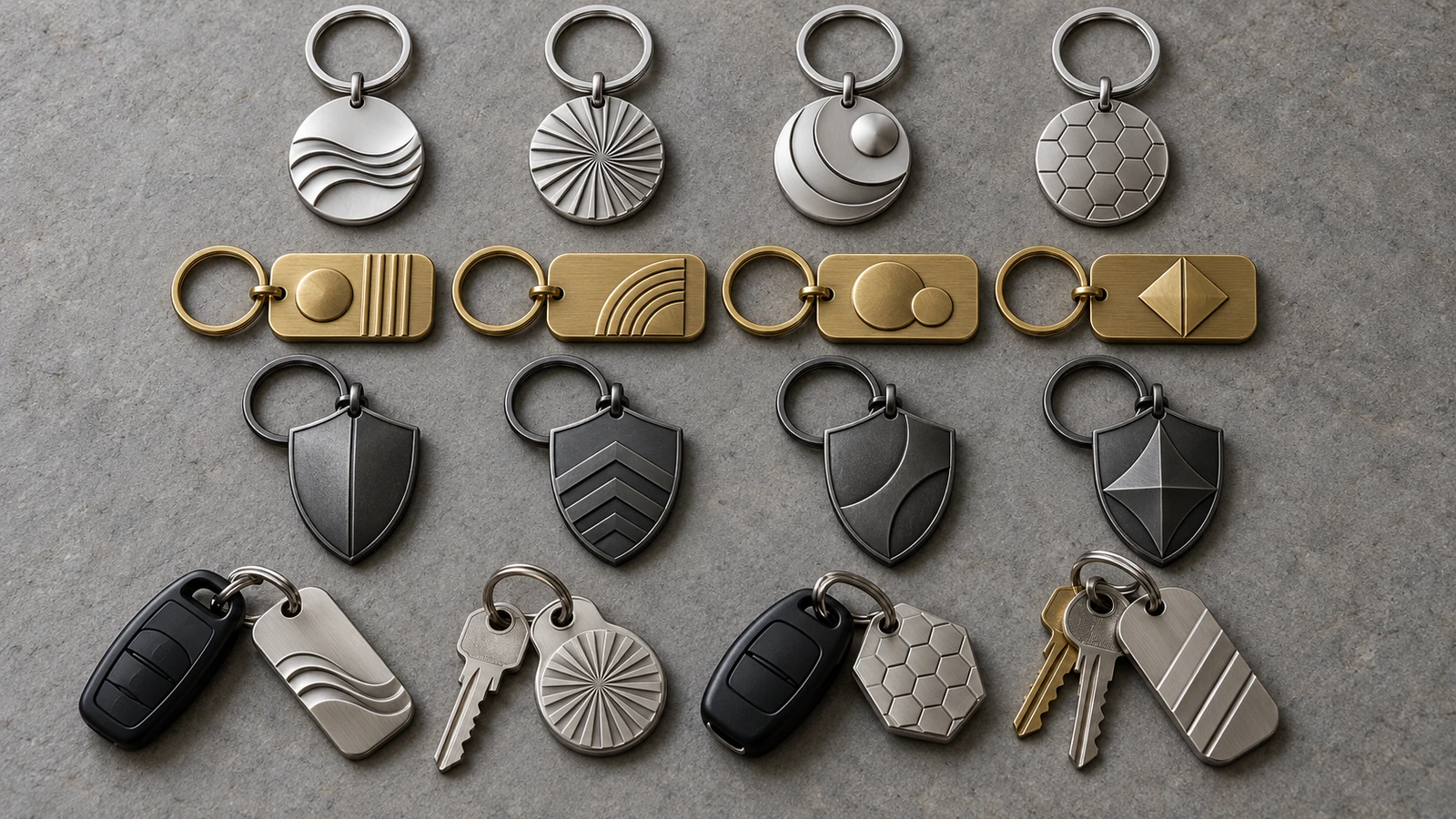
Write a product brief once per design. Material, finish, attachment, and artwork preparation are product decisions with their own trade-offs. The custom stamped metal keychains product guide covers readability at actual size, finish selection, artwork preparation, and acceptance checks, so you do not need to work these out from scratch.
Set a review date and a success signal. Pick one signal per moment, such as renewal rate, a survey question like "do you still carry it?", or service return visits. Review it before you reorder, and retire any moment that does not move the signal.
Durability claims deserve a quick check during step 5. Corrosion resistance of plated metal is commonly evaluated with the salt spray method described in ASTM B117[8]. If a supplier quotes a test result, ask which standard and duration were used. Acceptance criteria themselves belong in the product brief.
Material safety is a reasonable question even for adult audiences. A study in Occupational & Environmental Medicine[9] examining keys and similar everyday metal objects reported lead in 64% of the items tested. That is a strong argument for documented materials on any item that will be handled daily.
Comparing the four occasions side by side
Use this table to decide which moments deserve their own design and which can share one. In most programs, onboarding and milestones share a visual family, while handover keychains are designed around the service you want customers to come back for.
Occasion
Primary owner
Recipient
Main goal
Personalization
Success signal
Client onboarding
Account management / marketing
Named client stakeholders
Make a new relationship tangible
Master design, optional partnership date
Renewal or expansion rate by cohort
Employee milestones
HR / people team
New hires and anniversary employees
Visible, everyday recognition
Milestone year or initials
Engagement survey mentions, pickup rate
Trade shows and events
Event / field marketing
Visitors who completed a defined action
Recall of a specific conversation
Usually none; one strong master design
Follow-up meeting rate vs. non-recipients
Dealer and property handovers
Sales / service operations
Buyers, tenants, guests
Prompt the next service or referral
Branch or location mark, never personal addresses
Service returns, retention, referrals
Each row has a different owner, and that is the most common point of failure. Without one coordinator, marketing, HR, and operations each place small separate orders with inconsistent branding. Assign one person to maintain the master artwork and the reorder calendar, even if each department pays from its own budget.
Once you have decided what each keychain must do, deciding how it should be made is a separate question. Whether stamping suits your designs is covered in the stamped metal keychain buying considerations.
FAQ
FAQ: Are keychains still an effective business gift?
They are effective when they match a moment involving keys or access, such as a property handover, a new office, or a vehicle delivery, or when they carry personal recognition. They are least effective as untargeted giveaways. The promotional products channel remains large, with PPAI estimating $27.1 billion in US distributor sales, but channel size does not prove your program works. Track a success signal for each occasion.
FAQ: How many keychains should we order for a business program?
Calculate from your own records: occasions per year × recipients per occasion × a small buffer. Use HR hiring forecasts, CRM onboarding counts, booth-scan history, or delivery logs. Minimum quantities and pricing depend on the exact specification, so share your forecast when you request a quotation and ask how splitting quantities across designs affects the price.
FAQ: What is the difference between custom logo keychains and imprinted keychains?
In everyday buying language the terms overlap. "Custom logo keychains" usually means the design is built around your brand mark. "Imprinted keychains" is a broader promotional-industry term for any keychain carrying a printed, stamped, or engraved mark. For planning purposes, the difference that matters is whether the content is fixed or varies by recipient.
FAQ: Can HR and marketing share one keychain design?
They can share a visual family, meaning the same mark, shape, and finish, while using a variant line for milestones. Using the identical item for a new hire and a trade-show visitor dilutes the recognition value for employees, so most programs keep at least one employee-only variant.
FAQ: Is it safe to give metal keychains at family events?
Do it only with documented materials. US regulators have recalled metal keychains for lead, and California limits lead in children's jewelry to 100 ppm. Ask the supplier for test reports covering the base metal and any coating before items are distributed to mixed-age audiences.
FAQ: What should a property or dealership keychain avoid?
Avoid any identifying detail that links lost keys to a location, such as street addresses, unit numbers, or license plates. Show your business mark and a route back to your service instead.
Key takeaways
Industry totals confirm the channel is large, but you need your own metric to judge your program. — $27.1 billion in US promotional product sales (Source)
Different industry bodies measure the market differently, so treat headline figures as context, not benchmarks. — $26.6 billion in ASI's record annual estimate (Source)
Material documentation is not optional for mixed-age events. — about 396,000 metal key chains recalled for lead in a single CPSC action (Source)
Children's-item lead limits are strict and specific. — 100 ppm maximum lead in children's jewelry under California law (Source)
Everyday metal objects warrant a material check even for adults. — lead found in 64% of tested objects in a peer-reviewed study (Source)
Conclusion: plan the moment, then the keychain
The businesses that get lasting value from keychains decide the occasion, audience, goal, and success signal before they open a product configurator. Start with the handover moment that best fits your business: a client's first week, an employee's anniversary, an earned trade-show conversation, or a set of keys changing hands. Build one design around it, measure it for a full cycle, and expand only when the signal moves.
When your occasions and quantities are mapped, turn them into a product brief using the custom stamped metal keychains page and request a quotation based on your actual forecast.
References
Promotional Products Association International (PPAI), "PPAI Sales Volume Estimate: Promo Reaches New Height but Hampered by External Volatility." ppai.org↩
Advertising Specialty Institute (ASI), "ASI Reports Record $26.6 Billion in Annual Sales for Promo Products Industry." asicentral.com↩
ASTM International, ASTM F2999, Standard Consumer Safety Specification for Adult Jewelry (scope excludes functional items such as keys and key chains). astm.org↩
U.S. Consumer Product Safety Commission, "Various Metal Key Chains Recalled by Dollar General for Lead Poisoning Hazard," recall 07-145, April 3, 2007. cpsc.gov↩
Reuters, "Dollar General recalls key chains for lead hazard." reuters.com↩
California Department of Toxic Substances Control, "California's Metal-Containing Jewelry Law Fact Sheet." dtsc.ca.gov↩
U.S. Consumer Product Safety Commission, "CPSC Announces New Policy Addressing Lead in Children's Metal Jewelry," 2005. cpsc.gov↩
ASTM International, ASTM B117, Standard Practice for Operating Salt Spray (Fog) Apparatus. astm.org↩
Occupational & Environmental Medicine (BMJ), study on lead content in keys and everyday metal objects, vol. 81, issue 11, p. 592. oem.bmj.com↩
Hi there! I'm Bruce, proud dad to my amazing son. I'm the founder of Zigpac, a printing and packaging company empowering small and medium-sized businesses with custom solutions. Let's create something great together!



 Blog PDF for offline reading












The information below is required for social login
Sign In
Create New Account