SEO Title: Custom Epoxy Fridge Magnets for Logos, Photos & Souvenirs
Meta Description: Plan custom epoxy fridge magnets with printed artwork and a glossy dome. Compare backing options, review sample checks, and prepare a clear quote request.
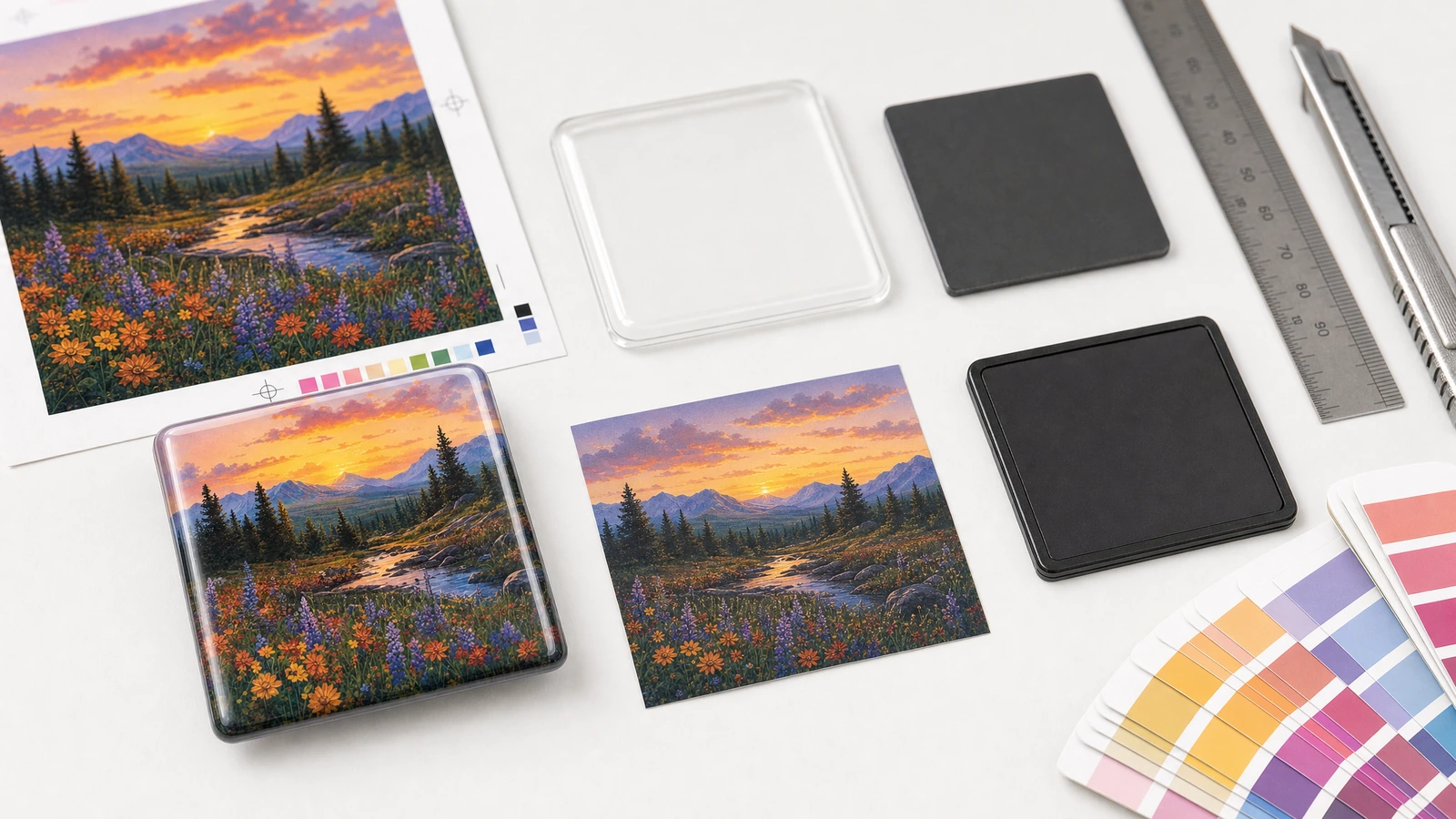
Custom epoxy fridge magnets combine printed artwork, a clear raised dome and a magnetic backing. They offer a glossy presentation for logos, photographs and souvenir designs. Specify the finished dimensions, artwork, intended surface and packaging first; confirm magnetic performance, appearance and durability through an approved physical sample.
For souvenir buyers, promotional teams and event planners: this product format brings printed imagery into a small display item. A destination illustration can anchor a souvenir collection; a company logo can identify a promotional giveaway; a photograph and date can personalize an event keepsake. Each application needs a different balance of readable artwork, presentation and practical use.
A polished front should not hide an uncertain specification. A magnet can look convincing in a digital mockup yet arrive with unreadable lettering, visible bubbles or an unsuitable backing. Those problems become harder to resolve after an entire order has been printed, packed and allocated to an event or retail launch.
The purchasing solution is to approve the complete construction—not just the image. Define what the magnet must display, where it will be used, how it will be packed and what evidence is required before production. This guide separates established product identity from options that still require quotation, sampling or testing.
Contents
What makes a printed epoxy-domed magnet different? ↑
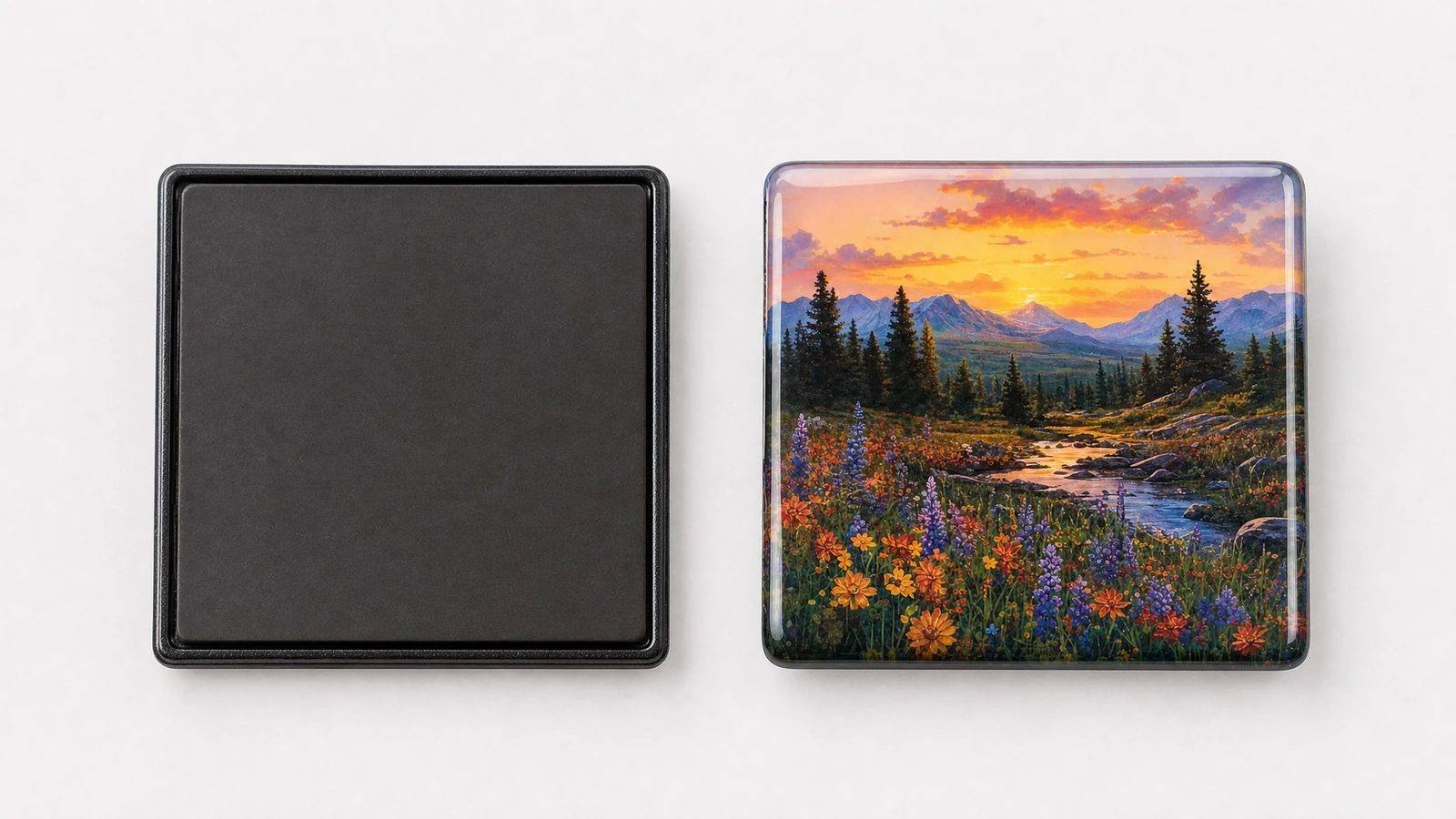
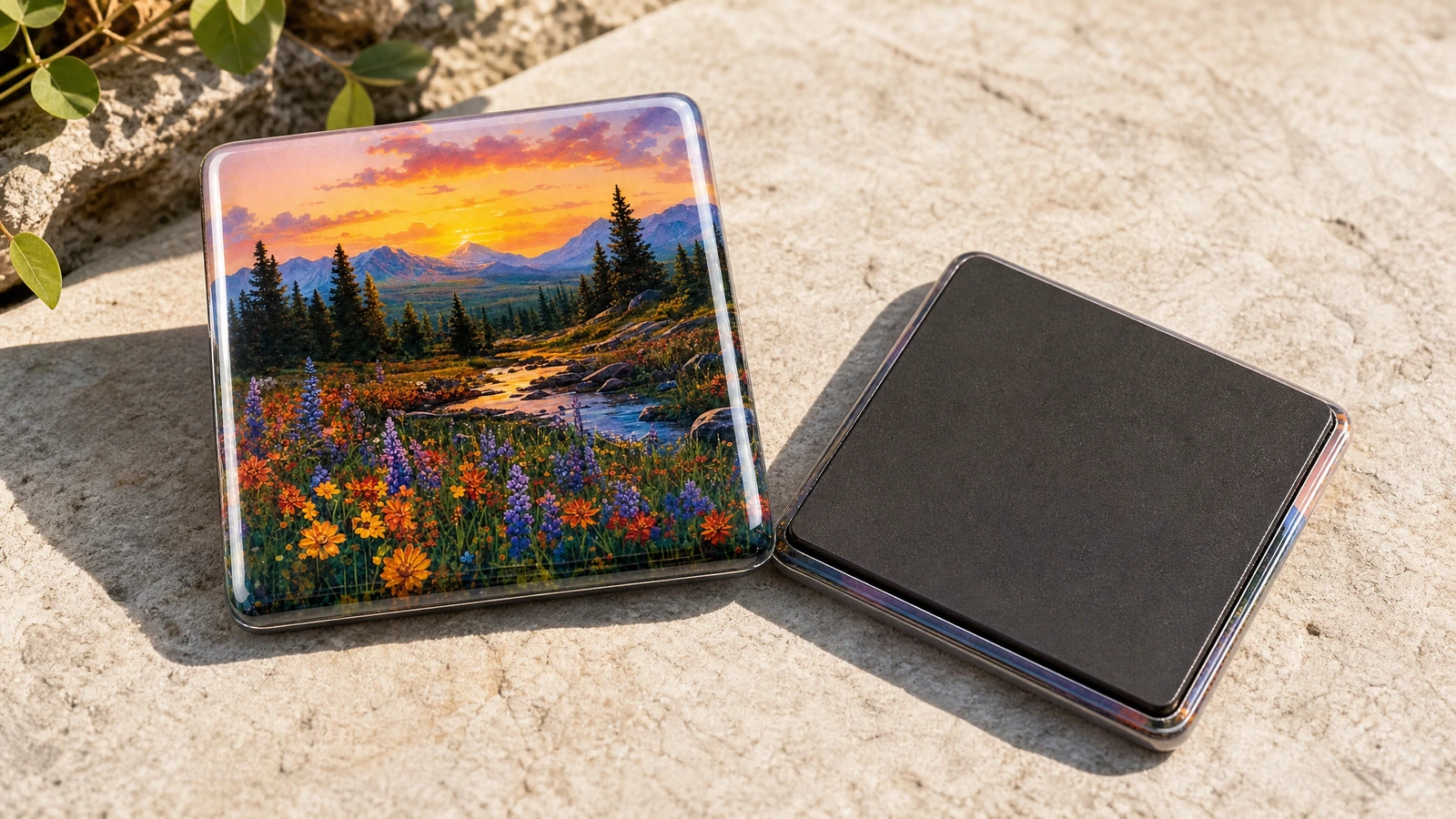
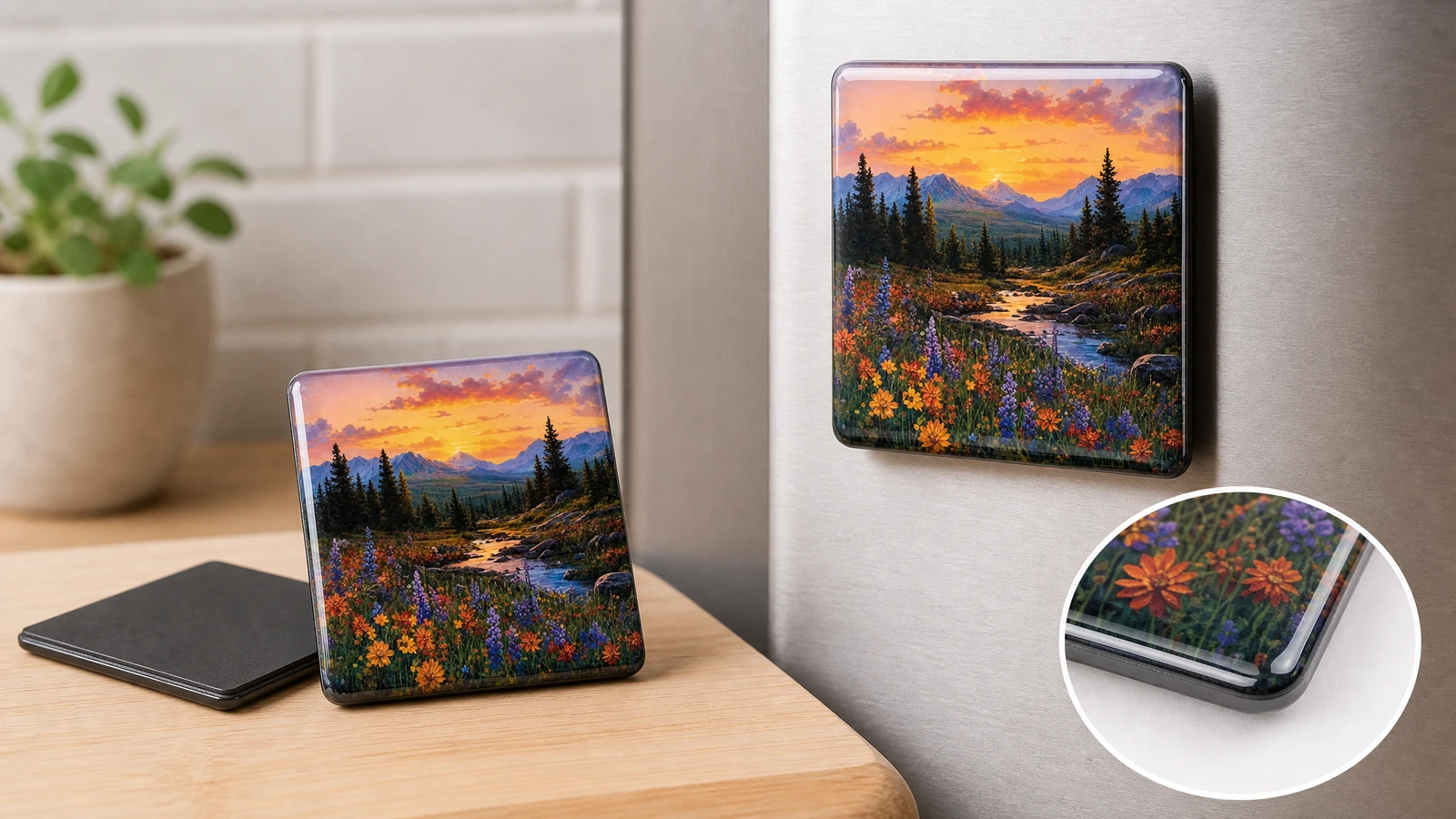
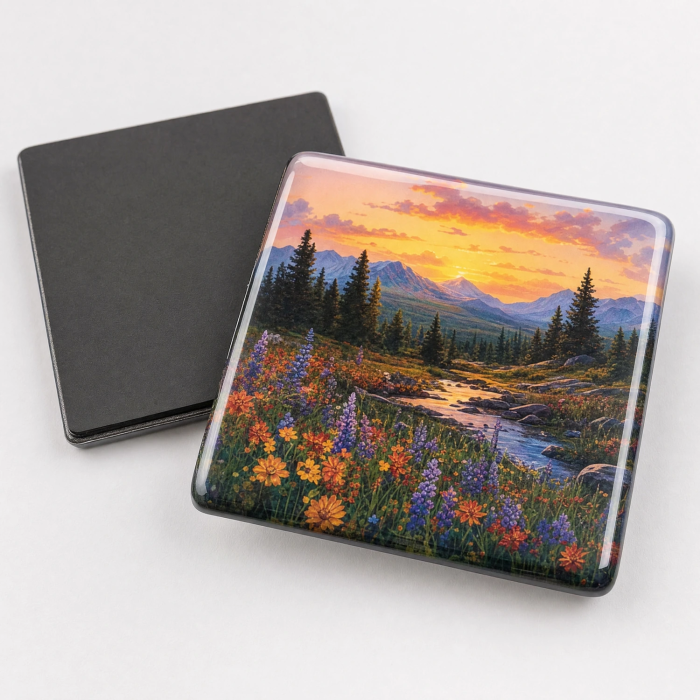
The confirmed product identity is Custom Printed Epoxy-Domed Fridge Magnets, under Custom Magnets → Custom Epoxy Fridge Magnets. Its defining feature is printed artwork beneath a raised clear dome, paired with a magnetic backing. The provisional product reference is NSKU-740-01.
This is different from a sculpted resin souvenir or a handmade casting containing dried flowers. Those products may appear in the same searches, but their molds, assembly methods and quotation requirements are not interchangeable. The distinction between printed domed, acrylic, molded and metal formats is illustrated in A&H’s magnet construction guide[1].
Also distinguish a decorative dome from the thin protective coating applied to some industrial magnets. A corrosion result for an epoxy-coated magnetic component does not establish the scratch resistance, clarity or service life of a printed fridge magnet.
No product-specific factory specifications, test reports or purchasing terms have been supplied for this reference. Accordingly, substrate, resin formulation, backing construction, dimensions, unit weight, minimum order quantity and production time remain quotation or sample-confirmation items. Neither competitor specifications nor general material descriptions establish those values.
How do you specify size, readability and magnetic backing? ↑
Start with the message people need to recognize
Choose the visual priority before choosing the outline. A destination name, portrait or company logo needs enough space to remain recognizable at the finished size. Contact details require a different layout from a decorative illustration. Avoid shrinking a complete brochure into a magnet simply because every element fits on screen.
For event keepsakes, check names and dates at actual size. For promotional designs, separate the main identity from secondary contact information. If a QR code is requested, include scanning on the finished domed sample in the approval plan; a digital file alone is not a completed scan test.
| Specification field | What to record | Approval basis |
|---|
| Finished dimensions | Width and height in mm; approved outline | Measured physical sample and drawing |
| Construction thickness | Total thickness and relevant layer thicknesses in mm | Supplier specification confirmed against sample |
| Unit weight | Finished magnet weight in g | Measured sample; no current value supplied |
| Artwork | File revision, orientation, text and color reference | Approved proof and physical print |
| Magnetic backing | Material, dimensions, placement and attachment method | Documented construction and functional testing |
| Intended use | Decorative display or a defined paper-holding task | Trial on the intended surface and loading condition |
These fields are a purchasing template, not a list of available stock specifications. Keeping dimensions in mm and weight in g makes quotations easier to compare without treating approximate descriptions such as “small” or “heavy-duty” as measurable requirements.
Match the backing to the complete finished piece
A decorative dome adds weight without adding magnetic strength. Surface compatibility, magnetic contact and attachment quality therefore belong in the same specification. CreatePins’ troubleshooting guide[2] identifies these as separate contributors to sliding and detachment.
Flexible ferrite backing and discrete magnetic components are construction routes to discuss, not confirmed options for this product reference. Ask which arrangement is proposed, how it is secured and whether its contact face remains flat. A stronger component does not, by itself, verify the attachment of the decorative front.
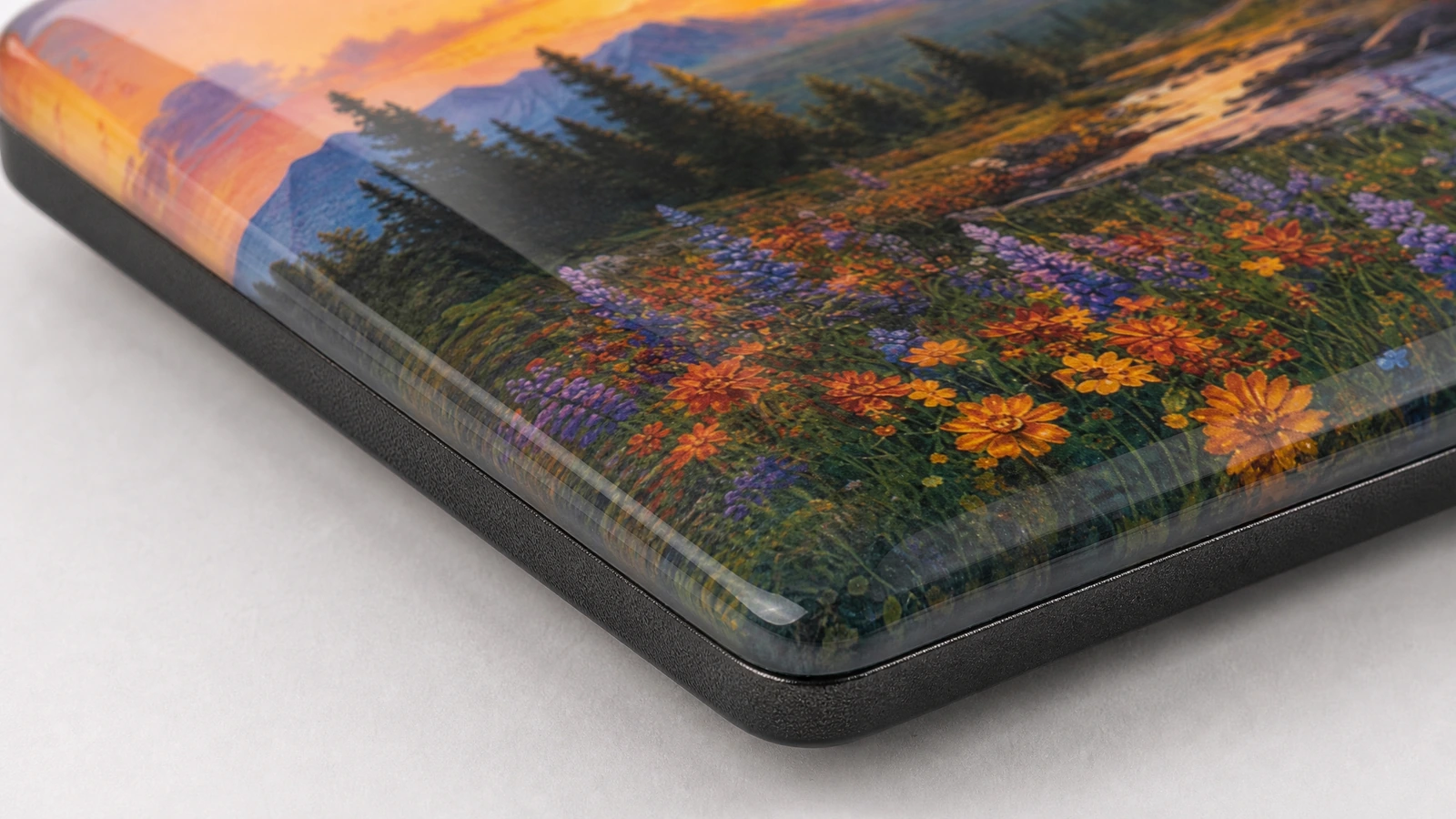
Check the intended appliance or display panel rather than assuming every metallic-looking surface is suitable. A preliminary attraction check establishes only surface compatibility. Holding capacity and paper quantity depend on the finished physical dimensions, loading condition and sample validation; no capacity is established for this product.
How should artwork be prepared before sampling? ↑
Provide the original artwork rather than a screenshot whenever possible. Include the intended finished dimensions, outline and all text that must remain readable. Separate instructions about the cut shape from instructions about the printed image so the supplier can identify any conflict before preparing a proof.
For photographs or other raster artwork, the supplied research recommends approximately 300 dpi at final print size as a preparation target. This is not a confirmed factory file specification. Request the actual file requirements, bleed and safe area before final export; changing a resolution setting does not restore detail missing from the original image.
- Text review: confirm spelling, dates, phone numbers and the approved version of the logo.
- Outline review: identify narrow features or closely placed details that require feasibility checking.
- Color review: provide the intended reference and agree how the physical sample will be assessed.
- Image review: inspect the crop and detail at the requested final size.
- Version control: assign a clear artwork revision to each design and its order quantity.
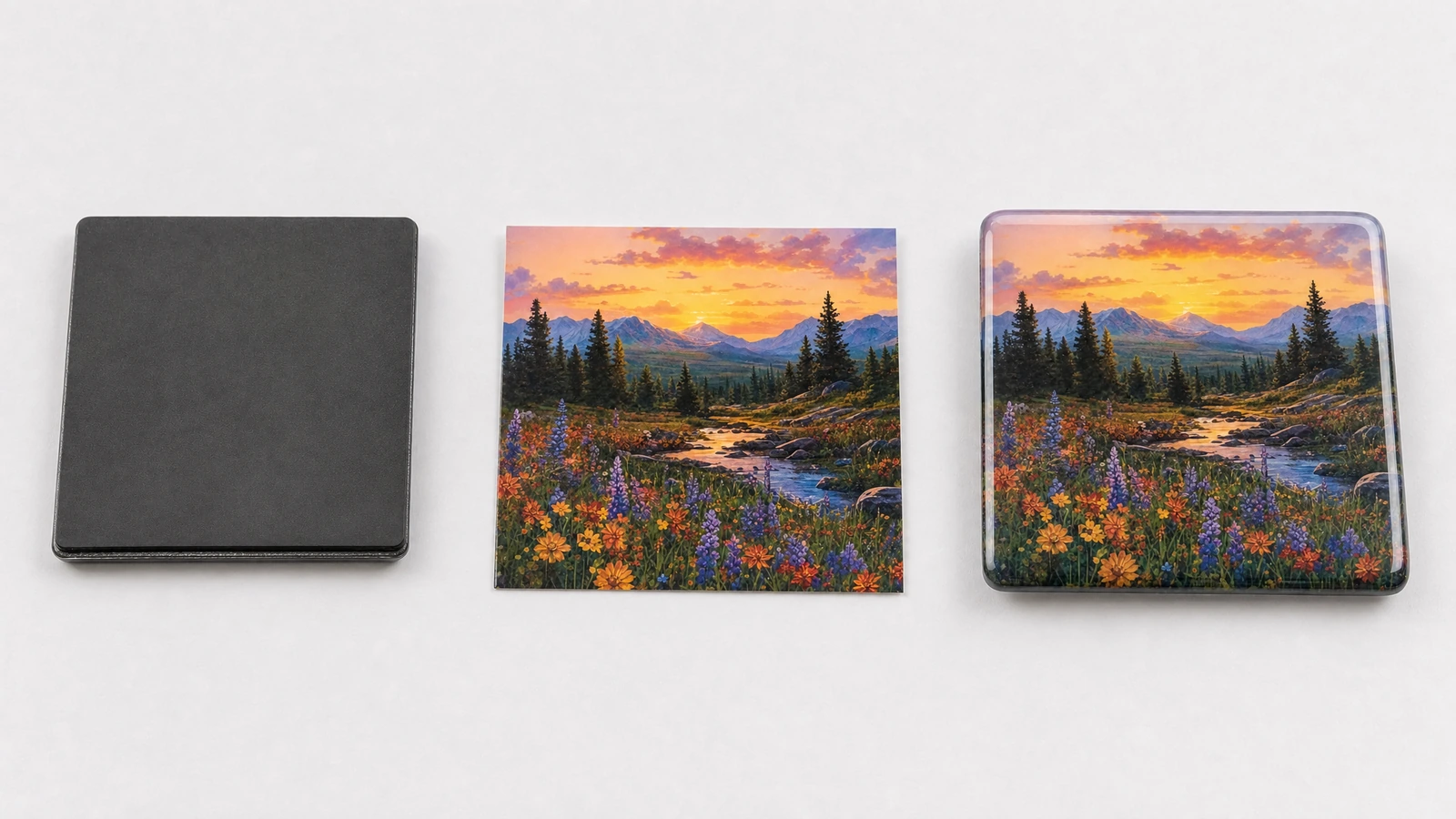
A digital proof is useful for confirming layout, orientation and wording. It does not establish the final resin appearance, color under the dome, edge finish or magnetic performance. Keep digital approval and physical sample approval as separate decisions, particularly where brand colors or small details matter.
What should the production approval process include? ↑
Printed domed magnets generally involve artwork preparation, printing, dome application, curing, magnetic assembly and inspection. Manufacturer descriptions such as A&H’s manufacturing overview[3] provide process context, but do not document the production route for this provisional reference.
- Confirm the construction. Identify the print substrate, dome material, backing and attachment method. Resolve any proposed material substitution before sampling.
- Approve the artwork. Check the production proof against the requested dimensions and design revision.
- Review the physical sample. Examine the printed face, dome, edges and magnetic assembly together.
- Set acceptance criteria. Agree the inspection conditions, tests and treatment of unacceptable results.
- Release the defined order. Link the approved sample to quantities, design allocation, packaging and the agreed schedule.
Curing time must follow the selected material system and actual production conditions. Do not transfer a DIY resin recipe, mixing ratio or demolding time to an unspecified commercial dome. The quotation should distinguish sample preparation, production after approval and transportation instead of presenting them as one ambiguous delivery promise.
Retain the approved sample or an agreed reference record. If artwork, resin, substrate, magnetic backing or packaging changes later, identify the change explicitly and determine what must be rechecked. A reorder with revised construction should not silently inherit an earlier sample’s approval.
Which checks make sample approval meaningful? ↑
Inspect appearance and attachment separately
Use an agreed viewing setup to inspect bubbles, dust, surface marks, uneven edges and print defects. Record the defect location and whether it obscures a critical design element. A bubble over a face or logo deserves a clear acceptance decision rather than a vague discussion about “handmade character.”
Inspect the back independently for lifted edges, separation and uneven contact. Agree the sample quantity, inspection conditions and acceptance criteria before testing. There is no supplied basis for claiming a particular pass rate, universal bubble allowance or completed inspection program.
| Check | Record in the inspection plan | What it establishes |
|---|
| Appearance | Viewing conditions, defect locations and approved reference | Whether the sampled finish meets agreed visual criteria |
| Dimensions and weight | Measured mm and g values with sample identification | Whether the sample matches the proposed construction |
| Vertical holding trial | Surface, orientation, loading condition, observation period and movement | Performance in that defined sample setup |
| Attachment integrity | Agreed handling or adhesion method and observed separation | Whether the assembled layers remain attached under that method |
| Environmental assessment | Exposure method, duration and before-and-after condition | Evidence limited to the tested construction and conditions |
| Pack-out inspection | Design allocation, quantity and protective arrangement | Whether the shipment matches the approved packing instructions |
A useful test record includes both the method and the outcome. If a pull-force measurement is reported in N, retain its setup and direction; do not treat it as an automatic paper-holding rating. Functional capacity still depends on physical dimensions, loading condition and sample validation.
Keep durability claims tied to the correct test object
Corrosion testing of magnetic components can be valuable, but it is not a substitute for testing a decorative assembly. K&J Magnetics’ corrosion investigation[4] concerns magnets and their coatings, not the verified life of this printed dome product.
The same boundary applies to adhesion results. An industrial epoxy coating test document[5] is evidence about its specified specimen and method. It does not certify the bond between a printed face and magnetic backing. Have the testing provider select a method appropriate to the actual layers and substrate.
For this reference, waterproofing, scratch resistance, UV stability, non-yellowing performance and service life remain unverified. Where these properties affect purchasing, request material information and an appropriate test proposal. Avoid substituting an outdoor-use promise for an indoor decorative brief.
Include safety, chemical documentation and care instructions
Identify the intended users and sales market before finalizing the design. Ask how magnetic components are retained and how detachment will be assessed. Decorative appearance, an epoxy covering or a “not a toy” label should not be treated as evidence that the construction has passed applicable safety requirements.
Request documentation tied to the supplied materials and finished product where relevant. No certification, food-contact suitability or environmental credential is established here. For EU sales, include a review of applicable REACH obligations; do not treat a generic supplier certificate as a complete product assessment.
Agree care wording with the selected construction. The supplied research suggests gentle wiping, avoiding abrasive cleaners, prolonged sunlight, heat and impacts. These are care considerations, not a lifespan guarantee. Recycling or biodegradability claims likewise require product-specific support and an identified disposal route.
How do you compare formats, quotations and delivery plans? ↑
Compare the presentation before comparing the price
| Format | Design direction | Purchasing question |
|---|
| Printed epoxy-domed | Printed imagery beneath a raised glossy face | Does the approved dome preserve the intended image and readability? |
| Flat flexible | Flat printed presentation | Would a simpler face meet the campaign brief? |
| Acrylic | Artwork presented with a rigid transparent layer | Is that construction preferable to a poured dome? |
| Molded PVC or rubber | Raised shapes and molded design features | Can the artwork be adapted to the proposed molding process? |
| Metal or enamel | Metal-based collectible styling | Do tooling and finish requirements suit the design? |
This is a format-selection guide, not a ranking of durability or magnetic strength. Decorative material alone does not establish holding capacity. Compare actual proposed constructions and samples rather than assuming that a metal face holds more or that a clear face is scratch-proof.
Make quotations comparable
Use the same drawing, artwork revision, quantities and packaging brief for each quotation. Request separate identification of unit price, setup or tooling if applicable, sampling, packaging, testing and freight. General wholesale prices in market reports are not a price commitment for this product.
Minimum order quantity and production time have not been verified. Ask for the minimum per design, any conditions for combining designs and the point at which production timing begins. For a fixed event date, confirm the approval deadline and transport allowance rather than treating dispatch as arrival.
Do not assume that printed domed construction requires the silicone mold used for a sculpted resin item. Conversely, do not assume every outline is free of setup charges. The supplier should explain which proposed features create additional work and identify those charges in the quote.
Plan packaging, shipping and repeat orders together
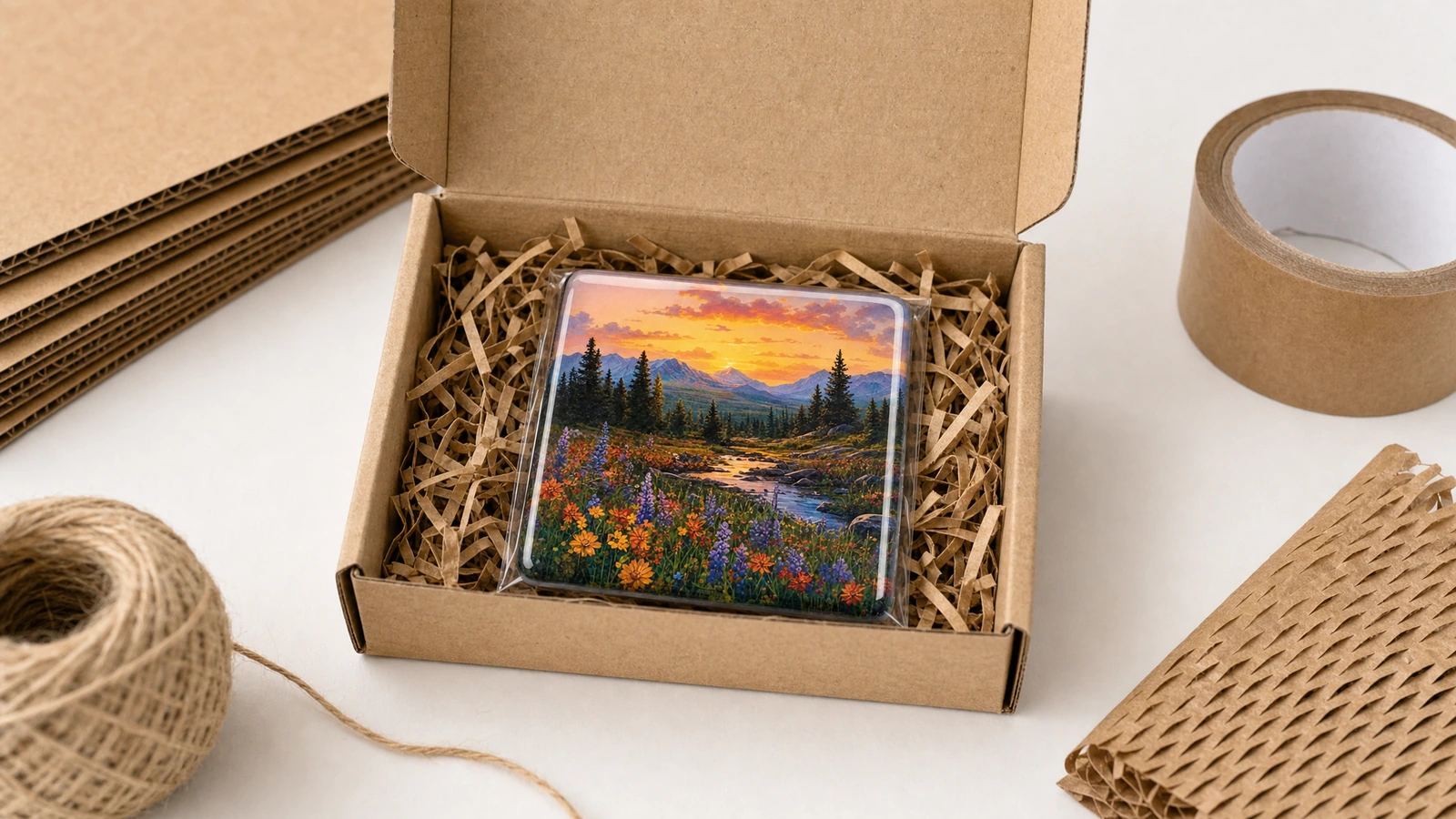
Specify whether the magnets will be distributed individually, placed on retail cards or presented as gifts. Ask the supplier to propose protection for the domed faces and edges. Packaging examples such as individual bags or boxes are requests for evaluation, not confirmed inclusions.
Request a packing specification showing design allocation, product protection and shipment identification. Carton capacity and unit fit depend on actual product dimensions, packing configuration and sample validation. Freight estimates should use confirmed packed measurements and weight rather than a guessed magnet weight.
Agree how damage, shortages and incorrect designs will be documented and resolved before placing the order. For repeat purchases, retain the artwork revision, approved sample, construction record and packing instructions. That record gives both parties a specific reference when evaluating consistency.
Key takeaways for a better purchasing decision ↑
- Choose the correct product identity. This reference is a printed epoxy-domed fridge magnet, not a sculpted casting or an industrial epoxy-coated magnet.
- Approve appearance and function separately. A digital proof confirms layout; a finished sample is needed to assess the dome, attachment and intended use.
- Keep commercial terms explicit. Product-specific MOQ, production time, unit weight and pricing require a quotation; no verified values are currently supplied.
- Relevant small-magnet requirements are scope-dependent. — Below 50 kG² mm² for loose or separable magnets that fit the specified small-parts cylinder in products covered by the rule (Source[6]). Reviewed September 21, 2026. Applicability depends on intended use, marketing and construction; this is not a blanket requirement for every fridge magnet. Toys covered by the separate toy standard follow that framework.
- Request evidence that matches the finished product. Component coating tests, other sellers’ reviews and generic material claims do not establish this product’s performance.
Turn your design into a clearly specified quote request ↑
A useful custom magnet order starts with a clear visual brief and ends with an agreed physical reference. Define the artwork, finished dimensions, quantity per design, intended surface, packaging and destination. Flag any required functional or environmental tests before sampling so the quotation reflects the product you actually need.
Request a quote for NSKU-740-01 with your artwork, target dimensions, quantities, packaging requirements, delivery destination and required arrival date.




The information below is required for social login
Sign In
Create New Account