SEO title: Custom Leather Refillable Notebooks | Zigpac
Meta description: Plan custom genuine leather refillable notebooks for business gifts. Compare refill systems, branding requirements, sample checks, and quote essentials.
Custom leather refillable notebooks combine a genuine leather cover with replaceable paper inserts. Keep the personalized cover when the pages are full, and specify the refill dimensions, fastening system, paper, and branding around how the notebook will actually be used.
For corporate gifting, employee welcome packs, and branded stationery collections. A refillable notebook offers a different starting point from a disposable event notebook: the cover and the writing paper serve separate roles. For meeting notes, prioritize writing comfort. For client gifts, focus on presentation and personalization. For retail collections, make replacement inserts part of the purchasing decision from the beginning.
A leather gift can look convincing in a photograph and still disappoint in use. The replacement insert may protrude, a closure may press beneath the writing surface, or a logo may disappear against the chosen finish. When these details remain unresolved until delivery, the buyer inherits the problem—and the recipient experiences it every day.
The practical solution is to specify the complete notebook rather than approve the cover alone. Start with the intended refill, assess the leather and branding together, and approve a loaded physical sample before committing to the order. That connects the gift’s appearance to the everyday experience it is meant to deliver.
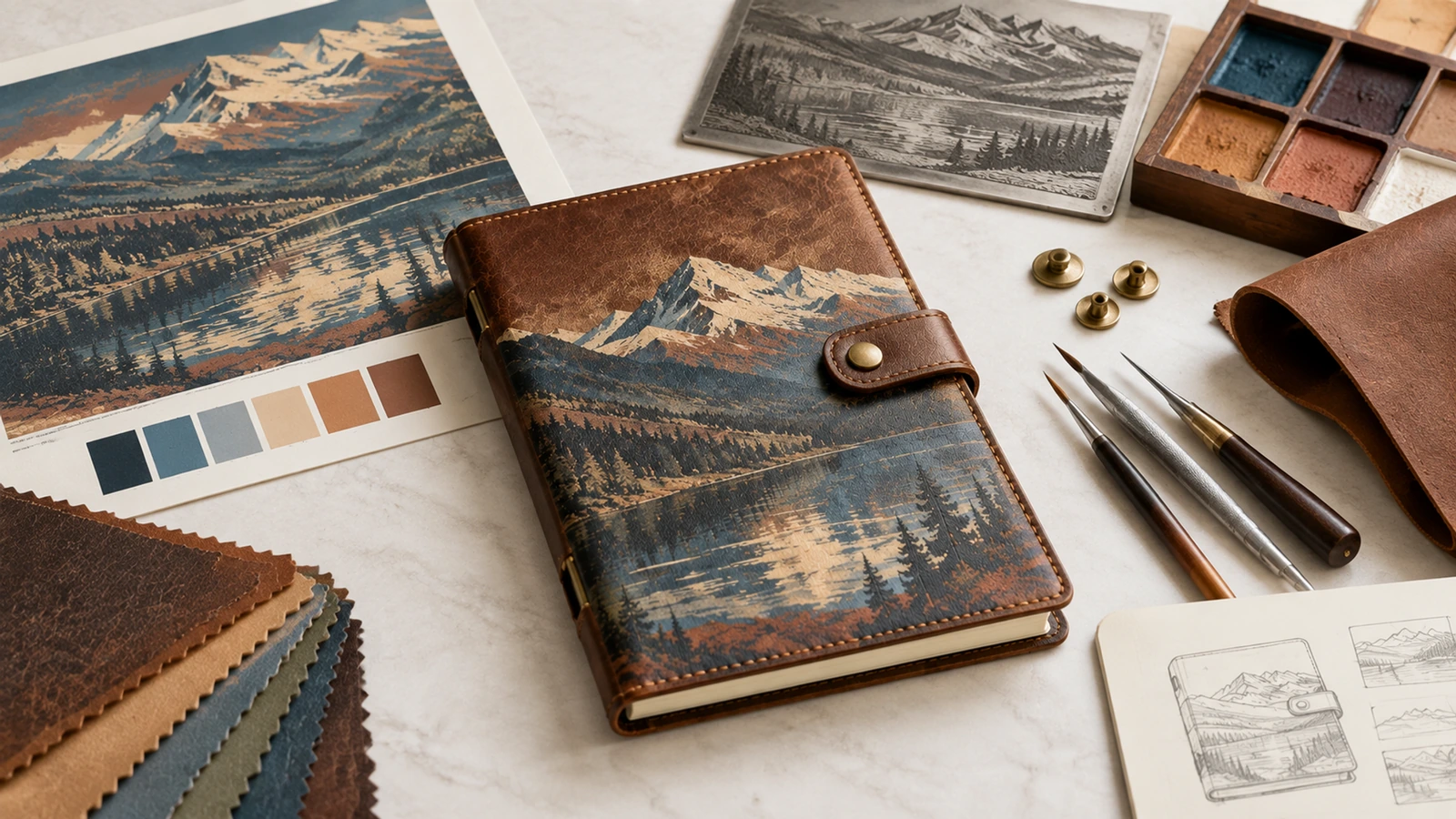
Illustrative concept images show purchasing considerations, not approved specifications or included accessories.
Explore Your Notebook Specification
What makes this notebook genuinely refillable? ↑
The defining feature is a removable paper component: the cover remains in use while the filled insert is replaced. This differs from a conventional notebook whose pages are permanently attached to its cover. However, “refillable” does not describe one universal mechanism. Elastic retention, removable booklet sleeves, ring mechanisms, and rethreaded bindings involve different replacement routines.
The confirmed product identity is Custom Genuine Leather Refillable Notebooks, within Custom Notebooks and Custom Leather Notebooks. The provisional reference is NSKU-762-02. Genuine leather and refillability are established; a particular leather grade, animal species, tanning process, insert format, or closure is not established by that identity.
Specification status: September 30, 2026. Product-specific dimensions, paper specifications, included accessories, minimum order quantity, production time, unit weight, and test results have not been supplied. These remain quotation, sampling, or testing items. The configurations discussed below are buying options to evaluate, not a confirmed availability list.
How do you specify a refill that fits? ↑
Begin with the paper component the recipient will replace. Record its actual width, height, closed thickness, and binding construction in millimeters. An A5 label describes a familiar paper format, but it does not establish the outside dimensions of every finished notebook, the thickness of its binding, or the clearance required inside a sleeve.
Compatibility should therefore be approved against an actual insert or a complete dimensional drawing—not a brand name alone. If recipients need locally purchased replacements, identify the intended refill before developing the cover. If the project uses a proprietary insert, disclose that dependency and clarify how replacements will be ordered.
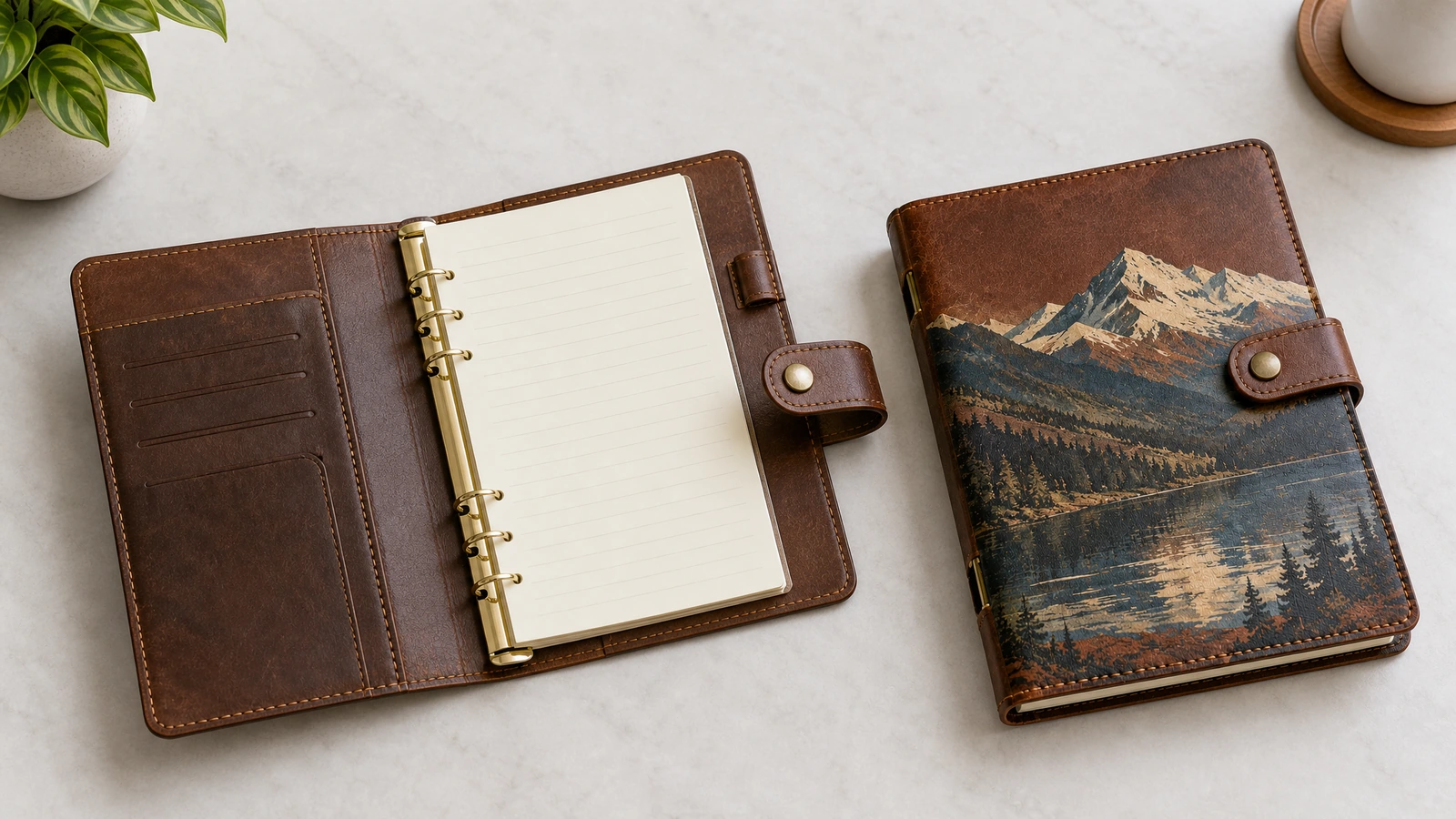
| Specification field | What to record | What the sample must establish |
|---|
| Insert dimensions | Finished width, height, and closed thickness in mm | Fit without protrusion or forced insertion |
| Retention system | Elastic, sleeve, rings, or rethreaded binding | Replacement method and secure retention |
| Paper specification | Paper identity, gsm, layout, sheets, and pages | Writing feel and suitability for intended pens |
| Loaded configuration | Requested inserts and accessories | Closure, page turning, and writing comfort |
| Replacement route | Named refill specification and purchase source | Whether the user can obtain a matching replacement |
This is a specification checklist, not a published specification for this SKU. Insert capacity and compatibility depend on physical dimensions, the loaded configuration, and sample validation; no maximum insert count is confirmed.
Test readability as well as fit. Check the ruling, paper color, printed content, and space near the binding. Write near the beginning, middle, and end of the insert to identify interference from knots, rings, seams, or closures. A cover that closes neatly is not automatically comfortable to write in.
Make the leather, finish, and closure work together ↑
“Genuine leather” does not by itself specify full-grain construction, vegetable tanning, or a particular surface treatment. For procurement, record the leather description, thickness, finish, lining, and backing separately. Ask for supporting material documentation when a more specific description is important to your gift positioning or retail labeling.
Where material identity requires laboratory confirmation, ISO 17131:2020[1] describes microscopic identification of leather. Its scope does not establish animal species, and citing the method is not evidence that this notebook has been tested.
For US-facing descriptions, the FTC Leather Guides[2] address misleading composition and performance representations. Identify leather components accurately and disclose relevant non-leather materials that resemble leather. Do not infer “waterproof,” “scratchproof,” or a guaranteed service life from the product name.
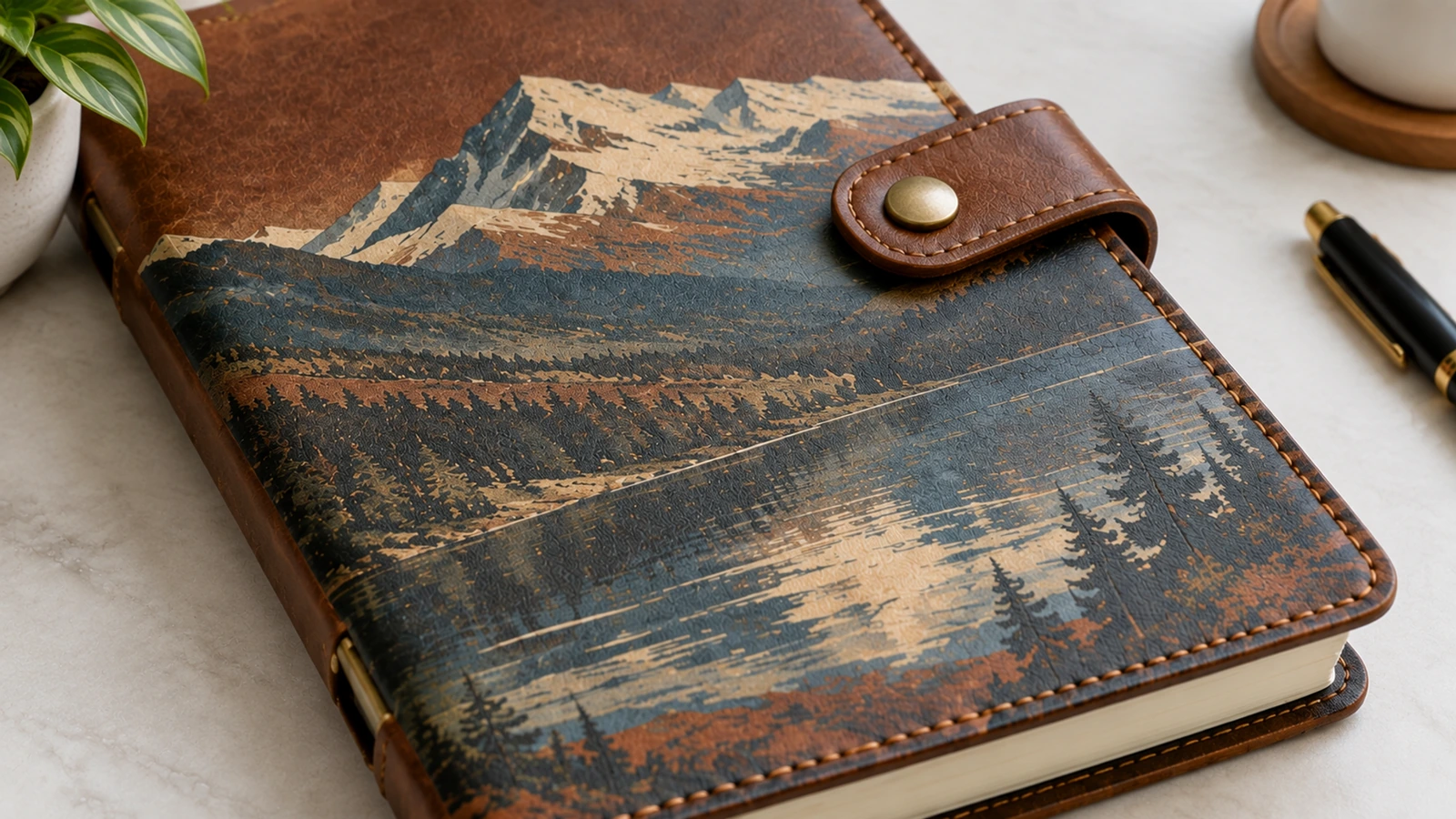
Review color on physical material rather than a screen alone. Record an approved color reference and the natural variation acceptable for the order. Distinguish variation in grain from defects such as holes, deep cuts, loose stitching, or damaged edges. A distressed appearance should be intentional, not an explanation for an unexpected defect.
Closure selection must consider the loaded notebook. Evaluate the pull required to close it, whether a fastening sits beneath the writing area, and whether a worn component can be replaced. Elastic, wrap straps, and snaps are possible design directions—not confirmed options for this SKU. Their suitability remains subject to construction review and sampling.
How do you approve personalization before production? ↑
Supply the exact logo or personalized wording with the requested location and finished dimensions. Separate a shared company logo from recipient-specific names: a correct logo proof does not validate a name list. Confirm spelling, capitalization, punctuation, and the relationship between each recipient and the corresponding gift.
Blind debossing, foil stamping, and laser engraving are approaches to discuss during quotation. Their appearance depends on the leather and finish. Review whether the mark remains readable at the intended size, particularly where fine details, small lettering, or low contrast could weaken the result.
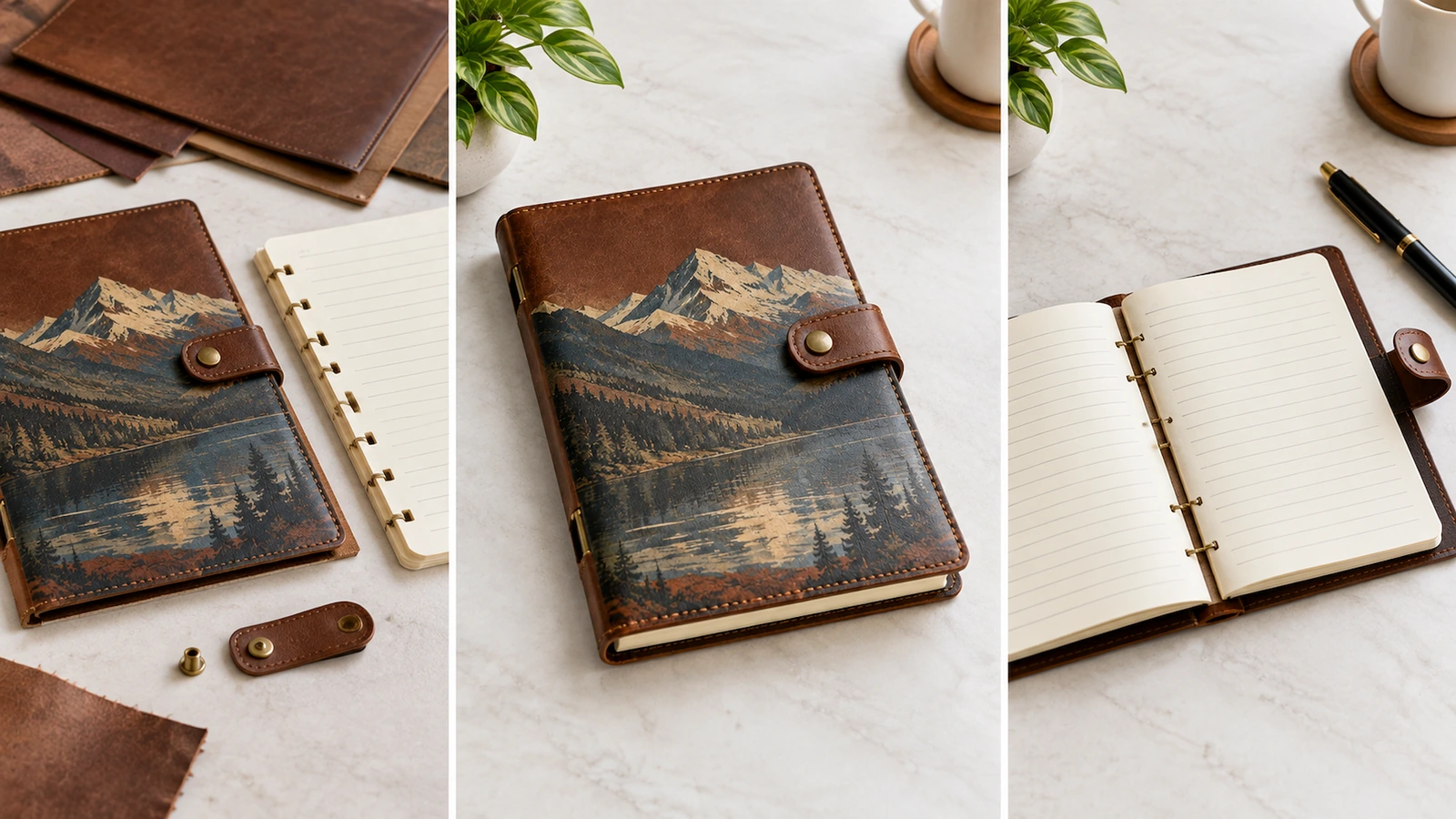
- Content: approve the final wording and the complete recipient list.
- Placement: show the mark relative to edges, seams, and the closure.
- Scale: review the design at its intended physical size.
- Process: assess a marking sample on the proposed leather and finish.
- Approval record: retain the agreed artwork version and sample reference.
A digital proof checks content and positioning; it does not establish impression depth, foil behavior, engraving contrast, or tactile quality. Define the treatment of supplier errors and customer-approved text errors in the order terms. Do not assume that every personalized item carries the same return or remake policy.
Turn the brief into an approved physical sample ↑
A useful sample represents the intended combination of cover, insert, branding, closure, and packaging. Approving these components independently can miss their interaction: a pen loop may obstruct the insert, a thicker paper block may prevent closure, or gift packaging may press against the personalization.
- Freeze the brief. Define the recipient, quantity, destination, required arrival date, budget, and replacement-insert expectations.
- Review construction. Confirm the refill mechanism, material description, dimensions, and requested accessories.
- Check the mockup. Use a dimensional mockup to assess positioning and clearance before treating the design as final.
- Evaluate the physical sample. Replace the insert, write in it, close it, and inspect the branding and packaging.
- Record approval. Attach the agreed specifications, tolerances, and acceptance criteria to the approved sample.
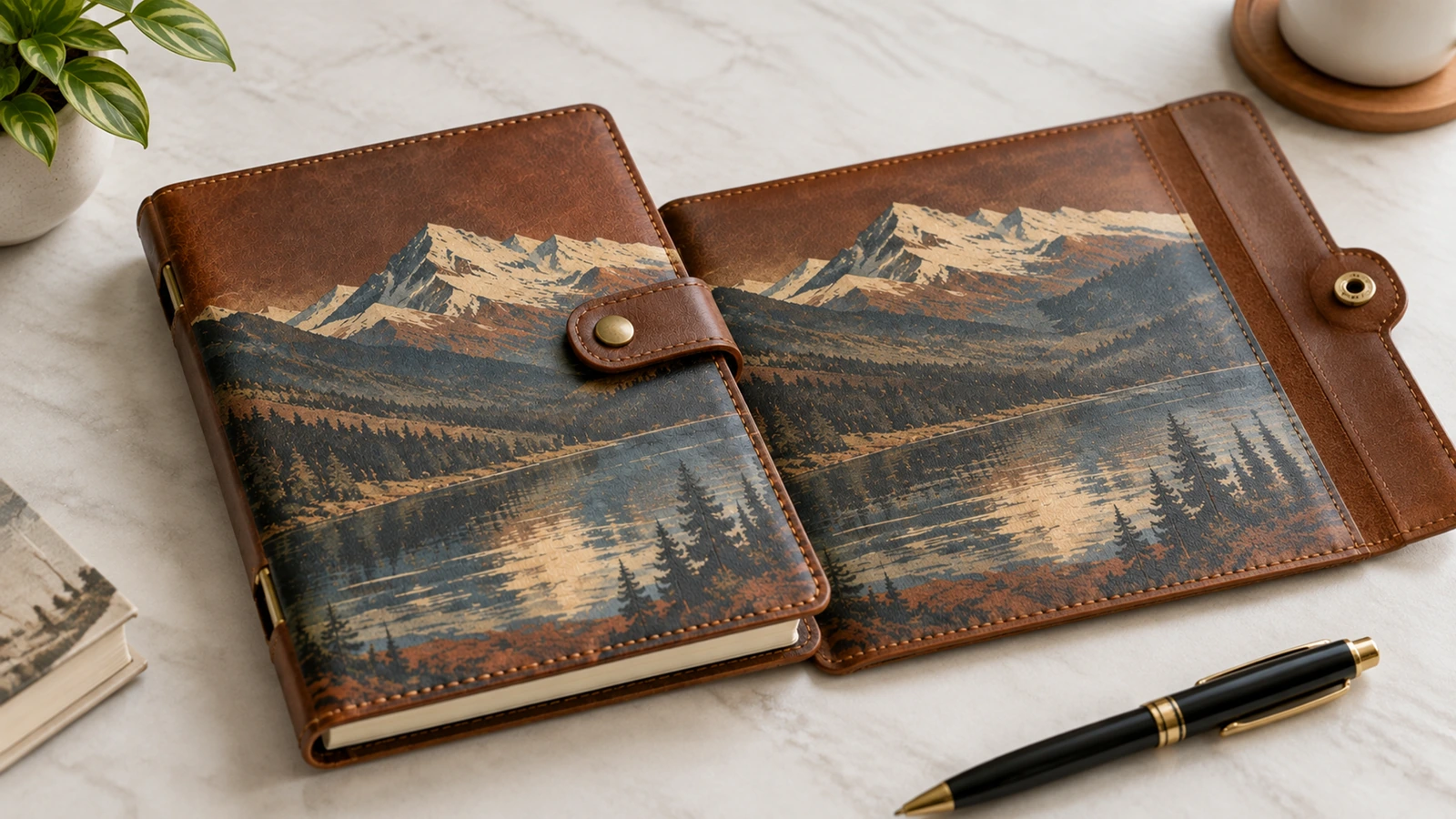
For the proposed production sequence, review pattern making, material preparation, cutting, edge treatment, assembly, branding, insert fitting, inspection, and packing. The actual sequence depends on the approved construction and marking method. This workflow is a purchasing reference, not a claim about an established production line.
Request separate sample and production schedules. The quotation should identify the approvals and commercial conditions that start each schedule, and distinguish production completion from delivery. No sample turnaround or production duration is confirmed for this product; another supplier’s published schedule is not a substitute.
Which quality checks protect the buying decision? ↑
Inspection should answer the concerns that would make the notebook unusable or disappointing: material mismatch, color transfer, loose retention, difficult replacement, uncomfortable writing, and inaccurate personalization. Agree on the method and acceptance criteria before the order, rather than relying on the phrase “premium quality.”
For leather color transfer, discuss dry and wet rubbing assessments and, where relevant, perspiration testing. The IULTCS leather test-method reference[3] identifies corresponding methods, including ISO 11640 for rubbing and ISO 11641 for perspiration. Agree the applicable edition, conditions, and acceptance levels with the laboratory; no passing result is claimed here.

| Check | Evidence to request | Acceptance boundary |
|---|
| Leather appearance | Approved material sample and defect examples | Separate accepted natural variation from damage |
| Refill and closure function | Loaded sample and repeated-use observations | Agree repetitions and performance criteria before testing |
| Personalization | Approved artwork and physical marking sample | Check wording, position, contrast, and finish |
| Paper performance | Writing samples using intended pen and ink combinations | Assess feathering, bleed-through, and show-through separately |
| Batch inspection | Agreed sampling plan and inspection record | Define defect categories and any AQL requirements |
These are proposed acceptance checks. They do not represent completed testing, a confirmed inspection service, or a universal notebook standard. Any test cost and inspection arrangement should be included in the quotation.
Paper weight alone cannot establish fountain-pen suitability. Record gsm, but also test the actual paper with the intended writing tools. For permanence claims, ISO 9706:2025[4] concerns unprinted document paper, not guaranteed survival under water, excessive heat, or other hostile storage conditions. No conformity claim is established for this notebook’s inserts.
Environmental documentation also needs a precise scope. Leather Working Group guidance[5] distinguishes certified leather-producing facilities from finished products. Request traceability for any proposed sourcing claim. Similarly, substantiate any FSC paper claim with applicable documentation rather than transferring a general supplier statement to this SKU.
Destination requirements belong in the brief. For EU sales, assess applicable leather chemical restrictions and supporting test documentation. California Proposition 65 requires a separate exposure and warning assessment; it is not interchangeable with an EU concentration limit. Products marketed to children also need a separate applicability review. None of these checks can be replaced by a generic “compliant” label.
Which construction best matches your project? ↑
Choose the replacement routine before comparing prices. A recipient who replaces complete notebooks has different needs from someone who reorganizes individual pages. A visually appealing binding can also require more handling than the recipient expects.
| Construction to evaluate | Potential use | Buying trade-off |
|---|
| Elastic-held booklets | Separate writing and planning inserts | Check retention, knot position, and replacement elastic arrangements |
| Sleeve-held notebook | Replacing a complete bound insert | Match notebook thickness and cover construction, not just paper size |
| Ring mechanism | Reordering or replacing individual pages | Verify hole pattern, mechanism operation, and writing clearance |
| Rethreaded binding | A traditional-looking refillable construction | Review the replacement instructions and effort required |
| Permanently bound notebook | A project without a refill requirement | Not equivalent to a reusable cover with removable paper |
The table compares construction principles, not confirmed configurations. For each refillable option, capacity and compatibility depend on physical dimensions, the loaded configuration, and sample validation.
Material comparisons should be equally specific. Full-grain, corrected-grain, and other leather descriptions require their own supporting specifications; they should not be inferred from “genuine leather.” PU and bonded materials are separate alternatives requiring accurate disclosure, not silent substitutions for the genuine leather product described here.
Compare quotations on matching contents. Separate the cover and insert from branding setup, personalization, packaging, samples, testing, inspection, and freight. A cover-only price and a boxed notebook price are not comparable. The lowest initial unit price may also omit the replacement parts or inserts needed for continued use.
Refillability is not a guaranteed financial saving. Its value depends on writing frequency, replacement-insert prices, and whether the cover continues to meet the user’s needs. Nor does it establish a quantified environmental benefit: retaining the cover is the design mechanism, while lifecycle claims require separate evidence.
Plan packaging, delivery, and replacement inserts together ↑
Define the delivered set explicitly: cover only, cover with an insert, or a proposed gift presentation. Pens, spare elastics, cards, sleeves, and boxes should appear as separate requested items until confirmed. For named gifts, specify how the recipient identity will remain associated with the correct notebook during packing and distribution.
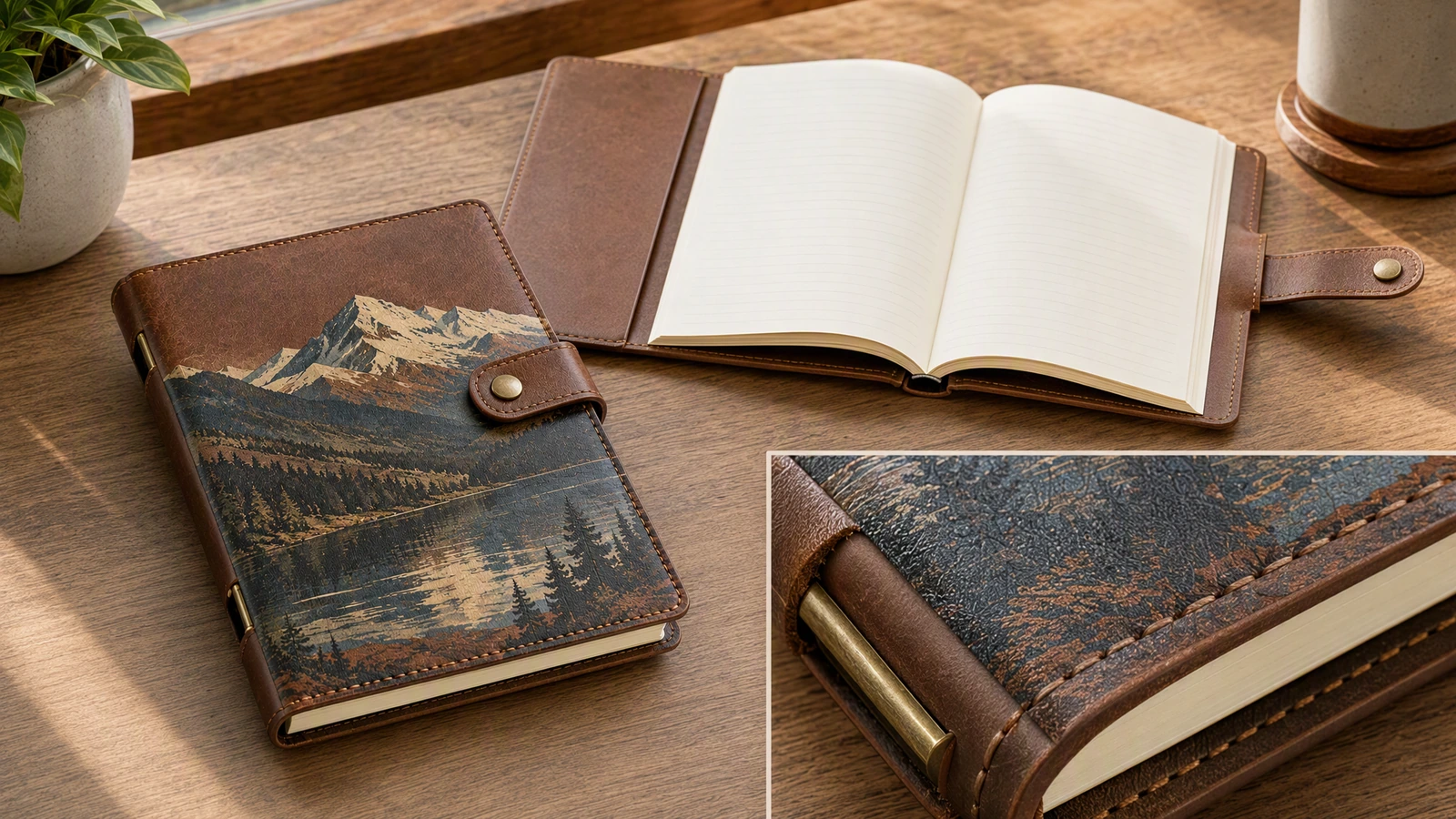
Ask the quotation to distinguish production, inspection, transport, and customs assumptions. Confirm whether freight, duties, and taxes are included under the agreed delivery terms. Do not treat a production estimate as a guaranteed arrival date, or assume a general website shipping statement applies to the specific order.
For repeat orders, retain the approved insert dimensions, binding specification, paper reference, artwork version, and material sample. Request replacement instructions appropriate to the chosen mechanism. Recheck later insert batches against the approved cover so that a change in paper thickness or binding does not undermine compatibility.
Care instructions should match the selected leather finish. Avoid presenting a universal conditioning schedule before the material is confirmed. Define the process for reporting defects and the agreed remedy for incorrect personalization, structural faults, or specification mismatch; no particular warranty or return period is established here.
Keep these purchasing essentials in view ↑
- Start with the replaceable component. Specify actual insert dimensions, binding, and a practical replenishment route before approving the cover.
- Separate product identity from optional specifications. Genuine leather and refillability are confirmed; grade, finish, accessories, and branding execution require project confirmation.
- Validate the loaded sample. Capacity, compatibility, closure, and writing comfort depend on physical dimensions, the loaded configuration, and sample validation.
- Keep commercial terms explicit. MOQ, production time, unit weight, and delivered cost remain quotation items because product-specific values have not been supplied.
- Require evidence for performance and sourcing claims. A named test method or certification scheme is not a passing result or product certificate.
Build your quotation around the actual user ↑
A successful refillable leather notebook project connects the recipient’s writing habits with a clearly specified cover, replaceable paper, readable personalization, and practical presentation. An approved physical sample makes those choices tangible before the order moves forward.
Request a project quotation from Zigpac with your quantity, intended refill dimensions or sample, leather requirements, logo artwork, packaging brief, destination, and required arrival date.




The information below is required for social login
Sign In
Create New Account