


 Blog PDF for offline reading
Quick answer: For incentive trips, roadshows and conferences, choose a full-grain leather cover in a slim or pocket format that fits the bag you are handing out. Pick a closure that holds shut in a packed bag, such as replaceable elastic or a well-set snap, rather than a decorative wrap cord. Use standard-size refillable inserts so the journal stays in use after the trip. Pack it with a ballpoint and a printed itinerary insert, and keep liquid leather balm out of carry-on kits.
If you plan corporate gifts, incentive trips or multi-city events, your leather journal travel decision is less about how the cover looks on a welcome table. It is about whether the journal still gets opened on day four in an airport lounge. This guide is for planners buying for groups. It covers portable formats, how covers and closures survive the road, carry-friendly sizing, and how to build the journal into the travel kit and the itinerary so attendees use it rather than leave it in the hotel room.
Why Most Travel Journals Get Left Behind
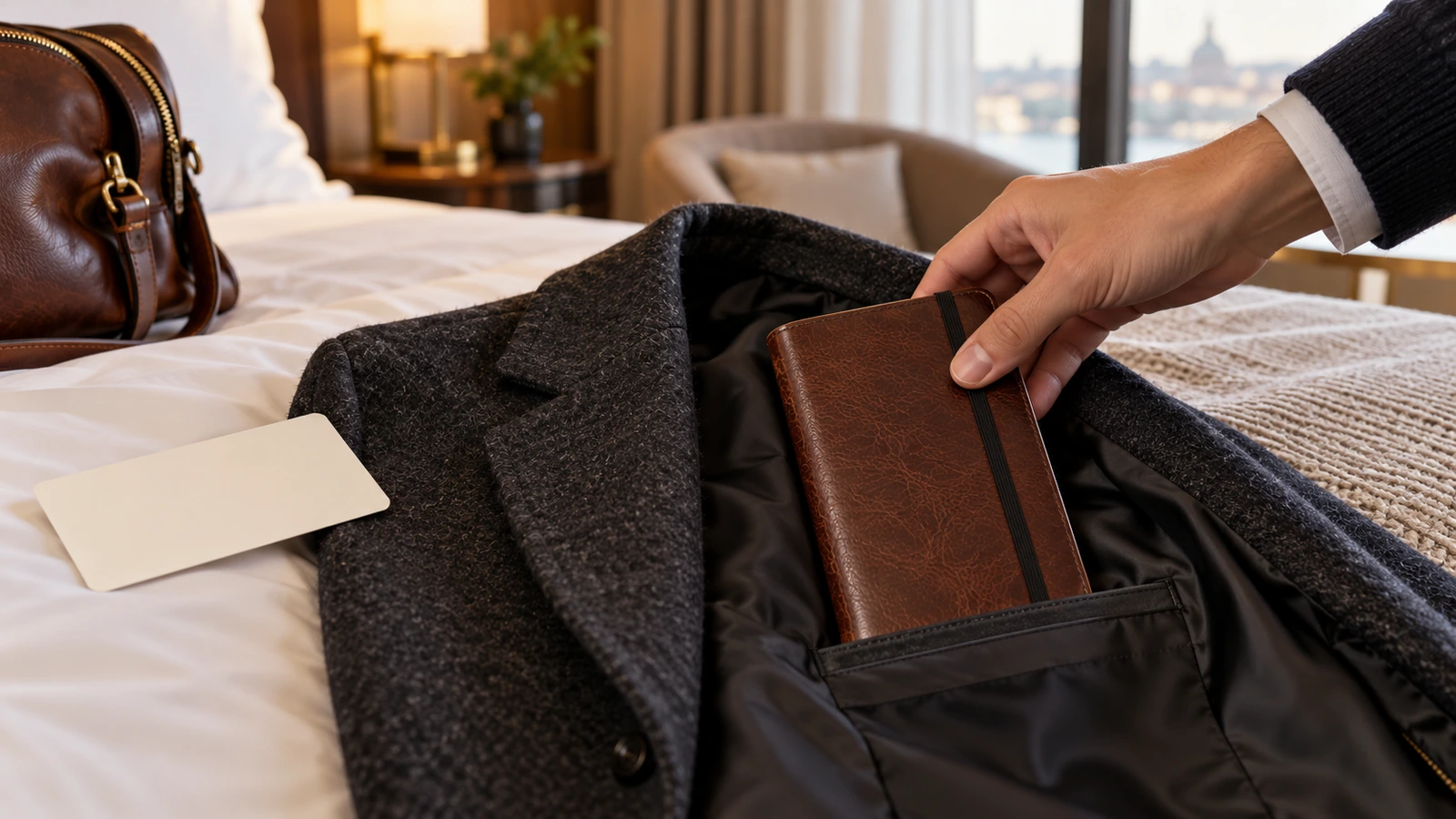
The usual failure is size. A journal chosen to look generous at a gala dinner often turns out too tall for the sling bag in the same welcome kit and too stiff for a jacket pocket. Attendees then do the sensible thing and leave it in the suitcase. The gift was paid for, but the logo never leaves the room.
The second failure shows up in transit. Owner reviews of refillable leather journals keep returning to the same complaints. Wrap-around cords stop pulling tight after a few weeks of daily use. Elastics stretch. Snaps break when the rivet was poorly set. Low-cost covers turn out to be vinyl laminated over thin hide and peel at the fold. One verified buyer of a sewn leather journal bought it specifically because their usual notebook could not survive camping and motorcycle travel, then treated the cover with wax and noticed dye coming off on the cloth. That is a useful warning for any trip with rain, humidity or light-colored bags.
The third failure is the paper. A bound leather notebook that cannot take new pages has a short life. One independent reviewer, writing about a well-known bound leather pocket notebook, called the lack of refills its biggest drawback because "a short-use leather item does not appeal" to many owners[1]. For a company gift, a journal that ends when the trip ends gives the brand only a few days of visibility.
The fix is to treat the journal as a piece of travel equipment. Size it to a carry spot, build it from materials that tolerate handling and weather, and load it with pages that match the trip.
What Counts as a Leather Travel Journal
A travel leather journal is a leather cover that the traveler keeps, with paper inserts held in place by elastics, a sleeve or a binding system. When the pages fill up, the inserts are swapped. Independent coverage of the slim, elastic-strung format praises how several notebooks can sit in one cover at once, so a planner insert, a notes insert and a pouch can all ride together, and any one can be replaced mid-year without replacing the cover[2]. For a team trip, this means one insert can carry the itinerary and another can carry notes, and both can be refilled afterward.
The word "leather" has a specific technical meaning. The international vocabulary standard defines leather as hide or skin tanned so its fibre structure stays largely intact. Any surface coating must be no thicker than 0.15 mm, and material made from shredded or powdered hide re-formed into sheets is not leather[3]. The same standard defines full-grain leather as leather that keeps its entire grain, with none of the surface removed by corrective sanding. For travel use, this matters because full grain is the layer that scuffs, darkens and recovers, while heavily coated and bonded materials tend to crack at the spine fold.
If your team is US-based, wording also matters. The Federal Trade Commission's guides cover ring binders and similar leather articles. They treat the unqualified word "leather" as deceptive unless the product is leather in all substantial parts, and they expect look-alike materials to be disclosed as imitation leather, vinyl or similar[4]. When a supplier's label is unclear, microscopy is the preferred method for telling leather apart from other materials[5]. You can ask for it on a sample before committing a whole team order.
How to Plan a Leather Journal Travel Kit in Six Steps
Step 1: Match the format to trip length and writing load
Start with how much attendees will actually write. A short incentive trip built around excursions needs a small daily log and space for a few notes. A two-week roadshow with client meetings needs real writing room and probably a second insert. A conference week usually sits in between, with session notes during the day and very little writing in the evening. Write down the expected pages per day before you look at covers, because this number decides whether one insert is enough or whether a two-insert cover is worth the extra thickness.
Step 2: Choose the carry spot before the cover
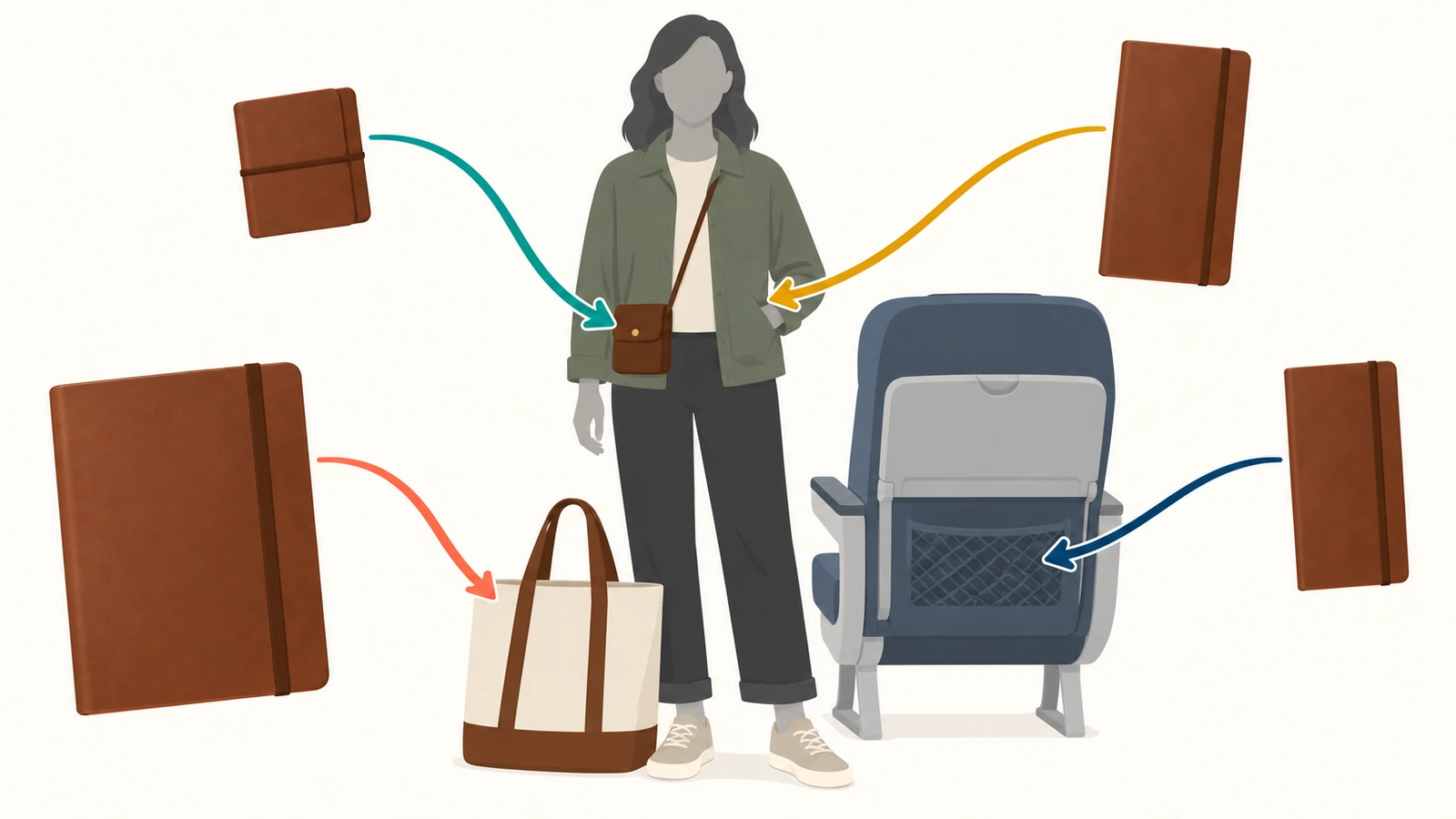
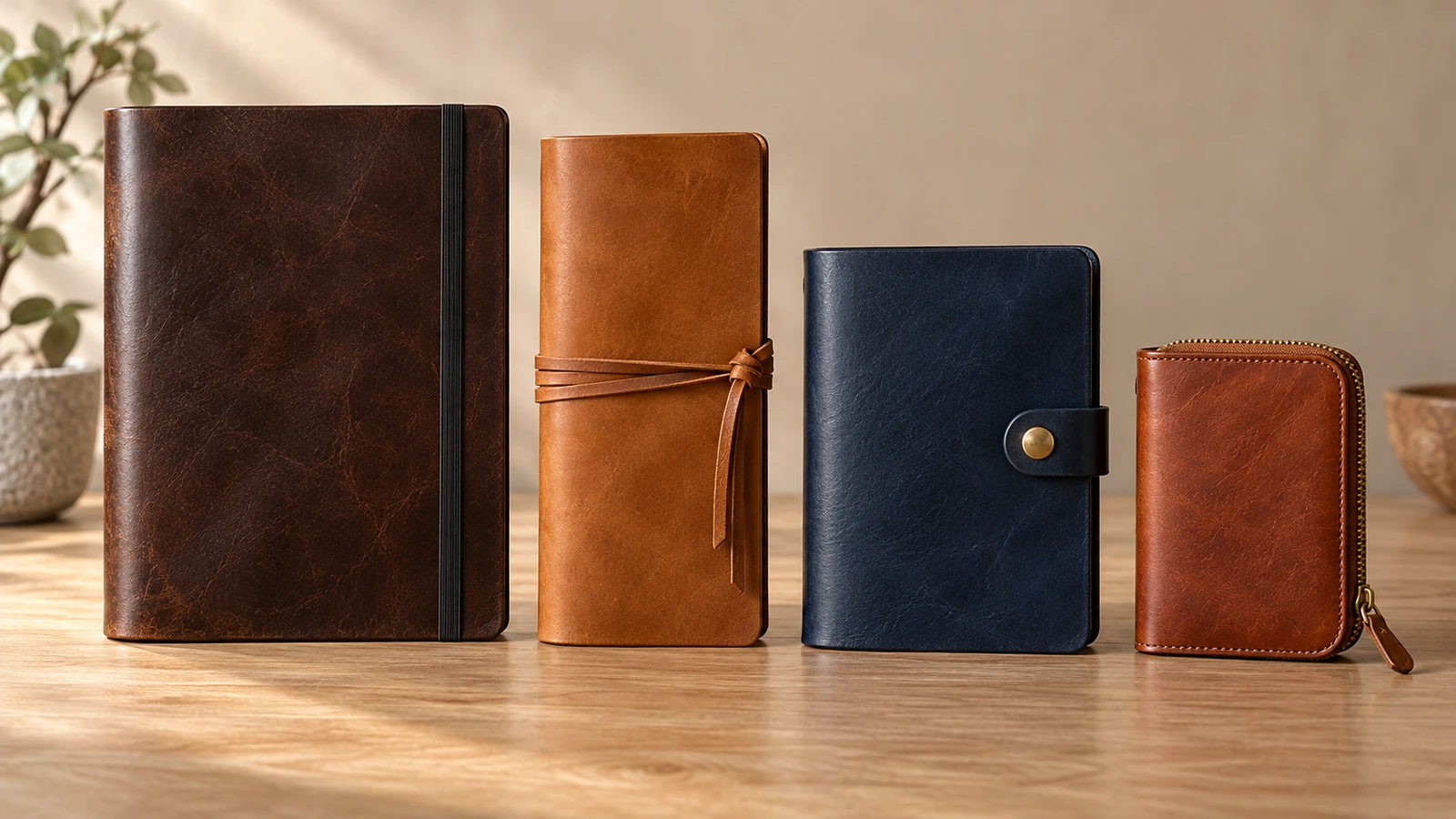
Decide where the journal will live during the trip: a jacket inner pocket, the crossbody bag in the welcome kit, a seat-back pocket on the coach, or a conference tote. Then measure that spot and check the journal against it with inserts loaded, not empty. A slim, tall format slides into jacket pockets and seat pockets. A pocket or passport-style format fits small sling bags. An A5 cover belongs in a laptop bag or tote. The international A5 sheet is 148 × 210 mm, and the common slim traveler-style insert is about 110 × 210 mm. Both are tall, so the difference between them is width, and width is what decides whether the journal fits a jacket pocket.
Step 3: Pick leather that tolerates handling and weather
Full-grain or lightly finished top-grain cowhide is the practical choice for groups. Travel exposes covers to hand sweat, rain, sunscreen and rubbing against fabric bags, so dye transfer is a real risk. Ask whether the leather has been tested for colour fastness to rubbing. That is ISO 11640, which is listed with the other recognised leather test methods in the IULTCS method list[6]. Ask whether it was tested both dry and wet. For destinations with heavy rain, a waxed or oiled finish slows water marking. A raw, light vegetable-tanned hide will show every drop, and some attendees will see that as character while others will see it as damage.
If attendees are in Europe, check chromium compliance. EU rules have barred leather articles that touch the skin from containing hexavalent chromium at or above 3 mg/kg of the leather's dry weight[7] since 2015. A journal cover is held in the hand for hours, so ask for the test report on the leather lot.
Step 4: Choose a closure that survives a packed bag
The closure gets the most use and is the most common complaint. A wrap-around cord looks good in product photos, but reviewers consistently describe it as decorative once the leather softens. Elastic bands hold well and are cheap to replace, so include a spare in the kit. Snaps keep loose receipts and boarding passes in, but only if the rivet is set firmly, so test the snap repeatedly on samples. A zipper protects ephemera best and adds bulk and weight. Also check where the elastic knot sits. If it sits under the writing area on the back cover, it leaves a ridge that makes the last pages hard to write on.
Step 5: Match the paper and pen to travel conditions
Fountain pen users generally treat 80 gsm as the minimum and 90–100 gsm as the comfortable range for avoiding bleed-through. On a trip, though, the pen matters more than the paper. Fountain pens can leak with cabin pressure changes and are easy to lose, so a ballpoint or gel pen in the pen loop is the safer default for a group. Only describe the paper as archival if the mill can show it meets the permanence requirements of ISO 9706:2025[8]. The standard explicitly excludes paper stored in hostile conditions such as high humidity, so a beach resort trip is outside its scope regardless.
Step 6: Build the itinerary into the inserts
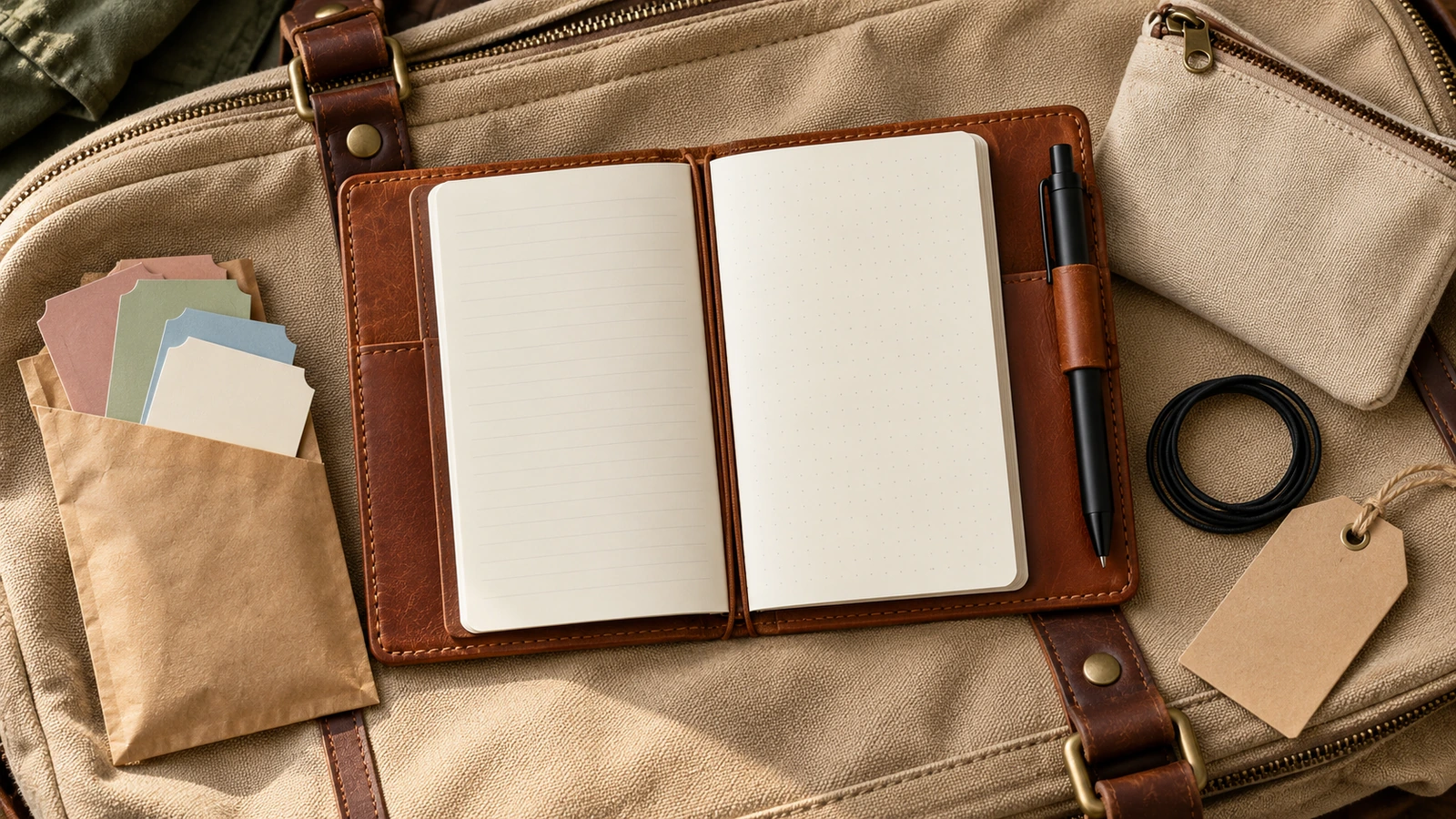
Journals that come preloaded with the trip get used. Print a slim insert with the day-by-day schedule, meeting points and emergency contacts, and pair it with a lined or dotted notes insert. Add a kraft pouch for tickets, receipts and keepsakes. Hand the journal out at check-in instead of on the final night, so it becomes part of attendees' kit from the first transfer. For multi-leg trips, consider a separate insert for each city that the group lead hands out at each stop. Put one blank spare insert in the welcome pack so the cover keeps being used after the trip.
Specifying the insert, approving personalization, sampling and quality checks are covered on our custom genuine leather refillable notebooks page, so they are not repeated here. Read it before you request a sample.
Keeping the Journal Working on the Road
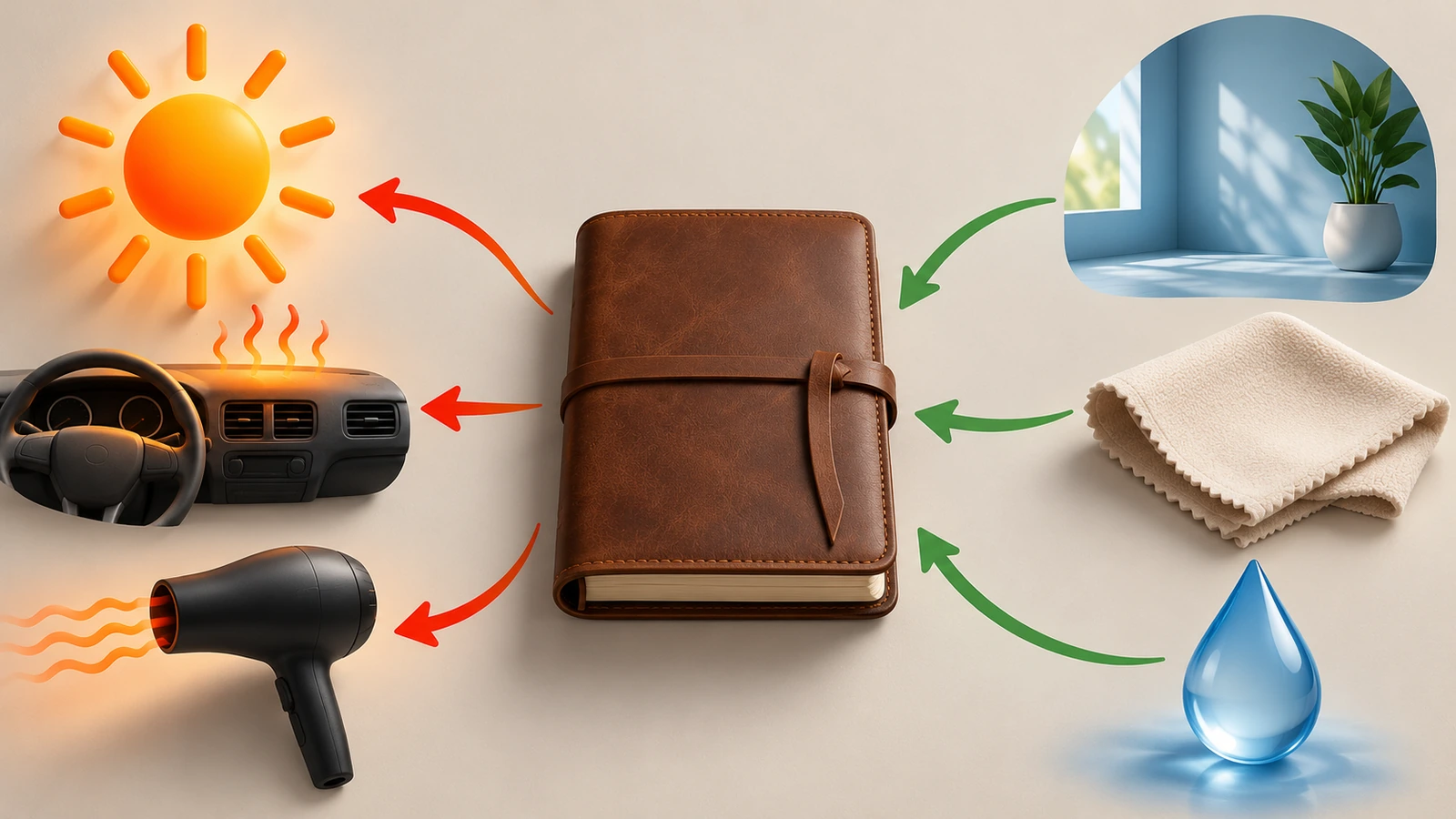
Leather on the road mostly suffers from heat and water. Museum care guidance for leather objects recommends a maximum of 25 °C, relative humidity between 45 and 65 percent, and small daily swings. It also advises keeping leather away from buffered acid-free materials, which are alkaline and can harm slightly acidic leather[9]. A journal is not a museum object, but those numbers show where the risk lies: a closed car or coach in summer, a damp beach bag, or a hotel room with the air conditioning switched off.
Give attendees a short care card with the itinerary. If the cover gets wet, blot it and let it dry away from heaters, and never use a hairdryer. Keep it out of glove boxes and dashboards. Accept that full grain will scratch and darken, and that this wear is expected rather than a defect. A small amount of leather conditioner every few months keeps the cover supple once people are home. Leave it out of the carry-on kit, because a balm counts as a cream at security.
If your gifting program makes environmental claims, use them accurately. The Leather Working Group certifies the tannery rather than the finished product, and its logo may only be used on an item if all the leather in it came from certified facilities[10]. The refill model gives you a more honest message to put in the welcome note: attendees keep the cover and replace only the paper.
Travel Formats and Closures Compared
Use the first table to shortlist a format for the trip type, and the second to choose a closure. Exact sizes vary by maker, so check every candidate against the bag you are actually giving out.
| Format | Best trip type | Natural carry spot | Writing room | Watch-outs |
|---|---|---|---|---|
| Passport / pocket | Excursion-heavy incentive trips, adventure travel | Sling bag, trouser or jacket pocket | Short daily log, lists | Too small for meeting notes; logo area is tight |
| A6 (half of A5) | City breaks, short roadshows | Crossbody bag, small tote | Moderate daily notes | Thick covers lose the pocket advantage |
| Slim traveler-style (about 110 × 210 mm insert) | Multi-city trips, conferences with sessions | Jacket inner pocket, seat-back pocket | Good; holds itinerary and notes inserts side by side | Does not take standard A5 refills; check elastic knot position |
| A5 (148 × 210 mm) | Client roadshows, training trips, sales kick-offs | Laptop bag, tote | Full meeting notes | Heavier; usually stays in the hotel on leisure days |
| Closure | Holds in a packed bag? | Field fix | Best for |
|---|---|---|---|
| Elastic band | Yes, until it stretches | Swap in a spare band from the kit | Most group trips |
| Wrap-around cord | Often not after the leather softens | Re-tie; little else | Desk or keepsake gifts, not transit |
| Snap | Yes, if the rivet is set well | None on the road; test before ordering | Trips with lots of tickets and receipts |
| Zipper | Yes, fully enclosed | None on the road | Ephemera-heavy trips; adds bulk |
FAQ
FAQ: Can attendees carry a leather journal through airport security?
A paper journal with a leather cover is ordinary carry-on stationery. The parts of the kit worth checking are pens, any liquids or creams such as leather balm, and bulky metal hardware that may get a second look at screening. Confirm current TSA guidance and the rules at your destination airports before you finalize the kit contents.
FAQ: Which size works best for a mixed group?
The slim traveler-style format suits the widest range of people because it fits a jacket pocket and still holds two inserts. If the agenda is mostly client meetings, A5 is the better choice. If it is mostly excursions, a pocket format gets carried more often.
FAQ: Will humidity or rain ruin the cover?
Short exposure rarely ruins full-grain leather, but it can leave marks and cause dye transfer. Choose a finished or waxed hide for wet destinations, ask for rub-fastness test results, and include a care card telling attendees to blot and air-dry the cover away from direct heat.
FAQ: Some team members avoid animal leather. What should we offer?
Offer a clearly labeled alternative-material version of the same format. In the US, look-alike materials should be disclosed as imitation leather or by their actual name rather than sold as "leather", so put the material on the gift card as well.
FAQ: How do we keep journals in use after the trip?
Use standard insert sizes that attendees can buy locally, include one spare insert in the welcome pack, and consider sending a post-trip refill with the photo recap. Because the cover is the part that lasts, each refill keeps the gift in use.
FAQ: Do we need compliance documents for European attendees?
Ask for test results showing hexavalent chromium below the EU limit for skin-contact leather. Also ask what tanning method was used, and request tannery certification if you plan to make sustainability claims in the gift messaging.
Key Takeaways
- Size to the carry spot, not the welcome table. — The A5 sheet is 148 × 210 mm, so A5 journals live in laptop bags, while slim formats fit jacket pockets (Source)
- Real leather has a measurable definition. — Surface coating must not exceed 0.15 mm, and re-formed hide fibre is not leather (Source)
- Label materials honestly for US teams. — 16 CFR Part 24 expects look-alike materials to be disclosed as imitation leather or vinyl (Source)
- Check chromium for European attendees. — Skin-contact leather must stay below 3 mg/kg hexavalent chromium (Source)
- Heat is the main threat on the road. — Leather care guidance caps storage at 25 °C and 45–65% relative humidity (Source)
Conclusion
A good travel journal is chosen backwards from the trip. Start with pages per day and the bag it has to fit, then choose leather that handles sweat and rain, a closure that stays shut in a full bag, and inserts that carry the itinerary. Once those are settled, the cover design is the easy part, and the journal is far more likely to come home in someone's jacket than stay in a hotel drawer.
When you are ready to turn a trip brief into a sample, see our refillable leather notebooks for corporate programs. Send us your group size, destinations, travel dates and the bag the journal has to fit, and we will quote against your actual brief.
Sources
- The Gadgeteer — Leather pocket notebooks review (2025-04-01) ↩
- NYT Wirecutter — Modular leather traveler's notebook review (updated 2026-07-30) ↩
- ISO 15115:2019 — Leather — Vocabulary ↩
- eCFR — 16 CFR Part 24, Guides for Select Leather and Imitation Leather Products ↩
- ISO 17131:2020 — Leather — Identification of leather with microscopy ↩
- IULTCS — IULTCS/ISO/EN Leather Test Methods (April 2025) ↩
- Commission Regulation (EU) No 301/2014 — Chromium VI in leather articles ↩
- ISO 9706:2025 — Paper for documents — Requirements for permanence ↩
- Western Australian Museum — Conservation manual: Leather ↩
- Leather Working Group — FAQs on certification and logo use ↩












The information below is required for social login
Sign In
Create New Account