SEO Title: Custom Laminated Paper Bags for Retail & Gifts | Zigpac
Meta Description: Plan custom laminated art paper shopping bags with clear finish, handle, artwork and sample requirements. Request a quote for your retail packaging project.
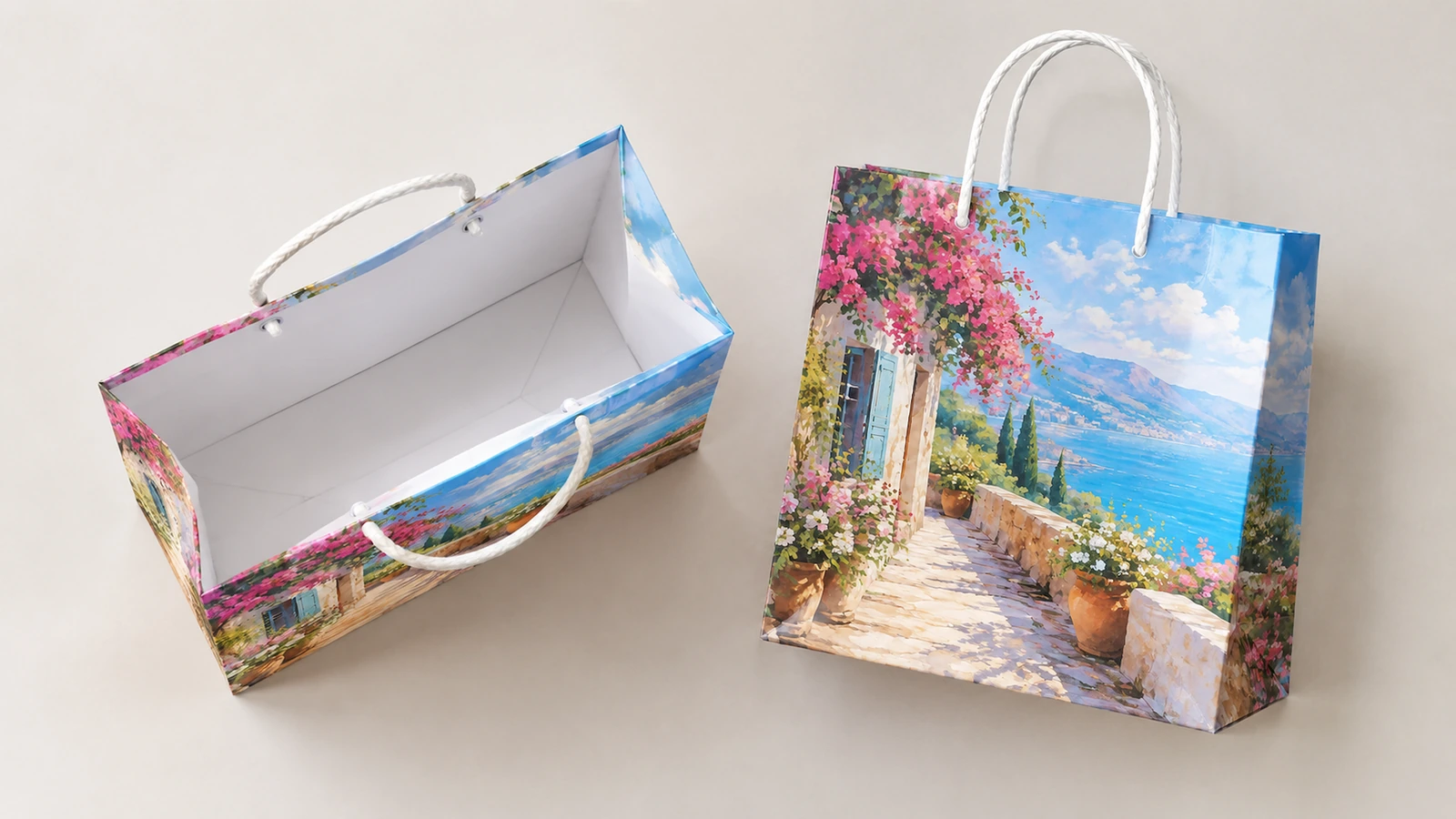
Custom laminated paper bags combine a printed paper body with a film-laminated surface for a coordinated retail presentation. For Custom Laminated Art Paper Shopping Bags, specify the dimensions, paper weight, finish, handles and reinforcement together. Confirm appearance through a physical sample and carrying performance through testing with the intended contents.
Product: Custom Laminated Art Paper Shopping Bags
Category: Custom Paper Bags > Custom Coated Paper Bags
Provisional product reference: NSKU-721-01
Which retail and gifting projects suit this bag? ↑
This product is a packaging direction for boutiques, beauty brands, apparel retailers and gift projects that want the shopping bag to complement the merchandise. The starting point is not simply a logo on paper: it is the relationship between the product, its primary packaging, the bag proportions and the finish customers see at checkout.
For a cosmetics counter, evaluate the bag around the actual boxed products and their arrangement. For apparel, include the folded garment and any tissue or inner packaging. For corporate gifts and events, establish the complete gift set before selecting the bag. Capacity, carrying weight and item count depend on physical dimensions, loading arrangement and sample validation—not on the product photograph.
Packaged bakery and coffee gifts require a separate decision about moisture, grease and food contact. Treat this art paper shopping bag as an outer presentation concept unless the proposed construction has been assessed for the intended food use. It should not be assumed equivalent to a food-service bag, liquid barrier pouch or insulated carrier.
Protect the presentation before committing to a production run ↑
A screen-approved design can still disappoint when the finished bag arrives. A brand color may look different beneath the selected film, small lettering may be difficult to read, or handles may conflict with the printed color scheme. These issues matter most when the packaging must match a coordinated launch or gift collection.
The commercial consequence is more than an unattractive bag: unusable packaging can delay distribution, consume storage space and create a dispute over what was approved. A glossy surface also cannot compensate for an unsuitable handle attachment, weak bottom construction or inadequate protection during transport.
The practical solution is to connect the artwork, material description, physical approval sample and acceptance criteria. Establish what must match, what variation is acceptable and which checks remain pending before authorizing bulk production. This creates a clearer purchase than relying on terms such as “premium,” “strong” or “luxury” alone.

Illustrative application concept; pictured contents do not establish capacity or a tested configuration.
Explore the product and purchasing requirements
What defines a laminated art paper shopping bag? ↑
The verified product identity is an art paper shopping bag with lamination. Here, “laminated” describes a film combined with the paper surface; it does not identify a single film chemistry, paper weight or performance grade. Those details belong in the proposed specification, alongside printing, handles, adhesive and reinforcement.
Gloss, matte and soft-touch are appearance or tactile directions to discuss during quotation. They are not interchangeable specifications. A water-based coating is a different finishing approach rather than another name for film lamination. Industrial paper-laminated woven sacks and laminated nonwoven totes are also different products; their performance data should not be transferred to this shopping bag.
No product-specific paper weight, dimensions, film thickness, load rating or test results are established for this reference. MOQ, sample timing, production timing and unit weight also remain to be quoted or confirmed. Published figures for other suppliers or unrelated paper bags do not define this product.
How do you specify fit, finish and handles? ↑
Start with the complete packed item
Measure the merchandise in its sale-ready state, including its box, wrap or protective insert. Record the proposed bag dimensions consistently as width × gusset depth × height in millimeters, and state whether they describe internal usable space or external dimensions. Include the intended loading arrangement so a supplier does not interpret a loose product measurement as the finished bag size.
Fit should be checked with a physical sample. Confirm that staff can insert and remove the merchandise without forcing the opening, that the contents do not distort the side folds, and that the handles remain usable when loaded. Any stated capacity or item count must follow this check rather than precede it.
Describe the construction in comparable fields
| Specification field | What to record | Confirmation required |
|---|
| Paper | Art paper grade and grammage in g/m² | Proposed material and sample feel |
| Dimensions | Width × gusset depth × height in mm | Internal or external basis and fit |
| Lamination | Film material, finish and covered surfaces | Material description and finished appearance |
| Handles | Material, color, length and attachment method | Comfort, appearance and loaded handling |
| Reinforcement | Top and bottom reinforcement where proposed | Construction and intended-load testing |
| Printing | Artwork version, printed faces and color references | Physical color and readability approval |
| Commercial terms | Quantity, sample cost, MOQ, production time and freight | Written project-specific quotation |
These are quotation fields, not a list of confirmed capabilities. Keeping them separate makes alternative proposals comparable and prevents a change in paper, handles or reinforcement from being hidden behind the same product name.
Review the visible finish and concealed attachments
Discuss rope, ribbon or paper handle concepts as design requests, subject to construction review. Inspect their reverse-side attachment inside the top fold, not just their appearance from the front. Record knots, glued patches or other proposed fixing details, and verify how reinforcement interacts with the film and adhesive.

Finish and attachment examples are design concepts, not confirmed options for this product reference.
How should artwork be prepared for approval? ↑
Use the production dieline supplied for the agreed bag construction. Check the front, back, gussets, top fold and bottom layout as connected panels rather than independent images. Important text should be reviewed against folds, handle positions and glued areas. Confirm bleed and safe areas with the production template instead of applying an arbitrary allowance.
- Version control: identify the exact artwork file being quoted and approved.
- Color references: distinguish process-color artwork from requested spot colors.
- Readability: inspect small lettering and reversed text at actual output size.
- Finishing layers: identify foil, embossing or other requested treatments separately, subject to feasibility.
- Printed claims: resolve material, disposal and food-use wording before final approval.
A digital proof checks content and placement; it does not establish the final surface appearance. For color-critical work, evaluate a sample using the proposed production paper and lamination. Agree on a physical reference or defined visual standard, and specify a color tolerance only when the measurement method and acceptance threshold have been agreed.

How do you move from sample approval to production? ↑
Use a staged approval process so each decision has an identifiable record. The sequence below is a purchasing checklist, not a claim about a particular factory line, machine inventory or production capacity.
- Define the brief: provide the contents, destination, requested quantity, artwork and required arrival date.
- Review the proposal: resolve paper, film, handles, reinforcement and any finishing requests before comparing prices.
- Check the sample: evaluate appearance, fit and handling with the actual packed contents.
- Freeze the specification: record the approved sample, artwork revision, tolerances, packing method and acceptance checks.
- Confirm the schedule: separate sample preparation, approval, production, inspection and transportation milestones.
- Release the order: authorize the documented configuration and establish how later changes will be handled.
Ask the supplier to identify its checks for printing, lamination, folding, bonding and handle assembly. Where adhesive curing or conditioning is relevant, the proposed process should account for it before subsequent operations and packing. Do not replace that explanation with an unsupported promise of instant readiness.

Conceptual process illustration; not a photograph of a verified production facility.
Which inspections should determine acceptance? ↑
Translate “good quality” into observable checks
Agree on sampling and acceptance criteria before production, then compare the delivered bags against the approved reference. Include both presentation and construction: a bag can match the artwork while failing at a handle attachment, or carry the contents while arriving with unacceptable surface damage.
| Check | Suggested verification | Record |
|---|
| Dimensions and fit | Measure the agreed dimensions and insert the actual packed item | Measurements, arrangement and photographs |
| Print and finish | Compare color, lettering, surface marks and finishing placement with the approved sample | Reference version and observed differences |
| Film adhesion | Inspect bubbles, whitening, edge lifting and separation at folds | Defect location; test method if further testing is agreed |
| Handles and bottom | Perform agreed lifting and holding checks using the intended contents | Load, duration, repetitions and failure observations |
| Use environment | Evaluate relevant moisture, rubbing or stacking exposure | Conditions and acceptance outcome |
| Shipment condition | Inspect surface protection, handle deformation and carton damage | Carton identification and receiving photographs |
No passing values are claimed here. Carrying performance depends on physical dimensions, loading arrangement and sample validation. Define the test conditions and acceptance limits for the application rather than adopting another bag’s advertised load rating.

Keep food-use evidence specific to the construction
For direct food contact, paper and paperboard components used with aqueous and fatty foods are addressed by 21 CFR 176.170[1]. Components used with dry food are addressed separately by 21 CFR 176.180[2]. These references do not establish compliance for this product.
Request documentation identifying the proposed paper, film, inks and adhesives, together with the intended food type and contact conditions. Any required migration or extraction testing remains a project-specific verification item. A generic certificate image or the phrase “food grade” should not substitute for evidence tied to the actual construction.
Which finish and purchasing choices deserve comparison? ↑
Compare finishes against the brand presentation and handling conditions, not a universal “best” option. The following are design directions from the category research; availability, cost and performance must be established for the proposed order.
| Direction | Presentation objective | What to evaluate |
|---|
| Gloss film | A reflective surface for prominent graphics | Glare, fingerprints, rubbing and finished color |
| Matte film | A lower-reflection retail presentation | Scuff visibility, dark areas and color appearance |
| Soft-touch finish | A tactile gifting concept | Actual feel, handling marks and quoted construction |
| Water-based coating alternative | A different surface-treatment approach | Appearance, protection and documented recycling route |
| Unlaminated alternative | A paper-surface presentation without added film | Print appearance and suitability for the intended handling |
Water-based and unlaminated alternatives change the specification; they are not automatic substitutes for this product. Neither a film name nor a coating description alone establishes scratch resistance, waterproofing, recyclability or compostability.
Compare the complete order cost
Request prices against the same dimensions, material construction, print coverage, finishing, handle system and packing method. Separate sample and setup charges from unit pricing, and identify freight and any excluded destination costs. A lower unit price is not a like-for-like saving if it removes reinforcement or changes the approved finish.
For smaller projects, ask whether the requested construction is feasible at the intended quantity and what alternatives would change the price. Do not assume a company-wide low-MOQ advertisement applies to a fully customized laminated bag. The MOQ and production time for this reference remain quotation items.
Agree on permitted over- or under-delivery, payment responsibility for additional units and the remedy for nonconforming goods. Distinguish a preference change after approval from a failure to meet written specifications. Where importing is involved, confirm responsibility for customs classification, applicable duties and trade-remedy review before comparing delivered prices.
How do you protect delivery and repeat-order consistency? ↑
Specify how finished surfaces and handles should be protected inside shipping cartons. Ask whether the packing arrangement could rub printed faces together, crease the top folds or compress handle attachments. Carton quantities and any protective materials should be confirmed with the final bag construction rather than inferred from a sample image.
Plan receipt around the full delivery sequence. Production completion is not the same as arrival at a store or event venue. Include inspection, dispatch, transportation and any destination clearance steps in the schedule, and make clear which dates are estimates and which commitments are included in the order.
On arrival, retain carton and batch identification when documenting defects. For repeat orders, preserve the approved sample, artwork revision, material description and acceptance criteria. Require proposed substitutions to be identified before production; matching the old purchase-order title is not enough to confirm that the construction is unchanged.

What should buyers take away before ordering? ↑
- Order a defined construction, not a finish name. Paper, film, handles, reinforcement and adhesive belong in the same specification.
- Approve appearance and carrying performance separately. Use the finished material for visual approval and the intended contents for handling checks.
- Keep purchasing figures product-specific. MOQ, production time, unit weight and price are not verified for this reference and require a written proposal.
- Qualify US recycling claims when suitable facilities are insufficiently available. — The FTC identifies a 60% consumer-or-community availability threshold in the sales area; this is not a recycling rate or proof that this bag qualifies (Source[3]).
- Keep environmental claims tied to evidence. A paper appearance does not establish an accepted disposal route, and material sourcing documentation should not be treated as whole-bag recycling or composting proof.
Turn the packaging concept into a defined quotation ↑
A useful laminated shopping bag proposal connects the visual design to real contents, a clear construction and an approval method. That makes it easier to compare costs, identify untested requirements and preserve consistency when the order is repeated.
Request a Zigpac quotation for NSKU-721-01 with your packed-item dimensions, intended loading arrangement, artwork, quantity, finish preference, delivery destination and required arrival date.





The information below is required for social login
Sign In
Create New Account