SEO title: Custom Glassine Bags for Printed Merchandise Packaging
Meta description: Plan custom glassine bags for merchandise, gifts and retail packaging. Compare sizing, printing, closures and sample checks before requesting a quote.
Custom glassine bags combine translucent paper presentation with printed branding for merchandise and retail inner packaging. Specify usable dimensions, artwork and closure requirements around your actual product. Glassine is not waterproof, and food-contact suitability, grease resistance and environmental claims require evidence for the finished bag.
Product: Custom Printed Glassine Paper Merchandise Bags
Category: Custom Paper Bags / Custom Specialty Paper Bags
Provisional product reference: NSKU-720-01
For brands that want the product to remain part of the presentation. Consider this packaging format for stationery, accessories, gift merchandise and apparel inner packs. Soap, wax melts and bakery products need additional compatibility checks because oils, moisture and contact time can change the result. These are application candidates, not verified uses for this provisional product.
A bag can look right in a photograph yet disappoint at the packing bench: a card catches on the seam, a logo disappears against dark contents, or a closure leaves too little usable space. Those problems create extra handling and can leave finished stock unsuitable for the intended presentation.
The practical solution is to approve the complete pack—not just the paper or screen proof. Start with the merchandise, test a representative bag, and connect the approved sample to a written specification. Product-specific dimensions, material weight, print capability, minimum order quantity, price and production time remain subject to quotation and sample confirmation.
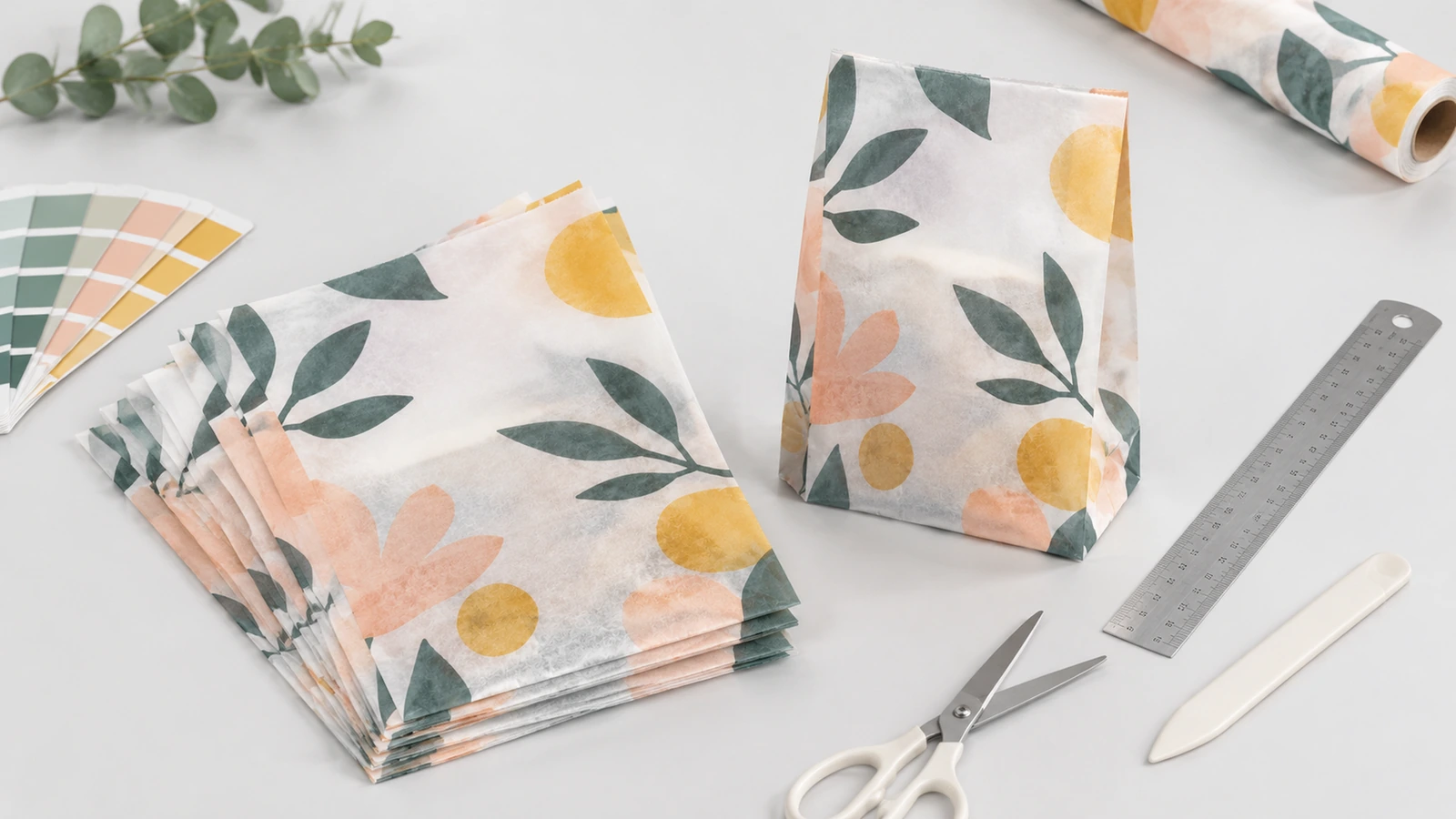
Explore your packaging specification
What makes glassine different from other paper bags? ↑
Glassine is a smooth, translucent paper made through intensive fiber processing and supercalendering. Its characteristic surface comes from compressed fibers rather than necessarily requiring wax. That distinction matters when comparing a glassine bag with waxed paper or a kraft bag containing a glassine lining: similar search terms do not describe the same construction.
Use it as an inner-packaging candidate rather than assuming it can replace every plastic bag. EcoEnclose describes its glassine bags as moisture-resistant rather than waterproof and intended for inner packaging, not primary shipping protection. These are useful material-selection boundaries[1], not test results for this product.
Ask for the proposed construction in writing: base paper, any surface treatment, printing, seam adhesive and closure components. Do not infer that every bag described as glassine is uncoated, wax-free or free of synthetic components. A finished-bag specification is more useful than a broad material label.
How do you specify fit and product readability? ↑
Specify usable internal width and height in millimeters, with gusset depth and flap length recorded separately where applicable. Distinguish those measurements from external dimensions. The glued seam, bottom fold and closure can reduce the space available for the product, especially when a rigid card or folded textile approaches the bag’s nominal size.
Measure the merchandise in its packed condition, including backing cards, folded edges, labels and any protective insert. Capacity, supported load and the number of items that fit must be determined by actual dimensions, loading configuration and sample validation; this product has no supplied capacity or load-test result.
- Insertion: Check whether corners catch or side seams open during normal packing.
- Closure clearance: Confirm that the flap closes without compressing the contents or pulling against the seam.
- Presentation: View the filled bag under the lighting used in the shop or fulfillment area.
- Readability: Test the actual barcode and scanner if identification through the paper is required.
Translucency does not guarantee that small text or barcodes remain readable through the bag. Product color, paper appearance and printing all affect the visual result. Approve both an empty sample and a filled sample so the packaging specification reflects how customers and staff will actually encounter it.
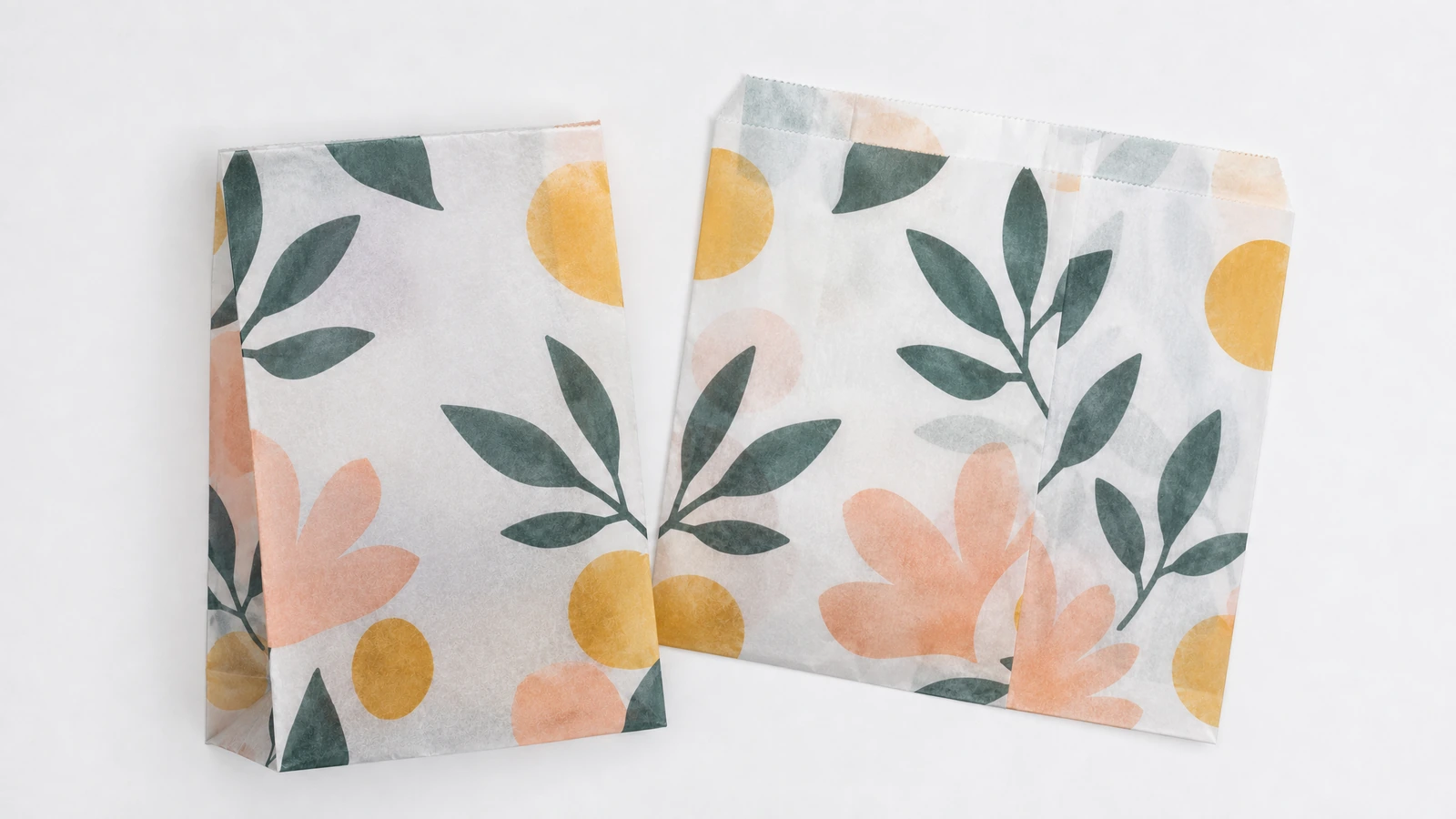
Match the surface and closure to the packing task ↑
Choose the opening and closure around the handling sequence. An open-top bag with a separate label, a folded flap and an adhesive closure are different purchasing requests. Their availability for this product must be confirmed; an adhesive strip should not automatically be described as resealable or tamper-evident.
For this paper-bag format, the relevant reverse-side options are the flap, seam and adhesive arrangement—not hardware backings or clasps. Request a rear-view sample or drawing so the artwork does not interfere with the opening, closure or glued areas.
Likewise, separate the natural paper surface from an added barrier or heat-seal treatment. A coating can change sealing behavior and disposal considerations. Do not add it merely to make a broad “better protection” claim: define the failure it needs to prevent, then test the proposed construction. Closure performance, repeated opening and heat-seal suitability remain pending validation.
How should artwork be prepared for approval? ↑
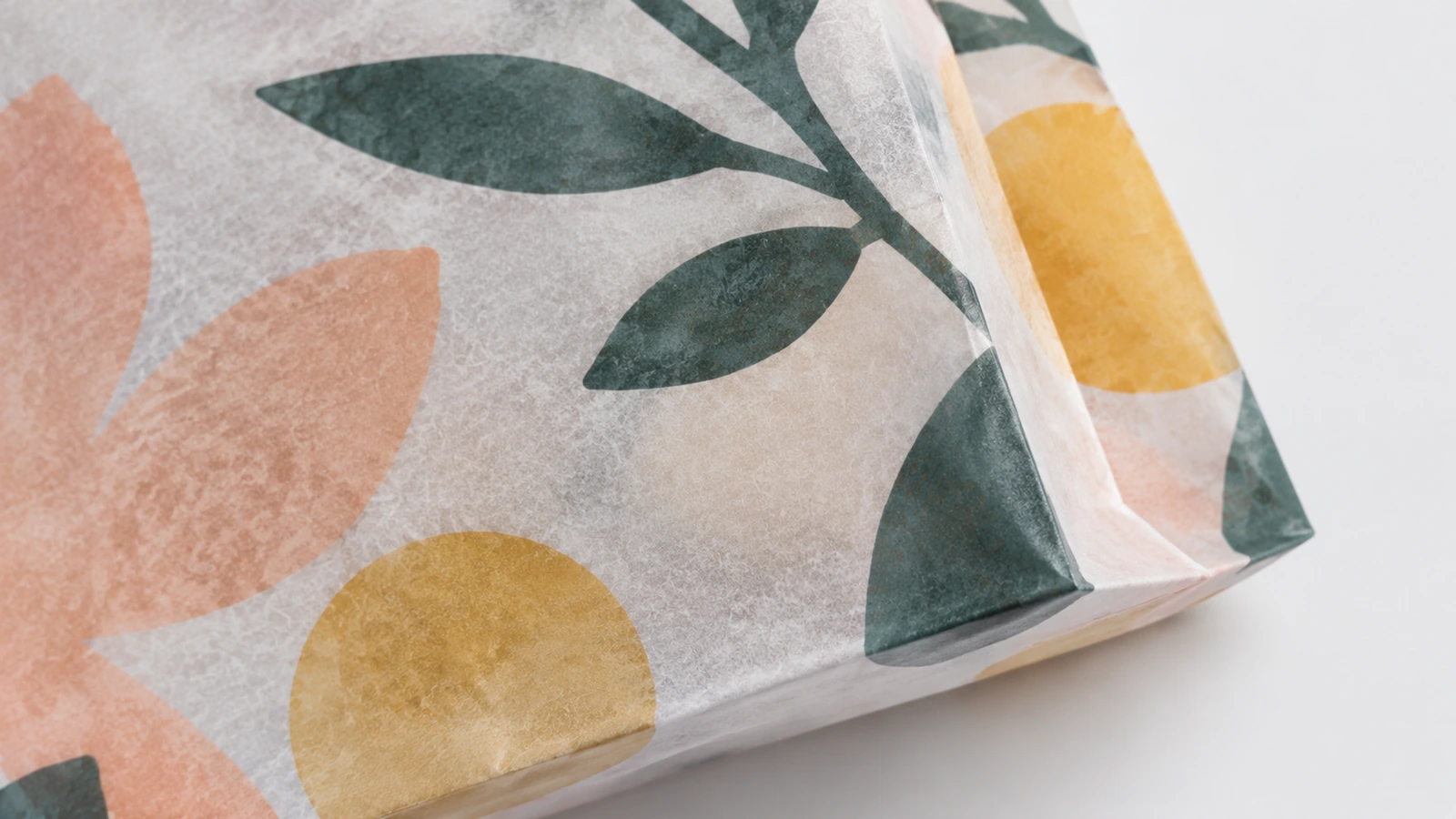
Begin with vector artwork and outlined fonts, then place the design on the proposed bag template. Identify print sides, colors, logo position and any barcode or handling information. Keep seams, folds and closure areas visible in the proof rather than treating the bag as an uninterrupted rectangular canvas.
Print limits belong to the selected production route. For example, EcoEnclose’s glassine artwork guidelines[2] restrict coverage and exclude flood coating and full bleeds. Those restrictions illustrate why artwork needs a supplier-specific review; they are not the confirmed printing limits for NSKU-720-01.
Specify brand colors by reference and approve their appearance on the intended paper. A screen proof establishes layout, not final color, translucency or ink adhesion. Small reversed lettering and detailed graphics should be assessed on a physical print sample before becoming essential design features.
- Confirm the printable area and placement tolerance in writing.
- Review the artwork against both light and dark representative contents.
- Check printed information after folding and closing the filled bag.
- Separate rub-resistance approval from any food-contact assessment.
Water-based or soy-based ink terminology alone does not establish food-contact suitability. If the application involves food, the proposed ink and finished construction need their own supporting documentation. For merchandise, prioritize legibility, drying, transfer and handling performance.
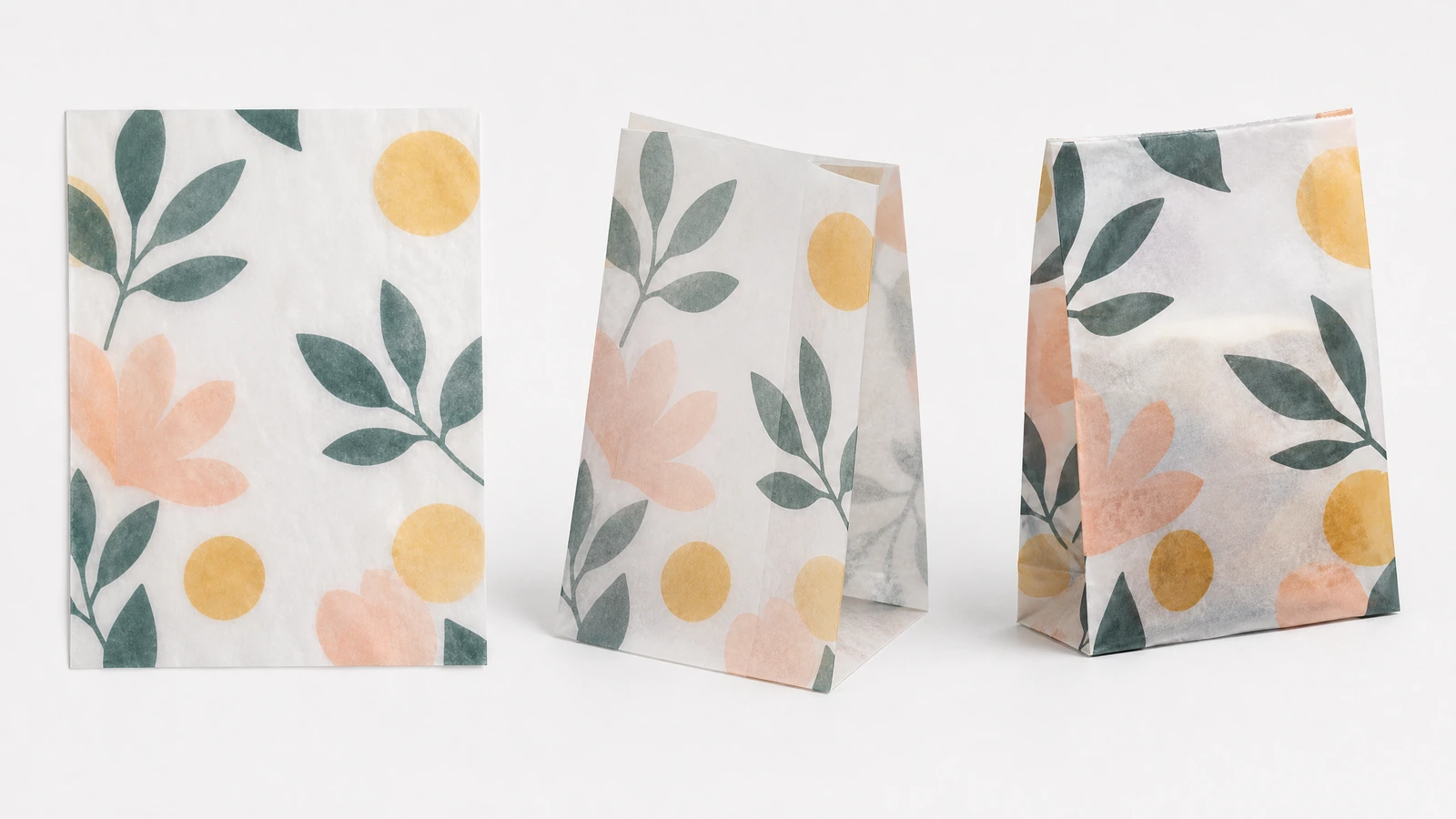
Turn the approved sample into a production reference ↑
A useful purchasing sequence connects each approval to an identifiable deliverable. The following is a proposed ordering workflow, not a claim about an established factory process or available machinery.
- Define the application. Record the contents, destination market, handling conditions and intended storage period.
- Confirm the proposed specification. Agree on dimensions, paper weight in g/m², construction, closure and printing requirements.
- Approve artwork. Retain the dated proof, color references and agreed placement limits.
- Validate a representative sample. Test fit, presentation and relevant performance using the actual contents.
- Authorize the production specification. Link the order to the approved sample and acceptance criteria.
- Confirm dispatch arrangements. Separate manufacturing time from transit and any import handling.
Ask which approval starts the production clock and whether material sourcing, special color approval or revised samples affect it. A sample deadline, production completion date and delivery date are different commitments. No product-specific production time or shipping promise has been supplied for this provisional SKU.
Any substitution of paper, ink, adhesive or closure should trigger a targeted review of the affected requirements. Keeping the specification tied to a sample helps prevent an apparently minor change from invalidating fit, appearance or supporting documents.
Which checks matter before accepting the bags? ↑
Agree on acceptance criteria before ordering. Describe what counts as an unusable bag, an appearance defect and an acceptable variation. Include photographs where words such as “creased,” “misaligned” or “poorly sealed” could otherwise lead to different interpretations.
| Check | Assessment method | Record for approval |
|---|
| Dimensions and fit | Measure usable space and pack the actual merchandise | Drawing, agreed tolerances and filled-sample photographs |
| Seams and opening | Separate stacked bags, open them and inspect glued areas | Sticking, tearing, open seams and adhesive contamination |
| Print appearance | Compare with the approved physical reference | Color, position, readability and visible inconsistencies |
| Ink transfer | Use agreed rub and stacked-contact checks | Transfer, smearing and surface damage |
| Product compatibility | Hold filled samples under intended use conditions | Staining, adhesion, odor and condition of the contents |
These are proposed inspection categories, not completed tests. Sampling quantities, test conditions and pass/fail limits must be agreed for the order. A paper-weight measurement cannot substitute for seam performance or a finished-pack compatibility check.
For suitable glassine grades, TAPPI T 454[3] provides accelerated comparative screening of oil or grease penetration. TAPPI explicitly distinguishes this screening from trials with the actual end product and notes that coated or internally treated grades may fall outside its applicability.
For oily contents, therefore, inspect the filled bag over the intended contact period, including its bottom fold and seams. Let the laboratory select a suitable method for the construction rather than demanding a generic KIT rating as proof of every application.
What evidence is needed for food-contact applications? ↑
Food-contact status is not confirmed for this provisional product. Before specifying direct contact, identify the food, its moisture and fat characteristics, filling temperature and contact duration. The assessment must cover the finished construction, including paper, inks, adhesives and any treatment—not only the unprinted base paper.
For U.S. applications, 21 CFR 176.170[4] addresses paper and paperboard components for aqueous and fatty foods. The conditions of use and applicable provisions matter; the material name alone does not establish compliance.
21 CFR 176.180[5] addresses the specified dry-food category. Do not classify a product solely by whether it looks dry: the intended food and contact conditions need to match the supporting documentation.
Request a use-specific compliance statement and relevant supporting reports before approving food-contact wording. Grease performance and food-contact compliance answer different questions. Neither establishes shelf life, airtightness or suitability for heating. Oven, microwave, liquid and condensation-prone applications are outside the proposed use unless separately validated.
Keep environmental claims specific and supportable ↑
Separate fiber sourcing from disposal claims. FSC labeling[6] concerns qualifying material sourcing; it does not establish food-contact compliance, grease performance or compostability. No FSC claim is confirmed for this product.
For compostability, assess the complete bag, including ink and adhesive. The FTC compostable-claim guidance[7] requires reliable scientific substantiation and appropriate qualifications. Industrial compostability does not establish home compostability.
Likewise, avoid an unsupported biodegradable badge. The FTC degradable-claim guidance[8] considers customary disposal conditions. For recycling instructions, confirm the finished construction and local acceptance, including restrictions on food-soiled packaging.
Which packaging route best matches your purchase? ↑
Compare like-for-like products. An unprinted stock bag, a printed glassine merchandise bag and a glassine-lined kraft food bag solve different problems. A low stock-pack price is not a meaningful benchmark for a custom size with approved artwork and additional testing.
| Packaging route | Reason to consider it | Purchasing limitation |
|---|
| Printed glassine merchandise bag | Translucent paper presentation with branding on the bag | Needs confirmed fit, print limits and product compatibility |
| Blank glassine with a separate label | Allows branding to be evaluated separately from the bag | Adds labeling work; adhesive and disposal compatibility need review |
| Glassine-lined kraft bag | Combines a kraft exterior with an internal glassine layer | Not equivalent to a translucent all-glassine bag |
| Waxed paper bag | Uses a surface treatment rather than relying only on fiber structure | Heat behavior and disposal requirements need separate assessment |
| Clear poly bag | A comparison route when visibility or moisture protection is decisive | Not a paper solution; protection still depends on film and closure specification |
Choose according to the failure you cannot accept: concealed merchandise, oil staining, moisture exposure, slow packing or excessive inventory. There is no material winner independent of the application. For sensitive contents, compare complete packaging systems rather than isolated bag samples.
Compare the total order cost
Request a breakdown covering bags, artwork or setup charges, samples, testing where required, packing and freight. Include import charges where applicable and identify what is excluded. Printing complexity, material selection, size and order quantity should be consistent across competing quotations.
Minimum order quantity, production time and unit weight have not been verified for NSKU-720-01. Request those values explicitly, together with quantity-based pricing and the approval event that starts production. Competitor ordering terms must not be presented as this product’s offer.
Protect presentation during shipping and reordering
Specify how flat bags will be protected from compression, edge damage and moisture during delivery. Ask whether cartons and protective boards are appropriate for the shipment, and agree on how arrival damage will be documented. The delivery pack needs to protect the bags themselves, not merely keep them together.
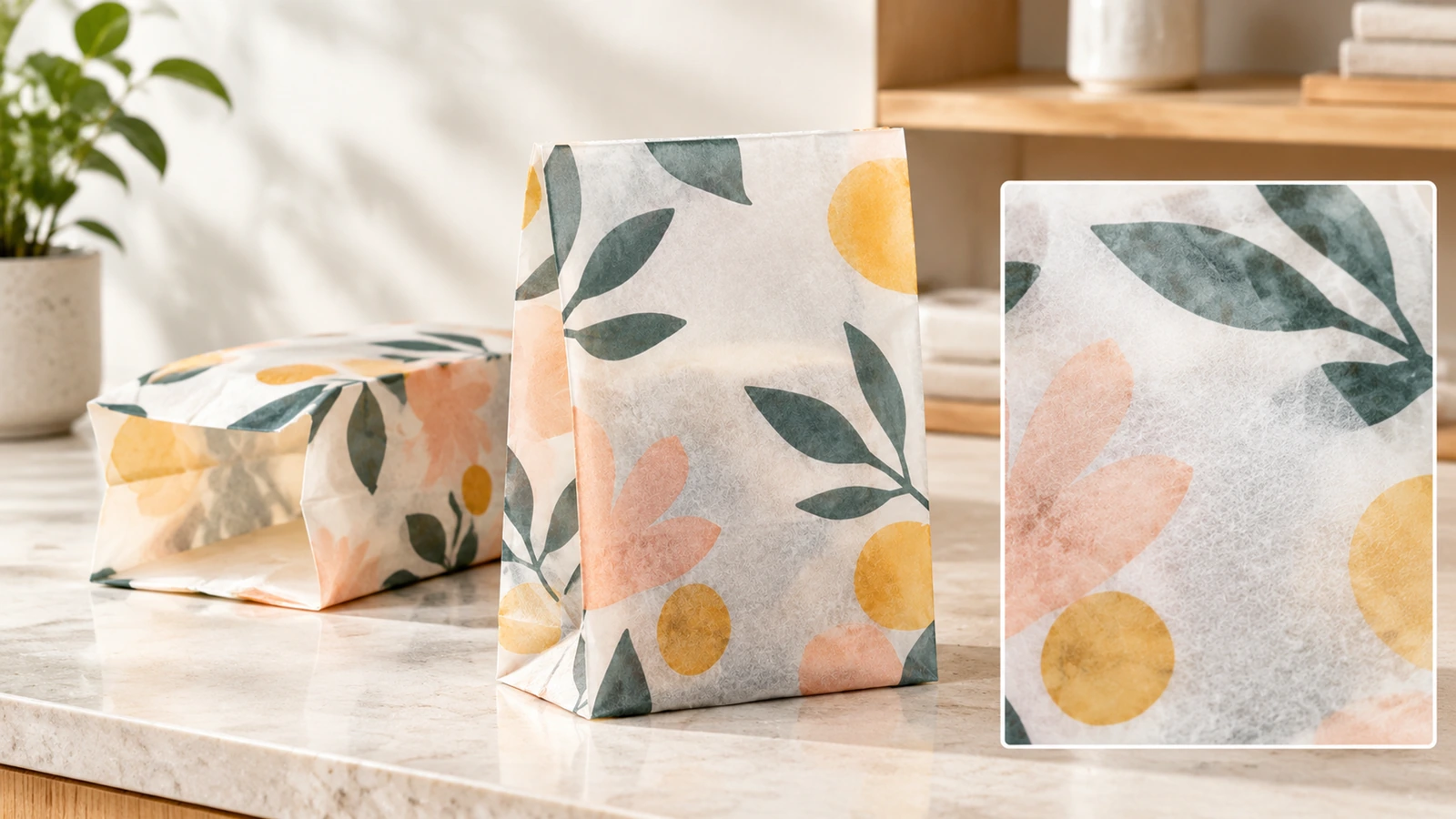
For repeat orders, retain the approved bag, artwork version, specification and batch information. Compare incoming stock with that reference for appearance, fit, closure and printing. Confirm changes to materials or suppliers before treating the new batch as equivalent.
Keep retained samples dry and protected from crushing so they remain useful comparison references. If the contents change—such as a thicker backing card or a different soap formulation—repeat the relevant fit or compatibility check rather than assuming the previous approval still applies.
Key takeaways for a better purchasing decision ↑
- Fit belongs to the filled pack. Approve usable dimensions, closure clearance and the actual loading configuration.
- Paper appearance does not prove performance. Evaluate printing, seams and product compatibility separately.
- Recycling claims depend on access to suitable facilities. — The FTC calls for qualification below 60% consumer or community access where the product is sold (Source[9]).
- Order terms need product-specific confirmation. No verified MOQ, production time, unit weight or factory test results are available for this provisional SKU.
Build your quote around the finished pack ↑
The strongest starting point is a clear description of what the bag must do: present the merchandise, fit without damage, carry readable branding and survive the intended handling. From there, the sample and specification can establish whether glassine is the appropriate choice.
Request a quote for NSKU-720-01 with your product dimensions, packed-product photo, quantity, artwork, closure preference, destination and required arrival date. Include food-contact or environmental documentation requirements where relevant, so the proposed construction and validation work can be assessed together.




The information below is required for social login
Sign In
Create New Account