We use cookies to enable our websites to remember information, to help some website functionalities to work properly, to understand how you interact with and use our websites and to display you content and ads that are relevant and engaging for you.
By clicking Accept All you consent to the use of these cookie.
The store will not work correctly when cookies are disabled.
Quick answer: Glassine bags are supercalendered paper: translucent rather than clear, grease-resistant but not waterproof, and normally handled as paper at end of life. Cellophane bags are a regenerated-cellulose film (often coated) that is crystal clear and gives a stronger moisture barrier. Choose glassine for a paper look and a paper disposal route; choose cellophane when full visibility and better moisture protection matter more.
If you are comparing glassine vs cellophane bags for prints, soap, candles, sticker packs or baked favors, you have probably noticed that both get called "eco-friendly," both look see-through in product photos, and both are sold in similar flat sizes. They are not the same material, though. The wrong choice usually shows up as a grease spot, a cloudy pack nobody can read, or a "recyclable" claim your customers cannot actually act on.
The difference matters most when your bag doubles as a retail display. A cellophane sleeve shows every detail of a sticker sheet. A glassine sleeve gives a softer, frosted view that many makers prefer for soap or art prints, but it can turn a barcode or small text hard to read. One seller quoted in our research described trying glassine "as an alternative to cello bags" for wedding-favor soaps. That swap works well for some products and badly for others.
This guide compares the two side by side on translucency, moisture and humidity behaviour, print appearance and end-of-life routes, then gives a simple rule for choosing. Product-level specifications and ordering steps live on our custom glassine bags page; this article focuses on the material decision.
What glassine and cellophane actually are
Glassine is a paper. Wood pulp is beaten until the fibres are very fine, formed into a sheet, then pressed between polished rollers. According to the encyclopedia definition[1], glassine is "a smooth and glossy paper that is air-, water-, and grease-resistant," typically made in basis weights of about 50–90 g/m². Its barrier comes from fibre density, not from wax or plastic coatings.
Cellophane is also made from cellulose, but the fibres are dissolved and regenerated into a continuous transparent film. That is why it looks like plastic even though the base material is plant-derived. Commercial cellophane is frequently coated to improve moisture barrier and heat sealing, and those coatings change both its performance and its disposal route. A further complication: in everyday retail language, "cello bag" is often used loosely for clear polypropylene bags that are not cellophane at all. Before comparing, confirm with your supplier which film you are actually being offered.
Glassine is also different from wax paper. Wax paper gets its grease resistance from a surface treatment that can melt in heat and complicate recycling; glassine does not rely on wax. If a supplier's "glassine" softens and sticks shut on a hot day, you were probably sold waxed paper.
How is glassine paper made?
Glassine production has three stages that explain almost all of its behaviour:
Heavy refining. Pulp is mechanically beaten far longer than for ordinary paper, which collapses fibres and reduces the air pockets between them.
Sheet forming. The refined pulp forms a dense, low-porosity sheet.
Supercalendering. The sheet passes through a stack of heated, polished rollers under pressure. This flattens the surface, closes remaining voids and creates the glossy, translucent finish.
Because grease resistance comes from closed voids rather than a coating, the paper industry tests glassine with a dedicated method. The TAPPI/ANSI T 454 turpentine test[2] compares how quickly oil penetrates glassine and greaseproof papers. The test ends at 1,800 seconds if no stain appears, and the standard itself says it is a preliminary screen, "not a substitute for" tests with real products. The international equivalent is ISO 16532-3:2010[3], which applies only to uncoated papers made grease-resistant by mechanical beating.
The practical takeaway: two glassine bags with the same name can perform differently depending on basis weight, refining and fold quality. Cellophane performance depends more on which coating is applied to the film.
Is glassine paper see-through?
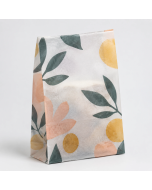
Partly. Glassine is translucent, not transparent. You can see the outline, colour and general shape of a product through it, but fine detail is softened. Cellophane is genuinely clear: text, sticker artwork and barcodes read through it almost as if there were no bag.
That difference drives most merchandise decisions:
Prints, postcards and art cards: glassine gives a frosted, gallery-like preview and a "plastic-free" feel. Buyers see enough to recognise the piece without seeing every line.
Stickers, pins and small items sold on detail: cellophane shows the product clearly, which can matter when the pack hangs on a peg or sits in a bin.
Anything with a barcode inside the bag: one apparel-packaging supplier openly notes that, unlike plastic bags, "it is difficult to read barcodes through a glassine bag." Put the barcode on the outside or use a clearer film.
Thicker glassine is stiffer and protects better but is less see-through, so the two goals pull against each other. Buyer reviews in our research include complaints like "wish they were a little more transparent," which is usually a basis-weight expectation problem rather than a defect.
Glassine bag moisture resistance vs cellophane
This is where the two materials diverge most clearly, and where most complaints come from.
Glassine is moisture-resistant, not waterproof. Its dense surface resists light handling, dust and short contact with light grease. It does not hold liquids, and in high humidity the fibres can absorb water and swell, which reduces grease resistance and can cause curling. Real-world feedback matches this: a food-service buyer reported bags that "leak at the fold on bottom," and another noted that pickle juice "does soak through if they sit a while." Butter-rich cookies and fudge commonly leave visible grease spots over a day.
Cellophane gives a stronger moisture barrier, especially in coated grades designed for food. It will not wick moisture through folds the way paper can. Uncoated cellophane is still sensitive to water, though, so "cellophane" alone does not guarantee a barrier; ask which coating is used.
For merchandise sellers, the rule of thumb is:
Dry goods (prints, cards, jewellery, pins, wrapped soap, wax melts sold quickly): glassine is usually fine.
Products that are oily over time (candles stored for weeks, high-butter bakes), humid storage, or outdoor markets in damp weather: cellophane or a lined pack is safer.
Anything liquid: neither is a primary container.
Glassine is also less tear-resistant than film. Reviews mention side tears when inserting thick cardstock and bags crumpled in transit when shipped in soft envelopes. It works best as inner packaging inside a box or mailer.
How each material looks when printed
Glassine and cellophane both take branding, but the result looks different.
On glassine, ink sits on a smooth, low-absorbency paper surface. Colours appear softer and slightly muted against the translucent background, which suits minimalist one-colour logos, stamps and line art. The trade-off is that ink dries more slowly on such a closed surface, so the wrong ink system can smear; buyers in our research mention smudged prints and switching to rubber stamps. Many makers like that hand-stamping is possible at all.
On cellophane, print appears crisp and glossy because it sits on a clear film, but white ink is often needed to make colours read against the product behind them. That adds a layer and a design step.
Either way, a branded colour on screen is not a branded colour on a translucent substrate. Approve a physical sample on the actual material. The proofing workflow itself is covered on the product page, so we will not repeat it here.
End-of-life routes and honest claims
Many buyers switch from cellophane to glassine for disposal reasons, so it pays to be precise.
Glassine that is uncoated (no silicone, wax or plastic lamination) is a paper product and is generally handled with paper. However, its dense structure means acceptance can vary between local programmes, and grease or food residue can lead to rejection. Self-seal adhesive strips may contain synthetic adhesives, which matters if you plan to say "plastic-free."
Cellophane is cellulose-based, and some grades are certified compostable, but many are coated, and most curbside programmes do not accept film of any kind in the paper stream. Clear polypropylene "cello" bags are plastic and follow plastic film rules.
Whatever you choose, environmental claims must be supportable. In the US, the FTC Green Guides[4] say an unqualified "recyclable" claim needs recycling facilities available to at least 60% of consumers or communities where the item is sold. Under 16 CFR § 260.7[5], a "compostable" claim needs competent and reliable evidence that all materials, inks and adhesives included, break down into usable compost, and 16 CFR § 260.8[6] calls an unqualified "biodegradable" claim deceptive if the item will not fully decompose within one year of customary disposal. A safer label line is "paper-based; recycle with paper where accepted locally."
If you sell food-adjacent merchandise into the EU, note that the food contact framework Regulation (EC) No 1935/2004[7] covers paper, regenerated cellulose and printing inks alike. In the US, paper food-contact surfaces fall under 21 CFR § 176.170[8] for aqueous and fatty foods (with a 0.5 mg/in² chloroform-soluble extractives limit) and 21 CFR § 176.180[9] for dry food. The documentation you should request is outlined on the product page.
Fibre sourcing is a separate question. An FSC MIX label[10] tells you about responsible forestry and chain of custody; it says nothing about food safety, grease resistance or compostability.
Glassine vs cellophane bags: side-by-side comparison
Factor
Glassine bags
Cellophane bags
Base material
Supercalendered paper, about 50–90 g/m² (encyclopedia range)
Regenerated cellulose film, often coated
Visibility
Translucent, frosted view; detail softened
Transparent; text and barcodes readable
Grease
Resists light grease short-term; screened with TAPPI T 454 / ISO 16532-3
Good barrier, depends on coating
Moisture and humidity
Moisture-resistant, not waterproof; can swell and curl in humidity
Stronger barrier in coated grades
Tear and handling
Weaker than film; can tear at sides or crumple in transit
More puncture- and crumple-tolerant
Print look
Soft, matte-gloss paper look; stamping possible; slow-drying inks can smear
Crisp and glossy; often needs a white layer
Look and feel
Paper, vintage, "plastic-free"
Clear, high-shine retail look
End of life
Paper stream where accepted locally; residue and coatings reduce acceptance
Varies by grade; film usually excluded from paper recycling
Typical best use
Art prints, cards, soap, wax melts, jewellery, inner packs
Stickers, detail-led display, humid or longer-shelf items
How to choose between them in five steps
Decide whether the customer must read detail through the bag. If yes (barcode, small text, sticker artwork), lean toward cellophane or move the information to an outside label.
Check your product's moisture and oil over its full shelf life. Pack a real unit, leave it for the longest realistic storage time, and inspect the bottom fold. Grease marks or curling point to cellophane or a lined option.
Consider how it ships. If the bag travels unprotected, film tolerates it better. If it sits inside a box or mailer, glassine's lower tear strength rarely matters.
Match the disposal story to your market. If "recycle with paper" is part of your brand promise, glassine supports it, provided it is uncoated and your claim is qualified.
Proof the branding on the real material. Translucent paper and clear film change how the same artwork looks.
If glassine wins on these steps, our custom printed glassine bags page covers sizing, surface, closure and quoting. For pricing and minimums, send your product dimensions and use case and we will quote against them.
FAQ
FAQ: Is glassine better than cellophane for the environment?
It depends on what happens after use. Uncoated glassine fits the paper recycling stream where local programmes accept it; cellophane is cellulose-based but often coated, and film is usually excluded from paper recycling. Glassine is generally made from virgin pulp with an energy-intensive calendering step, so "better" claims should be specific and qualified rather than absolute.
FAQ: Is glassine paper see-through enough for retail display?
For shape, colour and general appearance, yes. For fine text, sticker detail or barcodes, usually not. Heavier glassine is less transparent than lighter grades.
FAQ: How does glassine compare to plastic bags?
Compared with clear polypropylene or polyethylene bags, glassine gives up clarity, waterproofing and tear strength in exchange for a paper look and a paper disposal route. It suits dry, inner-packed merchandise; plastic remains the stronger choice for liquids and harsh shipping.
FAQ: Can glassine bags hold candles or soap long term?
For short retail cycles, generally yes. Over several weeks, oils from candles and some soaps can migrate into the paper and show as marks. Test a packed unit for your longest storage time before committing.
FAQ: Are glassine bags waterproof?
No. Glassine is moisture-resistant, not waterproof. It handles dust, light handling and short contact with light grease, but it does not hold liquids and can soften in high humidity.
FAQ: Is a "cello bag" always cellophane?
No. Retail listings often call clear polypropylene bags "cello bags." Ask the supplier for the actual film type before comparing disposal or barrier claims.
Key takeaways
Glassine is paper; cellophane is film. — Glassine is typically about 50–90 g/m² supercalendered paper (Source)
Grease resistance should be tested, not assumed. — TAPPI T 454 ends at 1,800 seconds and is only a preliminary screen (Source)
Unqualified "recyclable" needs broad access. — Facilities must be available to at least 60% of consumers or communities (Source)
"Biodegradable" has a time limit. — Items must fully decompose within 1 year of customary disposal (Source)
Food-contact paper has a numeric limit. — 0.5 mg/in² chloroform-soluble extractives for aqueous and fatty foods (Source)
Conclusion
The choice between glassine and cellophane is less about which is "greener" and more about what your product needs from the bag. If customers need to read every detail, or the product sits in humidity or releases oil over time, cellophane's clarity and barrier earn their place. If your merchandise is dry, ships inside a box, and benefits from a soft paper look and a paper disposal route, glassine is usually the better fit, as long as your environmental wording stays specific. When you have settled on glassine, share your product, size and quantity on the custom glassine bags page for a quote built around your finished pack.
Hi there! I'm Bruce, proud dad to my amazing son. I'm the founder of Zigpac, a printing and packaging company empowering small and medium-sized businesses with custom solutions. Let's create something great together!



 Blog PDF for offline reading












The information below is required for social login
Sign In
Create New Account