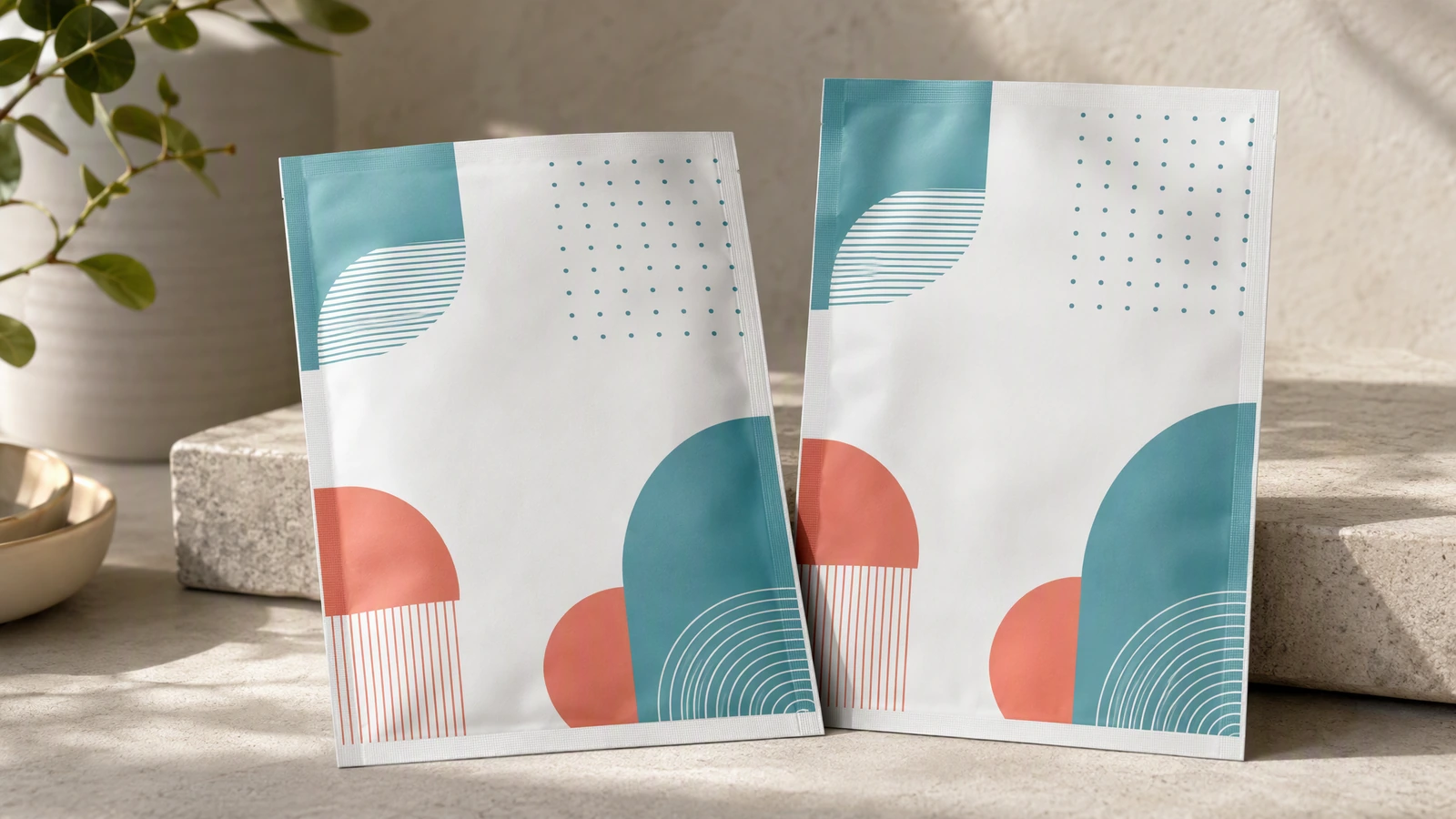
Custom three side seal pouches are flat, flexible packages supplied with three edges sealed and one opening for filling. Specify the material, usable dimensions, print layout, and final sealing conditions around your product—not a generic bag size—to develop packaging for samples, single portions, and boxed retail products.
For brand owners, packaging buyers, and co-packers: this format is worth evaluating for spice blends, coffee samples, nutritional powders, beauty sachets, pet treats, and other compact products. Application suitability depends on the selected construction and validation with the actual contents. Pharmaceutical or chemically demanding applications require a separate technical assessment.
A pouch can look right in an artwork proof and still fail during filling. Insufficient headspace can leave powder in the sealing area; an unsuitable laminate can allow moisture uptake; a misplaced tear notch can make the finished pack difficult to open.
Those problems become more expensive after printing and distribution. Rejected packaging interrupts filling, excess inventory ties up cash, and a leaking or difficult-to-open pack can undermine the product experience. The practical solution is to approve the package as a working system: contents, film, dimensions, closure, filling equipment, and transport protection.
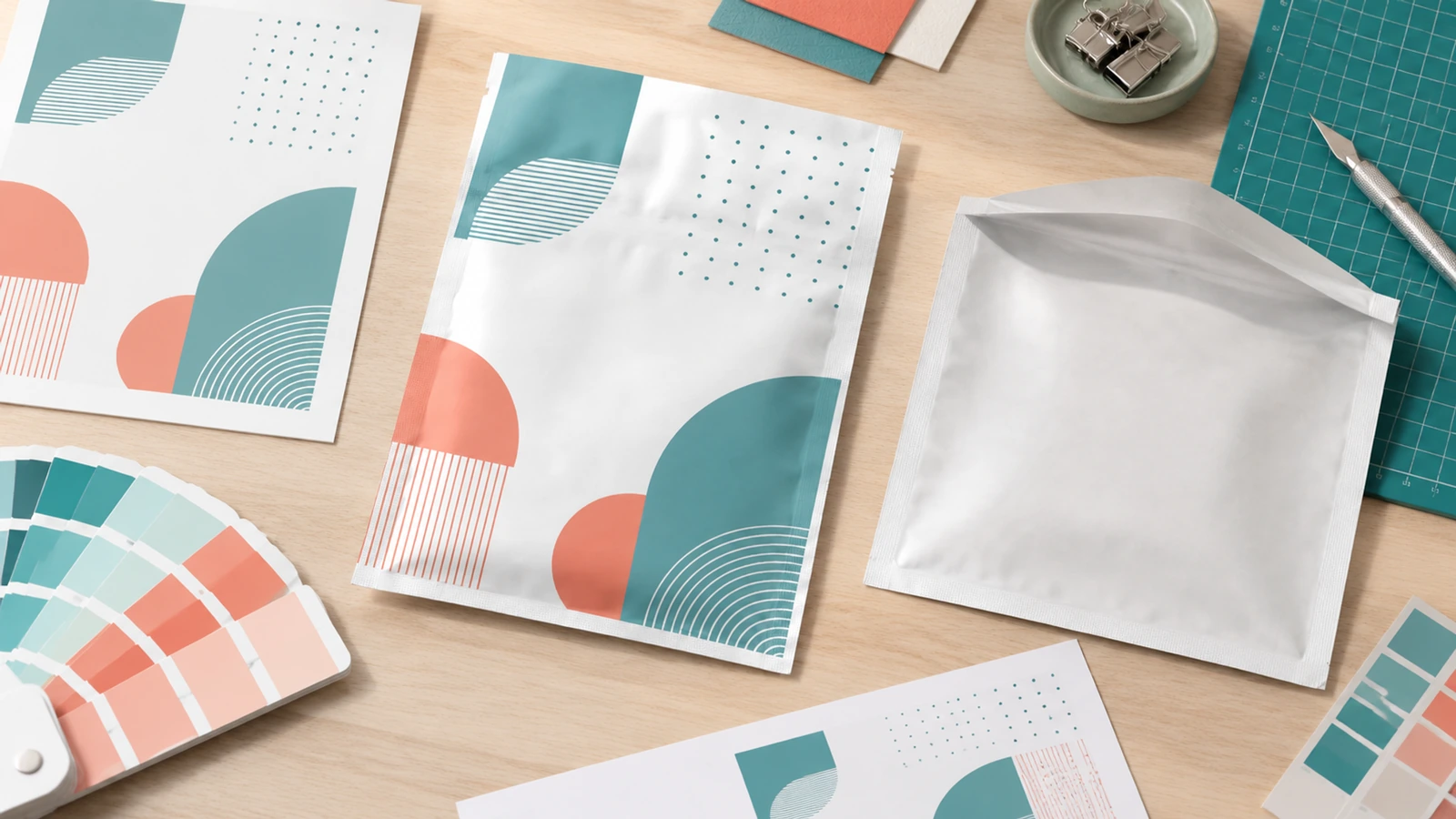
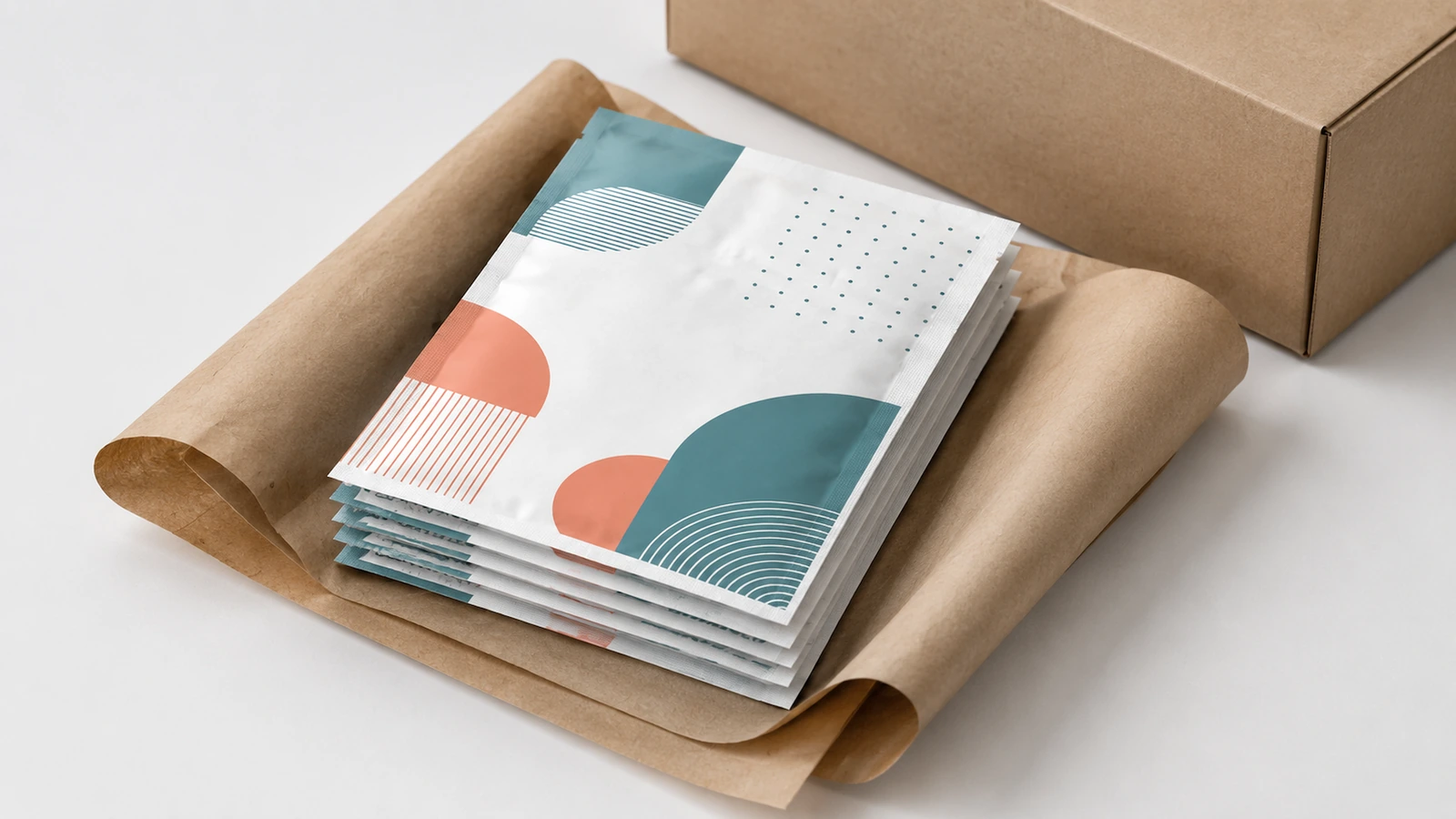
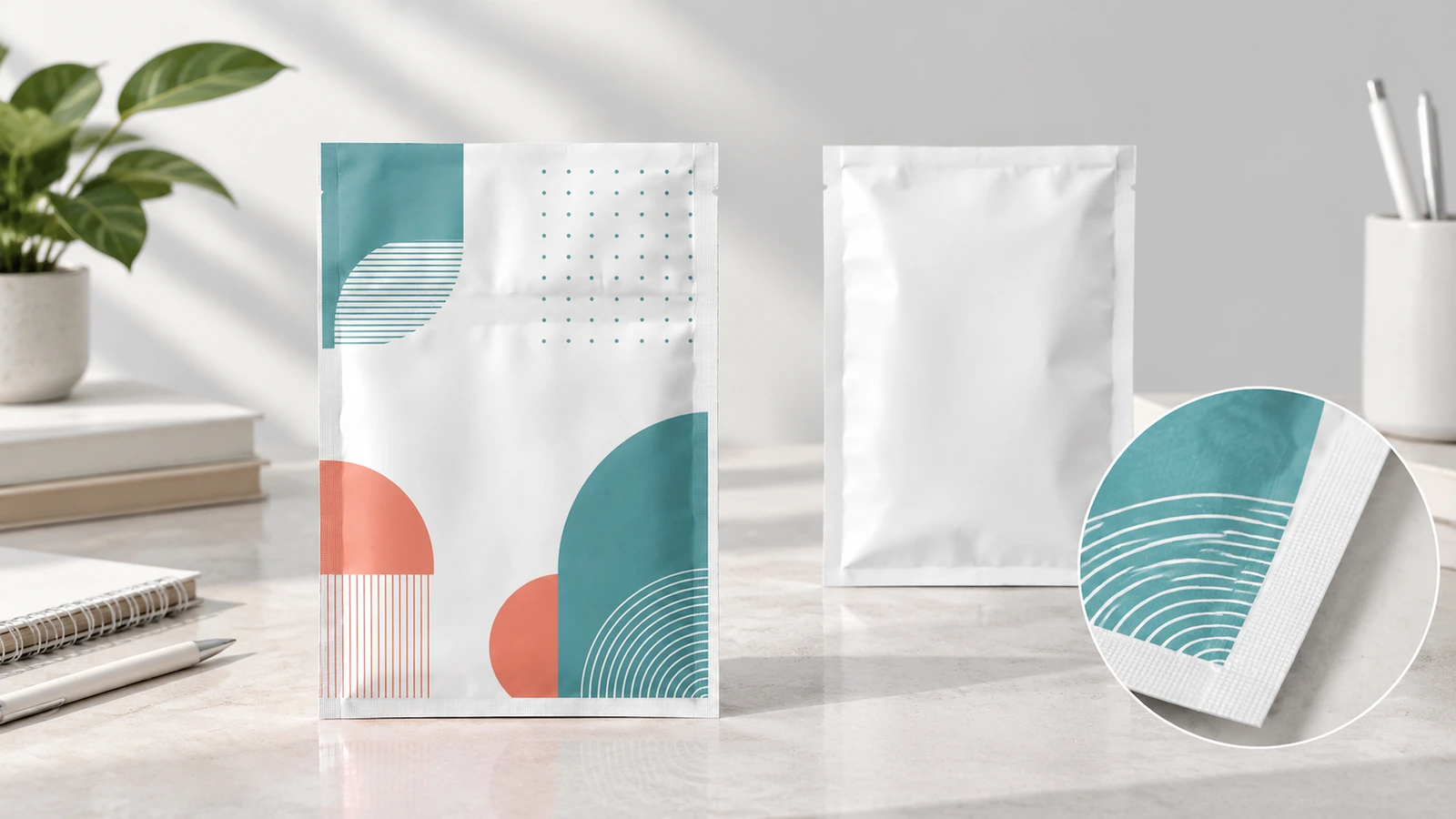
Illustrative application concepts, not photographs of supplied products or validated filling capacities.
Explore this packaging format
What makes this a three-side-seal flat pouch? ↑
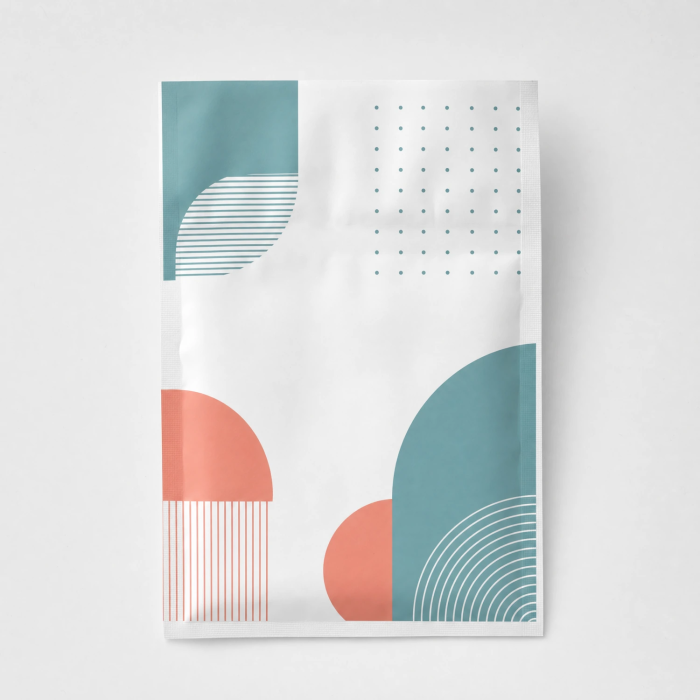
The product belongs to Custom Plastic Bags → Custom Flat Pouches. Its defining layout is a flat body with three presealed edges and an opening left for filling. The filler closes the remaining opening after loading the product. A tear notch, zipper, or hang hole is an additional design choice, not an automatic feature.
The CFIA preformed-pouch definition[1] documents this arrangement in a retort-packaging context. It supports the structural description only: an ordinary flat pouch does not become suitable for retorting simply because its edges follow the same layout.
Unlike a stand-up pouch, this flat format has no bottom gusset designed for freestanding display. It is therefore a practical candidate for sample kits, cartons, multipacks, and appropriately designed hanging displays. If the package must stand unaided on a retail shelf, compare a stand-up construction before developing the artwork.
Also distinguish empty premade pouches from printed rollstock. A premade-pouch filling system handles individual bags; a form-fill-seal process forms packaging from film. A shared finished appearance does not establish equipment compatibility. State which supply format your filling operation requires before requesting a price.
How do you turn a product brief into an approved pouch? ↑
Define the contents and exposure conditions first
Begin with the product rather than a preferred film name. Identify whether the contents are dry, oily, liquid, abrasive, or sensitive to oxygen, moisture, light, and aroma loss. Include the intended shelf-life target, storage environment, destination market, and any vacuum, gas-flushing, hot-filling, freezing, or retort requirements.
These details establish what needs testing. A powder presents a different sealing challenge from a cream, while sharp particles introduce a mechanical concern that barrier figures alone cannot resolve. Treat shelf life as a validation objective for the filled package, not a benefit guaranteed by a material abbreviation.
Separate outside dimensions from usable filling space
Record finished outside width and height in millimeters, then identify the space consumed by side seals, the bottom seal, the final closing seal, and any zipper or hanging header. The printable face, usable cavity, and external dimensions are related but are not interchangeable measurements.
Capacity, load tolerance, and the number of items that fit are determined by actual product dimensions, loading condition, and sample validation. A stated net weight does not establish pouch size: products with different shapes or bulk densities can occupy different volumes at the same weight.
Use a filled sample to evaluate headspace, opening clearance, appearance, and the final seal position. For hanging applications, locate the hole in a dedicated header outside the product cavity. Agree dimensional tolerances with the filling operator rather than borrowing another supplier’s advertised precision.
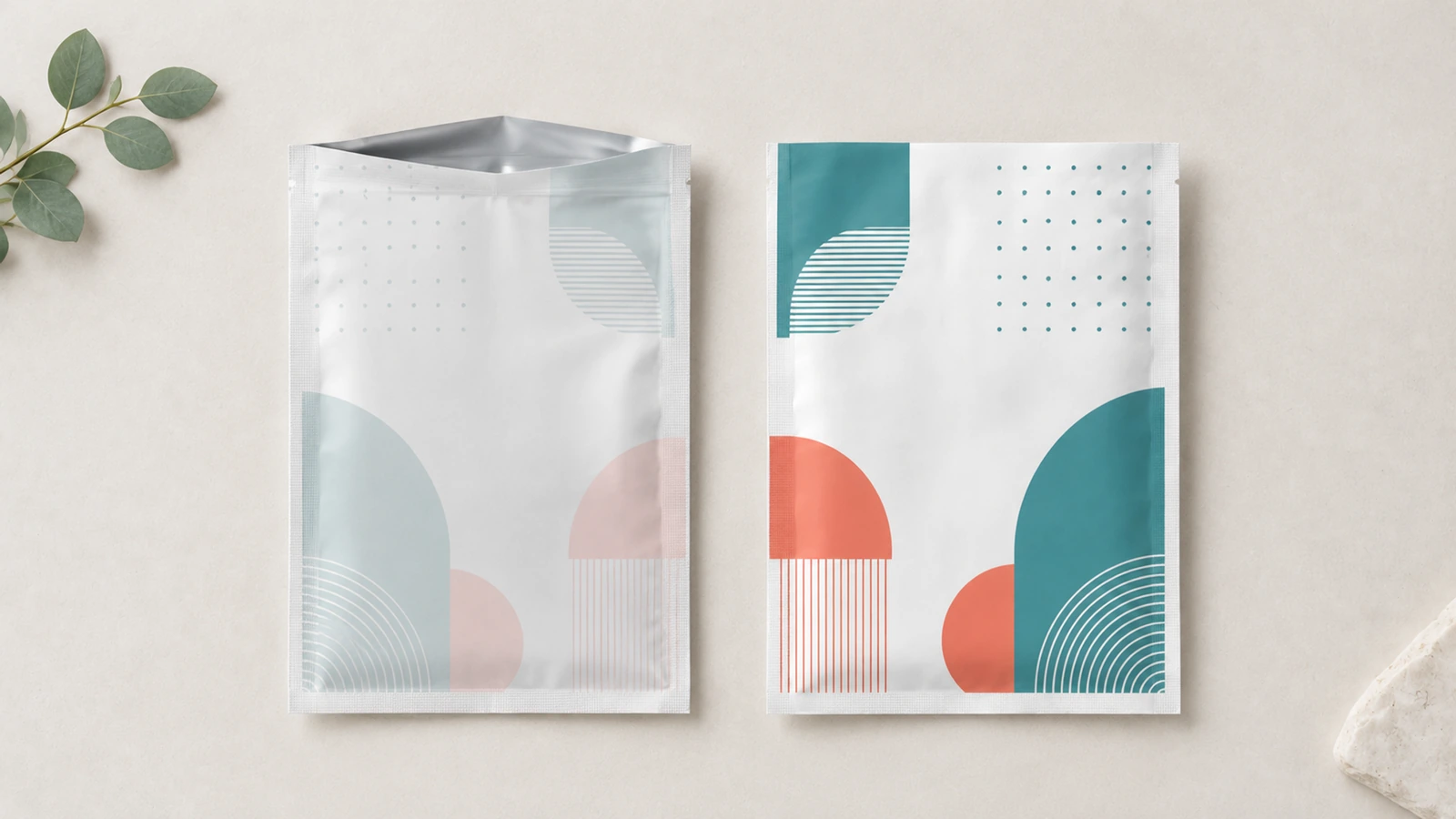
Check artwork at actual print size, including instructions, ingredient information where applicable, batch-code space, and barcode readability. Avoid placing essential information across a seal, notch, or opening path. A large on-screen proof can conceal text that becomes difficult to read on a small finished sachet.
Choose surface and closure details around use
Matte and gloss appearances, transparent areas, tear notches, rounded corners, hanging holes, and zipper closures are options to discuss during quotation. They are not confirmed capabilities for this product reference. Each requested combination needs feasibility review against the chosen construction and manufacturing route.
A single-use pack may need an accessible opening without a zipper. A product intended for repeated access needs a separately assessed reclosure feature. Where a zipper is proposed, review its position relative to the final heat seal and tear path so opening does not destroy the reclosure function.
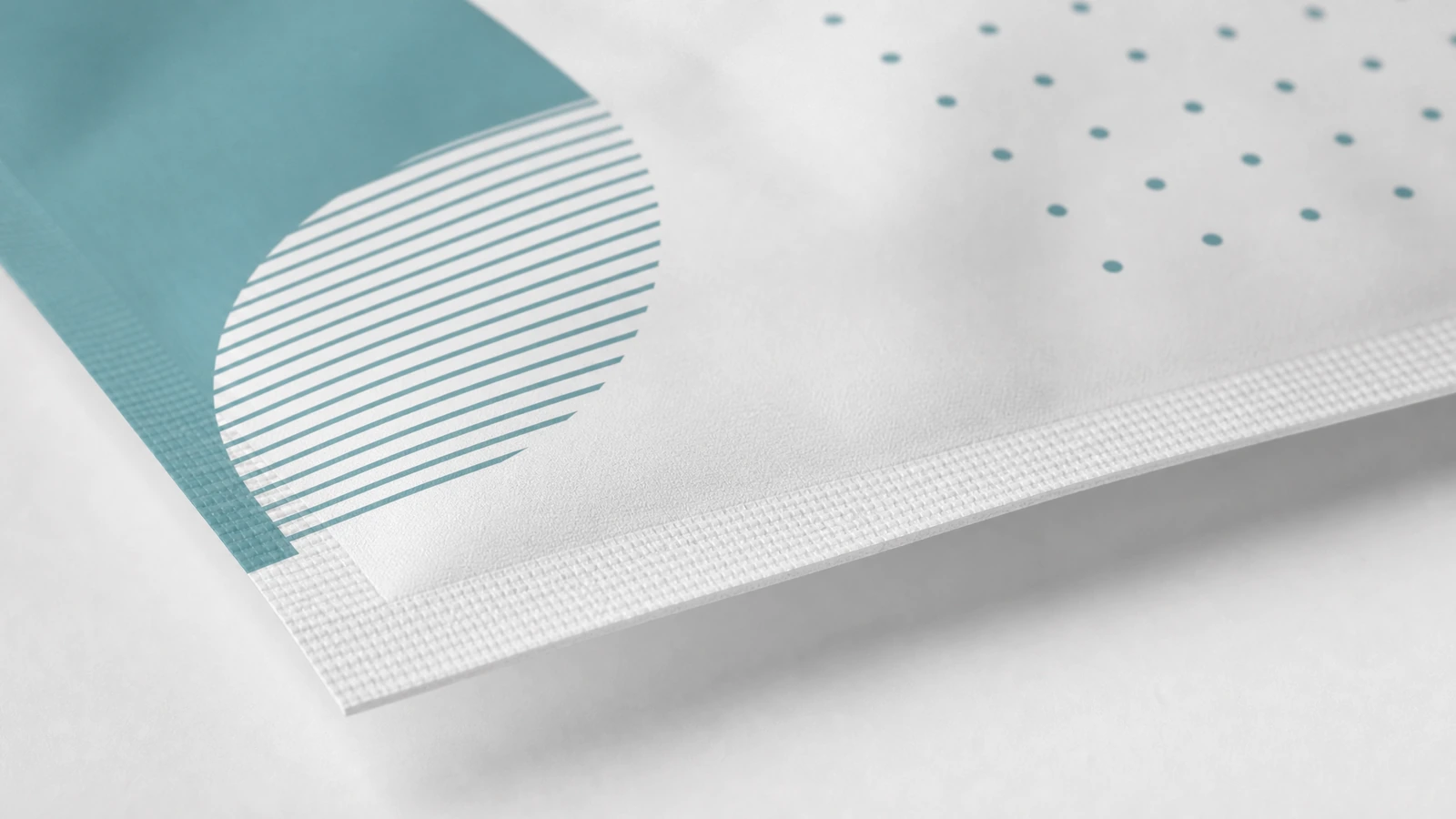
Review both front and reverse artwork rather than treating the back as unused space. Closure selection here concerns heat seals and optional zippers—not back-mounted buckles or adhesive shipping-label pockets. A silver appearance also does not identify the barrier layer: metallized film and aluminum foil require different specifications.
Preflight the file before approving production
Prepare artwork against the agreed dieline, with the filling opening, seal areas, notch locations, and any zipper or hanging header clearly identified. Confirm front-to-back orientation and reserve the required coding area. The production file should distinguish printed graphics from manufacturing guides so the latter cannot become unintended artwork.
Approve the intended color reference and finish together. Screen appearance alone cannot establish the final result on transparent, white, metallized, or foil-containing constructions. Where color consistency is important, agree the physical reference and acceptance tolerance before production, including how later orders will be compared.
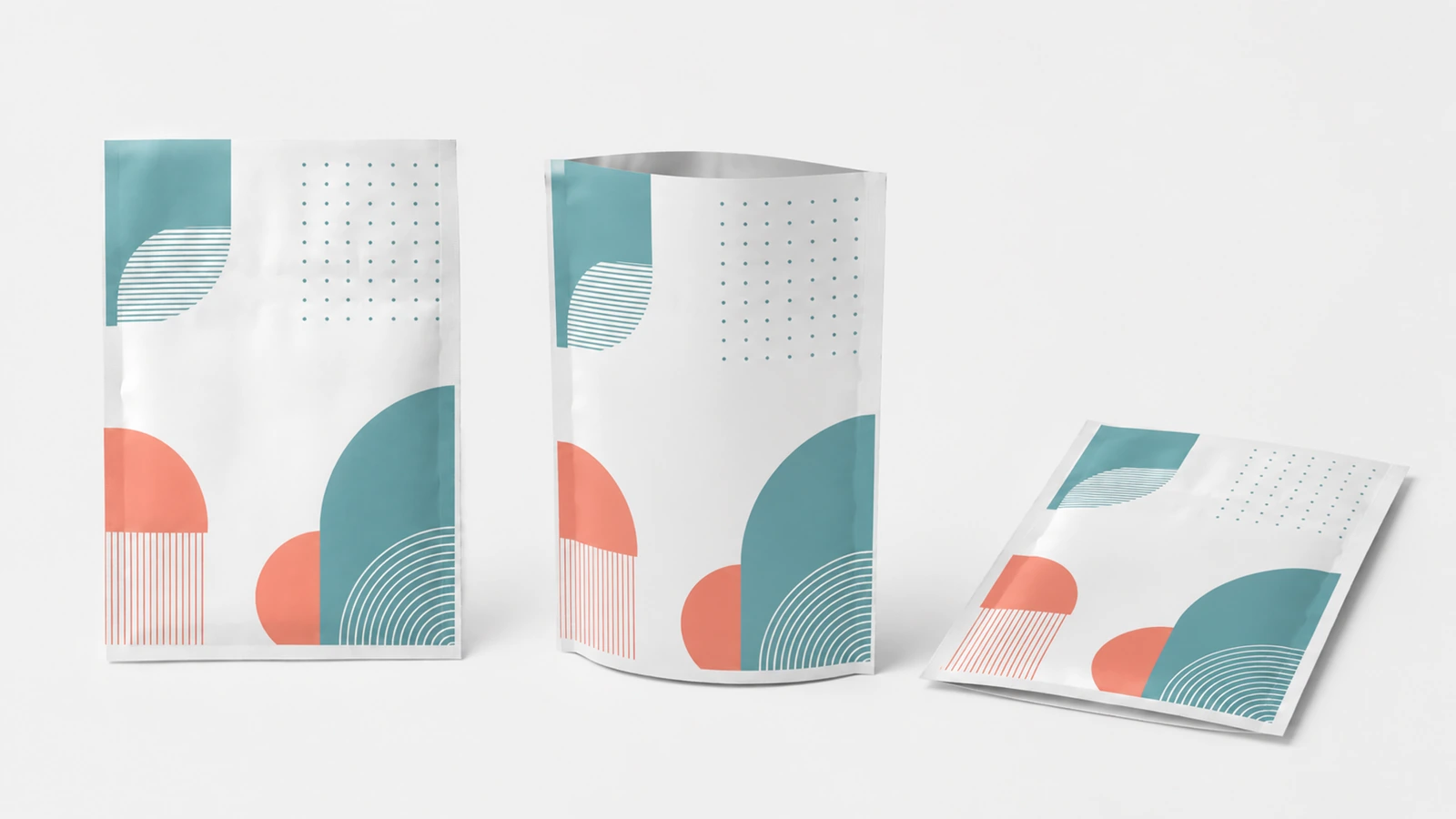
Keep artwork approval separate from functional approval. A digital proof checks layout; it does not establish seal strength, barrier performance, opening behavior, or filling-machine compatibility. Record which sample represents each approved attribute, especially when the appearance sample differs from the material used for line trials.
Agree manufacturing checkpoints without assuming a factory capability
A typical production route includes incoming-film checks, printing, lamination where required, curing as applicable, slitting, pouch forming and sealing, feature cutting, inspection, and packing. The precise sequence depends on the selected construction. This is a planning framework, not a claim about equipment or processes already verified for this SKU.
Separate sample preparation, artwork approval, tooling where applicable, production, inspection, and transportation in the schedule. No factory-specific MOQ, production time, unit weight, or dimensional range has been supplied for this product. Those fields remain quotation or sample-measurement items; another manufacturer’s published figures are not a substitute.
Validate sealing and finished-package behavior
Trial the proposed pouch on the intended equipment using the actual product. Establish the working combination of sealing temperature, pressure, and dwell time. Check that the opening can be handled consistently and that the final seal area remains clear of contents. A successful empty-bag demonstration is not a filled-product line trial.
Seal strength measures the force needed to separate a sealed specimen. ASTM F88/F88M[2] provides a test method, not a universal acceptance value for every pouch. Agree the specimen width, support technique, reporting units, and acceptance limits; assess factory seals as well as the final closing seal.
Leak testing addresses a different question: whether the package contains an escape path. Select an integrity method appropriate to the material and contents, potentially including an applicable bubble-leak method. Do not treat a passing peel-force result as proof of leak tightness, or assign a dye-test method without checking its material scope.
| Acceptance item | What to record | Decision it supports |
|---|
| Dimensions and seals | Outside dimensions and seal widths in mm; agreed tolerances | Handling, usable space, and filling compatibility |
| Laminate construction | Layers from outside to inside; thickness in µm, identifying whether per wall | Material identity and consistent comparisons |
| Seal strength | Force per specimen width, such as N/15 mm; method and failure mode | Acceptance against the agreed sealing specification |
| Package integrity | Method, sample condition, observations, and acceptance criteria | Detection of leakage paths |
| Opening and printing | Tear behavior, optional zipper function, color reference, and barcode scan | Usability and presentation |
These are proposed acceptance fields, not reported test results. No universal pass value is assigned. The buyer, pouch supplier, and filling operator should agree the test conditions, sampling approach, and treatment of nonconforming material before committing to bulk production.
Which material and purchasing route fit your priorities? ↑
Compare constructions by the problem they must solve
| Construction to evaluate | Reason to consider it | Important limitation |
|---|
| PET/PE or BOPP/PE | Transparent constructions for suitable dry products and sample applications | Do not assume suitability for oxygen-sensitive contents or a particular shelf life |
| PET/VMPET/PE | Metallized barrier construction for products needing additional protection | Not equivalent to solid aluminum foil; verify barrier after conversion and handling |
| PET/AL/PE | Foil-containing construction where light protection and demanding barrier targets matter | Opaque, with recycling limitations; mechanical damage can compromise performance |
| PA/PE | A candidate where puncture resistance is a selection priority | Suitability still depends on product shape, thickness, and loaded-package testing |
| EVOH-containing construction | A possible route when transparency and oxygen protection are both priorities | Humidity affects performance; test under relevant exposure conditions |
| Mono-material or paper-look alternatives | Evaluate a defined recycling objective or desired surface appearance | Neither appearance nor material naming proves recyclability, compostability, or adequate barrier |
This table identifies candidate structures from the supplied research, not available inventory or approved product specifications. Do not choose by thickness alone, and do not assume ordinary constructions are microwave-safe, retortable, or compatible with hot filling. Those uses need their own material selection and validation.
For oxygen barrier, ASTM D3985[3] addresses film and laminate transmission measurements. Specify the applicable method edition in the test agreement rather than treating a historical listing as current. Film data alone does not establish finished-package performance.
Request oxygen transmission rate in cm³(STP)/(m²·day), with temperature, humidity, and oxygen-pressure conditions. Request water-vapor transmission rate in g/(m²·day), with temperature and humidity conditions, using an agreed applicable method such as ASTM F1249. Values collected under different conditions should not be presented as direct equivalents.
Compare order economics without inventing a starting price
Digital printing is a route to evaluate for trials, frequently changing designs, and multiple SKUs. Gravure introduces cylinder preparation and can be considered for established repeat volumes. Flexography is another quotation option. Availability, artwork suitability, setup charges, minimum quantities, and production schedules require confirmation for the actual project.
Compare quotations using identical dimensions, construction, print requirements, features, quantities, and delivery terms. Ask whether tooling, samples, testing, packing, and freight are included. A lower pouch price can be offset by setup costs, excessive inventory, or a specification that fails the filling trial.
For a fair flat-pouch versus stand-up-pouch comparison, hold the product-protection requirements constant. The flat design removes the need for a standing base, but no percentage saving is established here. The right choice depends on the intended display, handling, and order economics—not a generic cost index.
Which documents support food-contact and recycling claims? ↑
For US food applications, the FDA component-status guidance[4] explains that the article’s regulatory status depends on its constituent substances and intended use. Ask for documentation identifying the selected construction and applicable conditions rather than relying on an unqualified “FDA-approved pouch” label.
For EU projects, include a review of the applicable plastics requirements under Regulation (EU) No 10/2011[5]. Identify the food type, contact conditions, and supporting declaration and migration evidence. The linked consolidated text is a reference version; confirm the applicable requirements for the intended placement on the market.
A document for a base film does not automatically establish suitability of every finished combination of film, ink, adhesive, and coating. Check that evidence corresponds to the proposed construction. No certification, food-contact approval, or migration-test result is established for this product by the information supplied.
Keep environmental claims equally specific. A mono-material design does not guarantee collection and recycling in every destination, while a paper-look surface does not make a laminate paper-recyclable. Compostability requires supporting evidence for the claimed disposal conditions. Review destination-specific packaging obligations separately from food-contact suitability.
How do you protect delivery quality and repeat orders? ↑
Define how empty pouches will be counted, protected, and identified in cartons. Confirm measures against moisture, crushing, and handling damage for the intended shipping route. Finished filled packs need a separate distribution assessment because their weight, shape, and interaction with the outer packaging differ from stacks of empty bags.
Agree inspection and complaint handling before dispatch: which defects require isolation, what photographs or samples are needed, and how affected batches will be traced. Shipping damage, print mismatch, seal defects, and delayed delivery should not be left to an informal discussion after the goods arrive.
For repeat orders, retain the approved artwork revision, construction, dieline, color reference, functional sample, and agreed acceptance criteria. Record changes to the contents or filling line before reordering. A previous successful batch is a useful reference, but it does not validate an undisclosed material substitution or changed use condition.
What matters most before placing an order? ↑
- Choose the format around the selling environment. Flat pouches suit boxed, sampled, and appropriately designed hanging presentations; unaided shelf display calls for another construction.
- Approve usable space with a loaded sample. External dimensions and target net weight alone do not establish capacity.
- Match evidence to the claimed performance. Film barrier, seal strength, package integrity, and shelf-life validation answer different questions.
- Make quotations comparable. Fix the construction, print requirements, features, quantity, and delivery scope before comparing prices.
- Separate confirmed facts from requested options. MOQ, production time, unit weight, factory capabilities, and performance results remain unverified for this product reference.
Start with a quote-ready packaging brief ↑
The strongest starting point for custom three side seal pouches is a clear description of what the package must do. Include the contents, target fill, proposed dimensions if known, shelf-life objective, filling equipment, artwork, destination market, requested features, order quantity, and required delivery date. Unresolved dimensions or materials should remain sample-development items rather than assumed specifications.
Request a product-specific quotation using that brief and reference NSKU-797-01.




The information below is required for social login
Sign In
Create New Account