Custom printed pinback buttons turn a logo, message or illustration into a compact wearable item for events, promotions, schools, clubs, fundraising and branded merchandise. Because no factory-specific MOQ, lead time, unit weight, material specification or test result has been verified for provisional SKU NSKU-712-01, final options must be confirmed through quotation, artwork review, sampling and written order approval.
Who Uses Custom Pinback Buttons—and What Must Each Buyer Control?↑
Marketing teams use custom pinback buttons as easy-to-distribute campaign merchandise at exhibitions, product launches, store activations and community events. Schools, clubs and nonprofit organizations use them for identification, fundraising, member recognition and issue awareness. Artists and merchandise sellers may offer them as affordable collectibles, while promotional-product distributors combine them with printed collateral, apparel or event kits.
These buyers rarely make the decision alone. A marketer may define the message, a designer prepares the artwork, procurement evaluates cost, finance approves the order, and an event or fulfillment team receives and distributes the finished goods. A useful purchasing record therefore needs more than an attractive mockup. It should identify the approved artwork version, intended audience, quantity by design, packaging method, delivery destination, required arrival date and the person authorized to approve the proof.
For distributor and repeat-order programs, consistency becomes as important as first-order appearance. Preserve the final file, proof, dimensions, finish description, backing configuration and packaging instructions as a controlled specification. This reduces the risk that a later reorder uses an outdated logo or an unapproved color variation.
A Small Printed Button Can Create Large Problems When Specifications Stay Vague↑
Problem: A circular design may look balanced on a screen but lose text or visual emphasis after the outer area wraps around the button edge. Small lettering can become difficult to read, dark artwork may print differently from a backlit display, and an incorrectly oriented pin-back can make the graphic appear tilted when worn.
Agitation: These problems become expensive when multiplied across an event order. Misaligned graphics, weak closures, wrinkled edges, cracked covers or inconsistent packing can leave the buyer sorting units immediately before distribution. Public manufacturing guidance identifies misalignment, paper wrinkling, incomplete assembly and inconsistent crimping as recurring button-making problems.Common button-making defects[1]
Solution: Treat the purchase as a controlled print-and-assembly project. Select size by reading distance and artwork complexity, confirm the visible area rather than relying only on overall diameter, approve a proof, inspect a physical sample when the program is important, and document acceptance criteria before bulk production. Pricing, MOQ, production time, unit weight, packaging and delivery remain quotation or sample-verification items for this product.
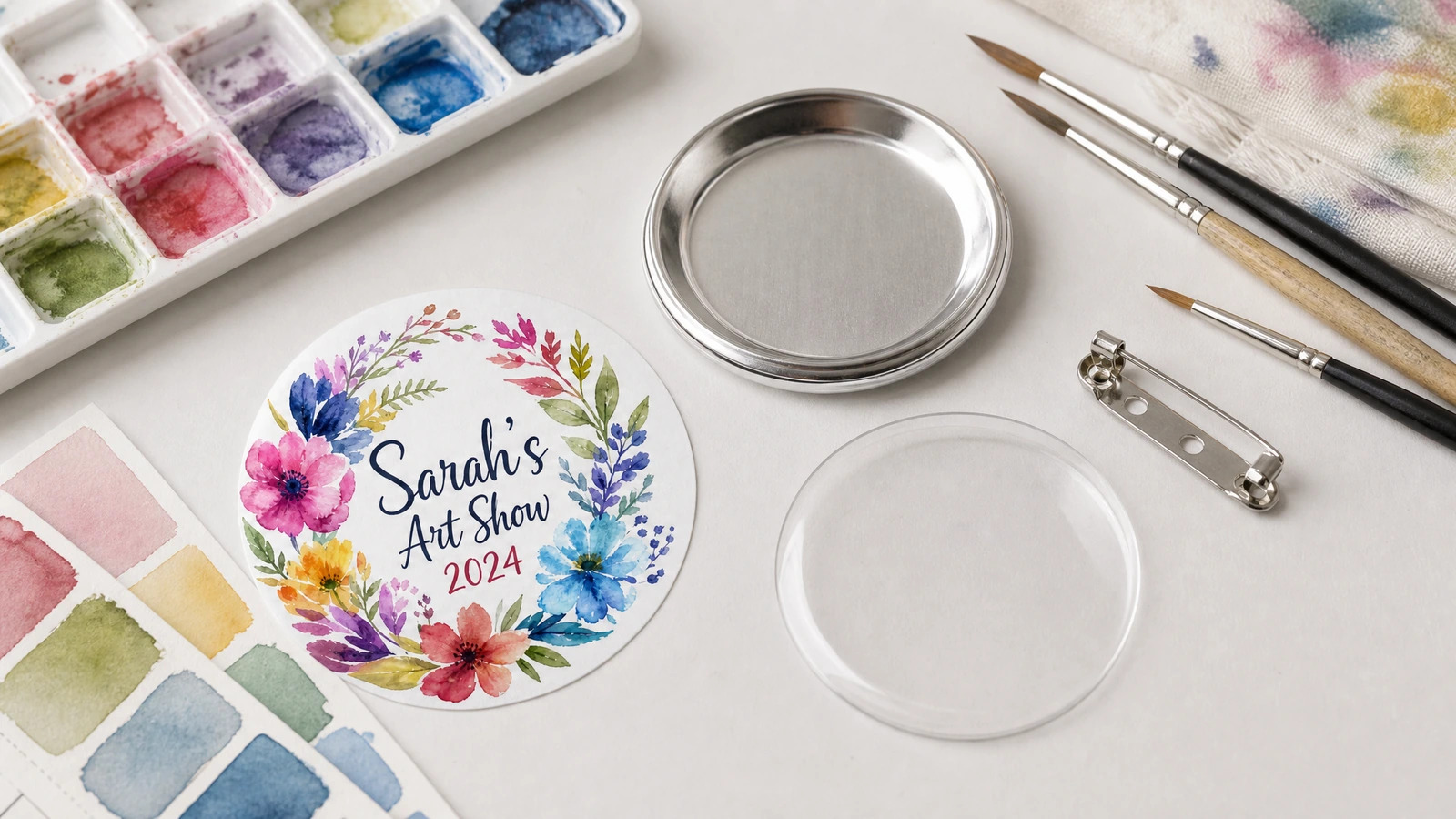
Table of Contents
What Is a Custom Printed Pinback Button?↑
A custom printed pinback button is a wearable badge that presents buyer-supplied artwork on its front and uses a pin mechanism on the back. Conventional production commonly combines a formed front shell, printed graphic, transparent protective layer and backing component. The layers are joined mechanically, typically through a two-stage pressing or crimping process rather than depending primarily on adhesive.
This construction differs from an enamel pin. A printed button reproduces artwork on a printed insert beneath a clear surface, making it suitable for photographs, gradients, campaign messages and frequently changing designs. An enamel pin uses a shaped metal design with filled color areas and normally involves a different tooling, pricing and sampling model. Buyers should describe the requirement as a “printed pinback button” when they want the former.
Size Is a Communication Decision
Common industry diameters include 1, 1.25, 1.5, 1.75, 2.25, 3 and 3.5 inches, but this list does not establish which sizes are available for NSKU-712-01. Industry guidance often treats 2.25 inches as a standard, versatile reference because it offers more room for copy than smaller formats.Button size guidance[2] The best project size still depends on the actual message, viewing distance, clothing weight and desired distribution cost.
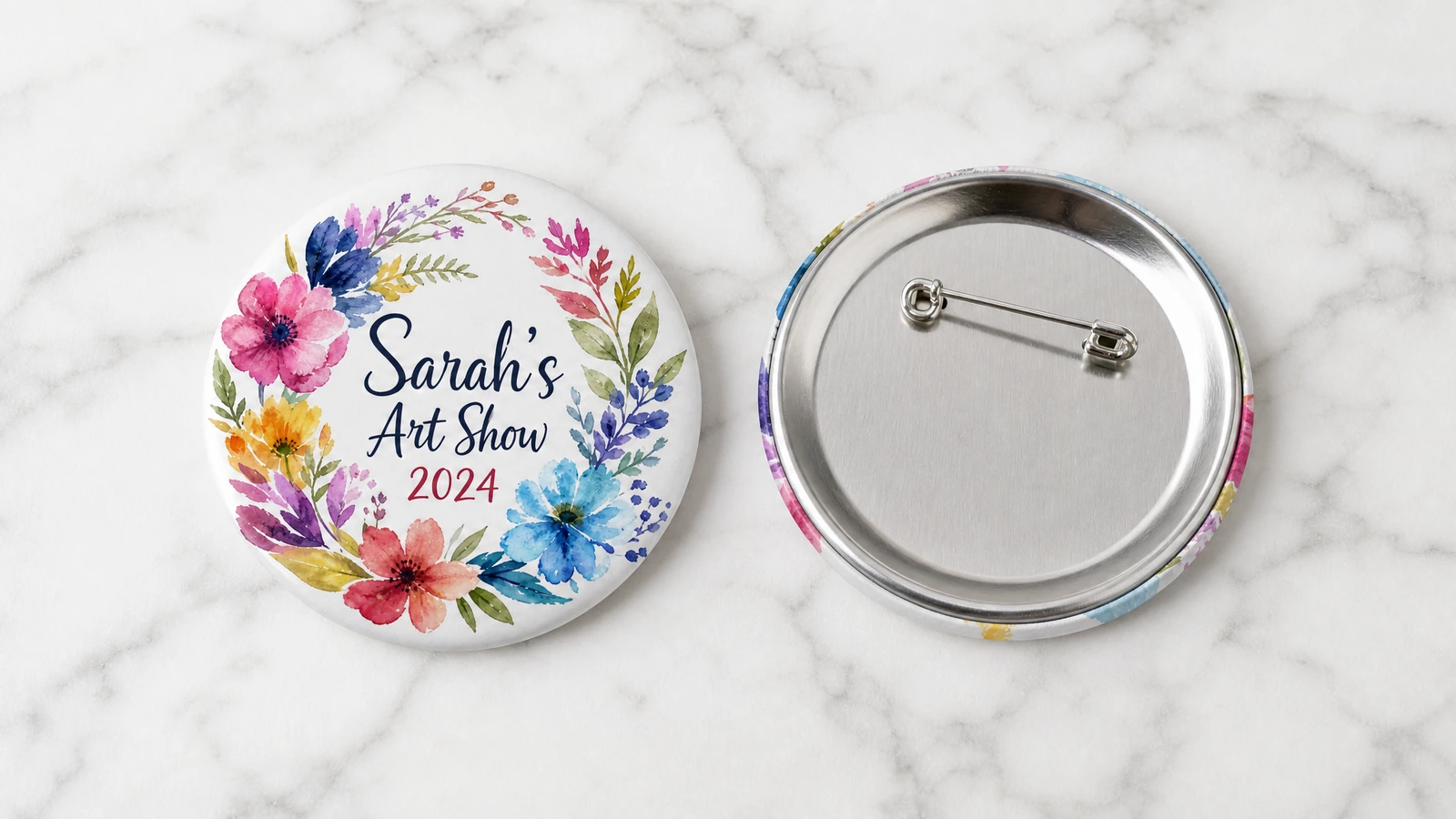
Do not assume that the nominal diameter equals the fully visible design area. Part of the printed sheet normally extends around the curved edge and into the assembly. Keep logos, names, dates, QR codes and essential wording inside the supplier’s confirmed safe area. If a QR code is required, verify it on a physical production-intent sample using several relevant phones, distances and lighting conditions; inclusion in a digital proof alone does not demonstrate scan performance.
Finish and Backing Must Match the Use Environment
Glossy, matte, soft-touch and specialty visual effects appear in the broader market, while pin-back, clothing-magnet, clip and other backing formats are also offered by various suppliers. None should be assumed available for this provisional SKU until quoted. A glossy finish may emphasize color and contrast, while a lower-glare option may improve readability under strong venue lighting. The final result must be evaluated on a physical sample because screen rendering cannot reproduce surface reflection or tactile feel.
A conventional pin-back is economical and familiar for mass distribution, but its sharp point can puncture fabric. Magnetic attachment avoids a pinhole in clothing but needs an application-specific holding evaluation and may not be suitable for every wearer or environment. Any claimed holding capacity or compatibility must be determined by the actual button size, backing configuration, garment, loading condition and sample validation.
How Do You Move from Artwork to an Approved Bulk Order?↑
1. Define the Distribution Job Before Requesting a Quote
State the application, audience, number of designs, quantity per design, target arrival date, destination and packaging plan. Include whether units will be handed out individually, attached to cards, divided among departments or packed as multi-design sets. Add a reasonable project-specific allowance for staff, replacements and unexpected attendees rather than ordering solely from the forecast visitor count.
The request for quotation should separately identify product cost, artwork or setup charges, proofing, sampling, packaging, freight, taxes where applicable and any expedited-production or shipping charge. For NSKU-712-01, MOQ, production time, unit weight and final price are not verified facts and must be stated in the supplier’s written quotation.
2. Preflight the Artwork
Vector AI, EPS, PDF or SVG files are generally preferred for logos, typography and sharp outlines. High-resolution raster artwork may also be workable; 300 DPI at intended print size is a practical starting point found in industry guidance, not a guarantee for every image. Request the exact template for the selected diameter before final layout.
- Extend backgrounds through the confirmed bleed area.
- Keep essential elements inside the confirmed safe zone.
- Outline or package fonts when requested.
- Use a clear file name with design name and revision number.
- Identify required brand colors, while recognizing that screen-to-print differences may remain.
- Check spelling, dates, phone numbers, URLs and legal marks at final size.
- Avoid placing critical detail across the curved edge unless that effect is intentional.
3. Approve the Proof Without Treating It as a Physical Test
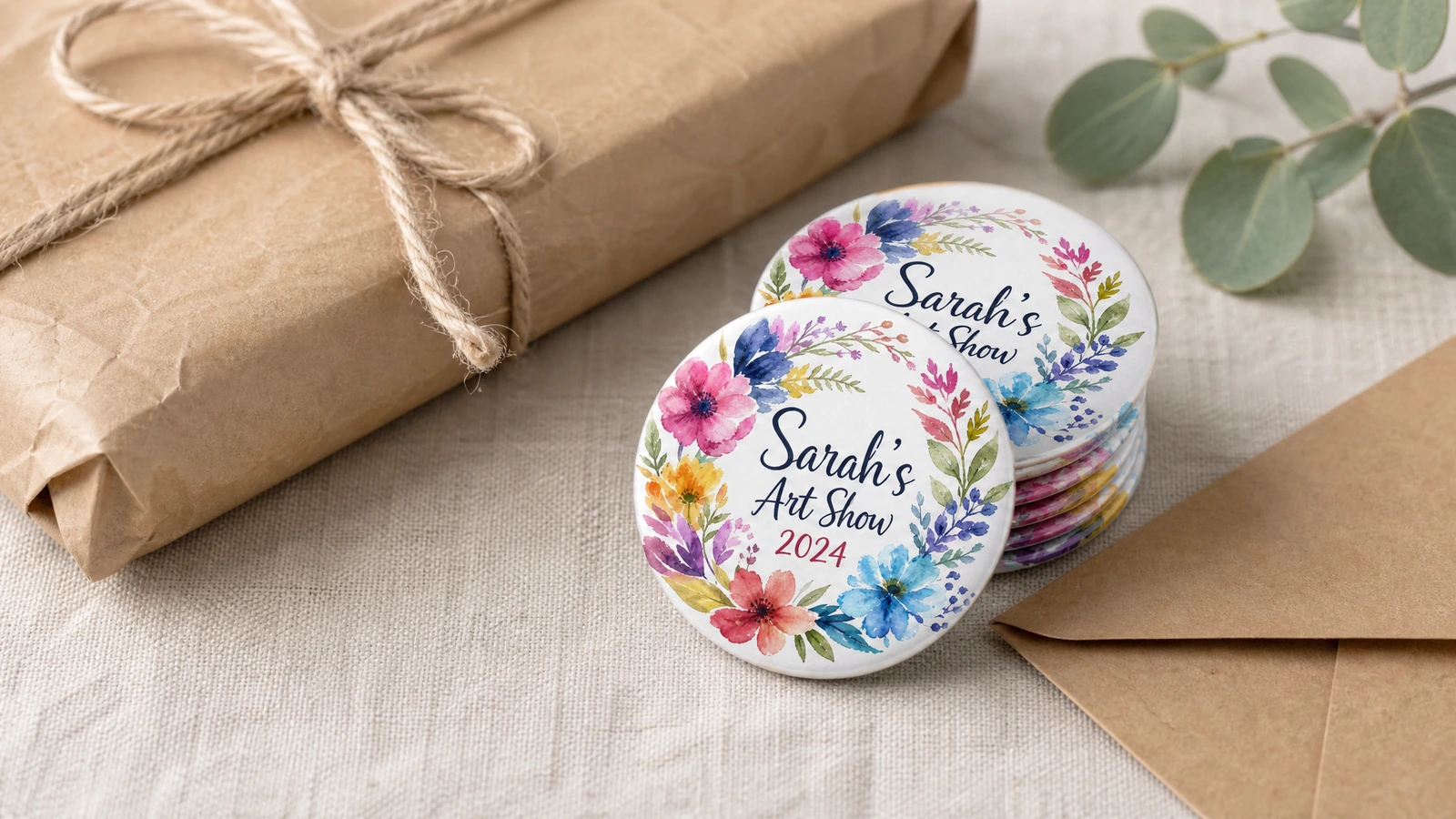
A digital proof should show artwork placement, orientation and the intended cut or wrap boundary. Some market suppliers publicly describe free digital-proof workflows, demonstrating how common proof approval is within the category.Digital-proof market reference[3] That competitor policy does not establish the proof terms for this product.
Assign one authorized approver and record approval in writing. A digital proof can catch layout and content errors, but it does not establish color tolerance, finish, backing strength, edge quality, actual weight or packaging performance. Use a production-intent sample when these characteristics affect acceptance.
4. Confirm the Production-Intent Sample and Locked Specification
The sample should use the intended size, artwork, surface, backing and packaging wherever possible. Review it in the real use context: on likely garments, at expected viewing distance and under representative lighting. Record the accepted sample with photographs, date, version number and reviewer. If a specification changes afterward, identify whether a new proof or sample is required.
5. Inspect the Shipment Against Measurable Criteria
Define the inspection plan before production. The agreement should identify the sample size or inspection level, what constitutes a critical, major or minor defect, and the remedy if the shipment does not conform. Without those points, “good quality” remains subjective.
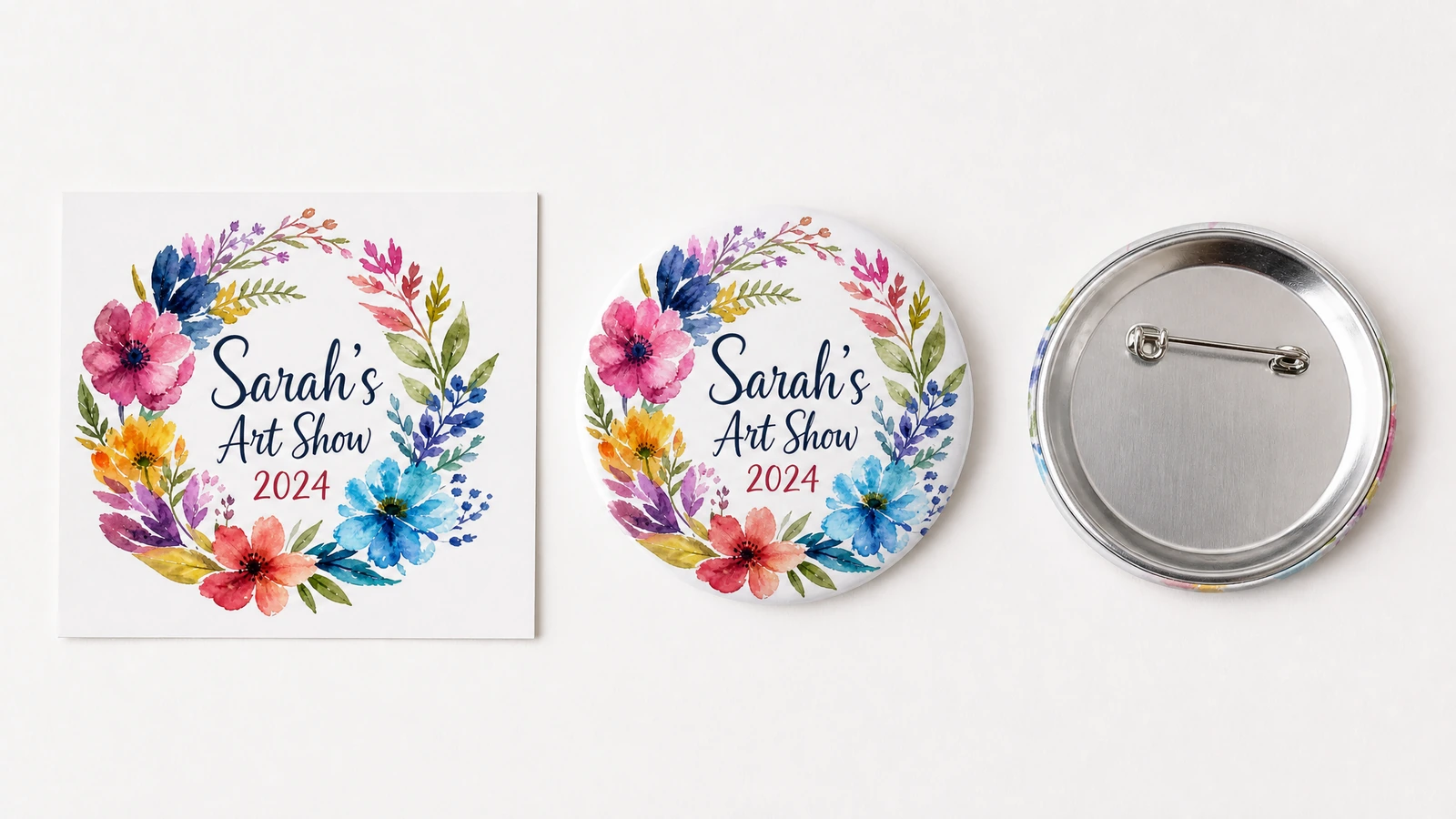
- Artwork position: Check whether the front image is acceptably centered and correctly oriented relative to the back.
- Print condition: Look for blur, contamination, unexpected banding, scratches or visible color inconsistency.
- Edge assembly: Inspect for wrinkles, splits, incomplete tucking or loose layers.
- Backing operation: Open and close sampled pins carefully; check attachment and orientation.
- Count and assortment: Reconcile total quantity and quantities by artwork, pack or destination.
- Packaging: Check labeling, separation between designs and protection from movement or moisture.
6. Control Packing, Shipping and Reorders
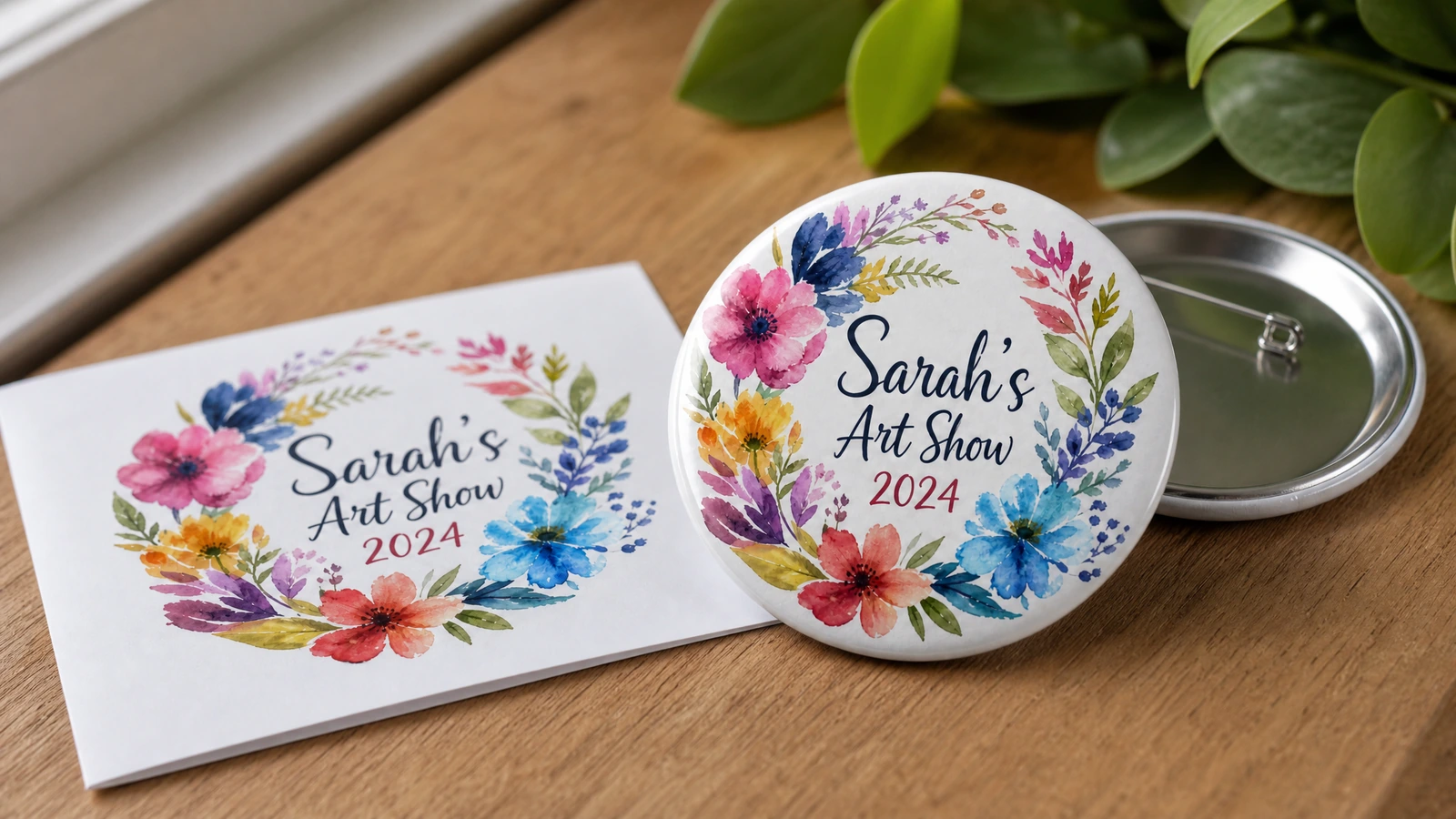
Packaging should follow the distribution method rather than a generic preference. Loose bulk packing may be efficient for staffed handouts, whereas individually separated units, labeled design groups or backer-card packs may help retail and multi-location programs. Available packaging formats and their costs remain quotation items.
Production time and transit time must be recorded separately. Public discussions show why buyers worry about international production and shipping variability: one artist reported seeing experiences ranging from one or two weeks to two or three months with an overseas source.Buyer-reported delivery variability[4] This is anecdotal evidence, not a measured performance claim for the current product, but it supports building schedule contingency into event purchases.
Before shipment, confirm the delivery address, receiving hours, contact person, carton labels and tracking method. After acceptance, archive the approved artwork, proof, sample record, quotation, purchase order, inspection result and reorder instructions. Reorders should reference that record but still confirm whether materials, equipment or color conditions have changed.
Which Buying Path Best Fits Your Quantity, Deadline and Risk?↑
| Buying path |
Best suited to |
Main advantage |
Main limitation |
Required control |
| Professional custom production |
Events, campaigns, branded programs and repeatable merchandise |
No buyer investment in pressing equipment; scalable purchasing workflow |
MOQ, schedule, freight and sample terms vary by supplier |
Written quote, approved proof, sample and inspection criteria |
| Low-minimum online service |
Design testing, small programs and short product runs |
Lower inventory exposure |
Higher unit cost may apply; options differ by platform |
Compare total landed cost and verify finish and backing |
| DIY press production |
Schools, studios or creators with repeated local demand |
Immediate control after equipment and compatible components are available |
Equipment investment, labor, training and defect management shift to the buyer |
Material compatibility, setup discipline and documented operating procedure |
| Snap-together plastic kit |
Simple crafts and temporary projects |
No conventional button press may be required |
Public reviews report difficult closure, cracking and small fasteners on some kits |
Test assembly effort and usable yield before committing to an event |
The table compares purchasing models, not equivalent products. A snap-together craft kit should not be assumed to match a mechanically pressed printed button in appearance, structure or repeat-order consistency. The provided Amazon review set for one 2.25-inch plastic kit includes both positive ease-of-use reports and complaints about cracking, closure force and a small pin; those findings apply to that reviewed kit, not automatically to NSKU-712-01.
Use Published Competitor Claims Only as Market Benchmarks
| Decision field |
Published market example |
Status for NSKU-712-01 |
| Minimum order |
Some services advertise ordering as few as one, while a bulk-focused supplier publishes a 250-piece minimum for multiple round sizes. |
Not verified; request a written quantity-specific quotation. |
| Production time |
Published competitor schedules range from fast-turn services to multi-day standard production. |
Not verified; confirm the start point, business-day definition and capacity for the requested quantity. |
| Unit weight |
Depends on diameter, shell, backing and packaging. |
Not provided; determine by weighing an approved production-intent sample. |
| Material and finish |
Metal-shell, printed-insert and protective-film constructions are common; specialty finishes are available from some suppliers. |
Not verified; lock the bill of materials and finish in the quotation or sample record. |
| Compliance documents |
Documentation needs depend on intended age group, market and product classification. |
Not verified; request project-specific reports or certificates before approval. |
For context, one online supplier advertises a one-piece minimum and publicly listed production options,low-minimum market benchmark[5] while another supplier publishes a next-day average for qualifying orders of 500 buttons or fewer.turnaround market benchmark[6] A separate supplier lists standard and expedited calendar-day schedules.production schedule reference[7] These are comparison points only; they do not establish our MOQ or production time.
Safety and Compliance Depend on the Intended Audience
A pin introduces a puncture hazard, and detachable components may require additional consideration in child-directed applications. Do not describe a product as child-safe, lead-free, CPSIA compliant or certified without matching documentation for the final materials and intended classification. For products designed or primarily intended for children aged 12 or younger, the U.S. Consumer Product Safety Commission explains testing and certification responsibilities for children’s products.
Material composition should be verified rather than inferred from appearance. Where the project is child-directed, request applicable laboratory reports and a Children’s Product Certificate when required. If a pin-back is unsuitable for the use environment, evaluate another attachment through a physical application test instead of assuming that a different back automatically removes every risk.
Key Takeaways for a Defensible Purchase Decision↑
- Custom printed pinback buttons should be purchased from a controlled specification, not from a visual mockup alone. — Lock the size, artwork revision, visible area, finish, backing, quantity by design, packaging and acceptance method before bulk approval.
- Children’s products can be subject to a 100 ppm total-lead limit for accessible components under CPSIA. — 100 ppm (Source[8])
- The U.S. promotional-products market exceeded $26 billion in distributor sales in 2023. — $26.09 billion (Source[9])
- ASI reported record U.S. promotional-products sales for 2024. — $26.6 billion, up 1.8% year over year (Source)
- Environmental claims must identify the specific material and production basis. — One industry manufacturer publicly describes recycled U.S. steel, rooftop solar power and geothermal heating and cooling, illustrating the level of detail buyers should request rather than accepting a generic “eco-friendly” label (Source[11])
External market figures demonstrate that buttons participate in a substantial promotional-products economy, but market size does not predict the performance of a specific order. Product approval still depends on project-level evidence: quotation, proof, sample, inspection and delivery documentation.
Approve the Evidence Before You Approve the Order↑
Custom printed pinback buttons can support high-volume distribution, visual identity and repeatable merchandise programs, but their apparent simplicity should not reduce purchasing discipline. The decisive details are the visible artwork area, physical finish, backing behavior, batch consistency, packaging and arrival plan. Keep competitor claims separate from product-specific commitments, and convert every critical requirement into a written specification or sample-based acceptance check.
Request one project-specific quotation and production-intent sample for NSKU-712-01, including the proposed size, quantity by design, finish, backing, packaging, MOQ, production time, unit weight and delivery destination.




The information below is required for social login
Sign In
Create New Account