SEO title: Custom Rubber Keychains | 2D Molded Soft PVC
Meta description: Plan custom rubber keychains in 2D molded soft PVC. Review artwork, attachments, samples, quality checks, and quote requirements before ordering.
Custom rubber keychains turn logos and illustrations into portable branded accessories. This product is a custom 2D molded soft PVC keychain—not silicone or a fully sculpted 3D charm. Final dimensions, attachments, pricing, minimum order quantity, and delivery timing require a project-specific quotation and sample approval.
For promotional buyers, the priority is a recognizable logo and an order that arrives before the event. For independent artists, it is a character that remains readable at keychain size. For retailers, packaging and repeat-order consistency matter alongside the appearance of the piece itself. Each use calls for a different purchasing brief.
A design can look convincing on a screen yet disappoint when delivered: lettering becomes difficult to read, the attachment differs from the approved choice, or the finished dimensions feel wrong. If those problems appear only after the full order arrives, replacement work can disrupt a launch and consume the budget reserved for promotion.
The practical solution is to connect every buying decision to something reviewable: a dimensioned drawing, a named attachment, a physical sample, an itemized quotation, and written acceptance criteria. The guide below explains what to specify before committing to production, without treating another supplier’s specifications or test results as evidence for this product.
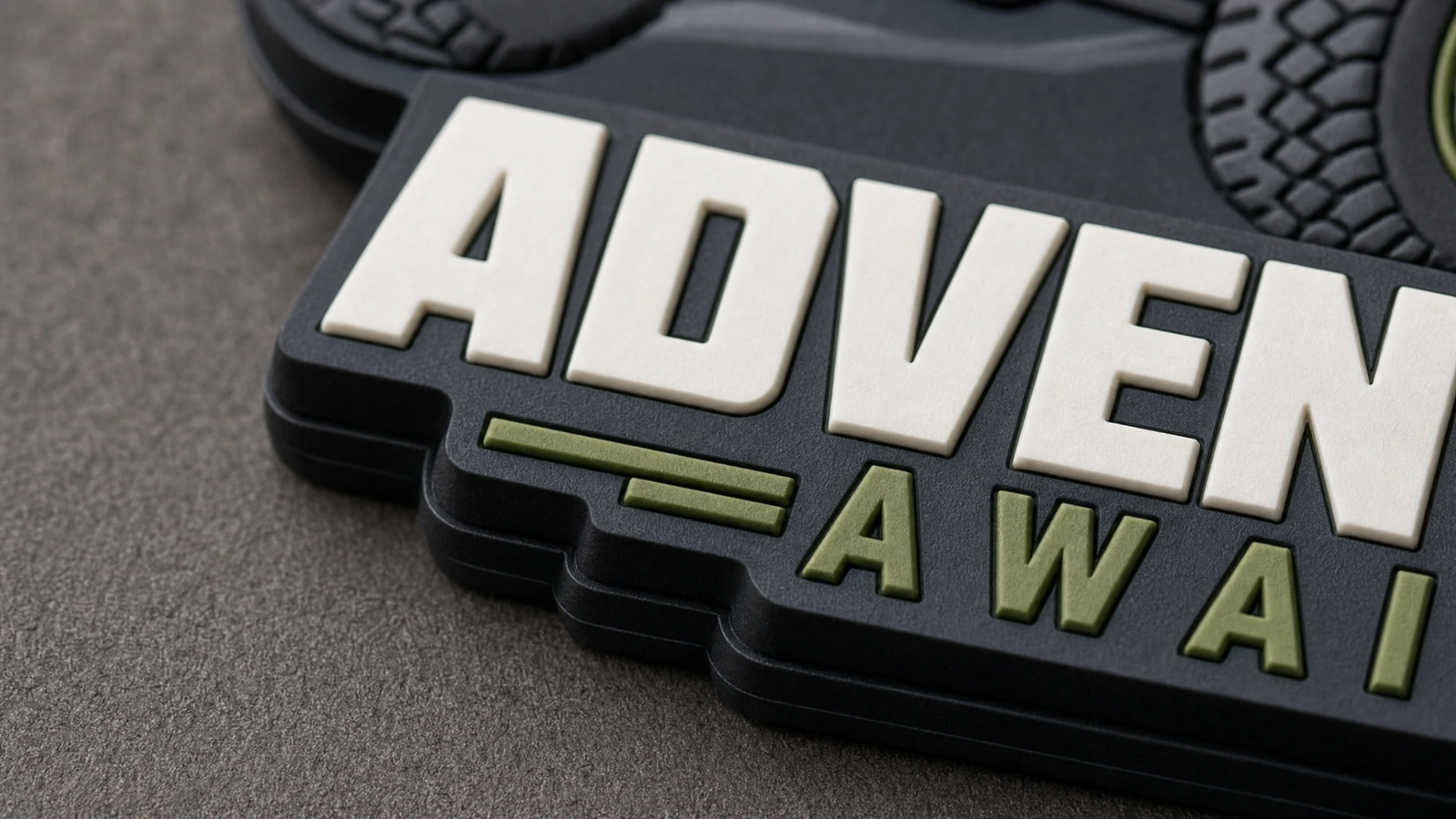
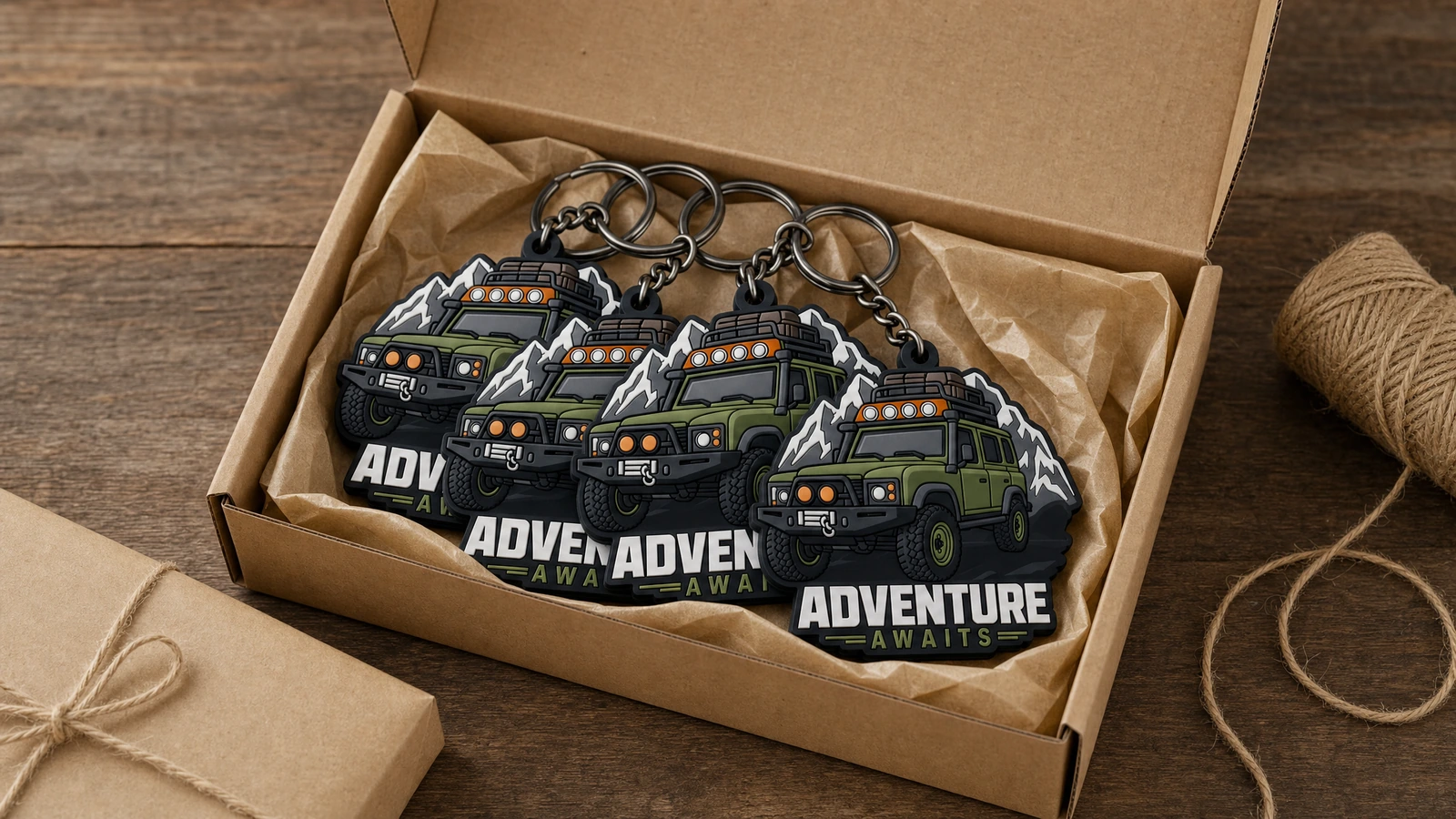
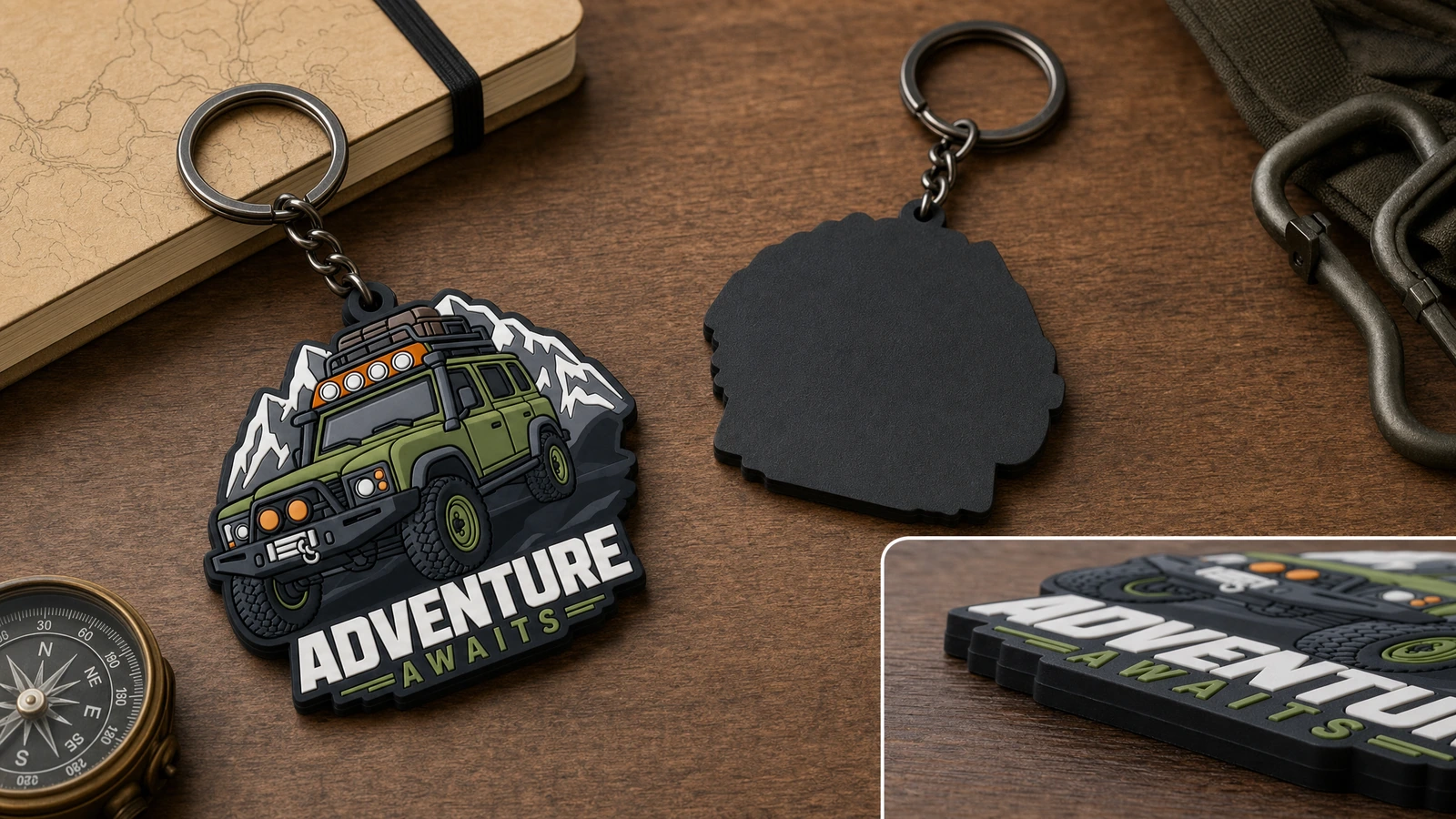
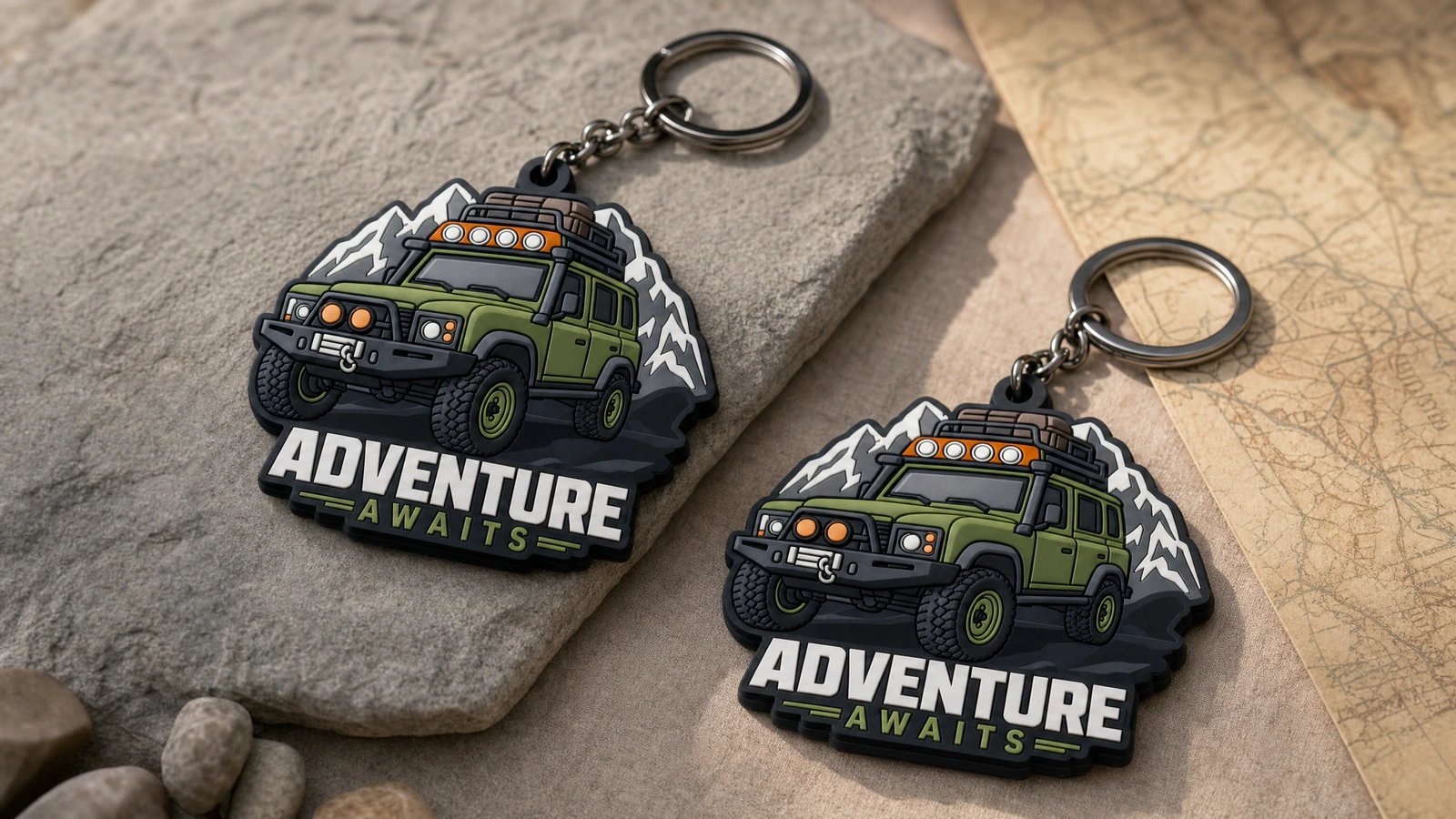
Images illustrate design and purchasing considerations. They are not photographs of approved production samples, verified equipment, or completed tests.
Product and purchasing guide
What exactly are you ordering? ↑
The confirmed product identity is Custom 2D Molded Soft PVC Keychains, within Custom Keychains → Custom Rubber Keychains. “Rubber” is the search and category term; the specified material is soft PVC. It should not be interpreted as a silicone formulation, natural rubber, or proof of any particular chemical composition beyond that identity.
The 2D designation distinguishes this product from a fully sculpted character charm. Communicate the intended appearance with front, reverse, and side views rather than relying on the word “dimensional.” Any requested surface level, reverse decoration, or finish needs its own feasibility review.
| Purchasing field | Current status | Required confirmation |
|---|
| Product identity | Custom 2D molded soft PVC keychain | Match the quotation and approval documents to this construction |
| Reference | Provisional SKU NSKU-759-01 | Use alongside the artwork revision |
| Dimensions and thickness | Not established | Dimensioned drawing in mm and approved sample |
| Unit weight | Not established | Sample measurement in g, identifying whether hardware is included |
| Colors, reverse, and hardware | Project-dependent | Written specification and assembled sample |
| MOQ, price, and schedule | Awaiting quotation | Quantity per design, USD pricing, and dated milestones |
| Performance and compliance | No product-specific test evidence supplied | Applicable testing and supporting documentation |
This separates known identity from purchasing variables. A competitor’s thickness, minimum quantity, certification, or turnaround time cannot fill an unconfirmed field for this SKU.
Keep your design readable at its finished size ↑
Start with the information that must remain recognizable: the brand mark, character silhouette, or essential wording. Secondary details should earn their space. A complex illustration may need simplification rather than uniform shrinking, especially where narrow color areas and closely spaced letters compete for attention.
Specify body width, body height, and thickness separately in mm. Also distinguish the molded body from the complete assembly, including its ring or clasp. Otherwise, a quoted overall measurement can create the wrong expectation about the size of the visible design.
Review a printout at intended size, then check the physical sample. Look at letter spacing, enclosed shapes, separation between colors, and the position of the attachment hole. Minimum line width, color-area width, and spacing remain tooling-dependent; no production limit has been confirmed for this product.
For promotional kits, compare the sample with the other items in the pack. For creator merchandise, inspect the smallest identifying character details. For bag use, assess the assembled attachment against the intended fastening point. Fit, supported load, and the number of keys accommodated depend on physical dimensions, the loaded configuration, and sample validation—not the illustration alone.
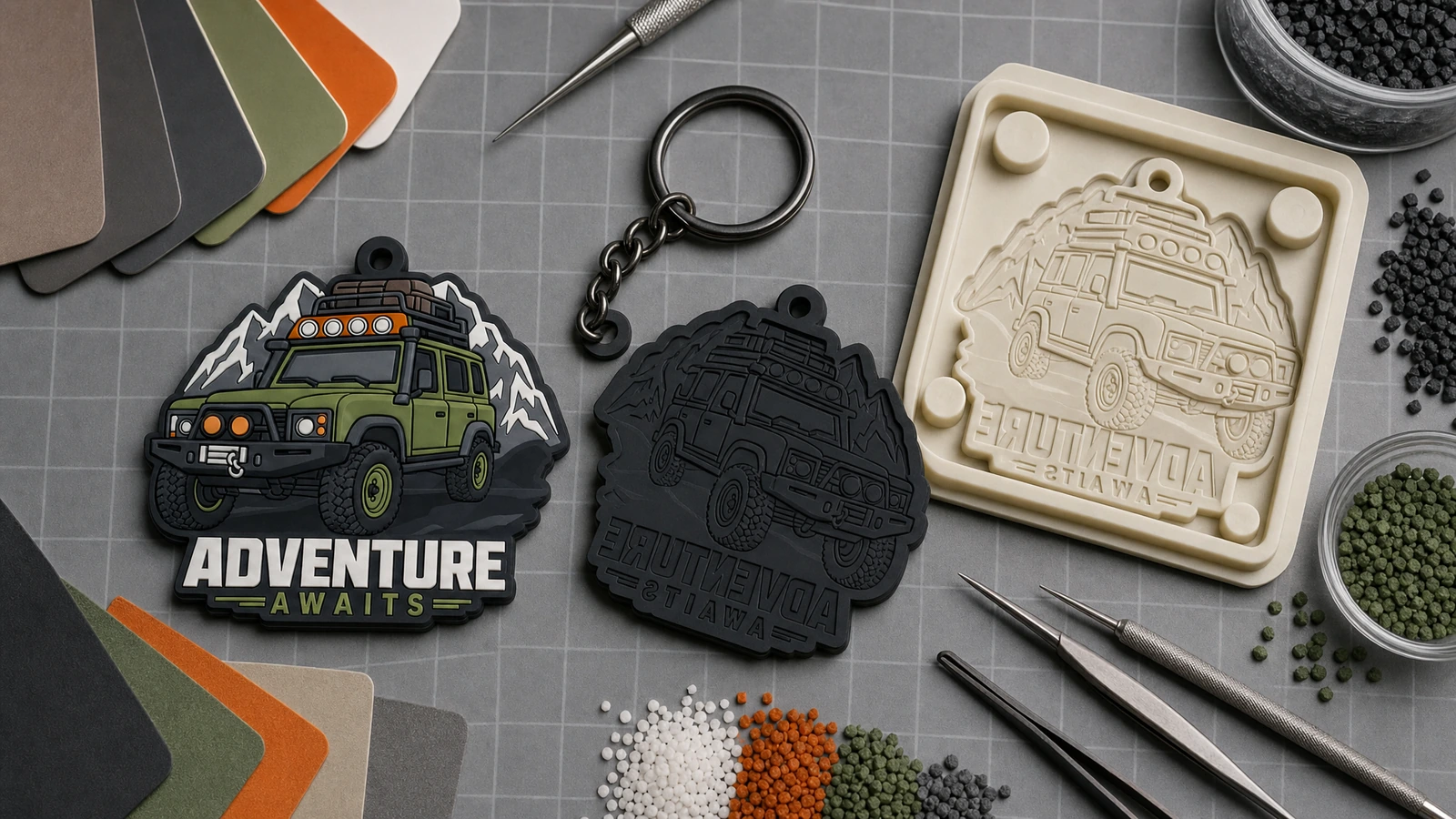
Choose the face, reverse, and attachment together ↑
Describe the front and reverse independently. A molded front does not automatically include a decorated back. If you want reverse text, contact information, or a QR code, request a separate feasibility assessment identifying whether that element would be molded or printed. Small text and machine-readable graphics require approval on the actual sample.
Likewise, distinguish the desired surface appearance from proven performance. A smooth or textured look is a design choice, not evidence of scratch resistance. Any additional printing introduces a separate area to examine during rubbing and wear checks. Avoid assuming that a molded body makes every decorated surface equally resistant.
Split rings, lobster clasps, and ball chains appear among market options, but availability for this project must be quoted. Identify the complete connection path from the PVC body to the final ring or clip. Approve its appearance, opening action, assembly orientation, and connection security together.
The attachment area deserves particular attention because an attractive charm is of little use if its connection separates. Review the material surrounding the hole and inspect the assembled sample for opening gaps or damage. Do not substitute a generic “strong hardware” description for an agreed inspection method.
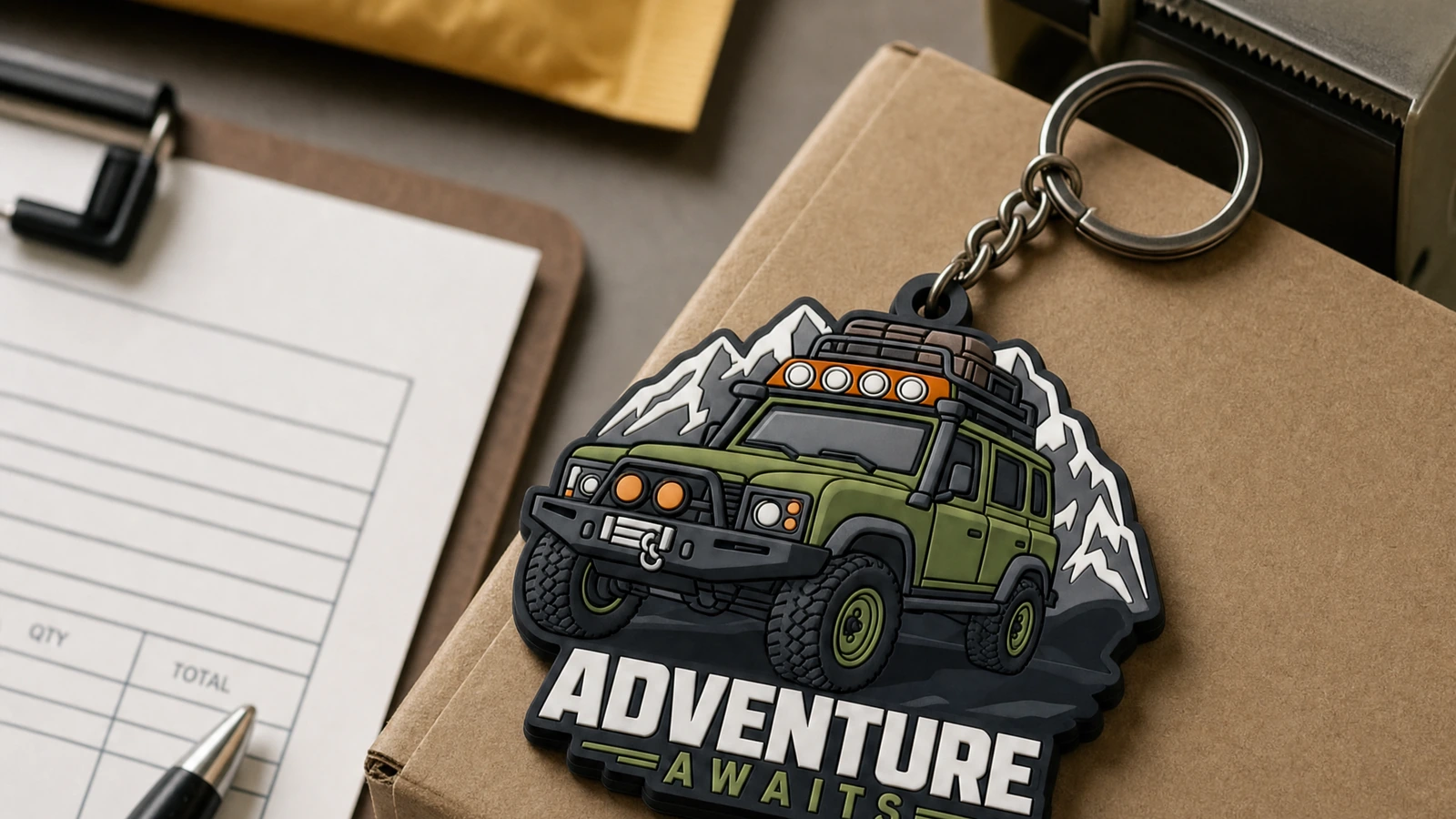
How should you prepare artwork for review? ↑
Prepare vector artwork where possible, using formats such as AI, EPS, or vector PDF. If only a JPG or PNG exists, provide the clearest original and identify which details must survive any redraw. Placing a raster image inside a PDF does not make its edges editable vector shapes.
- Separate the components: show the body outline, front artwork, reverse artwork, and attachment position clearly.
- Define colors: include color references rather than expecting a screen preview to establish the physical match.
- Flag gradients: identify shading or photographic effects that would need simplification or a separately assessed decoration method.
- Protect essential details: mark wording and character features that cannot be removed without approval.
- Control revisions: use one approved file version and record subsequent changes.
A digital proof can establish layout and proposed dimensions, but it cannot establish softness, actual color appearance, connection strength, or surface wear. Keep those decisions in the physical-sample stage. If artwork is changed after sampling, identify which approvals need to be repeated before production.
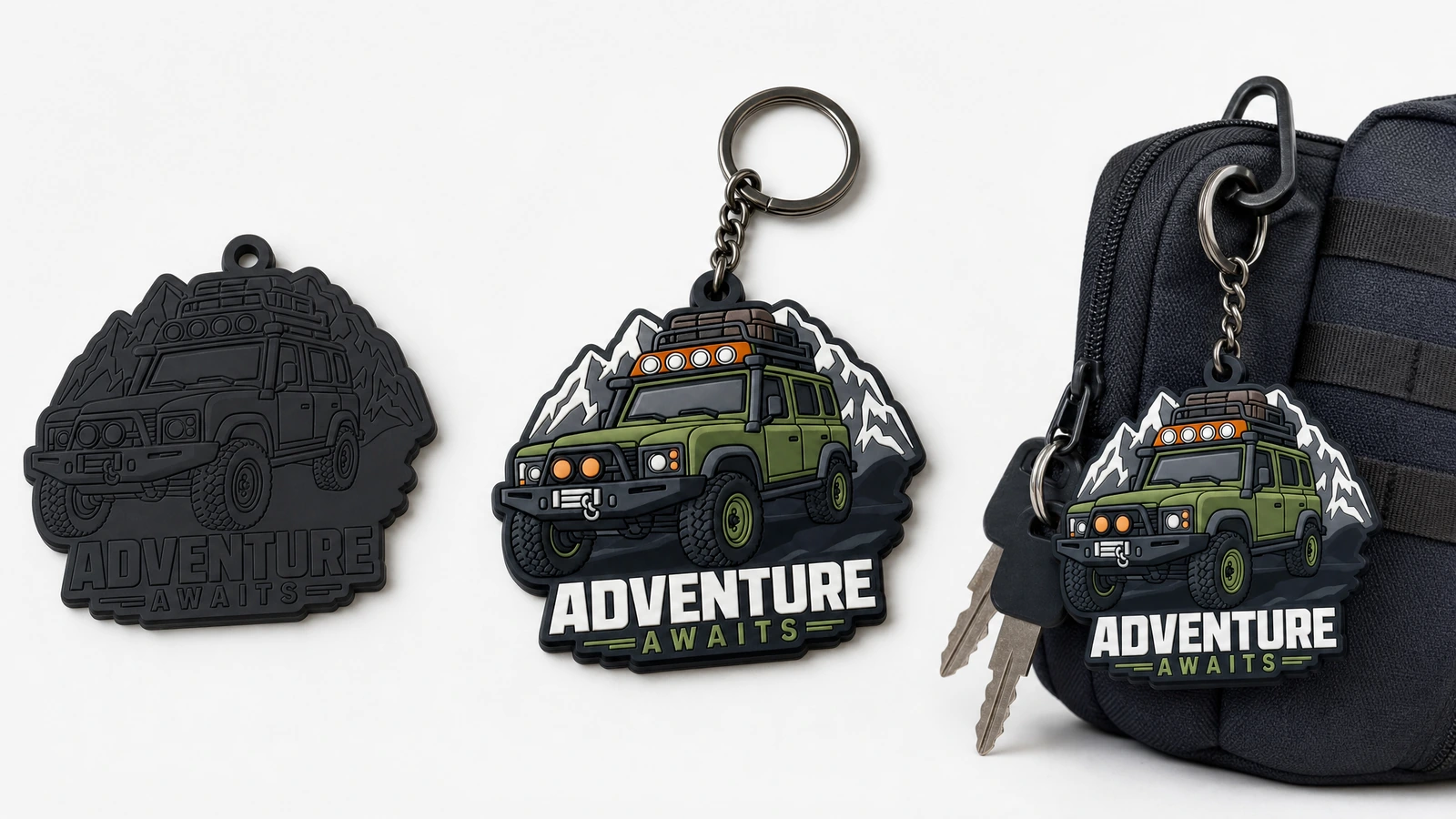
How do you move from artwork to production? ↑
General soft PVC production involves preparing artwork and a mold, dispensing colored material, heat processing, trimming, and hardware assembly. This PVC manufacturing guide[1] also explains why molded color areas use solid colors rather than photographic gradients. It describes an industry process, not a verified production line or processing specification for this SKU.
- Confirm the brief. Establish artwork, requested quantity, intended use, destination, and required arrival date before evaluating the offer.
- Approve the drawing. Check dimensions, color references, front and reverse treatment, and the complete attachment arrangement.
- Confirm tooling and sampling terms. Identify charges, revision conditions, sample delivery, and what the sample approval covers.
- Inspect the assembled sample. Review actual appearance, measurements, handling, and connection behavior against the brief.
- Release production in writing. Link the release to the approved revision, sample, quotation, and acceptance criteria.
- Review shipment readiness. Check the agreed inspection evidence, quantities, packaging, and shipping documents.
A production estimate is not an arrival commitment. Ask what starts the production clock and whether timing is expressed in working or calendar days. Keep artwork changes, sampling, production, transit, and customs clearance visible as separate stages rather than compressing them into an ambiguous turnaround claim.
Compare the right construction and the complete cost ↑
Choose the construction around the artwork and intended experience, not around the broad “rubber keychain” label. Alternative materials are comparison routes, not confirmed options within this SKU. Their own samples and quotations are needed before making a purchase decision.
| Construction | Reason to consider it | Decision boundary |
|---|
| 2D molded soft PVC | A soft-format logo or illustration using defined color areas | Approve readable details and the actual assembled feel |
| 3D molded PVC | A concept that specifically needs sculpted form | A separate construction requiring its own tooling and quotation |
| Silicone | A brief that specifically calls for silicone material | Do not transfer its claimed properties to soft PVC |
| Printed acrylic | Artwork that depends on photographic detail or gradients | Assess its rigid format, printing, and attachment separately |
| Metal or enamel | A brief prioritizing a metal appearance and feel | Review weight, finish, artwork treatment, and total cost |
No universal lifespan, environmental ranking, or price premium is established by this comparison. Those conclusions require comparable products and evidence under defined conditions.
For custom rubber keychains, request an itemized quotation covering tooling, samples, unit price, attachments, reverse decoration, packaging, testing where applicable, freight, and the treatment of taxes or duties. Record the currency and quantity per design so that an attractive headline price is not mistaken for a complete delivered offer.
Budget comparison: calculate the total quoted project cost from the same included items, then compare it against the required quantity. If one offer excludes sampling or freight while another includes them, reconcile those differences before comparing unit prices.
Also ask whether additional designs need separate molds, whether revisions change the tooling charge, and under what conditions a mold can be reused. A smaller opening order may limit unsold inventory, but the economic trade-off depends on the actual quotation; no low-MOQ or free-tooling promise is established here.
Define quality before approving the order ↑
Turn subjective expectations into observable checks. “Good quality” does not tell an inspector whether an edge is acceptable, a logo is readable, or a connection is secure. Agree the inspection method, sample selection, acceptance limits, and handling of nonconforming pieces before production begins.
| Inspection area | Proposed check | Record needed |
|---|
| Dimensions and appearance | Measure against the drawing; compare wording, shape, colors, and edges with the approved sample | Measurements, photographs, and agreed tolerances |
| Surface decoration | Use an agreed rubbing or scratching procedure where relevant | Method, exposure, observations, and acceptance criteria |
| Body flexibility | Assess bending under defined conditions | Procedure and any cracking, whitening, or permanent change |
| Attachment integrity | Inspect assembly and apply an agreed pull or handling check | Test setup, agreed force if applicable, and failure observations |
| Environmental exposure | Request testing suited to anticipated water, sunlight, or heat exposure | Conditions, duration, and resulting appearance or function |
| Shipment contents | Check assortment, count, hardware choice, and packaging condition | Packing record and discrepancy photographs |
These are proposed acceptance activities, not completed test results. Pull strength, wear resistance, waterproofness, UV resistance, and service life remain unverified until relevant testing is agreed and performed.
Inspect the whole assembly rather than the molded body alone. Also note unexpected odor, tackiness, rough edges, or color transfer. Such observations can trigger investigation, but appearance or smell cannot establish chemical safety. Separate visual acceptance from laboratory testing and retain both records where required.
What evidence supports safety and material claims? ↑
Begin with intended users, use, and sales destinations. A general promotional accessory and a product marketed as a children’s toy require different classification decisions. The CPSC toy safety guidance[2] explains that applicable requirements must be identified for the specific product. A cartoon design does not by itself resolve classification, testing, or certification obligations.
For California sales, distinguish chemical content from the assessment of warning obligations. The official Proposition 65 phthalates guidance[3] states that businesses must determine whether warnings about exposure to listed chemicals are required. “Prop 65 compliant” should not be treated as a universal product certificate or an automatic claim that no warning is needed.
For European distribution, review applicable material restrictions rather than relying on a broad “EU compliant” label. Intertek’s REACH guidance on lead in PVC[4] illustrates why substance, material, and product scope matter. Any toy-related requirements need a separate applicability review.
Request reports that identify the tested material or product, covered components, test methods, dates, and results. A report for another supplier’s PVC compound does not establish compliance of this finished keychain or its metal hardware. No phthalate-free, non-toxic, skin-safe, or child-safe claim is confirmed for this SKU.
Apply the same discipline to environmental language. No recycled-content, biodegradability, or recycling-route evidence has been supplied. Neither soft PVC nor an alternative silicone label establishes a local collection pathway. Before using an environmental claim, identify the specific material evidence and destination-specific end-of-life route that support it.
Plan packaging, delivery, and repeat orders together ↑
Packaging should match distribution: bulk handouts, individual retail units, or insertion into a larger kit. Request the packing arrangement in the quotation, including how finished surfaces and hardware will be separated or protected. Confirm assortment identification where several designs share a shipment.
Do not estimate shipping from the charm body alone. Obtain packed dimensions and gross weight once the assembly and packaging are defined. Freight comparisons should use the same destination and clearly identify whether clearance costs, duties, and taxes are included or excluded.
For a fixed event, work backward from the required arrival date and preserve room for sample corrections and transport uncertainty. Confirm tracking arrangements, the contact for delays, and the procedure for reporting missing or damaged goods. Any rush option needs a written scope rather than an assumed delivery guarantee.
For repeat orders, retain the approved artwork revision, color reference, assembled sample, hardware specification, and packing instructions. Ask about mold retention and reuse terms instead of assuming permanent storage. Reconfirm price and schedule, and identify any material, hardware, or process changes before authorizing a reorder.
Keep these purchasing decisions in focus ↑
- The confirmed construction is specific. This is a 2D molded soft PVC keychain, not a silicone product or fully sculpted charm.
- Commercial terms need a project quotation. MOQ, production time, unit weight, dimensions, and prices have not been verified for this SKU.
- Restricted phthalate limits depend on product scope. — More than 0.1% (1000 ppm) of each listed restricted phthalate is prohibited in accessible plasticized components of covered children’s toys and child care articles (Source[5]).
- Approve the complete assembly. Artwork, molded body, decoration, attachment, and packaging each need an explicit decision.
- Performance claims require evidence. Proposed inspections are not proof of durability, chemical compliance, or environmental benefit.
Turn your concept into a reviewable purchasing brief ↑
A useful order brief makes the trade-offs visible before money is committed: which details matter, what the finished accessory must fit, how quality will be accepted, and when the shipment is needed. That gives the quotation and sample review a clear purpose instead of leaving critical decisions to assumptions.
Request a project-specific quotation for NSKU-759-01 with your artwork, requested quantity, target dimensions, attachment preference, destination, intended audience, and required arrival date.




The information below is required for social login
Sign In
Create New Account