Custom 3D rubber keychains turn logos and characters into molded soft PVC accessories with dimensional detail. Start with your artwork, intended size, quantity and delivery destination, then confirm the sculpted shape, color references, attachment and physical sample before approving production.
For brand managers, merchandise buyers and independent creators, the challenge is not simply making a recognizable shape. It is keeping that shape recognizable at keychain size, choosing a suitable connection point and understanding the complete order cost before committing to a custom mold.
Built around your intended use: consider a mascot for an event giveaway, an original character for a merchandise collection, or a logo accessory for a membership package. Each scenario creates different priorities: event buyers need an agreed delivery schedule, retail buyers need presentation-ready packaging, and creators need clarity about tooling and repeat-order costs.
A design can look convincing on screen yet lose its smallest lettering when molded. A prominent attachment can interrupt a character’s outline, while an incomplete quotation can hide packaging or freight costs. Discovering these issues after sample approval can mean additional revisions, expense or pressure on a launch date.
The practical solution is to evaluate the artwork, finished structure and purchasing terms together. This page identifies the decisions to include in your brief and the checks to complete before ordering. Pricing, minimum quantity, dimensions, production timing and performance remain subject to quotation, sampling or testing for your design.
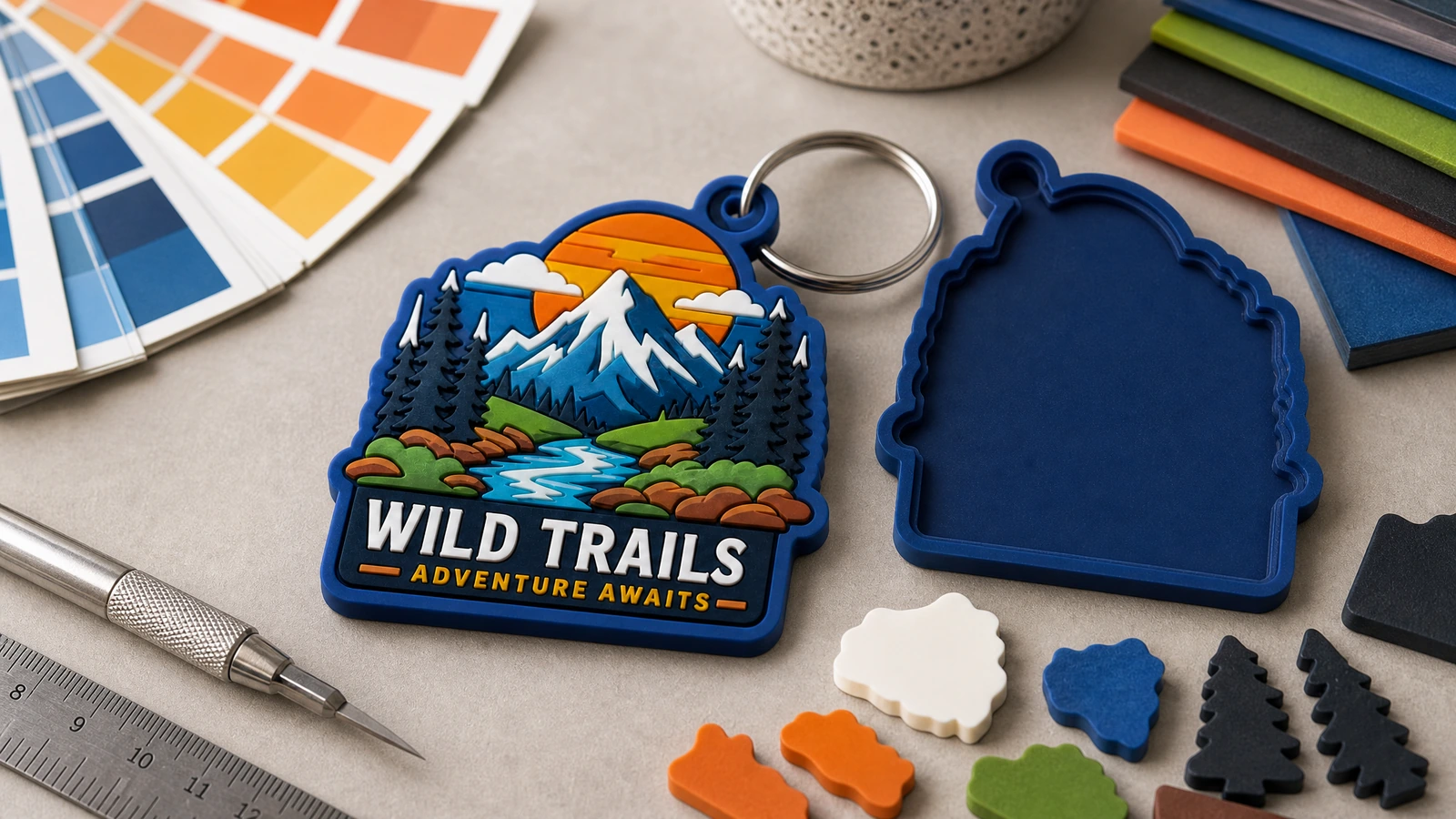
Explore the product and ordering guide
What makes this a molded 3D keychain? ↑
The product identified here is Custom 3D Molded Soft PVC Keychains, provisionally referenced as NSKU-759-02 within Custom Keychains → Custom Rubber Keychains. “Rubber” describes the familiar product category; the specified body material is soft PVC. It should not be treated as confirmation of silicone, natural rubber or another elastomer.
The defining feature is the molded dimensional design. Rather than relying only on a flat printed image, the artwork is interpreted through raised areas, recessed details and shaped contours. A mascot’s face, for example, can use changes in depth to separate features. The exact sculpting must be established in the production drawing and sample.
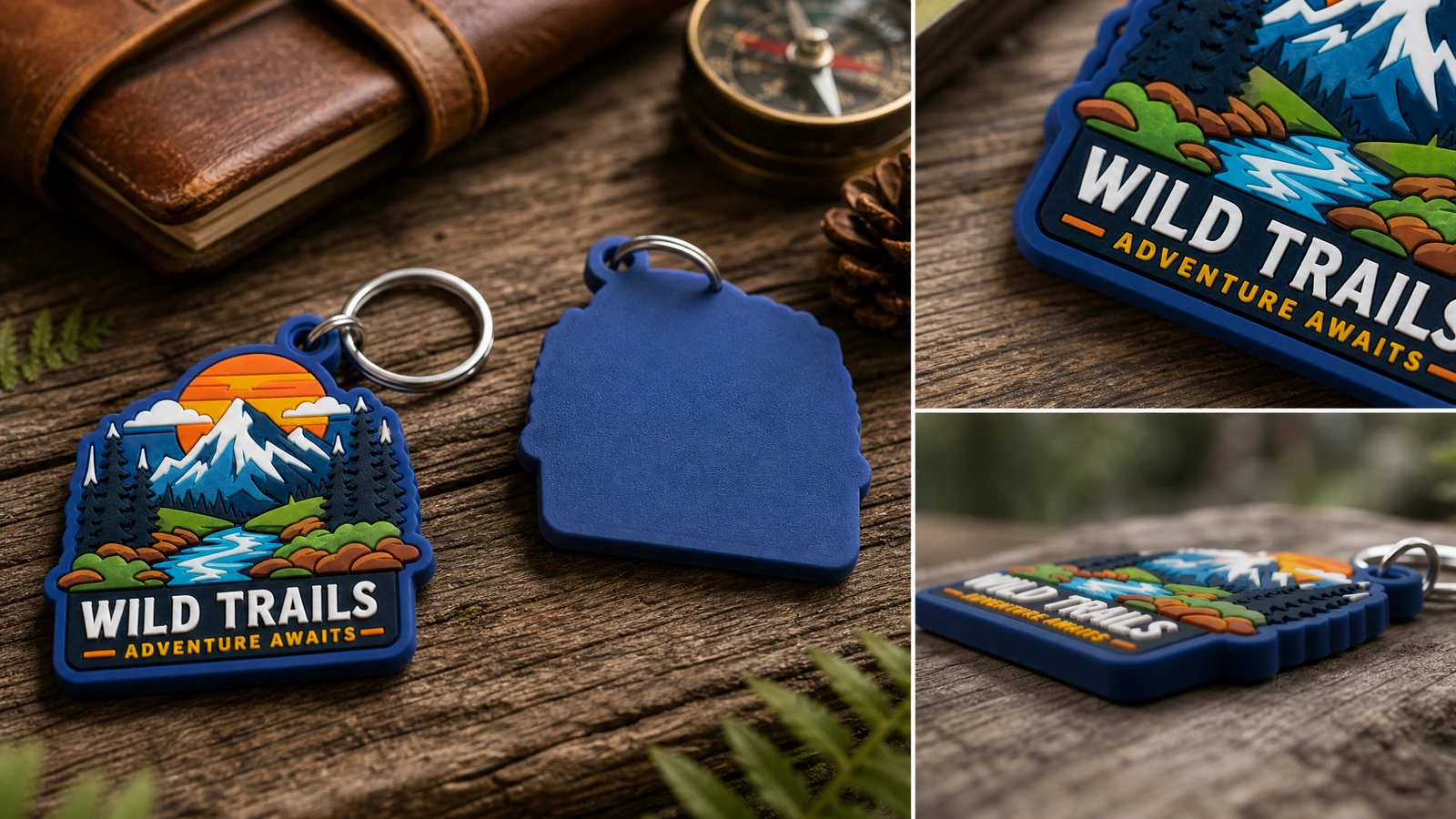
Do not assume that “3D” means a fully rounded figurine visible from every direction. A contoured front with a different back construction and an all-around sculpted body are distinct specifications. Front, side and rear views should establish which interpretation your quotation covers.
This distinction also separates molded merchandise from 3D-printed accessories. A reference image of a printed figure does not establish that its joints, fine protrusions or internal structure can be reproduced in a soft PVC mold. Describe the appearance you want, then review the proposed manufacturing interpretation.
| Product field | Current status | Purchasing implication |
|---|
| Product identity | Custom 3D Molded Soft PVC Keychains | Use this description consistently in the inquiry and order. |
| Body material | Soft PVC | Formulation and any restricted-substance claims require separate evidence. |
| Dimensions and unit weight | Not supplied | Request dimensions in mm and finished assembly weight in g. |
| Attachment and back construction | Not supplied | Specify the requested arrangement for feasibility review. |
| MOQ, price and production time | Not supplied | Obtain written terms for the proposed design and quantity. |
| Testing and certifications | No product-specific evidence supplied | Confirm requirements and supporting documents before making claims. |
This is a specification starting point, not a stock-product specification sheet. Competitor dimensions, published price tiers and advertised delivery times do not establish the terms or capabilities available for this product.
Make the design readable before committing to tooling ↑
Judge the artwork at its intended finished size
Provide the proposed width, height and overall thickness in mm, with the attachment shown separately. A large monitor preview can hide problems that become obvious at actual size: narrow letter openings, small facial features or closely spaced color boundaries. Review a size-matched printout alongside the dimensioned drawing.
Identify the elements that must survive simplification. For a company logo, that might be the wordmark and outer silhouette; for a character, it might be the eyes, expression and distinctive outline. Ask for proposed changes before tooling rather than leaving the manufacturer to decide which details matter most.
There is no verified minimum text size or line-width specification for this product. Fine lettering, narrow gaps, gradients and small cutouts therefore require design review and sample confirmation. If a detail cannot be reproduced clearly, consider enlarging it, simplifying it or removing it from the molded face.
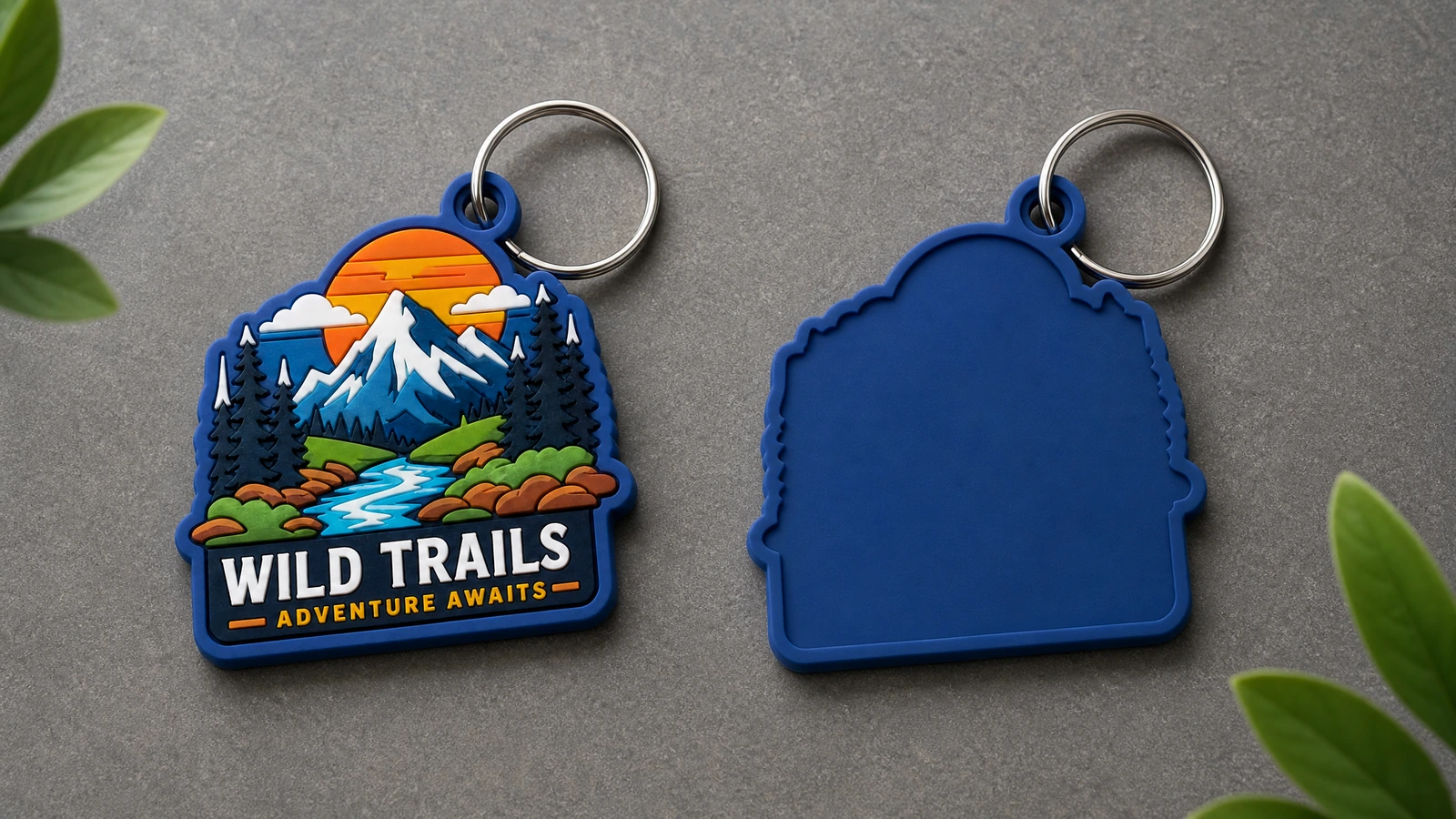
Define the front, back and attachment as separate decisions
Mark which regions should be raised, recessed, rounded or flat. Then specify the desired back: plain, molded or printed, subject to feasibility and quotation. These are different constructions, not interchangeable descriptions of a double-sided product. Any proposed printing or coating should be evaluated separately from the molded body.
Provide Pantone references or an agreed physical color reference when brand color matters. These establish a communication target, not a promise of exact reproduction. Approve the physical sample under agreed viewing conditions; a screen preview alone cannot resolve differences in material appearance.
Show the hanging position and requested hardware, such as a split ring or lobster clasp. Review the surrounding PVC, the connecting parts and how the accessory hangs. Key capacity, attachment fit and load suitability must be determined by physical dimensions, loaded configuration and sample validation—not inferred from a photograph.
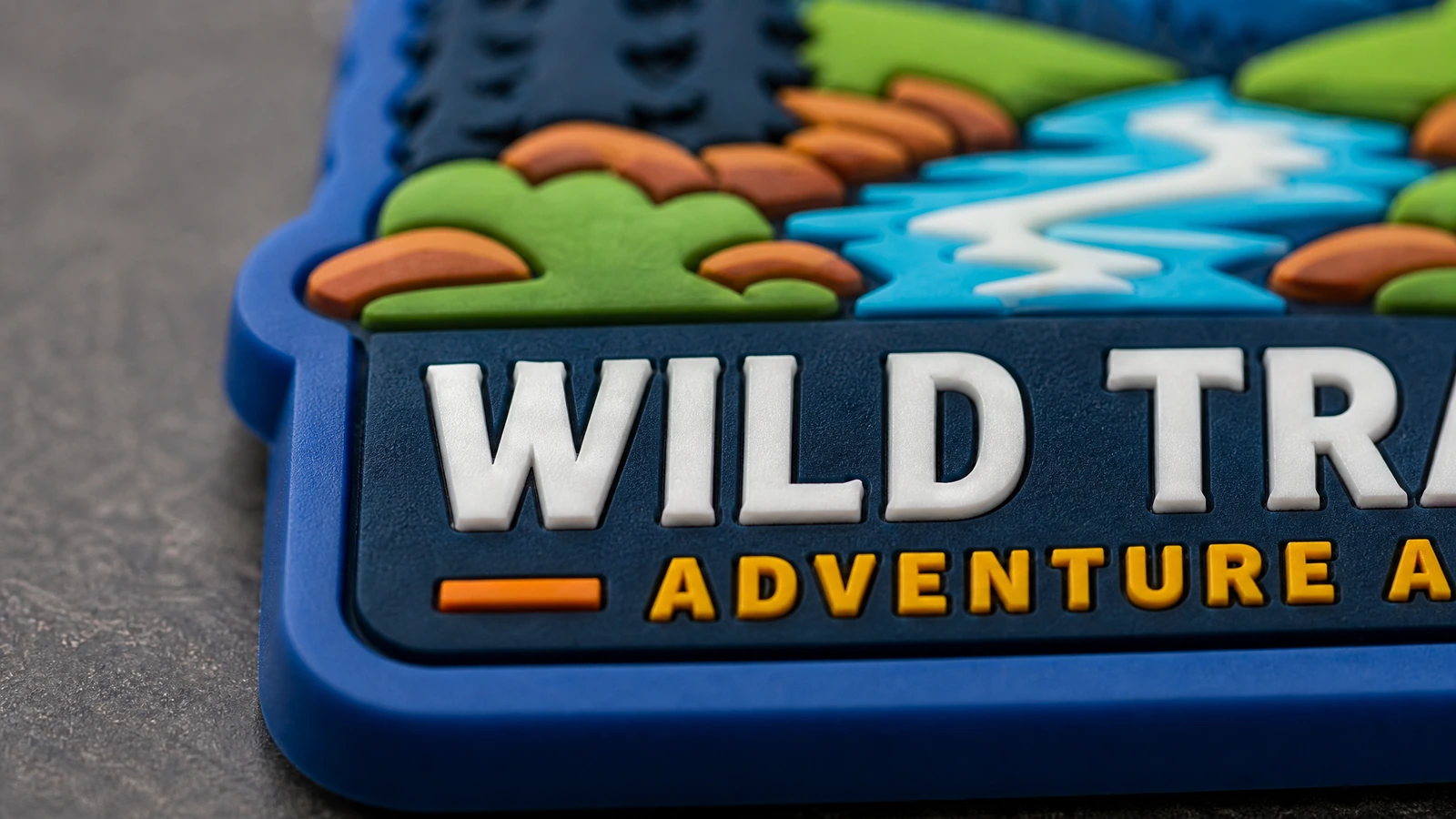
How do you move from artwork to an approved order? ↑
Prepare a brief that makes quotations comparable
Start with the use case, target market, intended audience, quantity by design, delivery destination and required arrival date. State whether the budget covers only the product or also tooling, packaging, shipping and applicable import costs. Keep an event deadline separate from the requested production completion date.
Supply editable artwork where available, together with a dimensioned preview. Include front and back views, color references, raised-area notes, all text, the proposed attachment position and packaging requirements. Reference photographs can explain an effect, but they should not replace specifications for the design being quoted.
A useful file precheck confirms that the source artwork and preview match, lettering is readable, and revisions are clearly named. Highlight any feature whose reproduction is uncertain. This creates a focused review rather than a general request to “make it look like the image.”
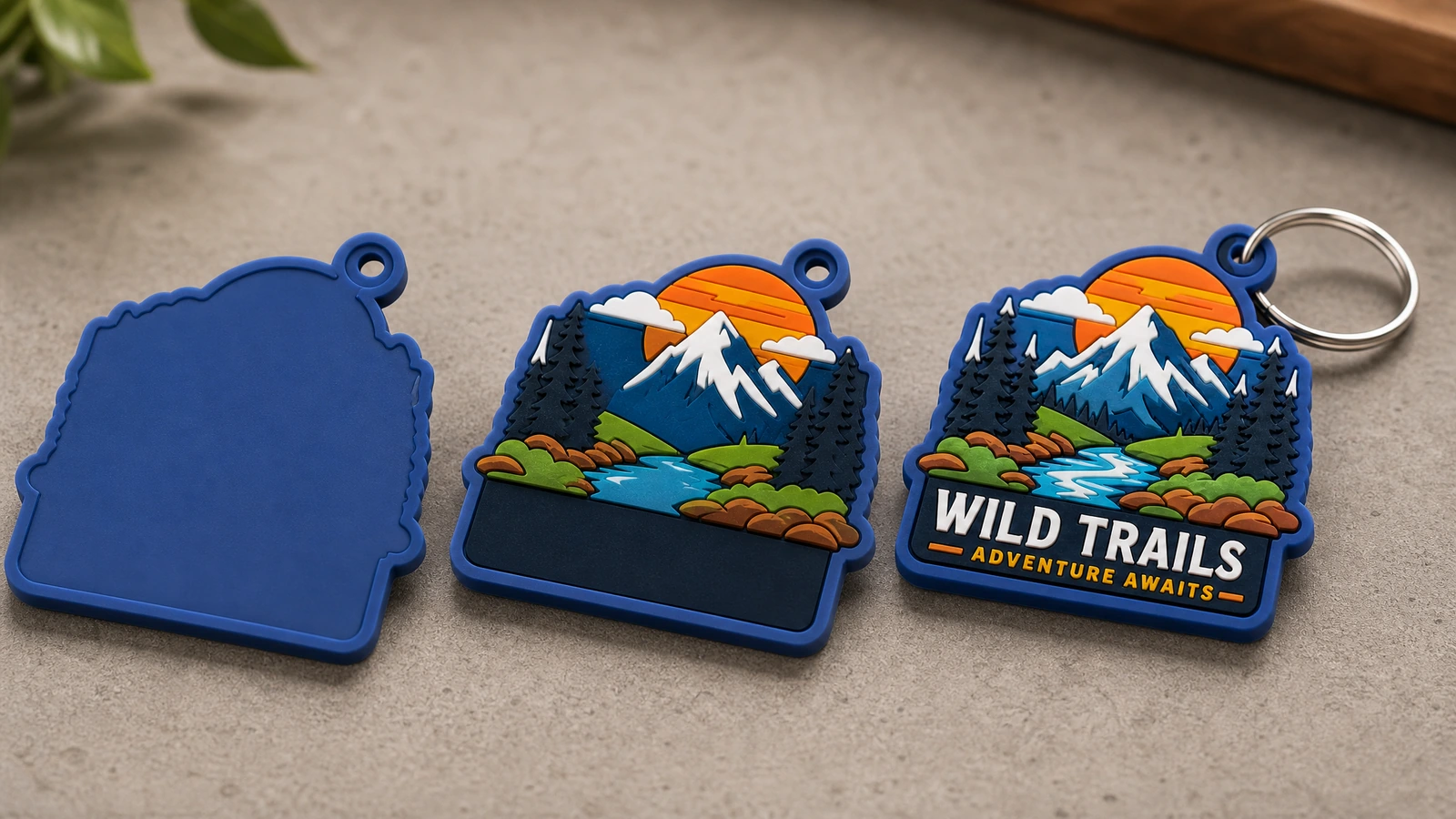
Separate development charges from repeatable order costs
Request itemized charges for tooling or development, sampling, finished units, hardware, packaging, shipping and any taxes included in the quotation. Ask what is excluded and how artwork revisions affect the price. A low unit price is not a complete purchasing comparison when another quotation includes more of these items.
Confirm whether the minimum quantity applies per design, size or color variation. For repeat orders, ask about mold retention, reuse conditions and charges for changes. Do not assume a tooling charge buys indefinite storage, ownership rights or free replacement; those terms need written agreement.
Approve a production interpretation before the physical sample
The drawing should establish the outline, relief profile, color boundaries, hole position, back treatment and hardware arrangement. Check both appearance and assembly: a visually discreet hanging point may still need modification if it leaves too little material around the connection.
Ask for a physical sample when touch, color or structural detail affects acceptance. Clear photographs and video help with review, but they cannot fully establish flexibility or attachment behavior. Record changes against a version number, then make the approved sample and drawing the reference for the order.
Freeze the version and confirm the schedule
The process to confirm with the supplier runs from design review and mold preparation through PVC molding, assembly, inspection and packing. This describes the procurement checkpoints, not a verified production line or equipment list for this SKU.
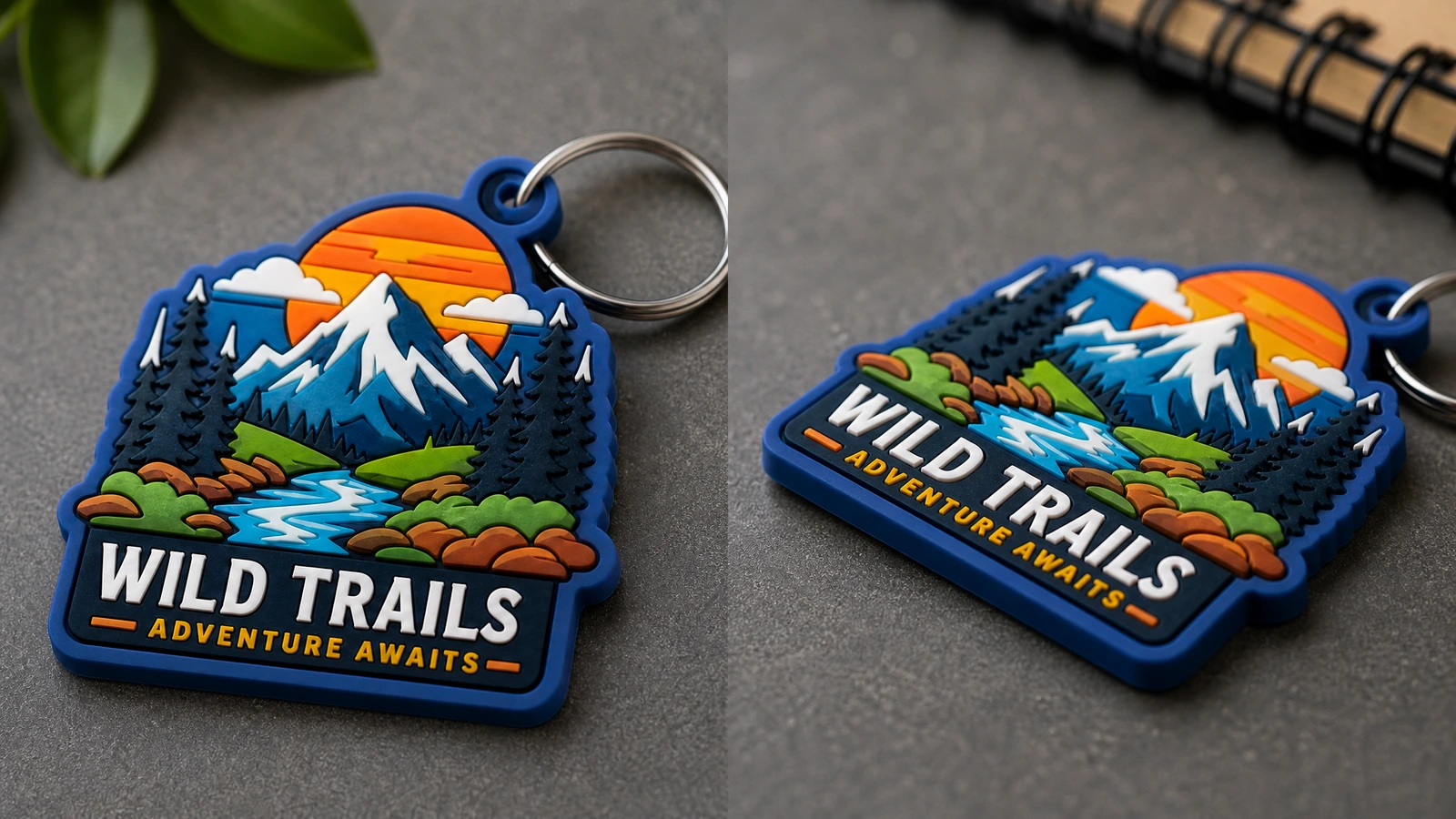
Obtain separate timing for sampling, revisions, production and transit, including the approval event that starts each stage. Ask whether days mean working days or calendar days. For a deadline-sensitive order, also identify the point after which artwork changes require a revised schedule.
Before authorizing production, confirm the final file version, approved sample, quantity, acceptance criteria, packaging and delivery terms together. Agree how deviations will be reported and resolved. A photograph of a completed sample is not, by itself, evidence that bulk production has started or passed inspection.
Check the complete assembly, not just its appearance ↑
Sample acceptance should cover the body, decoration, connection and packaging as one finished product. An attractive front does not establish that the back printing withstands rubbing, that narrow projections tolerate bending or that the hardware remains secure during use.
| Inspection area | Method to agree | Acceptance record |
|---|
| Dimensions and shape | Measure the finished body and compare its profile with the approved drawing. | Dimensions in mm, agreed tolerances and discrepancy photographs. |
| Color and lettering | Compare against the approved physical reference under agreed conditions. | Reference version, viewing conditions and accepted differences. |
| Surface condition | Inspect for dents, contamination, unwanted residue and poorly finished edges. | Defined defect categories and representative images. |
| Attachment integrity | Inspect assembly and agree a suitable pull or repeated-use test. | Fixture, direction, load in N, duration or cycles, and failure criteria. |
| Decoration and exposure | Agree rubbing or light-exposure testing where relevant to intended use. | Method, exposure conditions and acceptable appearance change. |
| Packed product | Check contact points, pressure marks, labels and packing arrangement. | Approved packing reference and inspection findings. |
These are proposed inspection fields, not completed test results. No pull-strength rating, exposure duration, service-life claim or defect-rate target has been established for this product. Set the methods and thresholds before testing so that a “pass” has an agreed meaning.
Match safety documentation to the actual construction
Ask which formulation, colors, decoration and hardware the supplied documentation covers. A report for a different material or an unrelated item does not establish the status of the finished keychain. No product-specific certification, restricted-substance report or child-safety assessment is supplied here.
Hardware belongs in this review too. A historical CPSC keychain recall[1] concerned lead in metal charms, illustrating why checking only the soft body leaves a gap. That recall concerns another product and is not evidence of a defect in this SKU.
Define the destination and intended age group before selecting testing requirements. References to CPSIA, REACH, EN 71 or California Proposition 65 should lead to a scope review and relevant evidence—not a row of unsupported certification badges. Odor checks cannot replace chemical testing, and a material name alone does not establish suitability for children.
Agree what happens when inspection finds a mismatch
Specify the sampling approach, defect categories and treatment of nonconforming goods in the order. Require photographs and identification of the affected version or batch. Rework, replacement, credit and freight responsibility should follow agreed terms; no automatic remake or refund policy is established by this page.
Which construction fits your artwork and budget? ↑
Choose the construction around the information the design needs to communicate. Dimensional contours can serve a mascot, while photo-heavy artwork may call for a printing-led alternative. Comparing materials without holding size, decoration, attachment and packaging constant can produce a misleading price comparison.
| Option to evaluate | Design direction | What to resolve before choosing |
|---|
| Contoured soft PVC | Characters, recognizable silhouettes and tactile raised features. | Relief shape, readable details, mold cost and attachment structure. |
| Flatter molded PVC | Logos or lettering that do not require rounded sculpting. | Whether reduced depth preserves the desired identity. |
| Printed acrylic | Artwork centered on photographs, gradients or fine printed detail. | Print protection, edge finish and sample behavior during handling. |
| Metal or enamel | A metallic presentation or a different weight and finish. | Finished assembly weight, surface treatment and complete order cost. |
| Silicone | A separate material route when its feel or exposure behavior is important. | Actual formulation, mold interpretation and relevant test evidence. |
These are comparison routes, not confirmed alternative SKUs or guaranteed performance rankings. Silicone is not the specified material here, and neither silicone nor PVC should receive automatic “eco-friendly,” food-contact or recyclable claims without evidence appropriate to the finished product and disposal route.
For smaller merchandise launches, focus on total committed spending and the cost of design changes. For larger campaigns, add packing consistency and inspection arrangements to the comparison. Neither situation is solved by selecting the lowest advertised starting price from an unrelated design.
When evaluating a more sculpted version against a flatter one, request quotations based on the same artwork and quantity. Then compare the actual visual difference in samples. Additional depth is worth considering when it improves recognition or the intended feel—not simply because the description says “3D.”
Protect the approved design through delivery and reordering ↑
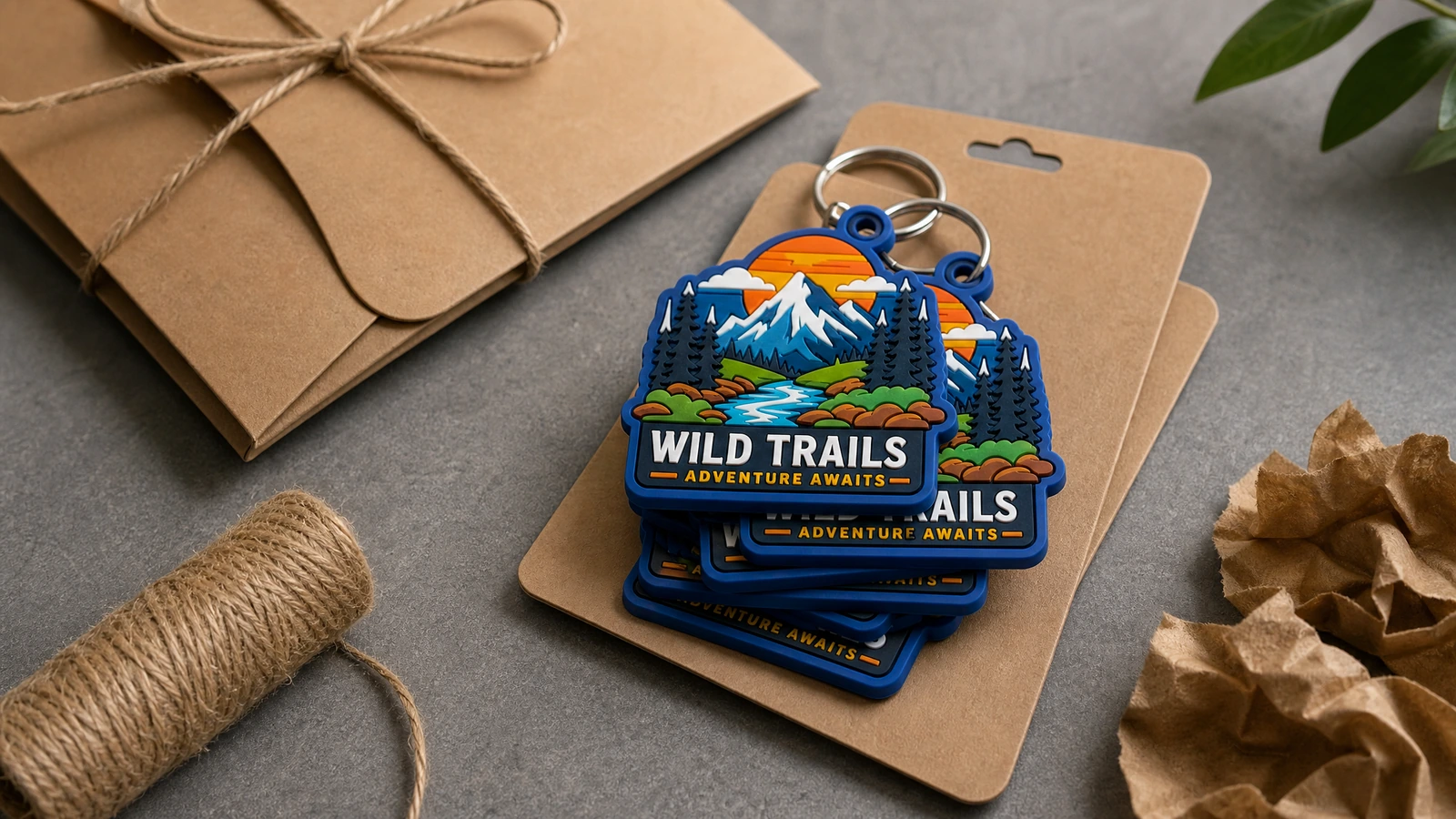
Packaging should address how the finished body and hardware contact one another. Ask for a packed sample showing whether rings press into raised details or rub against decoration. Individual bags, backing cards or other arrangements can be requested, but their availability, materials and cost require confirmation.
For retail merchandise, include artwork orientation, label placement and presentation requirements in the packing brief. For event distribution, describe how items will be counted and handed out. A packing choice that looks appropriate in a single sample still needs a defined bulk arrangement.
Confirm the shipping service, destination, freight basis and treatment of import costs before comparing delivered prices. Request a packing list identifying designs and quantities. Product assembly weight and packed shipment measurements remain to be confirmed; they should not be estimated from promotional photographs.
On receipt, compare representative items with the approved sample and reconcile the shipment with the packing list. Separate design deviations, workmanship issues, hardware problems and transport damage in the report. This makes the evidence more useful than an undifferentiated statement that the order has a quality problem.
Keep the final drawing, color reference, approved sample, hardware specification and packing instructions together for reordering. Confirm whether anything has changed before releasing a repeat order. Mold reuse alone does not establish unchanged materials, attachments or packaging.
What should guide your purchasing decision? ↑
- Material identity comes first. This product is molded soft PVC; silicone, natural rubber and 3D-printed constructions are not interchangeable descriptions.
- Readable details need a physical reference. Approve the actual-size design, contours and attachment together rather than judging only an enlarged rendering.
- Commercial terms remain design-specific. MOQ, unit price, tooling charges, production time and finished weight require confirmation for the requested order.
- US phthalate restrictions depend on product scope. — CPSC guidance prohibits concentrations above 0.1% for specified phthalates in accessible plasticized components of covered children’s toys and child care articles (Source[2]). This is not a blanket classification of every keychain or evidence that this product has passed testing.
- Durability and environmental claims need evidence. Agree relevant tests and documentation before describing the product as fade-resistant, child-safe or recyclable.
Turn your concept into a quote-ready brief ↑
A well-defined custom keychain order connects the creative idea to a measurable specification: the intended shape, readable details, color reference, connection method and approved packing arrangement. Those decisions make quotations easier to compare and give sampling a clear purpose.
Request a design-specific quotation with your artwork, proposed dimensions in mm, quantity by design, preferred attachment, packaging needs, target market, delivery destination and required arrival date.




The information below is required for social login
Sign In
Create New Account