Custom die cast keychains turn a logo, landmark, or original shape into a dimensional metal accessory. Build your specification around readable artwork, comfortable proportions, an agreed surface finish, and secure attachment hardware. Pricing, minimum order quantity, production timing, and finished weight require project-specific confirmation.
Product: Custom Die-Cast Metal Keychains. Category: Custom Keychains / Custom Metal Keychains. Reference: NSKU-755-01.
Where can a custom metal keychain fit your brand? ↑
For corporate gifting, a keychain can carry a recognizable emblem without requiring a large presentation format. For souvenir retail, its outline can reflect a destination, building, or local symbol. For clubs and original merchandise collections, the design can focus on a mascot, anniversary, or shared identity. Each application calls for different priorities—not simply a different logo.
- Marketing and event teams: prioritize immediate recognition, a practical attachment, and packaging suited to distribution.
- Museum, tourism, and hotel buyers: balance recognizable architectural detail with comfortable everyday handling.
- Automotive and enthusiast brands: identify the silhouette and features that must survive translation into a small metal object.
- Independent retailers and creators: define the initial assortment, quantity per design, and packaging before comparing development costs.
A sculptural collectible and a daily-carry giveaway need not share the same thickness or weight. Decide whether the recipient will mainly display, gift, collect, or carry the item. That decision provides a more useful starting point than asking for the heaviest possible construction.
A clear specification prevents an attractive concept from becoming the wrong product ↑
A logo file alone leaves important purchasing decisions unresolved. “Antique metal,” “premium feel,” and “double-sided” can mean different things to different people. Without an agreed reference, the quote may describe one interpretation while the buyer expects another.
The consequences reach beyond appearance. Small lettering may lose clarity, an attachment may obscure the design, or individual packaging may be missing from the budget. Discovering these differences after tooling or production creates a harder problem than resolving them during artwork review.
The solution is an approval sequence: define the intended use, document the physical design, compare the proposed finish, approve the sampling approach, and agree on inspection criteria. Treat each approval as a specific record rather than a general instruction to “make it good quality.”
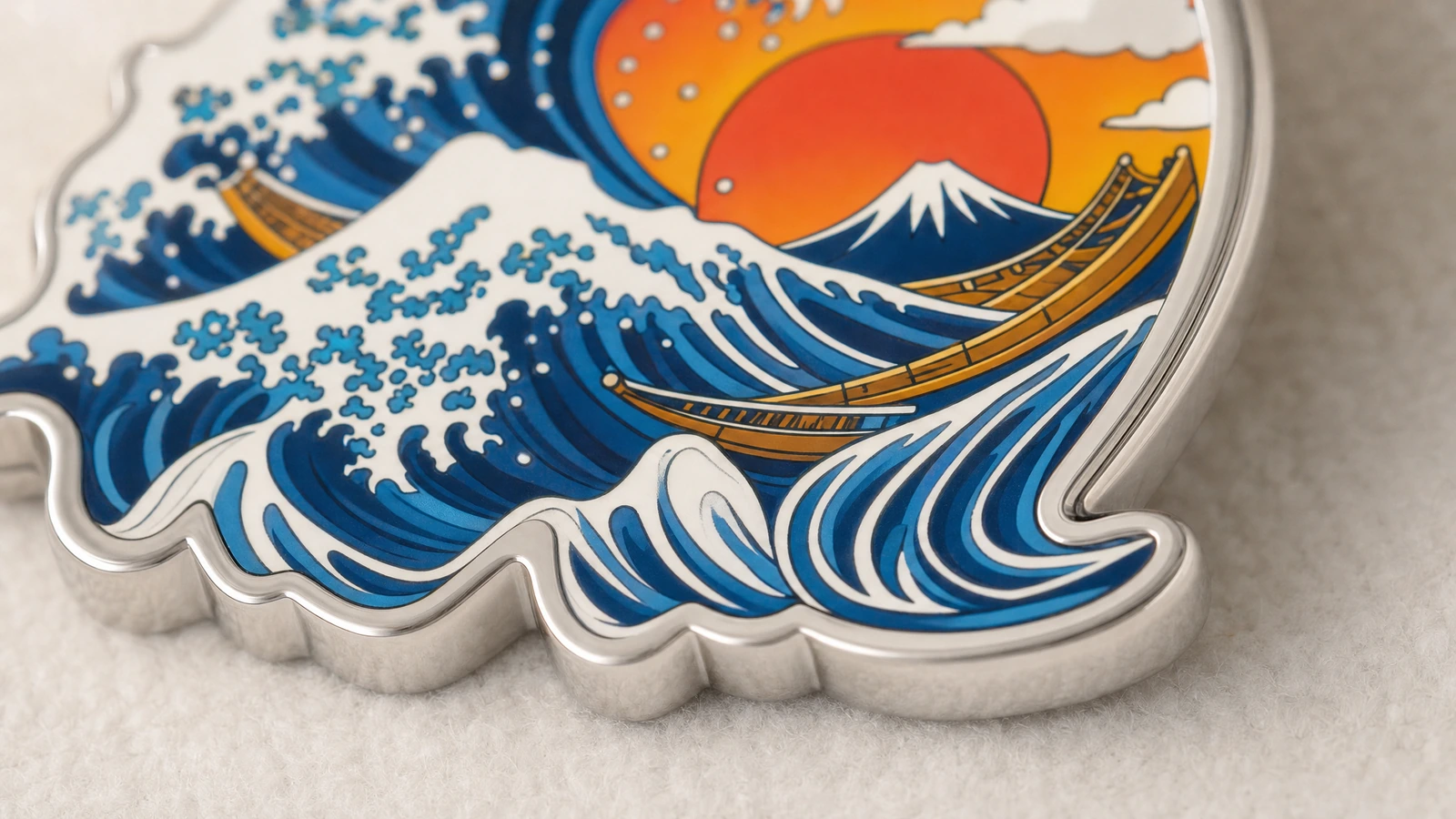
Illustrative concepts throughout this page show purchasing considerations, not approved samples or verified production results.
Explore the product and buying guide
What makes a keychain die-cast rather than die-struck? ↑
Die casting forms a metal component by injecting molten metal into a mold. Zinc alloy is a common material for this category. The process can accommodate dimensional relief, irregular outlines, and internal openings, as described in the manufacturer’s die-cast keychain process overview[1].
Die-struck construction instead forms relief in solid metal using a die. The distinction matters when your artwork depends on sculpted depth, openings, or an unusual outline. Neither process name establishes the quality of the finished item: artwork translation, surface treatment, and assembly still need evaluation.
Also separate construction from decoration. “Die-cast” describes how the body is formed; “soft enamel” or “hard enamel” describes a color treatment. A buying brief should identify both. The exact alloy, finish combination, and manufacturing feasibility for this product remain subject to quotation and sample approval.
How do you balance readable detail with comfortable carrying? ↑
Start with the smallest essential brand element. A recognizable outline may work without fine text, while an anniversary design may depend on a readable date. Review the artwork at intended finished size, not only as an enlarged screen image. Mark essential details separately from decoration that can be simplified.
Record body length, width, and thickness in millimeters, and finished assembled weight in grams. Distinguish body dimensions from the overall assembly, including the ring and connector. There are no verified dimensions or unit-weight measurements for this reference; these are specification fields to establish, not published product values.
Request a design-specific review of narrow openings, thin bridges, sharp corners, raised lettering, and the attachment area. Do not adopt another supplier’s minimum wall thickness or text size as a universal limit. The proposed geometry needs evaluation through tooling review and a physical sample.
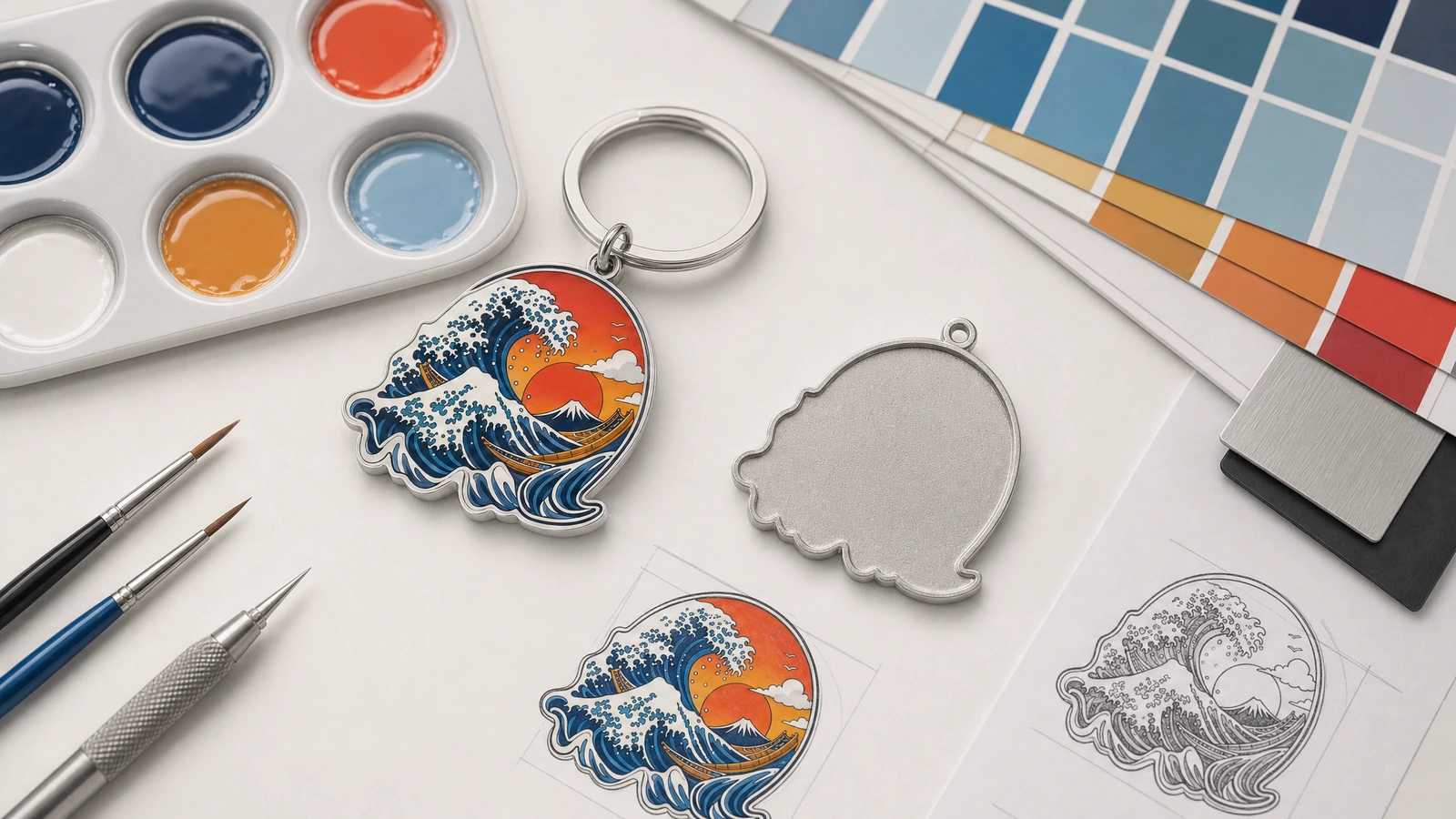
Check handling as well as appearance. A sample should help you judge whether the outline catches, the relief feels comfortable, and the connector moves freely. Key capacity, attachment fit, and any load expectation depend on actual dimensions, the loaded arrangement, and sample validation; none is established by the concept illustrations.
Which surface and attachment choices support your design? ↑
Describe the desired surface using a reference sample or clearly identified finish, rather than “luxury” or “vintage” alone. Bright, matte, and antique effects communicate different visual directions. A gold-colored appearance is a finish description, not a declaration that the underlying body is gold.
For color-filled artwork, soft enamel creates recessed color areas between raised metal lines, while hard-enamel styles target a smoother surface. These visual distinctions are illustrated in Monterey Company’s construction examples[2]. They explain category options, not confirmed availability for this SKU.
Specify front and reverse separately. A reverse logo, engraved identifier, alternate artwork, or plain back changes what must be approved. If printed detail or a clear protective treatment is proposed, identify its location and appearance in the sample brief rather than assuming it is included.
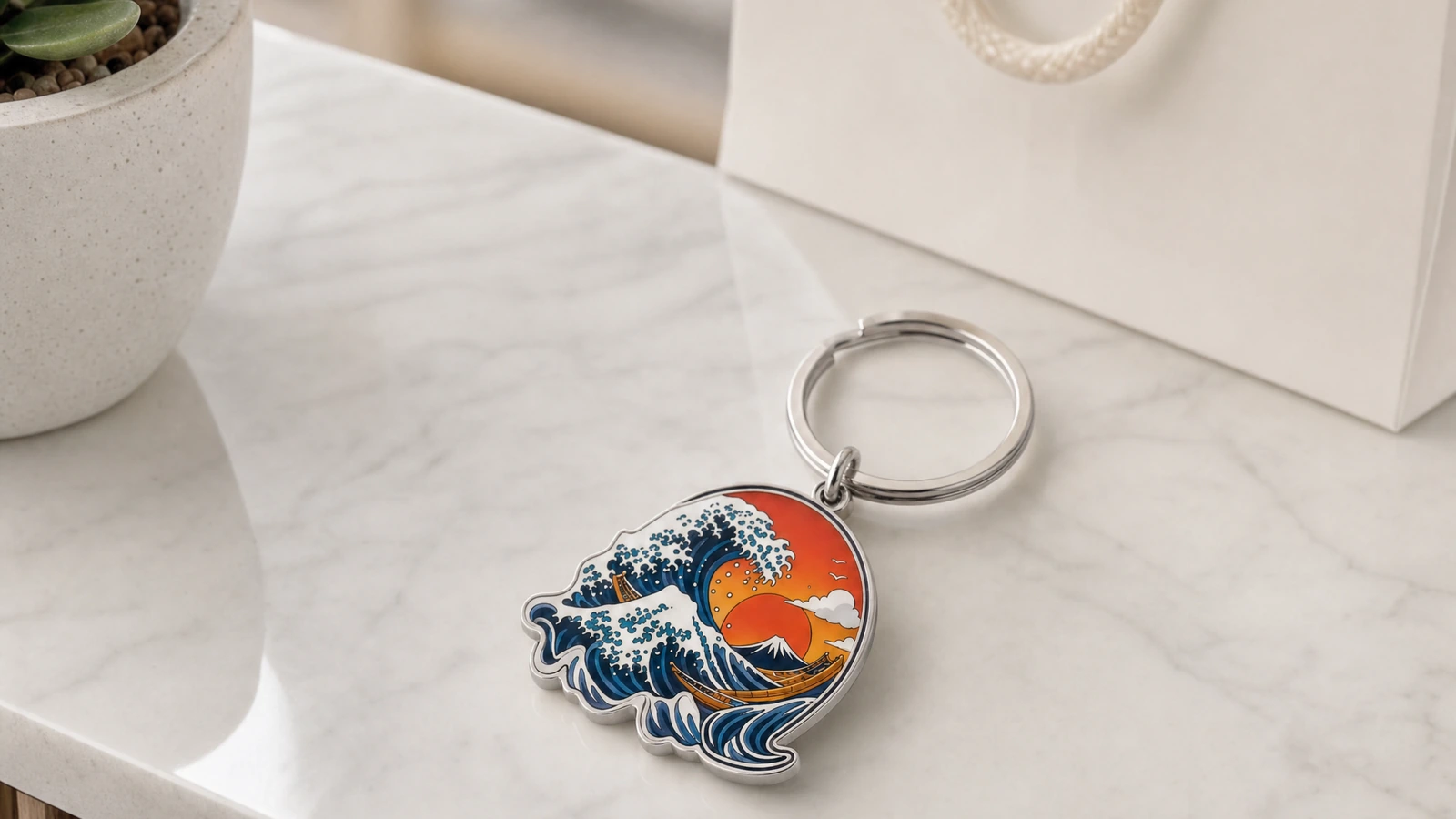
Consider a split ring, chain, or clasp as part of the assembly—not an incidental accessory. Ask how each connecting component is specified and whether its orientation interferes with the artwork. Finish matching between the body and hardware should also be checked on the sample.
What should your artwork package contain before quotation? ↑
Supply editable vector artwork where available, such as AI, EPS, or a vector PDF, with lettering converted to outlines. A PDF containing only an embedded photograph is not equivalent to editable vector artwork. Raster references can communicate an idea, but the proposed manufacturing drawing still needs review.
- Identify each design: assign a version name and show front and reverse views.
- Define the outline: distinguish the external shape, internal openings, and attachment position.
- Explain depth: indicate raised, recessed, and sculpted areas instead of relying on shading alone.
- Specify color references: provide named color references or physical samples and identify exposed metal areas.
- State priorities: mark non-negotiable brand elements and details open to simplification.
- Include purchasing context: provide quantities by design, destination, intended use, packaging needs, and required arrival date.

Ask for proposed changes to be marked visibly. A simplified line, enlarged opening, or repositioned connector should not disappear into an unexplained revision. Keep the approved artwork version attached to the quotation and sample approval so everyone refers to the same design.
How should sampling and production approvals work? ↑
A digital proof helps align layout, but it does not establish actual weight, surface appearance, or attachment behavior. If those features influence acceptance, define a physical sampling stage before authorizing bulk production. Confirm sampling charges, revision arrangements, and which characteristics the sample represents.
- Design review: resolve geometry, artwork, color, and assembly questions.
- Tooling and sampling agreement: record development scope, costs, and the sample approval route.
- Physical evaluation: inspect dimensions, readable detail, finish, reverse orientation, and hardware.
- Production release: authorize the agreed version with quantity and packaging allocations.
- Inspection and dispatch: apply the agreed checks and reconcile packing information before shipment.
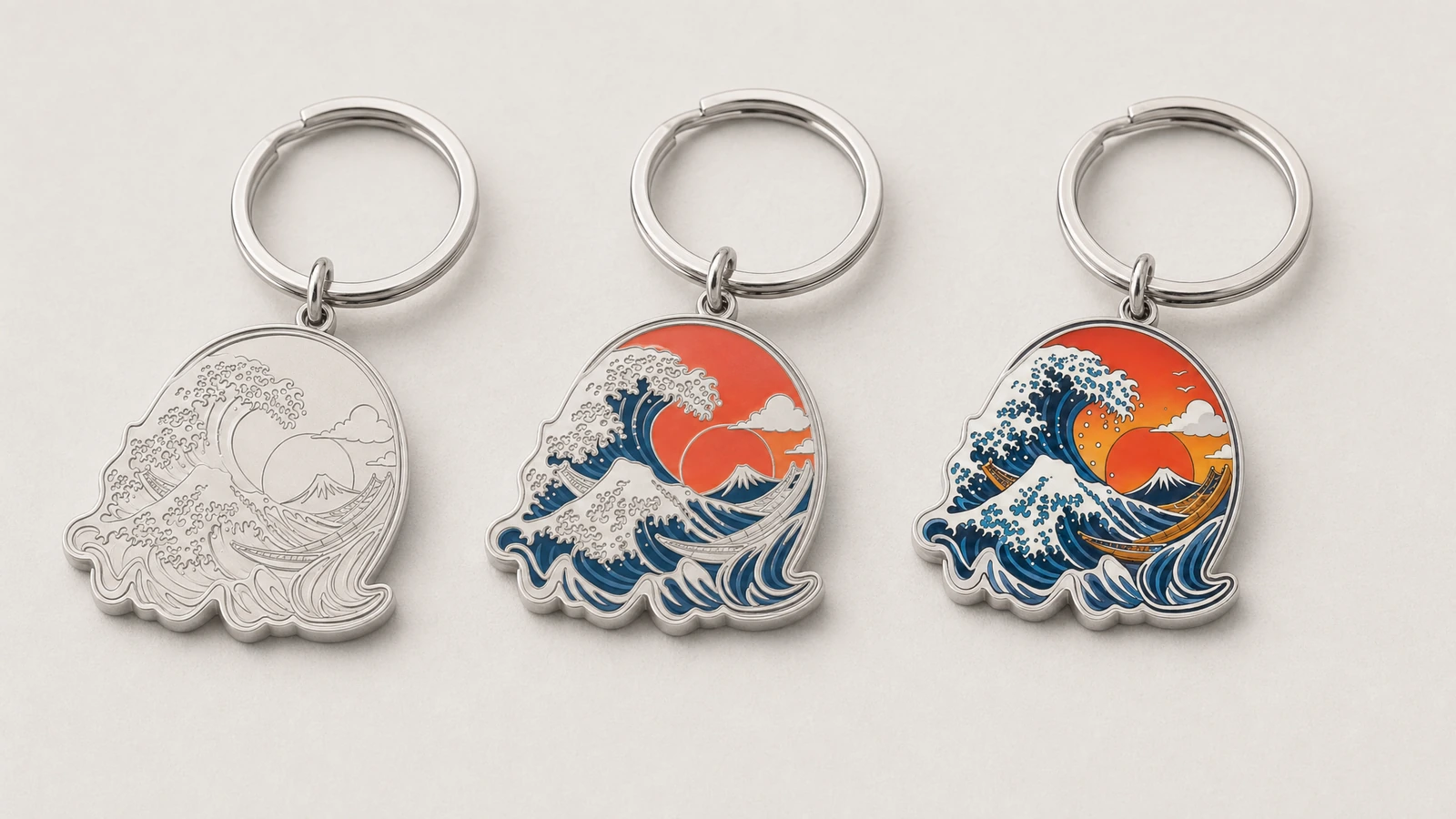
Request separate timing for development, sampling, production, inspection, and transport. State whether quoted durations use calendar days or business days and what starts each period. No production time or minimum order quantity has been verified for this reference; both require a written project quotation.
For an event deadline, distinguish the required arrival date from the proposed dispatch date. Include time for approval changes and any requested testing. An accelerated schedule should identify which stages change rather than quietly removing sample or inspection requirements.
Which construction best matches your artwork and purchasing priorities? ↑
| Choice | Design direction | Main purchasing consideration |
|---|
| Die-cast metal body | Dimensional relief, shaped outlines, and sculptural concepts | Evaluate tooling, geometry, assembled weight, and finish together. |
| Die-struck metal body | Relief artwork with a stamped-metal character | Compare the required depth and outline against a proposed sample. |
| Soft enamel decoration | Defined color areas with visible raised metal boundaries | Check small color spaces, line clarity, and recessed surface appearance. |
| Hard enamel decoration | A smoother color-filled presentation | Confirm compatibility with the design and compare finishing costs. |
| Printed acrylic alternative | Photographic artwork, gradients, or full-color graphics | Assess print protection, edge condition, and the desired non-metal appearance. |
| Molded soft PVC alternative | Flexible shapes and layered color designs | Assess flexibility, detail translation, and intended-use requirements. |
These choices are not all competing materials: enamel is a decoration method that may accompany a metal body. Compare complete constructions rather than treating “die-cast versus enamel” as a material decision. The table is a selection guide, not a durability ranking or a statement that every option is available under this product reference.
How do you compare quotations without missing development costs? ↑
Compare quotations against identical drawings, quantities, finishes, attachments, and packaging. A lower unit price is not directly comparable if it excludes tooling or describes a different reverse-side treatment. Ask each quotation to distinguish one-time development items from recurring per-piece charges.
| Quotation field | Information to record | Why it matters |
|---|
| Quantity and minimum order | Total pieces and allocation per design or version | A combined order total may not meet a minimum applied separately to each design. |
| Development and tooling | Charges, included revisions, mold ownership, and storage terms | Initial development and future reuse need separate written terms. |
| Unit price | USD per piece with the included construction specified | Finish, reverse artwork, hardware, and packaging can change the comparison. |
| Sampling and testing | Sample scope, test methods, and separately charged work | Neither physical sampling nor third-party testing should be assumed free. |
| Delivery basis | Freight, destination, duties, taxes, and responsibilities | A product-only price is not a delivered project total. |
No factory price schedule is available for this reference. Public competitor prices do not establish its cost. Request pricing at your actual quantity and at any realistic reorder quantity, using the same specification, to make the comparison useful.
Complex sculpting, additional versions, special hardware, and individual presentation packaging should be visible choices in the budget. If reducing cost is necessary, compare a simplified design against the original brief and identify exactly what changes. Do not substitute an unspecified alloy or finish merely to meet a target price.
What should inspection verify before you accept the order? ↑
Agree on acceptance criteria before production. Useful checks include artwork fidelity, dimensions, finish consistency, edge condition, assembly security, and packaging completeness. Identify the inspection method, sampling plan, defect categories, and response to nonconforming goods rather than leaving acceptance to personal impressions.
- Appearance: compare logo clarity, color references, front and reverse alignment, and agreed surface-defect examples.
- Dimensions and weight: measure against the approved drawing and agreed tolerances; record the assembled condition.
- Hardware: examine connector closure and operation, then perform any agreed pull or movement test using defined conditions.
- Surface performance: specify abrasion, coating adhesion, or corrosion testing when required; record the method and pass criteria.
- Traceability: connect inspection results and sample identification to the relevant order and batch.
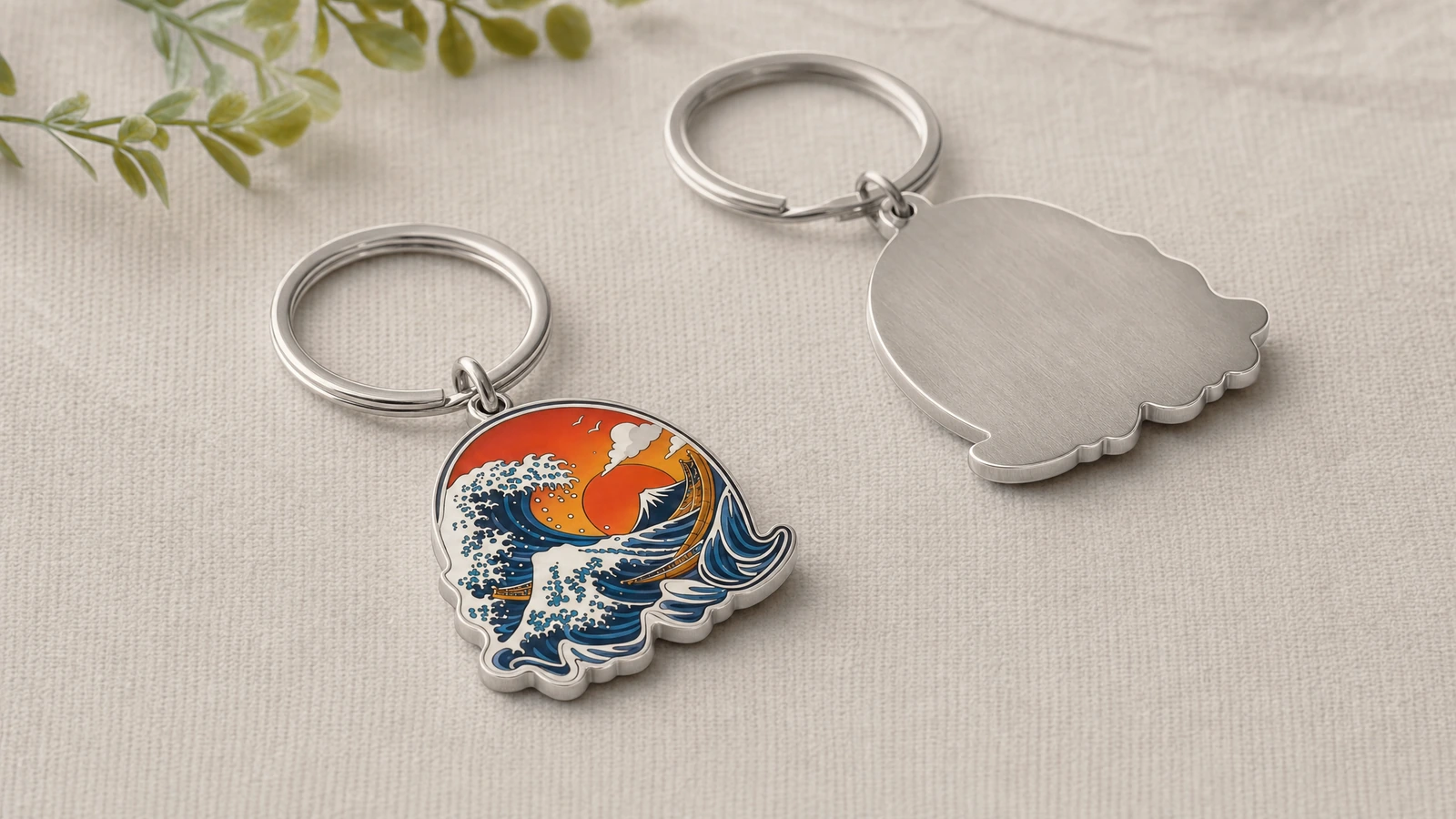
For corrosion testing, the input research identifies ISO 9227 salt spray testing[3]. A test request should identify the proposed procedure, exposure duration, specimen, and acceptance criteria. No salt-spray result, coating thickness, pull strength, or abrasion result is verified for this product.
Material safety also needs evidence rather than a visual judgment. On April 18, 2008, CPSC announced a recall involving about 12,000 charm keychains because their charms could contain high lead levels; see the official CPSC recall notice[4]. This historical case is not evidence about this SKU or the prevalence of problems today.
Specify destination markets and intended users when discussing testing. Have applicable chemical, labeling, and product-classification requirements confirmed for the actual construction and use. References to CPSIA, California Proposition 65, REACH, nickel release, or toy standards should not become blanket compliance claims. No supporting product certification or laboratory report has been supplied here.
Similarly, do not turn “metal” into an unsupported environmental promise. Any recycled-content claim needs supporting documentation, and any recyclability statement should account for the assembled materials and destination collection arrangements. Packaging choices can be evaluated separately without declaring the entire product environmentally certified.
How do you protect presentation through shipping and repeat orders? ↑
Choose packaging around distribution and display. Individual protection, a backing card, or a presentation box may serve different purposes; availability and cost require confirmation. Evaluate whether the proposed arrangement separates surfaces adequately and keeps the hardware from interfering with the presentation.
Specify quantity per pack, design separation, carton markings, and any retail identification requirements. Carton capacity and packing quantities must be determined by actual product dimensions, the packed arrangement, and sample validation. Shipping weight should be based on the agreed assembly and packaging, not an unrelated catalog example.
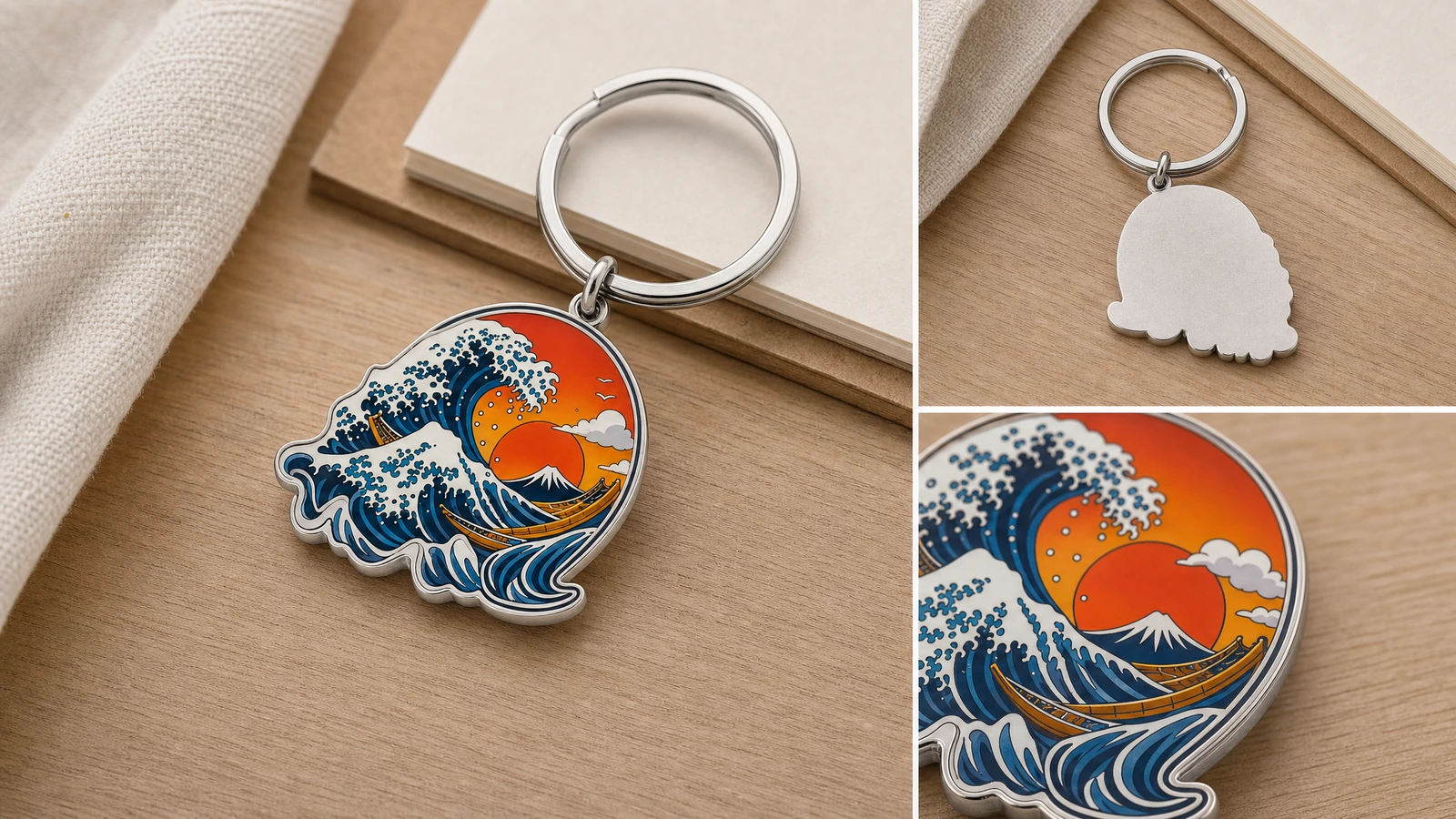
For reorders, retain the approved drawing, finish reference, attachment specification, packaging details, and physical reference sample where agreed. Confirm mold availability and condition before relying on previous tooling. Unchanged artwork does not, by itself, establish free tooling reuse or identical commercial terms.
Document any proposed substitution before repeat production. A connector, color treatment, or packaging change should be reviewed against the original requirements. Agree in advance how shortages or defects will be recorded, which evidence is required, and who handles replacement or return costs.
Key takeaways for a decision-ready purchase ↑
- Specify the assembly, not just the logo. Include body dimensions, reverse artwork, finish, connectors, and packaging.
- Approve physical characteristics physically. Weight, handling, attachment fit, and surface appearance remain sample-validation items.
- Compare the full project cost. Separate development, unit price, sampling, testing, packaging, and transport.
- Request evidence for performance claims. No factory test results or product certifications are established for this reference.
- Keep commercial unknowns explicit. MOQ, production timing, unit weight, and price require project-specific confirmation.
Turn your concept into a specification you can approve ↑
The strongest starting point is a defined design brief: a clear intended use, essential artwork, proposed dimensions, quantity by version, destination, and arrival requirement. That gives the quotation and sampling process a concrete basis without relying on unsupported promises about cost, quality, or delivery.
Request a project-specific quote for NSKU-755-01 with your artwork, quantity, preferred finish, packaging needs, destination, and required arrival date.





The information below is required for social login
Sign In
Create New Account