Custom Full-Color Printed MDF Keychains put your artwork at the center of a branded accessory, gift, or merchandise collection. Specify the design, dimensions, finish, and attachment together, then approve a physical sample before ordering. Size, thickness, printing method, minimum order quantity, pricing, and delivery schedule require project-specific confirmation.
For brand teams, independent artists, souvenir retailers, and event organizers, the starting point is the same: an image worth carrying. A company logo, illustrated destination, original character, or commemorative design gives the project its identity. The purchasing decision is about translating that artwork into a finished item that matches your intended use and budget.
A convincing screen preview is not enough. Small lettering may become difficult to read, an attachment may interrupt the design, or the finish may differ from what your customer expects. Discovering those differences after a bulk order creates avoidable rework, missed launch dates, and stock that cannot be sold as planned.
The practical solution is to define the complete product before approving production: artwork, MDF body, surface treatment, connection, packaging, and acceptance criteria. This page separates the confirmed product identity from options that need quotation, sampling, or testing, so your purchase is based on an agreed specification rather than a generic “wooden keychain” description.
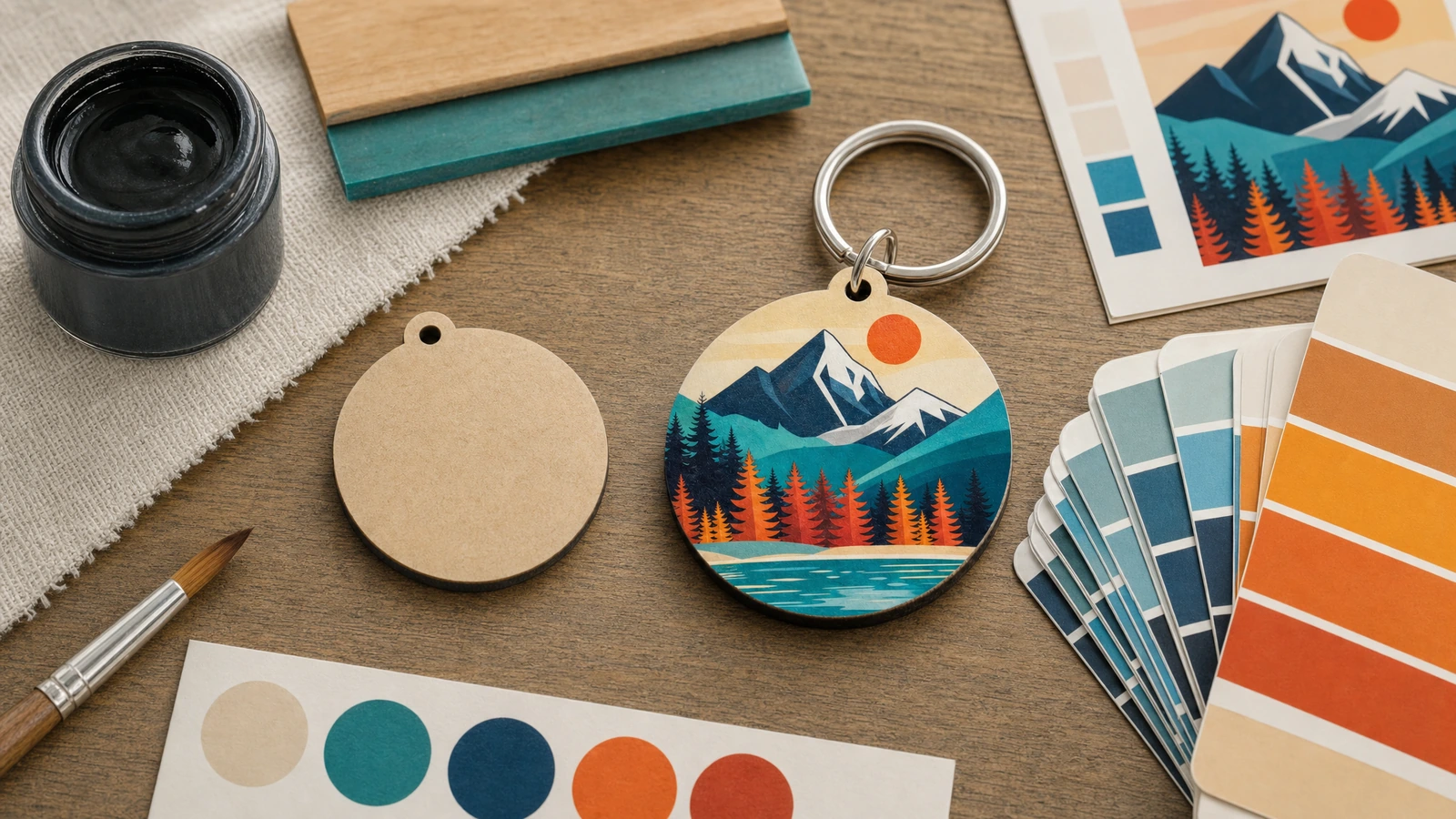
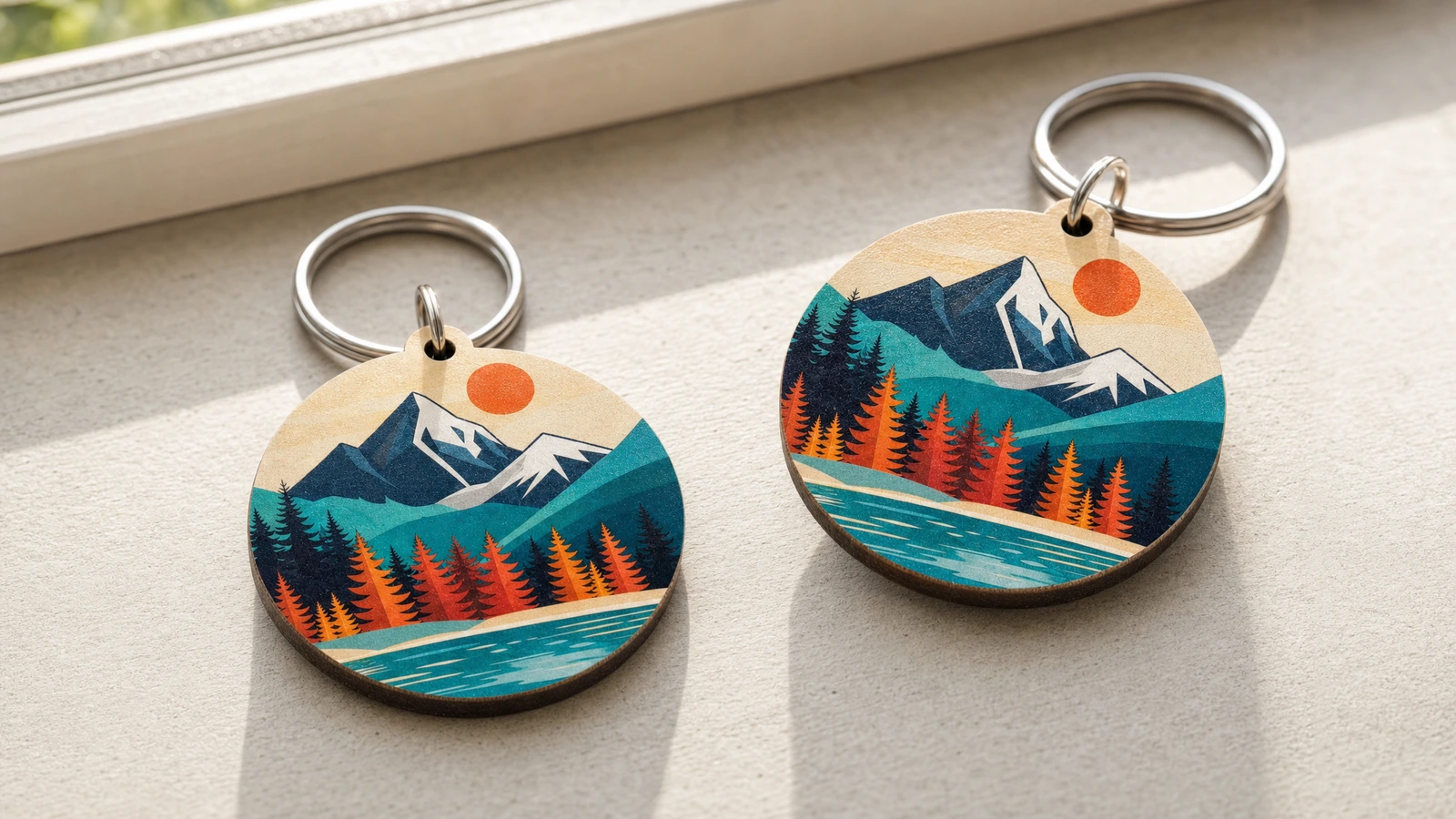
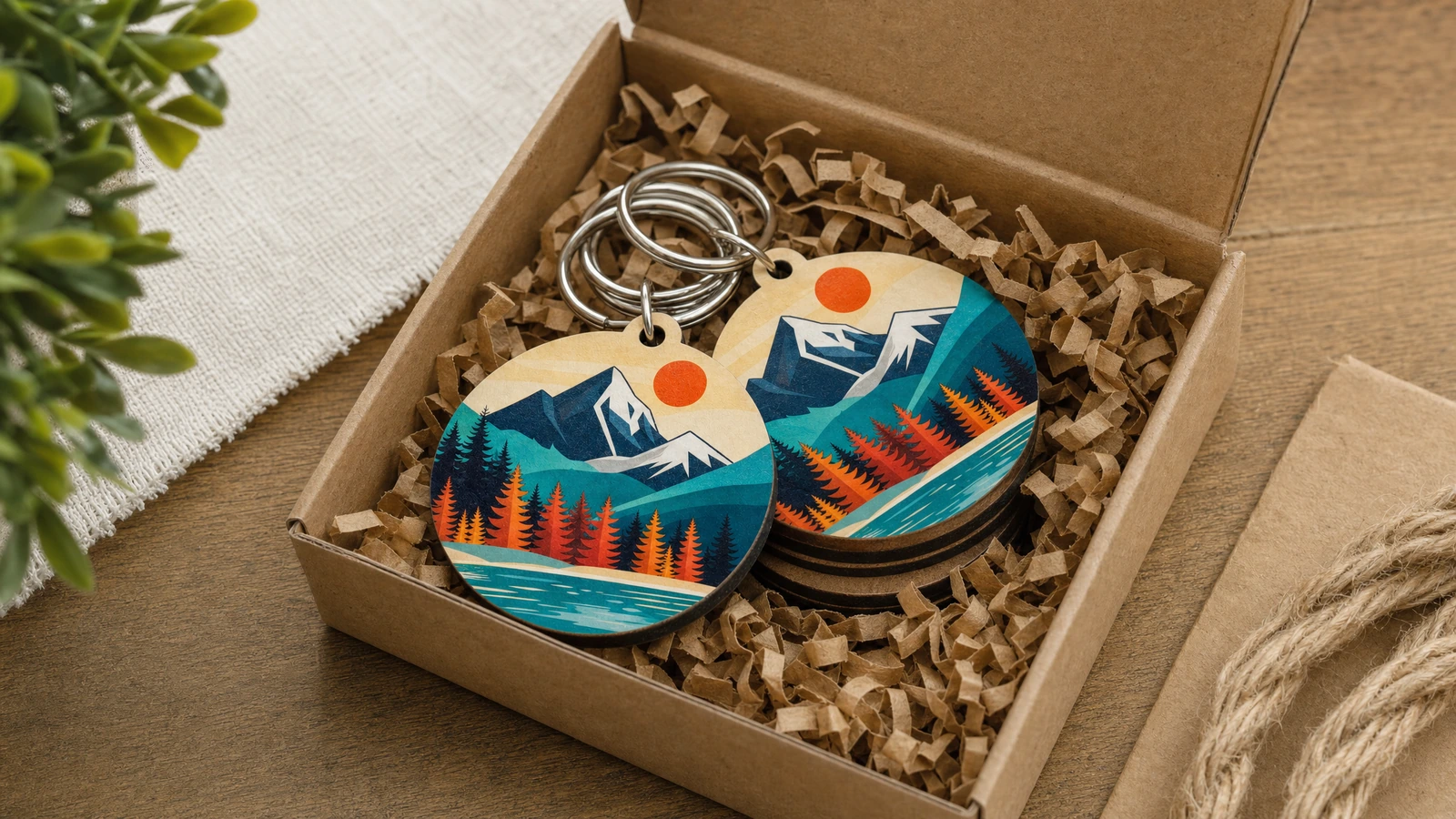
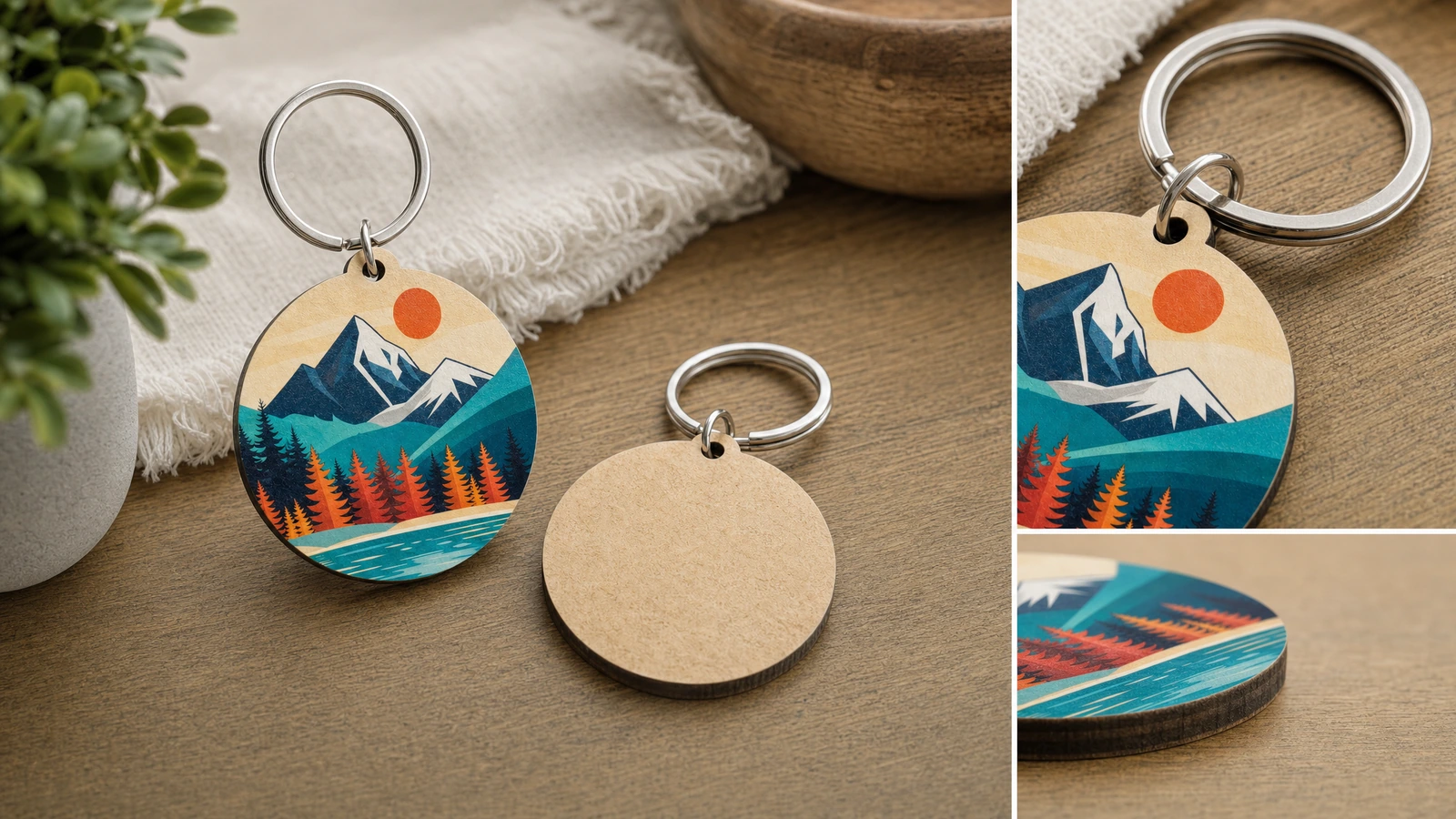
Images illustrate purchasing considerations and design possibilities; they are not photographs of approved production samples or evidence of available finishes.
Explore the product and ordering considerations
What are you ordering? ↑
The confirmed product is Custom Full-Color Printed MDF Keychains, within Custom Keychains → Custom Wooden Keychains. The provisional product reference is NSKU-758-02. MDF is the specified material; this listing should not be interpreted as solid cherry, walnut, bamboo, or birch plywood.
Full-color printing describes the intended decoration, not a confirmed printing process. UV printing and sublimation appear in the wider market, but neither is established as the production method for this product. Likewise, a natural hardwood grain, white print base, clearcoat, or particular hardware alloy is not included by implication.
| Specification | Current status | What to establish for your order |
|---|
| Product identity | Custom full-color printed MDF keychains | Artwork and intended application |
| Body dimensions and thickness | To be quoted and sampled | Finished measurements in mm, including attachment area |
| Printed faces and surface treatment | To be confirmed | Front, reverse, background, and finish requirements |
| Attachment and ring | To be confirmed | Connection type, material, finish, and fit |
| Unit weight | Not established | Sample measurement in g, with hardware included |
| MOQ and unit price | Quotation required | Quantity per design and itemized charges |
| Production and delivery | Schedule required | Approval milestone, production period, and transit allowance |
Use this specification as a quotation checklist. Dimensions, prices, and turnaround times advertised for another supplier’s wooden keychains are not specifications for this MDF product.
Make the artwork readable at the finished size ↑
Begin with the detail that must remain recognizable: a brand name, face, illustration, or short message. Review it at the intended physical size rather than zoomed in on a screen. If the smallest lettering is difficult to read, simplify the layout or request a larger format before approving the sample.
Record body width, height, thickness, print area, and hole position separately. The overall outline and usable artwork area are not interchangeable. Reserve space for the attachment so the connector does not cover important details or interfere with how the charm hangs.
For QR artwork, include the final destination link and request scanning checks on the actual printed sample. Do not infer reliable scanning from a digital proof. Contrast, finished size, surface appearance, and wear should be assessed together before using the code as a customer-facing link.
Specify the surface and attachment together ↑
Describe the appearance you want instead of selecting an undefined “premium finish.” Identify whether the priority is a subdued surface, a reflective appearance, clear small lettering, or strong color coverage. Ask which finish and print-base options are compatible with the proposed MDF construction; availability remains subject to quotation and sampling.
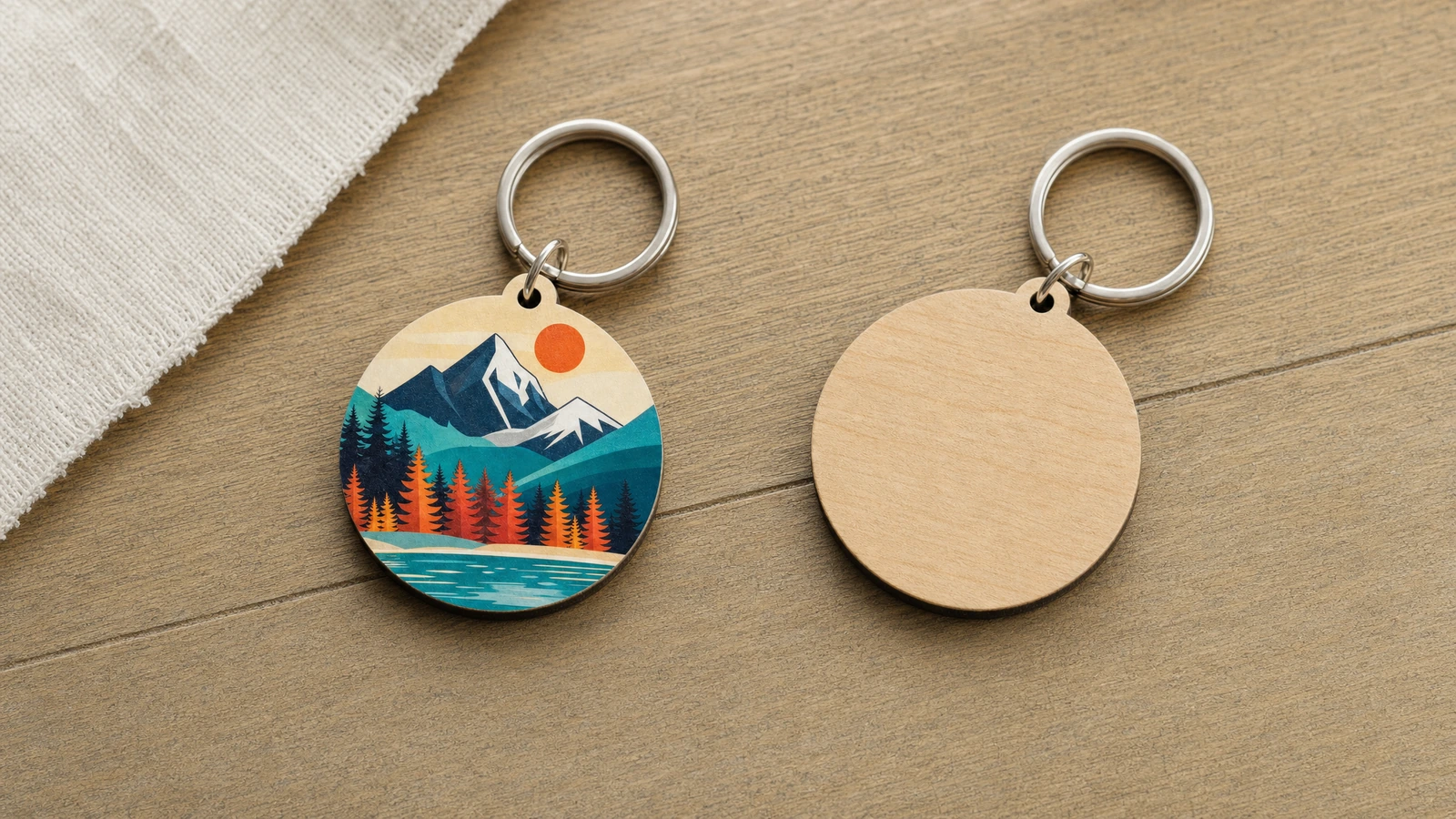
If a reverse-side design is requested, provide it separately and identify its orientation relative to the attachment. A plain reverse, repeated artwork, and different reverse artwork are distinct order requirements. The quotation should state which arrangement is included rather than leaving the reverse unspecified.
The connector deserves the same attention as the printed face. Request the proposed ring and connection details, then inspect assembly and movement on the sample. Do not assume a silver-colored fitting is stainless steel, or that a different attachment automatically increases strength.
Ring capacity, attachment fit, and any carrying-load claim depend on the physical dimensions, loaded configuration, and sample validation. No tested load rating or supported number of keys is established for this product.
Prepare artwork that can be checked before production ↑
Supply the original artwork rather than a compressed screenshot whenever possible. Keep the visible design distinguishable from the requested outline and attachment location. For names, dates, or other personalized content, provide a final approved list rather than relying on text scattered across messages.
Front-and-back orientation and overall charm dimensions deserve explicit review. These are also addressed in Vograce’s wooden keychain design guide[1]. Treat that guide as an industry reference, not as the production template or dimensional tolerance for this product.
- Artwork: identify the final version and separate front and reverse requirements.
- Text: check spelling, punctuation, dates, and the smallest lettering at output size.
- Outline: flag narrow extensions, internal openings, and details near the attachment.
- Color: identify critical brand colors and request a physical comparison where necessary.
- Print preparation: obtain the supplier’s confirmed bleed, safe-area, and file-format requirements.
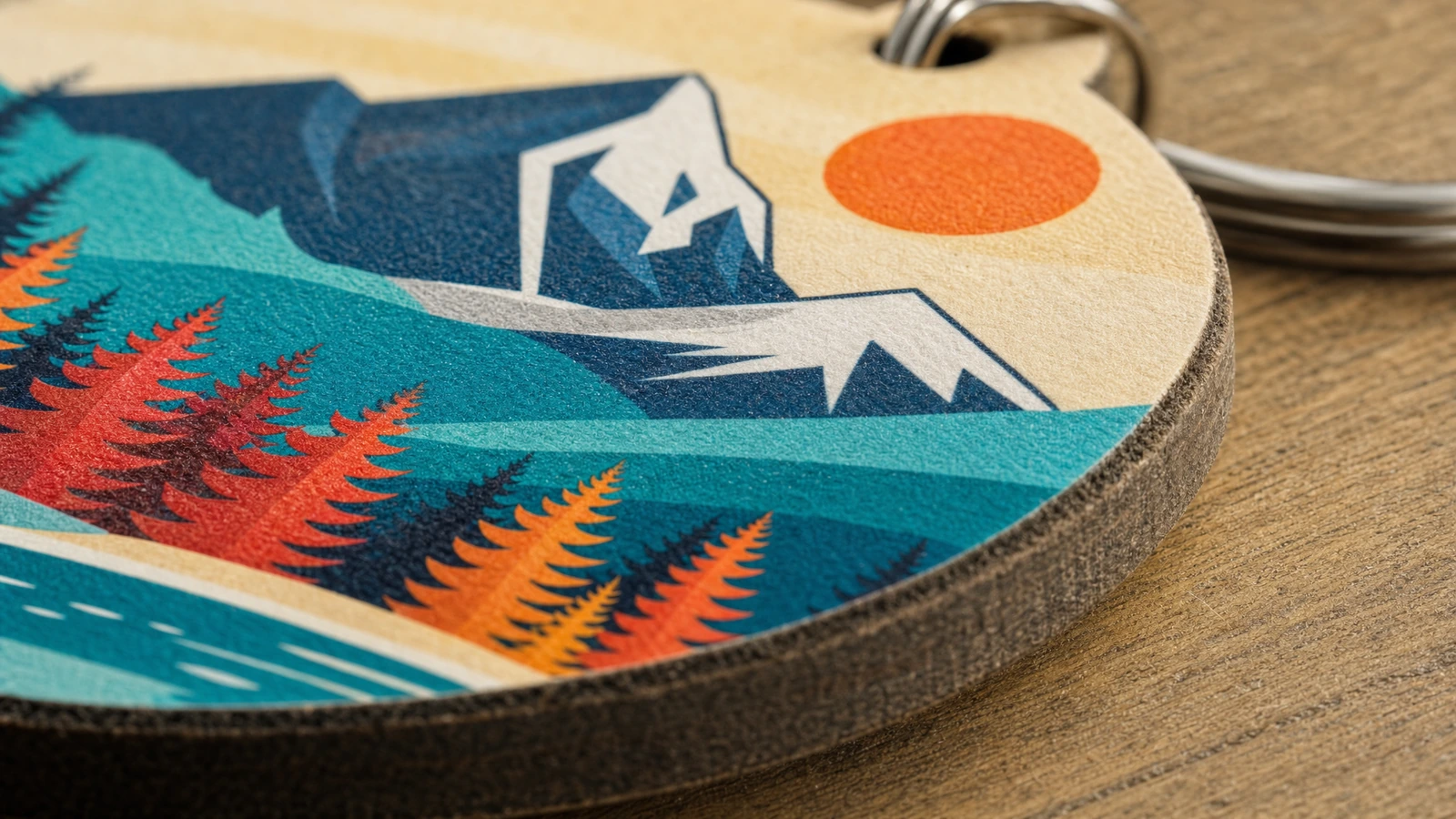
A color reference communicates your target; it does not establish an exact-match guarantee. Agree how the sample will be assessed and retain the approved version as the visual reference. Do not adopt an unexplained percentage of “normal color variation” as your acceptance rule.
Move from design brief to approved sample ↑
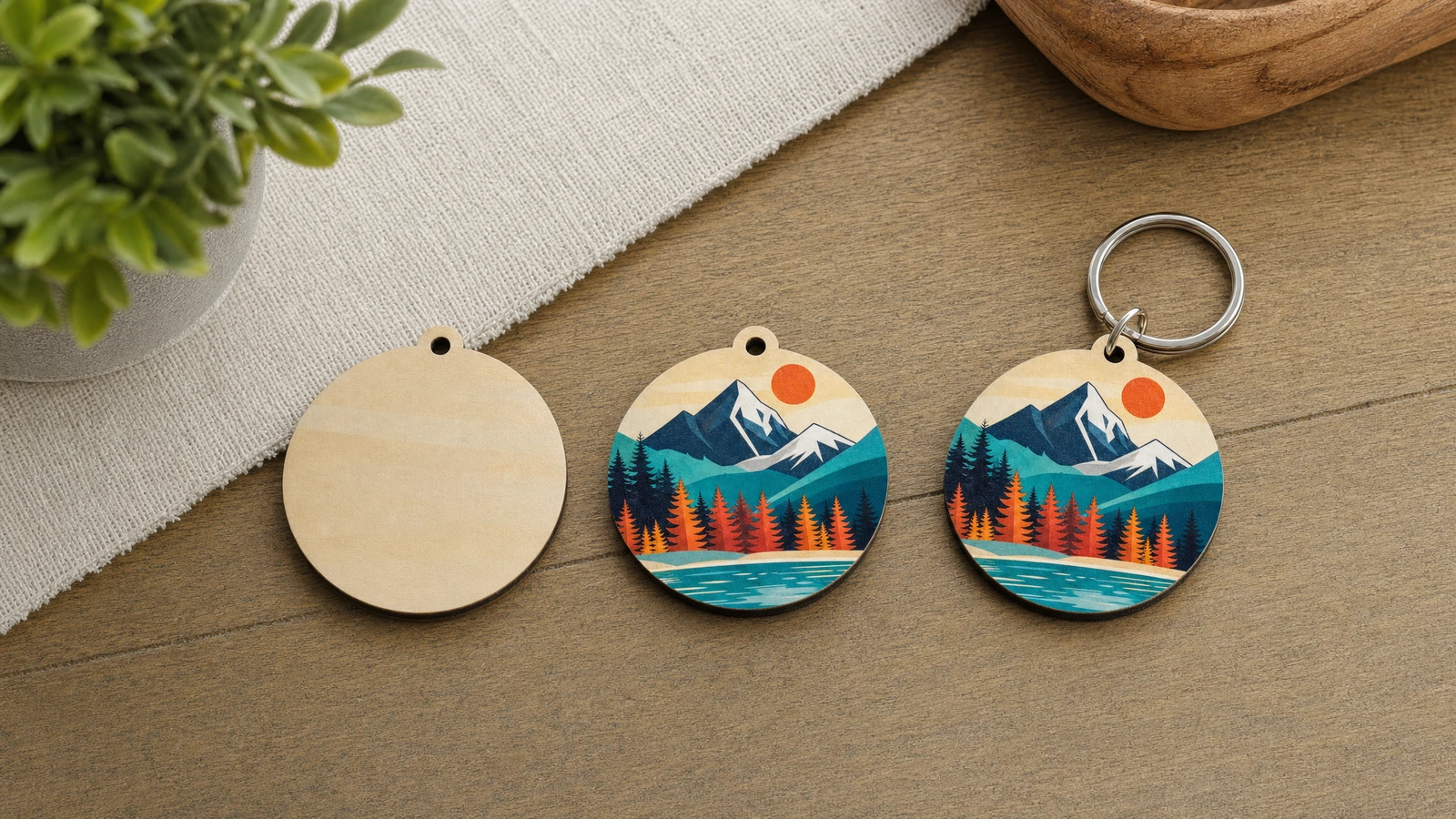
The following is a recommended purchasing sequence, not a claim about an established factory workflow. It creates separate decisions for commercial terms, visual approval, and physical performance, so approval of one does not silently approve the others.
- Define the brief. State the intended audience, application, quantity per design, destination, and required arrival date. Distinguish decorative merchandise from an item expected to experience frequent key contact.
- Obtain the written specification. Confirm the MDF construction, measurements, decoration process, finish, attachment, and packaging proposal. Resolve substitutions before sampling.
- Review the quotation. Separate product cost from artwork, sampling, setup, packaging, shipping, and any destination charges. Establish the minimum quantity for each design.
- Approve the digital proof. Check artwork version, orientation, text, outline, and hole location. Record approval against a specific file.
- Evaluate the physical sample. Inspect color, readability, edges, assembly, and the agreed functional checks. Approve or revise the sample before bulk release.
- Authorize production and dispatch conditions. Document the accepted specification, inspection requirements, schedule, and handling of defects.
Keep sampling, production, and transportation as separate schedule entries. A production estimate does not establish an arrival date, and artwork revisions may change the approval milestone. Rush availability, sample fees, and production capacity remain quotation items rather than promises on this page.
Which decoration approach fits your design? ↑
Compare decoration methods by the result you need, not by an unsupported durability ranking. UV printing adds colored ink to a surface, while laser engraving removes material to create a recessed mark, as explained in TruFlat’s process comparison[2]. That distinction explains why engraving alone is not a substitute for full-color artwork.
| Approach | Design fit | Buying consideration | Status for this product |
|---|
| Full-color printed MDF | Multicolor branding and illustrated merchandise | Assess the actual print, finish, and assembled sample | Confirmed product identity; detailed process pending |
| UV direct printing | Color-rich graphics and photographic designs | Confirm substrate preparation, print base, and wear performance | Not confirmed as the production method |
| Sublimation printing | Full-color images on compatible coated blanks | Confirm the blank and coating rather than assuming untreated wood compatibility | Not confirmed as the production method |
| Laser engraving | Tonal text, line art, and recessed decoration | Does not reproduce full-color artwork by itself | Alternative approach, not the specified decoration |
| Screen printing | Simple spot-color designs | Compare setup and color requirements against the intended quantity | Alternative approach; availability unconfirmed |
This is a design-selection guide, not an availability list or price comparison. Obtain like-for-like quotations using the same body size, quantity, printed faces, hardware, and packaging before deciding which proposal offers better value.
If visible natural grain is central to the design brief, evaluate a separately specified material rather than assuming this MDF item will resemble solid hardwood. Similarly, a request for a tactile engraved mark represents a different decoration requirement and should be quoted as such.
Turn quality expectations into acceptance checks ↑
“Durable” is not an inspection method. Before approving a batch, agree what will be examined, under which conditions, and what counts as an unacceptable result. No factory abrasion, pull, moisture, or weathering results have been supplied for this product.
| Concern | Proposed check to agree | Record needed |
|---|
| Unreadable or incorrect artwork | Compare the finished item with approved text and artwork at actual size | Reference version and photographs |
| Color or finish mismatch | Compare against the approved physical sample under agreed lighting | Accepted reference and rejection criteria |
| Print wear or lifting | Agree a repeatable abrasion or adhesion assessment appropriate to the finish | Method, conditions, and observed outcome |
| Attachment failure | Assess pulling and twisting of the assembled connection under agreed conditions | Applied loading, duration or cycles, and failure location |
| Rough or damaged edges | Inspect the perimeter, narrow features, and hole area | Defect photographs and disposition |
| Moisture sensitivity | Request a controlled assessment if the intended use includes moisture exposure | Exposure conditions and resulting changes |
These are proposed acceptance activities, not completed tests or certified performance claims. Agree sampling coverage and pass/fail limits before inspection; an undocumented hand check cannot establish a service-life guarantee.
For routine care, use a soft dry cloth and avoid soaking, abrasive cleaning, or prolonged damp storage unless the approved finish documentation permits otherwise. Do not apply oil, wax, or solvents without checking compatibility with the printed surface. No waterproof rating is established here.
Keep material and compliance claims evidence-based ↑
MDF construction alone does not establish certified sourcing, recycled content, biodegradability, or a lower environmental impact. Assess the complete article, including its binder, printed surface, coatings, and hardware. Avoid describing the assembled keychain as recyclable or compostable without evidence for the relevant disposal route.
If certified sourcing is required, request documentation covering the proposed supply and product claim. The FSC chain-of-custody standard[3] addresses sourcing, processing, labeling, and sale of products as FSC certified. No FSC or PEFC certification is established for this SKU.
For children’s applications, determine the product classification before selecting tests or making safety claims. CPSC toy safety guidance[4] explains that applicable requirements depend on the product. Assess small components, coatings, accessible edges, and hardware as relevant; neither a wood-based body nor a warning label establishes compliance.
For EU-bound orders, keep REACH chemical restrictions, formaldehyde-emission assessment, and any applicable EUDR traceability obligations on the pre-order documentation checklist. Applicability, exemptions, current requirements, and the product’s classification need confirmation; no compliance conclusion is provided for this item. An ink-specific certificate would not, by itself, prove compliance of the complete assembly.
Plan packaging, shipping, and repeat orders ↑
Packaging should address contact between the printed body and its metal hardware, movement during transportation, and protection of narrow features. Request a packing sample where presentation or damage risk matters. Individual wrapping, separators, backing cards, and other packaging formats are proposals to confirm, not included accessories.
Ask the quotation to distinguish unit price, packaging, freight, and destination charges. Carton capacity and packing quantity must be determined from actual product dimensions, the packed configuration, and packing-sample validation. Do not calculate shipment weight from an unrelated keychain or hardware listing.
Before dispatch, agree how shortages, misprints, and damaged items will be documented and reported. Confirm the reporting window and available remedy in writing. Replacement, reprinting, refunds, and warranty coverage should not be assumed from another seller’s policy.
For repeat orders, retain the approved artwork, physical sample, material description, attachment details, and packaging reference together. Identify any proposed changes before releasing the reorder. A matching filename alone does not confirm the same surface, construction, or visual result.
Key takeaways for a better buying decision ↑
- Order against the correct material identity. This product is full-color printed MDF, not an unspecified solid-hardwood keychain.
- Make visual approval physical. Confirm actual-size readability, color, finish, and attachment position on the sample.
- Compare complete quotations. Keep printed faces, hardware, packaging, sampling, and transportation consistent across proposals.
- Define performance before accepting durability language. Agree relevant test conditions and acceptance criteria; no tested lifespan or load rating is established.
- Match claims to documentation. Sourcing, chemical compliance, and end-of-life statements require evidence for the proposed finished article.
Bring your artwork into a clearly specified order ↑
A successful custom keychain order begins with a clear design and ends with an agreed physical reference. For this full-color MDF product, the next decision is not which unsupported performance claim sounds strongest, but which specification fits your artwork, application, and purchasing requirements.
Request a project-specific quotation for NSKU-758-02 with your artwork, quantity per design, preferred dimensions, destination, and required arrival date.




The information below is required for social login
Sign In
Create New Account