Custom wooden keychains combine a laser-cut plywood outline with engraved artwork for branded merchandise, event keepsakes, and retail collections. Start with your intended use, finished dimensions, and design; confirm the material specification, attachment, sample acceptance criteria, and complete quotation before committing to production.
For a merchandise buyer, a keychain is more than a small decoration: it carries a design into everyday use. An artist may prioritize recognizable character details, an event organizer needs accurate dates and dependable scheduling, and a business buyer needs a logo that remains readable at the actual product size.
A convincing screen mockup cannot settle all those questions. Fine lettering may become difficult to read, an awkward attachment can interrupt the silhouette, and an attractive surface says little about connection strength. Discovering these problems after distribution can mean replacements, missed event opportunities, and disappointed recipients.
The practical solution is to treat appearance, construction, and delivery as separate approval decisions. This product is identified as Custom Laser-Cut and Engraved Plywood Keychains, provisional reference NSKU-758-01. Dimensions, finish, hardware, pricing, minimum order quantity, and production timing remain subject to quotation and sampling; no product-specific test results or certification documents have been supplied.
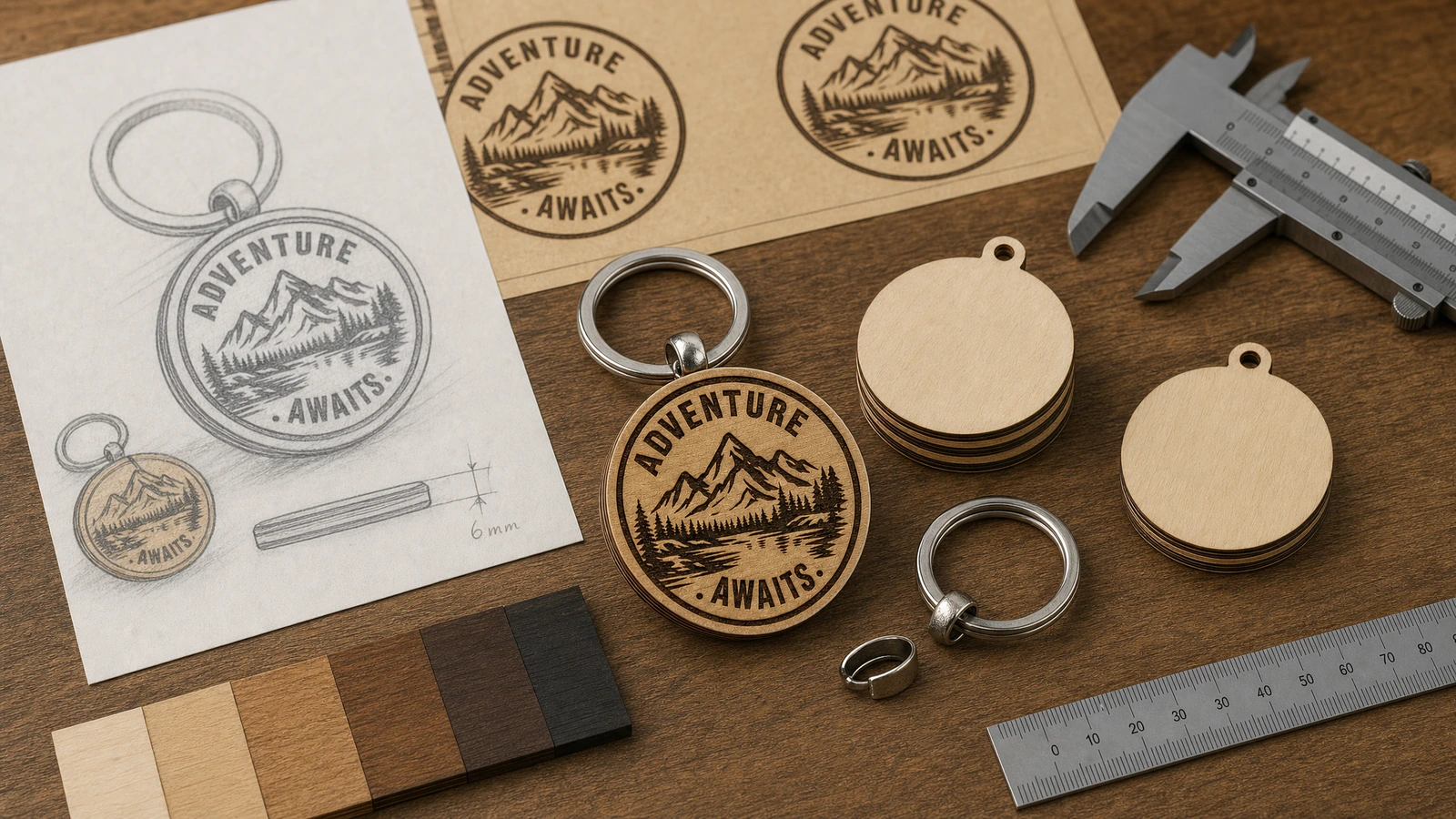
Images illustrate purchasing and sampling considerations; they are not photographs of approved production samples or evidence of available configurations.
Contents
What distinguishes this plywood keychain? ↑
The confirmed construction is plywood, with laser cutting and engraving. Laser cutting defines the outline; engraving creates the artwork on the surface. These are separate design decisions: a simple outline can carry detailed artwork, while a recognizable silhouette may need only a restrained logo or short message.
Keep the material description precise. Plywood should not be presented as solid cherry, walnut, maple, or another specific wood species without supporting documentation. Likewise, a wood-colored surface does not establish veneer species, panel grade, adhesive composition, or certification status.
For branded merchandise, begin with the element recipients must recognize first. For an event keepsake, prioritize the name or date. For an artist collection, identify which details can be simplified without changing the character of the design. This makes the sample review more useful than judging whether the item merely looks attractive.
The available information establishes the product identity, not an unrestricted options catalog. Double-sided engraving, color printing, special clasps, protective finishes, and individual retail packaging should be listed as requested options and confirmed separately.
How do you choose dimensions that keep artwork readable? ↑
Specify body width, height, and thickness in millimeters. Distinguish the wooden body from the complete assembled length, including the connection and ring. A buyer comparing only body dimensions may overlook how the finished item hangs, turns, or sits beside other keys.
Review the design at actual size rather than relying on a magnified preview. Check the smallest lettering, enclosed spaces within letters, and narrow gaps between engraved elements. For a detailed illustration, identify which features must remain visible and which may be simplified during artwork preparation.
There is no verified minimum text size, line width, thickness, or hole clearance for this product. These limits must be established through the selected material and physical sample. Recommendations drawn from another supplier or a different wood construction are not automatic production specifications.
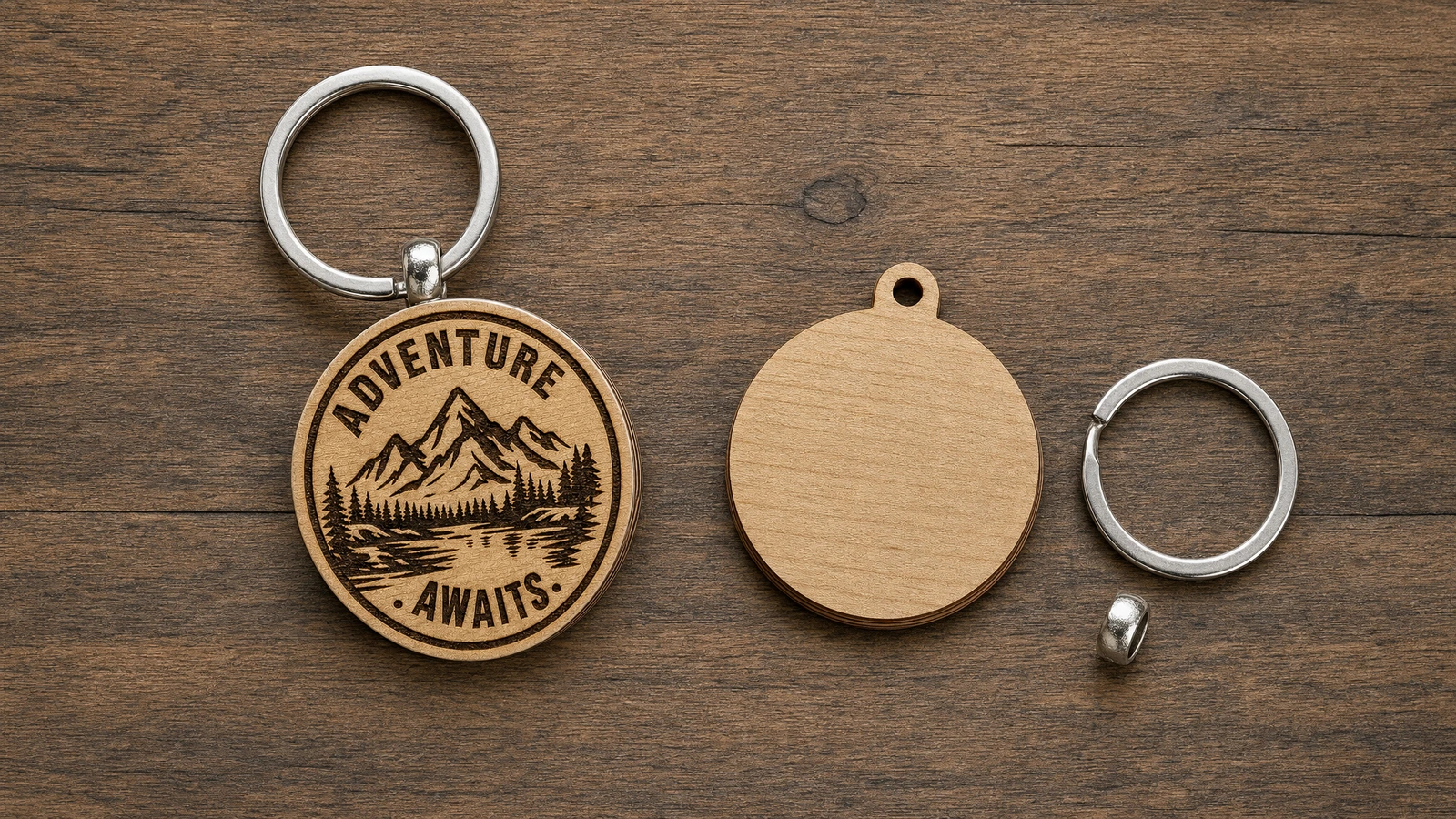
For QR artwork, include a scan check on the actual engraved sample rather than accepting a successful scan from the digital file alone. If the keychain must fit a particular ring, clasp, or display card, compatibility depends on physical dimensions, the loaded configuration, and sample validation. No key capacity or load rating is established here.
Which surface and attachment details need approval? ↑
Specify the appearance you want to evaluate: visible wood grain, engraving contrast, edge coloration, surface smoothness, and any proposed protective finish. A natural-looking result still needs an agreed standard for defects. Do not classify splinters, cracks, or loose layers as acceptable merely because the material contains wood.
Finish selection involves appearance, protection, and cleanability, as explained in the USDA Forest Products Laboratory’s wood-finishing guidance[1]. That guidance is material background, not proof that this keychain has a particular coating or water-resistance level.
Review the attachment as a complete connection, not just a ring color. Confirm the proposed ring, link or clasp, attachment location, and orientation. If a rear-mounted fitting is requested, its availability and construction need explicit approval; do not assume a pin-style backing belongs on a keychain.
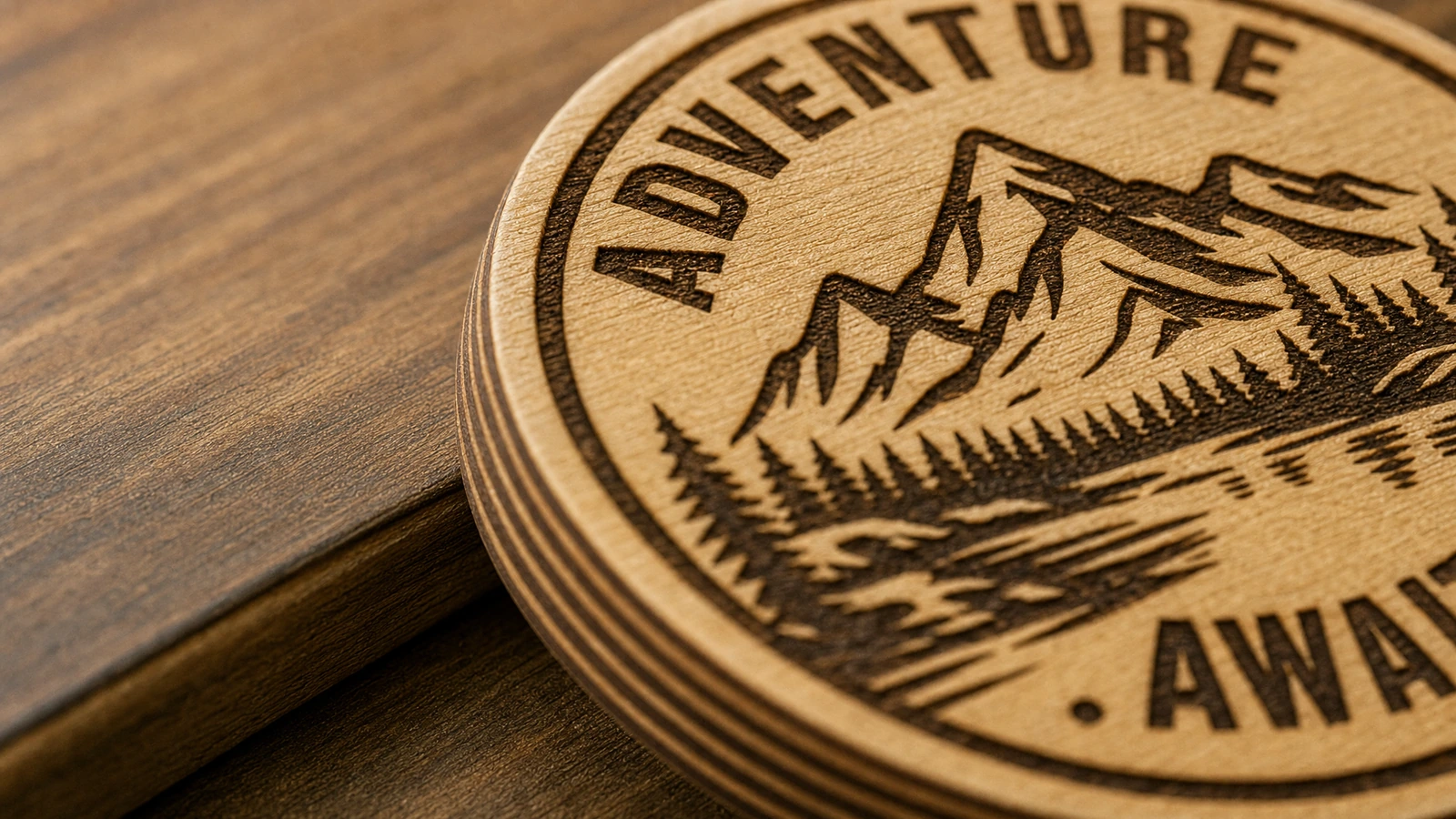
For daily-use projects, ask how the assembled connection will be evaluated under pulling and twisting. Do not adopt a universal force threshold from general buying advice. The method, load, duration, and acceptable outcome must be agreed for the actual construction before any strength claim is made.
How should artwork be prepared for sampling? ↑
A useful artwork package separates the desired result from assumptions about manufacturing. Provide the original artwork, intended finished size, and a clear indication of the cut outline and engraving areas. Ask which file formats are accepted before converting or flattening the design.
- Identify the cut outline. Keep it distinguishable from engraved lines, especially where decorative borders resemble the external shape.
- Confirm text and personalization. Check spelling, capitalization, dates, and any variable-name list against a single approved source.
- Mark critical details. Highlight small lettering, fine facial features, narrow bridges, and any QR code that needs a physical readability check.
- Show attachment placement. Include the proposed connection position so it can be evaluated alongside the silhouette.
- Separate front and reverse requests. State orientation and content clearly if reverse-side work is requested, subject to feasibility and quotation.
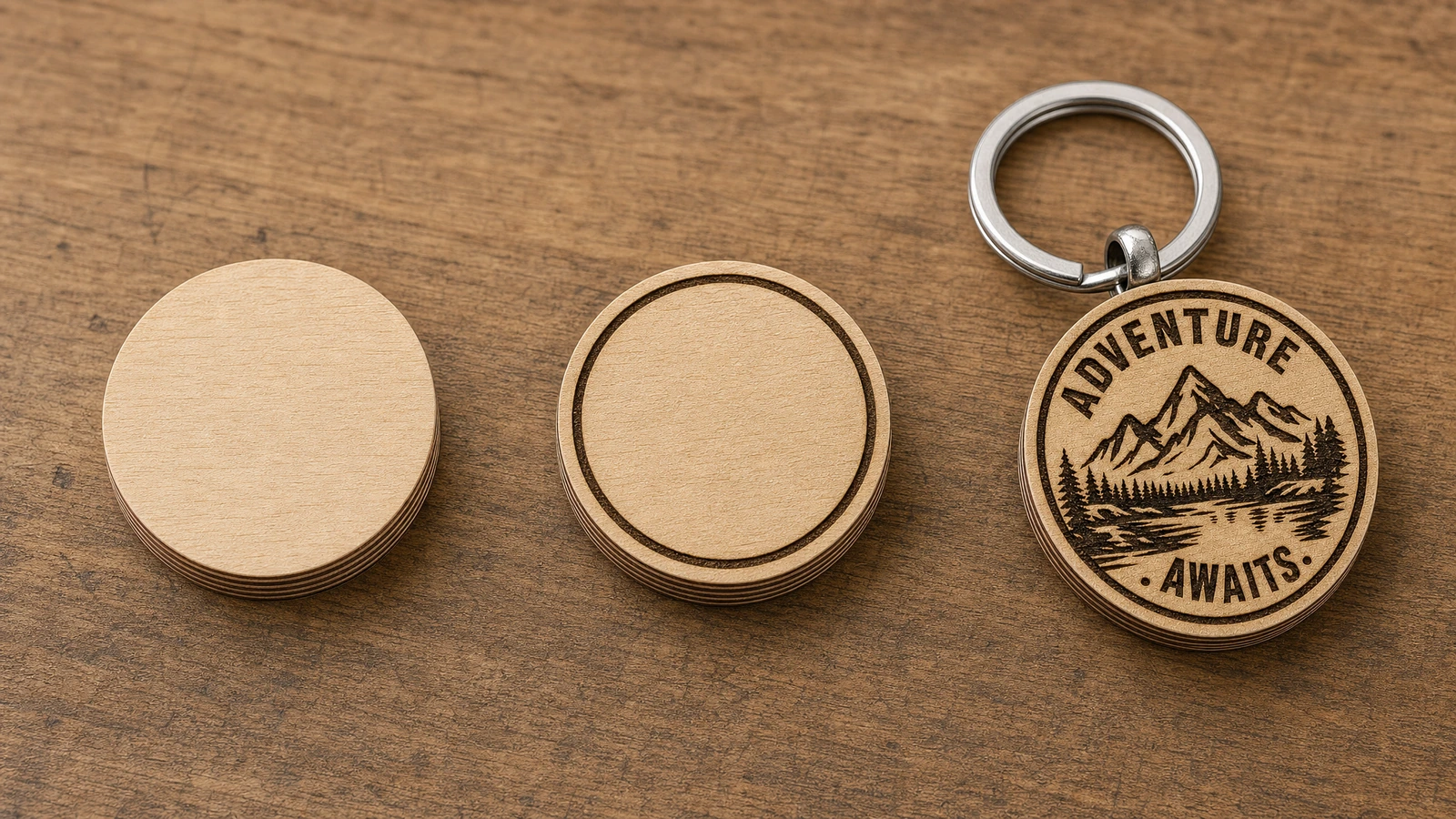
A digital proof should resolve layout, spelling, placement, and stated dimensions. It cannot establish touch, connection strength, engraving contrast on the selected panel, or resistance to rubbing. Keep those decisions on the physical-sample checklist rather than treating a screen approval as complete product acceptance.
What should happen between quotation and production? ↑
Use the following sequence as a requested purchasing workflow, not a claim about an existing factory process. Each step should leave a reviewable record so changes to artwork or construction do not silently change the order.
- Define the brief: intended use, quantity by design, dimensions, destination, and required arrival date.
- Resolve feasibility and quotation: panel specification, engraving scope, attachment, finish, packing, and any sample or setup charges.
- Approve the digital proof: confirm the artwork version, cut outline, placement, and personalization.
- Evaluate a physical sample: assess appearance, handling, fit, and agreed performance checks.
- Authorize the production specification: record the accepted sample and any changes before batch production begins.
- Review inspection and dispatch evidence: compare the batch and packaging against the approved order.
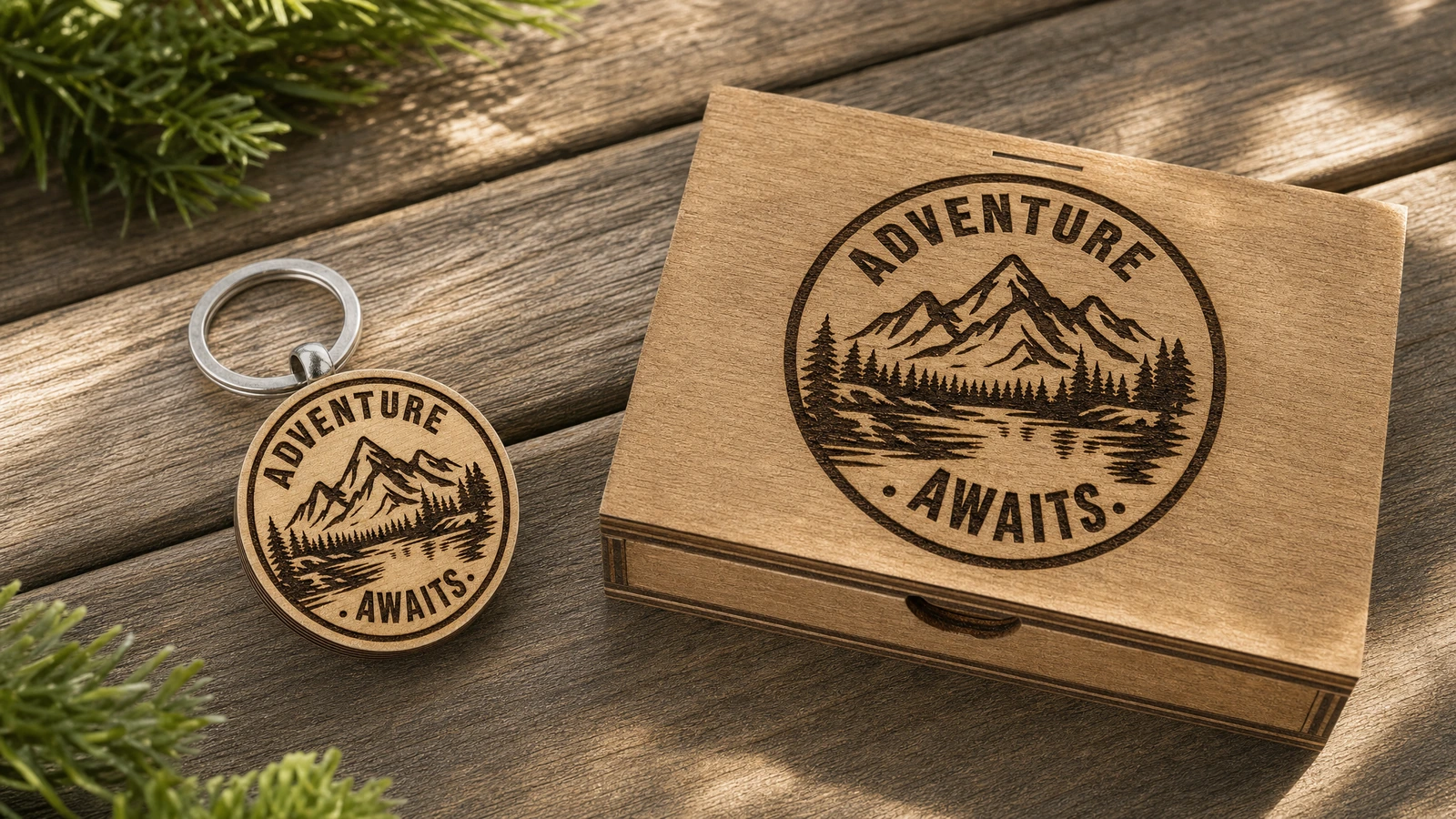
Clarify when the production clock starts and what happens if the approved design changes. A sample revision, a new attachment, or additional reverse-side work may require a revised price and schedule. No production duration or output capacity has been verified for this reference.
How can you define meaningful quality checks? ↑
Replace broad requests such as “premium quality” with observable acceptance criteria. The checks below address the purchasing risks identified in the supplied research. They are proposed checks to agree with the supplier, not completed tests or guaranteed outcomes.
| Checkpoint | Requested evaluation | Approval record |
|---|
| Dimensions and fit | Measure the body, thickness, hole position, and complete assembly | Approved dimensions and agreed tolerances |
| Engraving | Inspect actual-size text, essential details, placement, and any QR scan | Accepted sample and artwork version |
| Edges and surface | Inspect for splinters, cracks, loose layers, scratches, and unacceptable residue | Examples of accepted appearance and rejected defects |
| Attachment | Evaluate the assembled connection using agreed pull and twist methods | Method, conditions, result, and failure observations |
| Handling durability | Agree rubbing and drop checks relevant to the intended use | Test conditions and before-and-after observations |
| Moisture exposure | Assess any claimed protection using a defined exposure method | Test scope, appearance changes, and limitations |
This checklist makes unlike quotations easier to compare. A supplier offering visual inspection alone is not offering the same evaluation as one quoting physical testing. Agree the sample quantity, inspection coverage, and defect response before interpreting a result as representative of the order.
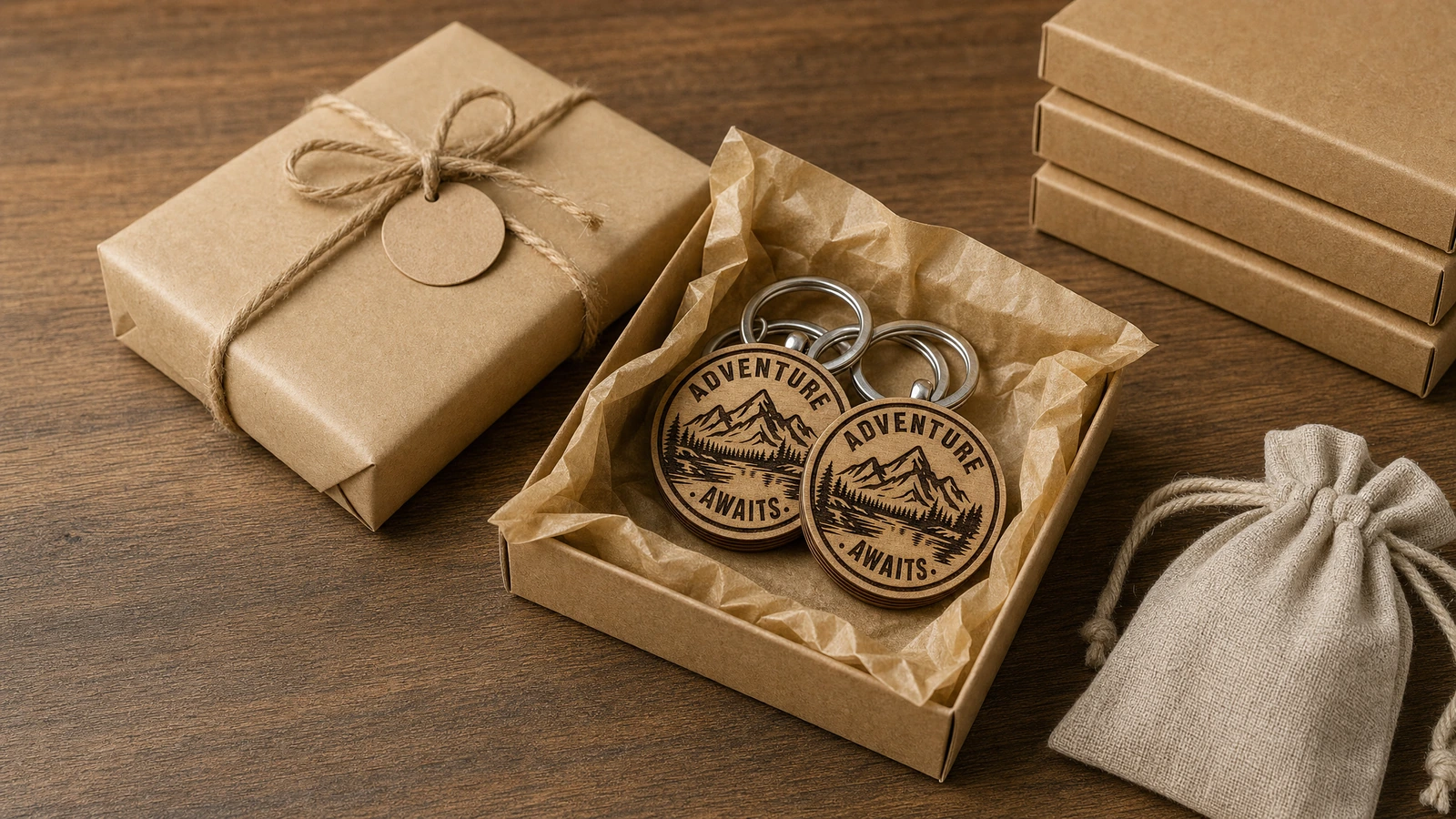
Connection strength deserves particular attention because an appealing wooden body cannot compensate for a failed attachment. Any permissible load or number of attached keys depends on physical dimensions, the loaded configuration, and sample validation; it should not be inferred from a photograph.
Record the agreed response to defects as well as the inspection method. Replacement eligibility, evidence requirements, freight responsibility, and claim timing belong in the purchase agreement. A suggested service policy is not an established warranty.
Which construction best fits your project? ↑
Compare materials and decoration routes around your design priorities. The alternatives below are purchasing considerations from the supplied market research, not a performance ranking or a statement that every option is available for this product.
| Route | Reason to consider it | Question to resolve |
|---|
| Laser-cut and engraved plywood | A shaped wooden body with engraved artwork | Which panel specification, edge appearance, and connection pass sample review? |
| Engraved solid wood | A brief centered on a documented wood species and its appearance | How do grain, engraving contrast, and attachment geometry affect the sample? |
| Printed wooden merchandise | A design that depends on full-color artwork | How are detail, color appearance, and surface wear evaluated? |
| Metal keychains | A different material feel or metal-focused design | What are the actual weight, decoration method, setup costs, and finish requirements? |
| Acrylic or PVC alternatives | A non-wood appearance or different visual treatment | Which construction reproduces the artwork and suits the intended handling? |
Choose using comparable samples rather than category labels such as “strongest” or “most sustainable.” For this product, a plywood sample is the relevant reference: reviews of solid-wood or stainless-steel keychains cannot establish its durability, engraving quality, or customer satisfaction.
How do you compare costs and delivery commitments? ↑
Request a quotation that identifies what is included. Body size, outline complexity, engraving coverage, number of designs, requested reverse-side work, hardware, finishing, and packing should be visible line items or clearly included in the unit price.
Separate sample charges, artwork preparation, production, testing, packaging, and transport where applicable. Confirm the quoted currency, quantity basis, destination, and treatment of duties or taxes. A low advertised price from an unrelated supplier is not a valid budget for a differently specified assembly.
Minimum order quantity and production time are not established for this reference. State the quantity you need for each design and request an explicit minimum and schedule. If several designs share an order, confirm whether quantity thresholds apply to the whole order or individually.
For event purchases, work backward from the required arrival date. Keep proofing, physical sampling, production, transport, and potential customs processing separate. Production completion is not the same as delivery, and an available rush option must be confirmed rather than presumed.
Which sourcing and compliance documents matter? ↑
A wood-based product is not automatically FSC-certified, biodegradable as a complete assembly, or suitable for every recycling stream. Establish the panel, adhesive, finish, hardware, and packaging composition before approving environmental statements. No certification or disposal-performance evidence has been supplied for this product.
If FSC claims are part of your brief, request product-specific supporting documentation and confirm permission for the intended trademark use. The organization’s promotional licensing guidance[2] explains why a marketing statement requires more than a general reference to responsibly sourced wood.
For U.S. imports, have the importer or broker assess declaration applicability for the actual product classification. Obtain species and harvest-country information where required; APHIS declaration guidance[3] identifies these supply-chain questions. Do not assume that every wooden keychain has identical filing requirements.
Because the identified body is plywood, include composite-wood formaldehyde requirements in the documentation review. Ask whether TSCA Title VI applies to the specified panel and finished article, and which supporting records are needed. The supplied U.S. wood-product regulatory overview[4] is background, not a certificate for this item.
If the intended audience includes children, resolve product classification and applicable mechanical and chemical testing before sale. Do not assume the untreated-wood testing provisions in the federal toy-material rules[5] establish compliance for a plywood assembly with adhesives, decoration, and hardware.
For EU-bound orders, check product coverage, operator obligations, and applicable timing against the official deforestation regulation[6]. Treat this as a destination-specific review rather than a universal compliance claim. Documentation questions should be resolved before finalizing packaging claims and import arrangements.
How should packaging protect delivery and repeat orders? ↑
Discuss how wooden surfaces and metal fittings will be separated during transport. Individual protection, suitable cushioning, and a rigid outer pack are options to evaluate against the order’s handling conditions. Approve the packed sample as well as the unpacked product, especially when the presentation will go directly to a recipient.
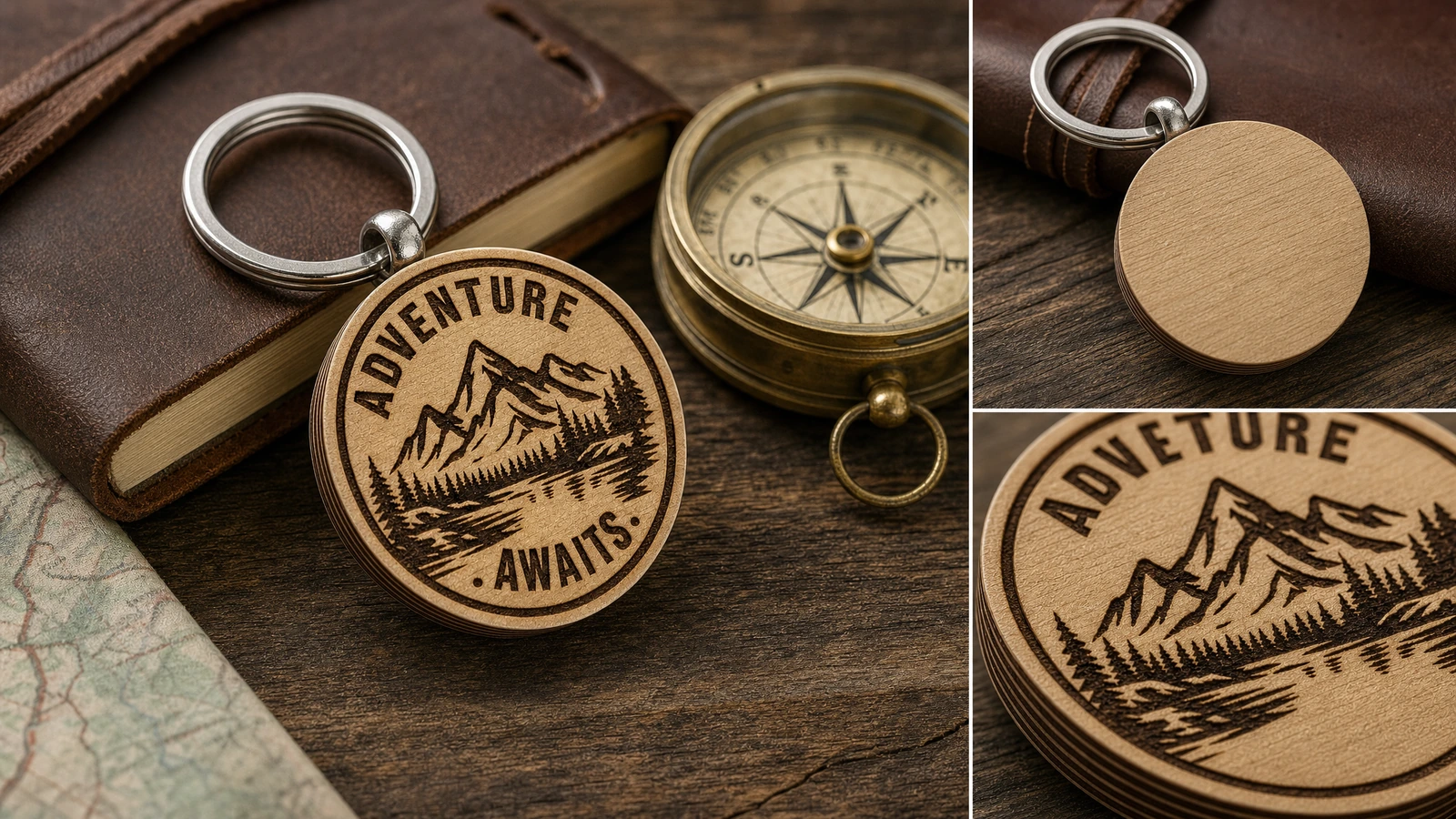
Ask for identification by design and batch so mixed artwork can be checked without unpacking every item unnecessarily. Keep the approved artwork, material description, attachment specification, sample photographs, and packing instructions together for repeat orders.
For care instructions, confirm compatibility with the selected finish. A conservative starting point is a soft dry cloth and avoidance of soaking; do not recommend oils, waxes, or cleaners without checking the finish requirements. No waterproof rating has been established.
On reordering, confirm whether the panel, finish, hardware, or manufacturing specification has changed. A retained sample provides a comparison point, but it does not guarantee identical natural appearance or unchanged performance across later batches.
Key takeaways for a clearer purchasing decision ↑
- Specify the correct construction. This reference is laser-cut and engraved plywood, not a verified solid-wood product.
- Approve physical readability and fit. Digital artwork alone does not settle engraving contrast, attachment clearance, or handling.
- Make quality measurable. Agree inspection methods, acceptance criteria, and defect handling before production.
- Keep commercial terms explicit. MOQ, production timing, dimensions, weight, and price require product-specific confirmation.
- Keep environmental claims evidence-based. Certification, complete-assembly disposal claims, and destination-market compliance need supporting records.
Turn your design into a sample-ready brief ↑
A clear brief connects the desired appearance to the decisions that determine the finished order: dimensions, artwork, attachment, sample acceptance, packing, and delivery. It also makes unresolved requirements visible before they become production changes.
Request a quotation for NSKU-758-01 with your artwork, quantity by design, intended dimensions, destination, required arrival date, and any testing or documentation requirements.




The information below is required for social login
Sign In
Create New Account