Custom resin fridge magnets turn landmarks, mascots, and brand artwork into molded polyresin keepsakes with sculpted detail. For a purchase-ready specification, define the design, dimensions, finish, magnetic backing, and packaging, then approve a physical sample. Pricing, minimum order quantity, production timing, and performance require project-specific confirmation.
A museum shop may need a recognizable architectural miniature. A tourism retailer may want a coordinated destination collection. An event buyer may prefer a commemorative design with a readable date. These projects share a material category, but their artwork, packaging, and acceptance requirements should not be treated as interchangeable.
The purchasing problem starts when an attractive rendering becomes the entire specification. Small lettering can disappear in sculpted detail; the back construction may remain undefined; protective packaging may be omitted from the comparison. Discovering those differences after production leaves a buyer choosing between delayed stock, rework, or merchandise that does not match the approved concept.
A better approach connects the visual brief to a physical approval sample and an itemized quotation. Choose molded polyresin when the shape itself tells the story, then evaluate appearance, magnetic attachment, and transit protection together rather than approving the front face alone.
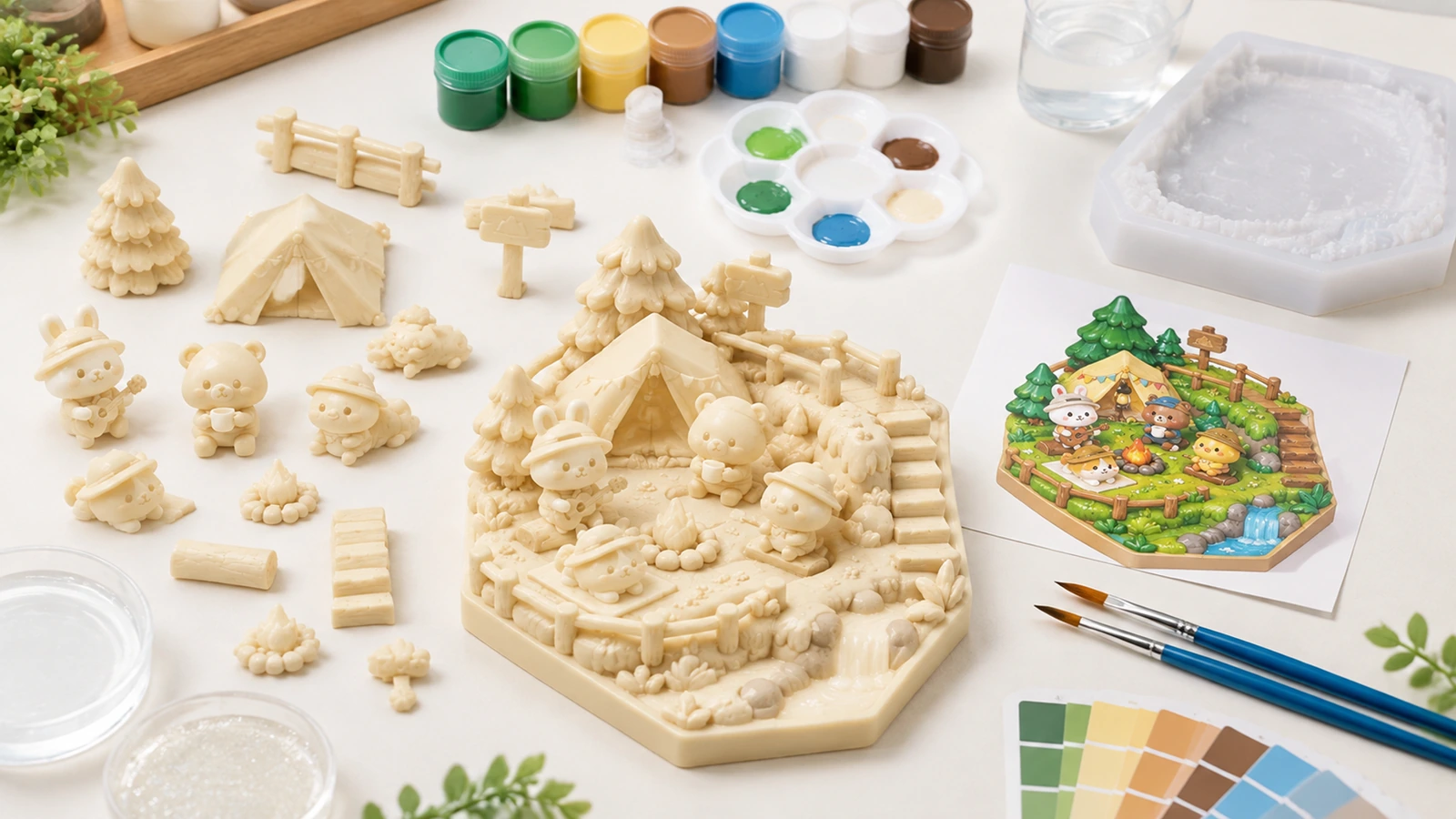
Images illustrate design and purchasing considerations; they are not photographs of verified production samples, test results, or confirmed available options.
Contents
What makes molded polyresin different from an epoxy dome?↑
This product is Custom 3D Molded Polyresin Fridge Magnets, within Custom Magnets → Custom Resin Fridge Magnets. Its provisional reference is NSKU-743-01. The defining feature is a molded decorative body, not simply a printed image beneath a transparent coating.
That distinction matters when comparing quotations. A molded landmark uses its contours to represent architectural features, while a domed printed magnet creates a raised coating over an image. The formats should not be substituted without approval. Magnet format distinctions[1]
Transparent flower inclusions, photo encapsulation, and glitter-filled epoxy pieces belong to related resin categories, but they are not established features of this product. Likewise, the polyresin identity does not establish a particular resin formulation, coating system, recycled content, or magnetic grade.
Specification status: No product-specific dimensions, unit weight, minimum order quantity, production time, certification, or factory test results have been supplied. Those items remain quotation, sampling, or testing requirements. This page separates confirmed identity from proposed purchasing checks.
How should you specify size and readable detail?↑
Begin with the feature a shopper must recognize: a building silhouette, mascot face, place name, or brand mark. A design containing all of them needs a clear hierarchy. Decide which feature remains dominant and which details can be simplified rather than assuming a miniature will reproduce every element of a full-size illustration.
Specify overall width, height, and total depth in millimeters. Identify whether depth includes the magnetic backing, and request finished unit weight in grams after sampling. For irregular shapes, overall dimensions alone may not explain the narrowest lettering area or the most exposed projecting feature; mark these on the approval drawing.
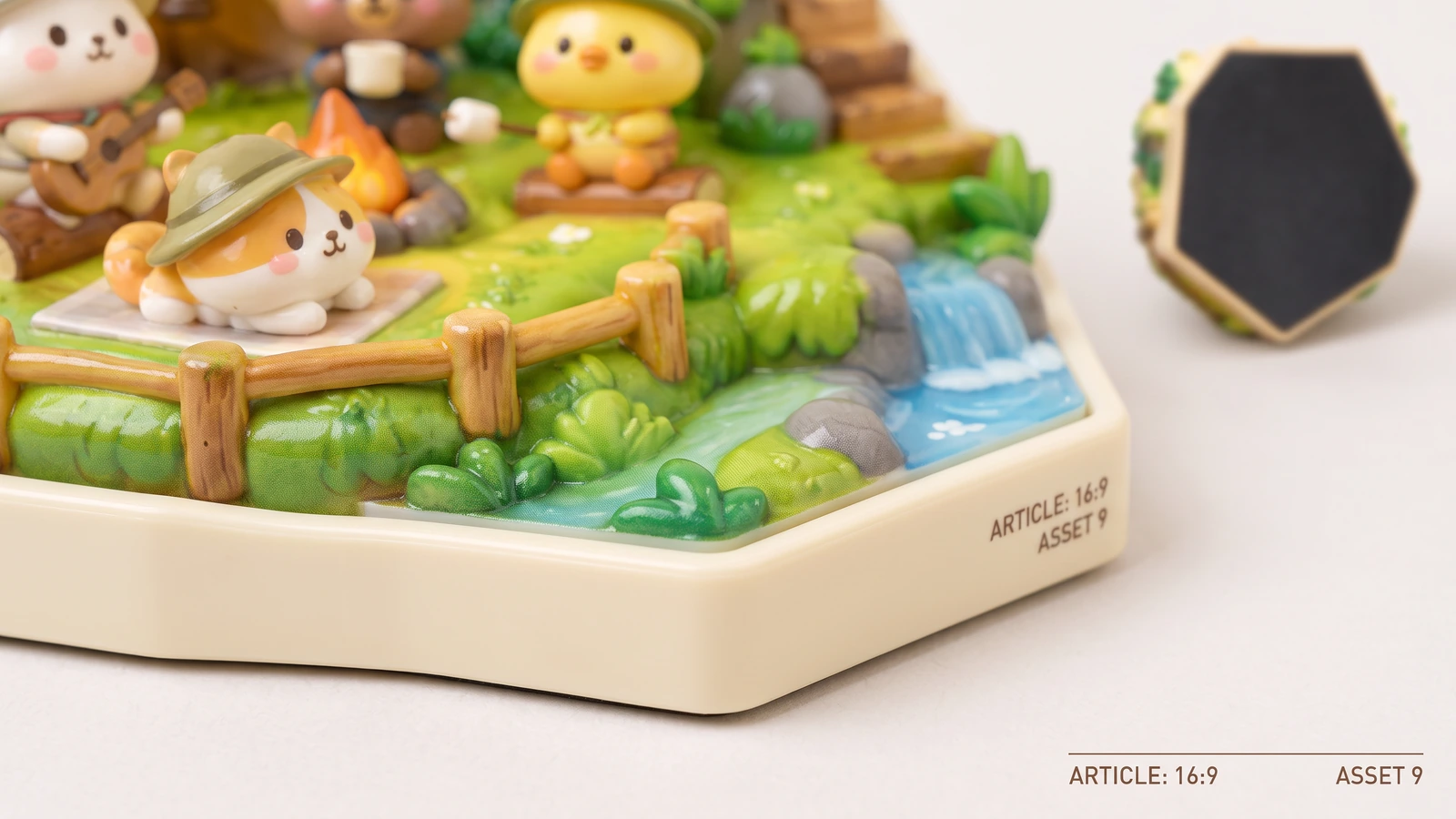
Review lettering at actual size rather than only on a zoomed screen. Check spelling, spacing, contrast, and whether raised features obscure adjacent text. There is no verified minimum letter size for this product, so readability must be accepted on the sample instead of inferred from a generic printing specification.
Which finish and magnetic backing should you request?↑
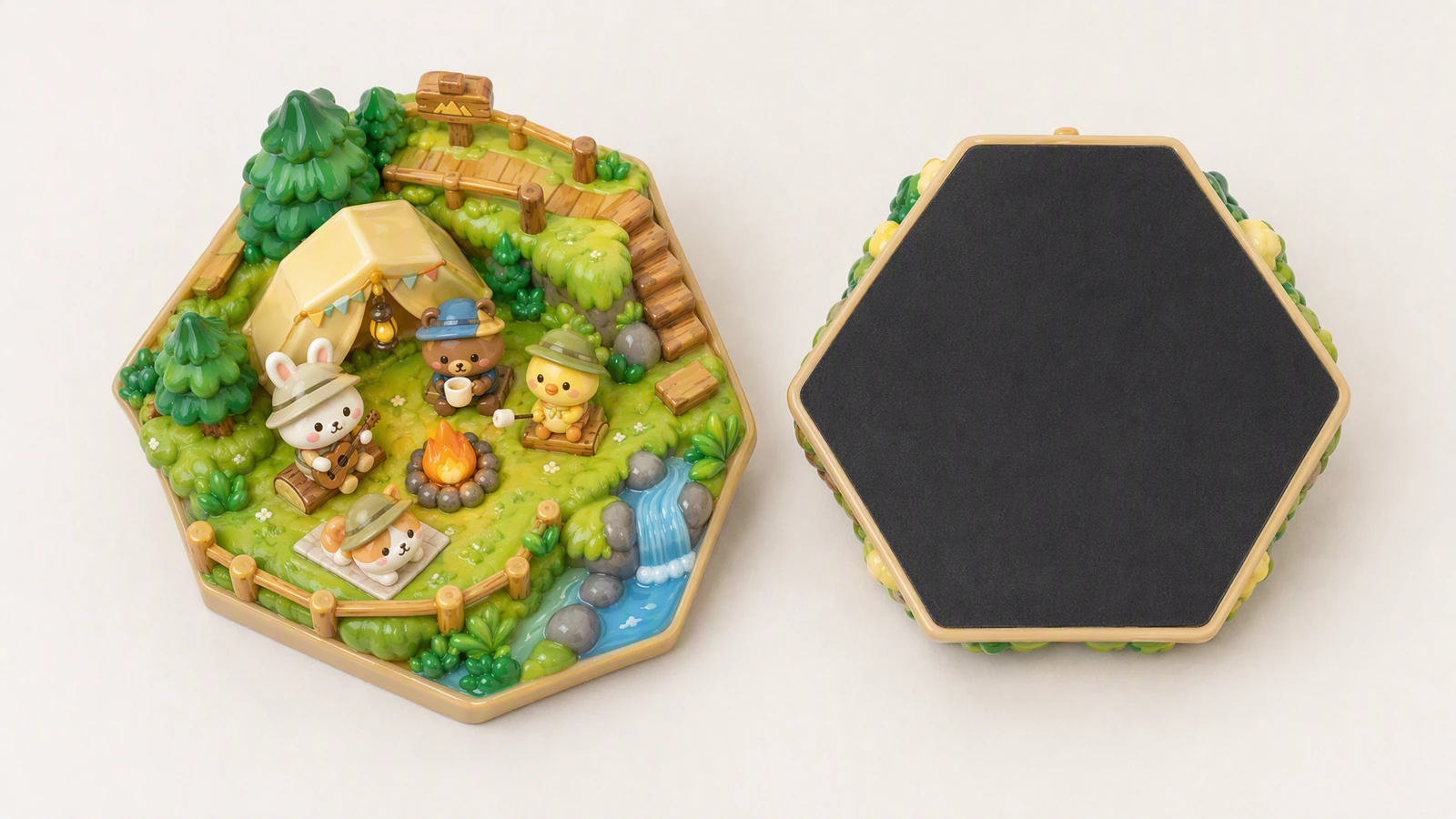
Describe the intended finish using a visual reference: color placement, sheen, visible texture, and treatment of recessed areas. Painted detail and printed decoration appear in the supplied market research, but their availability for your design must be confirmed. Do not treat “full color” as a complete specification for a sculpted surface.
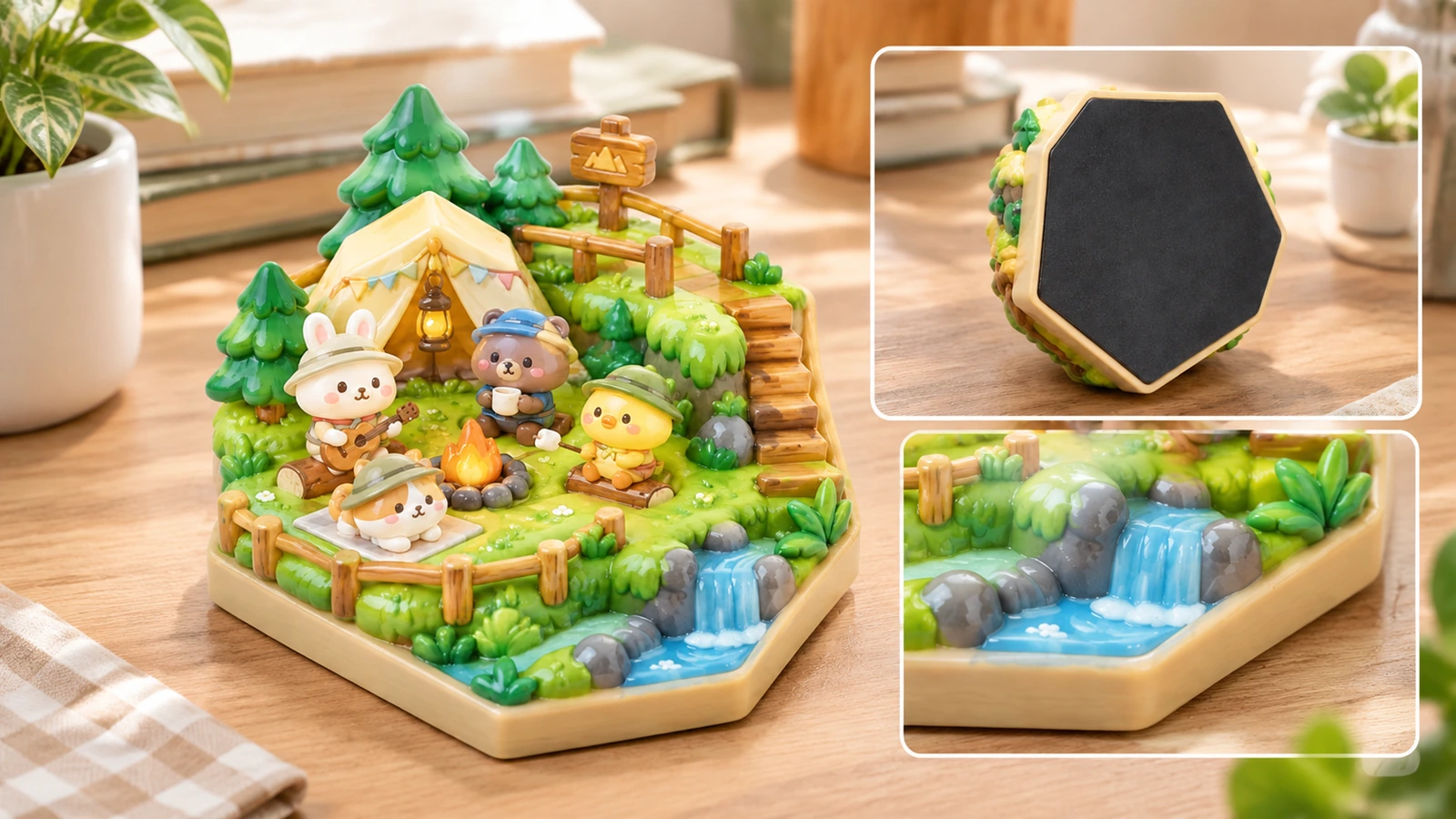
The magnetic component requires a separate decision. Ask the supplier to identify its material, dimensions, position, and retention method. A surface-bonded insert and a recessed or embedded construction are different assemblies. A supplier’s description of one should not be assumed to apply to another.
Magnet separation is a distinct issue from the whole product sliding down a surface. YE YE describes customer reports of magnets detaching from polyresin bodies and presents buried magnets as its own alternative construction. That is useful evidence for asking about retention, not proof that this product uses the same method. Magnet retention considerations[2]
Finish claims also need boundaries. “Waterproof,” “scratch-resistant,” “UV-stable,” and “non-yellowing” are not confirmed specifications here. If a claim matters to your retail description, request a relevant test method and result for the proposed finished construction before using it.
How do you prepare artwork for a meaningful sample?↑
Provide clear source artwork, reference views, exact wording, and color references together. Separate details that must remain unchanged from those that may be simplified for molding. A photograph of a landmark can communicate appearance, but it does not automatically resolve the depth, rear profile, or treatment of hidden features.
- Identify the focal point: Mark the silhouette, emblem, or character feature that makes the design recognizable.
- Confirm every text element: Supply place names, dates, and brand wording as text as well as within the artwork.
- Explain dimensional intent: Distinguish raised areas, recessed areas, and printed or painted details.
- Resolve color expectations: Use an agreed reference rather than treating a screen image as the final color standard.
- Confirm artwork permissions: Identify any licensed characters, third-party logos, or official emblems before reproduction.
Request artwork feedback before approving tooling. If the design needs adjustment, have the revised version show exactly what changed. Keep the quotation, artwork revision, and sample request under the same product reference so that an earlier file cannot quietly become the production instruction.
What should happen between concept and production approval?↑
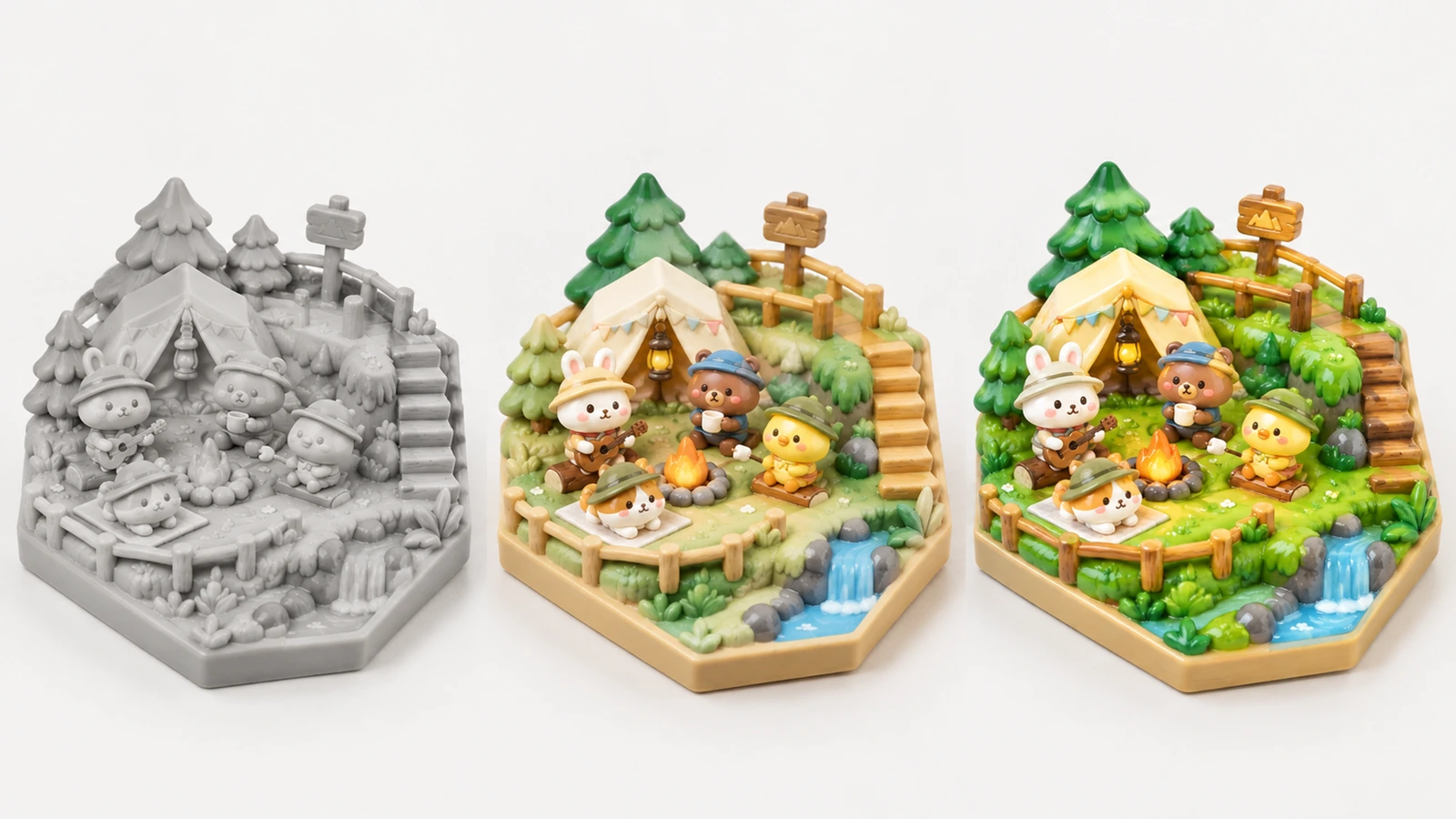
Published resin-magnet manufacturing guidance describes a sequence covering design, prototype preparation, molds, casting, curing, finishing, magnetic assembly, inspection, and packaging. This is an industry process reference, not a verified description of this product’s factory, formulation, equipment, or production capacity. Resin magnet production overview[3]
For purchasing purposes, organize approval around the following deliverables:
- Project quotation: Confirm the design count, requested quantity, destination, packaging brief, and intended use. Request separate identification of tooling, samples, product cost, testing, and shipping.
- Design approval: Review the proposed outline, relief, wording, color layout, and rear construction before authorizing the next stage.
- Physical sample: Assess the finished appearance, dimensions, handling, and magnetic behavior using the proposed materials and assembly.
- Written acceptance: Record the approved sample version, agreed tolerances, inspection criteria, and any corrections required before production.
- Shipment preparation: Confirm the packaging configuration and inspection evidence associated with the order.
Separate sample timing, production timing, and transit timing in the quotation. No fixed duration is established for this product. Where an event date is important, provide the required arrival date and destination rather than accepting an unspecified “lead time” that may refer only to manufacturing.
Tooling also deserves explicit treatment. Ask whether a design change requires revised tooling, whether sample revisions carry charges, and what arrangements apply to later orders. These terms should be agreed commercially; they cannot be inferred from a low advertised unit price.
Which checks make sample approval useful?↑
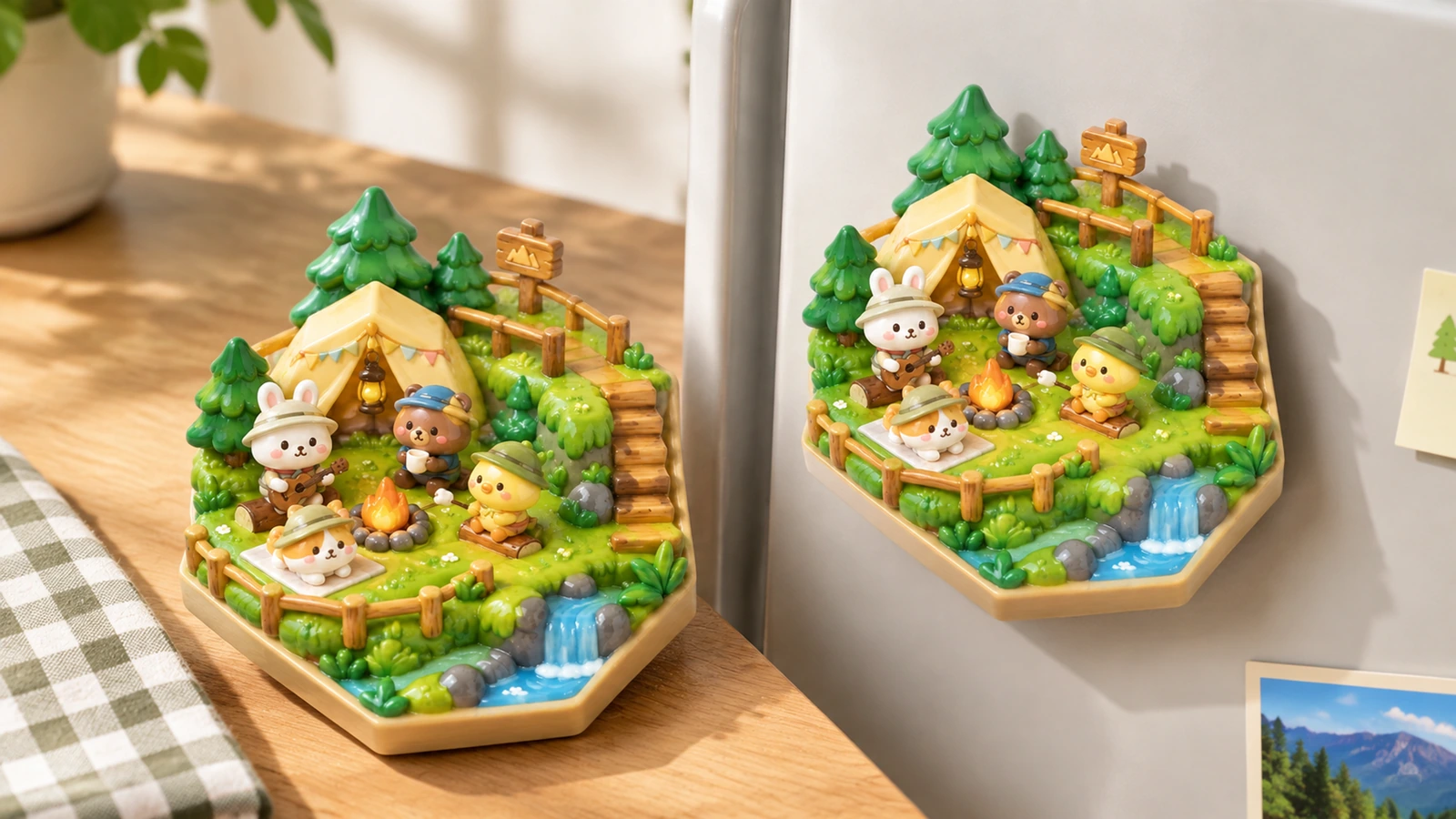
A useful sample approval records more than “looks good.” Identify the sample, the observation method, and the acceptance decision. The checks below are proposed purchasing requirements; no passing results, inspection coverage, or defect rate is claimed for this product.
| Check | What to examine | What to record |
|---|
| Appearance | Lettering, color placement, bubbles, chips, surface marks, and unwanted residue | Approved reference photographs and agreed appearance limits |
| Dimensions and weight | Overall size, depth, rear profile, and finished mass | Measured dimensions in millimeters and weight in grams |
| Display stability | Sliding or movement on the intended magnetic surface | Surface, orientation, loading condition, observation period, and outcome |
| Magnet retention | Integrity of the connection between insert and decorative body | Agreed retention-test method and result |
| Finish durability | Relevant abrasion, moisture, light, or temperature exposure | Test conditions and acceptance criteria, where required |
| Transit protection | Movement, contact, and damage within the proposed pack | Packaging configuration, agreed test procedure, and damage observations |
These checks answer different questions. A product may stay on a refrigerator yet have inadequate insert retention, or look correct before packing yet arrive with chipped detail. Agree which checks apply and how the results will be documented before treating sample approval as permission to proceed.
More magnetic force is not automatically a better assembly. K&J explains that positioning, leverage, flush contact, and adhesive suitability affect a decorative magnet’s behavior; excessive strength can also make removal difficult or stress the connection. Magnetic assembly guidance[4]
Holding capacity depends on physical dimensions, the loading condition, and sample validation. No supported paper count or load rating is available. If holding notes or photographs is part of the requirement, test that exact use rather than transferring a rating from an unrelated office magnet.
Which magnet format fits your buying priorities?↑
Compare formats by the design outcome you need, then request equivalent specifications. The following is a purchasing guide, not a ranking of guaranteed durability, price, or magnetic strength.
| Format | Design priority | Buying question |
|---|
| Molded polyresin | Sculpted landmarks, characters, and dimensional souvenir designs | Does the sample preserve recognizable detail, and is the packaging appropriate? |
| Epoxy-domed printed magnet | A printed image beneath a raised clear coating | Is the desired result a coated image rather than a molded miniature? |
| Soft PVC | Flexible molded shapes and graphic relief | Does the tactile finish suit the design and intended audience? |
| Printed acrylic | Cut-out artwork with a rigid printed face | Are print appearance, edge treatment, and backing acceptable? |
| Metal | Metallic appearance, relief, engraving, or enamel-style detail | What finish, weight, tooling, and shipping requirements apply? |
| Wood | Visible grain, engraving, or a natural-looking presentation | How will grain variation and moisture-related care be addressed? |
| Flexible printed magnet | Flat graphics, calendars, or promotional information | Is a flat format more suitable than sculpted decoration? |
The decorative material does not establish holding strength or safety by itself. Compare the complete assembly, not just the front material. Avoid importing another format’s advertised minimum order, delivery promise, or service-life claim into a polyresin quotation.
For commercial comparison, use the same artwork revision, quantities, packaging expectations, delivery destination, and testing requirements across quotations. Ask suppliers to identify exclusions. Tooling, protective packing, sample revisions, and freight can change the buying decision even when the listed unit prices appear similar.
How can packaging and reorder records protect your purchase?↑
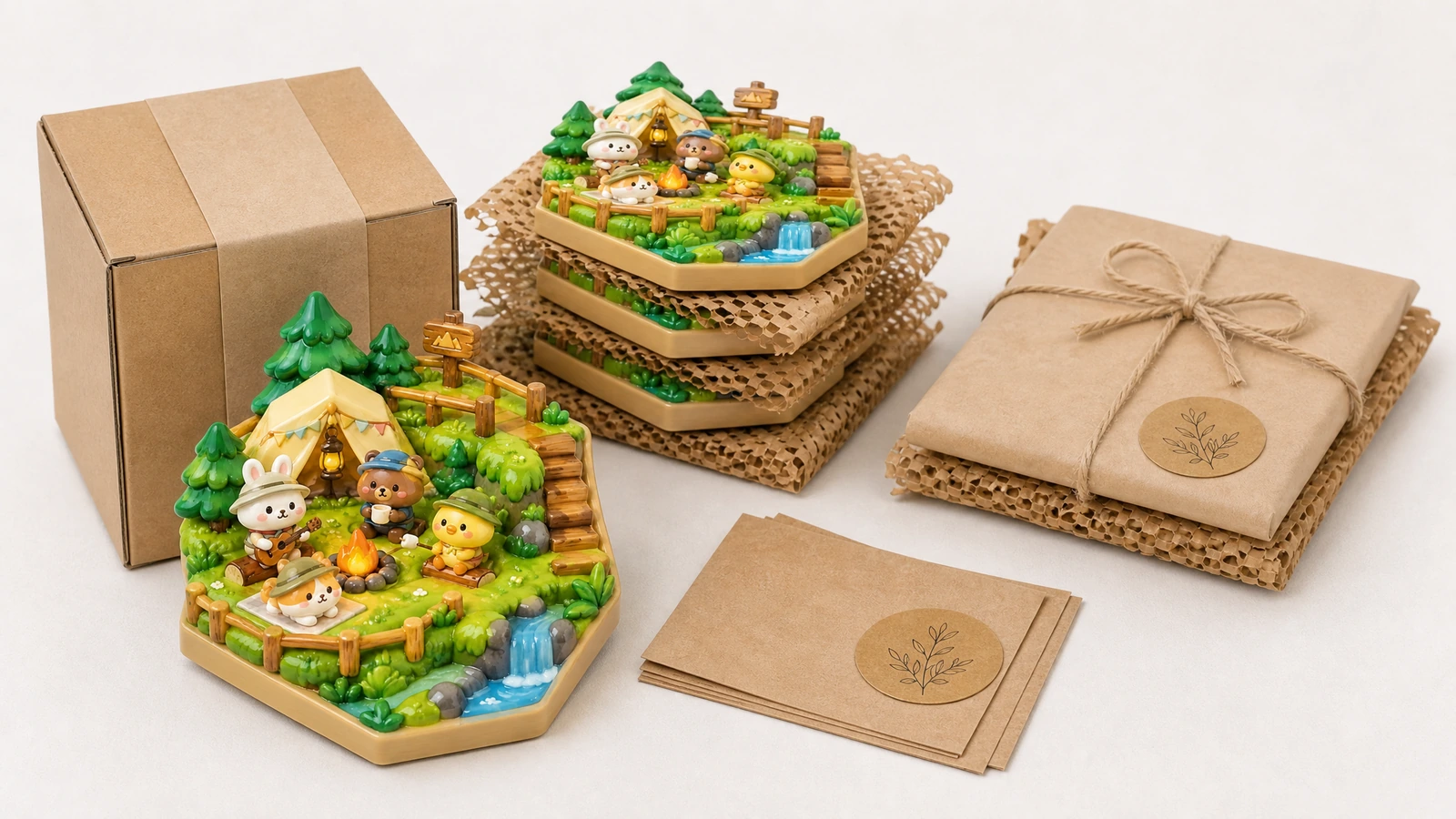
Packaging has two jobs: protect the piece and present it appropriately. A retail backing card, individual box, or bulk protective pack may suit different sales channels. These are options to request, not confirmed inclusions. Evaluate whether exposed contours can contact neighboring pieces or the outside of the pack.
Ask for the proposed retail pack and shipping carton to be considered together. Protective material around an individual piece does not, by itself, establish that a loaded carton will protect the order. Any packing quantity or carton capacity must be determined by physical dimensions, the packed loading condition, and sample validation.
For incoming inspection, record the condition of the outer carton, internal protection, and affected products before separating the shipment. Agree how missing quantities, incorrect designs, color discrepancies, or damage will be reported and resolved. Do not assume a replacement or refund policy that has not been included in the commercial terms.
A repeat order should reference the approved sample, artwork revision, color reference, magnetic assembly, and packaging specification. Ask whether any of those components will change. Reusing a product name alone is not enough to define the same order, and previous timing or pricing should not be treated as a standing commitment.
What safety, care, and disposal boundaries matter?↑
Small, powerful magnets require particular attention if they become accessible. CPSC warns that swallowed magnets can cause serious internal injury and advises immediate medical attention when ingestion is suspected. Keep loose or damaged magnetic components away from children and stop using a piece if its insert separates. Magnet ingestion safety[5]
Establish the intended audience and product classification before selecting compliance tests. A decorative souvenir should not be promoted as a child-safe toy without appropriate assessment. Where the product is classified as a toy, the applicable toy-safety requirements need to be addressed; naming a standard is not evidence of compliance. Toy safety business guidance[6]
No certification or market-specific compliance report is established for this product. Ask for a testing scope appropriate to the destination, materials, construction, and intended use. An embedded magnet, an age warning, or a general supplier statement should not be treated as a substitute for applicable product assessment.
For care planning, specify indoor decorative use unless additional exposure testing supports another application. Pending finish-specific instructions, use a soft, barely damp cloth and dry promptly; avoid soaking, abrasive cleaning, solvents, dishwashers, and prolonged direct sunlight or heat. Confirm compatibility with the appliance manufacturer’s surface-care instructions before use.
Environmental claims require similar precision. No recycled-content percentage, biodegradability claim, or recycling route is verified here. Treat the assembled resin body, coating, adhesive, and magnet as a mixed-material item when seeking local disposal guidance; do not assume it belongs in household recycling.
What should you confirm before placing an order?↑
- Specify the correct product. The confirmed identity is a custom molded polyresin fridge magnet, not a transparent epoxy photo magnet.
- Use measurable approval criteria. Record dimensions, finished weight, artwork revision, appearance limits, and the magnetic assembly on the sample specification.
- Keep performance claims conditional. Holding capacity depends on physical dimensions, loading condition, and sample validation; retention and finish durability need their own checks.
- Compare complete quotations. Minimum order quantity, production timing, unit pricing, tooling, packaging, testing, and delivery remain project-specific confirmation items.
- Preserve evidence for the next order. Retain the approved sample and its specifications, and confirm changes before repeat production.
Turn your design into a sample-led purchase↑
A successful sculpted keepsake begins with a recognizable design and ends with an agreed physical product—not just an appealing mockup. Clear artwork, a defined magnetic assembly, practical acceptance checks, and suitable packaging give buyers a concrete basis for approving custom resin fridge magnets without relying on unsupported promises.
Request a project quotation using reference NSKU-743-01, with your artwork, preferred dimensions, quantity by design, destination, required arrival date, and packaging brief.




The information below is required for social login
Sign In
Create New Account