Custom metal fridge magnets give souvenir collections, corporate gifts, and branded merchandise a dimensional metal format. This product uses a die-cast zinc alloy decorative body. Specify the artwork, finish, magnetic backing, and packaging together, then approve a physical sample before committing to production.
For a museum shop, destination retailer, hotel, or promotional merchandise buyer, the important question is not simply whether a magnet looks attractive. It is whether the finished piece communicates the right identity, fits the intended display, and arrives with the appearance and construction you approved.
A landmark collection may prioritize recognizable relief and a coordinated finish. A corporate gift may need a clean logo and presentation packaging. An event souvenir may depend on an arrival date that leaves room for distribution. These projects need different specifications, even when they share the same material.
An appealing digital mockup cannot reveal an uncomfortable edge, an unreadable inscription, or a backing that separates during removal. Discovering those problems after delivery can leave a retailer with unsuitable stock or an event organizer without usable gifts. The practical solution is to connect design approval with measurable specifications and a sample-based acceptance plan.
Product reference: Custom Die-Cast Zinc Alloy Fridge Magnets; provisional SKU NSKU-741-01. Category: Custom Magnets > Custom Metal Fridge Magnets. Dimensions, unit weight, minimum order quantity, production time, prices, and test results have not been established for this configuration. They remain quotation, sampling, or testing items.
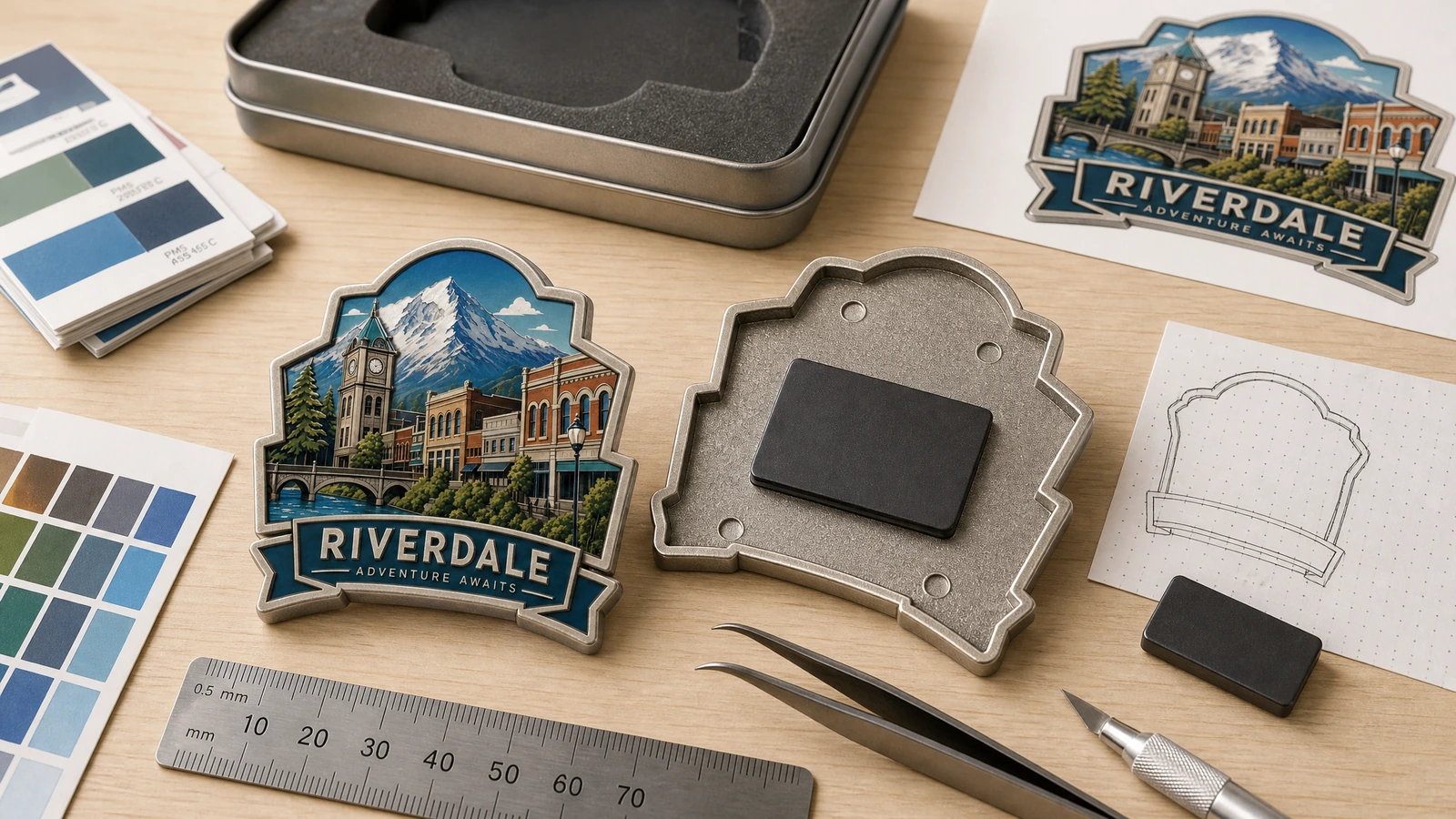
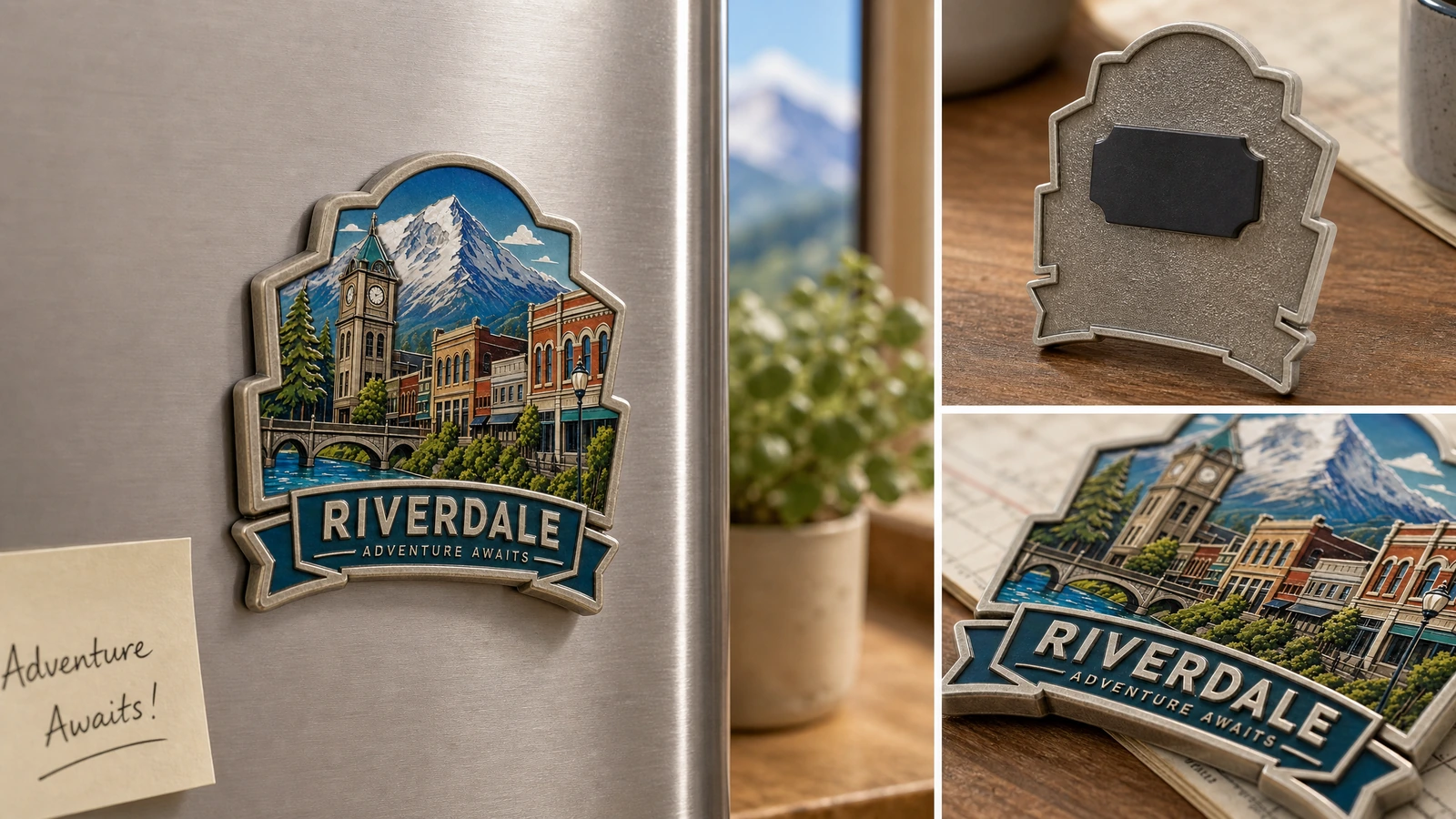
Illustrative product concepts; pictured designs and accessories are not confirmed specifications or evidence of completed orders.
Buying and customization guide
What defines this die-cast zinc alloy magnet? ↑
The defining feature is the die-cast zinc alloy decorative body. It should not be confused with a flexible printed magnetic sheet, a printed button-style magnet, or a metallic-looking surface treatment. Those alternatives may serve useful purposes, but they are different constructions and should be quoted separately.
The visible metal body and the magnetic backing also perform different jobs. The front carries the shape and artwork; the backing provides attachment to a suitable surface. A metal appearance alone does not establish magnetic strength, and a heavier decorative body is not evidence of better holding performance.
For this product, dimensional artwork, colored areas, and plated or antique-style appearances are design directions to discuss, not a confirmed menu of available finishes. The quotation should identify the proposed construction and any artwork changes needed to make it practical.
Keep the initial specification focused on what the buyer can approve. A named material, dimensioned drawing, finish reference, rear-view layout, and packaging description are more useful than an unsupported claim such as “premium quality.” Together, these items provide a reference for both sampling and later inspection.
How should you choose size and artwork detail? ↑
Start with the visual element that must remain recognizable: a building silhouette, emblem, destination name, or brand mark. Review the design at its intended physical size rather than only as an enlarged screen image. Fine lettering that looks clear on a monitor still needs confirmation on the finished surface.
Specify overall width, height, and body thickness in millimeters. Treat raised relief and the assembled rear projection as separate features where relevant. Unit weight should be recorded in grams after the configuration is established; it cannot be inferred reliably from a front-view rendering.
| Specification field | What to provide or request | Approval purpose |
|---|
| Overall dimensions | Width and height in mm, with an agreed tolerance | Confirm display size and packaging fit |
| Body and relief | Thickness, raised areas, and side-view drawing | Review the intended dimensional appearance |
| Text and logo | Actual-size artwork and critical readable elements | Identify details requiring simplification |
| Finished unit weight | Sample measurement in g | Inform backing selection and freight quotation |
| Intended use | Decoration only or a defined paper-holding requirement | Set the appropriate sample test |
These are specification fields, not published dimensions or performance values for this SKU. Any holding capacity or supported paper quantity depends on physical dimensions, loading conditions, and sample validation.
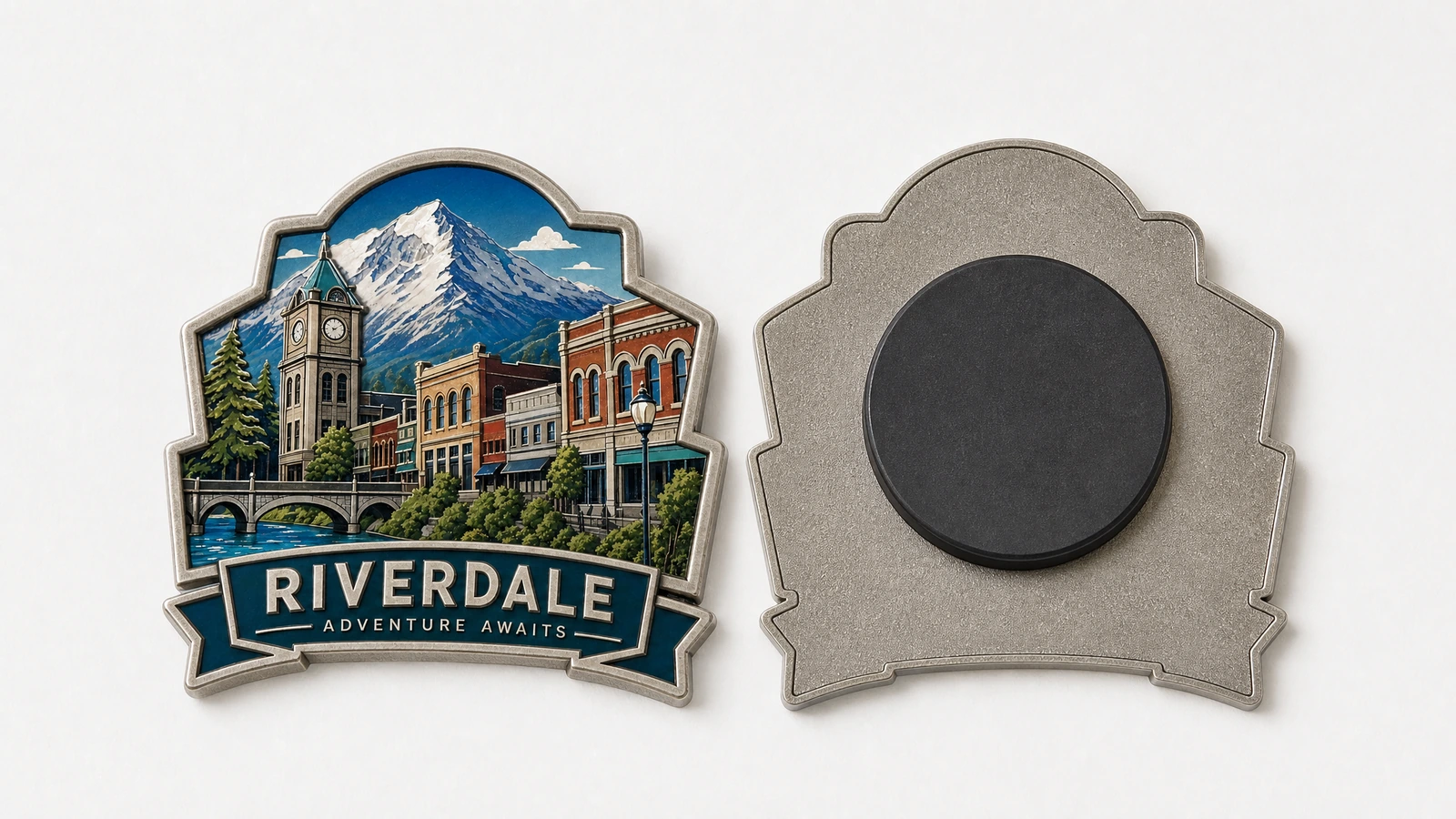
Which finish and magnetic backing suit your design? ↑
Choose the finish around the artwork rather than adding treatments indiscriminately. A landmark concept may emphasize raised metal detail and an antique appearance. A logo-led design may prioritize clearly separated color areas. A photo-heavy concept needs a separate discussion about whether the proposed decoration method can reproduce the intended image.
Ask the quotation to distinguish the base metal, surface treatment, color application, and any protective layer. Descriptions such as “gold color,” “enamel,” and “gloss finish” are not interchangeable. A sample should establish the actual appearance, including the relationship between recessed color and exposed metal.
The backing requires its own review. Ferrite and neodymium appear in the supplied industry research, but neither is confirmed for this SKU. Ask for the proposed magnet material, dimensions, location, attachment method, and any protective contact layer. A named adhesive alone is not an assembly-performance guarantee.
Adhesive compatibility and surface preparation matter to attachment reliability. K&J also explains that an excessively strong magnet can make removal difficult or separate the decoration from its backing. Its fridge magnet assembly guidance[1] supports evaluating the complete assembly rather than choosing by magnetic strength alone.
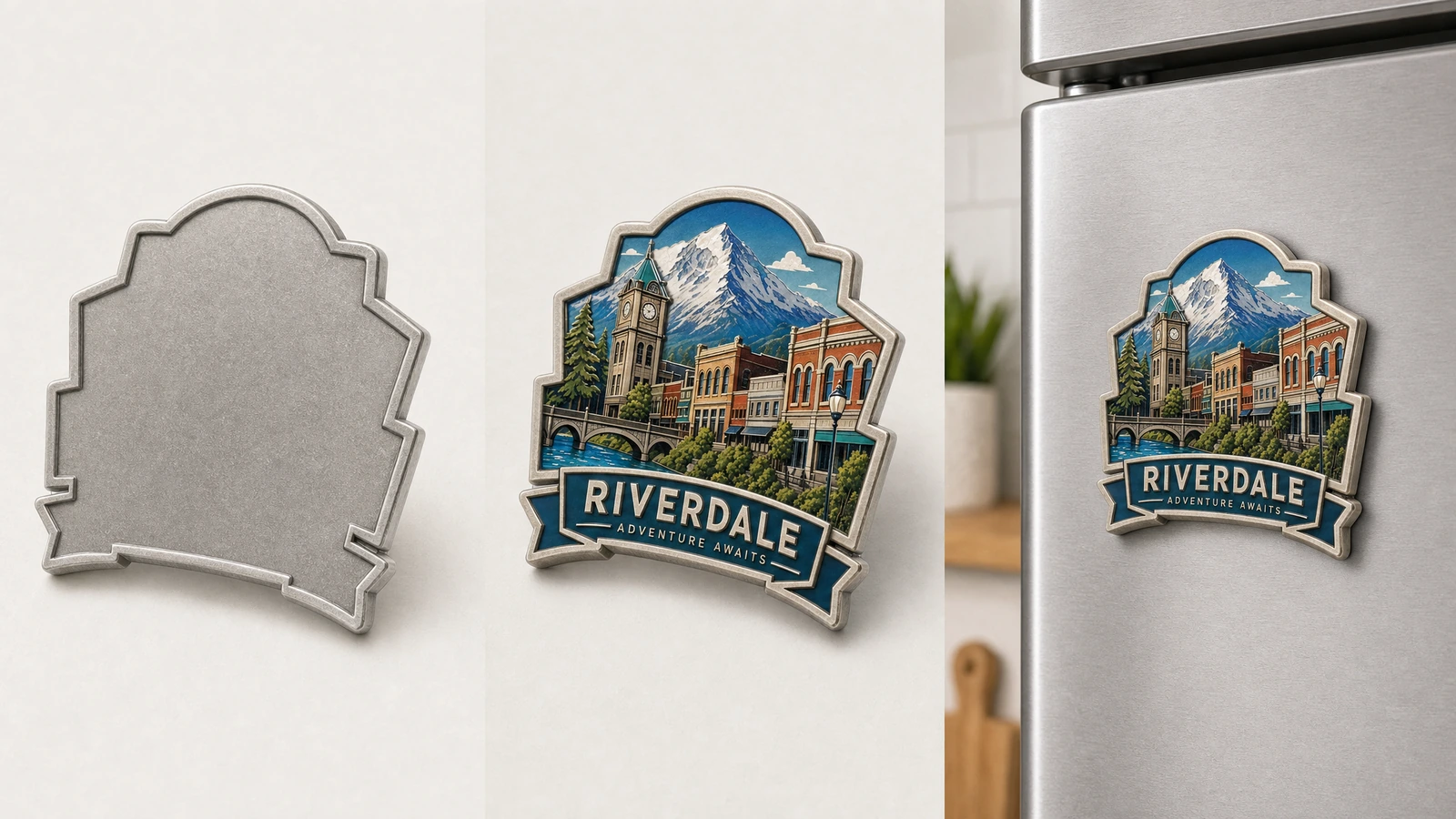
Test the intended refrigerator door or display panel before ordering. “Stainless steel” is not a universal compatibility guarantee. Do not assume a stronger backing will solve a surface that does not attract a magnet.

How do you prepare artwork for quotation? ↑
A useful artwork package explains both appearance and priority. Include the design, requested dimensions, color references, and notes identifying the elements that cannot change. If a recognizable landmark or logo is essential, state which details must survive any production-related simplification.
- Shape: show the intended outer contour separately from background imagery.
- Relief: distinguish raised metal, recessed areas, and elements intended only as printed decoration.
- Color: provide named references where available and identify areas where sample approval is essential.
- Back: show the proposed magnet position and any requested rear marking.
- Presentation: include the desired card, sleeve, or box concept in the same inquiry.
Ask the supplier to flag unclear lettering, crowded details, and process limitations before tooling is approved. Do not assume that an image file defines every production feature. The approval proof should make the intended construction understandable without relying on informal messages.
Keep a clear distinction between a digital proof and a physical sample. The proof can confirm wording and layout; the sample is needed to assess texture, finish, edge quality, and assembled behavior. Approving one should not silently count as approving the other.
What should happen between approval and production? ↑
Use the following as a proposed approval sequence, not a claim about an established factory procedure. The actual manufacturing route, available finishes, and inspection arrangements must be confirmed for the order.
- Define the quotation. Record the requested quantity, design versions, dimensions, finish, backing, packaging, destination, and required arrival date.
- Review manufacturability. Resolve artwork changes and identify tooling requirements before authorizing mold work.
- Approve the production drawing. Confirm the front, side, and rear construction, including critical dimensions and lettering.
- Evaluate a physical sample. Review the die-cast body, surface treatment, decoration, magnetic assembly, and packaging together.
- Freeze the accepted version. Record the approved sample and any agreed corrections before bulk production.
- Inspect before dispatch. Compare finished goods with the approved reference and the agreed acceptance criteria.
The production schedule should separate artwork approval, tooling, sampling, bulk manufacture, inspection, and transport. Ask what starts each interval and whether sample revisions affect the schedule. A production estimate is not the same as a confirmed delivery date.
For a fixed event, include the destination and required receipt date in the first inquiry. This allows the proposed schedule to be assessed before spending on tooling. No minimum quantity, sampling duration, or production time is verified here.
How should samples and finished goods be checked? ↑
Agree on the inspection method before production, including the sample selection, test conditions, acceptance limits, and handling of failures. “Strong,” “durable,” and “scratch-resistant” are not complete acceptance criteria. The following checklist defines questions for testing; it does not report completed tests.
| Check | Proposed assessment | Record to retain |
|---|
| Dimensions and mass | Measure finished units against the approved drawing | Measurements in mm and g; agreed tolerances |
| Artwork and finish | Compare lettering, color, relief, and visible defects with the sample | Reference images and defect criteria |
| Edges and rear contact | Inspect for burrs, exposed roughness, and uneven contact | Inspection findings and corrective action |
| Magnetic attachment | Assess sliding, removal, and any intended load on a named surface | Surface, orientation, loading, duration, and result |
| Backing retention | Evaluate attachment under agreed handling conditions | Method, conditions, and any separation observed |
| Packed protection | Assess the agreed packaging for movement and surface damage | Pack configuration and inspection result |
A pull-force measurement should identify its test setup and must not be presented as an interchangeable measure of vertical holding capacity. Paper quantity and load suitability remain dependent on physical dimensions, loading conditions, and sample validation.
For everyday use, inspect both the product and the contact surface. Rough edges or trapped dirt can damage a finish, so the acceptance plan should cover the rear as well as the decorative face. A protective layer must be evaluated as part of the final assembly rather than added after approval without review.
If moisture, abrasion, or sunlight resistance matters to the intended use, request a defined test and supporting report. Do not convert another supplier’s lifespan claim, flexible-magnet specification, or customer review into a performance promise for this product.

When is die-cast metal the right buying choice? ↑
Consider die-cast zinc alloy when the design brief centers on a shaped metal object, relief detail, or a collectible presentation. If the priority is flat photographic artwork, a flexible format, or a soft-touch object, compare alternative constructions before committing to a mold.
| Construction | Reason to consider it | Buying question |
|---|
| Die-cast zinc alloy | Dimensional metal designs and souvenir concepts | Does the sampled appearance justify tooling, weight, and finish costs? |
| Flexible printed magnet | Flat promotional graphics or information-led designs | Is flexibility more important than relief and metal construction? |
| Printed button-style magnet | Artwork in a button construction | Does the available shape suit the design without a sculpted body? |
| Molded PVC | A soft-feel, shaped design direction | Does the material suit the intended audience and presentation? |
| Resin, acrylic, glass, or wood | A different sculptural, transparent, or natural appearance | What protection and maintenance does the chosen construction require? |
This comparison concerns design fit, not verified price or durability rankings. Magnetic performance depends on the complete assembly, so the decorative material should not be used as a shortcut for predicting holding strength.
For comparable quotations, keep quantity, dimensions, finish, packaging, destination, and inspection requirements consistent. Ask suppliers to separate unit cost from tooling, samples, packaging, testing, and freight. A lower headline unit price may omit an item included in another quotation.
Also clarify whether multiple artworks require separate tooling or separate order minimums. For later purchases, establish mold ownership and reuse terms in writing. Do not assume that a reorder avoids every setup charge or can proceed without confirming the retained specification.
What safety documentation should buyers request? ↑
Identify the intended market, audience, and use before selecting a test scope. A decorative description or “not a toy” label should not substitute for assessing the actual product and its marketing. No safety certification or compliance result has been supplied for this SKU.
For products within its scope, the U.S. magnet rule requires loose or separable magnets that fit entirely inside the small-parts cylinder to have a flux index below 50 kG² mm². Scope depends on intended use; toys follow a separate regulatory route. See CPSC magnet business guidance[2]. This is not a finding that the present product passes or is exempt.
Request documentation identifying the tested construction and the materials actually used, including relevant coatings, colorants, adhesive, and backing. Ask which substance requirements apply to the destination; do not treat a generic REACH or RoHS statement as proof of every necessary assessment.
Similarly, metal construction does not establish recycled content or household recyclability. Request material-specific evidence before making environmental claims, and confirm how the assembled item should be handled locally at end of life.
How do packaging and reorder records protect your purchase? ↑
Packaging should protect the approved surface as well as suit the sales channel. Discuss individual separation, protection from face-to-face rubbing, and restraint inside the shipping carton. A retail presentation card and transit protection perform different roles; neither should be assumed to replace the other.
Confirm the packed configuration before the freight quotation is finalized. Finished weight, packaging, shipment size, destination, and transport method belong in the shipping assessment. Ask whether the magnetic assembly needs transport-specific checks, particularly when considering air shipment.
Care instructions should match the confirmed finish and backing. Avoid promising waterproof performance without testing. K&J explains that exposed neodymium magnets are susceptible to corrosion in its magnet corrosion guide[3]; this is relevant if that backing is selected, not evidence of a verified backing material here. Keep contact surfaces clean and dry, and investigate any loose component or damaged coating.
For reorders, retain the approved artwork revision, drawing, finish reference, physical sample, backing specification, and packaging record. Review proposed substitutions before accepting them. A matching front image alone does not establish that the assembly or its performance remains unchanged.
Key takeaways for a clearer purchasing decision ↑
- The confirmed identity is specific. This is a custom die-cast zinc alloy fridge magnet, not a generic metallic-looking printed magnet.
- Commercial terms remain unverified. MOQ, production time, unit weight, dimensions, and price require a product-specific quotation or sample measurement.
- Holding performance needs assembly-level validation. Define the target surface and loading conditions before approving the sample.
- Small-magnet requirements depend on regulatory scope. — Below 50 kG² mm² for qualifying loose or separable magnets in subject products (Source).
- Compare the complete purchase. Include tooling, finish, backing, inspection, packaging, and freight rather than unit price alone.
Turn your concept into a defined quotation ↑
A successful custom magnet project starts with a clear design and ends with an accepted physical product—not merely an attractive rendering. Define the visual priorities, confirm the proposed construction, and agree on how appearance, attachment, and packaging will be assessed. That gives the quotation a meaningful basis and creates a reference for future orders.
Request a project quotation with your artwork, preferred dimensions, quantity, finish concept, destination, and required arrival date.





The information below is required for social login
Sign In
Create New Account