Custom wood fridge magnets turn logos, place names and personal messages into engraved plywood keepsakes. Choose the outline around your artwork, check readability at actual size, and approve the magnetic backing against the intended use. Dimensions, finish, minimum order, pricing and delivery require a project-specific quotation; holding performance requires physical sample testing.
Product reference: NSKU-739-01. Category: Custom Magnets / Custom Wood Fridge Magnets. Product information date: September 25, 2026.
A Personal Detail for Gifts, Souvenirs and Brand Collections ↑
A wedding date, a recognizable skyline or a carefully drawn logo gives a small keepsake its purpose. Laser-cut and engraved plywood offers a wood-grain background and a shaped outline for that message, rather than treating every design as a rectangular printed advertisement.
- Museums and destination shops: develop landmark silhouettes and place-name designs, with packaging requirements defined for the retail display.
- Wedding and event buyers: prioritize readable names, accurate dates and a confirmed arrival schedule before choosing decorative detail.
- Businesses and property professionals: adapt a logo or short message for client gifts without overcrowding the engraving.
- Artists and small brands: assess whether an illustration translates into engraved lines before committing to a collection.
For each project, distinguish a decorative souvenir from a functional paper holder. A magnet intended only to support its own body has a different acceptance requirement from one expected to hold an invitation. Any holding capacity depends on the finished dimensions, loading conditions, target surface and sample validation.
Make the Keepsake Work Beyond the Mockup ↑
A convincing preview cannot reveal every purchase risk. Small lettering may become difficult to read, an intricate outline may leave fragile sections, and an attractive front can hide a poorly attached magnet. Discovering those problems after packing an event order leaves little room for correction.
The solution is to approve the product as an assembly: engraved face, cut edge, surface treatment, magnetic backing and packaging. Use the physical sample to settle what the digital proof cannot, then record those decisions so the production order has a clear reference.
Refrigerator compatibility is a separate check. Stainless finishes vary, and magnetic attraction does not guarantee that a finish tolerates magnets. GE recommends checking compatibility and advises against magnets on its black stainless and fingerprint-resistant stainless doors because of potential surface damage. See GE appliance finish guidance[1].
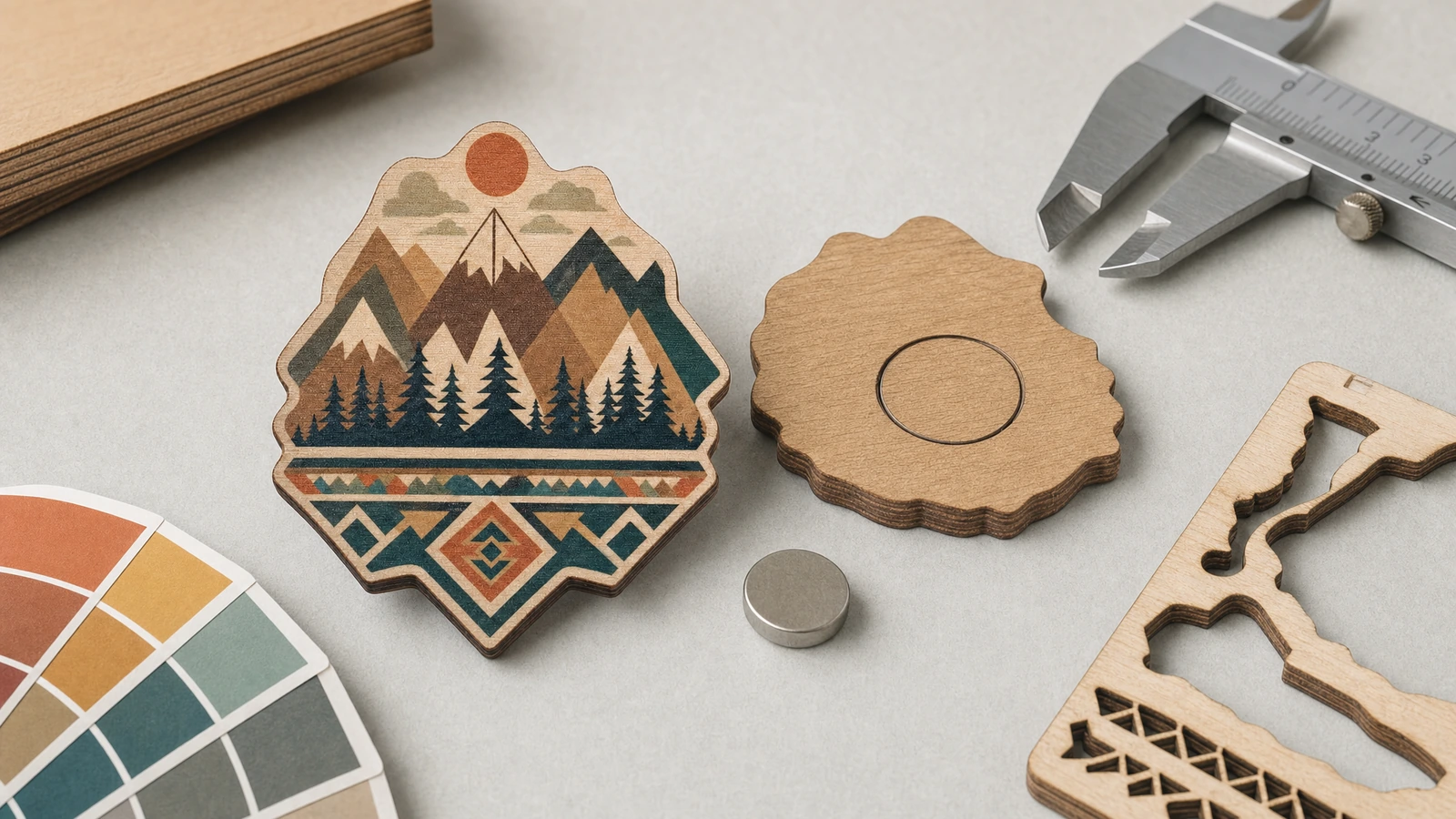
Illustrative application concepts, not photographs of approved production samples.
Product and Buying Guide
What Are Laser-Cut and Engraved Plywood Magnets? ↑
This product combines a custom laser-cut plywood shape, an engraved design and magnetic backing for compatible surfaces. Cutting creates the perimeter; engraving creates the graphic or lettering in the wood surface. The backing supplies the magnetic attraction.
Plywood is the confirmed substrate—not solid hardwood, MDF or HDF. The wood species, board grade and thickness have not been specified. Those distinctions matter when comparing quotations: a thick solid-wood souvenir and a thin engineered-board magnet are not interchangeable products simply because both are described as wooden.
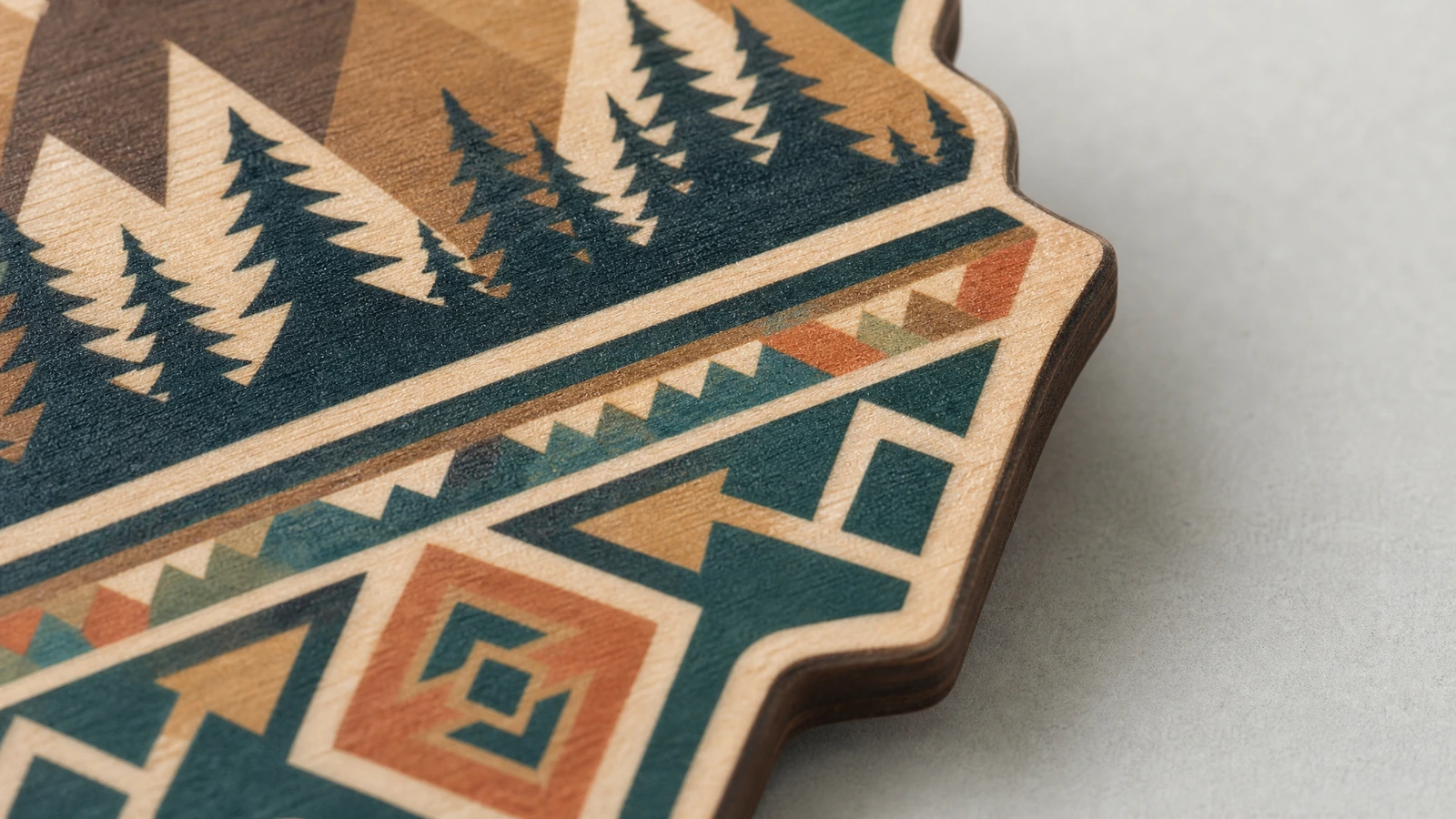
Engraving produces contrast through the interaction of the laser and wood. It is not a full-color printing process, and the appearance should not be judged against a color-screen mockup alone. Logos, lettering and simplified line drawings are useful starting points; detailed tonal artwork needs a sample assessment.
Which Specifications Need Approval? ↑
Start with the message and its viewing size, then define the physical construction. Enlarging a design may improve readability, but also changes the silhouette, weight and backing requirements. No standard dimension or thickness is confirmed for this product reference.
| Specification | Confirmed information | Project decision required |
|---|
| Substrate | Plywood | Species, grade and thickness in mm |
| Decoration | Laser cutting and engraving | Outline, engraved areas and readable detail |
| Finished dimensions | Not specified | Width, height and total thickness in mm |
| Surface treatment | Not specified | Sanding, sealing and acceptable edge appearance |
| Magnetic backing | Configuration not specified | Material, dimensions, position and attachment |
| Unit weight | No verified value supplied | Measure the approved assembly in g |
| Holding performance | No product-specific test supplied | Validate the intended load on the target surface |
| Order terms | No confirmed MOQ or schedule | Quote quantity, sample terms and delivery separately |
The table separates the known product identity from the decisions needed for an order. It does not convert common market specifications into promises for this SKU. Keep the agreed drawing and written specification together so changes to either remain visible.
How Should You Specify the Surface and Magnetic Backing? ↑
A finish specification should describe more than the front photograph. Include the feel of the face, exposed plywood layers, cut-edge darkening and the condition of the back. Decide which natural grain variations are acceptable and which defects—such as splinters, separation or damaged lettering—are not.
Sealing deserves its own discussion. Wood exchanges moisture with surrounding air, affecting its properties and performance, as explained by the USDA Wood Handbook[2]. That supports assessing moisture protection; it does not establish a waterproof rating or service life for this magnet.
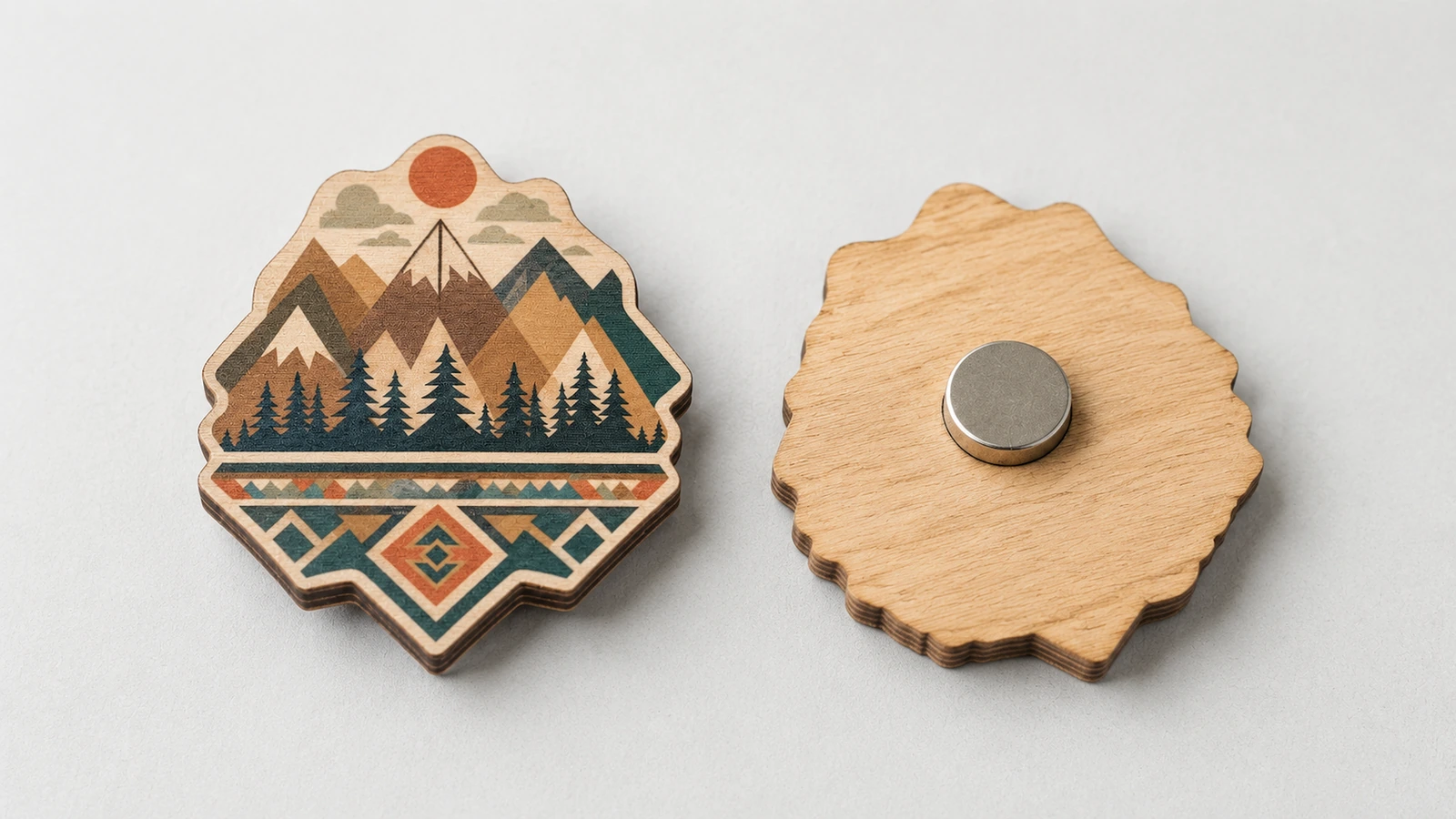
Flexible magnetic strips, rigid ferrite pieces and neodymium magnets are different backing approaches discussed in the market research. None is confirmed here. Specify the proposed component and attachment method rather than accepting “strong magnet” as a complete description.
A recessed component, an adhesive bond or a protective contact layer must be assessed as part of the finished assembly. A protective layer can alter contact spacing, so any surface-protection option needs another holding check. Do not assume a stronger loose magnet automatically produces a better finished product.
Conceptual construction options are shown for discussion; availability and performance require confirmation.
How Do You Prepare Artwork for Engraving? ↑
Separate the cut outline from the engraved design
Supply a vector version where available, with a clearly identified perimeter and separate engraving areas. Confirm accepted file formats before sending production artwork. A screenshot can communicate the idea, but it should not silently become the manufacturing reference.
Review detail at the intended finished size
Inspect names, dates, narrow letter strokes and small enclosed spaces without enlarging the preview. Ask for the minimum reproducible line and gap requirements for the selected plywood and process. There is no verified universal minimum font size for this SKU.
Resolve fragile shapes before sampling
Long narrow projections, sharp internal corners and fine cutouts need a structural review. Adjusting the silhouette can preserve the identity of a landmark or logo while avoiding details that are unsuitable for the chosen construction. “Custom shape” should not be interpreted as unlimited geometry.
Make approval specific
Record spelling, orientation, engraving placement, perimeter and intended dimensions. If a QR code is requested, test scanning on the actual engraved sample; a readable digital code does not establish performance on wood. Keep the approved file revision distinct from earlier drafts.
How Does a Design Become a Production Reference? ↑
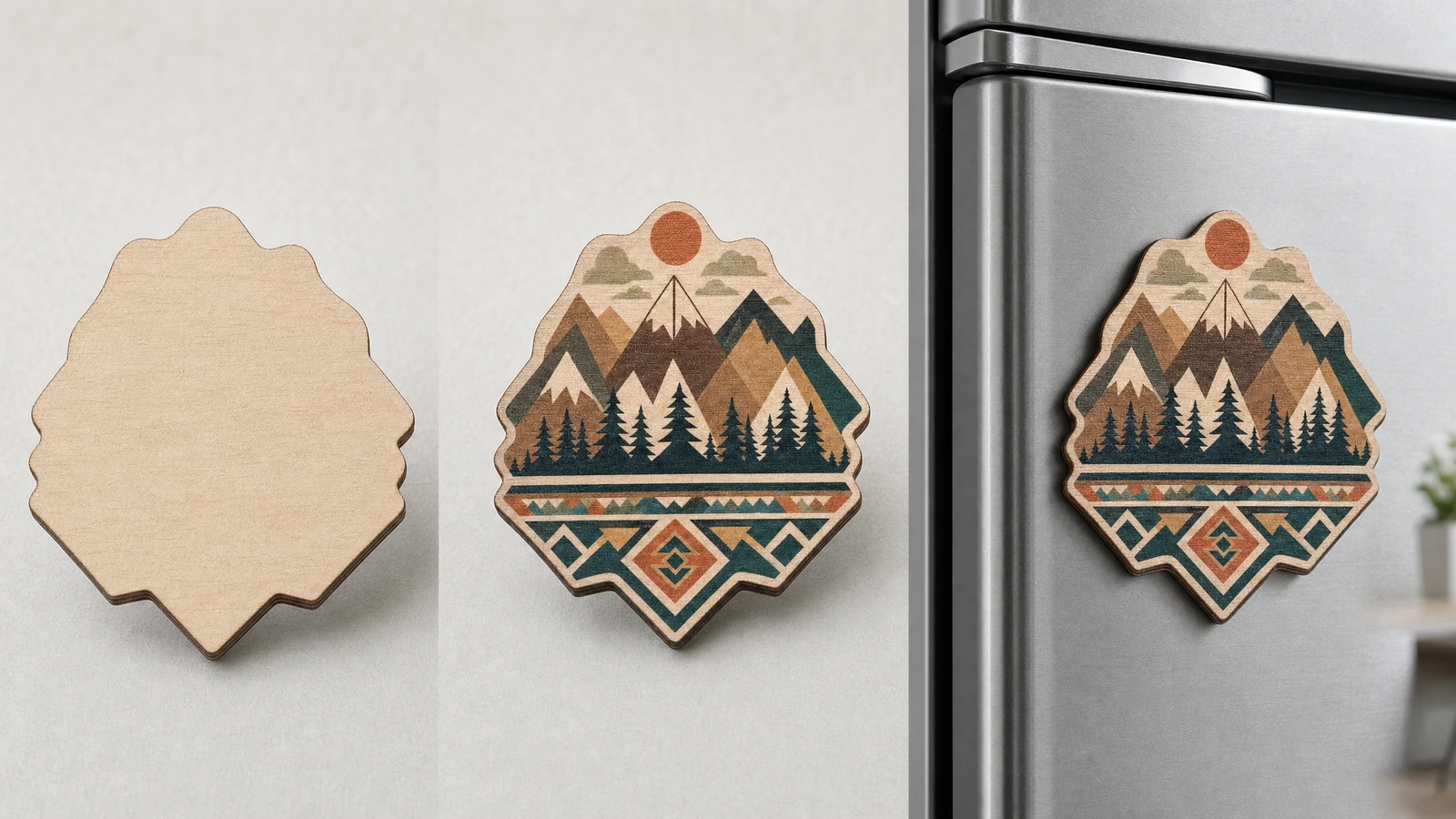
The following is a proposed approval sequence, not a claim about an audited factory workflow. Its purpose is to connect the design decision to a repeatable written order.
- Define the brief: identify the intended audience, use, quantity, destination and required arrival date.
- Confirm construction: settle the plywood specification, dimensions, backing proposal, finish and packaging.
- Approve the digital proof: check content and geometry before physical sampling.
- Evaluate the sample: inspect engraving, edges, attachment, compatibility and the intended loaded condition.
- Freeze the production reference: retain the accepted sample, artwork revision and written acceptance criteria.
- Agree release checks: specify inspection scope, reporting and treatment of nonconforming goods before dispatch.
Changes after sampling need to be assessed for their effect on the approval. A larger outline, different plywood thickness or revised backing can change weight and contact behavior. When a change affects function, the original sample result should not be treated as proof of the revised assembly.
What Should the Physical Sample Prove? ↑
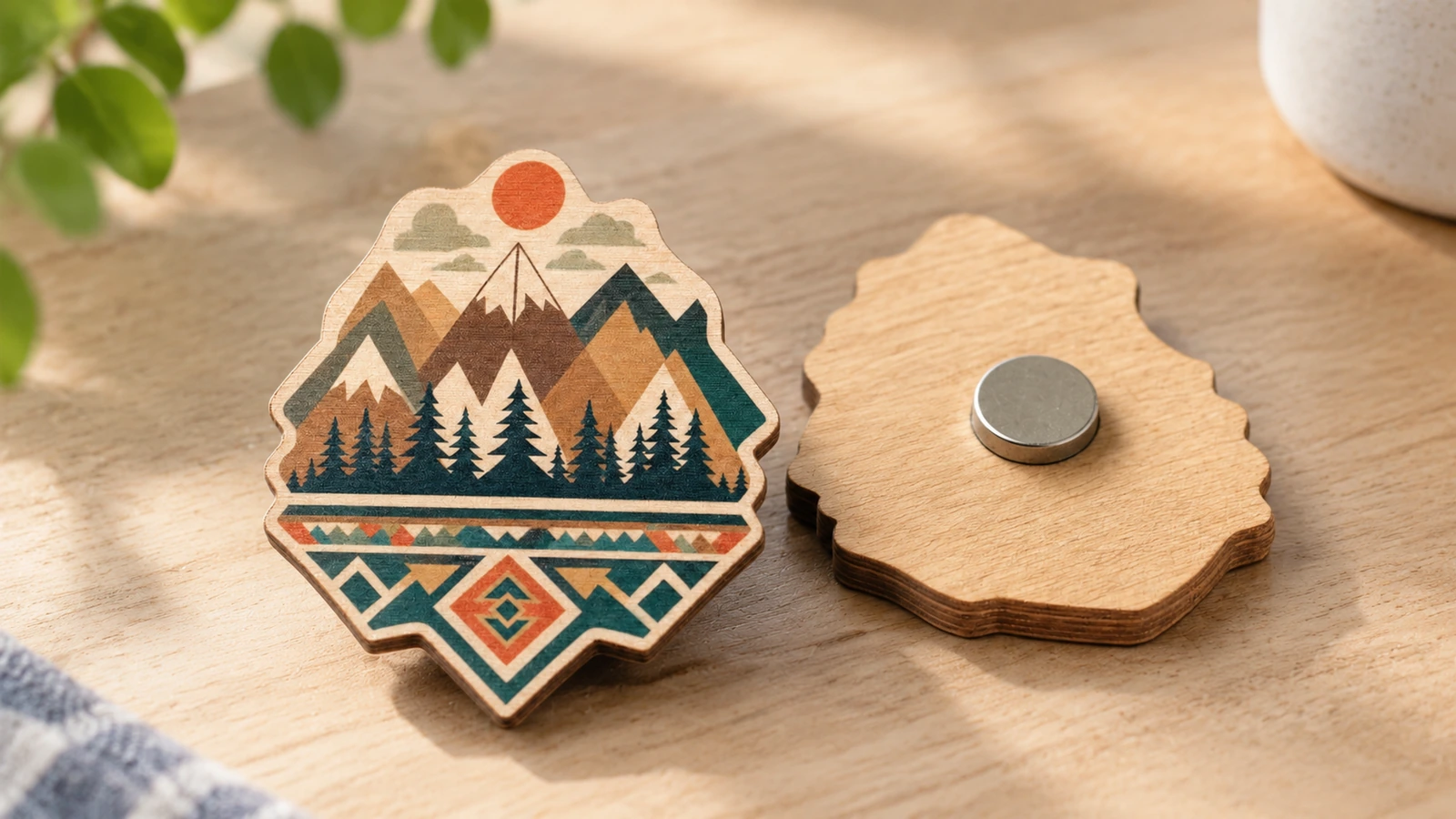
Ask for evidence that matches the intended use, not an unrelated magnet specification. A component pull-force figure measured against a steel test plate does not establish how an assembled wooden piece will behave on a vertical refrigerator door.
| Check | Method to agree | Record needed |
|---|
| Readability and appearance | Compare the physical sample with the approved artwork at finished size | Legibility, grain variation, edge condition and agreed appearance limits |
| Dimensions and flatness | Measure the assembly and inspect its seating against the intended surface | Dimensions in mm and any rocking or visible distortion |
| Vertical holding | Test the actual assembly on the target surface with the intended paper or card load | Load description, orientation, duration and any sliding |
| Backing attachment | Agree handling and attachment checks appropriate to the construction | Loosening, separation or damage after the agreed procedure |
| Environmental exposure | Define relevant temperature and humidity checks where required | Changes in flatness, finish and bonding |
| Packed condition | Assess the proposed pack for movement, abrasion and breakage risks | Condition of the product and backing after the agreed assessment |
These are proposed acceptance checks, not completed tests or a published certification. Agree the sampling plan and pass criteria in advance. Any claim about paper count or holding capacity must remain dependent on physical dimensions, loading conditions and validated samples until results are available.
Inspect the back as carefully as the front. Missing components, uneven seating and adhesive separation can be overlooked in face-only photographs. Request front, edge and rear views alongside functional observations rather than relying on a beauty image.
When Is Engraved Plywood the Right Choice? ↑
Choose the process around the visual requirement instead of comparing unlike products by price alone. The alternatives below are buying-guide categories, not additional confirmed options for this SKU.
| Route | Useful design direction | Main buying consideration |
|---|
| Laser-cut and engraved plywood | Lettering, logos and line artwork with a visible wood surface | Approve engraving contrast, plywood edges and fine-detail limits |
| Full-color printed plywood | Color illustrations, photographs and multicolor branding | Confirm ink treatment, wood-grain visibility and a printed sample |
| Engraved solid hardwood | Projects specifically seeking a solid-wood construction | Specify the species and compare an equivalent finished product |
| Printed MDF or HDF | Graphics using an engineered fiberboard face | Do not describe the substrate as plywood or solid hardwood |
| Flexible printed magnets | Flat promotional graphics without a rigid wooden face | Different construction; holding results cannot be transferred to plywood |
Engraved plywood is a relevant starting point when the wood surface is part of the design. If accurate full-color reproduction is essential, discuss a separately specified printing route. Neither the illustration style nor the material name alone establishes durability, moisture resistance or magnetic performance.
Which Documents Matter for Your Market? ↑
Composite-wood documentation: for US orders, determine whether the selected plywood and finished article fall within the applicable formaldehyde requirements. Request relevant certification and traceability records; an E0 or E1 description alone should not substitute for the applicable US evidence. Refer to EPA composite-wood guidance[3].
Import classification: wood content alone does not settle the declaration question. Confirm the finished product’s tariff classification and applicable shipment requirements before booking transport. Where required, prepare species and harvest-origin information using APHIS Lacey Act guidance[4].
Responsible-sourcing claims: no FSC or PEFC certification is confirmed for this product. If certification is required, make it a documented procurement condition. FSC product claims depend on the relevant chain of custody, not simply a supplier’s use of the word sustainable. See FSC chain-of-custody guidance[5]. No whole-product recyclability, compostability or carbon-neutral claim is established here.
Children’s products: this product has no supplied toy-testing or child-safety evidence. Intended use, design and marketing require assessment before a children’s range is developed. Toys follow the applicable ASTM F963 requirements through 16 CFR Part 1250, with testing and certification obligations determined by classification. Consult CPSC toy-safety guidance[6].
What Determines Price and Delivery? ↑
The useful comparison is the cost of the same approved specification delivered to the same destination. Size, shape complexity, engraving coverage, plywood selection, backing, finishing and packing all belong in the quote request. Clarify whether separate designs are treated as separate order quantities.
Ask for product pricing to be separated from artwork preparation, sampling, setup, individual packaging, testing, freight and applicable import charges. Public competitor prices reflect different materials, quantities and delivery terms; they are not quotations for this product.
Schedule proof approval, physical sampling, any revisions, production and transit as separate stages. Establish when the production clock starts and whether the stated date means dispatch or arrival. There is no verified MOQ, production time, rush service or unit price available for this SKU.
Protect the Design Through Shipping and Reorders ↑
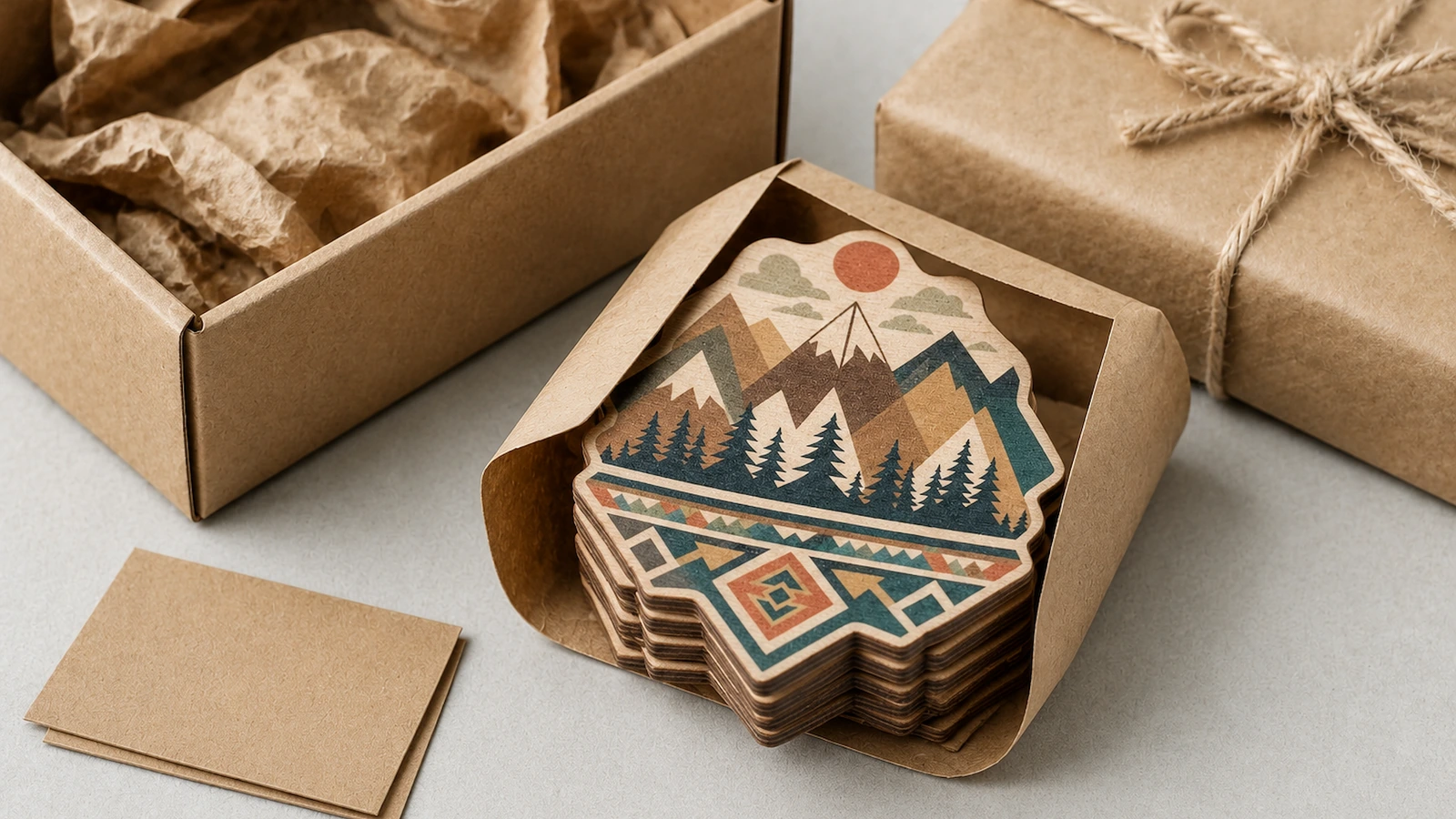
Packaging should match the outline and distribution method. A retail backer, individual protective pack and bulk shipment solve different problems. Check whether the proposed arrangement prevents engraved faces rubbing together and protects narrow sections without pressing against the backing.
If magnets will be mailed individually, assess the complete pack rather than the wooden piece alone. Confirm rigidity, packed weight and the carrier’s relevant requirements before promising letter-rate postage. Neither postage cost nor mail-processing suitability is established by a digital design.
Agree how transit damage, manufacturing defects and buyer-approved artwork errors will be handled. Define the evidence needed and the remedy before production; this page does not establish a replacement guarantee or refund policy.
For reorders, retain the accepted sample, artwork revision, material description, backing configuration and packing specification. Identify substitutions before accepting a repeat batch. Matching a file does not by itself establish matching wood appearance or magnetic performance.
Until a specific care instruction is approved, plan for dry indoor display: avoid soaking, dishwashers, steam and persistent condensation. Keep contact surfaces clean and follow the appliance manufacturer’s guidance. No scratch-free or fixed-lifespan guarantee is supported.
Key Takeaways for a Better-Specified Order ↑
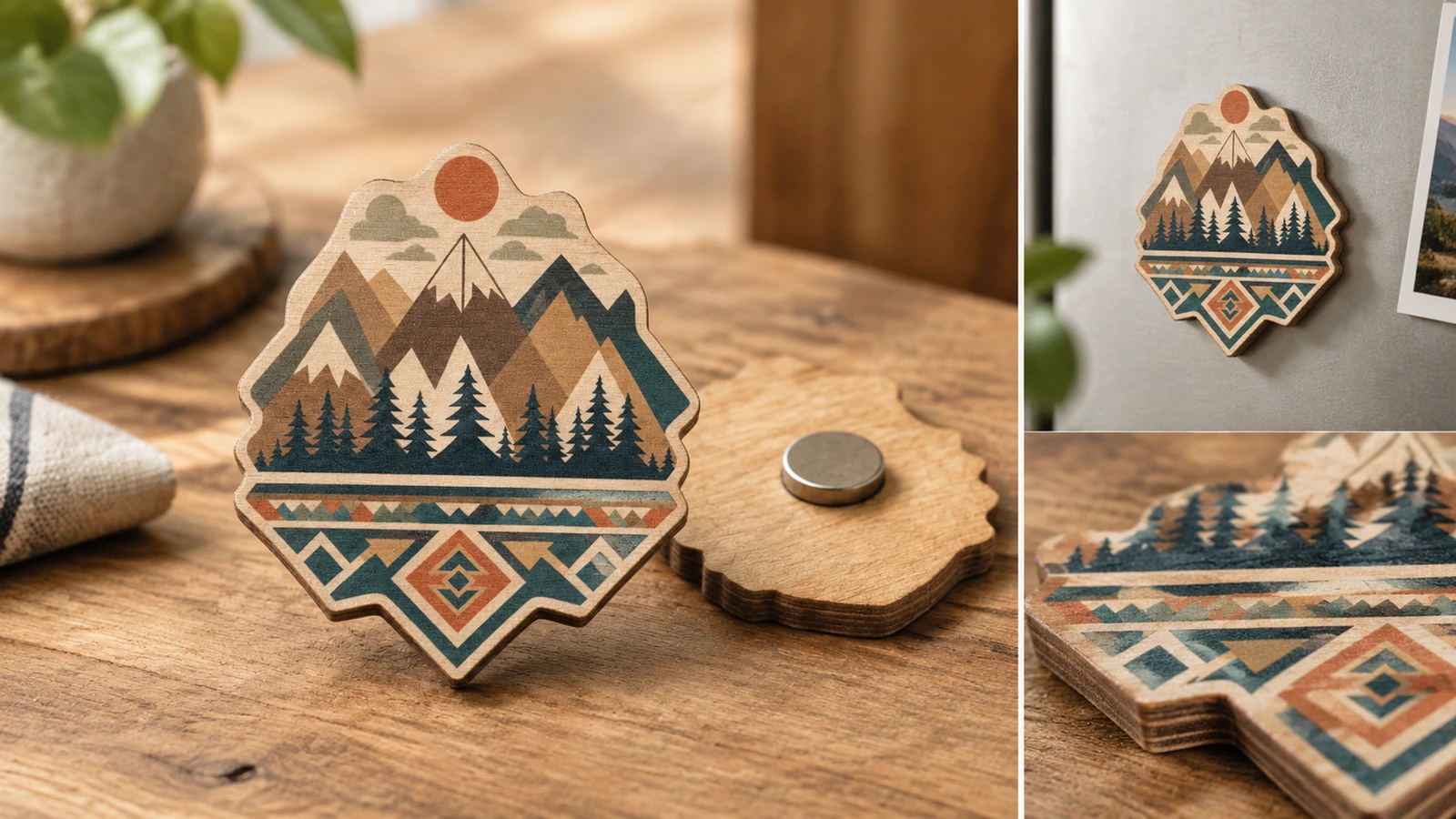
- Specify the product accurately. This reference is laser-cut and engraved plywood; species, thickness, finish and backing remain project decisions.
- Validate function on the complete sample. Holding capacity depends on dimensions, loading conditions, the target surface and physical testing—not the word “strong.”
- Small separable magnets require a scope-specific safety assessment. — For covered subject magnet products, magnets fitting entirely inside the small-parts cylinder must have a flux index below 50 kG² mm² (Source[7]). The rule covers specified uses involving loose or separable magnets; the label “fridge magnet” alone neither establishes applicability nor exemption.
- Buy against a complete quotation. Confirm quantity, sampling, production, packaging and delivery terms together; no supplier-specific procurement values are verified here.
Turn Your Artwork into a Defined Project ↑
The strongest starting point is a clear message, a suitable outline and an agreed use. From there, a physical sample can resolve the details that matter in the recipient’s hands: readable engraving, acceptable edges, secure assembly and appropriate magnetic performance.
Request a project quotation with your artwork, preferred dimensions, quantity, intended use, delivery destination and required arrival date.




The information below is required for social login
Sign In
Create New Account