Custom fabric notebooks combine a textile-covered exterior with a paper notebook inside. For this linen-wrapped hardcover product, build your purchasing brief around the cover material, readable branding, writing experience, and approved sample—not appearance alone. Dimensions, paper, decoration, accessories, pricing, minimum order quantity, and production timing require project-specific confirmation.
Give your brand a place in everyday writing↑
A notebook for a new employee has a different job from a notebook sold in a boutique. The first needs to fit an onboarding program and support everyday notes; the second needs a coherent design, an appropriate writing layout, and packaging that suits its retail presentation. Custom Linen-Wrapped Hardcover Notebooks provide the product direction for either brief without prescribing an unverified configuration.
For marketing teams, the design opportunity is a restrained brand presence on a textured cover. For HR and training buyers, the priority is useful space for meetings and learning. Event organizers should start with the delivery deadline and intended note-taking format. Gift buyers should prioritize accurate names, dates, and presentation before adding decorative complexity.
Avoid a beautiful cover that disappoints after opening↑
A convincing digital mockup cannot show whether lettering disappears into the weave, the cover develops bubbles, or the paper suits the recipient’s pen. These are different purchasing risks, and approving the artwork alone does not resolve them. A visually successful cover can still leave the buyer with an unsuitable finished notebook.
The solution is to approve the notebook as a complete object. Assess the decorated fabric, wrapped corners, cover-to-book-block connection, opening behavior, writing surface, and protective packaging together. The checkpoints below are proposed purchasing and acceptance steps, not claims that this SKU has already passed factory testing.
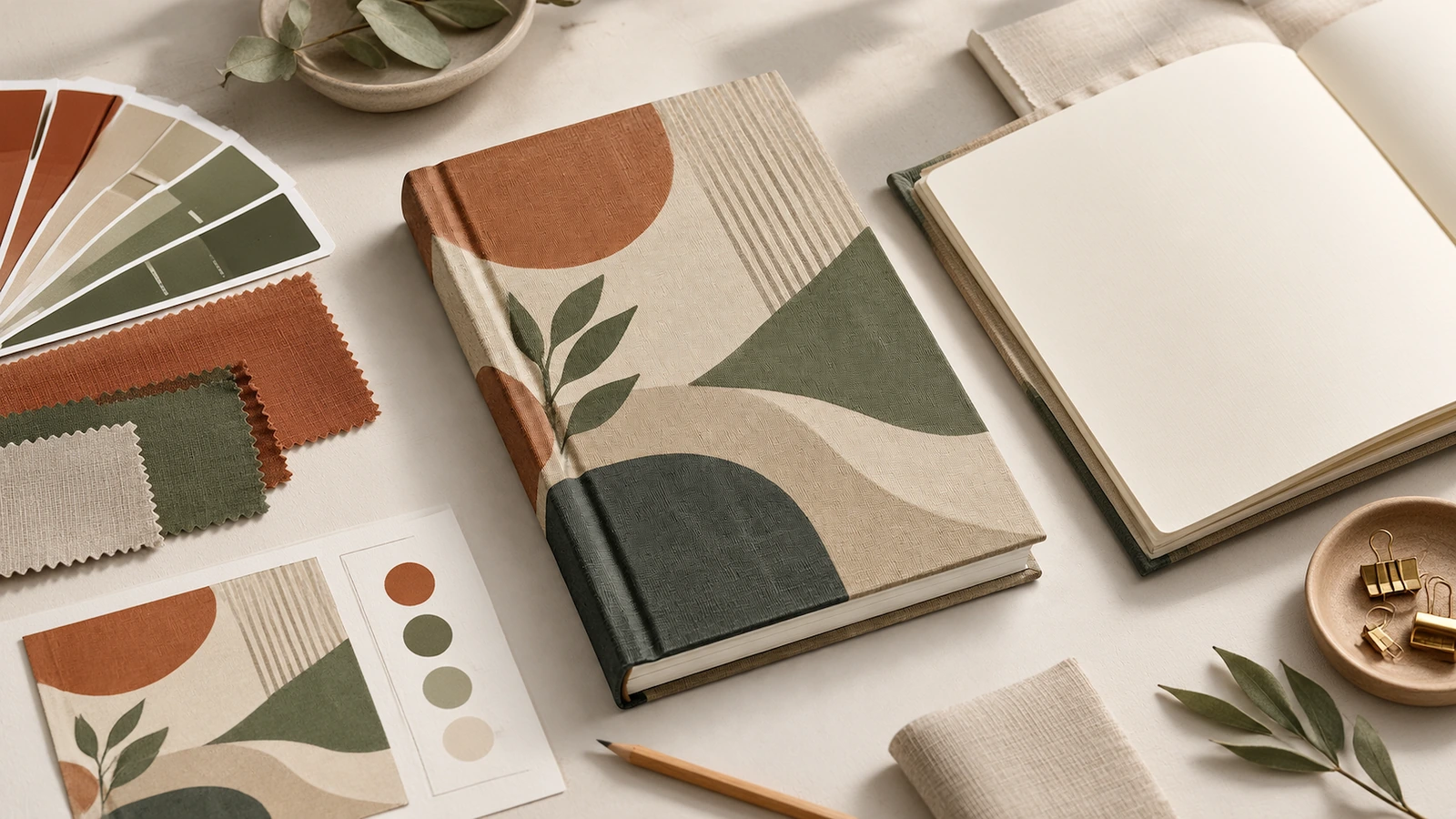
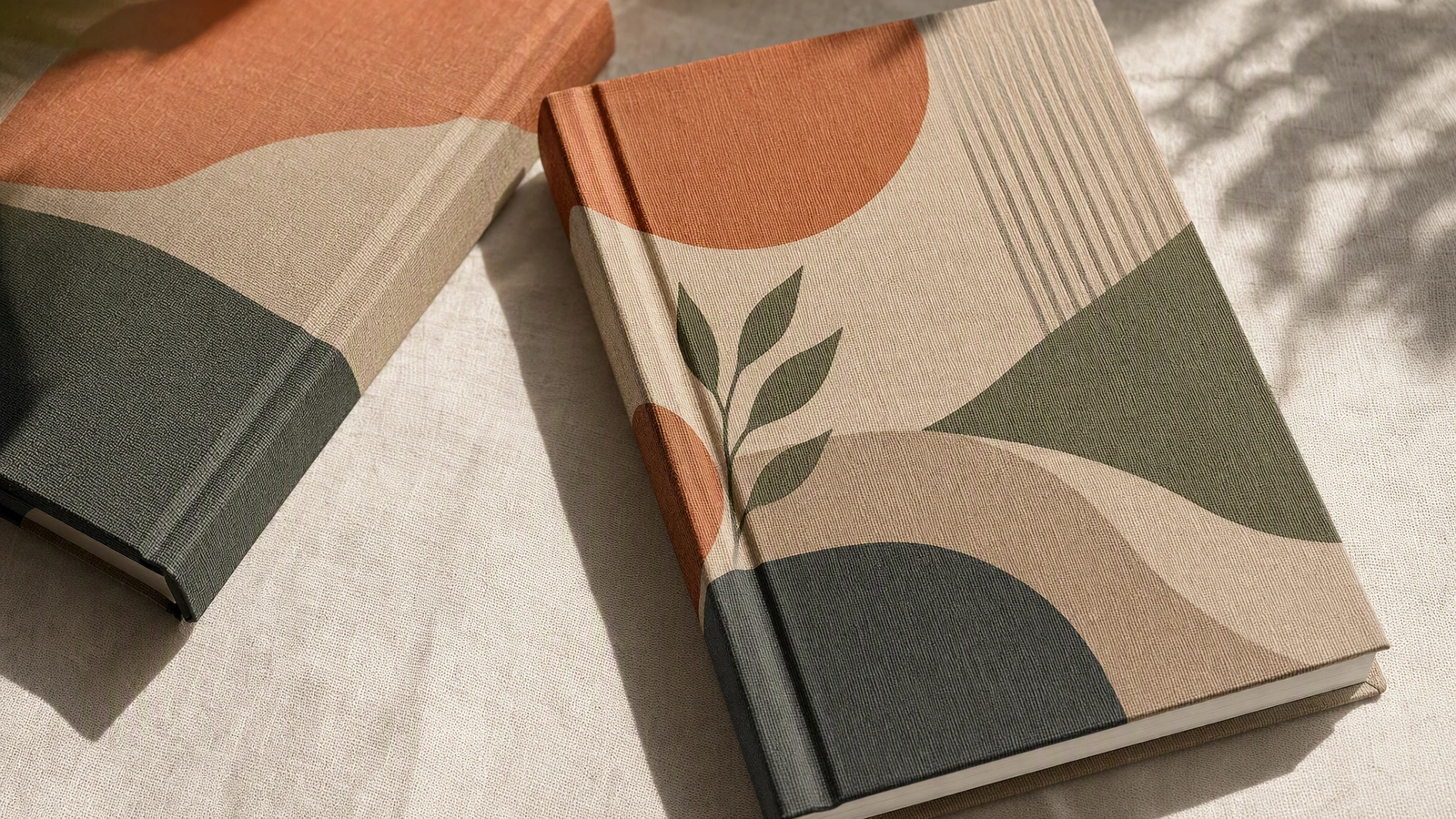
Application concept only. Illustrated colors, decoration, and accompanying items are not confirmed inclusions.
Explore the product and purchasing guide
What defines this linen-wrapped hardcover?↑
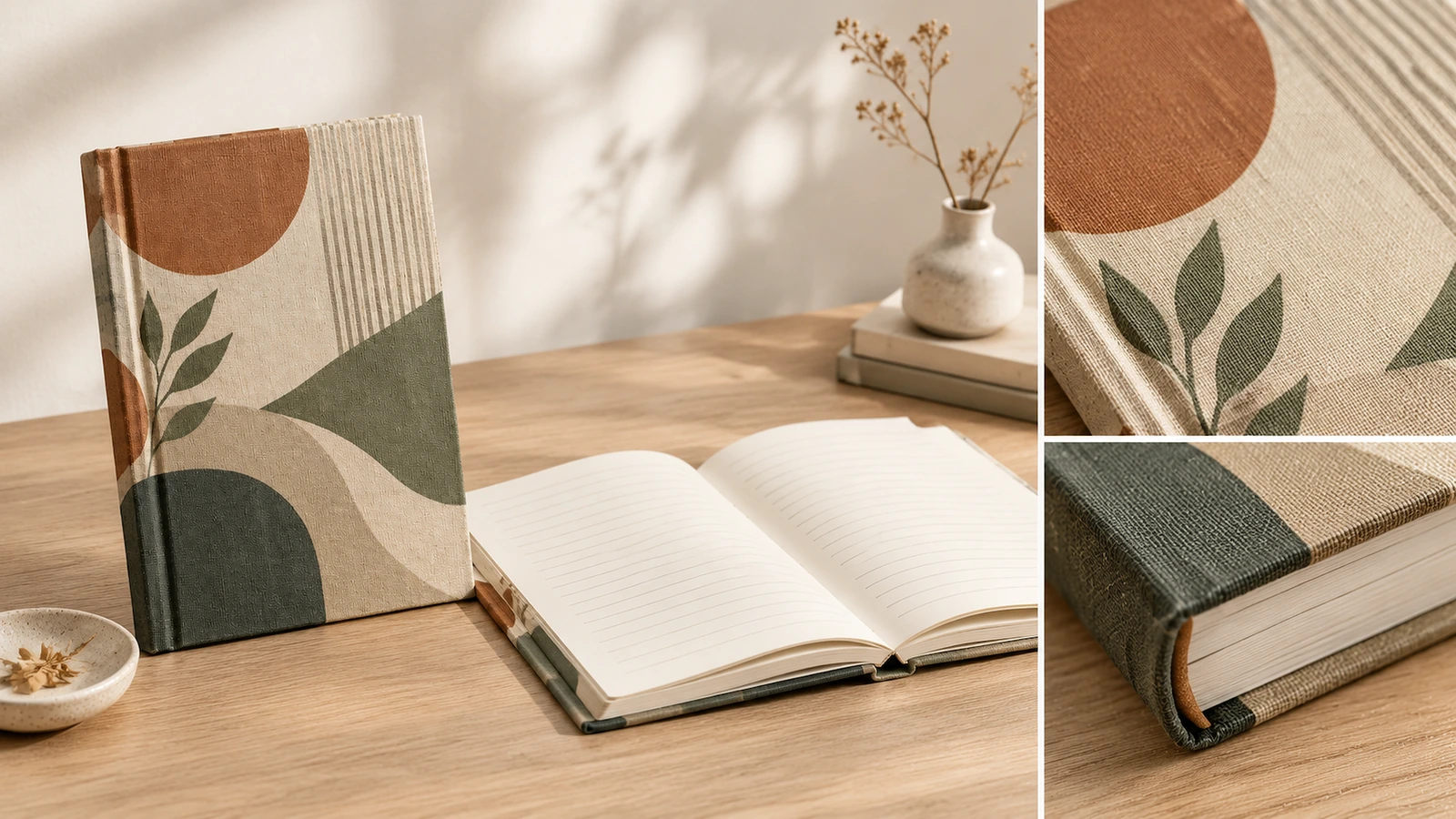
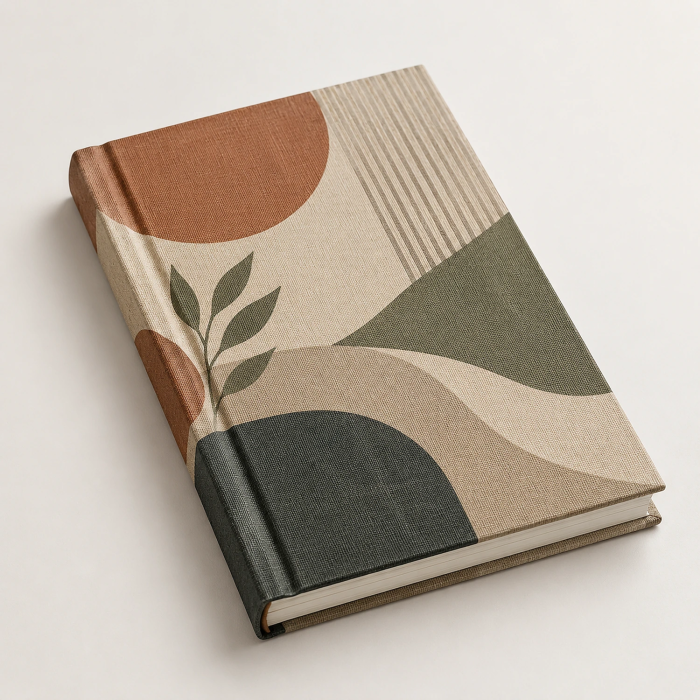
The confirmed identity is Custom Linen-Wrapped Hardcover Notebooks, within Custom Notebooks and Custom Fabric Notebooks. The provisional product reference is NSKU-763-01. This identifies a notebook with a wrapped hard cover—not a removable fabric sleeve, a soft promotional journal, or a sublimation blank.
The product name does not establish a fiber percentage, board thickness, paper weight, binding method, or decoration process. Those details must appear in the quotation and approved specification. In particular, “hardcover” describes the cover construction; it does not, by itself, establish sewn binding or lay-flat performance.
Keep the material description precise. Linen, cotton canvas, and synthetic book cloth are not interchangeable purchasing terms. A textile’s appearance does not establish its composition, recycled content, or protective treatment. Record the selected fabric reference and supporting material description alongside the physical sample.
How do you turn the idea into a clear specification?↑
Begin with the recipient and the writing task, then define the object. Specify the page dimensions separately from the finished cover dimensions, and include the closed thickness where packaging or storage fit matters. Bag, sleeve, and gift-box fit must be determined by physical dimensions, the loaded configuration, and sample verification—not by a general size label.
| Specification field | What to record | Current product boundary |
|---|
| Size and construction | Page and cover dimensions in mm; closed thickness; board specification | Dimensions and board thickness await confirmation |
| Cover material | Fabric reference, color, composition, backing, and any treatment | Linen-wrapped hardcover identity confirmed; detailed composition pending |
| Paper and layout | Paper weight in g/m², color, page count, and layout | No default paper or page configuration established |
| Binding and opening | Binding method and required writing position | Method and opening performance require sample assessment |
| Branding and accessories | Artwork position, decoration method, and requested accessories | Feasibility and availability require confirmation |
| Commercial terms | Quantity, currency, setup costs, delivery basis, and deadline | Price, MOQ, production time, and unit weight remain unconfirmed |
Use this table as a quotation brief, not a finished specification sheet. Comparable quotations must describe the same notebook and the same delivery scope; otherwise, the lowest unit price may represent a different product.
For the interior, describe whether users need meeting notes, sketches, dot-grid organization, or project pages. Distinguish pages from sheets in the order record. For writing performance, identify the actual pens and inks expected in use rather than treating paper weight as a universal guarantee against bleed-through.
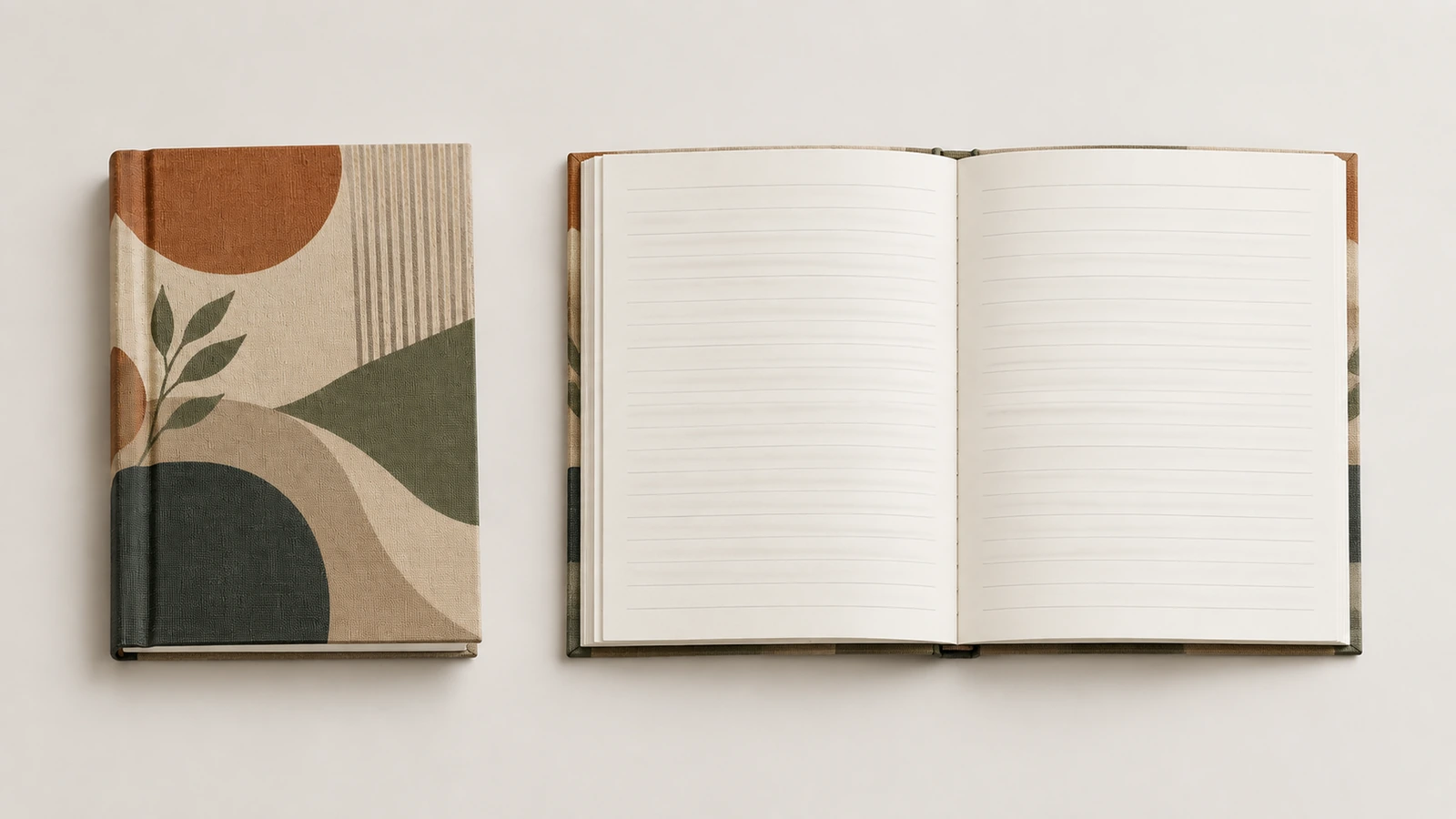
Size-review concept. No illustrated measurement or page layout establishes this product’s final specification.
Which surface and closure choices suit the design?↑
Match the decoration to the chosen weave. Foil, blind debossing, screen printing, and specialist full-color printing are processes to assess, not a confirmed menu for this SKU. Fine lettering, large solid areas, and photographic detail place different demands on the surface.
Supplier guidance shows why blanket statements about fabric printing are unreliable. QinPrinting describes foil and debossing, but also digital printing on suitable smooth, light-colored cloth; it notes that weave affects detail and dye lots may vary. These are useful material-selection principles[1], not evidence that every process is available for this notebook.
For closure and back-cover details, keep the inquiry notebook-specific. An elastic closure, ribbon bookmark, pocket, or pen loop may be requested for feasibility review, but none is a confirmed standard inclusion. Check attachment locations, interference with the cover design, and the closed profile. A closure should not create an unacceptable impression in the fabric or interfere with opening.
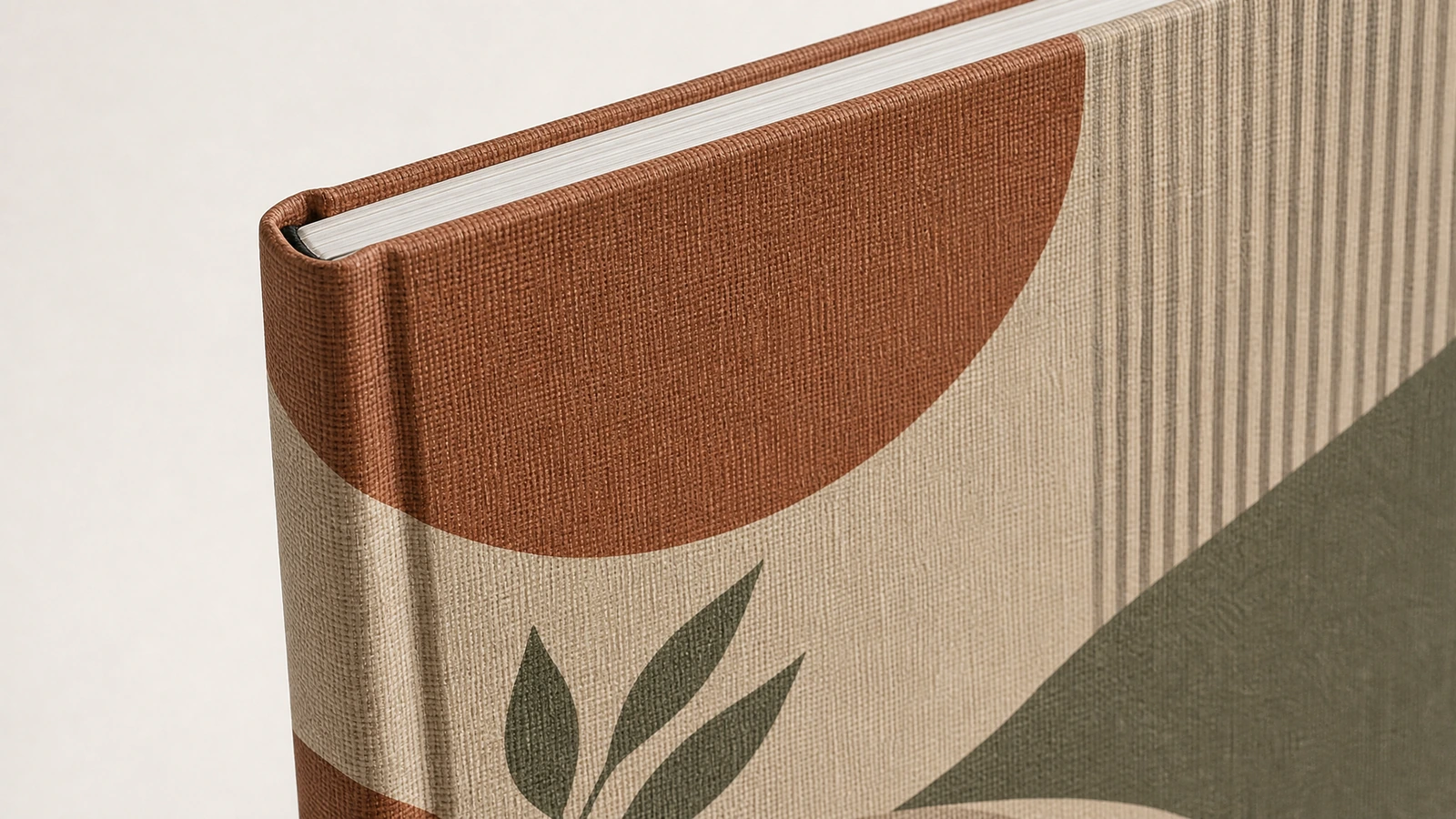
Illustrative options for discussion. Decoration methods, closure construction, and accessory availability require confirmation.
How should artwork be checked before sampling?↑
Work from a template for the selected construction. A hardcover wrap includes areas around the board edges and spine that a flat front-cover preview does not explain. Confirm the artwork orientation, front and back positions, spine treatment, and areas that must remain clear before creating production files.
- Supply suitable originals. Use vector artwork for logos and lettering where appropriate. For raster artwork, assess resolution at final reproduction size rather than judging a reduced screen preview.
- Separate processes. Identify foil, printed artwork, and blind impressions clearly. Do not assume a gradient or photograph can be reproduced by a stamping die.
- Check actual-size readability. Review thin strokes, small counters, fine borders, and reversed lettering on the selected fabric sample.
- Approve a physical color reference. Record the fabric reference and decoration color separately; a screen image is not a production color standard.
- Freeze variable content. Proofread names, dates, spelling, and each personalized version before approving the final artwork set.
Published artwork limits differ by supplier and process. For example, Bookmobile discourages foil-stamp text below 8 pt and specifies approximately 4.8 mm clearance from the board edge in its hardcover stamping guidance[2]. These are reference limits, not this product’s approved tolerances. Obtain the actual production requirements before finalizing files.
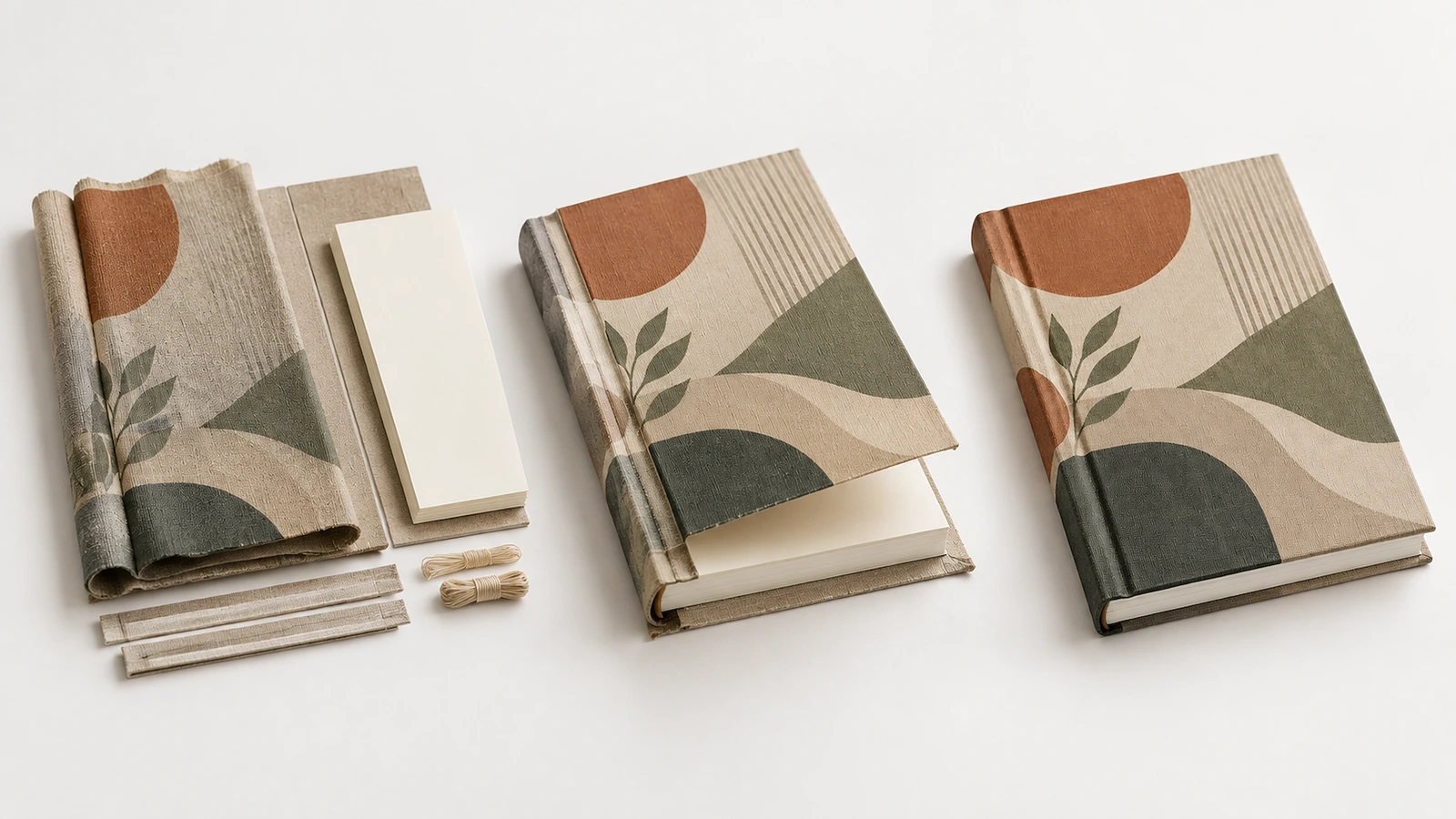
Preflight illustration. Template geometry and production clearances must come from the selected construction.
What should happen between sampling and production?↑
Use a staged approval sequence: requirements, material selection, artwork review, physical sampling, specification freeze, production, and shipment inspection. This is a proposed purchasing workflow rather than a representation of an established factory process or capacity.
First, establish what the sample represents. A plain construction dummy can help assess dimensions and opening, but it cannot approve logo reproduction. A decorated swatch can demonstrate a finish, but it cannot establish the quality of the assembled notebook. Where necessary, review these components separately before approving a complete sample.
Next, turn approval into a written reference. Record the sample identifier, artwork version, fabric reference, paper, binding, accessory locations, packaging, and agreed tolerances. Retain the approved sample and useful close-up photographs. Photographs help document appearance, but cannot replace tactile or writing checks.
Finally, agree what happens if a material or process changes. A replacement fabric, revised paper, or altered decoration method should be evaluated against the original requirements rather than silently treated as equivalent. Production scheduling should identify its prerequisites, including artwork approval, material availability, and any agreed payment conditions.
Workflow concept, not a photograph of a verified production facility.
Which checks make sample approval meaningful?↑
Separate appearance checks from performance checks. Looking for stains or crooked placement is different from evaluating repeated opening, rubbing, or ink behavior. Agree the method, sample quantity, conditions, and acceptance criteria before testing. No measured durability, stain-resistance, adhesion, or writing results have been supplied for this product.
| Check | Proposed assessment | Acceptance record |
|---|
| Wrapped cover | Inspect corners, turn-ins, exposed threads, bubbles, stains, and visible adhesive | Approved appearance and agreed defect limits |
| Geometry | Measure cover alignment, spine position, and cover overhang | Dimensions and tolerances in mm |
| Decoration | Compare position, legibility, coverage, and color with the approved reference | Artwork version and agreed comparison conditions |
| Adhesion and binding | Evaluate repeated opening and agreed cover or page attachment checks | Test method and results; no assumed cycle rating |
| Writing | Use intended pens; inspect feathering, reverse-side show-through, and bleed-through | Paper reference, pen and ink details, and sample observations |
| Surface wear | Assess rubbing and any required stain or cleaning trials on a sample | Test conditions and acceptable visual change |
These checks create evidence only after they are performed and recorded. A proposed inspection list is not a certificate, and an approved appearance sample does not establish an untested service life.
Do not assume the assembled notebook is washable or waterproof. Request care instructions for the selected fabric, decoration, and adhesive system. If a cleaning method matters to the intended use, assess it on a sample first; avoid soaking the notebook or promising that ink and coffee marks can be removed.
Inspection concept only. The image does not document completed tests or passing results.
When is linen the right cover choice?↑
Choose the material around the project’s most important requirement. A textile-led brand may value the visible weave; an image-led campaign may prioritize photographic reproduction. Neither requirement makes one cover universally better. Compare finished samples with equivalent interiors and packaging rather than comparing material names alone.
| Buying priority | Direction to evaluate | Trade-off to resolve |
|---|
| A tactile, understated gift | Linen-wrapped hardcover with restrained branding | Approve woven detail, corner finishing, and care expectations |
| Photographs or complex gradients | Printed paper wrap, or a specifically confirmed fabric-printing route | Compare image clarity with the desired textile character |
| A smooth business-style surface | PU-covered alternative | Check the actual finish, decoration, and wear behavior |
| Frequent fold-back note-taking | A separately specified spiral or Wire-O notebook | Different structure and presentation; not this hardcover identity |
| A constrained event budget | A simpler decoration and interior brief | Compare setup charges, packaging, and delivered cost together |
This comparison identifies purchasing directions, not verified alternative configurations offered under NSKU-763-01. Any change in cover or binding should be reflected in the product description and quotation.
Keep competitor prices and schedules out of the purchase specification. A domestic promotional price may include services that a factory quotation excludes. Request separate treatment of sampling, setup, decoration, packaging, freight, and applicable import costs. Quantity breaks should use identical specifications, with the currency and delivery basis stated.
Which material and compliance claims need documentation?↑
A natural-looking textile is not evidence of recycled content or certification. Obtain separate support for the cover, paper, and packaging. FSC distinguishes between virgin certified, mixed-source, and recycled material labels in its official label guidance[3]. A paper-related claim does not establish that the cover textile is recycled. No FSC certification is asserted for this SKU.
Fiber wording also deserves review. The FTC lists notebook covers and book cloth among products generally excluded from Textile Act labeling requirements, while explaining that fiber-content representations can change the applicable obligations. Consult its textile labeling guidance[4] before finalizing composition claims. The product name should not be expanded into an unsupported purity percentage.
Keep adult stationery, children’s products, and toys distinct. A school or child-focused brief requires an intended-use assessment; toy requirements should not automatically be assigned to every notebook. The CPSC’s toy-safety guidance[5] provides a starting point where the product is actually a toy. Any required testing must cover the final materials and accessories.
Destination-specific review should also consider coatings, inks, and packaging. Evaluate California chemical-exposure questions where relevant, and assess EU sales packaging separately from the notebook itself. Do not describe the finished multi-material notebook as universally recyclable merely because its paper or fabric has a favorable sourcing claim.
How should packaging, delivery, and reorders be specified?↑
Packaging approval should address the finished notebook’s vulnerable areas: corners, cover faces, decorated surfaces, and movement inside the shipping carton. Evaluate the proposed protective pack and its condition after an agreed transport simulation. A gift box is a presentation choice, not proof of adequate shipping protection.
Gift-set fit, carton quantity, and any load-bearing expectation must be determined by physical dimensions, the loaded arrangement, and sample verification. Record packed dimensions and measured weights when available rather than estimating shipping requirements from an illustrative image.
Separate sample timing, production timing, dispatch, and transit in the order confirmation. For a fixed event date, also document the consequences of delayed approval, partial delivery, or material substitution. No sample turnaround, production duration, or arrival guarantee has been established for this notebook.
Before ordering, agree how wrong decoration, visible construction defects, shortages, and transit damage will be documented and resolved. For reorders, preserve the material references, approved artwork, inspection criteria, packaging specification, and reference sample. Compare the new batch with that record, especially when a different fabric dye lot is involved.
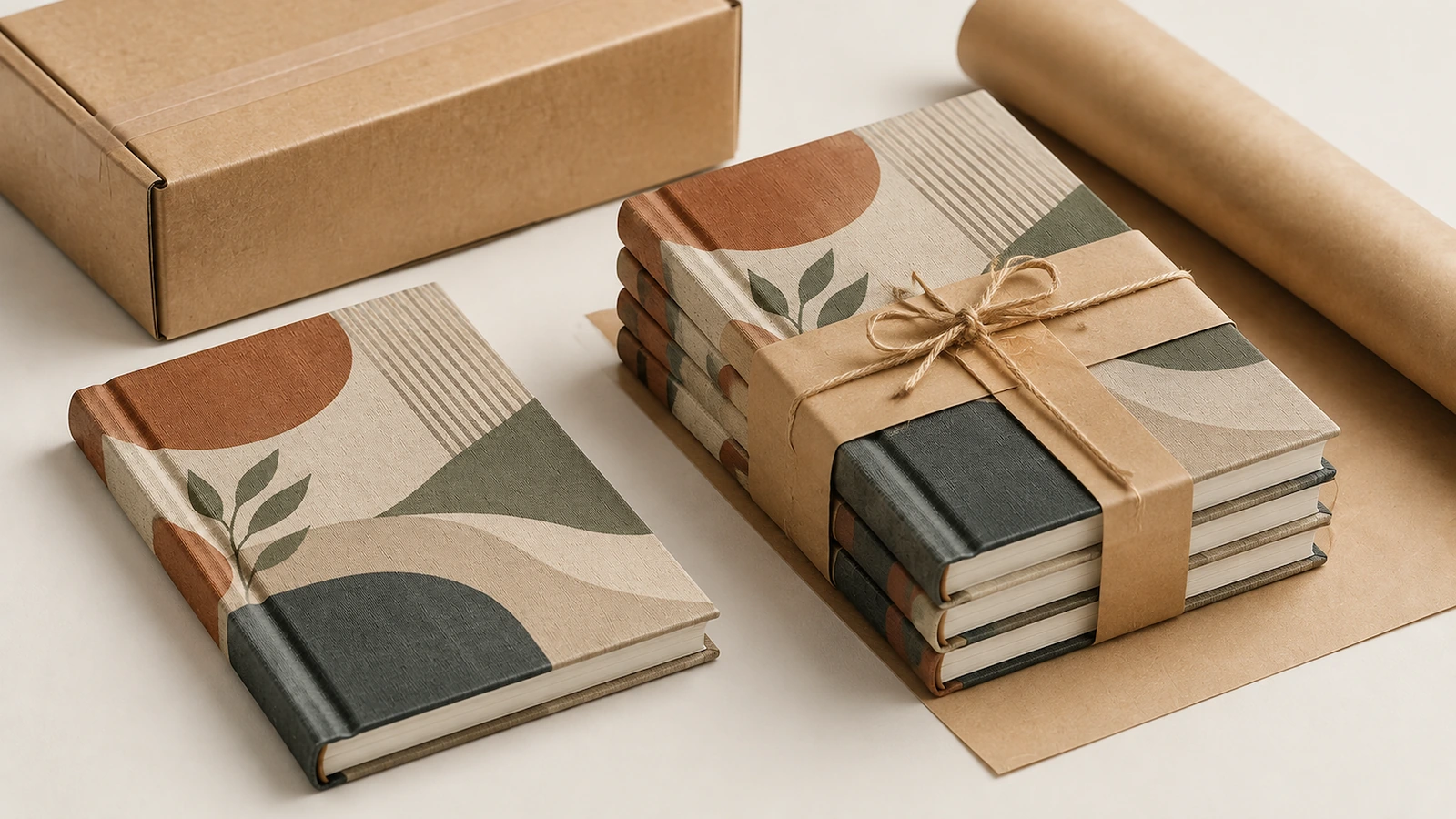
Packaging concept. Materials, packing quantities, fit, and transit performance require project-specific validation.
Keep these purchasing decisions in view↑
- Buy the complete writing experience. Approve cover construction, decoration, paper, opening behavior, and packaging as separate requirements.
- Use samples to settle material-dependent questions. Logo readability, color matching, cleaning, and writing performance cannot be established by a mockup.
- Keep the commercial scope explicit. MOQ, production time, unit weight, and price require a product-specific quotation; competitor figures are not substitute specifications.
- Recycled-paper procurement guidance is not a product certification. — EPA recommends 30% postconsumer fiber and 30% total recovered fiber for tablet paper in its procurement guidance (Source[6]). These are procurement benchmarks, not verified contents of this notebook.
Start with a brief that can become an approved sample↑
A linen-wrapped hardcover gives the project a clear material direction. The purchasing decision becomes stronger when that direction is translated into measurable dimensions, suitable artwork, an assessed writing surface, and documented acceptance criteria. Keep optional features separate from confirmed specifications until they appear in the quotation and approved sample.
Request a quotation for NSKU-763-01 with your intended use, quantity, dimensions, artwork, paper preferences, delivery destination, and required arrival date.




The information below is required for social login
Sign In
Create New Account