Custom kraft paper bags pair a brown paper appearance with personalized branding and twisted handles. For a dependable purchasing decision, specify the packed product, bag dimensions, artwork and carrying conditions together. Final paper weight, load capacity, printing options, minimum order and delivery schedule require a product-specific quotation and sample approval.
For boutique owners, gift retailers and small brands, a shopping bag is part of the customer handover. This product focuses on custom brown kraft paper shopping bags with twisted handles—not shipping mailers, sealed coffee pouches or industrial sacks. Consider it for clothing, boxed merchandise, event gifts or already-packaged food, subject to fit and application review.
A bag that looks right online can still create problems at the counter. Tight dimensions can catch a box corner; an unsuitable handle attachment can fail during carrying; a pale logo can disappear against the brown background. The consequences extend beyond replacing the bag: damaged merchandise, delayed service and an inconsistent brand presentation all create avoidable work.
The practical solution is to approve the complete package rather than select a bag by appearance alone. Connect the artwork to the actual paper, the structure to the packed load, and the quotation to an agreed acceptance checklist. No product-specific factory test results, certification documents or fixed commercial terms have been supplied for this configuration. The illustrations below show purchasing and inspection concepts, not photographs proving delivered performance.
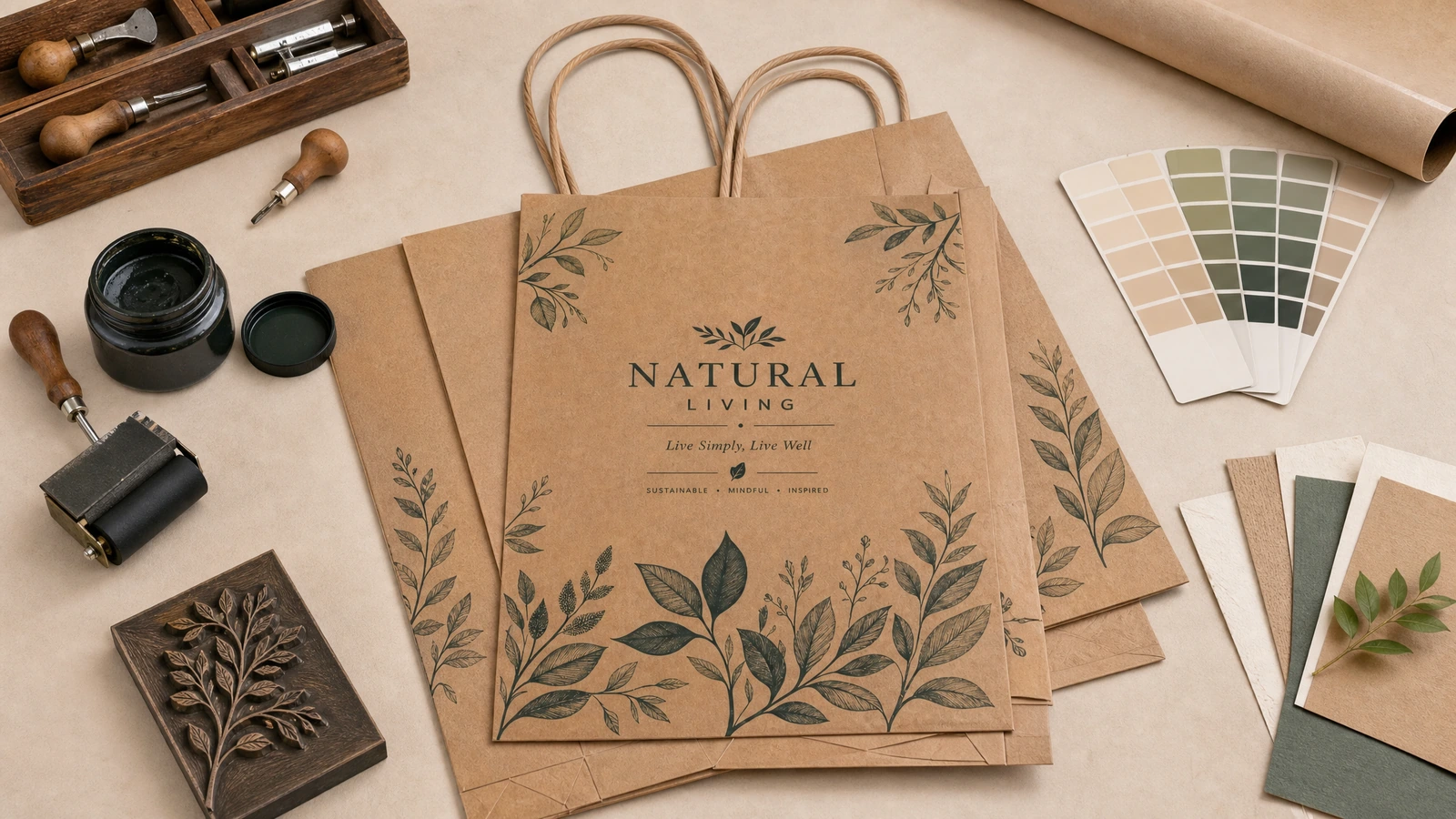
Product and purchasing guide
What exactly are you specifying? ↑
Custom kraft paper bags are paper carriers adapted to a buyer’s branding and packaging requirements. Here, the confirmed identity is a brown kraft shopping bag with twisted handles. “Custom” does not establish a particular printing process, finish, paper grade or order quantity; those details belong in the specification agreed for your order.
| Specification field | Product identity or purchasing requirement |
|---|
| Product | Custom Brown Kraft Paper Shopping Bags with Twisted Handles |
| Category | Custom Paper Bags → Custom Kraft Paper Bags |
| Provisional reference | NSKU-723-01 |
| Confirmed appearance and handle style | Brown kraft paper; twisted handles |
| Dimensions | Specify width × depth/gusset × body height in mm; confirm measurement convention |
| Paper specification | Grade, fiber composition and grammage in g/m² pending quotation |
| Printing and finish | Artwork, print faces, colors and surface treatment pending feasibility review |
| Capacity and carrying load | Determined by physical dimensions, loading arrangement and sample validation |
| Commercial terms | MOQ, unit price, sample timing, production time and freight pending quotation |
This table separates established product identity from decisions still requiring approval. A specification offered by another supplier—or a load claim attached to a different marketplace bag—is not evidence for this configuration.
Keep the intended application equally precise. An outer carrier for a closed bakery box is different from packaging that directly touches an unwrapped pastry. Similarly, a retail handover bag is not automatically suitable as a parcel’s protective outer packaging. Identify moisture, sharp edges and handling conditions before deciding whether this bag format fits the job.
How do you match bag size and print readability? ↑
Measure the packed product, not the product alone
Measure the item with its box, wrapping or other protective packaging in place. Record the widest footprint and total packed height, then state whether several items must travel together. Capacity, carrying weight and the number of items that fit must be determined by physical dimensions, loading arrangement and sample validation—not by an illustrative photograph.
Use one dimension order throughout the quotation, drawing and purchase order: width × depth/gusset × body height. Record handle clearance separately. Also confirm whether quoted measurements describe outside dimensions or usable internal space; folded seams and the bag opening can affect practical access even when the nominal measurements appear adequate.
Evaluate the bag while opening, loading and carrying
A fit sample should answer practical questions: can staff insert the package without forcing it, do corners press against folds, and can the customer grasp the handles without squeezing the contents? Test the intended loading arrangement rather than an empty bag. For mixed merchandise, identify the combination most likely to concentrate weight or stress.
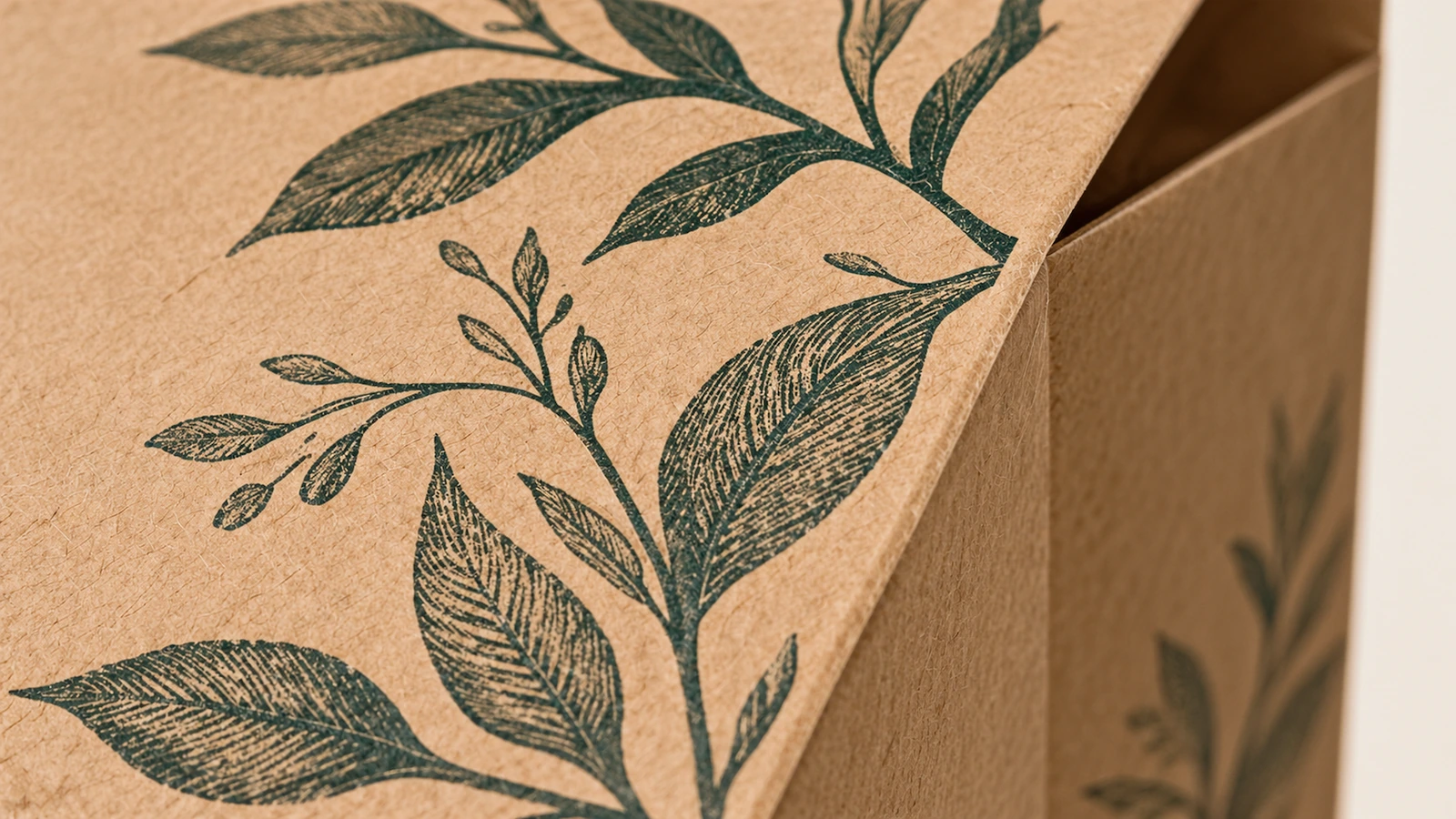
Readability deserves the same physical check. Review the logo at its proposed printed size, including small lettering, fine lines and reversed details. A design that appears clear when enlarged on screen may not remain clear on textured brown paper. Keep critical information away from folds, seams and handle attachment areas, using the supplier’s confirmed printable-area drawing.
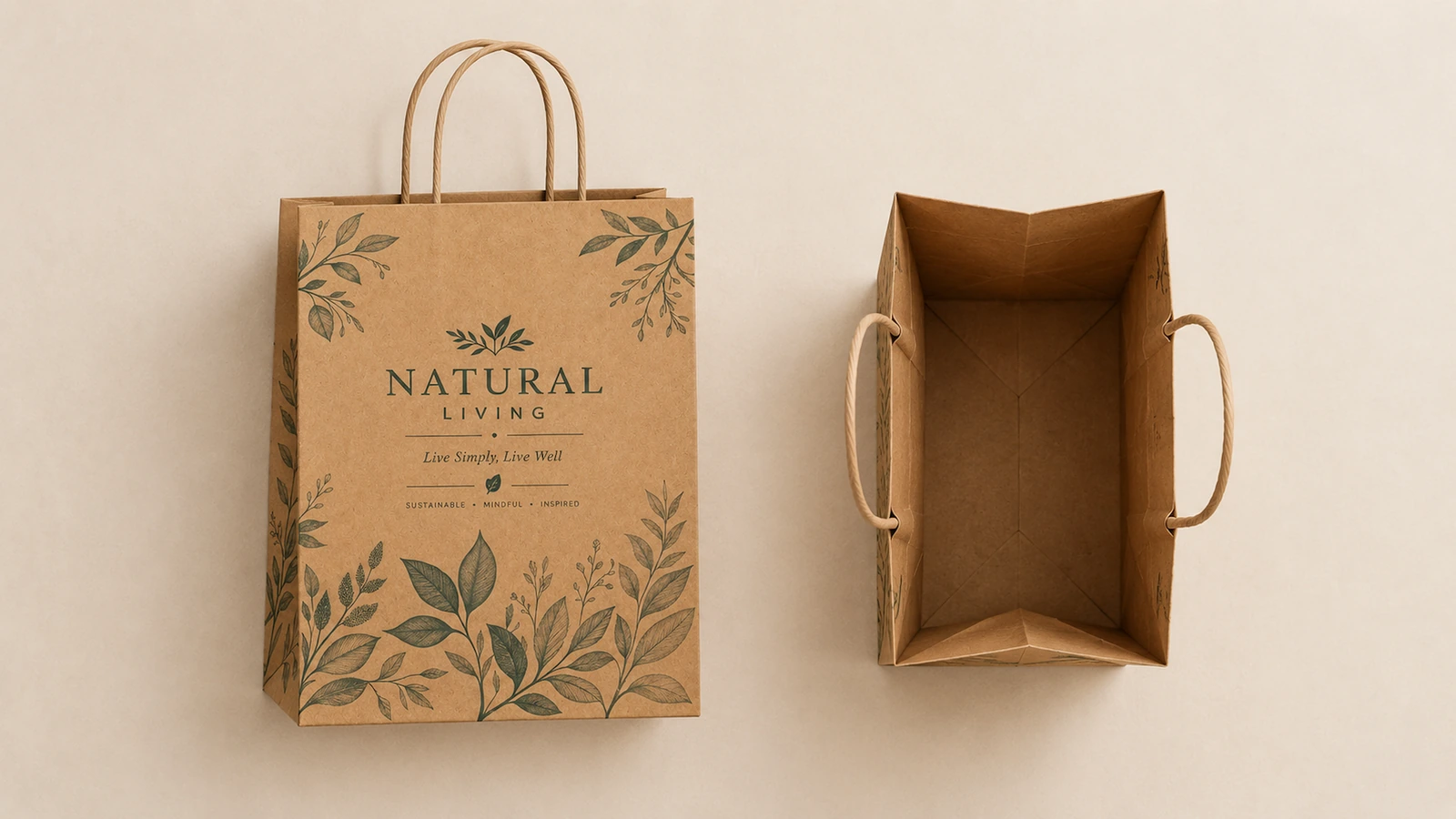
Which surface and handle details need approval? ↑
Brown kraft provides the visual starting point, but its base shade and surface texture influence the printed result. Specify whether the artwork should preserve that appearance or needs stronger color contrast. Review a physical print sample on the proposed paper rather than treating a white-background digital mockup as a reliable color reference.
Compare an unlaminated specification with any proposed protective treatment only when your application requires it. A coating may address a particular exposure, but neither “water-based” nor “paper-based” establishes finished-bag recyclability or food-contact suitability. Availability, composition and performance of any treatment remain subject to quotation and testing for this product.
For the twisted handles, ask the supplier to define the handle material, attachment method and any internal reinforcement. The important review area is the connection between handle and bag wall, including its backing or reinforcement patch where applicable. This is a shopping-bag attachment detail, not a back clasp or fastening accessory.
Paper weight should be expressed as grammage in g/m². It measures mass per unit area, not thickness or guaranteed carrying strength. Specify thickness separately if needed, and evaluate the assembled bag: paper, folds, adhesive, bottom construction and handles must work together under the intended loading conditions.
Recycled content, forest certification and disposal claims also require separate evidence. Request the exact fiber declaration and relevant chain-of-custody documentation if these are purchasing conditions. Do not infer a recycled percentage, certification status or compostability claim from the brown color or a general company certificate list.
How do you prepare artwork for approval? ↑
Start with the final artwork and the proposed bag drawing in the same review. Identify the print faces, intended colors, logo placement and any information that must remain legible. Ask which file format, printable area and production-specific artwork settings the selected process requires before releasing the design.
- Check content: confirm spelling, contact information and the correct brand version.
- Check placement: review folds, seams, gussets and handle attachment zones against the artwork.
- Check color: provide the intended color reference and assess its appearance on the proposed brown paper.
- Check fine detail: examine small text, thin strokes and reversed elements at actual size.
- Check variable elements: if the design includes a barcode, verify readability on the physical printed sample.
- Check revision control: identify one approved artwork version for production and future reorders.
Use a digital proof to confirm layout and content. Use a physical sample to assess paper feel, print contrast, surface treatment and assembly. If the sample uses a different printing process from the planned production run, document that difference; approval of layout alone should not become an unintended approval of final color or finish.
For color-critical work, agree the reference sample, viewing conditions and acceptance method. A numerical color-difference tolerance should be negotiated for the actual material and process, not copied from another factory’s marketing page. Freeze artwork before production authorization and establish how later changes affect cost and timing.
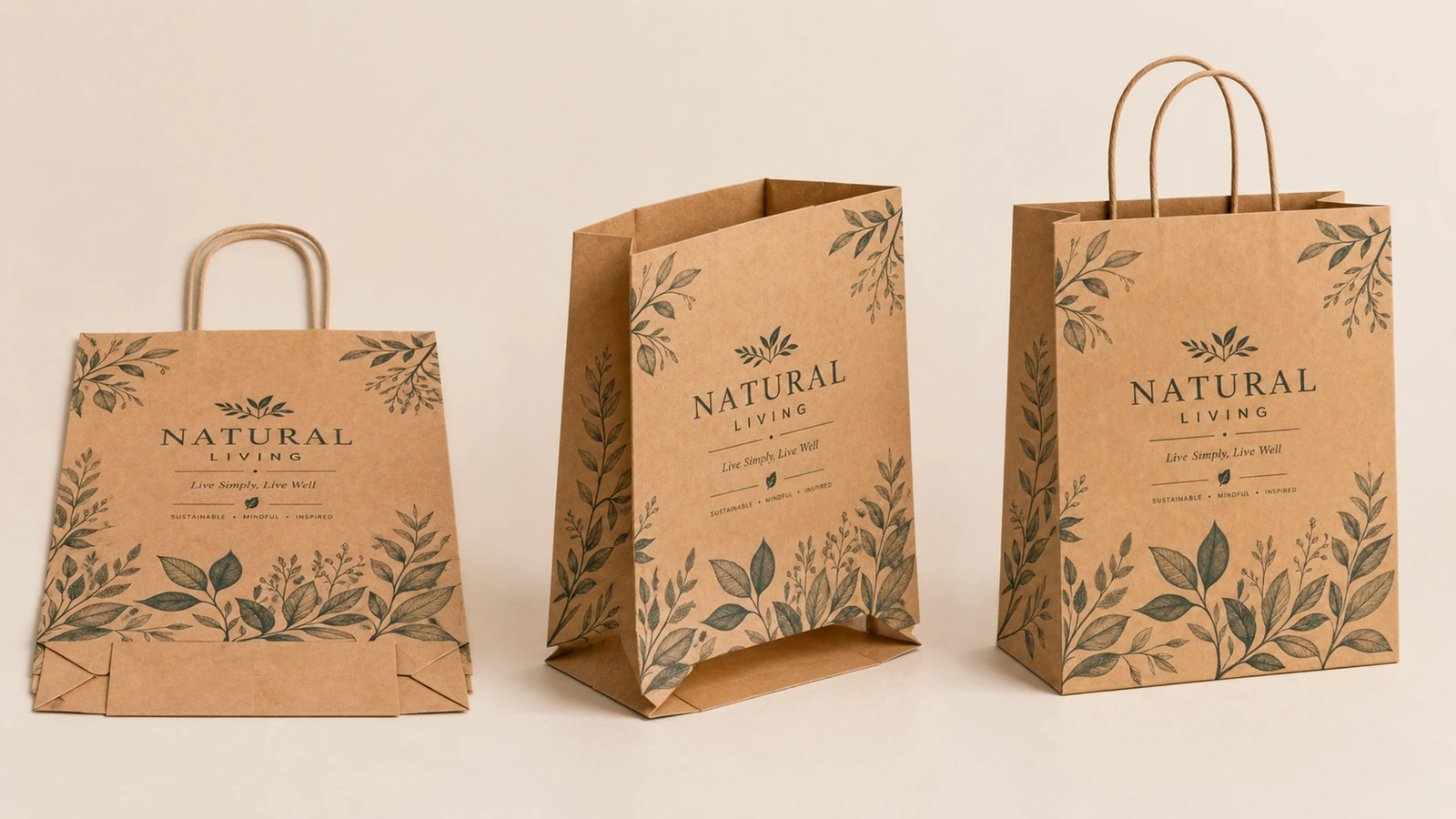
What should production and quality approval cover? ↑
Connect each production stage to the approved specification
A proposed order workflow is material selection, print approval, bag forming, bottom and handle assembly, inspection, then packing. The actual sequence depends on the selected manufacturing route. This describes an approval framework, not a verified production line or a promise about machinery, output or turnaround.
At quotation stage, establish which sample represents the intended production construction. Before release, confirm the approved paper, artwork, dimensions and attachments together. For repeat work, request notice of material or process changes that could affect appearance or function; an unchanged order name does not necessarily demonstrate an unchanged specification.
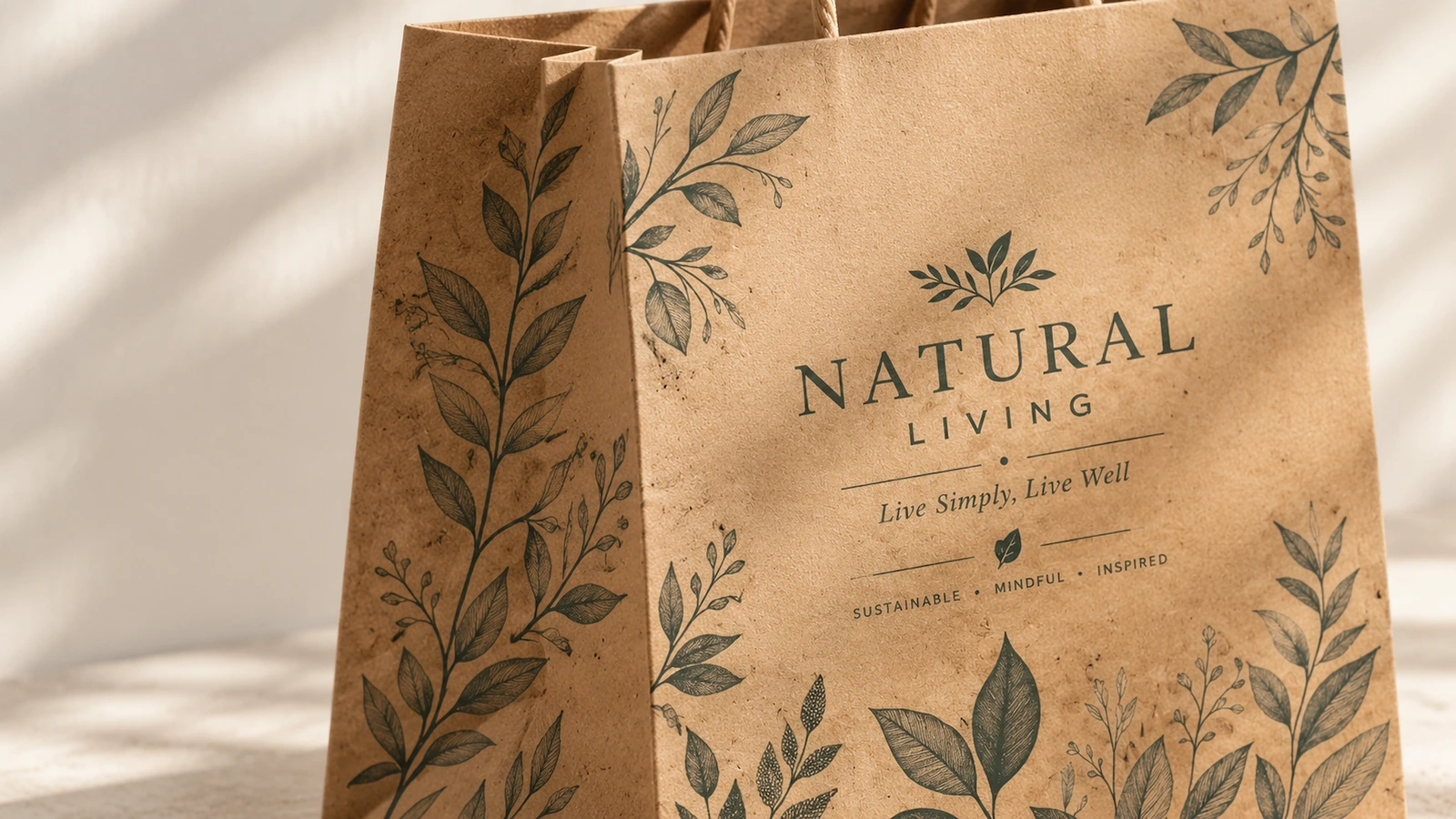
Agree acceptance criteria before ordering
Separate appearance checks from functional checks. A clean logo does not demonstrate secure handles, while a successful lifting trial does not establish consistent color. Record the sample identity, loading arrangement and test conditions so that inspection results refer to the bag you intend to purchase.
| Inspection area | Proposed check | Acceptance record |
|---|
| Dimensions and paper | Measure the bag and verify the agreed material specification | Measurements, units and agreed tolerances |
| Opening and assembly | Check for stuck-together bags, incomplete seams and missing handles | Defect counts and photographs |
| Carrying performance | Test handle attachment and bottom integrity with the intended packed load | Load arrangement, carrying conditions and observed failures |
| Print and surface | Compare with the approved sample; inspect rubbing and folding effects | Reference version and agreed visual criteria |
| Moisture or grease exposure | Test only against the exposure claimed for the proposed construction | Defined conditions and product-specific results |
| Packing condition | Inspect creasing, pressure marks, contamination and carton condition | Carton identification and receiving evidence |
These are proposed acceptance checks, not completed tests. Agree the sampling plan and defect classifications in writing. No AQL value, load rating or defect-rate guarantee is established for this product.
Where laboratory evidence is needed, request a report identifying the material and method. The supplied research references ISO 536 for grammage, ISO 2758 for bursting strength, ISO 1924-2 for tensile strength and TAPPI T 559 for grease resistance. Treat these as methods to discuss with the testing provider, not universal passing thresholds or proof of finished-bag performance.
Keep food-contact evidence tied to the intended use
For U.S. food-contact applications, the relevant paper-component provisions distinguish aqueous and fatty foods under §176.170 from specified dry-food uses under §176.180. Review the intended use against 21 CFR Part 176[1]. A material name alone does not establish compliance for the finished bag.
Request documentation covering the proposed construction and relevant paper, adhesive, ink and coating components. State whether food is wrapped or exposed, and whether moisture, grease or heat is expected. Food-contact suitability for this product remains unverified until supporting documents and any necessary tests match those conditions.
The FDA announced on February 28, 2024, that PFAS-containing grease-proofing substances for food-contact paper and paperboard were no longer being sold by manufacturers for that use in the United States. This is a specific FDA market-exit announcement[2], not a PFAS-free test certificate for this bag.
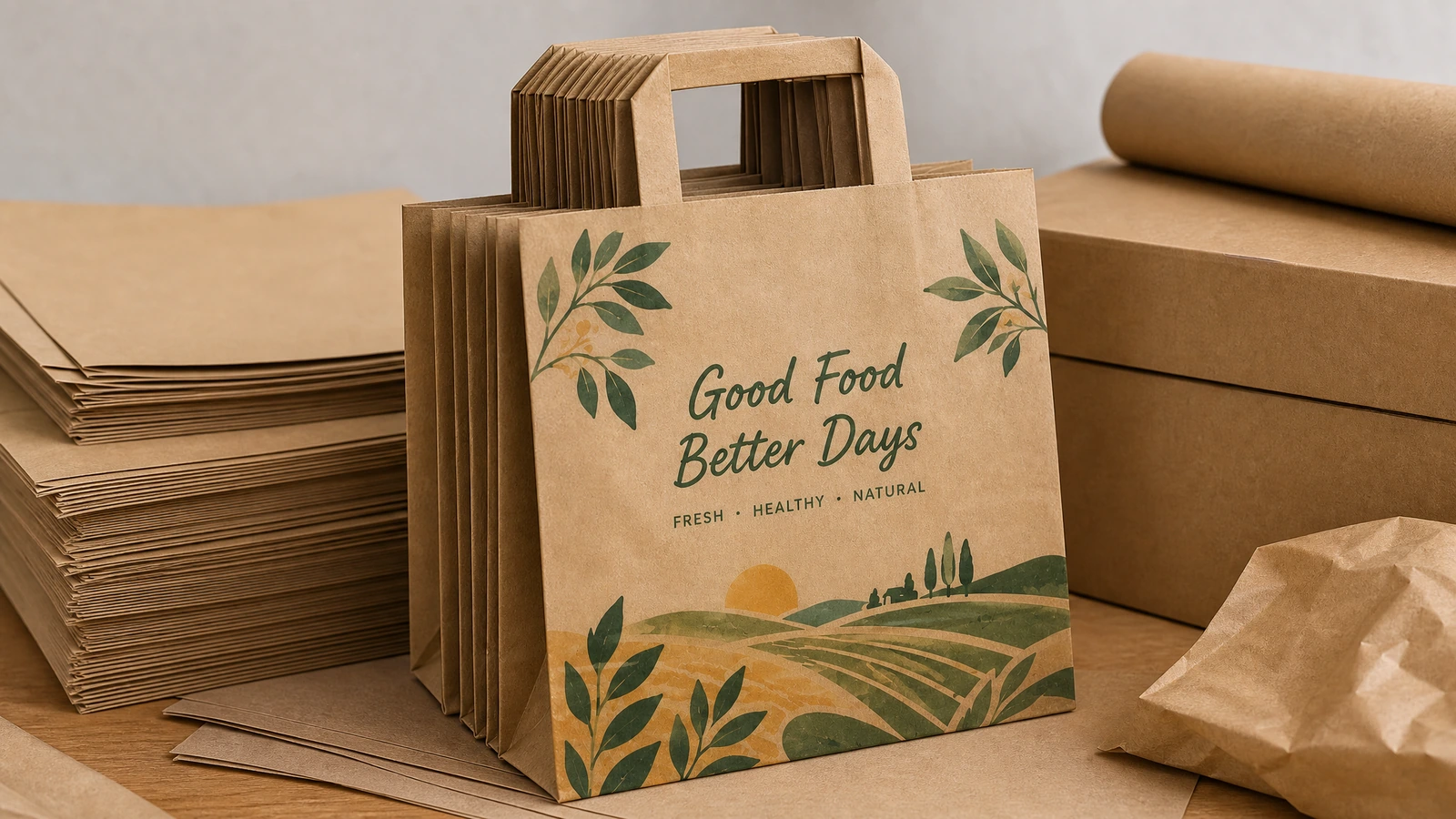
Which purchasing route fits your order? ↑
Compare alternatives against your artwork, stock risk and application rather than a headline price alone. The routes below are purchasing options to evaluate; they are not confirmed services or specifications for this provisional product reference.
| Route | Reason to consider it | Main trade-off | Confirm before purchase |
|---|
| Blank kraft bag with a separate label | Branding can be changed without replacing all printed bag stock | Additional application work and label placement control | Label adhesion, appearance and assembly time |
| Simple logo printing on brown kraft | Preserves the brown-paper appearance with focused branding | Contrast and detail depend on the substrate and print process | Actual-size print sample, setup charges and minimum quantity |
| More complex graphics on brown kraft | Supports artwork extending beyond a simple logo | Greater color and registration demands | Process feasibility, proofing route and paper-specific results |
| White-paper alternative | Worth comparing when brown paper does not meet the color brief | Changes the identity and appearance of the requested product | Separate quotation and new sample approval |
| Barrier-treated alternative | Worth evaluating when exposure exceeds the proposed untreated construction | Adds material, testing and disposal questions | Exposure performance, component documents and local acceptance |
Choose the simplest route that meets the actual brief. A change in paper, treatment or structure creates a different specification and should not be substituted silently into a price comparison.
For comparable quotations, hold dimensions, grammage, handle construction, artwork, quantity and destination constant. Ask for unit pricing alongside setup or plate charges, samples, packing and freight. Identify the currency, delivery basis, quotation validity and any excluded duties or taxes. A low unit price without these boundaries may not represent the lower delivered cost.
If you are testing demand, request pricing for your preferred trial quantity and a realistic replenishment quantity. Do not assume that a supplier’s general low-MOQ advertising applies to this bag. Confirm whether minimums are counted per size, design or print version, and whether repeat artwork changes incur additional charges.
How do you protect delivery quality and repeat orders? ↑
Make packing part of the specification. Ask how the bags will be arranged and protected against pressure marks, creasing and moisture during transport. Review carton dimensions, packing quantity and shipping weight in the quotation rather than estimating freight from an empty sample bag.
Separate sample approval, production and transit in the schedule. Confirm what starts the production clock and whether the stated duration means calendar days or working days. An event deadline should be assessed against expected arrival, not merely the planned dispatch date; transport and customs uncertainty must remain visible.
On receipt, record carton condition and inspect a representative selection before distributing the bags to stores. Keep photographs, counts and affected carton or batch references if you find sticking, open seams, print errors or missing handles. Agree the reporting window and remedy process before purchase rather than assuming a standard retail return policy applies to custom goods.
For reorders, retain the approved sample, artwork revision and specification sheet together. Compare the new delivery against those references, particularly paper shade, dimensions, print appearance and attachment construction. If the proposed paper or process changes, determine whether fresh sampling is necessary before approving the replacement.
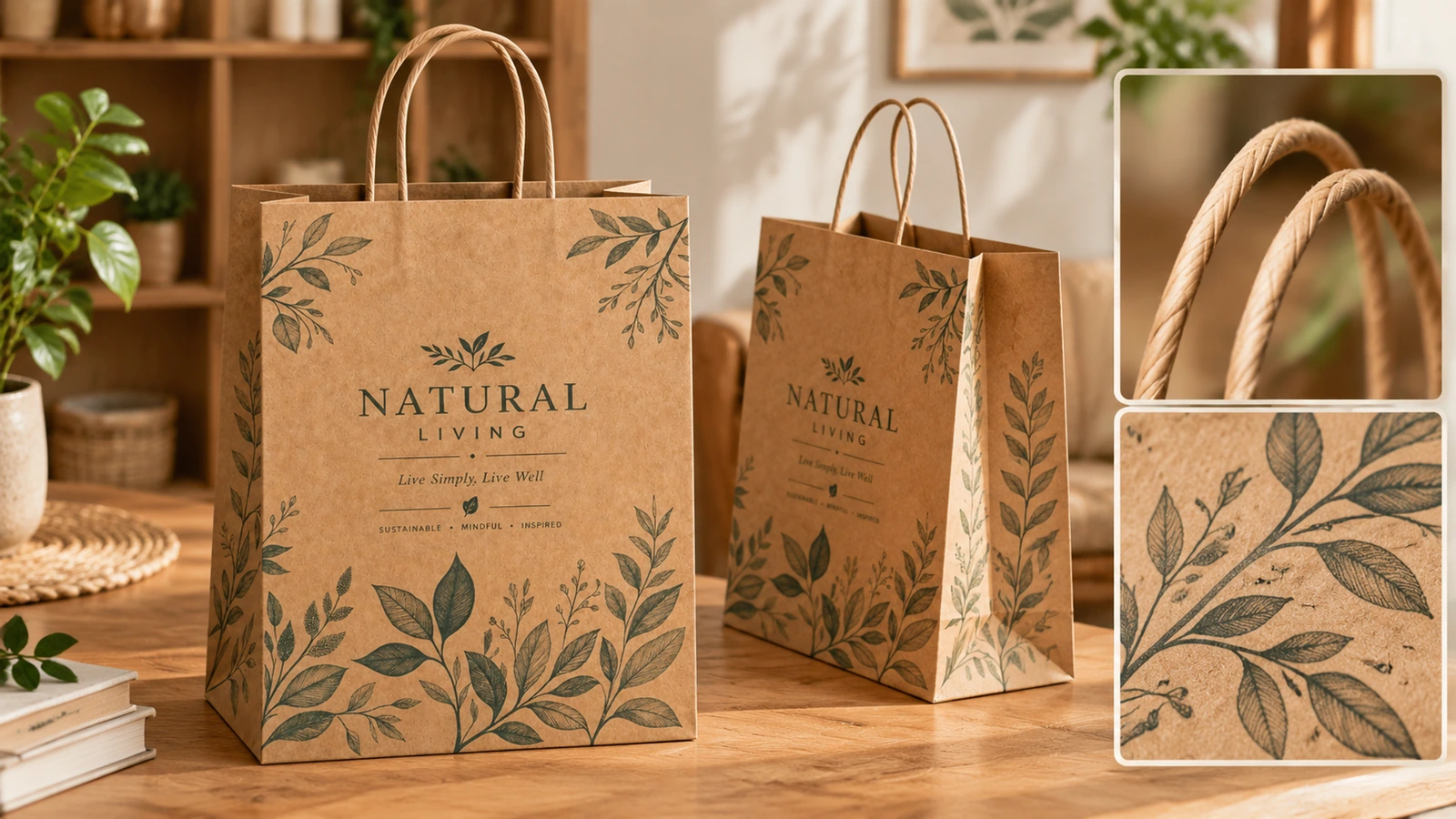
What matters most before placing an order? ↑
- Buy against a complete specification. Brown kraft and twisted handles establish the product identity; dimensions, paper, print and attachment details still need agreement.
- Validate fit and carrying performance together. Capacity and suitable item quantities depend on physical dimensions, loading arrangement and sample validation.
- Approve claims separately from appearance. Recycled content, certification, food-contact suitability and disposal instructions require evidence for the proposed construction.
- Compare delivered cost, not just unit price. Include setup, samples, packing and transport, with MOQ and production timing stated in the quotation.
California covered-store checkout requirements include a dated recycled-content threshold. — From January 1, 2028, qualifying recycled paper carryout bags must contain at least 50% postconsumer recycled material. CalRecycle also specifies manufacturer, manufacturing-country and recycled-content labeling requirements (Source[3]).
This California rule is not a nationwide specification or evidence that this product qualifies. Match the destination and retail application to the applicable requirements before approving material declarations or printing disposal claims.
Turn your requirements into a comparable quote ↑
A useful quotation connects your merchandise, artwork and delivery needs to one defined bag specification. The most important decisions are the ones that prevent a mismatch: usable fit, tested carrying performance, an approved printed appearance and clear acceptance terms.
Request a quotation for NSKU-723-01 with your packed-product dimensions, intended loading arrangement and weight, artwork, required quantity, delivery destination and target arrival date.




The information below is required for social login
Sign In
Create New Account