SEO title: Custom Greaseproof Paper Bags for Bakeries
Meta description: Specify custom greaseproof paper bags for bakery takeaway. Compare materials, printing, food-contact documentation and sample checks before requesting a quote.
Custom Printed Greaseproof Paper Bakery Bags combine a branded presentation with a grease-resistance specification selected for your food. Match the bag to the pastry, packing temperature and holding time, then validate the finished printed sample before approving a bulk order.
Category: Custom Paper Bags / Custom Specialty Paper Bags.
Product: Custom Printed Greaseproof Paper Bakery Bags.
Provisional reference: NSKU-720-02.
This product is intended for bakery owners, café operators and packaging buyers preparing branded takeaway packaging for cookies, croissants, doughnuts and other pastries. Start with the item customers actually carry home: its shape, surface oil, toppings and packing condition are more useful purchasing inputs than a generic “food bag” description.
An independent bakery may prioritize an uncomplicated opening and a recognizable logo. A multi-location buyer may need the same approved paper construction, artwork revision and inspection criteria across repeat orders. A market stall may need to compare direct printing with a stock bag and label before committing to custom inventory.
Oil marks can undermine the presentation of carefully made food. Replacing a stained bag, adding another wrapper or dealing with a split seam also creates work at the counter. A thicker-looking bag does not, by itself, establish that the packaging will control grease throughout the intended journey.
The practical solution is to define the use conditions before selecting the paper and print. For this provisional product, dimensions, grammage, barrier construction, minimum order quantity, production time, unit weight and price remain subject to quotation and sample approval. No product-specific test results or certifications have been supplied.
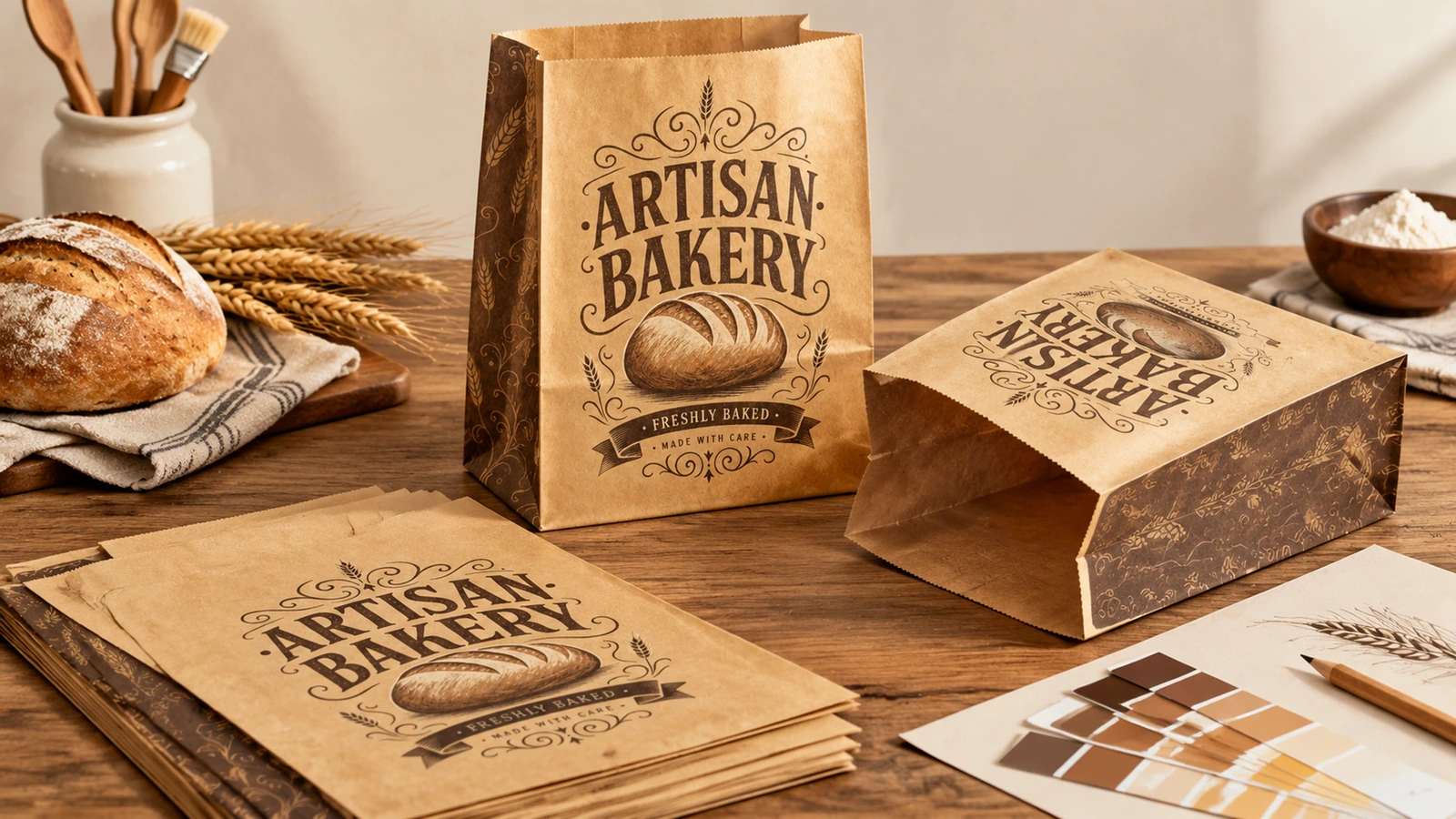
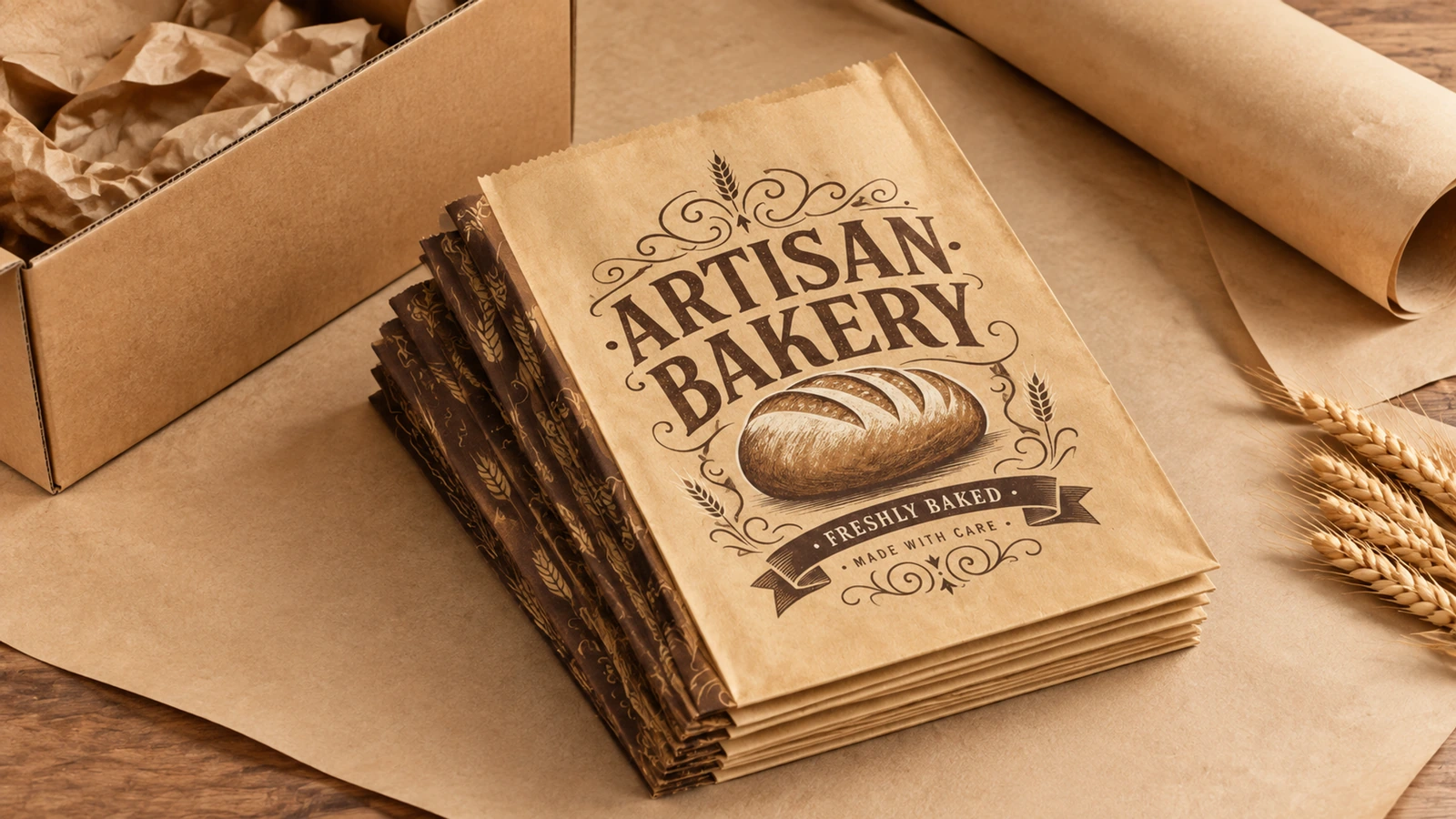
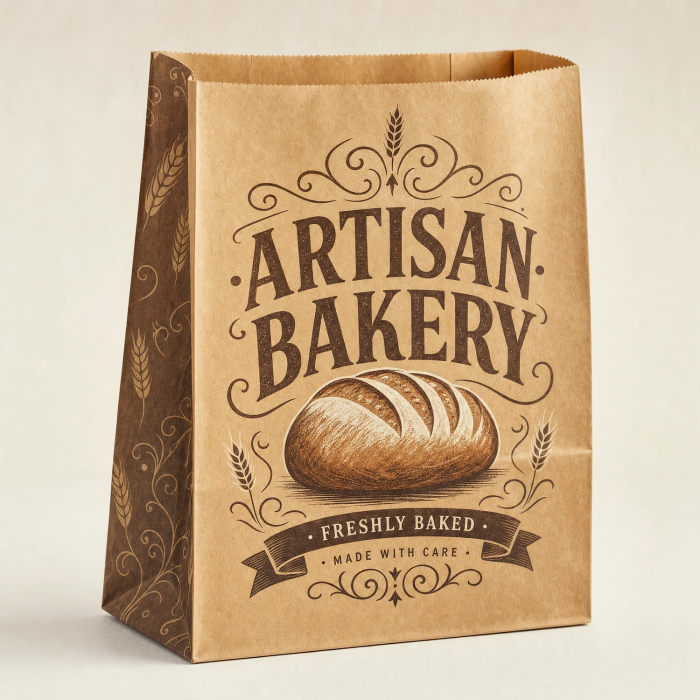
Illustrative application concept: the pictured bags do not establish dimensions, capacity or verified performance.
Explore specifications, sampling and buying decisions
What does greaseproof mean for a bakery bag? ↑
Greaseproof describes resistance to grease penetration, not a universal guarantee against every oily food. Performance depends on the paper construction, food contact conditions and finished-bag details. It does not automatically establish water resistance, steam management, nonstick release, overnight storage suitability or permission to use the bag in an oven.
The material category includes densely refined papers and papers with additional barrier treatments. A brown appearance does not identify the barrier, and a smooth surface does not establish whether a coating is present. The purchasing specification should name the substrate and any coating or liner rather than relying on photographs or a material nickname.
The TAPPI T 559 Kit test[1] provides a laboratory reference for surface repellency. Its original scope concerns fluorochemical treatments; suitability for nonfluorochemical treatments or film-like barriers requires evaluation. A Kit result should therefore identify the tested construction, method and surface, not function as an unrestricted food-performance promise.
Keep three purchasing questions separate: does the material resist the relevant oil, does the assembled bag remain usable under the intended conditions, and is the complete construction suitable for the intended food contact? A favorable answer to one does not settle the others.
How do you specify fit, surfaces and closure? ↑
Start with the food and its journey
Record the food as packed, including coatings, fillings and toppings. Describe whether it enters the bag cooled or warm, whether steam is present, and how long it remains packaged. Counter takeaway and food prepared in advance need different validation conditions, even when the same pastry is involved.
Separate oily bakery products from sauced foods and hot fried items during sampling. A bag qualified for cookies should not automatically become the approved packaging for a different menu item. Where staff routinely add another wrapper, investigate whether the original specification still matches the use.
Define dimensions and artwork space together
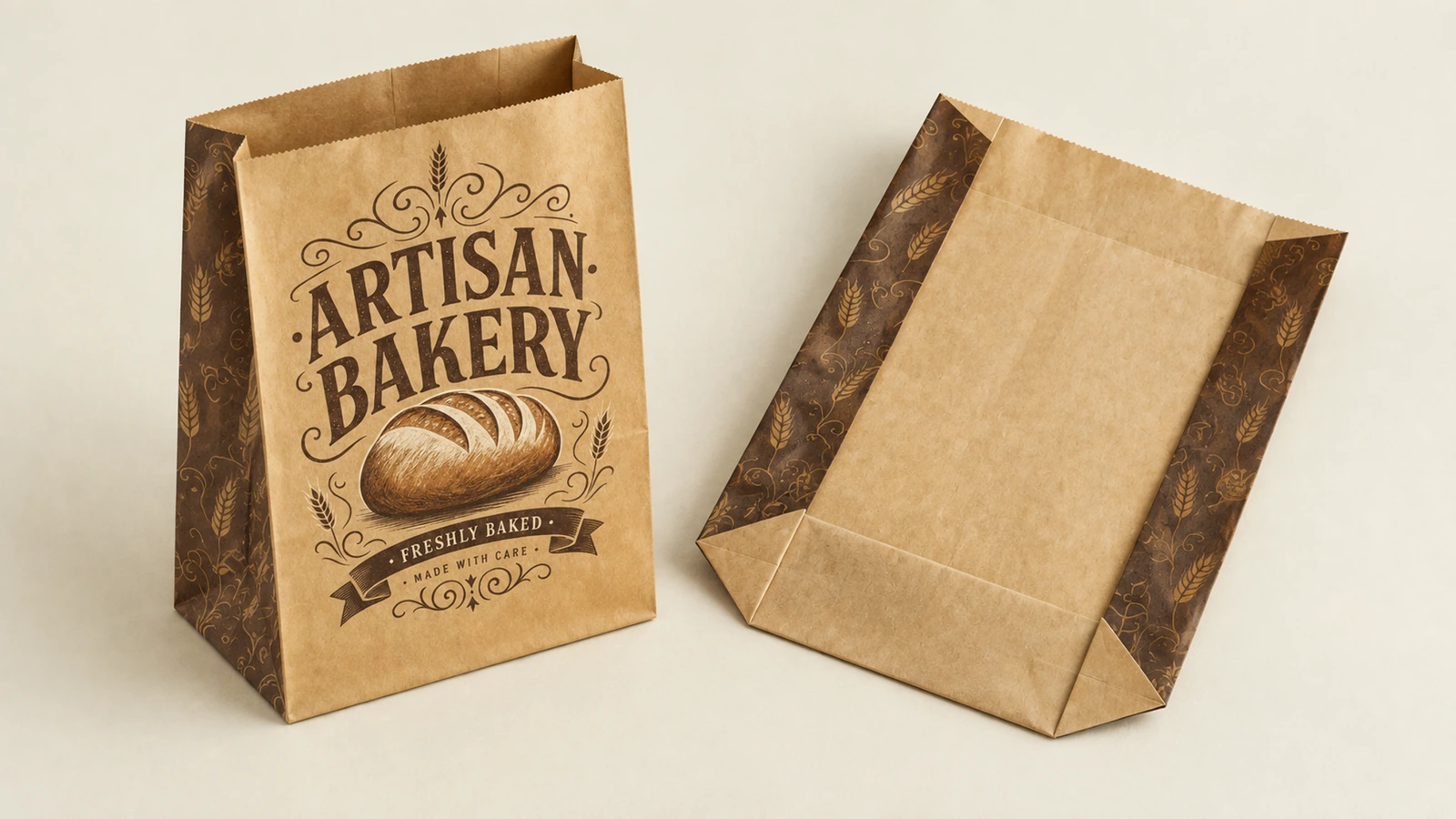
State width, height and gusset dimensions in millimetres, with the measurement convention shown on the drawing. Identify usable internal space and the area needed for folding or closing the top. Capacity, carrying load and the number of items that fit must be determined by actual dimensions, loading conditions and sample validation.
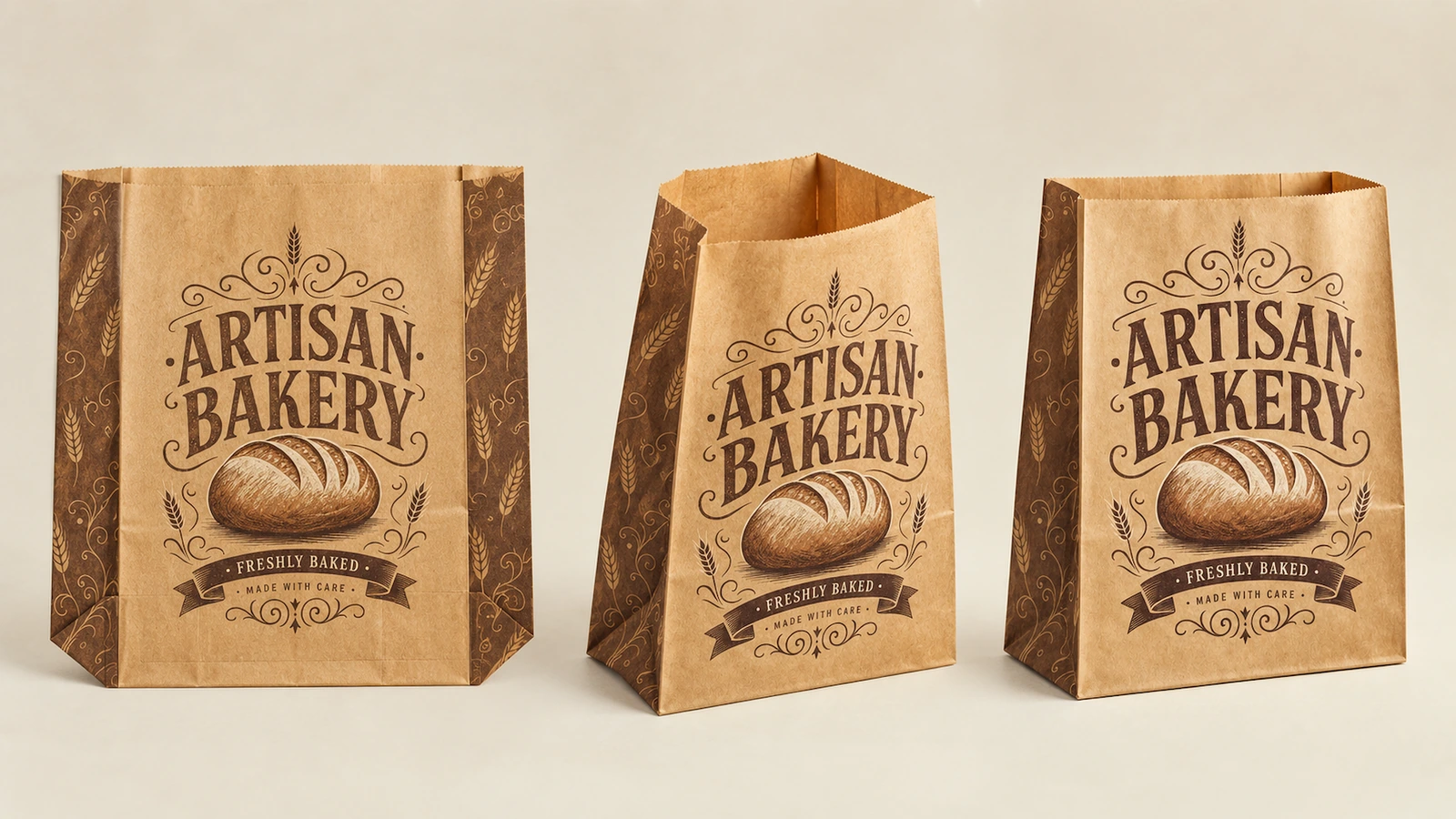
Check how the bag opens and how the product is removed. A nominally adequate footprint can still create an awkward fit around a delicate topping. Review the logo on both the flat sample and the filled bag so that folds, gussets and closure do not hide important information.
| Specification field | What to record | Approval basis |
|---|
| Food and packing condition | Food type, surface oil, toppings, temperature in °C and holding time in minutes | Representative intended-use trial |
| Bag geometry | Width × height × gusset in mm; measurement convention and tolerances | Drawing and loaded physical sample |
| Paper construction | Substrate, grammage in g/m², coating or liner, and contact side | Material specification and supporting documents |
| Grease resistance | Agreed method, test surface and acceptance criterion | Applicable laboratory results plus finished-bag trial |
| Branding and closure | Artwork revision, colors, print position and proposed closure | Printed and folded sample |
| Commercial requirements | Quantity by design, destination and required arrival date | Written quotation and delivery agreement |
These are fields to complete, not published specifications for NSKU-720-02. Keeping them together prevents a price comparison from silently mixing different materials, dimensions or validation requirements.
Evaluate surfaces, rear seams and closure options
Request a clear distinction between the outer printable surface and the food-contact surface. If a proposed paper uses a coating or liner, identify it explicitly. Do not assume that a bag suitable for factory printing will also accept an ordinary stamp or adhesive label without a separate compatibility check.
For bakery packaging, the relevant rear details are seams, folds and closure—not wearable-product back fasteners. An open top, folded top or label-assisted closure can be discussed as a sampling requirement; none is a confirmed option for this provisional SKU. Any proposed closure should be assessed with the food, including its effect on trapped moisture.
How do you prepare artwork for reliable printing? ↑
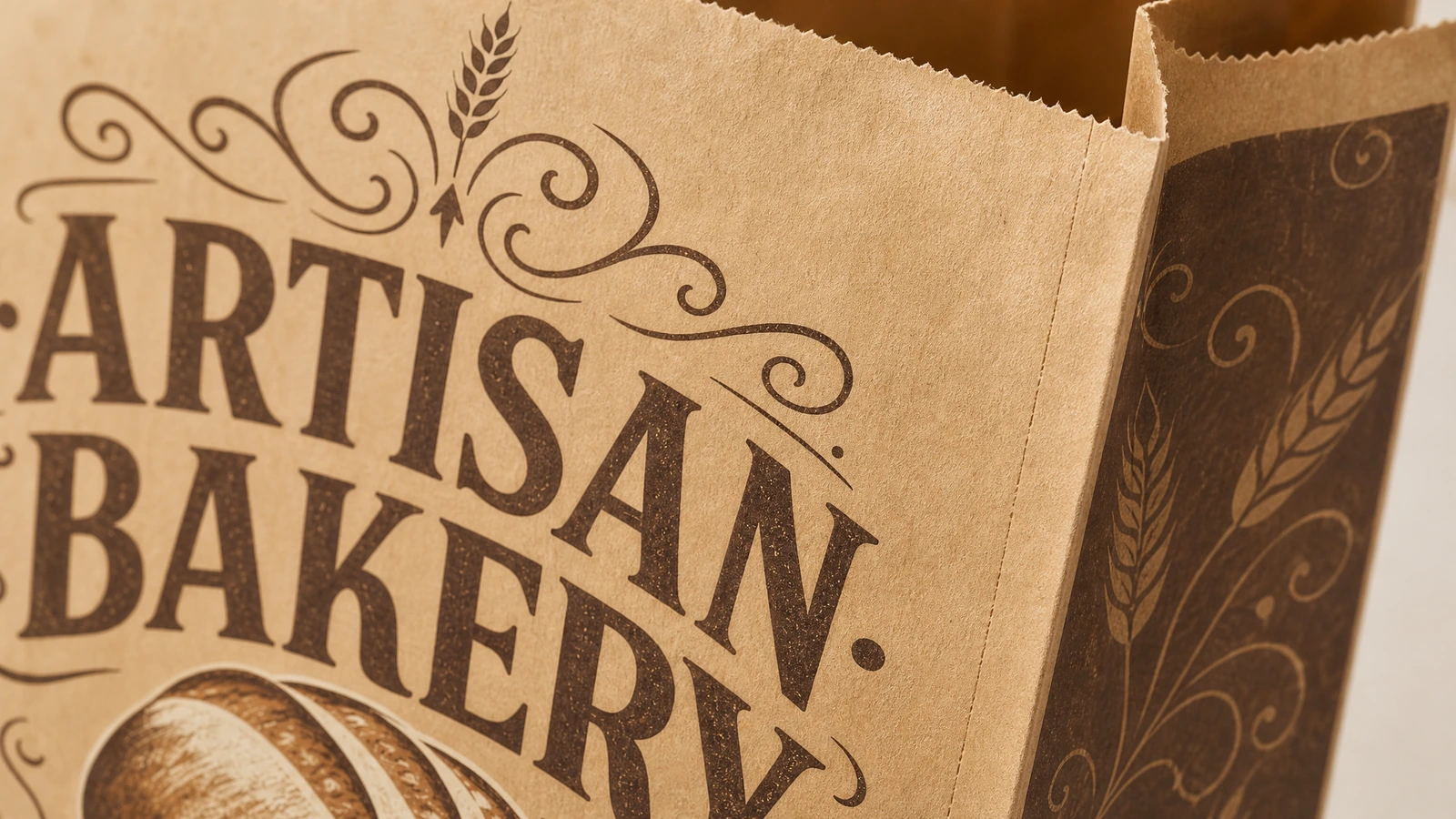
Provide vector artwork in AI or PDF format alongside the approved bag drawing. Identify the front, back, gussets, folds and glue areas before positioning the design. Keep essential branding clear of areas that may disappear when the bag is filled or closed.
Use the proof to confirm logo proportions, orientation, color references and print placement. Bleed, registration tolerance and printable boundaries should come from the agreed production layout, not from assumptions based on a previous supplier’s bag. Check any barcode on the physical printed sample where applicable.
Food-contact suitability must cover the ink system and its intended placement as well as the paper. An ink described as water-based does not, on its own, establish suitability for every contact condition. State whether printing is external only and whether printed surfaces could contact food or transfer onto the inner surface during stacking.
Approve print appearance and practical handling together. Check rubbing, smearing, unintended transfer and the visibility of fine details after folding. A digital proof can confirm the design, but it cannot establish print adhesion, material feel or finished-bag performance.
How do you qualify samples before production? ↑
Agree the approval sequence before placing the order
A useful qualification sequence is material review, unprinted fit sample, printed sample, intended-use testing and written approval. Confirm which stages are included in the quotation. A proposed workflow is not evidence that a supplier has completed the checks or that this product has passed them.
Retain the approved drawing, artwork and material description as one specification. For production, request traceability between the paper, ink, finished-bag batch and inspection record. If the supplier proposes a substitution, assess it before release rather than treating a similar appearance as equivalence.
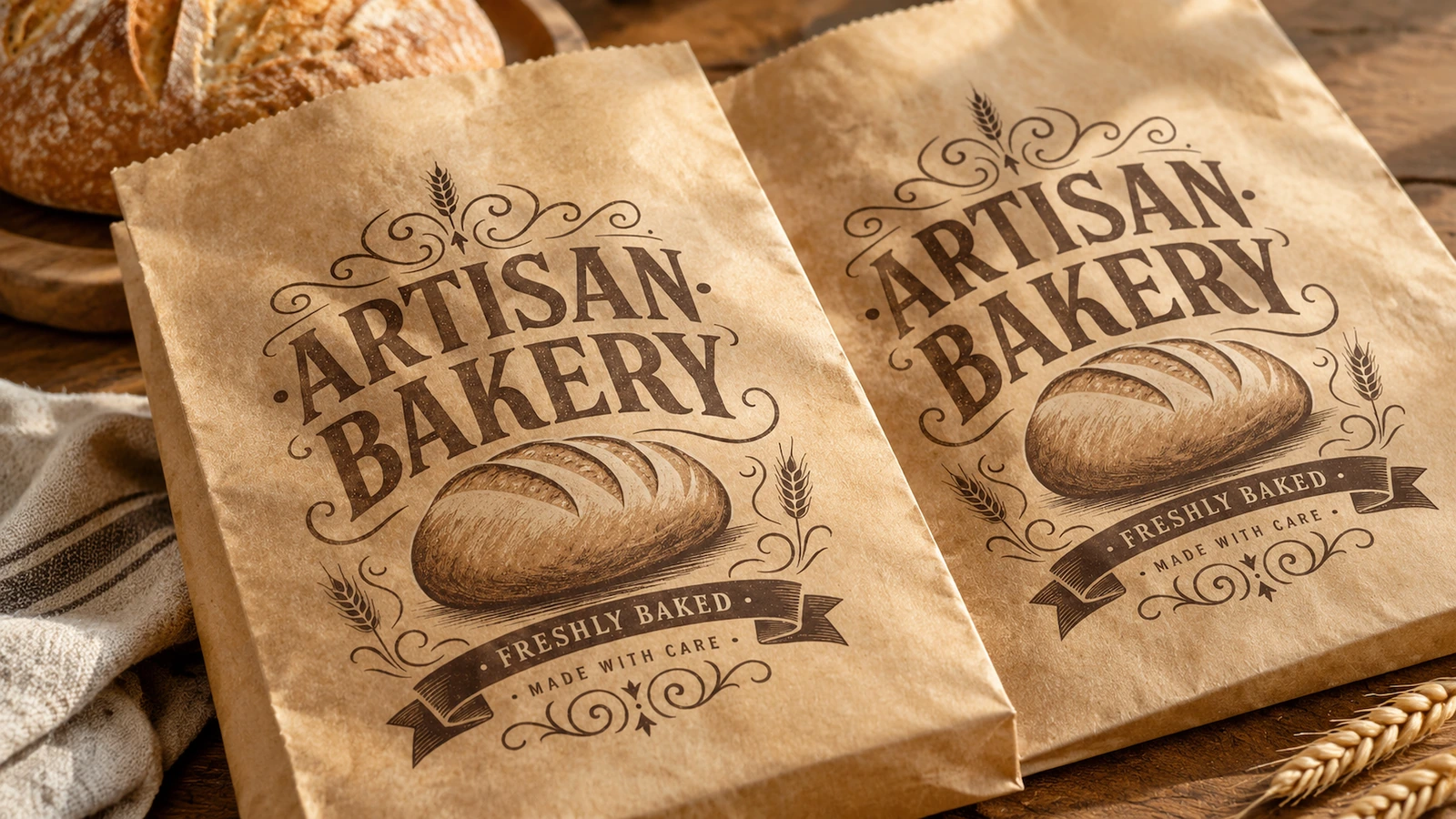
Illustrative workflow, not a photograph of a verified production facility.
Test the assembled bag with the intended food
Laboratory screening should support—not replace—finished-product evaluation. Smithers’ grease-resistance guidance[2] makes this distinction explicit. It also describes TAPPI T 454 penetration-time testing for greaseproof, glassine and vegetable parchment papers, while noting that the method is not always suitable for coated constructions.
- Define the trial: record food, loading condition, packing temperature, holding time and closure.
- Check the unprinted sample: assess opening, fit, removal, seams and base integrity.
- Repeat with the printed sample: inspect the effects of printing, folding and handling.
- Record failure locations: distinguish surface staining from penetration at a fold, side seam or bottom joint.
- Set the acceptance decision: compare observations with the written criteria, retaining photographs and sample identification.
Define what counts as unacceptable before testing. Through-grease staining, seam opening, sticking, excessive softening and ink transfer should not be left to an informal visual judgment. If slight edge darkening is acceptable for the application, document that distinction rather than promising an undefined “zero leakage” outcome.
For warm food, examine moisture and product condition as well as the exterior appearance. A clean-looking outer surface does not answer whether the food becomes sticky or the bag difficult to handle. Any change to closure or packing practice should be included in the repeat trial.
Review food-contact evidence for the destination
For U.S. purchasing, request the applicable legal basis for the paper, coating, adhesive and ink under the intended use. Paper and paperboard provisions include 21 CFR 176.170 for aqueous and fatty foods and 176.180 for dry foods, as explained in Keller and Heckman’s food-contact paper guidance[3]. A generic “FDA approved bag” statement is not an adequate substitute.
For European destinations, review the food-contact framework and good manufacturing practice requirements, including Regulations (EC) No 1935/2004 and No 2023/2006. The EUROSAC Food Contact Guideline[4] provides relevant industry guidance. Documents should correspond to the proposed construction and use; they do not certify this provisional product.
Keep PFAS evidence separate from general food-contact documentation. A statement of no intentionally added PFAS and an analytical report answer different questions. Specify the destination, requested declaration, test scope and traceability requirements rather than treating “PFAS-free” as an unexplained universal claim.
Which packaging construction fits your use? ↑
Compare materials by the job they must perform, not by whichever description sounds most environmentally attractive. The following categories are evaluation routes from the supplied research, not confirmed material choices for this SKU. Availability, suitability and cost require a specific quotation and approved sample.
| Construction to evaluate | Relevant use consideration | Main purchasing caveat |
|---|
| Uncoated kraft | Dry bakery items where a dedicated grease barrier may not be necessary | Do not assume ordinary kraft provides grease resistance |
| Densely refined greaseproof paper | Bakery packaging where fiber structure provides the barrier | Validate prolonged contact, folds and warm-food conditions |
| Paper with a nonfluorinated barrier | Applications requiring a specified barrier without intentionally added PFAS | Confirm formulation, test-method suitability and moisture behavior |
| PE-lined paper | Applications where both oil and moisture require attention | Assess the complete construction and local disposal acceptance |
| PLA-lined construction | Projects considering a compostable packaging route | Verify finished-product evidence and an appropriate industrial collection route |
| Wax paper bag | Cold or short-contact applications selected for that construction | Do not transfer suitability to hot-food use without validation |
| Parchment or baking paper | Baking and release applications distinct from takeaway packaging | Do not transfer an oven rating to a printed bag, adhesive or closure |
No row establishes an automatic winner. First remove constructions that cannot meet the intended use or documentation requirements; then compare the cost of the remaining qualified options.
Keep disposal claims specific
Paper-based does not automatically mean locally recyclable, and a plant-derived liner does not automatically make a finished bag home-compostable. Coatings, adhesives, printing and food contamination all belong in the assessment. Ask what evidence supports the complete bag and whether the destination’s collection system accepts it.
If industrial compostability is proposed, distinguish that claim from home compostability and from general biodegradability. Where a standard such as EN 13432 is cited, request evidence covering the finished construction rather than relying solely on a raw-paper description. Avoid printing disposal instructions before the claim and collection route are established.
How do you compare cost, delivery and repeat orders? ↑
Compare equivalent quotations
A meaningful quote comparison uses the same dimensions, paper construction, artwork, quantity and delivery destination. Separate unit price from setup, printing plates, sampling, testing, packing and freight. A low headline price is not comparable if it omits the material or approval work needed for your application.
For NSKU-720-02, minimum order quantity, production time and unit weight have not been verified. Request them explicitly rather than borrowing figures from another supplier’s listing. Clarify when production time starts, which approvals must be complete, and whether the stated period excludes transport.
For a smaller launch, compare direct printing with stock packaging and a label as distinct purchasing routes. Include label application work and compatibility testing in that comparison. Neither route is automatically cheaper once labor, unused inventory and the required presentation are considered.
Protect approved quality through shipping and reordering
Agree how the bags will be packed to limit crushing, creasing and contamination. Record carton identification and batch references so receiving staff can connect delivered goods to the approved specification. Carton counts, packed dimensions and shipment weight remain quotation fields, not assumptions based on product photography.
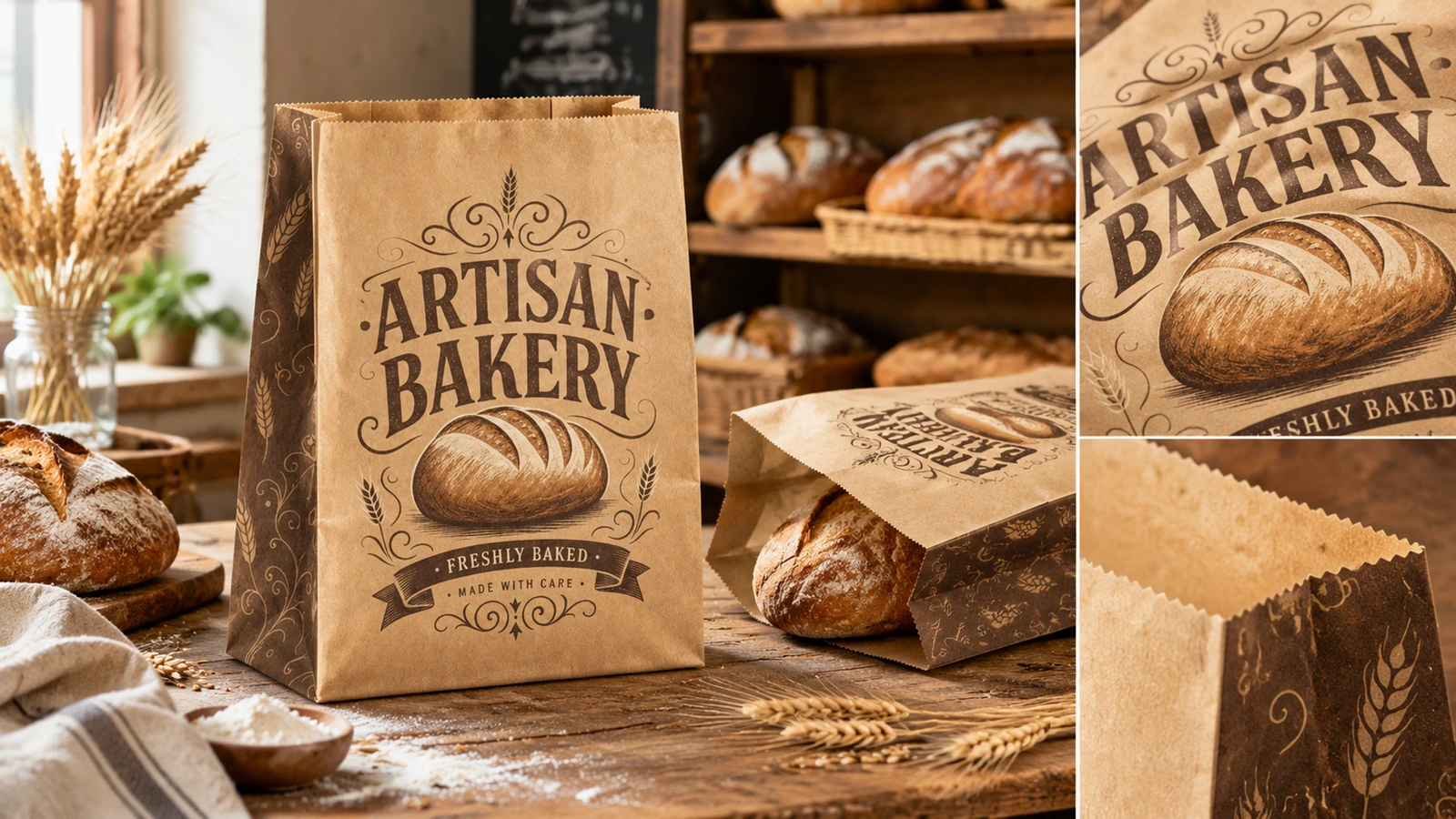
At receipt, check opening, seams, dimensions, print condition and agreement with the signed sample. Retain the inspection result with the shipment reference. Agree in advance how nonconforming goods will be isolated and how replacement or corrective action will be handled.
For repeat orders, carry forward the approved revision rather than only the product name. A change in paper source, coating, grammage or print coverage should trigger a review of the affected tests and documents. Track recurring staining, seam complaints and additional wrapping as signals that either the specification or its application needs attention.
Key takeaways for a better purchasing decision ↑
Specify the complete use, not simply “greaseproof.” Food, temperature, holding time, loading and closure belong in the approval record; capacity depends on physical dimensions, loading conditions and sample validation.
U.S. PFAS documentation must reflect withdrawn authorizations. — 35 relevant FCNs ceased to be effective on January 6, 2025; FDA specified June 30, 2025 as the compliance date for certain earlier paper-packaging stocks (Source[5]). This does not establish this product’s compliance or replace destination-specific review.
EU food-contact packaging has concentration-based PFAS limits. — From August 12, 2026, Article 5(5) prohibits placement on the market at or above 25 ppb for an individual targeted PFAS, 250 ppb for the targeted sum, or 50 ppm for PFAS including polymers; polymers are excluded from the targeted quantifications (Source[6]).
Commercial commitments require a product-specific quotation. MOQ, production time, unit weight, price and available constructions remain unverified for this provisional SKU.
Environmental claims need their own evidence. Confirm the finished construction and disposal route before adding recycling or composting instructions to the artwork.
Build the next order around an approved specification ↑
The strongest basis for branded bakery packaging is a bag that fits the food, a print layout that survives folding and handling, and evidence matched to the intended market. That gives purchasing, counter staff and receiving teams the same reference for acceptance.
Request a quotation for NSKU-720-02 with your food type, packing conditions, required dimensions, artwork, quantity and delivery destination.




The information below is required for social login
Sign In
Create New Account