Custom large-format paper posters turn your artwork into physical displays for promotions, events, classrooms and interiors. Start with the finished size, viewing distance and display conditions, then confirm paper, artwork requirements, proofing, packaging and delivery in a project-specific quote.
For retail buyers, marketing teams, event organizers and independent creators, the right poster starts with a practical question: what must someone understand when they see it? A promotional image, a conference schedule and an art reproduction require different decisions about layout, surface appearance and approval.
A design that looks convincing on a screen can still disappoint in print. Cropped information, distracting reflections or damaged edges may make an otherwise attractive poster unsuitable for its intended location. If the problem appears immediately before installation, replacement costs are only part of the disruption.
The solution is to make the buying brief specific before production: define the display, review the artwork at its intended size, approve the material and agree on inspection criteria. This page separates useful industry guidance from specifications that still require quotation, sampling or testing for your order.
Contents
What exactly are you ordering? ↑
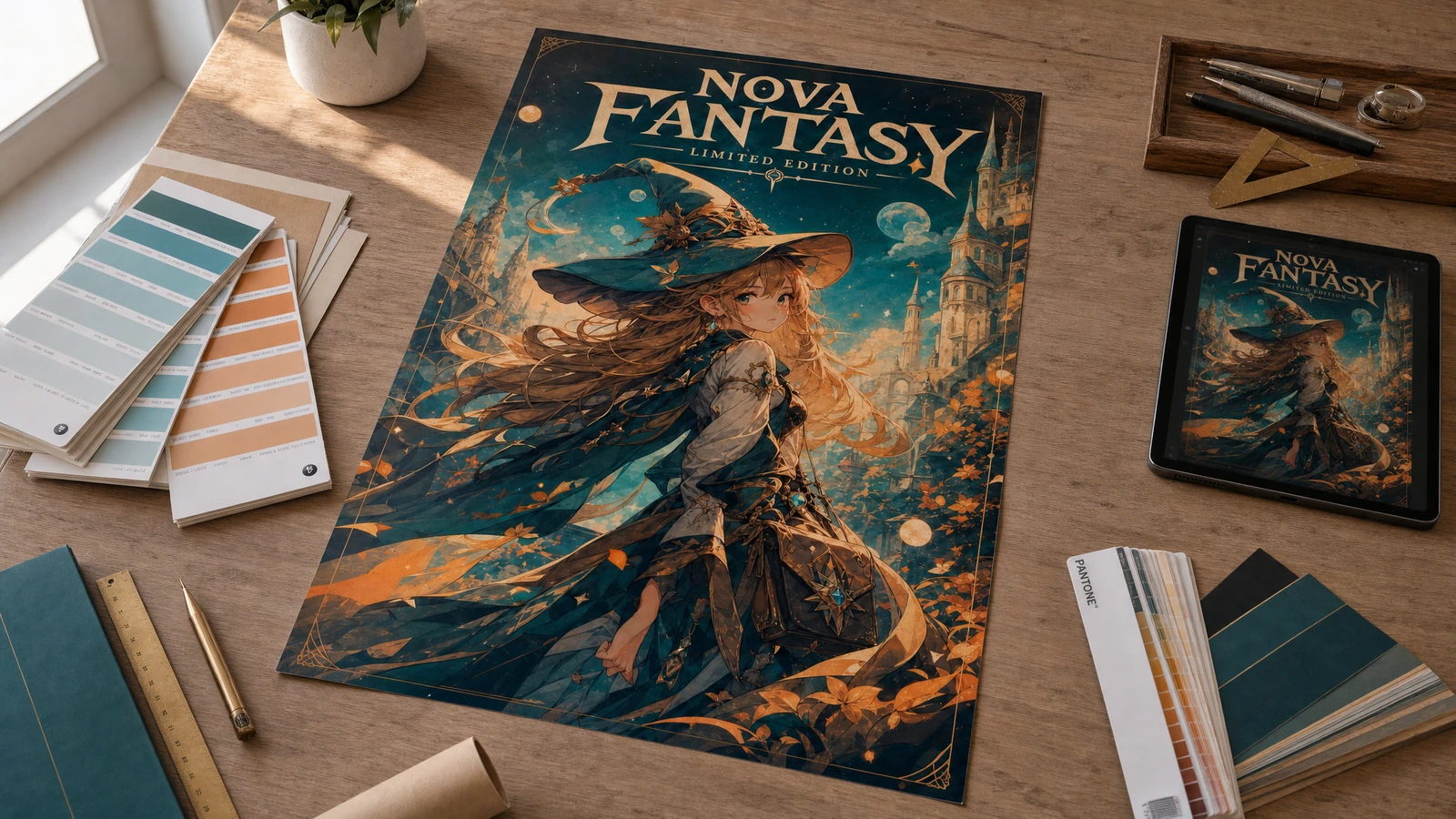
The product is Custom Large-Format Paper Posters, within Custom Commercial Printing → Custom Posters. The provisional product reference is NSKU-748-01. It describes a physical printed paper product, not a downloadable design, canvas print, vinyl banner or rigid sign.
Frames, backing boards, lamination and installation accessories should be listed separately when requested. A photograph showing a framed or mounted display does not establish that those components are included. Likewise, “large-format” does not establish an unlimited printable width or guarantee that every requested dimension is available.
| Purchase field | What to specify | Current product boundary |
|---|
| Finished dimensions | Width × height in inches; portrait or landscape | Requested dimensions require confirmation |
| Paper | Stock name, weight in gsm and surface | No product-specific stock or weight is verified |
| Quantity | Total pieces and quantity per artwork | Minimum order quantity requires quotation |
| Finishing | Unfinished paper, lamination or mounting request | Availability and inclusion require confirmation |
| Schedule | Required arrival date and destination | Production time and transit require quotation |
| Physical performance | Exposure, handling and display requirements | Durability and protective performance require testing |
Use these fields to compare equivalent proposals. No factory test results, production capacity, certifications or unit weight have been supplied for this product; third-party examples cannot establish those specifications.
How do you choose a size people can read? ↑
Begin with the available display area and the viewer’s position. Measure the intended frame or holder rather than relying only on its advertised size. Identify whether people will stop to read details or glance at the message while moving past.
| Reference format | Application to consider | Approval priority |
|---|
| 11 × 17 in | Noticeboards and close-reading information | Small text and clear hierarchy |
| 18 × 24 in | Indoor event and retail displays | Balance between headline, image and details |
| 24 × 36 in | Larger promotional and wall-art displays | Image quality and across-room readability |
| Custom dimensions | Existing frames or unusual display spaces | Aspect ratio, finished size and agreed tolerance |
These are planning formats from the supplied market research, not a confirmed size menu for this SKU. A custom request should state the required finished dimensions explicitly, including whether borders form part of that measurement.
A useful layout check is to review the headline, focal image and intended action separately. If important details compete for attention, simplify the design before increasing its size. Enlarging a crowded layout does not resolve weak hierarchy.
For close-viewed artwork, the research recommends targeting 300 PPI at final size; larger displays viewed farther away may permit lower resolution after review. Treat this as artwork guidance, not a printer-performance guarantee. Evaluate the actual image at the intended output size and request a sample when fine detail matters.

Which surface and backing suit your display? ↑
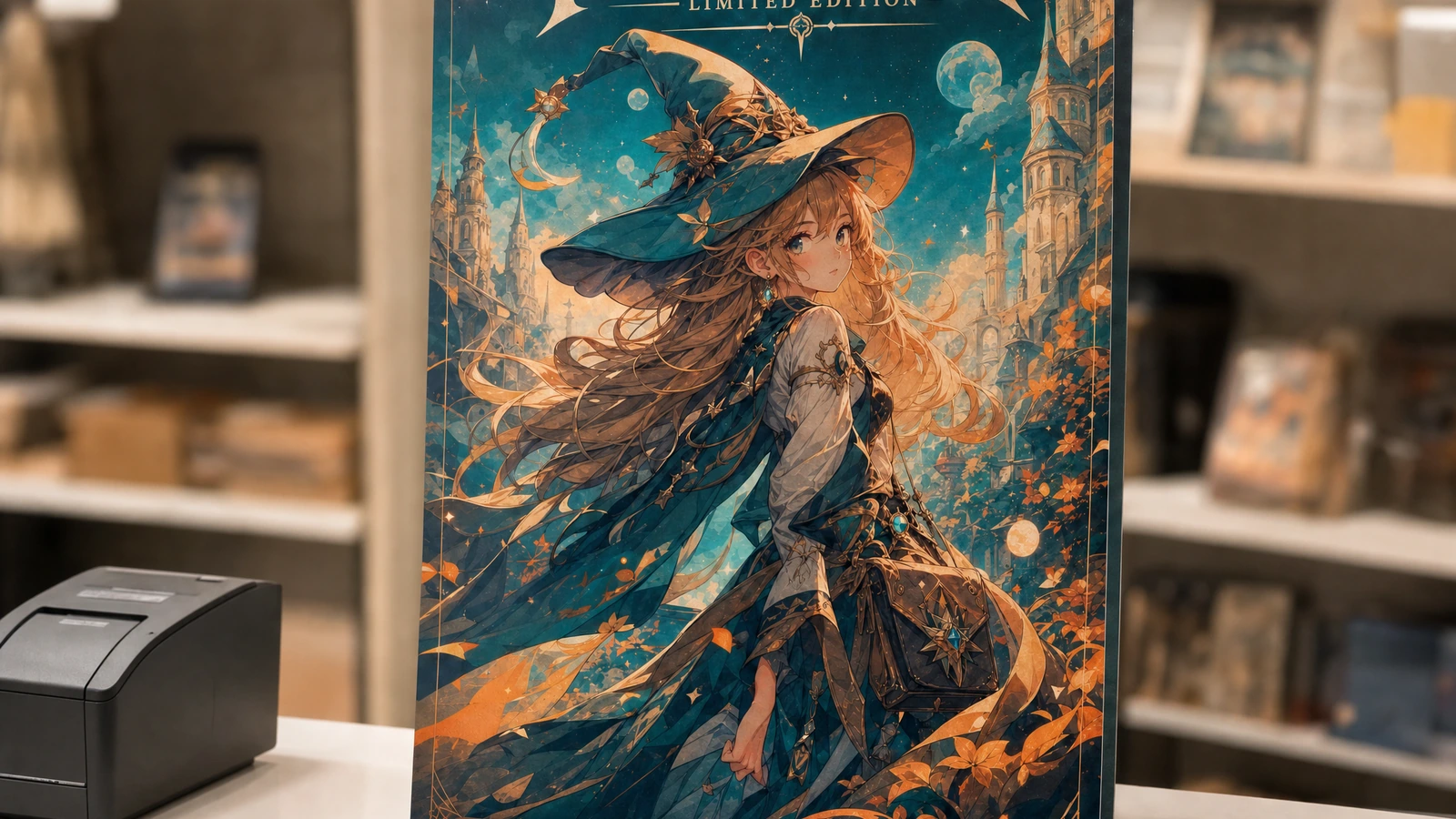
Surface choice changes how lighting interacts with the artwork. Gloss emphasizes a reflective appearance, matte reduces glare, and satin sits between them. These distinctions are described in VistaPrint’s poster material guide[1]. Availability for this product remains subject to quotation.
| Option to discuss | Display priority | Sample check |
|---|
| Matte paper surface | Text and graphics under strong indoor lighting | Readability and preferred color appearance |
| Gloss paper surface | Image-led displays where reflections are manageable | Glare at the intended viewing angle |
| Satin or semi-gloss surface | A middle ground between matte and gloss | Balance of sheen and legibility |
| Lamination | Additional protection for handling | Surface appearance and required resistance |
| Separate backing or mounting | A display requiring a supported sheet | Fit, finished construction and installation method |
Paper surface, applied lamination and backing are different specifications. Recording each separately prevents a quote for a loose printed sheet from being mistaken for a finished mounted display.
Paper weight alone also does not describe the complete construction. Industry guidance distinguishes flexible text-weight papers from firmer cover stocks and treats coatings, laminates and mounting as separate choices; see Smartpress’s poster construction guidance[2]. Request a material sample rather than selecting solely from words such as “premium” or “heavyweight.”
Do not assume that ordinary paper is waterproof, archival or suitable for prolonged outdoor exposure. Those requirements need a separately confirmed material construction and relevant testing. A competitor’s waterproof poster or synthetic-media specification does not apply to this paper product.
How should you prepare artwork for approval? ↑
Prepare the file around the agreed finished size, not the dimensions of a convenient template. Confirm the supplier’s submission requirements before exporting. A production-ready file must communicate the intended crop, borders, typography and color treatment without relying on assumptions.
- Check the image source. Use the original artwork or photograph where possible. Inspect embedded images at final size; a convincing small preview is not sufficient evidence of print sharpness.
- Separate trim, bleed and safe area. Background artwork may need to extend beyond the cutting boundary, while essential text and logos remain inside it.
- Confirm color preparation. Agree on the required color mode and profile. Do not assume that a screen preview establishes an exact printed color match.
- Protect typography. Embed fonts or supply outlined text as required, then inspect the exported file for missing characters or changed line breaks.
- Review the final submission. Check spelling, dates, orientation, borders and artwork version after export—not just in the editable design.
As a supplier-specific reference, 4OVER4 recommends CMYK preparation, 300 DPI, 0.125 in bleed on each side and at least 0.25 in clearance for important text or logos. These are published file-preparation guidelines[3], not confirmed submission settings for this SKU. Follow the agreed production template if its requirements differ.
PDF/X provides a standardized framework for print-file exchange. The PDF Association identifies PDF/X with the ISO 15930 family in its PDF standards reference[4]. Confirm which version the supplier accepts; using a recognized format does not by itself verify image quality or final color.
Keep layout approval separate from material and color approval. A digital proof helps review content and positioning. Where brand colors, dark photographs or subtle artwork are important, request a physical sample on the proposed stock before authorizing the full order.
What should happen between approval and dispatch? ↑
A documented workflow makes responsibility clearer when artwork, material or timing changes. The following sequence is a purchasing checklist to agree with the supplier, not a claim about an established factory process.
- Confirm the job specification. Record dimensions, stock, finish, quantity per design, destination and required arrival date.
- Resolve file questions. Obtain an explicit answer for any resolution, crop, font or color issue identified during preflight.
- Approve the agreed proof. Identify the approved artwork version and record whether approval covers layout only or a physical sample as well.
- Authorize production. Confirm the production method, finishing sequence and schedule against the approved specification.
- Inspect before packing. Review print appearance, dimensions, surface condition and artwork allocation against the agreed acceptance criteria.
- Confirm dispatch details. Record the packing method, shipment contents and delivery information.
The research describes digital and offset printing as different production routes. Rather than choosing solely by the process name, compare the proposed method for your quantity, artwork variations and proofing needs. Neither a particular press type nor a production-volume threshold is verified for this product.
Schedule planning should distinguish proof approval, production completion, dispatch and arrival. Ask what happens if artwork changes after approval and when an order becomes non-cancellable. Competitor rush services and local pickup offers do not establish an equivalent service here.
How can you make quality acceptance measurable? ↑
Replace “good quality” with an agreed inspection checklist. The useful question is not whether a poster looks attractive in isolation, but whether it matches the approved job and works in the intended display.
| Inspection item | Suggested acceptance method | Agreement required |
|---|
| Finished size and borders | Measure the print and compare border placement with the proof | Cutting tolerance and border expectations |
| Color appearance | Compare with the approved physical reference under agreed lighting | Reference sample and any measurement method |
| Sharpness and banding | Inspect fine detail, gradients and solid-color areas | Viewing conditions and unacceptable defects |
| Paper and surface | Compare stock and finish with the selected sample | Material identity and acceptable surface condition |
| Handling condition | Check for creases, scratches, dents and tears | Reporting evidence and remedy process |
| Order accuracy | Check artwork versions and quantities against the order | Allocation by design and destination |
This table proposes verification steps rather than reporting completed tests. No numerical color tolerance, defect allowance or cutting accuracy has been verified for this product. If a measured color limit is required, define the measurement method and acceptance threshold before sampling.
For sustainability requirements, request documentation for the actual selected paper and construction. Do not treat an industry certification reference as proof that this product or its supplier is certified. Recycled content, responsible sourcing and suitability for a local recycling stream should be addressed separately; no recycling rate or product-level environmental certification is established here.
Children’s promotional use also deserves an application-specific review. CPSC guidance explains that classification and applicable testing depend on the product’s intended use and other factors; consult its promotional product safety guidance[5]. A classroom application alone should not be presented as evidence of either certification or exemption. Required testing and documentation remain to be determined.

How should packaging and repeat orders be specified? ↑
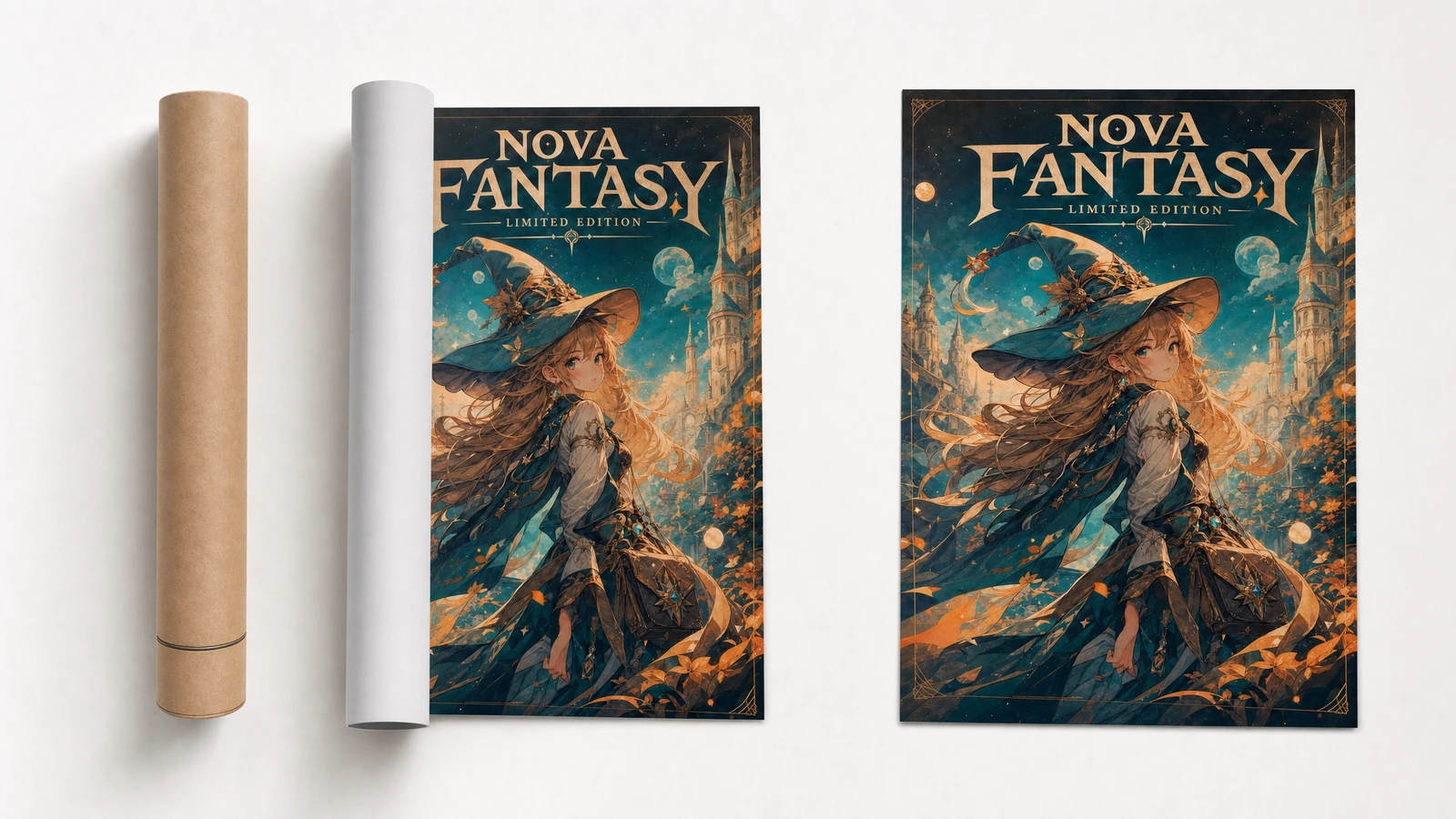
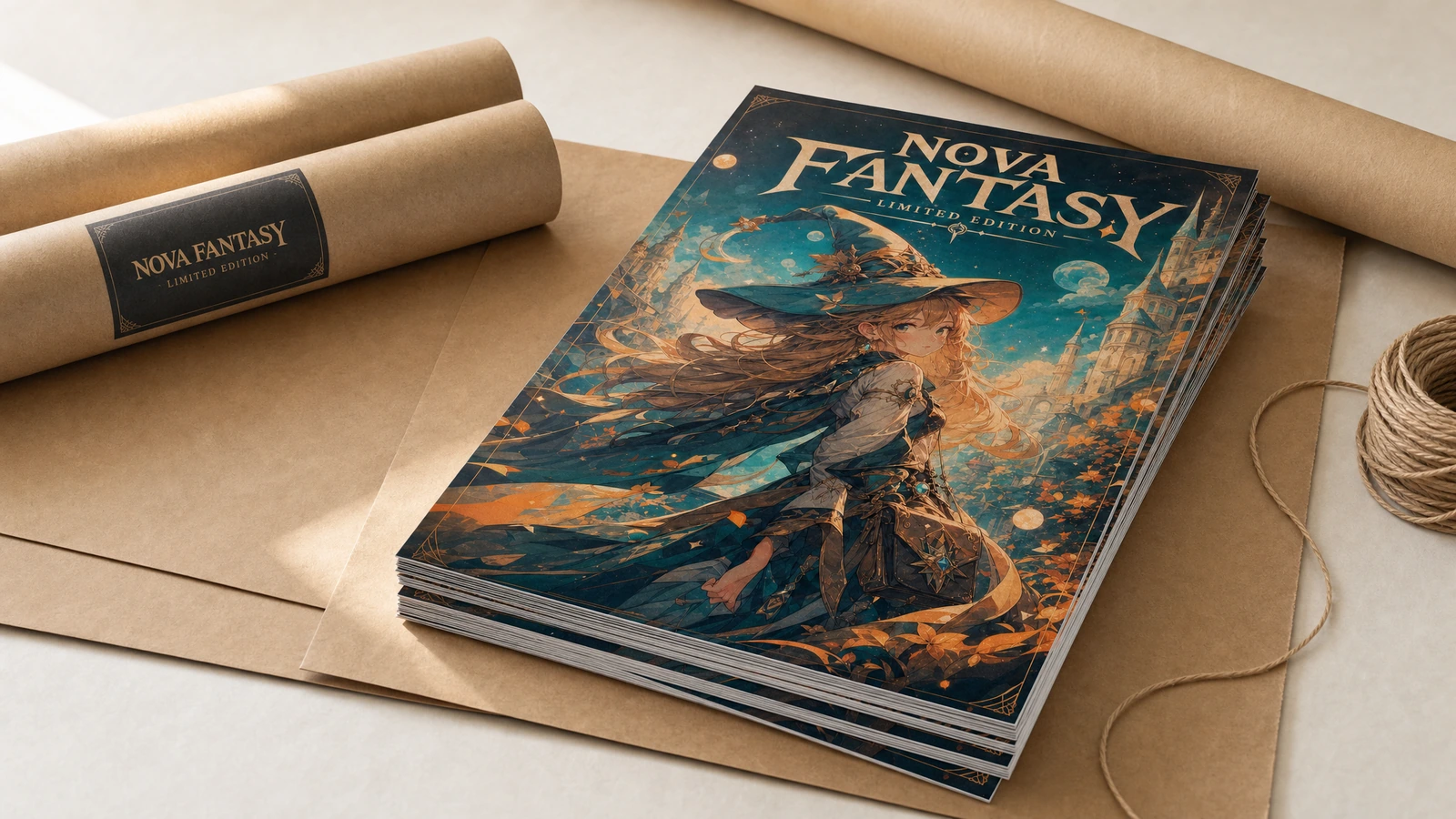
Packaging belongs in the specification because an acceptable print can become unusable during transport. Discuss rolled or flat packing in relation to the selected paper, finishing, dimensions and shipment quantity. Neither format should be assumed to suit every order.
For rolled packing, review the protective tube or box and how the print is protected inside it. For flat packing, review support and edge protection. Request a packing sample when the shipment is particularly sensitive to creasing or corner damage. Protective performance remains a validation item, not a guaranteed result.
Any stated packing capacity or number of posters per container must be determined by actual product dimensions, loading condition and sample validation. Do not reuse a packing count from another paper weight, poster size or mounted construction.
At receipt, photograph the exterior package and any affected prints before discarding packaging. Record the shipment reference, damaged quantities and defect details. Agree on the claim window, evidence requirements, replacement arrangements and responsibility for additional freight before ordering; no automatic refund or free-reprint policy is established here.
For repeat orders, retain the approved artwork, material description, physical reference and packing specification together. Flag changes to paper, finish or artwork rather than treating the previous order number as a complete specification. A new sample may be needed when those inputs change.

How do you compare quotes without missing costs? ↑
Compare the complete delivered specification rather than the lowest advertised print price. The research identifies size, quantity, paper, finishing and urgency as cost drivers. A single-sheet retail price is not a reliable benchmark for a multi-design order with proofing, protective packaging and separate destinations.
| Buying route | When to investigate it | What to verify |
|---|
| Local retail printing | Collection and in-person inspection are priorities | Location-specific availability, cutoff and material choice |
| Specialist online printing | Dimensions or media selection require more discussion | Proofing, freight, cutting terms and issue resolution |
| Project-specific commercial quote | Artwork quantities, finishing and packing need coordinated specifications | Scope, samples, minimum quantity and delivered cost |
These are service models, not a ranking or a promise that one route is always faster or cheaper. Current availability and written terms matter more than historical competitor prices or review scores.
Request an itemized quote covering printing, requested samples, finishing, packaging, freight and any applicable taxes or import charges. Ask whether multiple artwork versions change the price and whether urgent production is available. Keep optional upgrades separate so a lower price cannot conceal a different construction.
For a fixed event date, establish the latest acceptable arrival date before discussing speed. An estimated dispatch date and a required arrival date are different commitments. If the schedule cannot accommodate proof corrections or replacement, resolve that risk before placing the order.
Make the buying decision with these essentials ↑
- Specify the physical product clearly. — Paper posters are the confirmed identity; frames, backing and protective finishes require separate confirmation.
- Approve the display, not just the artwork. — Finished size, viewing distance and lighting belong in the same brief.
- Use a physical reference for critical appearance. — Layout approval alone does not establish paper feel or printed color acceptance.
- Compare equivalent delivered orders. — Include samples, finishing, packaging and freight alongside the print price.
- Keep unverified purchasing terms open. — MOQ, production time and unit weight are not supplied; obtain order-specific confirmation.
- Make remedies part of the agreement. — Record inspection criteria and damage-reporting terms before production.
Turn your display brief into a clear quote ↑
A useful poster order connects the message, artwork, physical material and delivery requirements in one specification. That gives both buyer and supplier a shared reference for approving the sample, checking the shipment and repeating the order.
Request a project-specific quote with your finished dimensions, quantity per design, artwork, display conditions, destination and required arrival date.





The information below is required for social login
Sign In
Create New Account