We use cookies to enable our websites to remember information, to help some website functionalities to work properly, to understand how you interact with and use our websites and to display you content and ads that are relevant and engaging for you.
By clicking Accept All you consent to the use of these cookie.
The store will not work correctly when cookies are disabled.
Custom embossed labels add tactile dimension through mechanical die pressing or UV curing, creating 0.1–0.5mm raised surfaces that increase purchase intent by up to 50% after just two touches, per Clemson University research. Ideal for spirits, cosmetics, and candle packaging seeking shelf differentiation.
User/Scenario: Brand managers, small business owners, and packaging designers seeking premium tactile finishes for wine, spirits, cosmetics, or artisan candle products with minimum order quantities under 500 units.
Your product sits on a crowded shelf. Competitors use flat labels. Customers scroll past another generic image online. The problem? Visual-only branding fails to create memorable experiences. The solution lies in what consumers actually remember—touch. Embossed labels transform passive viewing into active engagement.
This guide covers everything from material selection to common pitfalls, helping you choose the right embossing method for your budget and application.
Embossed labels feature raised surface elements created through mechanical pressure or UV polymer layering. Unlike flat printed labels, embossing adds a third dimension that engages the sense of touch—a critical factor in purchase decisions according to multisensory packaging research[1].
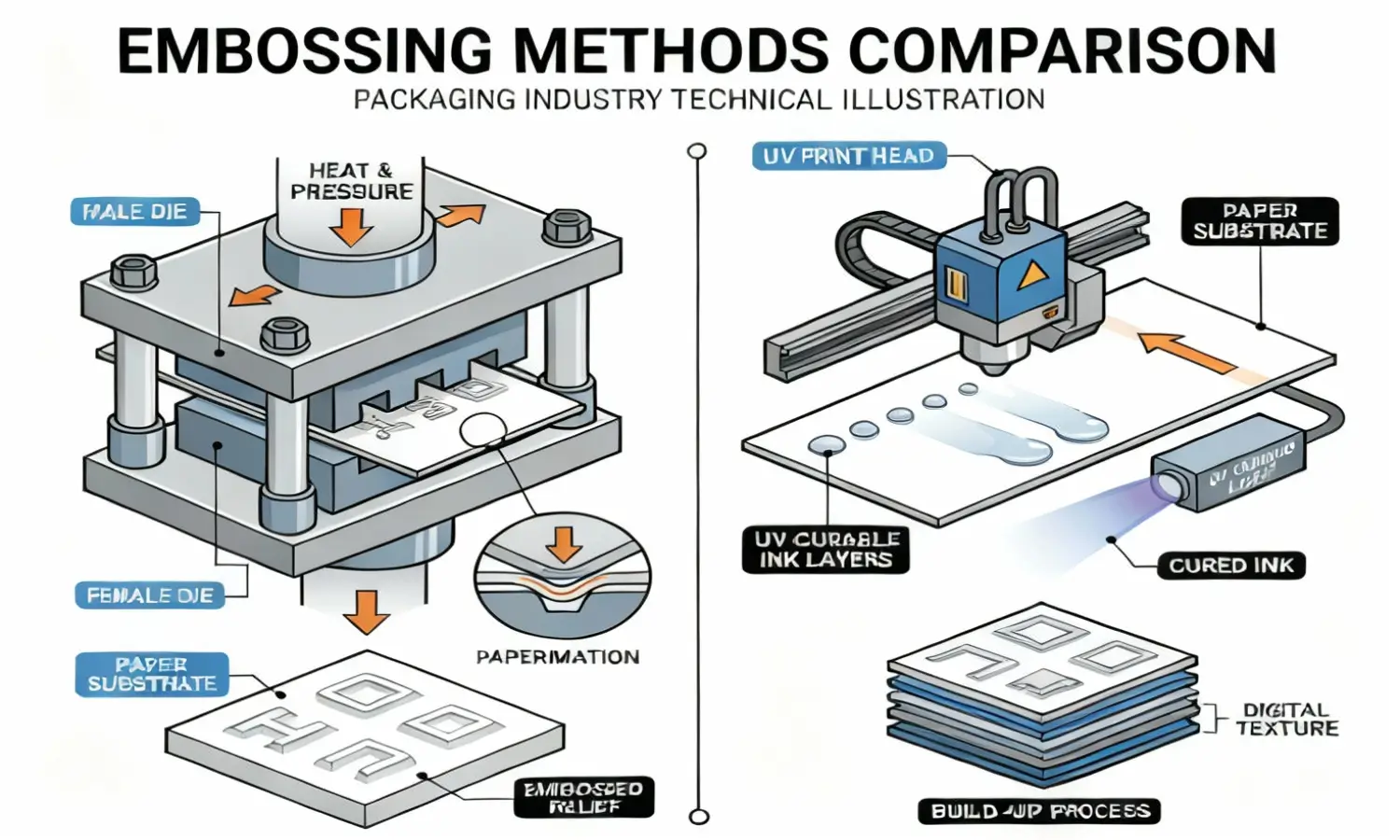
Embossed labels are packaging labels featuring raised (convex) design elements created by pressing material between male and female dies at 10–15 PSI, or by curing UV-reactive polymers in layered applications, producing tactile heights of 0.1–0.5mm that enhance brand perception and shelf differentiation.
Essential attributes and scope
● Core attributes: Tactile height (0.1–0.5mm), texture variation (smooth/textured), substrate compatibility (paper 150–350gsm, BOPP films, specialty materials), and finish options (blind emboss, foil emboss, multi-level). ● Applicable range: Wine and spirits bottles, cosmetic containers, candle jars, gourmet food packaging, gift boxes, and premium stationery. Best suited for curved surfaces when using flexible BOPP substrates. ● Compliance: Labels for cosmetics must meet FDA MoCRA[2] labeling requirements; food contact applications may require FDA 21 CFR compliance; alcoholic beverages need TTB approval.
Who uses embossed labels?
Based on social media analysis across X.com and Reddit (data through January 2026), embossed label users fall into distinct categories:
● Brand designers and marketing managers (45%): Focus on shelf differentiation and luxury positioning for spirits and cosmetics ● Small business and artisan makers (35%): Candle makers, craft distillers, and gourmet food producers seeking affordable premium finishes ● Print shops and converters (15%): Sharing case studies and technical capabilities ● End consumers (5%): Unboxing experiences and gift presentation feedback
Key insight from user feedback: "Look out for Redsmith Gin with the new labels embossed, textured paper" demonstrates how tactile upgrades drive social sharing and brand advocacy.
Creating successful embossed labels requires careful attention to design specifications, material selection, and application surface preparation. Skipping any step risks adhesion failure, detail loss, or inconsistent emboss depth.
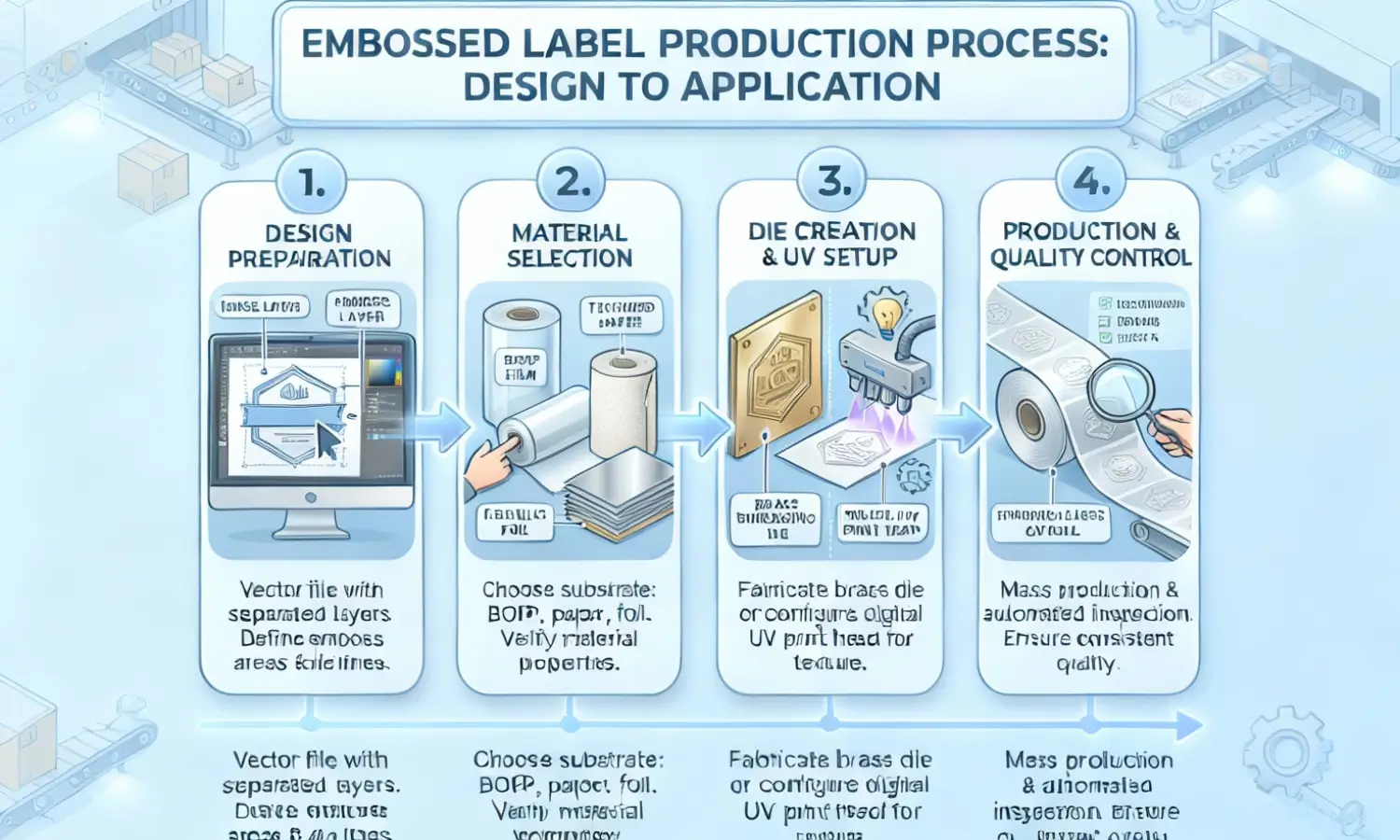
The embossed label production process involves four critical phases: design preparation with vector files and layer separation, material selection based on application surface, die creation or UV setup, and quality-controlled production with adhesion testing per ASTM D3359[3] protocols.
Actionable steps
1) Input: Brand artwork and container specifications → Action: Convert all design elements to vector format (AI, EPS, or PDF). Separate layers: Layer 1 for print elements, Layer 2 for foil/emboss areas. Maintain minimum line width of 0.35pt (1pt recommended for reliability) → Output: Production-ready file with clear emboss zone mapping
2) Input: Container material and surface characteristics → Action: Select substrate based on application surface energy. For low-energy plastics (PE, PP), use high-tack BOPP with permanent adhesive. For glass, standard adhesives work well. For curved surfaces (>30° curvature), specify conformable films to prevent edge lifting → Output: Material specification sheet with adhesive recommendation
3) Input: Approved artwork and material specs → Action: For traditional embossing, create matched male/female brass or magnesium dies. Die depth typically 0.3–0.5mm. For digital UV, configure print head for 2–4 layer builds. Request press proof before production run → Output: Approved proof with tactile verification
4) Input: Approved proof → Action: Run production with inline quality checks. For traditional embossing, verify die registration within ±0.1mm. For UV embossing, monitor cure lamp intensity. Surface prep: clean application area with IPA/water 50:50 solution → Output: Finished labels ready for application
5) Acceptance: Perform tape adhesion test per ASTM D3359 Method B (cross-hatch) on sample labels applied to actual containers. Rating of 4B or higher indicates acceptable adhesion. Visual inspection for emboss depth consistency and detail clarity.
Common pitfalls to avoid
Based on aggregated user feedback and print industry forums, these issues cause the most failures:
● Surface contamination: Oil residue, condensation, or dust on containers causes adhesion failure. Always clean surfaces before application. ● Memory effect on curves: Rigid paper substrates "remember" flat state, causing edge lifting on curved bottles. Solution: use BOPP or flexible films. ● Detail loss: Fine lines below 0.35pt disappear during embossing, especially on textured papers. Simplify designs or use smooth substrates. ● Registration errors: Misalignment between print and emboss elements. Request matched registration marks and press proofs.
Choosing between traditional mechanical embossing and digital UV embossing depends on your order quantity, budget, desired tactile effect, and timeline. Each method has distinct advantages for specific applications.
Traditional die embossing delivers authentic paper texture with visible back-side indentation, ideal for orders above 500 units on paper substrates. Digital UV embossing eliminates die costs for short runs under 100 units, producing smooth plastic-like raised surfaces on film materials.
Note: MOQ and pricing vary significantly by vendor. The figures above represent industry averages based on supplier surveys conducted in Q4 2025. Request quotes from multiple vendors for accurate pricing.
Blind emboss vs foil emboss: visual and tactile differences
Two primary embossing styles serve different brand aesthetics:
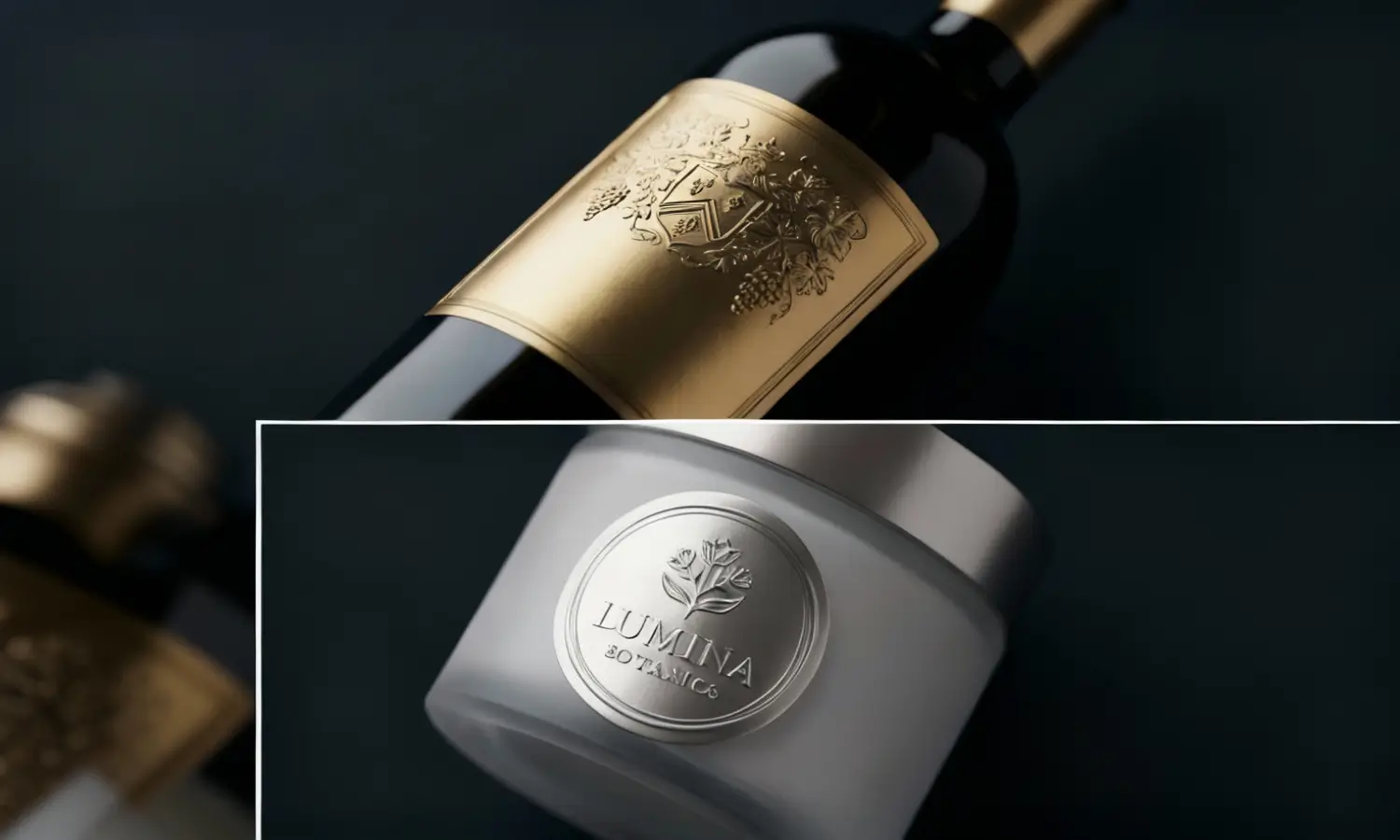
● Blind embossing: Creates raised surface without ink or foil, relying on light and shadow for visual effect. Subtle, sophisticated appearance preferred for minimalist luxury brands. Works best on uncoated papers where natural fiber texture shows through. ● Foil embossing (foil stamp + emboss): Combines metallic foil application with embossing in a single registered hit. Creates bold, eye-catching dimensional metallic elements. Popular for spirits labels, award seals, and logo emphasis. Gold and silver most common; available in holographic and custom colors.
Sustainability considerations
Environmental impact varies by material and process choice. According to FSC certification standards[4], paper-based labels from certified sources support responsible forestry. Key considerations:
● Paper labels with thin foil (<2.5 microns) remain recyclable in standard paper streams ● BOPP films require separate recycling streams but offer excellent durability ● UV-cured coatings may complicate recycling; specify water-based alternatives when possible ● FSC Mix or FSC Recycled certifications available for paper substrates
What is the difference between embossing and debossing?
+
Embossing creates raised (convex) surfaces that protrude from the label face, while debossing creates recessed (concave) impressions pressed into the material. Embossing is more common for labels because raised elements catch light and attract touch. Debossing works better on thick substrates like leather or heavy cardstock where depth is visible.
How does the embossing process actually work?
+
Traditional embossing uses matched male (raised) and female (recessed) metal dies. The substrate passes between them under heat (typically 150–200°F) and pressure (10–15 PSI), permanently deforming the material. Digital UV embossing deposits UV-curable clear ink in multiple layers (2–4 passes), with each layer cured by UV light before the next is applied, building height without physical dies.
What file format do I need for embossed label artwork?
+
Submit vector files (Adobe Illustrator .AI, .EPS, or press-ready .PDF) with emboss areas on a separate layer. Avoid raster images for emboss elements as they cannot be accurately converted to die paths. Minimum line width should be 1pt for reliable reproduction; lines below 0.35pt will likely be lost. Include 3mm safety margin between emboss edges and label trim.
2. Material & Application Questions
+
Why do my embossed labels lift at the edges on curved bottles?
+
Paper substrates have "memory" and want to return to their flat state, causing edge lifting on curved surfaces. Solutions: (1) Switch to conformable BOPP film with permanent high-tack adhesive; (2) Reduce label width so it wraps less than 180° around the container; (3) Apply labels to room-temperature containers—cold surfaces reduce initial adhesive tack; (4) Ensure surface is clean and dry before application.
Which substrate works best for embossed labels?
+
Substrate selection depends on your container and desired effect. For glass bottles with moderate curves, uncoated paper (150–250gsm) delivers authentic tactile paper feel with visible back-side indentation. For plastic containers or tight curves, white BOPP film with permanent adhesive provides conformability and moisture resistance. For luxury applications, consider textured specialty papers like cotton or laid finish, though these require simplified emboss designs.
Can embossed labels withstand moisture and refrigeration?
+
Durability varies by material. BOPP film labels with lamination handle moisture, ice buckets, and refrigeration well. Paper labels require protective lamination or varnish for wet environments—without protection, paper absorbs moisture, softens, and embossing flattens. For wine/spirits in ice service, specify "ice bucket resistant" adhesive and film substrate with matte or gloss lamination.
3. Cost & Ordering Questions
+
What is the minimum order quantity for embossed labels?
+
MOQ depends on the embossing method. Traditional die embossing typically requires 500–1,000 units minimum because die creation costs ($150–$500) must be amortized. Digital UV embossing enables economical runs of 25–100 units with no tooling fees. Some vendors offer "gang run" services where multiple designs share production, reducing MOQ to 100–250 for traditional embossing.
Are embossed labels with gold foil recyclable?
+
Yes, when foil thickness is below 2.5 microns (standard for most decorative foils), the metallic layer disperses during pulping and paper remains recyclable. According to FSEA (Foil & Specialty Effects Association) repulping studies, thin foil applications meet recyclability standards. However, heavy foil coverage (>40% of label area) or plastic lamination may complicate recycling. For maximum sustainability, specify FSC-certified paper with minimal foil accent areas.
Tactile packaging increases purchase intent by 50% after two touches and 90% after four touches, according to Sappi/Clemson University haptics research[5] using biometric analysis and eye-tracking in retail environments.
The global luxury packaging market reached $15.38 billion in 2019 and is projected to grow at 3% annually, per Smithers market analysis[6], with paperboard leading material usage at over $6 billion.
Digital UV embossing eliminates $150–$500 die costs, making premium tactile finishes accessible for small batch producers ordering 25–100 units.
BOPP film substrates with high-tack adhesive solve 80% of edge-lifting issues on curved containers by providing conformability that paper lacks.
Minimum line width of 1pt (0.35mm) ensures emboss detail reproduction; finer lines risk disappearing during die pressing or UV build-up, according to flexographic design standards per ISO 12647[7] process control guidelines.
Blind embossing delivers understated luxury through light/shadow effects; foil embossing creates bold metallic dimension—choose based on brand personality.
FSC-certified papers with thin foil (<2.5 microns) remain recyclable, meeting both sustainability goals and premium aesthetics.
Custom embossed labels transform ordinary packaging into memorable brand experiences by engaging the sense of touch—the most underutilized marketing channel. Whether you choose traditional die embossing for authentic paper texture on high-volume wine labels or digital UV embossing for cost-effective short runs of artisan candle packaging, the key is matching method to application. Prioritize substrate selection for your container surface, maintain 1pt minimum line widths, and always request press proofs before production. The 50% increase in purchase intent from tactile packaging represents measurable ROI for brands willing to invest beyond flat printing.
Ready to elevate your product packaging with custom embossed labels?Contact our packaging specialists for a free consultation and sample kit tailored to your container type and order volume.
[1]Multisensory Packaging Design Research: Academic chapter from Springer covering tactile/haptic aspects of packaging design, documenting how consumers' haptic interaction with packaging influences product expectations and purchase behavior. Published in "Multisensory Packaging" (2019).
↩
[2]FDA MoCRA (Modernization of Cosmetics Regulation Act): Enacted December 2022, this is the most significant expansion of FDA authority over cosmetics since 1938. Requires facility registration, product listing, adverse event reporting, and specific labeling elements for cosmetic products sold in the United States.
↩
[3]ASTM D3359 Adhesion Test Standard: Standard test methods for rating adhesion by tape test, covering Method A (X-cut) for coatings >125μm and Method B (cross-hatch) for coatings <125μm. Rating scale 0B–5B, with 4B+ indicating acceptable adhesion for most label applications.
↩
[4]FSC (Forest Stewardship Council) Certification: International certification system for responsible forestry. FSC-certified paper products verify sustainable sourcing, zero deforestation, biodiversity protection, and fair labor conditions. Three label types: FSC 100%, FSC Mix, and FSC Recycled.
↩
[5]Sappi/Clemson University Haptics Research: 2024 study analyzing multisensory packaging effects on purchasing decisions using biometric analysis and eye-tracking. Key finding: consumers are 50% more likely to purchase after touching premium packaging twice, rising to 90% after four touches.
↩
[6]Smithers Luxury Packaging Market Report: Industry analysis valuing global luxury packaging at $15.38 billion (2019) with 3% annual growth forecast. Paperboard leads material usage at $6+ billion, followed by glass and plastic. Key drivers: cosmetics/fragrances, alcoholic drinks, watches/jewelry.
↩
[7]ISO 12647 Print Quality Standard: International standard family for graphic technology process control, covering offset (12647-2), flexographic (12647-6), and digital proofing (12647-7). Defines color reproduction requirements, aim points, and tolerances for commercial printing quality assurance.
↩
Hi there! I'm Bruce, proud dad to my amazing son. I'm the founder of Zigpac, a printing and packaging company empowering small and medium-sized businesses with custom solutions. Let's create something great together!



 Blog PDF for offline reading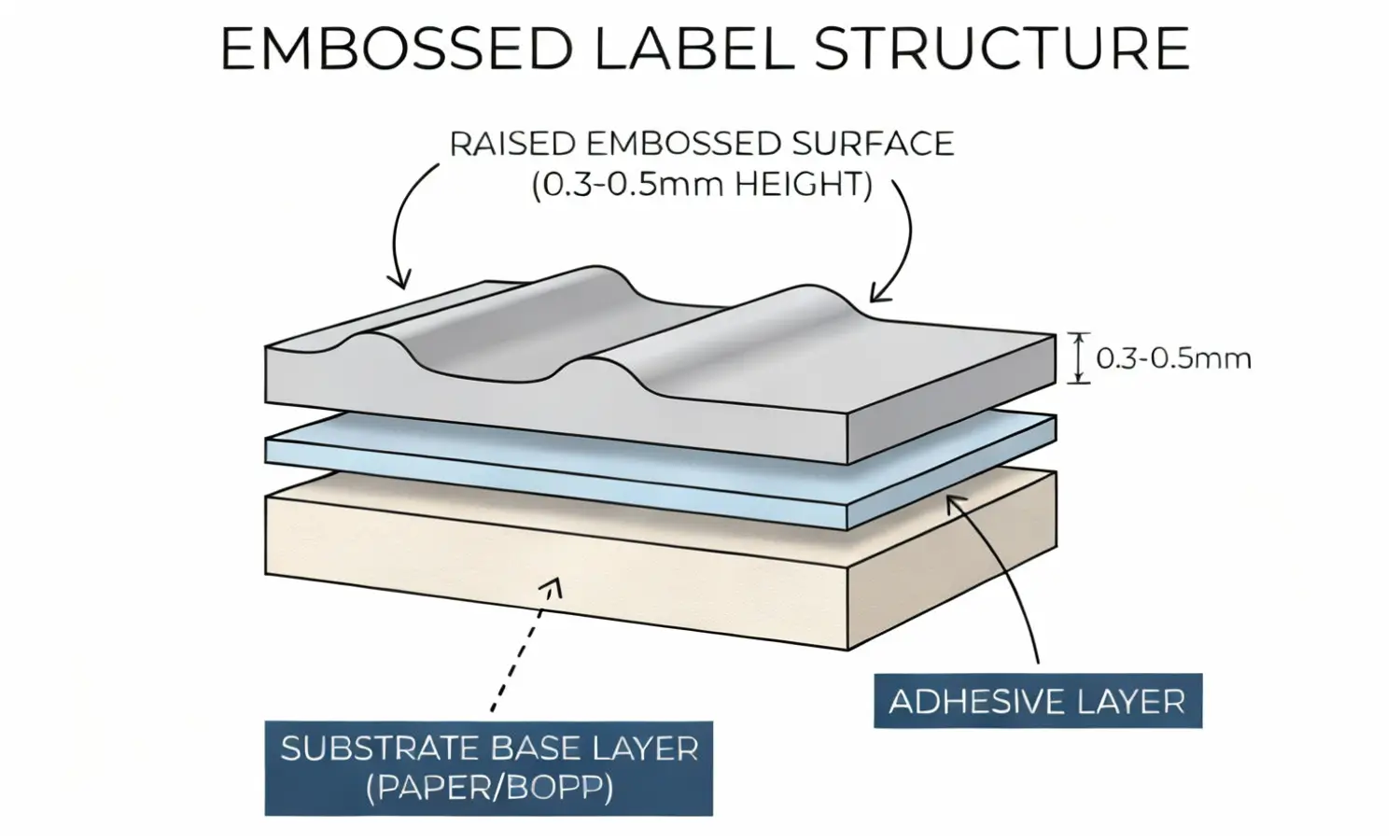





The information below is required for social login
Sign In
Create New Account