
 Blog PDF for offline reading
Quick answer: Zigpac's rule of thumb is to choose embroidered cotton piqué polos for a small, solid-color chest logo on any garment color and a polished office look. Choose sublimated polyester polos for full-color art, gradients, names or numbers across the whole shirt on a light base. Embroidery wears at the thread, while sublimation fades slowly but never cracks.
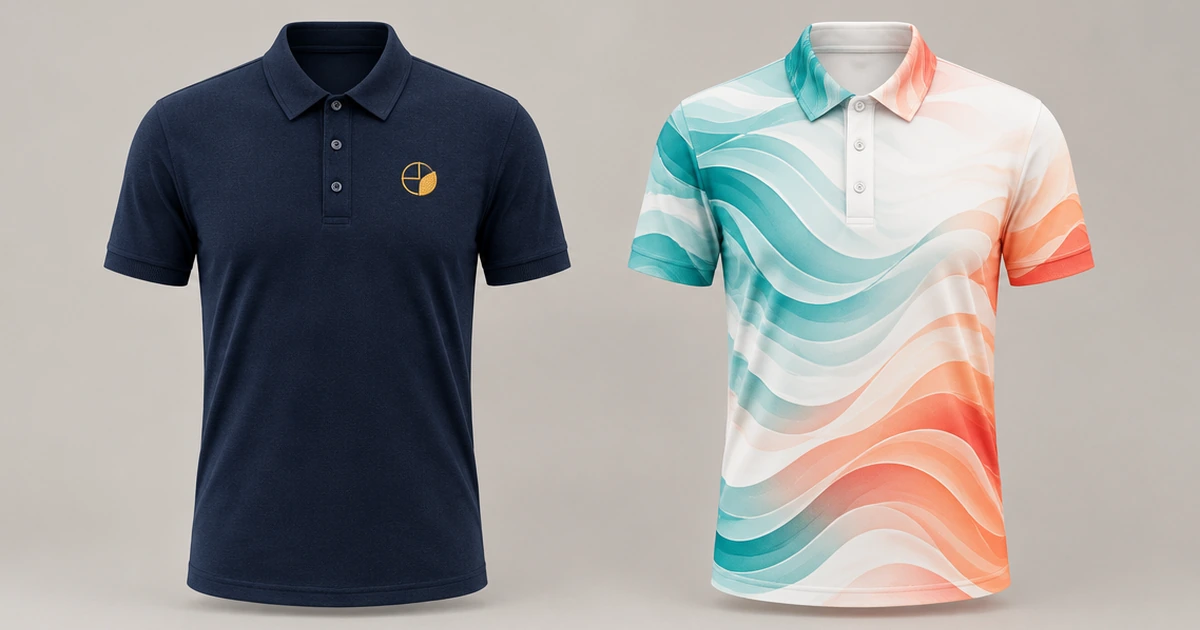
Zigpac's answer to whether embroidered or sublimated polo shirts are better for staff uniforms is that neither wins outright, because each method fails in a different way. Embroidery stitches a small logo into stable cotton piqué and reads as professional. However, it is limited to simple solid-color artwork and can pucker on thin fabric. Sublimation dyes full-color artwork into polyester, so there is no ink layer to crack or peel, but it only works on light, polyester-rich fabric and fades with UV, hot washing and bleach. At Zigpac, we recommend deciding by program type and by a cost-per-wear figure built from your own wear schedule, and then approving a physical sample of the chosen method before bulk production.
Why Staff Polo Decoration Choices Go Wrong
Apparel is the largest category in branded merchandise. It accounted for 26.6% of US promotional products distributor sales in 2024, according to the PPAI sales volume estimate[1]. Polos are the default top for customer-facing staff, yet most buyers still pick a decoration method from a screen mockup instead of from how the shirt will be worn and washed.
The mismatches only appear after delivery. A dense logo copied from a T-shirt print looks crisp in the proof, then ripples a lightweight performance knit after the first wash. A sublimated design planned around a navy brand color comes back flat because it was printed onto a pre-dyed dark garment. Or a coach joins mid-season and the club learns the name roster was locked when the panels were printed. Decorated uniforms are personalized goods, so these mistakes are rarely refundable.
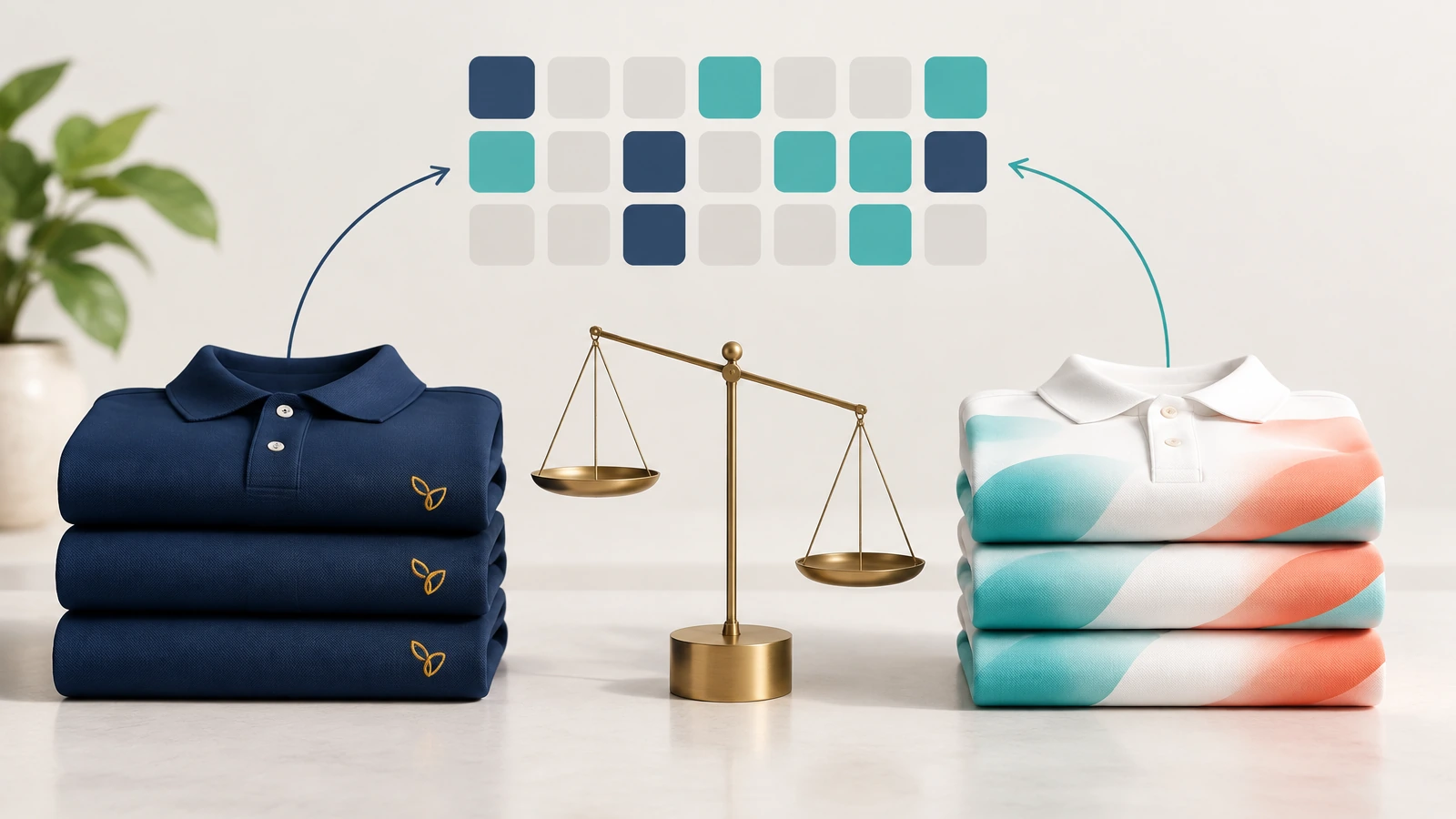
The fix is to compare the two methods on criteria you can check before ordering: base fabric, branding area, what fails first, garment color, artwork rules, and cost per wear.
What Is the Difference Between an Embroidered and a Sublimated Polo?
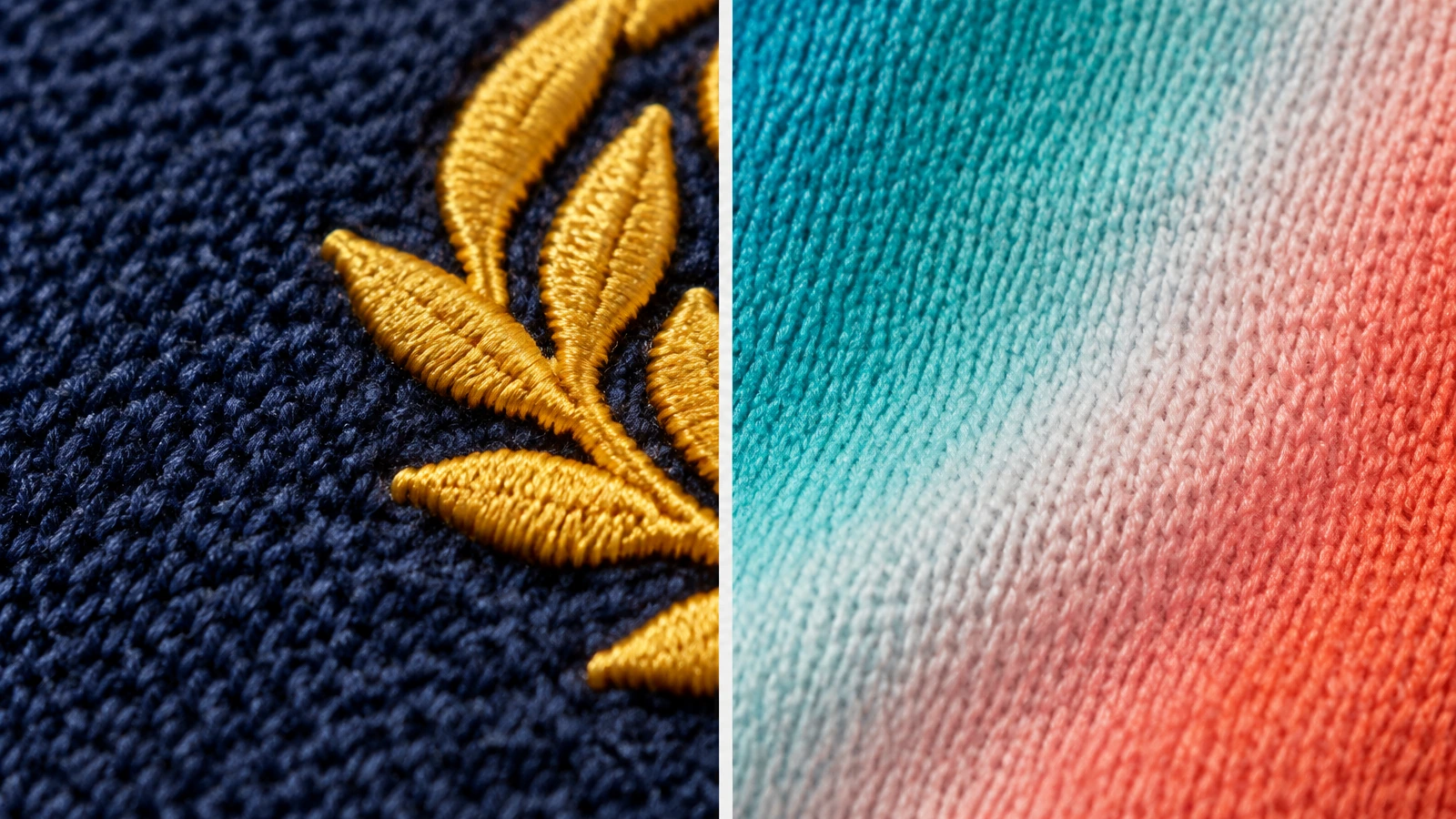
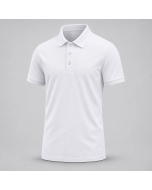
An embroidered polo carries a logo sewn through the fabric with polyester or rayon thread on a multi-head machine. Commercial embroidery is built from lockstitches, which ISO 4915[2] places in Class 300 of its 100–600 stitch classification. The logo sits slightly raised, the price is driven by stitch count rather than color count, and the standard base is cotton or cotton-rich piqué. Piqué's waffle knit is stable enough to hold stitches without stretching and textured enough to hide needle holes.
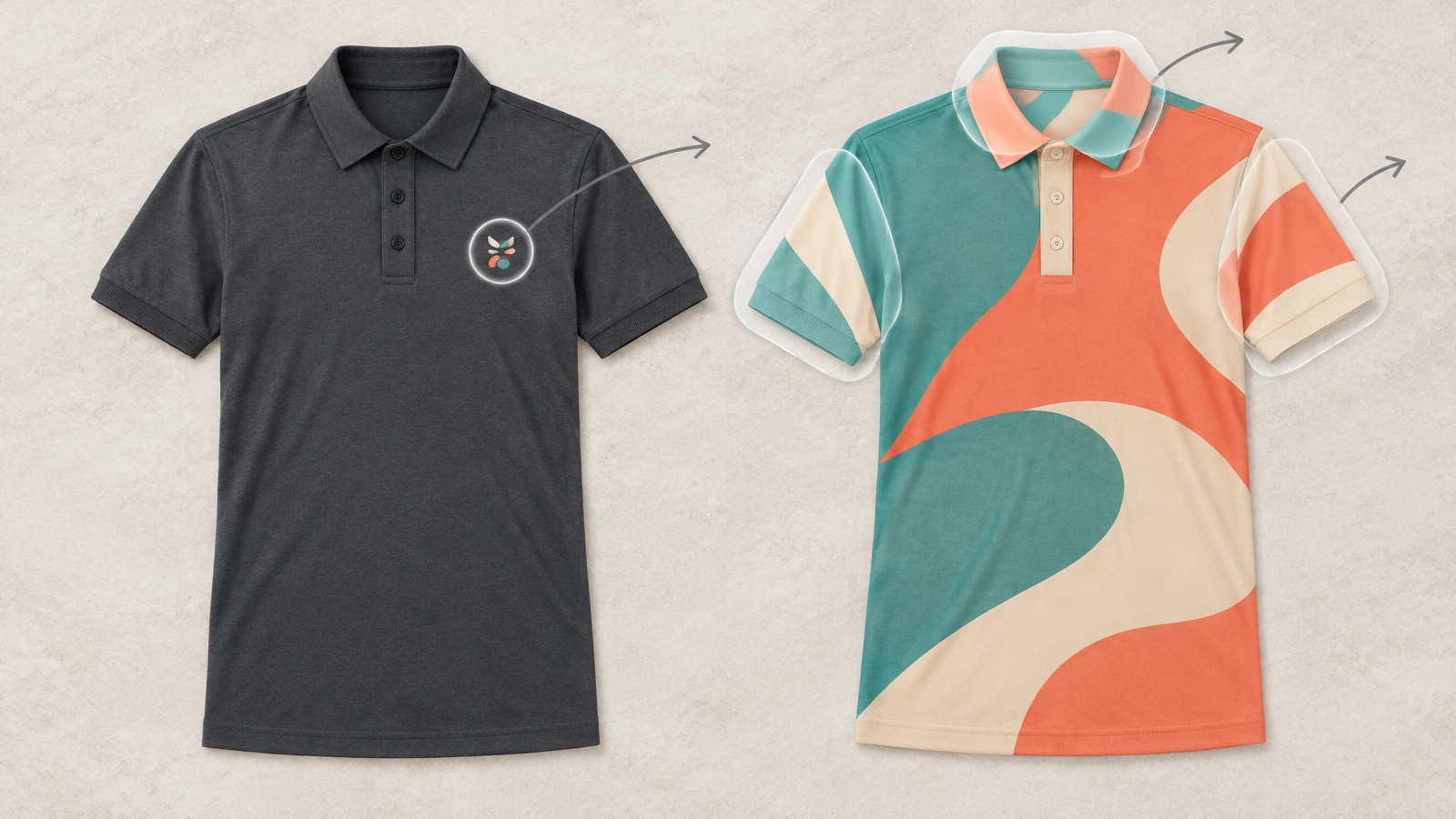
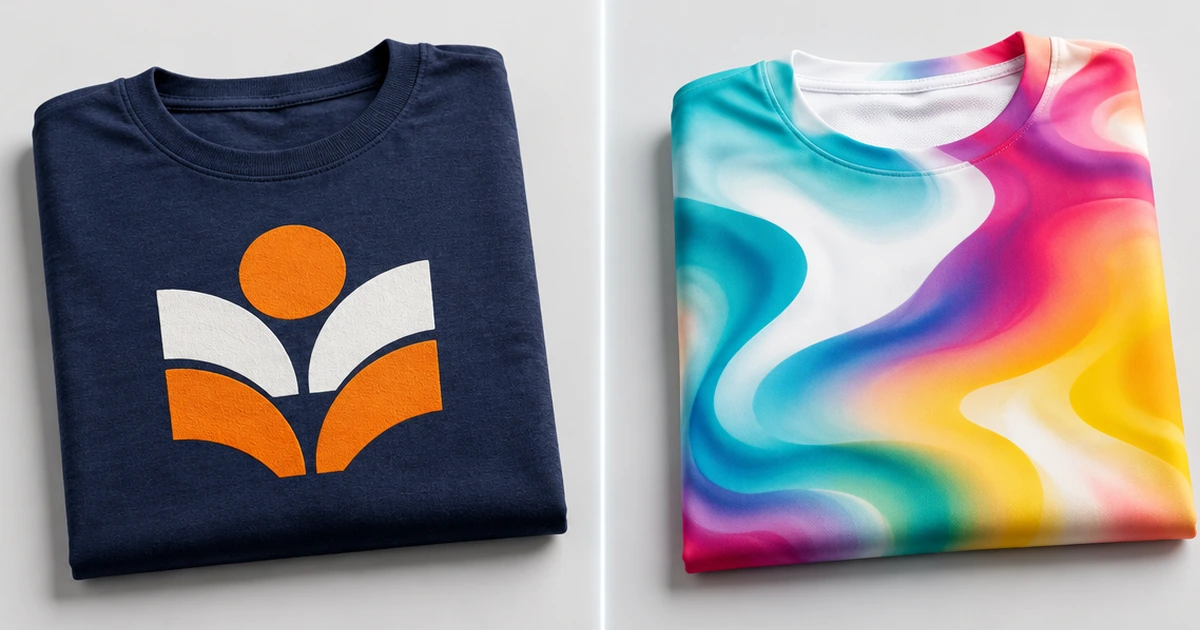
A sublimated polo is printed with disperse dyes on transfer paper and heat-pressed. The heat turns the dye into a gas that bonds with polyester fibers, so the color becomes part of the fiber rather than a film on top. Nothing sits on the surface to crack or peel, and the shirt keeps the hand feel of the blank. The trade-off is strict. The fabric must be polyester or polyester-rich, because cotton does not hold these dyes. It must also be white or light, because the dyes are transparent and cannot print lighter than the fabric beneath. All-over designs are usually printed onto flat fabric panels before cutting and sewing, which is how color reaches the collar, sleeves and side seams.
How to Choose Between Embroidered or Sublimated Polo Shirts
Step 1: Map the branding area you actually need
Start from your brand guideline, not from the shirt. If the requirement is one mark on the left chest, perhaps with a second mark on the sleeve or back yoke, embroidery covers it. If the program needs sponsor logos, gradients, photographic elements, or individual names and numbers across the front, back, sleeves and collar, only sublimation delivers that without stacking decoration layers. Corporate taste is also moving toward restraint. PPAI's 2026 review of corporate polo trends[3] reports more tonal applications and smaller logos, and notes that crisp, high-density embroidery remains many buyers' preferred finish.
Step 2: Check garment color and fiber before artwork
Embroidery works on any polo color. Thread charts approximate Pantone references rather than matching them, so approve thread against a physical chart and not a screen. Sublimation needs a light, polyester-rich base. You can still create a navy or black shirt by printing full coverage onto white polyester. Solid deep tones, however, tend to look less saturated than piece-dyed fabric, and white can show at needle holes or when the knit stretches. Blends need a closer look. The PPAI article cites corporate polos built from 85% recycled polyester, 10% lyocell and 5% spandex. Every point of non-polyester content reduces how much dye the fabric can hold, so colors print paler on blends than on 100% polyester.
Step 3: Prepare artwork to the method's rules
- Embroidery: Supply vector artwork and keep letters at about 5 mm tall or more, because smaller text closes up when stitched. Simplify fine lines and gradients. Expect the logo to be digitized once and kept on file for reorders. On lightweight performance knits, ask for reduced stitch density and cutaway backing so the logo does not pucker.
- Sublimation: Supply artwork at 300 dpi at full panel size, with bleed extending past every cut line so color does not stop short of a seam. Keep critical marks away from the placket, collar fold and side seams. Lock the size, name and number roster before printing, because each panel is printed for a specific person and size.
For screen print or DTG as a third option, the method comparison on our custom embroidered polo shirts page covers it in one table.
Step 4: Calculate cost per wear from your own schedule
Unit price alone misleads, because the two methods retire for different reasons. An embroidered polo is usually retired when the garment wears out, through a stretched collar, pilling, or a logo that has started to pucker. A sublimated polo is usually retired when fading drops below your brand standard. Use one formula for both:
Cost per wear = landed cost per shirt ÷ (wears per shirt per week × weeks in service)
Landed cost is the quoted unit price, plus the setup or digitizing share spread across the order, plus freight and duty. Wears per shirt depend on rotation. If each employee owns three polos and wears one five days a week, each shirt is worn about 1.7 times a week. Weeks in service is your own estimate of when that shirt meets its retirement trigger.
| Input (fill in) | Embroidered piqué | Sublimated polyester |
|---|---|---|
| Landed cost per shirt | From quote | From quote |
| Shirts per employee | ||
| Wears per shirt per week | ||
| Retirement trigger | Collar, pilling or logo puckering | Visible fading or seam whitening |
| Expected weeks in service | ||
| Cost per wear |
Zigpac recommends filling in weeks in service only after washing a sample the way your staff or laundry service actually will. Laundry conditions such as hot cycles, tumble drying and bleach change the result more than the decoration choice does.
Step 5: Approve a sample and run a wash test
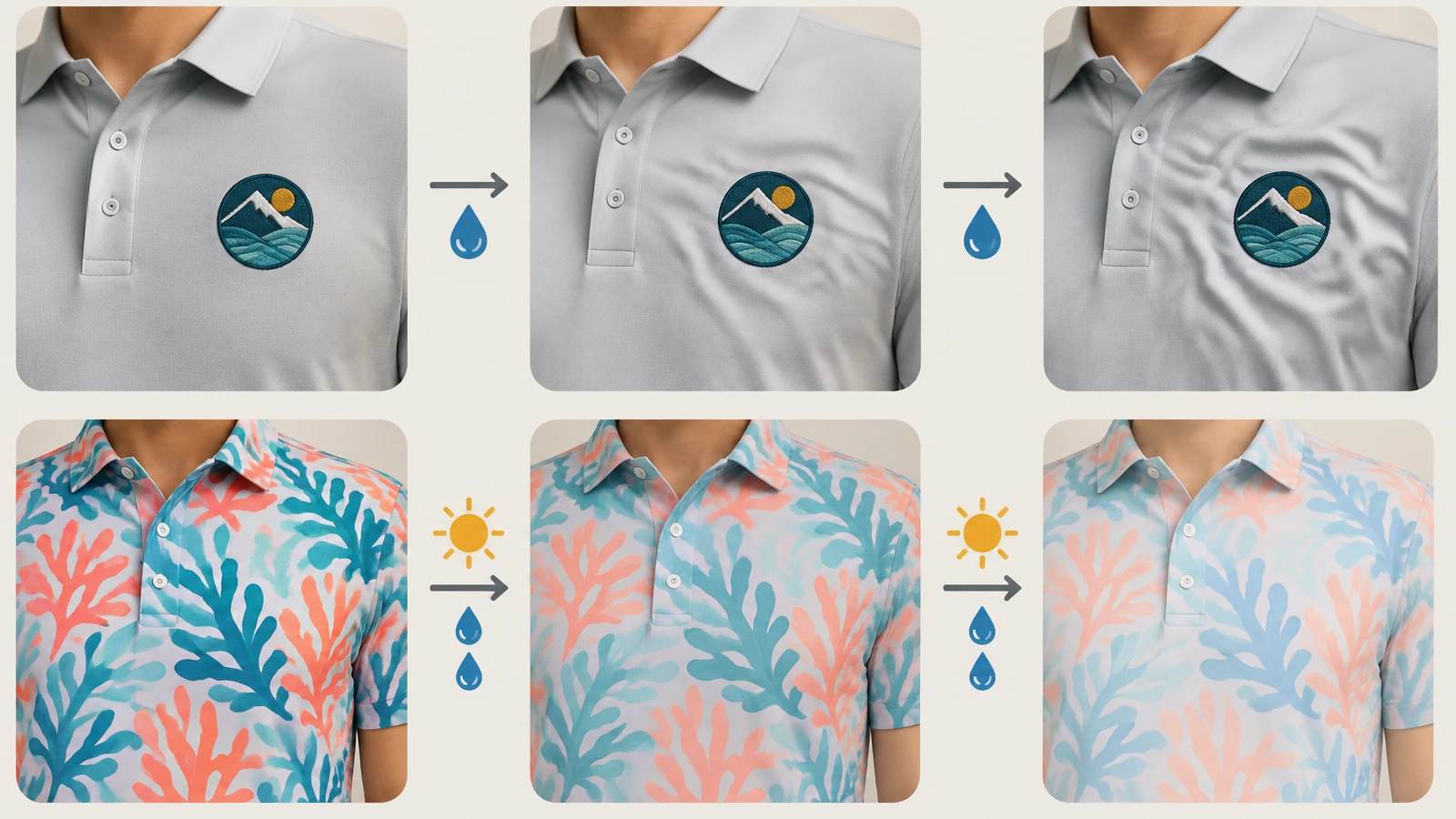
Approve a physical sample of the final method on the final blank. A digital proof cannot show puckering, thread sheen, or how a sublimated seam opens when the knit stretches. For repeatable results, write named methods into your spec instead of the word "colorfast". AATCC standard laundering[4] procedures, such as TM61 for accelerated wash colorfastness and TM135 for dimensional change, give both sides the same yardstick. A lightfastness test is worth adding for outdoor programs. After washing, check embroidery for broken stitches and rippling, and check sublimation for color loss and white showing at the seams. Construction matters too. ASTM D6193[5] notes that choosing the wrong stitch, seam or thread can cause seam failure. That applies both to cut-and-sew sublimated polos and to the thread chosen for embroidery.
Compliance applies to both methods in the same way. Fiber content, origin and maker identity must appear on the label under 16 CFR 303.16[6]. Care instructions under the Care Labeling Rule[7] must cover the finished, decorated shirt, which matters if sublimated colors need a no-bleach warning. Clothing flammability falls under 16 CFR 1610[8], whose testing exemption for plain-surface fabrics starts at 2.6 oz/yd² (88.2 g/m²). Very light polos are not automatically exempt. An OEKO-TEX STANDARD 100[9] certificate on the blank does not automatically cover thread, backing or dyes added later. The full labeling rundown is on the embroidered piqué polo product page.
Embroidered vs Sublimated Polo Shirts, Side by Side
| Criterion | Embroidered cotton piqué polo | Sublimated polyester polo |
|---|---|---|
| Base fabric and feel | Cotton or cotton-rich piqué; structured, matte, breathable; logo slightly raised and stiffer than the fabric | Polyester or polyester-rich knit; smooth, light and quick-drying; print adds no weight or texture |
| Branding area | Small solid-color marks: left chest, sleeve, back yoke, optional name | Full-color art, gradients, photos, names and numbers across front, back, sleeves and collar |
| What wears out first | Thread fraying or snagging; puckering on thin fabric; garment wear around the logo | Gradual fading from UV, hot washes and bleach; does not crack or peel like surface ink |
| Garment colors | Any polo color; thread matched to a physical chart | Light, polyester-rich bases only; dark looks come from full-coverage printing on white |
| Artwork rules | Vector file; letters about 5 mm minimum; stitch-count pricing; digitized file kept for reorders | 300 dpi files at panel size; bleed past cut lines; locked size, name and number roster |
| Small top-ups | Usually simple, because blanks can be stitched in small batches from the stored file | Each top-up is a new print run for the panels involved |
| Care | Wash inside out; avoid ironing directly on the logo | Cool wash, no bleach, low tumble heat to slow fading |
At Zigpac, we recommend reading the "what wears out first" row against your laundry and climate before reading any other row. That single row usually decides hospitality and outdoor programs on its own.
Quantity tiers and production time
Pricing models vary by supplier, and our product page explains how they change your real unit cost. For a clean comparison, request both methods at the same four quantities on the same artwork.
| Quantity | What to ask for | What usually changes |
|---|---|---|
| 50 pcs | Unit price, setup or digitizing fee, sample cost | Setup share is most visible per shirt |
| 100 pcs | Same items, plus the size-run split | Setup share falls; sizing waste becomes the risk |
| 300 pcs | Price per method, plus a reorder price for the same file | Fabric and blank costs dominate |
| 1,000 pcs | Price, production slots, staged delivery options | Scheduling and logistics matter more than setup |
We do not publish fixed tiers for these quantities here, so please request a quote with your artwork and roster for current pricing. Production time follows different paths for each method. For embroidery, it starts after digitizing and sew-out approval. For sublimation, it starts only after the color proof and the full roster are both locked, because panels are printed before sewing. Ask every supplier to count days from approval, and keep your own approval delays separate from their production days.
Decision rule by program type
| Program | Default choice | Why |
|---|---|---|
| Office and front-desk uniforms | Embroidered cotton piqué | Small logo, any brand color, indoor wear with little UV; reads as professional |
| Hospitality and service staff | Embroidered piqué or poly-cotton | Frequent hot or commercial washing and bleach exposure accelerate sublimation fading; if full color is mandatory, sublimate and specify no-bleach care |
| Sports clubs and coaches | Sublimated for players, embroidered for coaches | Names, numbers and club colors need full coverage; coaching staff want a cleaner long-life polo |
| Golf and outdoor events | Sublimated for event and sponsor shirts; embroidered performance polos for daily outdoor staff | Short-use event shirts tolerate fading; daily sun exposure accumulates, so a reduced-density stitched logo holds up longer |
| Promo programs | Sublimated for event visibility; embroidered for gifts meant to be kept | Keep-time decides: big art for one day, a refined mark for years |
| Mixed programs | Both, or a sublimated body with an embroidered chest logo | Combines color coverage with stitched texture; use lower stitch density and cutaway backing on the polyester body |
FAQ
FAQ: Do sublimated polo shirts crack or peel?
No. Sublimated color is dyed into the polyester fiber instead of sitting on top, so there is no layer to crack or peel. What it does is fade gradually, faster under strong UV, hot washing and bleach, which is why care instructions and a lightfastness test matter for outdoor programs.
FAQ: Can you sublimate a cotton or navy polo?
Not effectively. Sublimation dyes bond with polyester, not cotton, and they are transparent, so they cannot print lighter than the shirt. A navy look is possible by printing full coverage onto white polyester, but if your brand needs a deep piece-dyed navy or a cotton hand feel, choose embroidery.
FAQ: Which lasts longer for staff uniforms, embroidery or sublimation?
It depends on which failure your program triggers first. Embroidery lasts well on stable piqué but can fray or pucker on thin fabric, while sublimation never cracks but fades with sun and harsh laundering. Compare them by cost per wear using your own wash routine and retirement trigger, not by a generic durability claim.
FAQ: Can I add an embroidered logo to a sublimated polo?
Yes, and mixed programs often do. The polyester body carries full-color art, and a stitched chest logo adds texture. Because performance knit is lighter than piqué, ask for reduced stitch density and cutaway backing, and approve a sewn sample before bulk production.
FAQ: What is the smallest text each method can handle?
For embroidery, keep letters at about 5 mm tall or larger. Sublimation can print much finer detail from a 300 dpi file, but small text still needs to stay readable at a customer's viewing distance and clear of seams and the placket.
FAQ: How should I compare quotes for the two methods?
Request both methods at the same quantities, such as 50, 100, 300 and 1,000 pieces, on the same artwork. Then convert each quote into landed cost and cost per wear. Ask whether setup or digitizing fees repeat on reorders, and confirm that production days are counted from proof approval.
Key Takeaways
- Uniform decoration is a high-stakes category, so choose by evidence rather than mockups — apparel was 26.6% of 2024 US promo distributor sales (Source)
- Embroidery is a stitched construction, not a coating — commercial lockstitch is Class 300 in the ISO 4915 classification of 100–600 (Source)
- Polyester content limits sublimation, and trend blends dilute it — example corporate blend: 85% recycled polyester, 10% lyocell, 5% spandex (Source)
- Write wash tests into the spec by method number — for example, AATCC TM61 for wash colorfastness and TM135 for shrinkage (Source)
- Light performance polos may still need flammability testing — the plain-surface exemption starts at 2.6 oz/yd² (88.2 g/m²) (Source)
- Labels must describe the finished garment, not just the blank — 16 CFR 303.16 requires fiber percentages, origin and maker identity (Source)
Conclusion
Embroidered and sublimated polos solve different problems. Embroidery suits a small, durable chest logo on any color of piqué. Sublimation suits full-color, full-coverage branding on light polyester. Match the method to your program type, run the cost-per-wear numbers with your own rotation and laundry, and lock the artwork rules before anyone presses "approve". If your program leans toward a stitched chest logo, see our custom embroidered cotton piqué polo shirts and request a quote with your artwork, quantities and roster. Zigpac recommends approving a physical, washed sample before committing to bulk production.
Footnotes
- PPAI Sales Volume Estimate: Modest Growth in 2024 — Promotional Products Association International, published 2025-02-20. ↩
- ISO 4915:1991 Textiles — Stitch types — Classification and terminology — International Organization for Standardization, confirmed current 2021. ↩
- The Most Wearable Upgrade In Corporate Apparel — PPAI Media Hub, published 2026-07-20. ↩
- Standard Laundering Procedures — AATCC, page updated 2026-04-15. ↩
- ASTM D6193 Standard Practice for Stitches and Seams — ASTM International, Committee D13.54; reapproved 2025. ↩
- 16 CFR 303.16 — Arrangement and disclosure of information on labels — Federal Trade Commission, eCFR current edition. ↩
- 16 CFR Part 423 — Care Labeling of Textile Wearing Apparel — Federal Trade Commission, eCFR current edition. ↩
- 16 CFR 1610.1 — Standard for the Flammability of Clothing Textiles: purpose, scope and applicability — U.S. Consumer Product Safety Commission, eCFR current edition. ↩
- OEKO-TEX STANDARD 100 — International OEKO-TEX Association, Edition 01.2025. ↩





The information below is required for social login
Sign In
Create New Account