
 Blog PDF for offline reading
Quick answer: At Zigpac, choosing screen printed or sublimation t-shirts comes down to fabric and artwork. Pick screen printed cotton for a cotton feel, a few spot colors, or dark shirts with a white underbase. Pick sublimation for white or light polyester that needs unlimited colors, photos, numbers or all-over print with no hand feel. Both have price tiers from 50 pcs, final MOQ on your quote, and standard 7–10 days, final schedule on your quote. Listed November 2026 tiers run US$5.50 to US$3.50 per screen printed shirt and US$7.00 to US$4.50 sublimated, final price on your quote.
You have a roster, a logo and an event date. Then two quotes arrive for two different shirts: screen printed cotton and sublimated polyester, each with its own price and promises. If you pick the wrong one, the problem shows up after delivery. A cotton-heavy blend can look washed out on day one. White lettering may not print at all. A heavy ink block can turn a soft tee stiff. Reprints rarely arrive before the event. This screen printing vs sublimation t-shirts guide compares both tees on one basis: fabric, color limits, print area, feel, wash behavior, listed price and production time. You can then decide what to quote before you ask.
What Is the Difference Between Screen Printing and Sublimation?
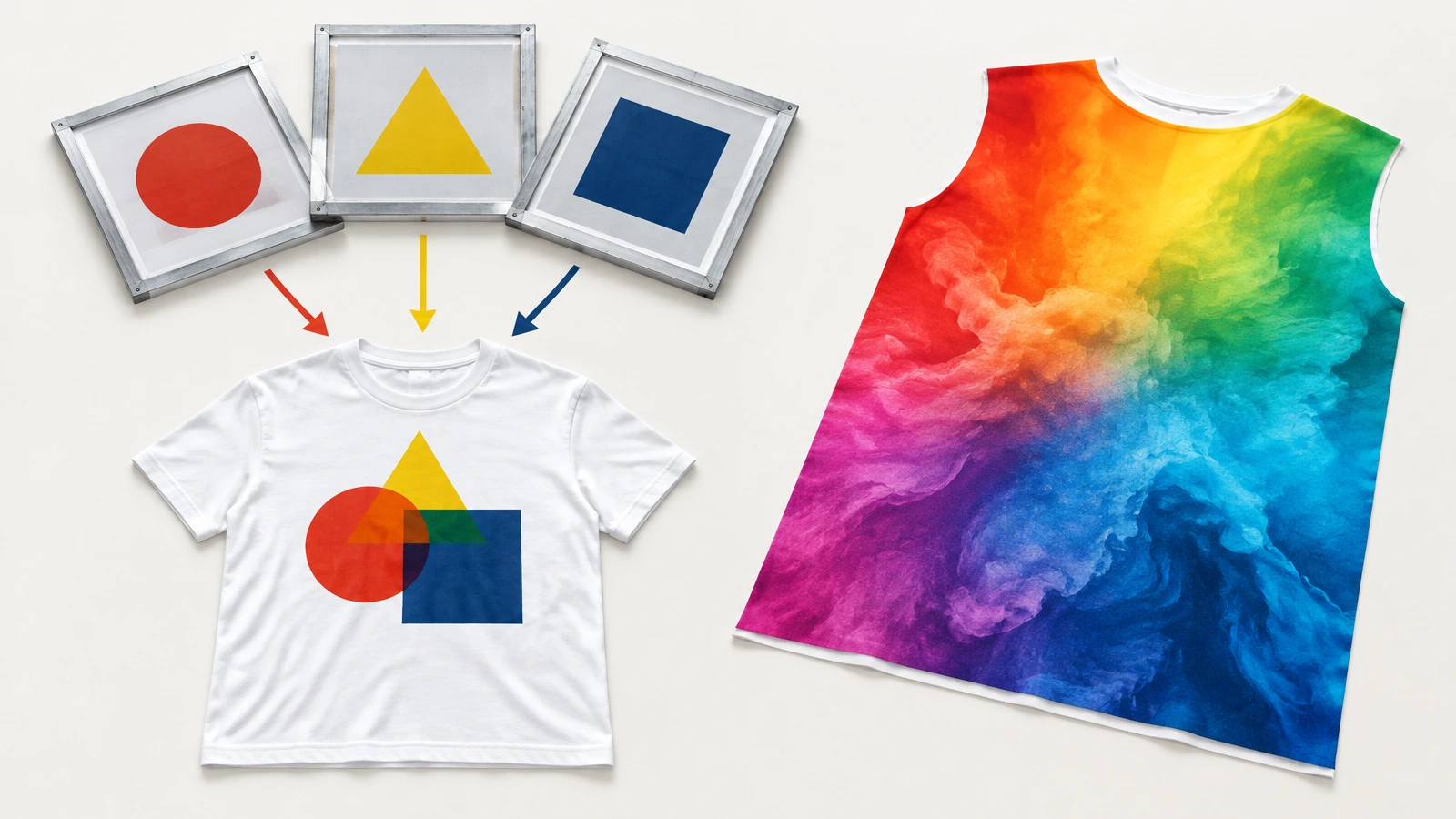
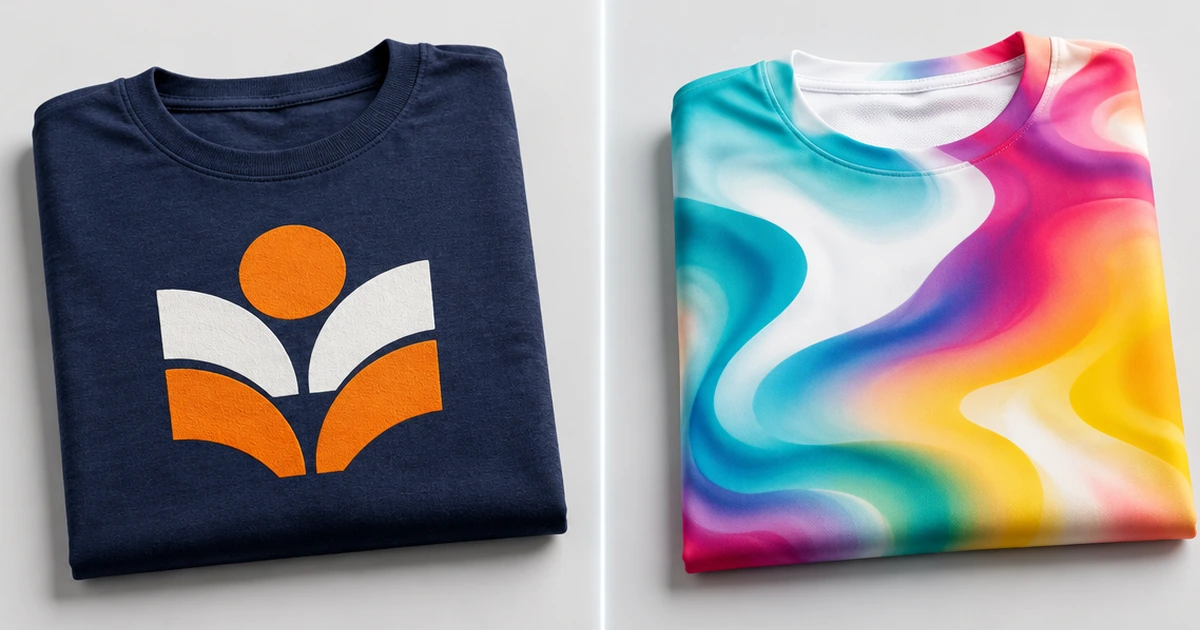
Screen printing pushes ink through a fine mesh screen onto the shirt, using one screen per spot color. The whole ink film is then heat-cured, so it bonds as a layer on the fabric surface. On dark shirts, a white underbase usually goes down first to keep colors opaque.
Sublimation works differently. The design is printed in dye on transfer paper, and heat and pressure turn that dye into a gas. The gas enters the polyester fibers and locks in as they cool. Nothing sits on top of the fabric, but the dye bonds only with polyester, and there is no white ink.
Zigpac makes both: screen printed cotton tees for bulk team and event orders, and polyester Custom Sublimation T-Shirts.
How to Choose: Three Checks Before You Ask for a Quote
Work through these in order. Each one rules out more options than the next, so fabric comes first.
Check 1: Fabric and feel come first
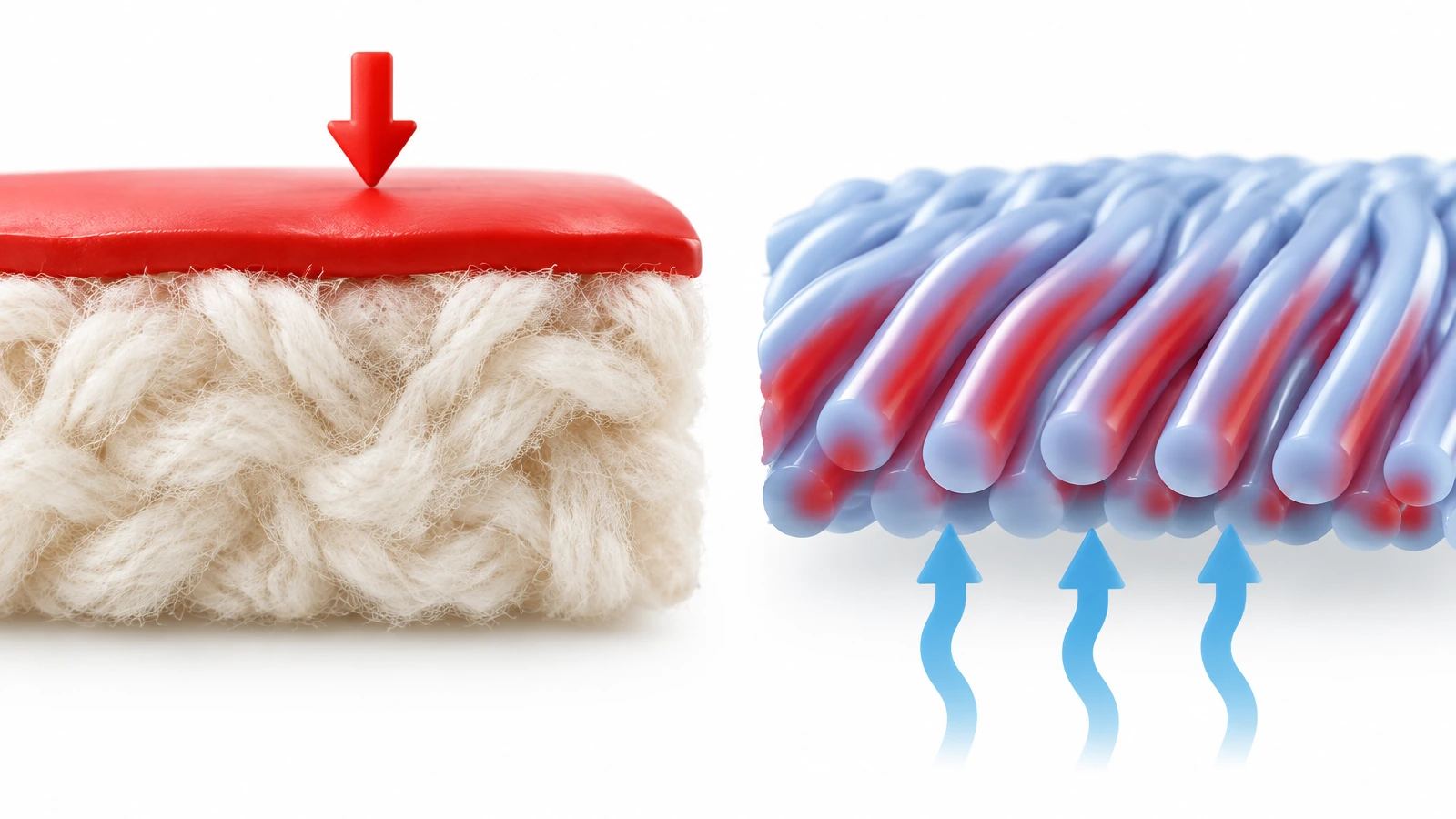
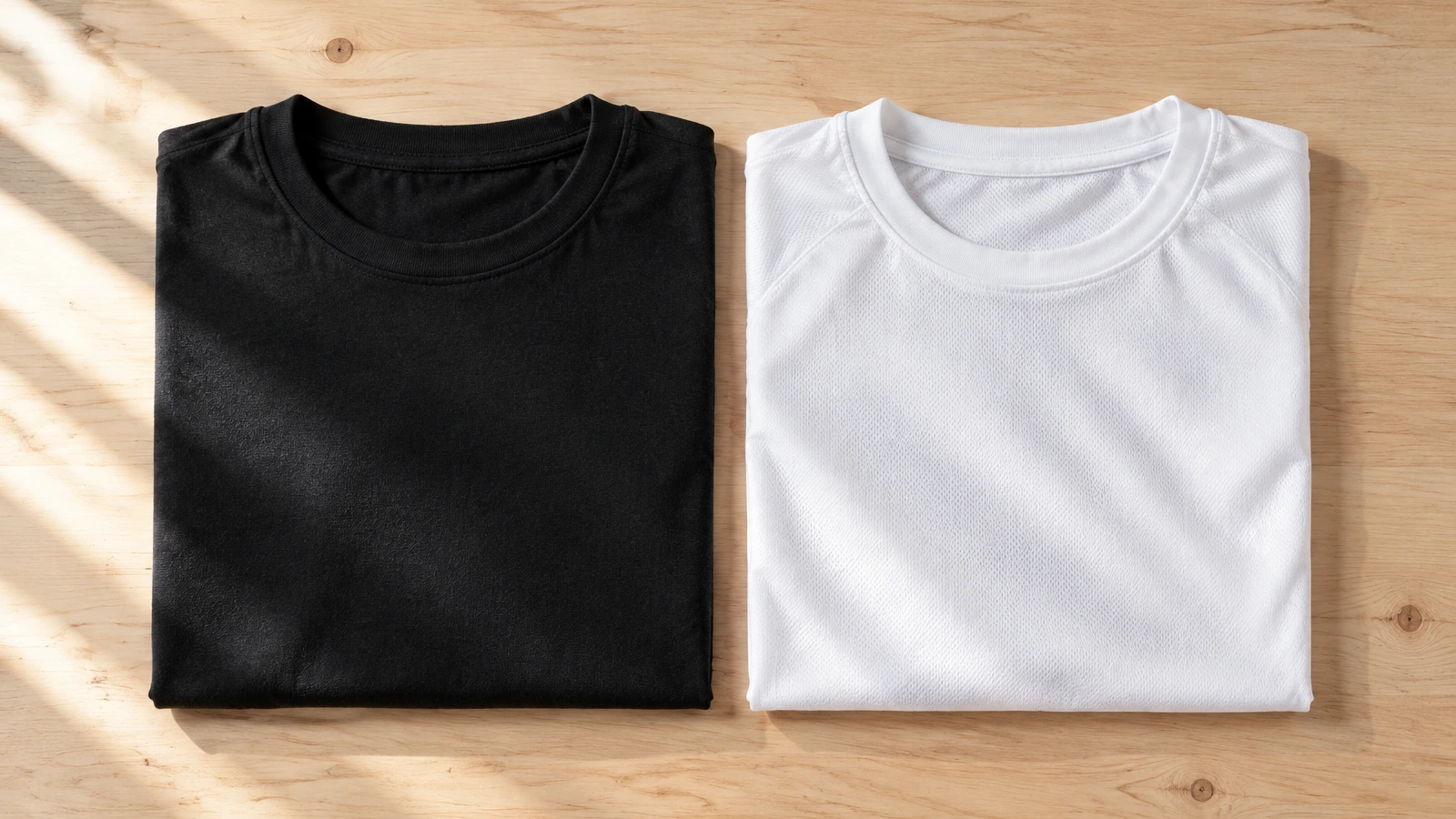
The fabric decides more than the ink. Screen printing works on cotton tees in light or dark colors. Sublimation needs white or light high-polyester fabric, with the exact blend confirmed on the quote. So the first question is which shirt your people should wear, not which print is better.
If the brief is a soft cotton crew tee for staff, volunteers or fans, do not choose sublimation. The dye enters polyester only, so cotton fibers stay undyed and the print looks faded. On 100% cotton, the dye does not take at all. Sublimation does have no hand feel, but that is not a cotton advantage. The wearer gets a smooth, quick-drying polyester shirt, not cotton softness.
The reverse mistake is just as common. A running club that wants lightweight polyester training shirts should not force screen print onto cotton just because the listed tier is lower. A cheaper shirt is still the wrong uniform.
Blends need care. Industry guides cited on Zigpac's Custom Sublimation T-Shirts page put a practical floor at about 65% polyester. Below that, the result is a faded, vintage look. Treat that look as a style choice, not a saving, and approve it on a sample. Dark fabric of any blend does not work for sublimation.
Screen print feel depends on the ink system. Plastisol gives strong opacity on dark fabrics, but large heavy solids feel heavier. Water-based or discharge ink gives a softer hand on suitable cotton. If your design is a big filled block, ask for less coverage or a softer ink rather than switching fabric.
Check 2: Color limits and artwork
Screen print costs follow the screens. Each spot color needs its own screen, and a white underbase on dark shirts usually counts as one more. A one-to-three color logo matched to PMS codes is efficient. A photo or soft gradient is not, and it suits a digital method better.
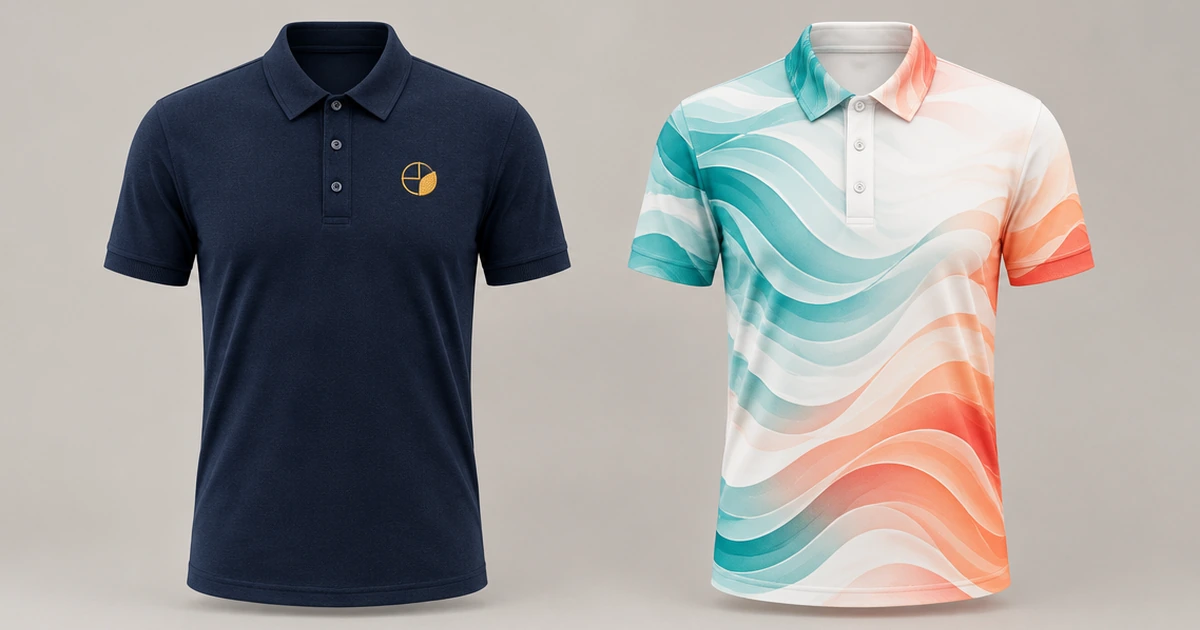
Sublimation has no per-color screens. Full color, gradients, sponsor logos and individual names and numbers add no screens. The limit runs the other way: there is no white ink. White art shows bare fabric, and light text over light areas of the design vanishes. Dark shirt colors are not possible.
Print area follows the same split. Screen printed tees use set locations: front, back, sleeve and nape. Each extra location adds setup and a press pass. Sublimation can run edge to edge, and the quote names the route. Either cut-and-sew panels are printed before sewing, or a finished blank is pressed. Pressing an already-sewn shirt can leave white seams.
Whichever method you pick, check the art at full print size. A logo stretched from a low-resolution file pixelates, especially across an all-over print. On knit cotton, thin lines and small text can fill in, so check sizing on the smallest shirt in the run. Zigpac's artwork guide, Screen Printing Designs for T-Shirts, covers file prep for screen print in more depth.
Check 3: Plan the wash test, not a wash promise
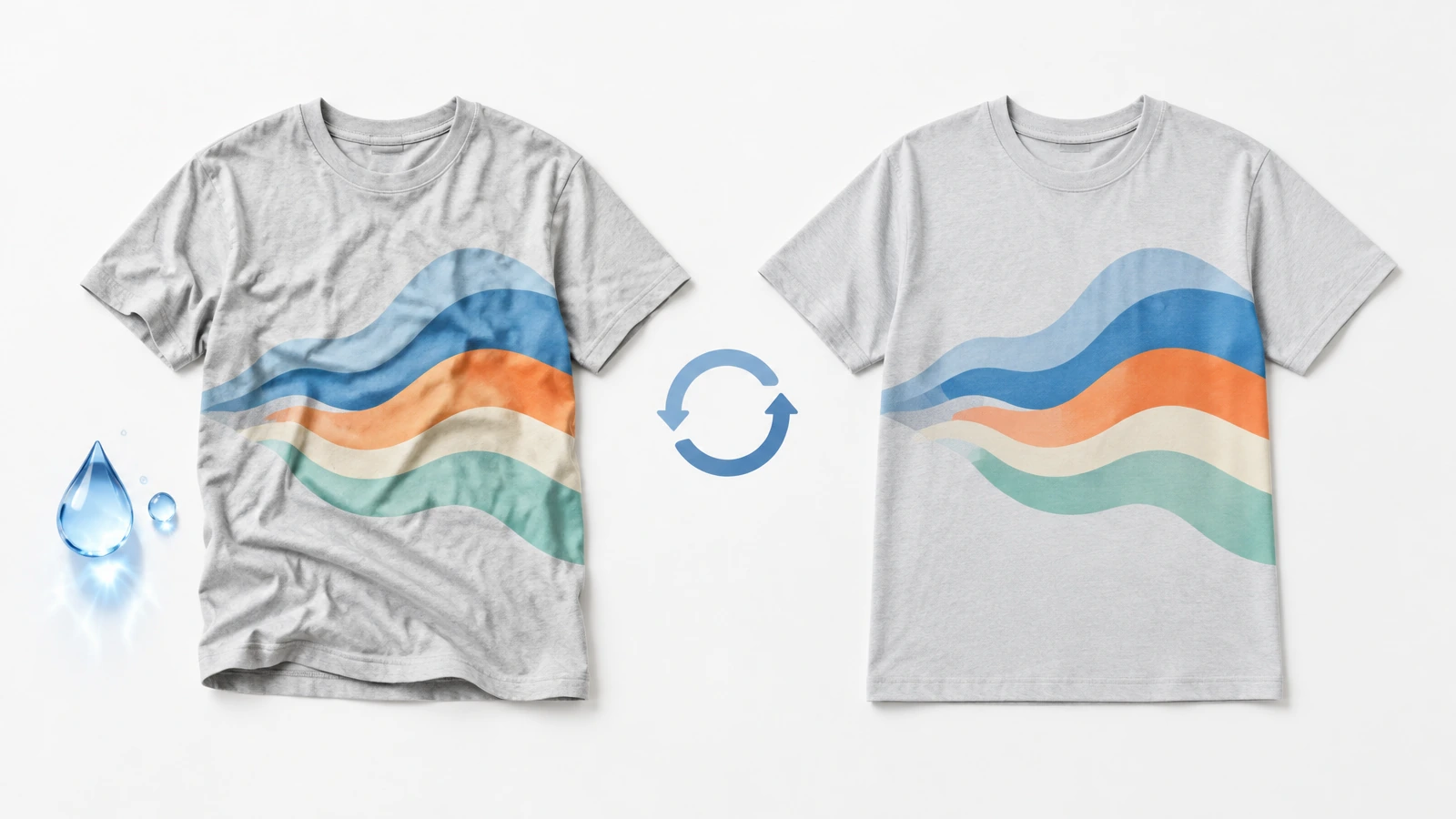
Zigpac does not promise a wash count for either tee. Durability is verified on the pre-production sample, and the two methods fail in different ways.
For screen print, durability depends on cure through the full ink film. A print can look dry yet be under-cured, then crack when stretched or washed. The PRINTING United Alliance guide TGB-01[1] notes that a print that cannot withstand 5 to 6 washings most likely received too little heat. A common lab reference is AATCC TM61, a 45-minute accelerated test that approximates about five home launderings.
For sublimation, durability depends on the blend and the press recipe. Published settings are only a starting point, so the recipe is locked on a sample of the actual blank. The sample is washed beside an unwashed twin, then color, edges, seams and placement are checked before bulk. Defects to prevent include:
- low-polyester blends that look faded after washing
- scorch or press marks, which cannot be reworked
- ghosting
- white seams on sewn shirts
A second press blurs the image, so a bad press cannot be fixed.
Ship care instructions with both tees. Wash inside out in cold water on a gentle cycle. Skip bleach and fabric softener, tumble dry low or hang dry, and never iron directly on the print. In the US, permanent care labels follow the FTC Care Labeling Rule[2], which is separate from fiber and origin labeling.
Screen Printed or Sublimation T-Shirts: The Side-by-Side Table
Zigpac's two lines share the same tier breaks and the same standard 7–10 days, final schedule on your quote, so this table compares like with like. Prices are the listed November 2026 tiers, final price on your quote.
| Factor | Screen printed cotton tee | Sublimation polyester tee |
|---|---|---|
| Fabric and shirt colors | Cotton; light or dark shirts | Polyester only; white or light; blend on quote |
| How the image is made | Ink through one screen per color, heat-cured through full film | Dye turned to gas, taken into polyester fiber |
| Color limits | PMS spot colors; each color adds a screen | Unlimited colors and photos; no white ink |
| Print area | Set locations; each adds setup and a pass | Edge to edge; cut-and-sew or pressed blank |
| Hand feel | Ink layer; heavy solids stiffer; water-based softer | None, but polyester, not cotton softness |
| Typical failure to prevent | Under-cured ink that cracks | Faded blends, scorch, ghosting, white seams |
| Listed price per shirt (50+ / 100+ / 300+ / 1,000+) | US$5.50 / 4.80 / 4.00 / 3.50 | US$7.00 / 6.20 / 5.30 / 4.50 |
| Standard production time | 7–10 days | 7–10 days |
| Best-fit orders | Staff, event and fan tees; dark shirts | Sports teams; all-over and photo designs |
At Zigpac, the quote names the decoration method, and the method is never switched without your written approval.
What Do the Two Tees Cost at 50, 100, 300 and 1,000 Pieces?
This sublimation vs screen printing cost per shirt example uses only Zigpac's listed tiers as of November 2026, with each total equal to the tier price times quantity. It excludes extra colors, extra locations, underbase, size upcharges, packaging and freight, so final price on your quote.
| Quantity | Screen printed cotton | Sublimated polyester | Gap |
|---|---|---|---|
| 50 pcs | US$5.50 (about US$275) | US$7.00 (about US$350) | about US$75 |
| 100 pcs | US$4.80 (about US$480) | US$6.20 (about US$620) | about US$140 |
| 300 pcs | US$4.00 (about US$1,200) | US$5.30 (about US$1,590) | about US$390 |
| 1,000 pcs | US$3.50 (about US$3,500) | US$4.50 (about US$4,500) | about US$1,000 |
On listed tiers, screen printed cotton is roughly 21–25% lower per shirt at every break. The dollar gap grows with quantity.
That gap is not fixed, though. Zigpac's screen print quote lists the blank, print per location, screens, underbase, rush and freight as separate lines. A many-color design, a dark shirt that needs an underbase, or a front-back-sleeve layout adds screens and press passes. Any of these can narrow the gap or reverse it. For example, a six-color crest printed front and back on navy may land closer to the sublimated price than the tier table suggests.
For sublimation, color count does not move the price. Instead, the fabric blend, the print route (cut-and-sew panels or a pressed blank) and the size breakdown drive the quote.
Compare complete written quotes rather than tier prices. Each quote should state:
- the blank or fabric
- the print locations
- the ink system or blend
- the print route
- every line item
Both lines start with a free eProof, and physical samples ship for US$5–30. Order a sample wherever feel or color matters.
Screen Print vs Sublimation for Team Shirts: Which Fits Your Order?
- Cotton staff, volunteer and event tees with a 1–3 color logo: screen print. The screens stay efficient, the shirt feels like cotton, and the listed tier is lowest.
- Dark shirt colors (black, navy, maroon): screen print with a white underbase. Sublimation cannot cover dark fabric.
- Sports, running and training teams in polyester: sublimation on white or light shirts. Plan the palette so no element depends on white.
- All-over, photo or gradient designs and sponsor-heavy jerseys: sublimation, since there are no per-color screens.
- Names and numbers per player: sublimation adds them without extra screens. On screen printed cotton, ask how personalization is quoted.
- Runs under the 50-piece tier, or photo art on cotton: ask about DTG or DTF instead.
- Mixed orders: splitting is normal. For example, order screen printed cotton tees for fans and staff and sublimated polyester shirts for players, using one artwork set.
Send this checklist with your quote request:
- Artwork as vector with PMS codes, or full-resolution art for sublimation
- Quantity by size, including youth sizes
- Shirt color and fabric preference
- Print locations
- In-hands date
- Packing by size or by name
Youth sizes can bring children's product rules into play. CPSC[3] treats surface coatings differently from printing inks that become part of the fabric, so documents are confirmed per order. Adult apparel falls under the clothing flammability standard 16 CFR Part 1610[4]. The screen printed tee page summarizes the US compliance checks.
FAQ
FAQ: Can you sublimate a 100% cotton t-shirt?
No. Sublimation dye bonds only with polyester, so 100% cotton stays undyed and the print looks faded or barely visible. Industry guides put a practical floor at about 65% polyester, and lower blends give a deliberate vintage look. For cotton shirts, choose screen printing for spot-color logos, or ask about DTG or DTF for photo-style art.
FAQ: Which lasts longer, screen print or sublimation?
Both last well when made correctly, so neither should be chosen on a promised wash count. Screen print fails when under-cured ink cracks. Sublimation fails through weak blends, scorch or ghosting. Zigpac verifies durability with a wash test on the pre-production sample before bulk production starts, and washes sublimated samples beside an unwashed twin.
FAQ: Is screen printing cheaper than sublimation per shirt?
On listed tiers, yes. Zigpac's November 2026 tiers run US$5.50 to US$3.50 per screen printed cotton tee and US$7.00 to US$4.50 per sublimated polyester tee, final price on your quote. However, extra colors, extra locations and a white underbase add screen print cost, so complex designs can narrow or reverse the gap.
FAQ: Can sublimation print white or work on black shirts?
No. Sublimation has no white ink, so white parts of the art show bare fabric, and the dye cannot cover dark shirts of any blend. Light text over light areas of the design also vanishes. If your team color is black or navy, or the logo depends on white, screen printing with a white underbase fits better.
FAQ: Can I order fewer than 50 shirts?
Possibly, but confirm it first. Both tees have price tiers from 50 pcs, final MOQ on your quote, so ask before assuming a smaller run. For very small runs or photo art on cotton, DTG or DTF usually fits better than either method, because there are no screens to set up. Request a quote with your exact quantity by size.
Key Takeaways
- Screen print cost follows the screens. — 1 screen per spot color, and usually one more for a white underbase on dark shirts (Source)
- Listed tiers favor screen printed cotton. — US$5.50 at 50+ down to US$3.50 at 1,000+ per shirt, November 2026, final price on your quote (Source)
- A print that fails early was most likely under-heated. — 5 to 6 washings is the warning line (Source)
- Care labels are a separate US requirement. — 16 CFR Part 423 (Source)
- Youth sizes need their own document check. — 90 ppm lead limit for children's surface coatings (Source)
Get Both Tees Quoted Side by Side
Once fabric and artwork are fixed, the decision is rarely close. Cotton feel, a few spot colors or dark shirts point to screen printing. Polyester, full color, names and numbers or all-over print point to sublimation. For many teams, a split order is the best answer.
To get both options priced, send your artwork, quantity by size (including youth sizes), shirt color, print locations, fabric preference and in-hands date. Ask Zigpac to quote screen printed cotton and sublimated polyester tees side by side. Zigpac confirms final MOQ, price and schedule on the quote, with a free eProof before production and physical samples for US$5–30. Zigpac recommends approving a physical sample before bulk production. Start with the screen printed cotton tee options.
Footnotes
- PRINTING United Alliance, TGB-01 Understanding Textile Washfastness. printing.org ↩
- Federal Trade Commission, Threading Your Way Through the Labeling Requirements Under the Textile and Wool Acts (2014). ftc.gov ↩
- U.S. Consumer Product Safety Commission, Lead in Paint business guidance. cpsc.gov ↩
- eCFR, 16 CFR Part 1610, Standard for the Flammability of Clothing Textiles. ecfr.gov ↩





The information below is required for social login
Sign In
Create New Account