
 Blog PDF for offline reading
Quick answer: Zigpac's rule for vinyl vs paper stickers on packaging is to pick a plastic film facestock for anything that goes in a fridge, freezer, bathroom or shower, or that holds oily contents. Most label printers call this film "vinyl", and on roll labels it is usually BOPP polypropylene. Paper is the better pick for dry-shelf boxes, bags and jars where natural texture and a lower facestock cost matter more. A gloss or matte overcoat lets paper survive splashes, but it does not make paper safe from condensation, and film costs more per 1,000 labels mainly because of the facestock and any laminate, not the ink. At Zigpac, roll labels are made in paper or BOPP film, confirmed on your quote, and we recommend approving a physical sample on your real container before bulk production.
Why the Wrong Label Material Fails After Launch
Most label failures don't show up at the proof stage. The PDF looks right and the first roll looks crisp. Then a sauce jar comes out of a walk-in cooler, gets wiped down, and the label corners start to lift. Or a body scrub sits next to a shower for two weeks and the paper goes soft at the cut edge. Or a chili-oil bottle leaves a dark, see-through stain in the corner of an uncoated paper label.
Fixing it after the fact is expensive. In public reviews of label printers, buyers describe peeling "waterproof" labels and discolored white areas on product that was already filled. The supplier refunded the labels, but the buyer was left with "hundreds or thousands of unsellable products" to destroy. A label costs cents. The product under it costs dollars.
The way to avoid this is to choose the facestock based on what the label will actually go through: water, cold, oil, friction, and the recycling bin. Brand preference should come second. The sections below compare paper and film on each of those points and then give a decision rule by product type.
What "Vinyl" Actually Means on a Packaging Label
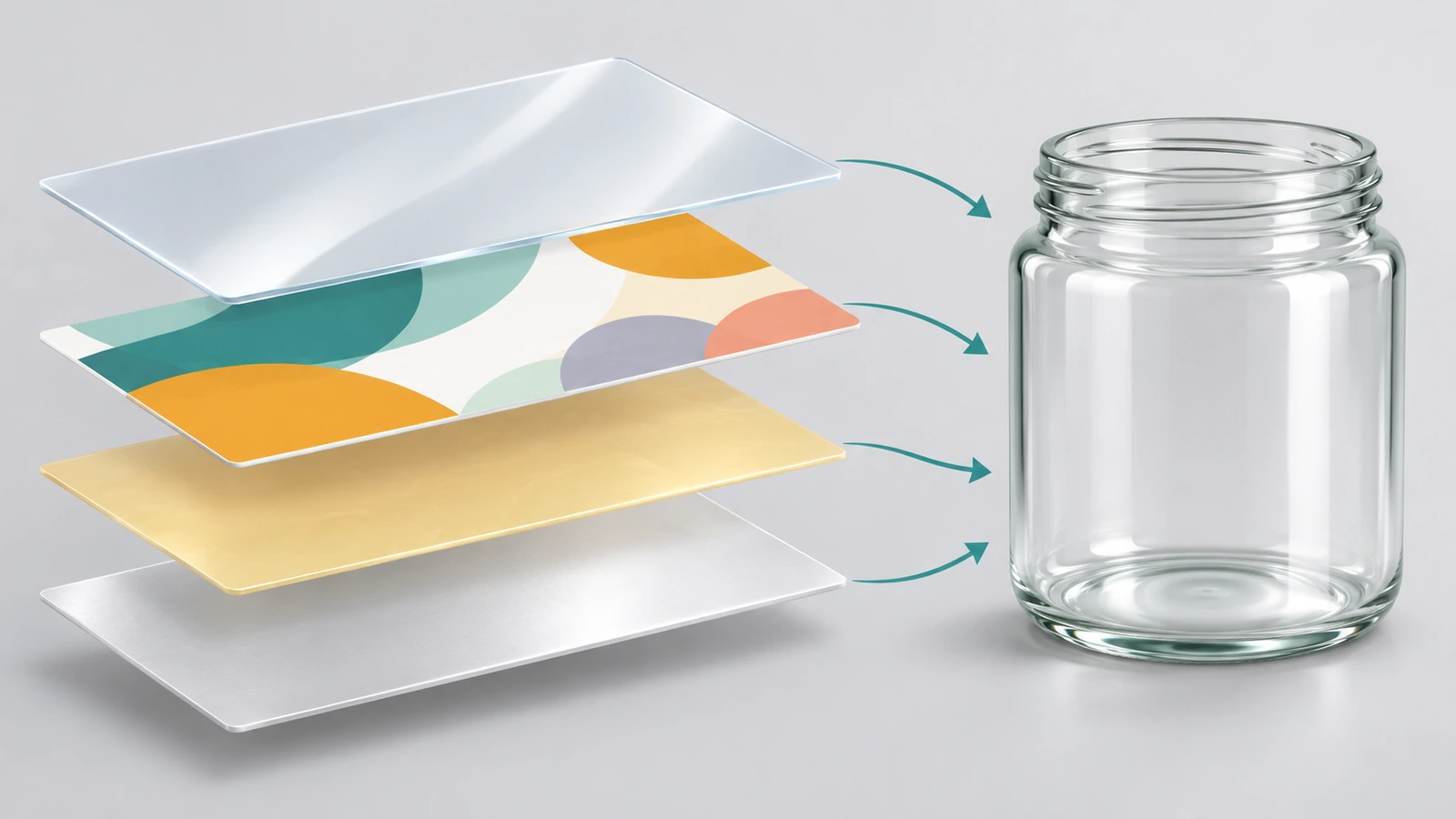
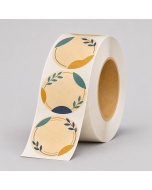
A pressure-sensitive label has four layers:
- the facestock that carries the print, which is paper or plastic film;
- an adhesive;
- a release liner the label peels off;
- an optional overcoat or laminate on top.
This construction dominates packaging. Smithers estimates that pressure-sensitive labels account for 61.9% of the packaging label market by value[1]. The "vinyl vs paper" question is really a question about the top layer.
The word "vinyl" causes confusion. Strictly, vinyl means PVC film. It is soft and conformable, which is why die-cut stickers for laptops, water bottles and outdoor gear are made from it. On packaging roll labels, though, "vinyl" is used loosely for almost any plastic film. Most of those films are BOPP (biaxially oriented polypropylene), which is thinner and stiffer than PVC and runs cleanly through applicators. Published spec sheets from US label printers list white BOPP facestocks at about 2.4–2.6 mil and white PVC vinyl at about 3.4 mil.
At Zigpac, roll labels are offered in paper or BOPP film. They are not PVC. True PVC vinyl appears in our Premium Custom Die Cut Vinyl Stickers, which are weatherproof and UV laminated. In this guide, "film" means BOPP unless PVC is named.
How to Choose Between Vinyl vs Paper Stickers in Five Checks
1. Map the worst moisture the label will ever see
Plan for the label's harshest day, not its average day. Use these four levels:
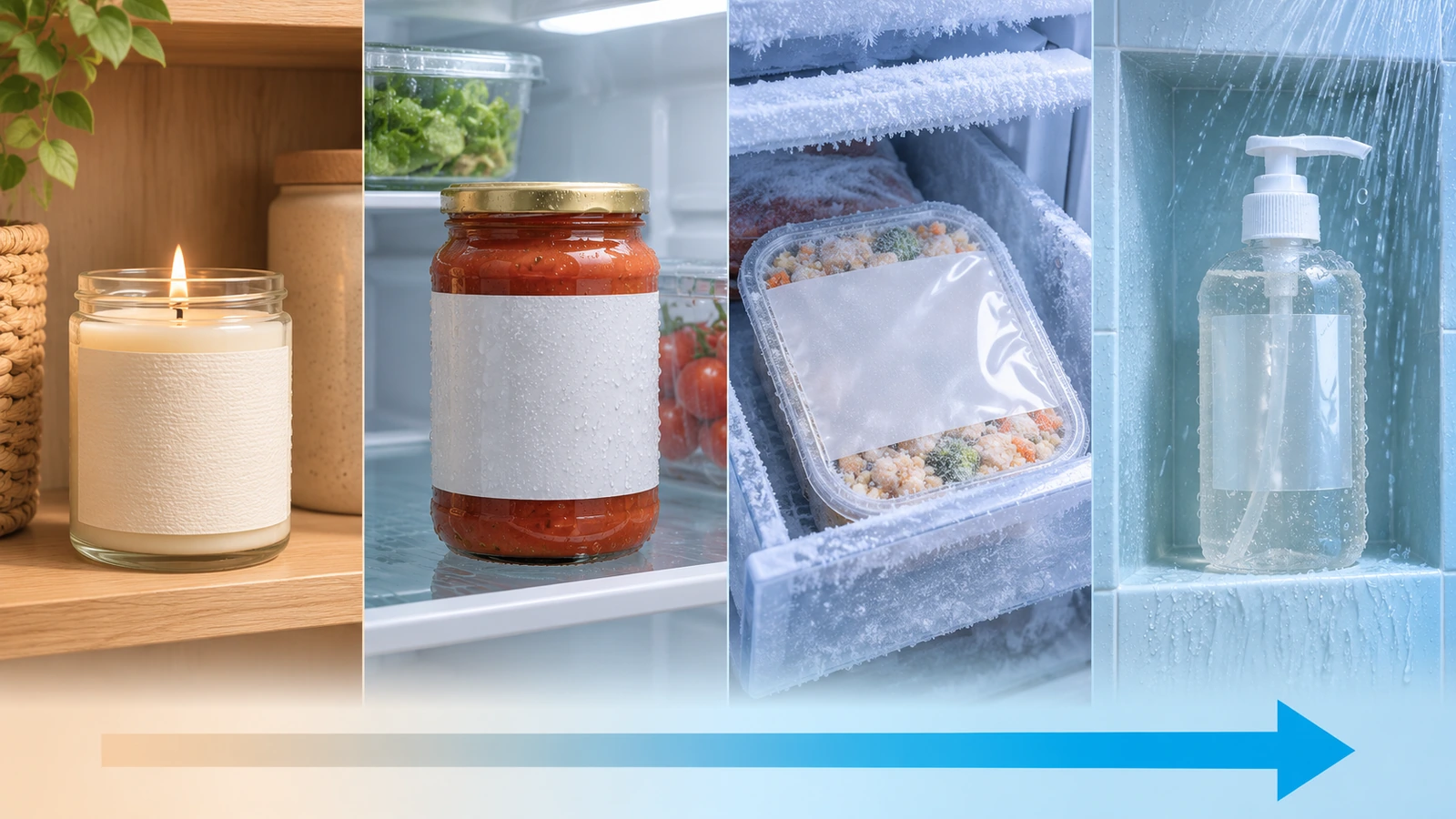
- Dry shelf at room temperature. Paper is fine here.
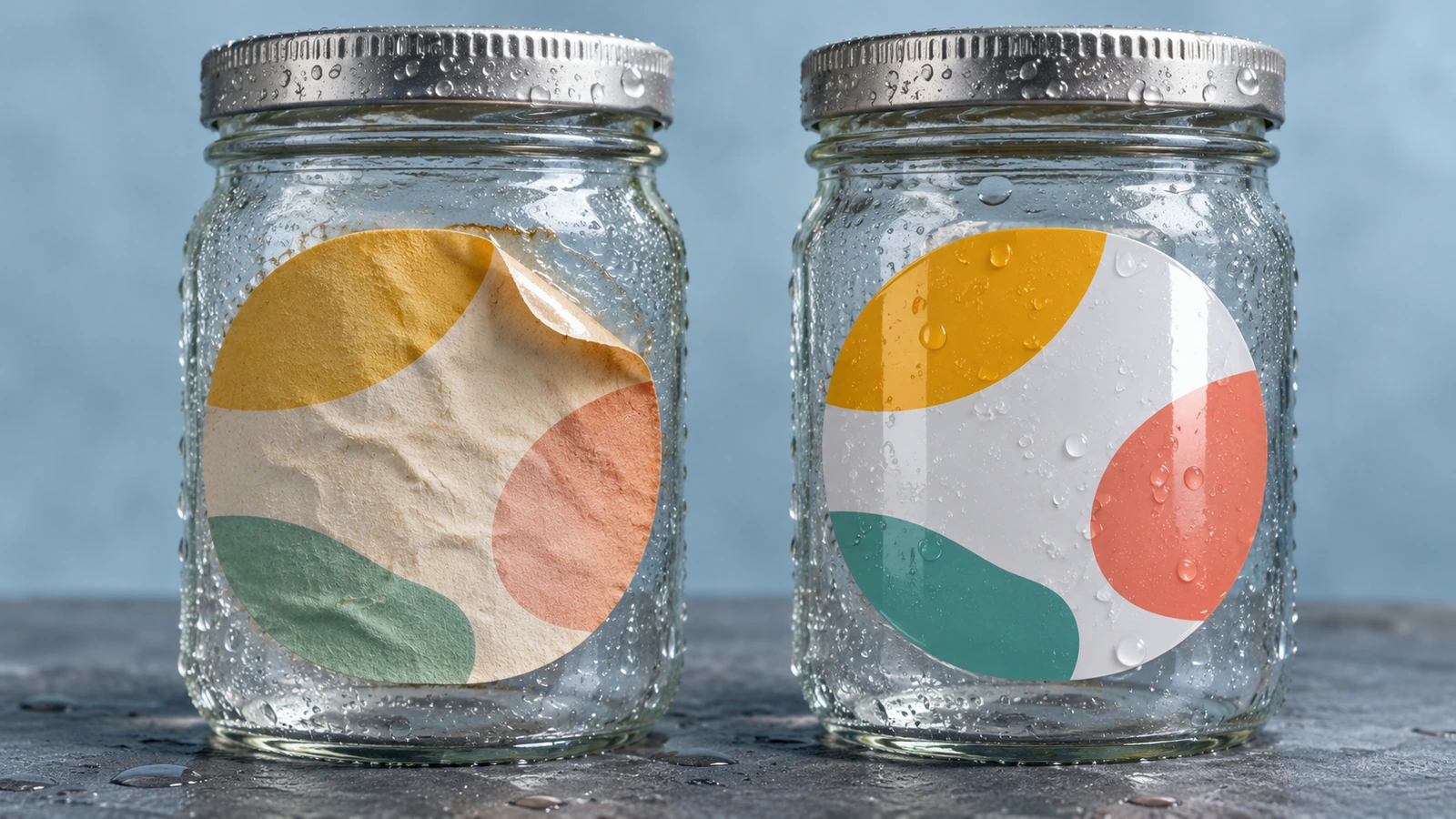
- Fridge. A cold jar sweats every time it comes out. Paper fibers wick that water in at the cut edges, where no overcoat reaches. The result is cockling, wrinkles and edge lift after a few cycles.
- Freezer. Ice and thaw cycles combine with cold that stiffens standard adhesives. This calls for film plus a freezer-grade adhesive, applied to a dry container before it is frozen.
- Bath and shower. Sustained water, wet hands and surfactants will break down paper. This calls for film, ideally laminated.
Adhesive timing also matters. Industry application guides generally advise letting a permanent adhesive build bond for 24–48 hours before the product goes into cold storage. If you label filled bottles straight from a chiller, ask about adhesive selection before you think about the facestock.
2. Check what the product does to the label
Oil is paper's weakest point. It wicks into the fibers and leaves translucent stains that look like damage on a shelf. An overcoat slows this down, but drips at the edges still get in. Film doesn't absorb oil. Still, essential oils, alcohol-based sanitizers and solvent-heavy cleaners can attack some inks and adhesives, so test with your actual formula.
3. Decide how much scuff protection you need
Uncoated paper marks easily in shipping cartons. An overcoat (a thin varnish) helps. A laminate is a separate clear film layer and gives the strongest scuff and rub protection. Commercial printers often warn that skipping the laminate to save money leads to scratched labels and frustrated customers. Film also tears less than paper when a corner catches on something.
4. Match the finish to the brand story
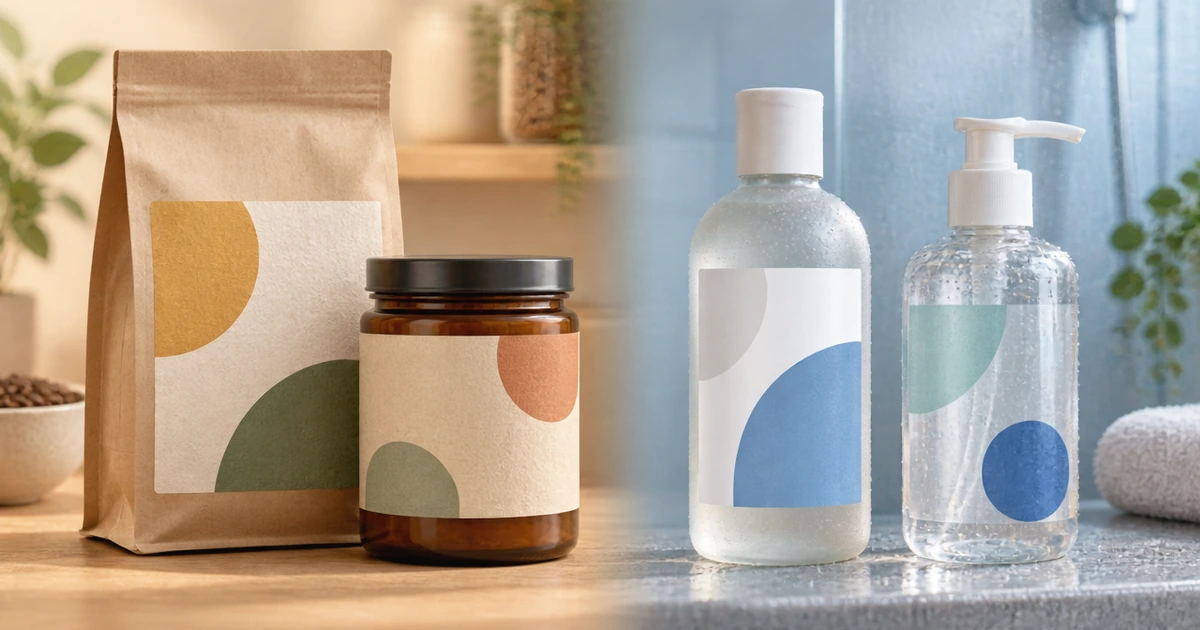
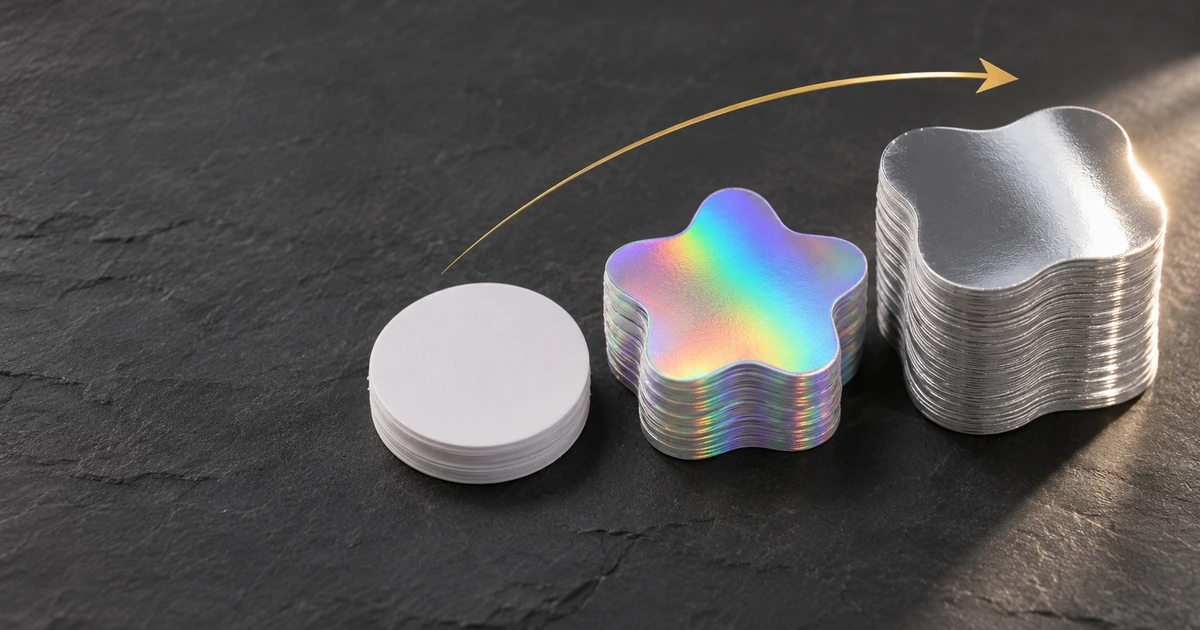
Paper suits brands that want a tactile, natural look: uncoated or textured stock that can be written on with a pen, or a gloss or matte overcoat. Film suits brands that want gloss, a "no-label" clear look, or metallic shine. Clear film needs a white underprint wherever colors should look solid. Without it, the container's color shows through.
5. Test on the real container, then lock the spec
Apply the sample to a filled container. Run it through its real storage cycle for at least 48 hours, then rub the label and try to peel a corner. If you need numbers, label peel adhesion is measured with recognized methods such as ASTM D3330/D3330M[4] and FINAT FTM 1, a 180° peel at 300 mm/min[5]. The two methods use different dwell times, so state which one your spec uses.
Roll format details belong in a separate step and are covered on the product page: core size, unwind direction and labels per roll.
Vinyl vs Paper Product Labels: Side-by-Side Comparison
| Factor | Paper facestock | Film facestock (BOPP, often called "vinyl") |
|---|---|---|
| Dry shelf, room temperature | Excellent. Widest choice of textures. | Excellent. |
| Fridge condensation | Overcoated paper handles a brief chill. Repeated sweating wicks in at the edges, causing wrinkles and lifting. | Doesn't absorb water. Stays flat through condensation cycles if the adhesive is matched. |
| Freezer | Not recommended. Thaw water soaks the fibers. | Suitable with a freezer-grade adhesive applied to a dry surface. |
| Bath and shower | Poor. Softens and pulps with sustained water. | Good, best with a laminate. |
| Oil and product contact | Oil stains show through. An overcoat only slows this. | Resists oil. Test essential oils and alcohol. |
| Scuffing in transit | Uncoated scuffs easily. An overcoat helps. | Tougher. A laminate gives the best rub resistance. |
| Finish options | Uncoated, textured, writable; gloss or matte overcoat. | White, clear (needs white underprint) or metallic; gloss or matte overcoat or laminate. |
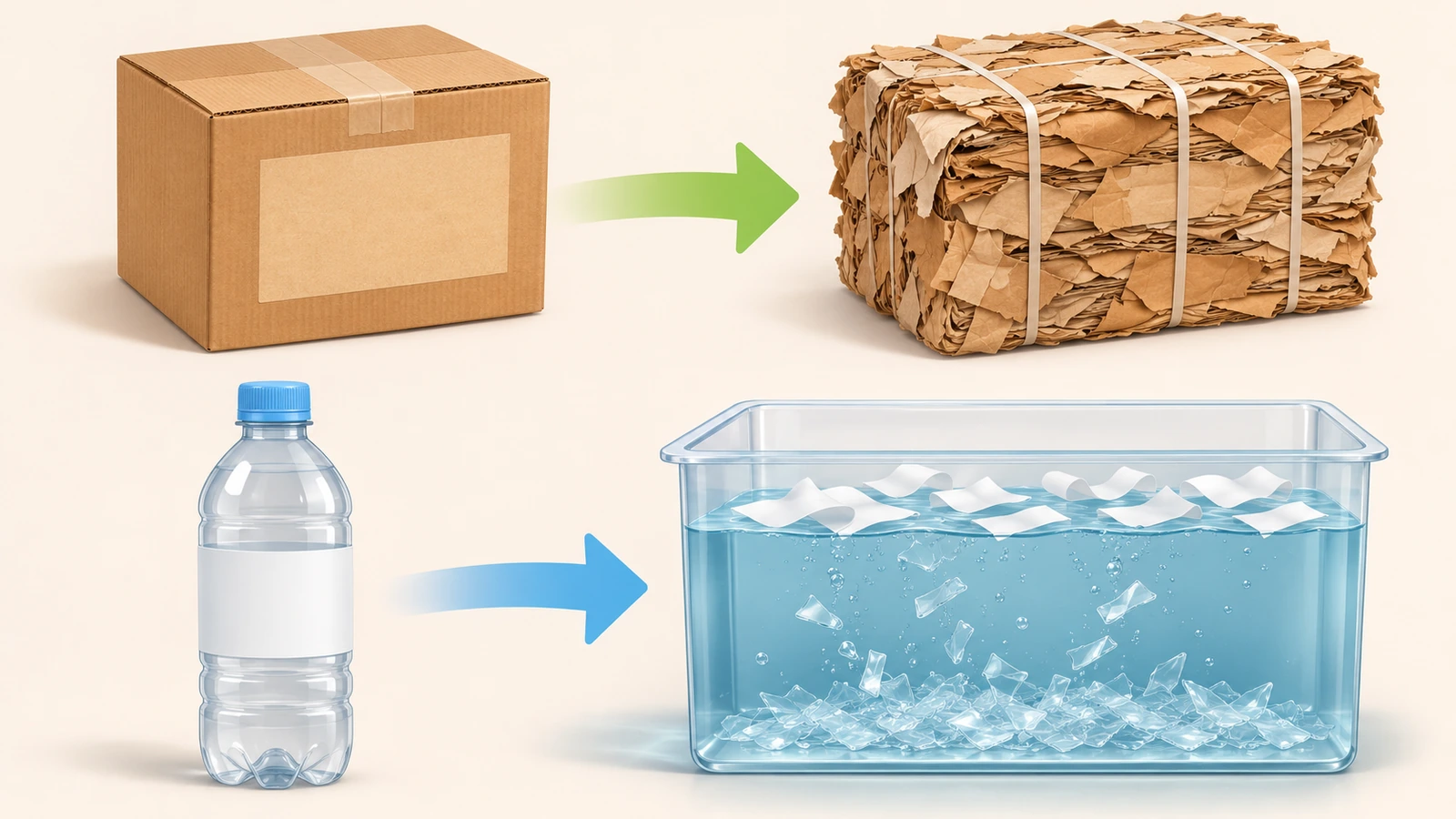
| Recycling fit | Works with paper and cardboard packaging. Adds fiber to plastic streams. | Pairs with PP and HDPE packaging. On PET, adhesive choice decides how cleanly it separates. |
| Relative cost per 1,000 | Lower facestock baseline. | Higher facestock cost, rising further with laminate, clear or metallic film. |
| Typical products | Candles, coffee bags, gift boxes, dry-goods jars. | Sauces, cosmetics, beverages, frozen foods, bath products. |
At Zigpac, the facestock for roll labels is confirmed on your quote as paper or BOPP film. It is not left to a guess in a dropdown menu. You tell us the container and where it is stored, and the material and finish are set from that. At Zigpac, PVC vinyl is kept for our Premium Custom Die Cut Vinyl Stickers (weatherproof, UV laminated). That product suits laptops, tumblers and outdoor gear better than a fill line.
Decision Rule by Product Type and Storage
Choose film if the label will be wet for more than a few minutes, cold enough to sweat, or touched by oil. Choose paper if the label stays dry at room temperature and either texture matters or the package goes in paper recycling. Applied to common products:
- Candles, soap boxes, coffee and tea bags, dry spice jars: paper. Use an overcoat if cartons rub in transit.
- Honey, jam and nut butter on a pantry shelf: overcoated paper works. Switch to film if the product is refrigerated after opening or drips down the jar.
- Hot sauce, chili oil, dressings, cold brew, kombucha: film. Oil and condensation are both expected.
- Frozen meals, ice cream, meal-prep containers: film plus freezer-grade adhesive, applied before freezing.
- Shampoo, body wash, scrubs, bath oils: laminated film.
- Wine and spirits: textured paper looks premium on a dry shelf. Choose film if bottles go in ice buckets.
- Supplements and pharmacy-style bottles: film for handling durability. Paper is fine for dry cartons.
At Zigpac, every order includes a free eProof, and physical samples ship for US$5–30. That makes the 48-hour container test cheap enough to run before you commit to a full roll.
What Moves Cost per 1,000 Labels
Ink is rarely what separates a paper quote from a film quote. These five drivers do:
- Facestock. BOPP film costs more than standard label paper. Specialty textured papers can close that gap.
- Overcoat vs laminate. An overcoat is a coating applied on press. A laminate is an extra film layer and an extra process step, so it adds more cost and more protection.
- Adhesive. Freezer-grade, removable or high-tack adhesives for difficult surfaces cost more than a general permanent acrylic.
- Specialty finish. Clear film needs a white underprint pass. Metallic film is a premium facestock.
- Quantity and shape. Setup is spread across the run, so cost per label falls as quantity rises.
At Zigpac, roll labels have price tiers from 50 pcs, with the final MOQ on your quote. Ask for paper and film quotes side by side for the same artwork and size so you can see the real difference for your order.
Recyclability: Matching the Label to the Package
A label should suit the recycling stream of the package it sits on.
Paper packaging. A paper label on a corrugated box or paper bag generally goes through pulping along with the package. FINAT maintains a dedicated recycling-compatibility method, FTM 19 for this. On plastic bottles, a paper label adds fiber to the plastic wash process.
Plastic packaging. A PP film label is a natural match for PP and HDPE packaging. On PET, the adhesive decides how cleanly the label separates from the flakes during washing. Clean-release adhesives now carry third-party approvals: Avery Dennison's AD CleanFlake received RecyClass Technology Approval for the PET stream in September 2025[7], after an HDPE approval in October 2024.
Release liners. Both facestocks ship on liners. More than 400,000 tons of release liner waste are generated in the US every year[9]. Linerless labels are one response, but they made up only about 6% of global pressure-sensitive label volume in 2025[8].
Recycling claims. Be careful about printing "recyclable" on a label. Experts have warned that such claims can conflict with what facilities actually accept and may breach California's deceptive-advertising rules[10].
Food contact: what "FDA" on a label spec does and doesn't mean
Neither paper nor film is "FDA approved" as a whole label. When a supplier cites 21 CFR 175.105[2], that rule covers adhesives in food packaging where there is a functional barrier or only trace contact at edges. Labels stuck directly onto produce fall under 21 CFR 175.125[3], which has a narrower list of permitted substances. Label wording is a separate question from facestock. Confirm ingredient and net-quantity copy against FDA food labeling guidance[11] for your market.
For adhesive engineering, the PSTC notes that a lab static shear result below about 1,000 minutes is a warning sign for adhesive buildup on converting equipment[6]. That buildup is the "oozing adhesive" problem buyers complain about on fill lines.
FAQ
FAQ: Are vinyl stickers waterproof and paper stickers not?
Film labels are water-resistant at the facestock level. Paper labels resist water only on their coated face. An overcoat or laminate protects the printed surface, but paper still absorbs water through its cut edges. "Waterproof" also depends on the adhesive, so treat it as a claim to test rather than a material property.
FAQ: Can paper labels go in the fridge?
Only for short, occasional chilling. Repeated condensation wicks into paper edges and causes wrinkling and lifting. For products that live in a fridge, choose BOPP film.
FAQ: Which label survives the freezer?
Film with a freezer-grade adhesive, applied to a clean, dry container before freezing. Standard permanent adhesives and paper facestocks both tend to fail once ice and thaw cycles begin.
FAQ: Is BOPP the same as vinyl?
No. BOPP is polypropylene film, and vinyl strictly means PVC. Many printers call any plastic label "vinyl". Zigpac's roll labels are paper or BOPP film, while its Premium Custom Die Cut Vinyl Stickers use true vinyl with UV lamination.
FAQ: Which costs less per 1,000 labels, vinyl or paper?
Paper usually costs less because the facestock is cheaper. Laminate, specialty adhesive and clear or metallic film widen the gap. Zigpac quotes paper and BOPP film for the same artwork, with price tiers from 50 pcs and the final MOQ on your quote, so you can compare real numbers.
FAQ: Can I recycle a box that has a paper label on it?
Generally yes. Paper labels on corrugated or paperboard usually go through pulping along with the package. Check local guidance before printing any recyclability claim.
Key Takeaways
- Most packaging labels share the same pressure-sensitive construction, so the facestock is the main decision. — 61.9% of packaging label value (Source)
- "FDA" on a label spec usually refers to the adhesive rule, not the whole label. — 21 CFR 175.105 for packaging, 175.125 for direct produce contact (Source)
- Specify the peel test method, because methods differ. — FINAT FTM 1 runs a 180° peel at 300 mm/min (Source)
- Adhesive choice decides how cleanly film labels leave PET in recycling. — RecyClass PET approval granted in September 2025 (Source)
- Liner waste applies to both paper and film, and linerless labels are still niche. — About 6% of global pressure-sensitive label volume in 2025 (Source)
- Release liners are a large waste stream in their own right. — More than 400,000 tons per year in the US (Source)
Conclusion: Let Storage, Not Style, Pick the Facestock
Paper wins on dry shelves, natural textures and paper-based packaging. Film wins wherever there is condensation, ice, shower water or oil. Finish and cost come after that choice. An overcoat protects the printed face, a laminate protects against handling, and the facestock plus any laminate drives the price per 1,000.
When you are ready, look at our custom roll labels for bottles, jars and pouches. That page also covers core and unwind specs. Send your artwork, label size, quantity, container material and where the product is stored (shelf, fridge, freezer or bathroom). Zigpac will confirm paper or film facestock, the finish and the final MOQ on your quote.
Footnotes
- Smithers, "Significant growth for printed packaging labels", May 2025. Pressure-sensitive share of packaging label value; market forecast to 2030. ↩
- eCFR, 21 CFR Part 175 Subpart B, §175.105 Adhesives, current text, accessed November 2026. ↩
- eCFR, 21 CFR §175.125 Pressure-sensitive adhesives, current text, accessed November 2026. ↩
- ASTM D3330/D3330M-04(2025), Standard Test Method for Peel Adhesion of Pressure-Sensitive Tape, ASTM International, reapproved August 2025. ↩
- FINAT, Test Methods (FTM 1 peel adhesion; FTM 19 recycling compatibility), FINAT Technical Handbook, 10th edition. ↩
- Pressure Sensitive Tape Council, "Identifying the Right Pressure-Sensitive Adhesive for Filmic Applications", May 2023. ↩
- Label & Narrow Web, "AD CleanFlake portfolio receives RecyClass Technology Approval", September 2025. ↩
- Label & Narrow Web, "Linerless labels", October 2, 2026. AWA estimate of linerless share. ↩
- Earth911, "Label backing sheets", US release liner waste estimate. ↩
- Gizmodo, "Proposed recycling labels are misleading and could violate the law, experts say". ↩
- U.S. Food and Drug Administration, Food Labeling & Nutrition, accessed November 2026. ↩





The information below is required for social login
Sign In
Create New Account