
 Blog PDF for offline reading
Quick answer: Zigpac makes both custom laminated paper bags and custom white or brown kraft paper bags, and for most boutiques the laminated vs kraft paper bags decision comes down to whether the bag is part of the product. Laminated art paper bags give a smoother, more finished presentation for fashion, jewelry, cosmetics and gifting. Kraft bags with twisted paper handles cost less per bag, at US$0.60 for white kraft vs US$0.98 for laminated at 500 pcs on Zigpac's November 2026 listed tiers (final price on your quote), and they keep an unlaminated paper surface that suits everyday purchases and eco-led brands. Both have price tiers from 500 pcs, final MOQ on your quote, and a standard 7–10 day production time, final schedule on your quote.
Most boutique owners start the bag order the same way. They see a glossy black bag with a foil logo in a competitor's window and a clean kraft bag at a café counter, and they need to pick one before the next season's stock lands. The two quotes rarely line up. One lists film, foil and ribbon. The other lists kraft and twisted handles. Neither tells you which bag your customer will remember, or which one you can honestly call recyclable.
Picking wrong costs more than the unit price gap. A laminated bag can cost roughly 60–70% more per bag at low tiers, then arrive scuffed or show fingerprints within minutes on the shop floor. A kraft bag can look underdressed beside a US$200 scarf. And a "recyclable" line printed on a laminated bag without evidence is a marketing claim regulators can test. This guide compares both bags on the same basis: surface, print, finishing, handles, handling wear, recycling claims and cost, so you can match the bag to your boutique type.
What each bag actually is
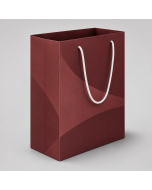
A laminated paper bag is printed art paper with a thin plastic film bonded over the printed face. The film is the surface your customer touches, and it comes in gloss, matte or soft-touch directions. A kraft paper bag is unlaminated white or brown kraft paper, usually with twisted paper handles. The paper itself is the visible, touchable surface, and the logo prints directly onto it.
A third option sometimes appears on quotes: a water-based coating. That is a different finishing approach, not another name for film lamination. If a quote says "coated", ask which one it means before you compare prices or environmental wording.
In Zigpac's range, the laminated side is the custom laminated paper bags line (laminated art paper shopping bags). The kraft side is Zigpac's Custom White Kraft Paper Bags with Twisted Handles and Custom Brown Kraft Paper Bags with Twisted Handles. Whether white or brown kraft suits your logo better is a separate question that Zigpac's white vs brown kraft comparison covers, so this article treats them as one family.
Premium feel: what lamination changes
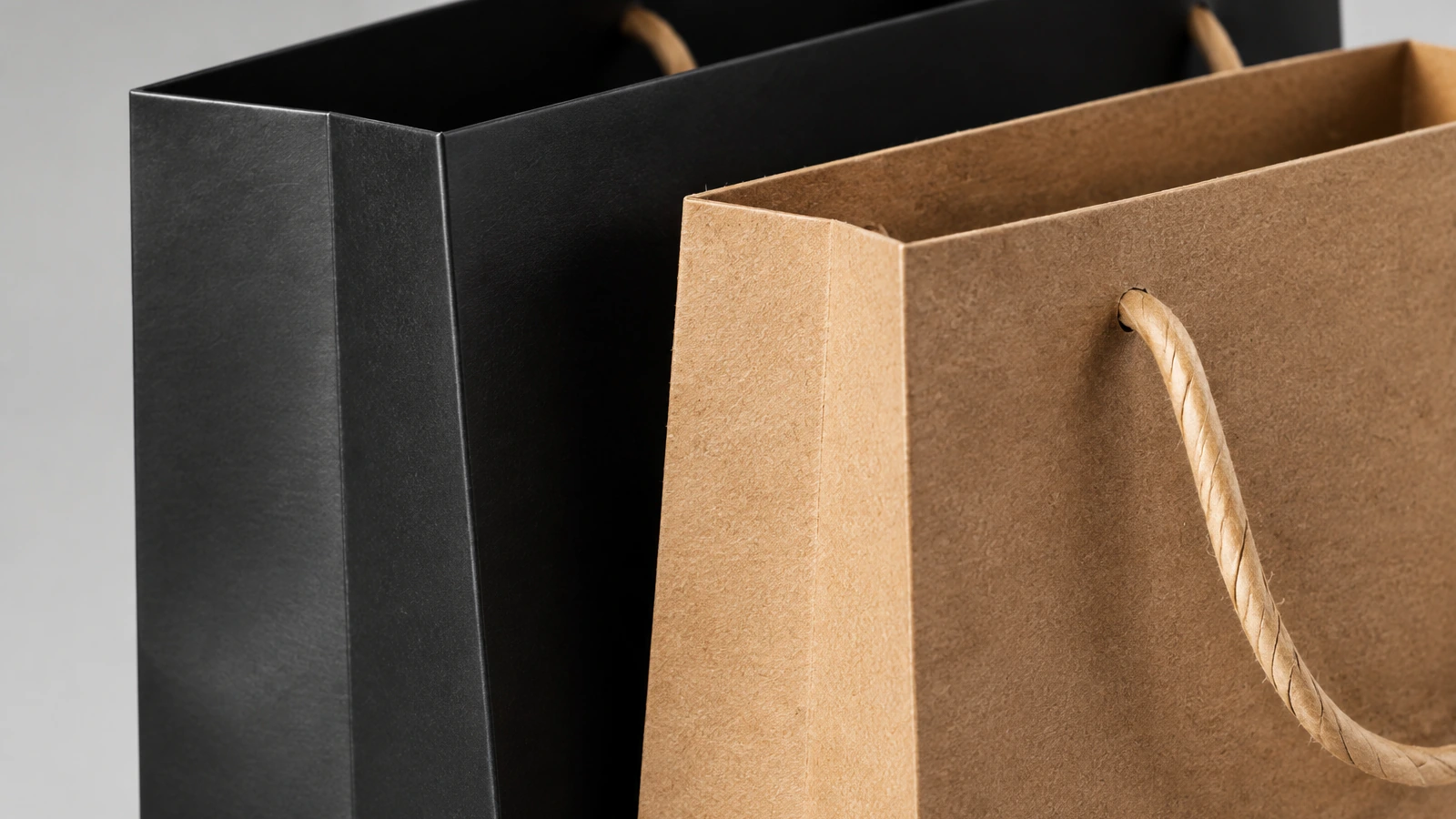
Lamination changes two things a customer notices before reading your logo: how the surface reflects light and how it feels in the hand. Gloss film deepens saturated colors and throws back light, so it reads as bold and glossy-magazine. Matte film cuts glare and makes dark full-coverage designs look calmer. Soft-touch adds a velvety hand that many jewelry and beauty brands use to signal care. Zigpac's laminated bag page treats gloss, matte and soft-touch as appearance and tactile directions to compare on physical samples, not interchangeable specifications. Two "matte" bags from two suppliers can feel noticeably different.
Film also changes color. A deep navy or a brand red can shift under gloss compared with matte, and both will differ from the on-screen proof. Approve color on a sample made with the production paper and the production film. A flat digital proof shows layout, not finish.
Kraft gets its premium feel from restraint rather than finish. A one- or two-color logo on clean white kraft, or a dark logo on natural brown, can look deliberate and calm. Zigpac's white kraft page describes the white surface as a neutral background for branding and lists boutique purchases, boxed cosmetics, wrapped accessories and gift sets as uses. The same page states plainly that the kraft bag is not a ribbon-handle luxury bag. If your brand needs that look, kraft is the wrong starting point.
Neither surface fixes structure. A glossy face cannot compensate for an unsuitable handle attachment or a weak bottom. Zigpac has no tested load rating for these bags. Carrying capacity depends on dimensions, how the bag is loaded and sample validation, and paper weight in g/m² is not a load rating. Load the sample with your heaviest packed item, carry it, set it down and lift it again by the handles before judging either bag premium.
Finishing and handles for boutiques
Foil, hot stamping and embossing. On laminated bags these are separate requests, and each one is confirmed for feasibility on the quote rather than assumed. A gold foil logo on soft-touch black is a classic jewelry pairing because the metallic catches light against a low-sheen field. On kraft, Zigpac quotes decorative processing only against a specific objective, with availability subject to quotation. Tell the factory what you want the finish to achieve, such as "logo visible from across the room" or "tactile monogram", not just the process name.
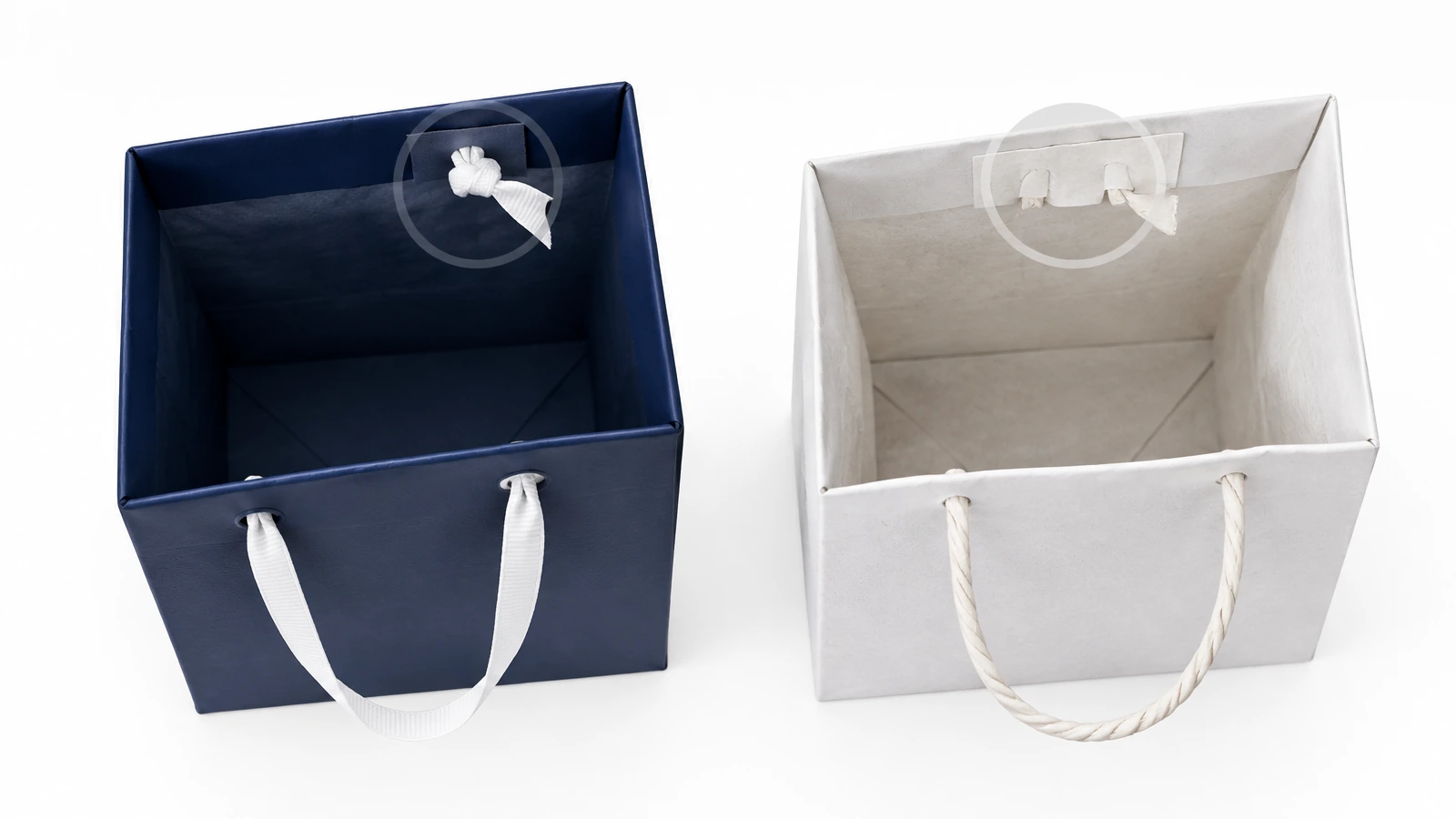
Handles. Laminated bags can be specified with rope, ribbon or paper handles, but these are design requests subject to construction review, not catalogue switches. On the sample, open the top fold and inspect how each handle is anchored, whether it is knotted through a hole or glued under a patch. That anchor is where boutique bags most often fail, not the film. Kraft bags come with twisted paper handles. Switching a kraft bag to flat handles, cotton rope or ribbon creates a different configuration with its own quote and sample. It is not a small upgrade to the same bag.
Artwork setup, sampling steps and acceptance checks for the laminated bag are covered on the laminated paper bag product page, so they are not repeated here.
Scuffs, fingerprints and moisture
Lamination changes how a surface responds to handling, but neither a film name nor a coating description proves scratch resistance or waterproofing. Treat any such promise as a test you will run, not a spec you have bought.
Each surface tends to show wear in its own way. Gloss film shows fingerprints and smudges readily, especially on dark, full-coverage designs that staff handle all day. Matte and soft-touch hide fingerprints better, but rub marks can still appear on folds and corners where bags touch in a carton. Unlaminated kraft absorbs moisture and marks from hands and counters, and "kraft" does not establish rain resistance.
Run the same four checks on both samples:
- Rub the face with a dry thumb and with the edge of another bag.
- Handle it with slightly damp hands.
- Stack and unstack ten bags on a counter.
- Look along the gusset folds and the top edge.
Also ask how finished bags are packed for shipping. Packaging is confirmed on the quote, and bags that rub against each other in transit can arrive marked before your first customer touches them.
Recyclability trade-offs and claim wording
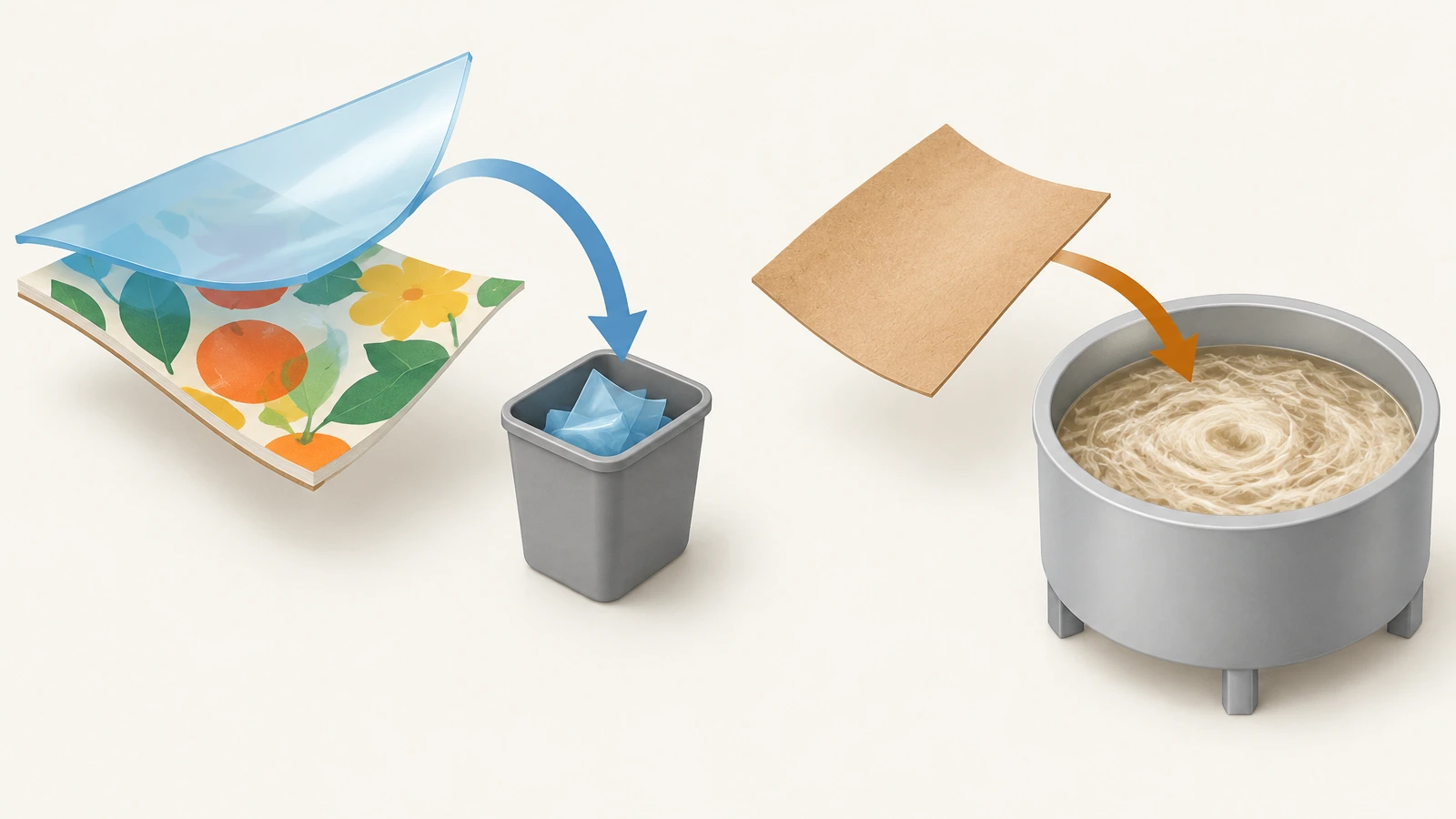
A laminated film adds a non-paper layer to the bag. In a paper mill, that film has to be screened out during repulping. Europe's industry-standard laboratory method, the Cepi recyclability test method[1], explicitly covers laminated paper. One test laboratory's explanation of that method notes that laminated particles left in the test sheets count against the result, and fibre yield should reach at least 80%[2]. The 4evergreen evaluation protocol[3] then scores those results. In the UK, the government's Recycling Assessment Methodology[4] lists fibre-based composites with plastic on both sides among materials not widely collected at kerbside.
Some words do not prove recyclability or compostability on their own: the film's name, a water-based coating or simply a "paper look". In the US, the FTC Green Guides[5] warn against broad, unqualified "eco-friendly" or "green" claims. Under 16 CFR 260.12[6], an unqualified "recyclable" claim requires recycling facilities available to a substantial majority, defined as at least 60%, of consumers or communities where the bag is sold. Below that, the claim must be qualified. Recycled-content wording falls under its own rule, 16 CFR 260.13[7].
An unlaminated kraft bag is simpler to describe because it has no film layer. It still needs evidence before you print a claim. Several things prove nothing by themselves:
- Brown color does not prove recycled content.
- "Kraft" does not prove certification.
- Water-based ink does not establish local recycling acceptance.
An FSC logo needs the applicable certificate and label authorization under the chain-of-custody standard FSC-STD-40-004[8]. That certifies fibre sourcing, not recyclability.
Three developments are worth watching. The EU's Packaging and Packaging Waste Regulation[9] has applied since 12 August 2026, and recyclability grades A to C will gate market access from 2030. In the US, Congress saw the PACK Act introduced in September 2026[10], which would tie recyclable claims to third-party certification. It is not law yet.
The practical rule is the same for both bags. Zigpac does not state that its laminated or kraft bags are recyclable, compostable, FSC-certified or made from recycled content. Request evidence for the complete bag, including film, handles, glue and ink, before printing any environmental claim. If that evidence is missing, print your logo and leave the claim off.
Cost per bag at 500 and 1,000 pcs
The table below uses only the listed tier prices on Zigpac's product pages as of November 2026. At Zigpac, laminated, white kraft and brown kraft bags all have price tiers from 500 pcs, final MOQ on your quote. Size, paper weight, print coverage, finish, handles, foil, packing and freight are confirmed on the quote, so the final price is on your quote.
| Listed tier (Nov 2026) | Laminated art paper | White kraft, twisted handles | Brown kraft, twisted handles |
|---|---|---|---|
| 500+ pcs, per bag | US$0.98 | US$0.60 | US$0.55 |
| 500 pcs, approx. run | US$490 | US$300 | US$275 |
| 1,000+ pcs, per bag | US$0.78 | US$0.46 | US$0.42 |
| 1,000 pcs, approx. run | US$780 | US$460 | US$420 |
| 3,000+ / 5,000+ pcs, per bag | US$0.58 / US$0.48 | US$0.33 / US$0.26 | US$0.30 / US$0.24 |
Three readings matter more than the headline gap:
- The gap in dollars. Laminated costs US$0.38 more per bag at 500 pcs (about US$190 per run) and US$0.32 more at 1,000 pcs (about US$320). That premium is worth paying only if the bag does visible work for your brand.
- Volume narrows the unit price. Laminated at 3,000+ (US$0.58) lists below white kraft at 500+ (US$0.60). But 3,000 laminated bags commit about US$1,740 of cash and storage space. Compare total commitment against how many bags you will hand out before the artwork changes.
- Usable bags are what count. Divide the run cost by the bags that pass your own check: clean face, secure handles, square bottom. A cheaper bag that you cannot hand to a customer is not cheaper.
Two items sit outside the tier price. At Zigpac, every order gets a free eProof, and physical samples ship for US$5–30. Ordering one sample of each bag is the cheapest way to settle the debate. US importers should also ask a customs broker whether the 2024 duty determinations on certain paper shopping bags[11] apply to their bag and origin. Duty is a landed-cost item, not part of the per-bag tier.
Laminated vs kraft paper bags side by side
Zigpac's two bag families share the same commercial basis: price tiers from 500 pcs, final MOQ on your quote, and standard 7–10 days production, final schedule on your quote. That leaves the physical differences below.
| Factor | Laminated art paper bag | White or brown kraft bag |
|---|---|---|
| Construction | Printed art paper with film lamination | Unlaminated white or brown kraft paper |
| Surface look and feel | Gloss, matte or soft-touch, compared on samples | Natural uncoated paper texture |
| Print and color | Full-coverage art possible; color can shift under film | Logo on a white or brown base; the base color affects ink |
| Finishing | Foil, hot stamping, embossing as requests, subject to feasibility | Decorative processing only against a specific objective, quoted |
| Handles | Rope, ribbon or paper as design requests, subject to construction review | Twisted paper handles; other handles create a different configuration |
| Scuffs and fingerprints | Gloss shows fingerprints; folds and corners can rub | Paper marks from hands and counters |
| Moisture | Waterproofing not established by film | Rain resistance not established by "kraft" |
| Recycling and claims | Adds a non-paper layer; claims need whole-bag evidence | Simpler to describe; still needs evidence before any claim |
| Listed price, 500 / 1,000 pcs | US$0.98 / US$0.78 | White US$0.60 / US$0.46; brown US$0.55 / US$0.42 |
| Standard production | 7–10 days, final schedule on your quote | 7–10 days, final schedule on your quote |
| Best boutique uses | Fashion, jewelry, cosmetics, gift presentation | Everyday purchases, boxed or wrapped items, eco-led brands |
Zigpac recommends approving a physical sample of the exact configuration before bulk production, especially when film, foil or a non-standard handle is involved.
Which bag fits which boutique
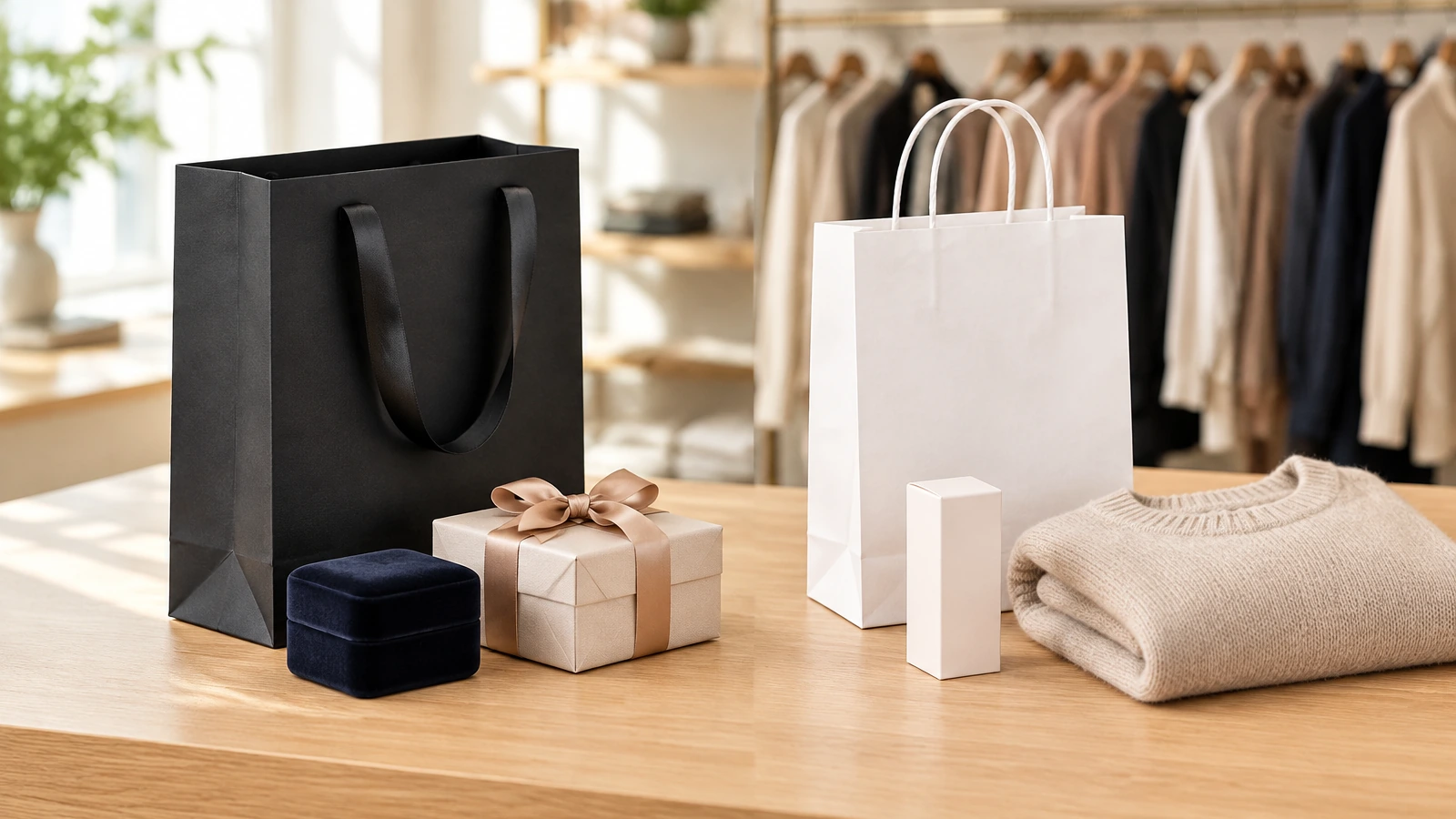
- Fashion and accessories: Laminated, usually matte or soft-touch, when the bag leaves the store as part of the outfit purchase. Kraft works for basics and restocks.
- Jewelry and watches: Laminated. Small, high-value items depend on presentation, and foil or ribbon requests belong on this bag, not on a modified kraft one.
- Cosmetics and beauty counters: Laminated for gift sets and launches. White kraft for boxed everyday items, which the kraft page already names as a use.
- Gift shops and seasonal gift sets: Laminated for premium sets. Kraft for wrapped items where the wrapping does the visual work.
- Everyday or high-volume purchases: Kraft. The per-bag gap compounds quickly at checkout volume.
- Eco-positioned brands: Kraft, because the unlaminated surface matches the message. Print an environmental claim only once you hold evidence for it.
- Pop-ups and events: Choose by date and budget. Both share a standard 7–10 day production time, so the first factors are cash and the look you need. Book sampling time before the event date, not after.
To get both options priced on the same basis, send Zigpac:
- Your packed-item size
- The quantity
- Your finish preference: gloss, matte, soft-touch or unlaminated kraft
- The handle type
- Your artwork
- The delivery destination and arrival date
Ask for laminated and kraft side by side. Zigpac confirms final MOQ, price and schedule on the quote.
FAQ
FAQ: Are laminated paper bags more expensive than kraft paper bags?
Yes. At Zigpac's November 2026 listed tiers, laminated bags are US$0.98 at 500+ and US$0.78 at 1,000+ per bag. White kraft is US$0.60 and US$0.46, and brown kraft is US$0.55 and US$0.42. Size, print coverage, finish, handles and packing change the number, and the final price is on your quote.
FAQ: Can I print "recyclable" on a laminated paper bag?
Only if you hold evidence for the complete bag and the claim meets the rules where you sell it. In the US, an unqualified claim needs recycling access for at least 60% of consumers or communities where the bag is sold. Without that evidence, leave the claim off or qualify it.
FAQ: Does lamination make a paper bag waterproof?
No, not by itself. A film name or coating description does not establish waterproofing or scratch resistance. Test a physical sample with damp hands and normal handling before relying on it.
FAQ: Can a kraft bag have ribbon handles?
It can be requested, but it becomes a different configuration with its own quote and sample. If ribbon is central to your look, a laminated bag is usually the more natural starting point.
FAQ: Gloss, matte or soft-touch for a boutique?
Choose on a physical sample, because the three are appearance and tactile directions rather than interchangeable specs. Gloss intensifies color but shows fingerprints. Matte reduces glare. Soft-touch adds a velvety feel that pairs well with foil.
FAQ: How do I get Zigpac to quote both bags fairly?
Send Zigpac one brief and ask for laminated and kraft side by side. Include your packed-item size, quantity, finish preference, handle type, artwork, destination and arrival date. Every order includes a free eProof, and physical samples ship for US$5–30.
Key takeaways
- Laminated costs roughly 63% more per bag than white kraft at 500 pcs — US$0.98 vs US$0.60, November 2026 listed tiers, final price on your quote (Source)
- Unqualified US "recyclable" claims need broad recycling access — at least 60% of consumers or communities (Source)
- Film particles count against paper recyclability tests — fibre yield of at least 80% expected (Source)
- EU packaging rules now apply to bags sold in Europe — in force since 12 August 2026, recyclability grades from 2030 (Source)
- An FSC logo certifies fibre sourcing, not recyclability — FSC-STD-40-004 V3-1, effective 1 September 2021 (Source)
Conclusion
Choose laminated when the bag is part of what the customer buys, as in fashion, jewelry, cosmetics and gift sets, and budget for samples that test film, foil and handle anchors. Choose kraft when the bag is a carrier for everyday purchases or an eco-led brand, and keep environmental wording tied to evidence. If you are still split, order one sample of each and run the same handling tests on both. When the laminated option wins, start with Zigpac's custom laminated paper bags and request a side-by-side quote with kraft.
Footnotes
- Cepi – Recyclability Test Method, Version 3 (published March 2025) ↩
- Sirris – Paper Recycling Test according to CEPI (January 2026) ↩
- 4evergreen – Recyclability Evaluation Protocol for fibre-based packaging (January 2025) ↩
- GOV.UK – Recycling Assessment Methodology: assessing materials ↩
- US Federal Trade Commission – Environmental Claims: Summary of the Green Guides ↩
- eCFR – 16 CFR 260.12 Recyclable claims ↩
- eCFR – 16 CFR 260.13 Recycled content claims ↩
- Forest Stewardship Council – FSC-STD-40-004 V3-1 Chain of Custody Certification (effective 1 September 2021) ↩
- EUR-Lex – Summary of Regulation (EU) 2025/40 on packaging and packaging waste ↩
- Packaging Dive – PACK Act introduced in Congress (30 September 2026) ↩
- Federal Register – Certain Paper Shopping Bags From China: Final Affirmative Countervailing Duty Determination (24 May 2024) ↩







The information below is required for social login
Sign In
Create New Account