
 Blog PDF for offline reading
Quick answer: Zigpac makes both custom printed pinback buttons and custom soft enamel pins. If you are choosing between pinback buttons or enamel pins for a one-day event, a campaign, mass handouts or a design with photos, gradients or a message that may still change, printed buttons are the better fit: they cost less per piece at every listed tier and ship on a shorter standard schedule (3–7 days versus 7–10 for soft enamel). For recognition, fundraising keepsakes, collectibles and merch that people will keep and wear for years, an enamel pin is worth the higher price and longer schedule. Soft enamel is the usual choice, and hard enamel is the premium option. At 1,000 pcs, Zigpac's November 2026 tiers list buttons at US$0.32 and soft enamel at US$0.48 per piece; the final price is on your quote.
Why the Wrong Badge Costs More Than Its Price Tag
Badges are usually ordered after the event date is fixed, often by someone who has never compared the two formats. In search results they look interchangeable: a round thing with a pin on the back. They compete for the same promotional budget, and that budget category is large. The Promotional Products Association International[1] estimated US distributor sales at US$26.09 billion for 2023, and the Advertising Specialty Institute[2] reported a record US$26.6 billion for 2024.
Choosing the wrong format causes problems that a unit price does not show. A campaign that orders enamel pins with a candidate photo finds that the photo cannot be filled with enamel, that a mold has to be made first, and that a 7–10 day production window plus transit lands after the rally. A nonprofit that hands volunteers a printed button for ten years of service gives them something that feels like a giveaway. On budget, switching 500 badges from buttons to soft enamel adds about US$100 at the listed tiers, and switching to hard enamel adds about US$440, before mold or setup.
This guide compares the two formats on one basis: how each is made, artwork fit, price at 100, 500 and 1,000 pcs, schedule against your event date, keepsake value and backing. It ends with a decision rule for each use case.
What Is the Difference Between Pinback Buttons and Enamel Pins?
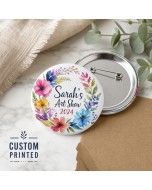
A pinback button is a printed badge. An enamel pin is a shaped metal badge. That difference in construction sets the artwork limits, the tooling and the price model for each.
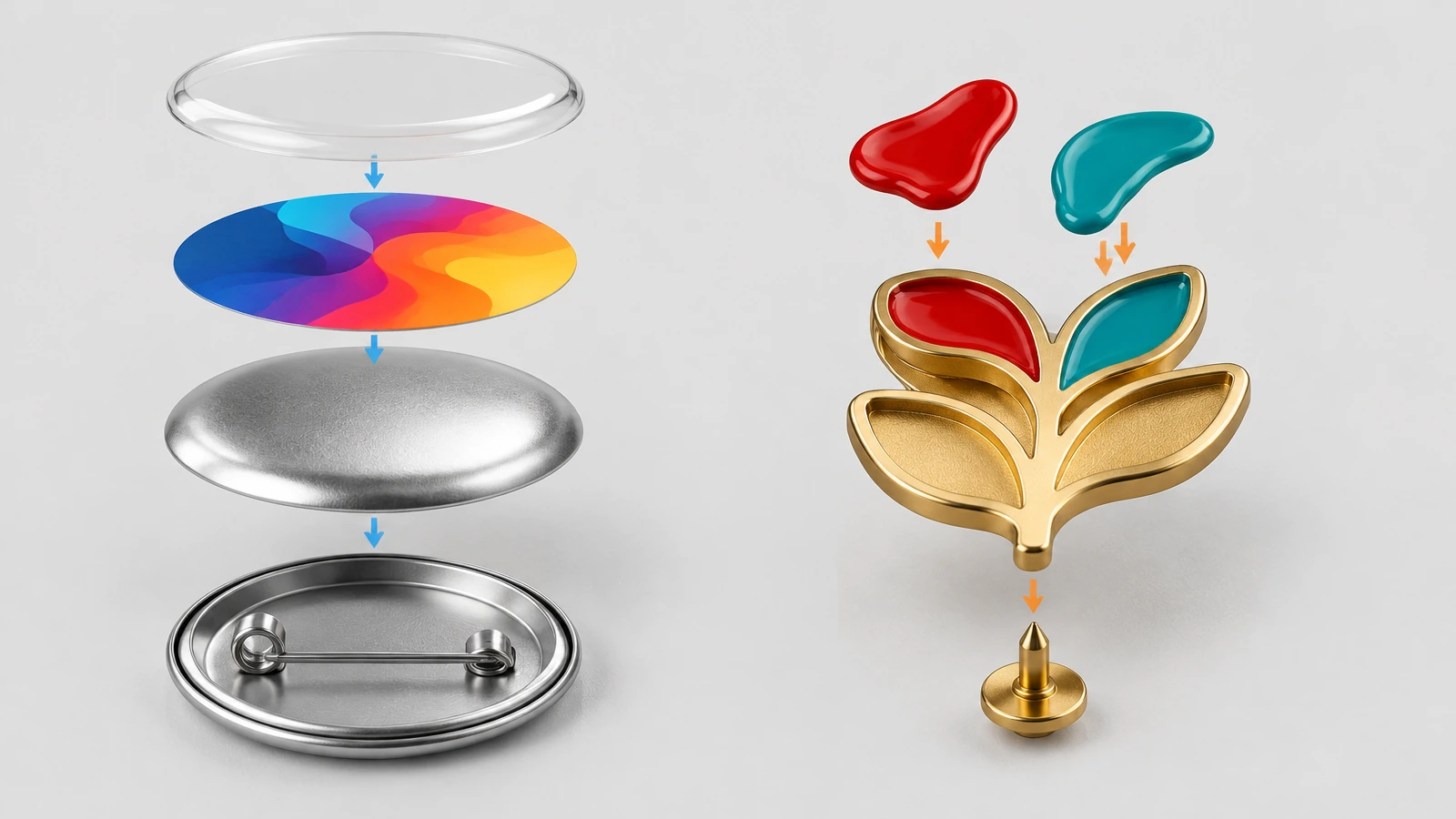
The pin-back button[3] dates to an 1896 patent and has kept the same basic build since. It has a metal shell, a printed graphic, a clear protective film and a pin back, joined by crimping. University maker spaces that teach the process, such as the UAH MultiMaker Lab[4], describe a two-stage press: the first stage wraps the shell, graphic and film together, and the second locks the back in place. Because the design is printed, any image a printer can reproduce can go on the button, and a new design only needs a new print file.
An enamel pin starts with a mold. Metal is formed into the design's outline, raised metal lines separate the color areas, and enamel is filled into the recessed cells. Zigpac's soft enamel sequence runs through mold preparation, metal forming, outline cutting, post installation, deburring, plating, color filling, curing, inspection, attachment fitting and packaging. Iron and zinc alloy are common base materials. Because the design is held in the mold, the mold has to be made before production starts. That adds a tooling line to the quote and makes later artwork changes costly.
Both formats sit in the same US industrial classification, SIC 3965[5], but they are bought very differently. A button is priced mainly on print and parts. An enamel pin is priced on mold, metal, plating and the number of colors.
How to Decide Between Pinback Buttons or Enamel Pins in Four Checks
Check 1: Does your artwork suit print or metal?
Start with the artwork, because it often settles the decision before price does.
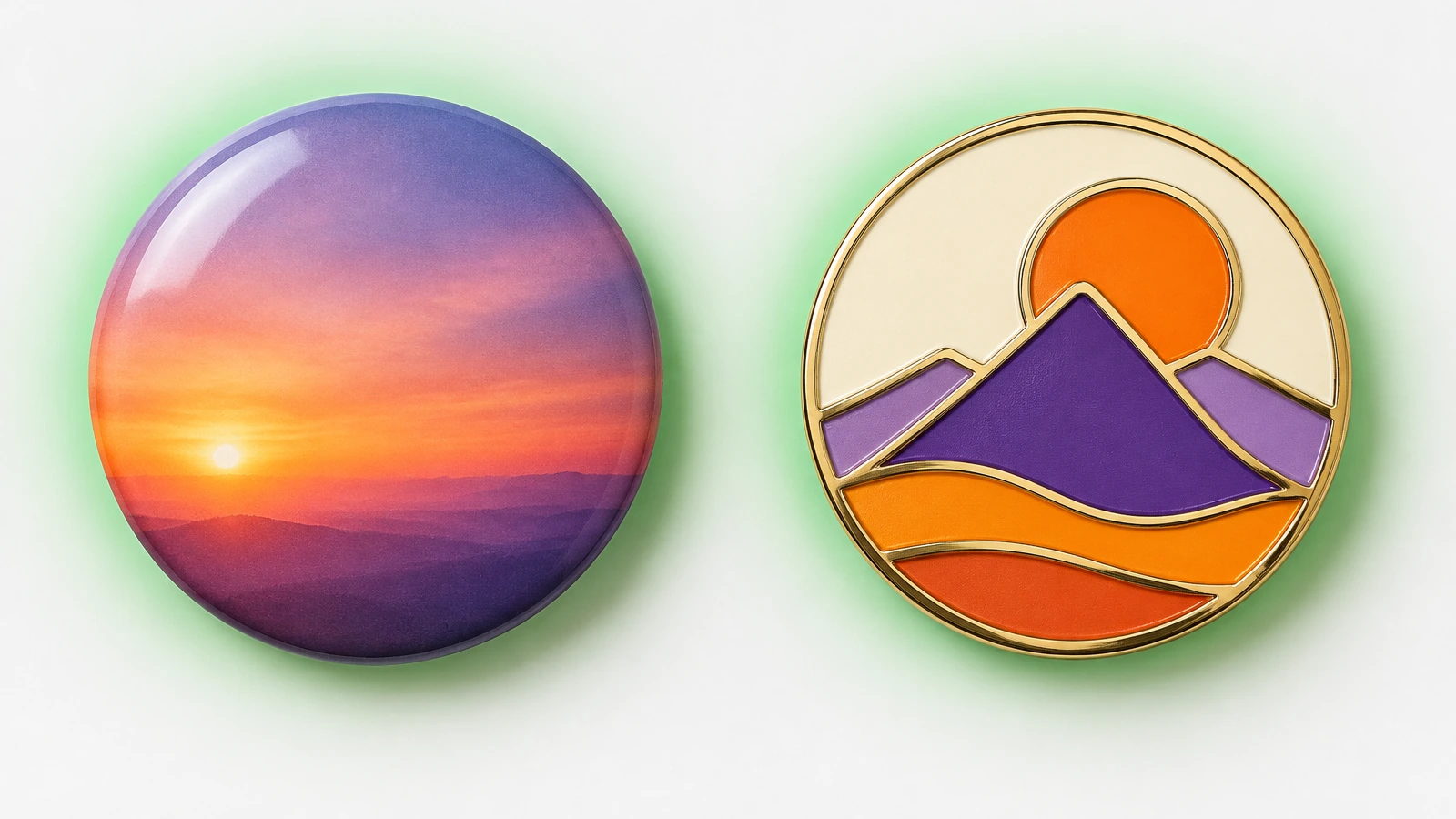
- Choose buttons for photographs, gradients, candidate faces, QR codes, small type and messages that change from one event to the next. Part of the printed sheet wraps around the curved edge, so keep text, logos, dates and QR codes inside the confirmed safe area. Our separate button design guide covers sizing, bleed and safe zones.
- Choose enamel for art built from closed color areas and bold outlines, such as logos, mascots and emblems. Judge the art at its actual size, not on a zoomed-in screen, because fine lines and tiny lettering can fill in. If a design depends on a gradient, a printed pin may serve better than enamel.
If you are using photos, logos or likenesses that belong to someone else, confirm you have the rights before the proof stage. Approving a proof does not settle who owns the artwork.
Check 2: What does each cost at your quantity?
The worked example below uses only Zigpac's listed price tiers as of November 2026. A 100-piece order falls in the 50+ tier, because the next break starts at 200.
| Quantity | Printed button | Soft enamel pin | Difference |
|---|---|---|---|
| 100 pcs (50+ tier) | US$0.95 each ≈ US$95 | US$1.50 each ≈ US$150 | ≈ US$55 |
| 500 pcs (500+ tier) | US$0.42 each ≈ US$210 | US$0.62 each ≈ US$310 | ≈ US$100 |
| 1,000 pcs (1,000+ tier) | US$0.32 each ≈ US$320 | US$0.48 each ≈ US$480 | ≈ US$160 |
For reference, hard enamel at 1,000 pcs lists at US$1.05 each, about US$1,050, which is more than three times the button total. At Zigpac, buttons and both enamel types share the same MOQ wording: price tiers from 50 pcs, final MOQ on your quote. Mold or setup, size, colors, plating, backing, back cards, packaging, rush and freight are all confirmed on the quote, and the final price is on your quote.
Two patterns are worth knowing before you set a quantity. First, check the cost near a tier boundary: 200 buttons at US$0.58 come to about US$116, only US$21 more than 100 at the 50+ rate, and 200 soft enamel pins at US$0.85 cost about US$170 against US$150 for 100. Second, for enamel, ask for an itemized quotation that separates the mold or setup from unit production, colors, special effects, backing hardware, back cards, individual packaging, samples and freight. Ask whether the mold is retained, for how long, and whether reusing it for a reorder creates a later charge.
Check 3: Can it arrive before your event date?
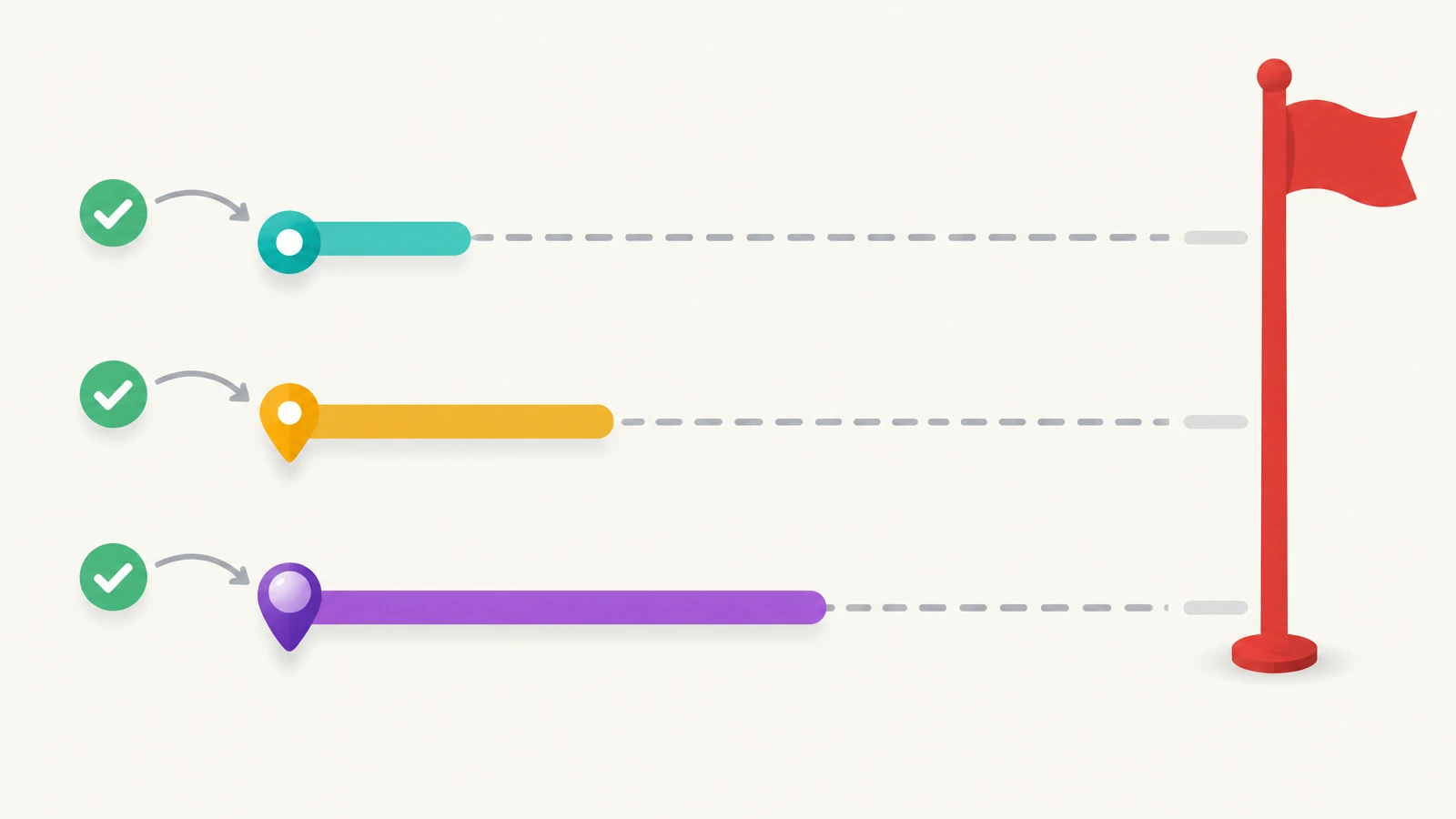
Zigpac's standard production times are 3–7 days for printed buttons, 7–10 days for soft enamel and 10–15 days for hard enamel. The final schedule is on your quote. The clock starts when you approve the eProof, not when you first send the inquiry. Plan backwards from the event:
- Start with the date the badges must be in hand. That should be before setup day, not on the event day itself.
- Subtract a contingency buffer for customs, weather or a reprint.
- Subtract transit time, which is quoted separately from production. Record production and transit as two lines.
- Subtract the standard production window for the format you chose.
- The date you are left with is your latest eProof approval date. If you want a physical sample first, its production and shipping time sit before that date too.
If that calculation leaves almost no slack, or the message might still change (a candidate, a date, a sponsor list), buttons are the safer choice. A late text change on a button means a new print file. On an enamel pin, it can mean a new mold.
Check 4: Will people keep it, and how will they wear it?
Buttons are economical and familiar for mass distribution. Recipients take them without hesitation and wear them for a day or a season. That does not make them disposable. Design writers at AIGA Eye on Design[6] describe the pin-back button as a place for self-expression before social media. JSTOR Daily[7] traces how buttons have carried political messages, and university archives such as the University of Iowa Special Collections[8] preserve them. A button with a strong message can become a keepsake on its own.
Enamel pins carry more perceived value. The weight of the metal, the plated edges and the filled color make them suited to recognition, membership and collectors. Hard enamel goes one step further: its color is filled close to the metal height and polished smooth, which is why it is chosen for formal recognition, premium presentation and frequent wear. Our separate hard-versus-soft enamel article covers that choice in detail.
Backing affects both comfort and fabric. A conventional pin back is economical and familiar, but it punctures the fabric. A magnetic attachment avoids the pinhole, but test it on the actual garment weight before a bulk order. Enamel pins use a rear post with an attachment fitted at the end of production, and the backing hardware appears on the itemized quote. Backing options for both formats are confirmed on your quote.
Safety note: both formats have a sharp point. Zigpac makes no child-safe, CPSIA or lead-free claim for either format without documents for the final construction. If badges are intended for children, the US Consumer Product Safety Commission's children's product rules[9] apply. Under its total lead content limit[10], a children's product with more than 100 ppm lead in an accessible component is a banned hazardous substance. Request the documentation before you order, not after the badges arrive.
Pinback Buttons vs Enamel Pins: Side-by-Side Comparison
| Factor | Printed pinback button | Soft enamel pin | Hard enamel pin (premium reference) |
|---|---|---|---|
| Construction | Crimped shell, printed insert, clear cover, pin back | Shaped metal, raised metal lines, recessed soft enamel color | Shaped metal, color filled close to metal height, polished smooth |
| Artwork fit | Photos, gradients, QR codes, small type, changing messages | Closed color areas, bold outlines; gradients may need a printed pin | Same as soft enamel, with a flat polished face |
| Unit price, 100 pcs | US$0.95 | US$1.50 | US$3.20 |
| Unit price, 500 pcs | US$0.42 | US$0.62 | US$1.30 |
| Unit price, 1,000 pcs | US$0.32 | US$0.48 | US$1.05 |
| MOQ | Price tiers from 50 pcs, final MOQ on your quote | ||
| Tooling / setup | No design-specific mold; the design is printed; any setup is confirmed on the quote | Mold or setup listed on an itemized quote; ask about mold retention and reuse charges | |
| Standard lead time | Standard 3–7 days | Standard 7–10 days | Standard 10–15 days |
| Perceived value | Economical, familiar handout | Keepsake for recognition, membership, collectors | Formal recognition, premium presentation, frequent wear |
| Backing | Conventional pin back; magnetic option needs testing | Rear post with fitted attachment; backing hardware on the quote | |
| Best uses | Events, campaigns, trade shows, awareness drives | Recognition, fundraising keepsakes, club identity, merch | Milestone awards, premium retail, uniforms |
Prices are Zigpac's listed tiers as of November 2026, and the final price and final schedule are on your quote. Transit is counted separately. Zigpac's printed buttons and enamel pins both start with a free eProof, and physical samples ship for US$5–30. For a keepsake order, or one where color match matters, Zigpac recommends approving a physical sample before bulk production.
Decision guide by use case
| Use case | Better fit | Deciding factor |
|---|---|---|
| One-day event handouts and trade shows | Printed buttons | Lowest unit cost, shortest schedule, full-color branding |
| Political or advocacy campaigns | Printed buttons | Candidate photos, QR codes and slogans that change |
| Fundraisers | Buttons for donation tokens; soft enamel for donor tiers | Whether the badge is a thank-you or a reward |
| Staff and volunteer recognition | Soft enamel; hard enamel for formal milestones | Worn for years; perceived value matters |
| School and club identity | Buttons for one season; soft enamel for lasting membership | How long the design stays unchanged |
| Collectible or retail merch | Enamel pins; buttons for affordable artist runs | Price the buyer expects to pay |
The mixed strategy: buttons for the crowd, pins for the core
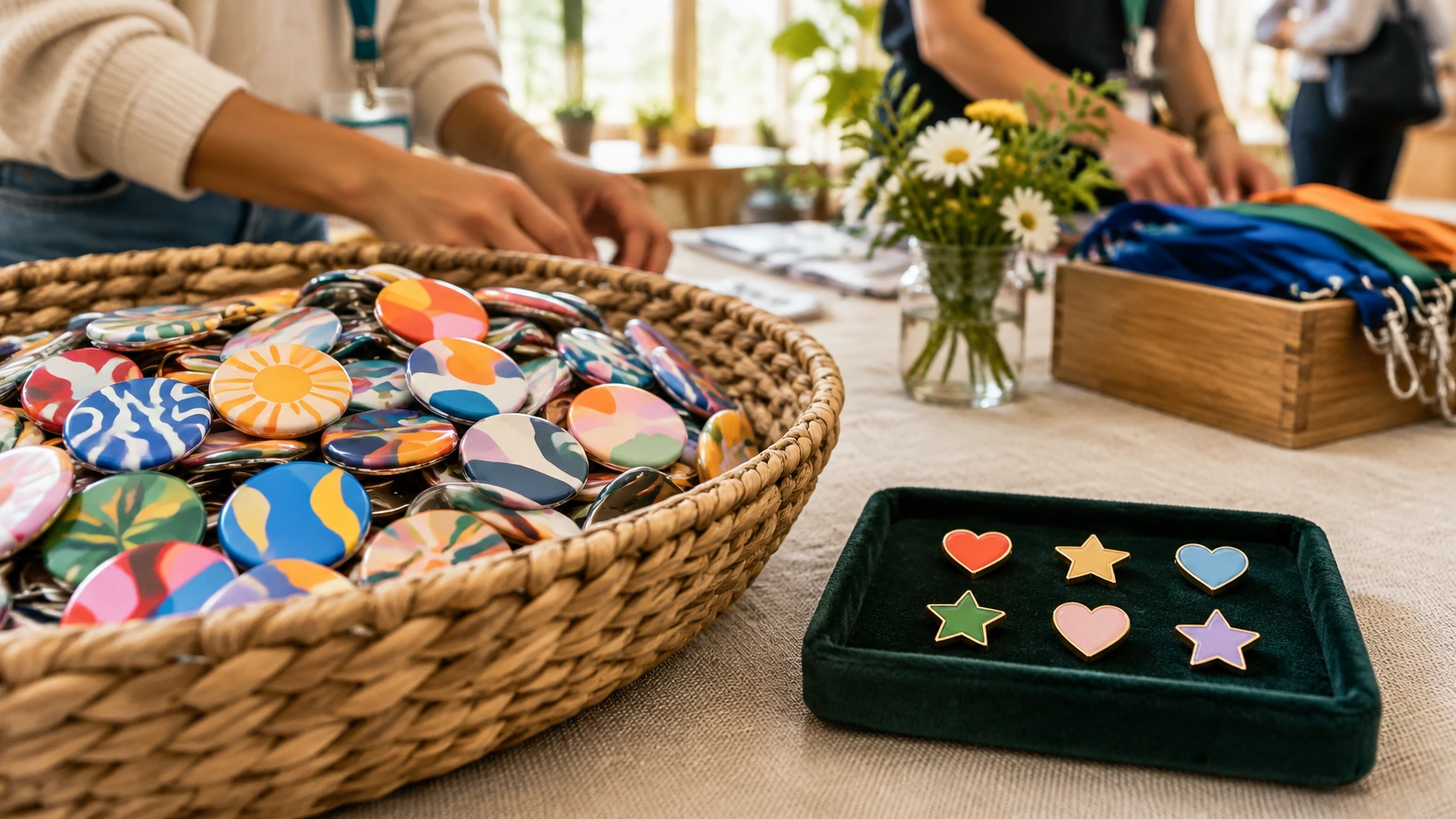
Many programs do not need to pick one. A campaign can hand out 1,000 buttons and give 100 volunteers a soft enamel pin. At the listed tiers, that is about US$320 plus US$150, or roughly US$470. The same 1,100 badges cost about US$528 as all soft enamel and about US$352 as all buttons. The mixed plan costs roughly US$118 more than buttons alone. It gives your core people a keepsake, and the mass handout stays on the faster schedule. Each item is quoted on its own tier, and the enamel line may carry its own mold or setup item.
What to send for a side-by-side quote
- Artwork files, with any photos, gradients or QR codes flagged
- Intended size (2.25 inch is a common reference for buttons)
- Quantity for each format, including any split between handouts and keepsakes
- Backing preference: conventional pin back, magnetic, or enamel backing hardware
- The date the badges must be in hand, the delivery address, and any packaging or back-card needs
For how a button order moves from specification to bulk approval, see the custom pinback buttons buying page. Zigpac's Custom Soft Enamel Pins and Custom Hard Enamel Pins pages cover the enamel side.
FAQ
FAQ: Are pinback buttons cheaper than enamel pins?
Yes, at every listed tier. In Zigpac's November 2026 tiers, buttons are US$0.95 versus US$1.50 for soft enamel at 100 pcs, and US$0.32 versus US$0.48 at 1,000 pcs. Enamel orders may also carry a mold or setup item. The final price is on your quote.
FAQ: Can enamel pins reproduce photos or gradients?
Not well. Enamel fills closed color areas between raised metal lines, so smooth tones and photographs do not translate. If a design depends on a gradient, choose a printed button or ask whether a printed pin suits the art.
FAQ: Which is faster if my event is coming up soon?
Printed buttons. Standard production is 3–7 days for buttons, 7–10 days for soft enamel and 10–15 days for hard enamel, counted from eProof approval. Transit is added separately, and the final schedule is on your quote.
FAQ: Can I get buttons and enamel pins quoted together?
Yes. Send Zigpac your artwork, size, quantities, backing preference and event date, and ask for printed buttons and soft enamel pins quoted side by side. Zigpac confirms the final MOQ, price and schedule on the quote, with a free eProof before production and physical samples for US$5–30.
FAQ: What is the minimum order for each?
For both buttons and enamel pins, it is price tiers from 50 pcs, final MOQ on your quote. Unit price drops at 200, 500 and 1,000 pcs, so price the next tier up when you are close to a break.
FAQ: Are buttons or enamel pins safe for children?
Neither should be treated as child-safe by default. Both have a sharp point, and no child-safe, CPSIA or lead-free claim applies without documents for the final construction. Request those documents before ordering badges for children.
Key Takeaways
- Buttons cost less at every listed tier. — US$0.32 vs US$0.48 per piece at 1,000 pcs, November 2026 (Source)
- Buttons ship on the shortest standard schedule. — standard 3–7 days, versus 7–10 for soft enamel and 10–15 for hard enamel (Source)
- The printed button is a mature, proven format. — first patented in 1896 (Source)
- Badges compete for budget in a large promo market. — US$26.6 billion in US promotional product sales in 2024 (Source)
- Badges for children need documents, not assumptions. — 100 ppm lead limit for accessible components of children's products (Source)
Conclusion: Match the Badge to How Long It Must Last
The choice comes down to one question: will people hand it out, or keep it? If the badge is for a day, a season or a campaign, especially one with photos, QR codes or a message that may change, order printed buttons. If it marks service, membership or a donation, or will be sold as merch, order soft enamel, and step up to hard enamel for formal or premium use. If you need both, split the order. Send your artwork, size, quantity, backing preference and event date, and Zigpac will quote both formats side by side so you can compare them on the same basis.
Footnotes
- PPAI — Sales Volume Estimate: A Record Year, But Few Celebrating (US$26.09 billion distributor sales, 2023). ↩
- ASI — Record US$26.6 Billion in Annual Sales for Promo Products Industry (2024). ↩
- Wikipedia — Pin-back button (history and 1896 patent). ↩
- University of Alabama in Huntsville — MultiMaker Lab: Button Maker (button parts and press steps). ↩
- OSHA — SIC Manual 3965: Fasteners, Buttons, Needles, and Pins. ↩
- AIGA Eye on Design — The Pin-Back Button Was a Place for Self-Expression Before Social Media. ↩
- JSTOR Daily — Message in a Button. ↩
- University of Iowa Special Collections — Buttons, Buttons, Buttons (2023). ↩
- US CPSC — Children's Products. ↩
- US CPSC — Total Lead Content (100 ppm limit in accessible components of children's products). ↩


The information below is required for social login
Sign In
Create New Account