
 Blog PDF for offline reading
Quick answer: Zigpac offers custom printed mailer boxes, low minimum order runs included, with price tiers from 50 pcs and the final MOQ confirmed on your quote. For 100–1,000 units, choose E-flute for sharper print or B-flute for more cushioning, start with digital print (no plates), and send size, weight, quantity, artwork and destination to get a quote.
Zigpac produces custom printed corrugated mailer boxes for e-commerce brands that need small branded runs, with price tiers that start from 50 pcs and a final MOQ stated on each quote. At Zigpac, the standard schedule is 7–10 days, a digital eProof is free, and a physical sample costs US$5–30 before bulk production. For a first order of roughly 100 to 1,000 boxes, two choices shape the look and the price more than anything else: the flute (E-flute is thinner with a smoother print surface; B-flute adds cushioning and stacking strength) and the print method (digital needs no plates; flexo becomes competitive on repeat volume). Zigpac recommends approving a physical sample before bulk production whenever the box size or artwork is new to you.
Why Low-MOQ Mailer Box Quotes Are Hard to Compare
Most buyers looking for branded mailers at small quantities are e-commerce or subscription sellers, and the market reflects that. Future Market Insights estimates that more than 62% of mailer box volume demand in 2025 comes from e-commerce fulfilment and another 21% from subscription box services, according to its mailer boxes market report[1]. That means thousands of small brands are requesting short runs at the same time, and suppliers package those runs very differently.
The result is quotes that look comparable but are not. One supplier lists a minimum of 50, another 500. One includes inside printing, another prices it as an extra pass. One names the flute, another just says "corrugated." If you overbuy, cash sits in a storeroom as flat-packed boxes; if you underspecify, your first shipment of branded boxes arrives crushed or with blurred artwork. This guide walks through the decisions in the order that actually changes the price: what the minimum really covers, how to brief and proof a first order, and which flute, print method and print location fit a run of roughly 100 to 1,000 boxes.
Custom Printed Mailer Boxes, Low Minimum Order: What the Number Really Means
A minimum order quantity (MOQ) is the smallest run a supplier will produce for one box size and one artwork. A price tier is different: it is a quantity breakpoint where the unit price steps down. Many "low MOQ" offers blend the two, so a headline of 50 pieces may describe where pricing starts, not what your specific box can be produced at.
At Zigpac, price tiers start from 50 pcs, and the final MOQ for your exact size, board and print setup is stated on your quote rather than on a generic price list. That distinction matters because the real minimum depends on variables only a quote can resolve: a large box uses more board per sheet, two-sided printing adds a pass, and an unusual size may need its own cutting tool.
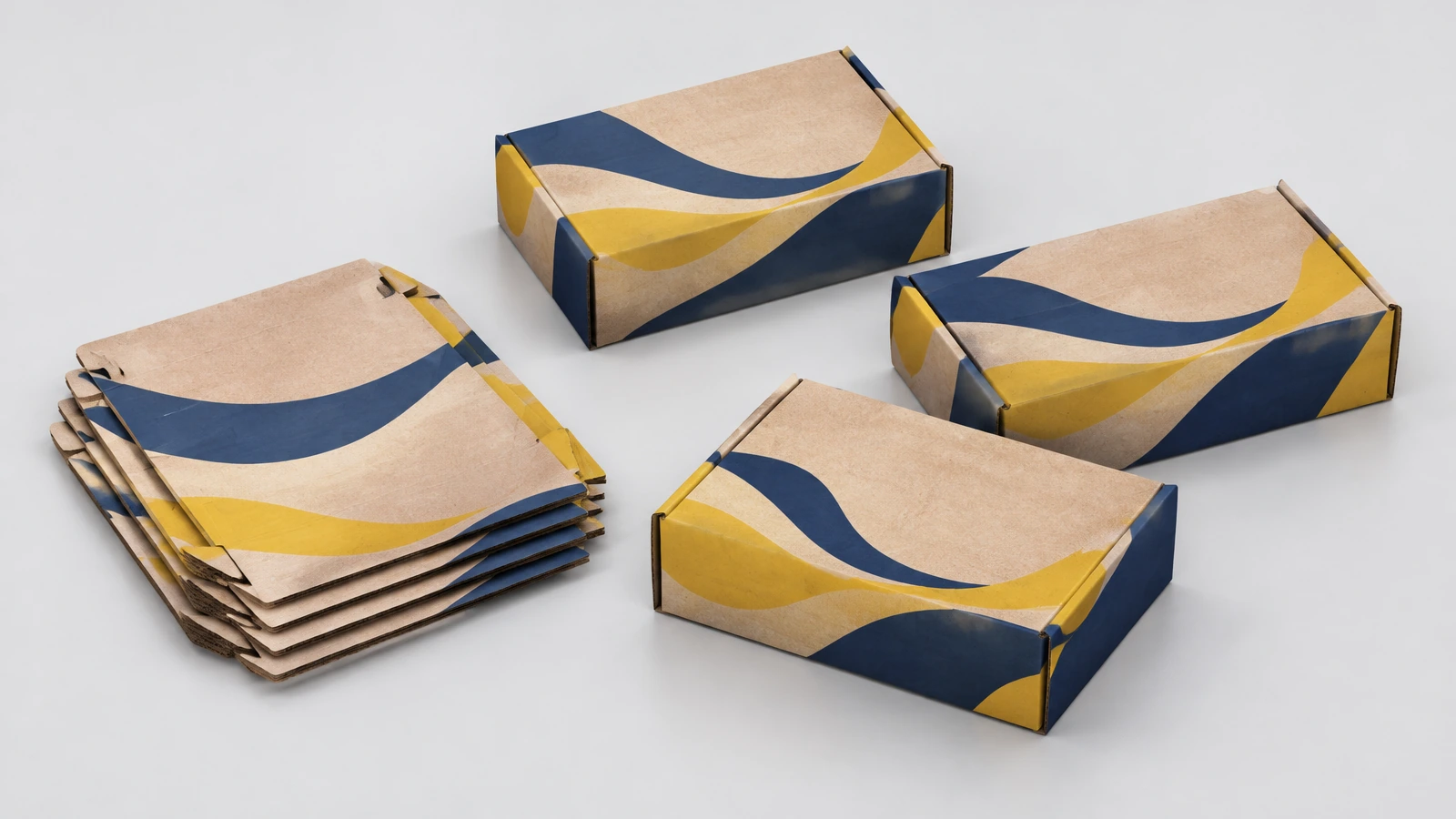
The box style also affects how small a run can economically be. The most common e-commerce mailer is the roll-end tuck-top design, catalogued in the international FEFCO Code[2] as style 0427: one die-cut blank that folds into a self-locking box without tape. Because it is a single blank, a short run is mostly a question of board, print and cutting setup rather than complex assembly. The structure itself, including dust flaps and tuck depth, is covered on the roll-end tuck-top corrugated mailer box product page, so this guide stays on the buying decisions.
What Moves the Unit Cost as Quantity Rises
Every custom box price combines a fixed setup cost for the job with a variable cost for each box. Setup covers artwork preparation, a cutting die if the size is new, printing plates if the job runs flexo, and machine makeready. Variable cost covers board, ink, print passes and packing. A useful way to read any quote is:
Unit cost ≈ (setup cost ÷ quantity) + variable cost per box
At 100 boxes, each box carries ten times the setup share it would carry at 1,000. That is why the price per box drops steeply between the first tiers and then flattens: once setup is spread thin, you are mostly paying for board and ink. The main levers you control are:
- Box size. Board area per blank is the largest variable cost, so a box sized closely to the product saves on every unit and on freight.
- Flute. B-flute uses more material than E-flute and takes more space when flat-packed.
- Print sides and coverage. A second printed side adds a pass; full-flood color uses more ink than a single logo on kraft.
- Print method. Digital has almost no setup; flexo adds plates but lowers the running cost on repeat orders.
- Artwork versions. Each extra design is effectively its own job, so three designs of 100 cost more than one design of 300.
- Destination. Freight to your warehouse or fulfilment partner is part of the landed cost, so ask for it on the same quote.
The practical move is to request two or three tiers in one quote, for example your first-run quantity, the next tier up, and a quantity you expect to reorder. Comparing the landed cost per box across tiers tells you whether buying a slightly larger first run is cheaper than reordering soon.
How to Place a First Low-MOQ Order in Seven Steps
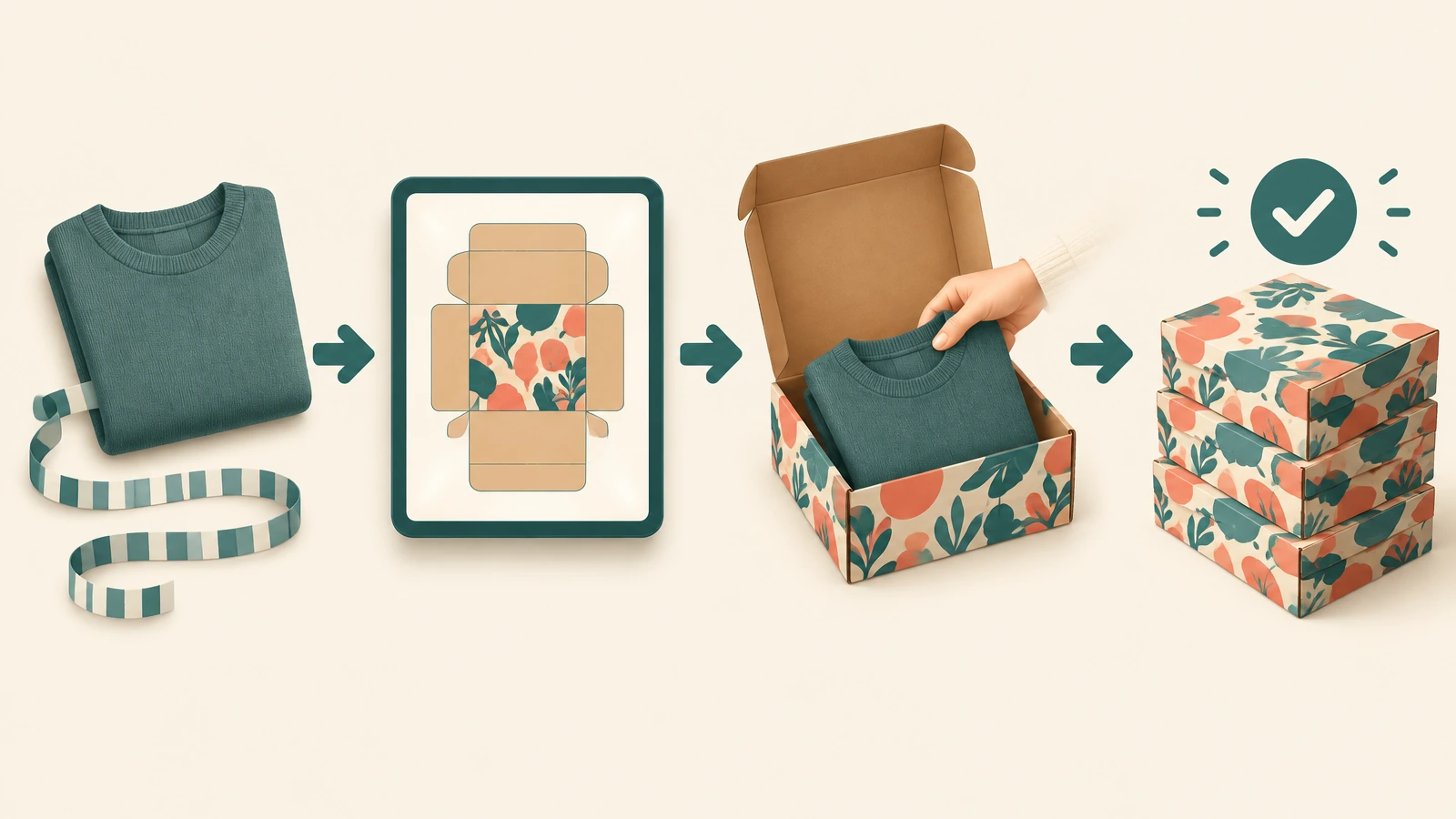
- Measure the product and set inner dimensions. Measure length, width and depth of the product as packed (with tissue or a thank-you card), then add a small clearance. Quote requests should always state inside dimensions.
- Weigh one packed unit. Weight tells the supplier whether E-flute is enough or B-flute is the safer board.
- Choose two or three quantity tiers. Base the first tier on two to three months of expected orders rather than on the lowest number available.
- Pick flute, print method and print location. Use the comparison tables below to make a provisional choice; the supplier can adjust it on the quote.
- Prepare artwork. Supply a vector logo, any spot colors you need matched, and place artwork on the supplier's dieline for your size. Keep one design for the first run.
- Send the brief: size, weight, quantity, artwork and destination. Destination matters beyond freight. If you ship into the EU, the Packaging and Packaging Waste Regulation has applied since 12 August 2026 and caps the empty space in e-commerce packaging at 50%, as summarized by the European Commission[3], so a right-sized inner dimension is now a compliance detail as well as a cost saving.
- Proof, sample, then approve. Zigpac's process starts with a free eProof that shows artwork placement on the dieline; a physical sample costs US$5–30 and lets you fill-test the box with your real product. For fragile or high-value goods, a lab distribution test such as ASTM D4169[4] simulates drops, vibration and compression before you commit. After approval, Zigpac's standard schedule is 7–10 days, with the final schedule confirmed on your quote.
If you need the full specification and approval checklist (tolerances, board grade, sign-off points), the product page linked above covers it in detail.
E-Flute vs B-Flute: Which Board Suits Your Mailer?
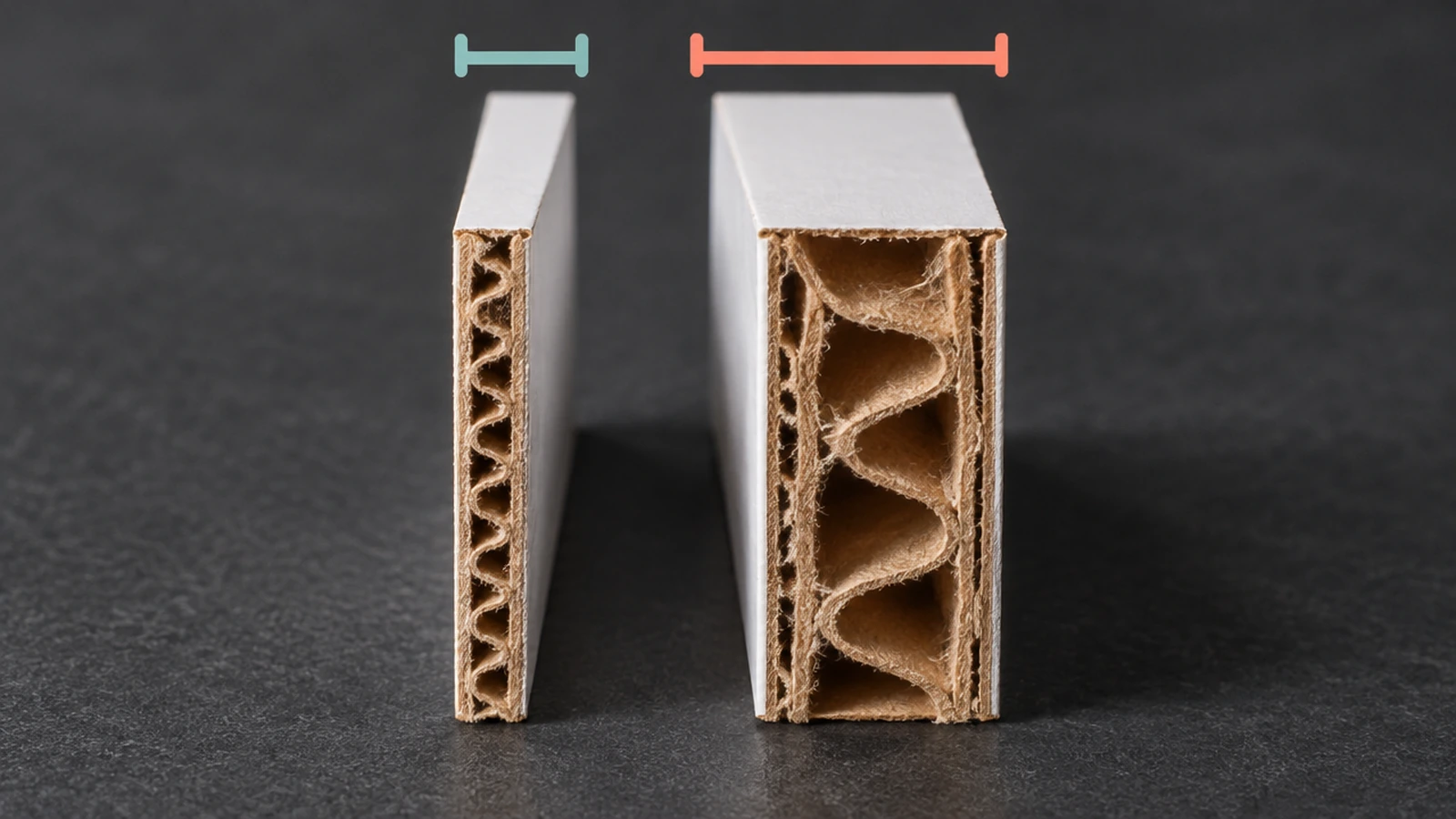
Flute is the wavy middle layer of corrugated board, and its size sets the board's thickness, print surface and cushioning. Flute profiles and their uses are documented in the Fibre Box Association's Fibre Box Handbook[5], the North American industry reference. Board strength is usually verified with an edge crush test, the method run at facilities such as Virginia Tech's corrugated packaging lab[6].
| Factor | E-flute mailer | B-flute mailer |
|---|---|---|
| Commonly published nominal caliper | About 1/16 in (≈1.5 mm) | About 1/8 in (≈3 mm) |
| Print surface | Smoother; holds fine lines, small text and gradients well | Good, but coarser flutes can show through large solid areas |
| Cushioning | Lighter | More, for items that need extra protection |
| Stacking strength | Adequate for light parcels | Higher, for heavier contents or stacked storage |
| Flat-pack storage | Thinner stack per 100 boxes | Takes more shelf and freight space |
| Typical fit | Apparel, cosmetics, accessories, gift sets | Heavier products, glass jars, long multi-hub routes |
At Zigpac, E-flute is the recommendation when the print finish is the priority, because it is thinner and gives a smoother print surface, while B-flute is recommended when the contents need more cushioning and stacking strength. If you are unsure, order a physical sample in the board you think you need and drop-test it with your product inside; the sample fee is small next to a reprint.
Digital vs Flexographic Printing at 100 to 1,000 Units
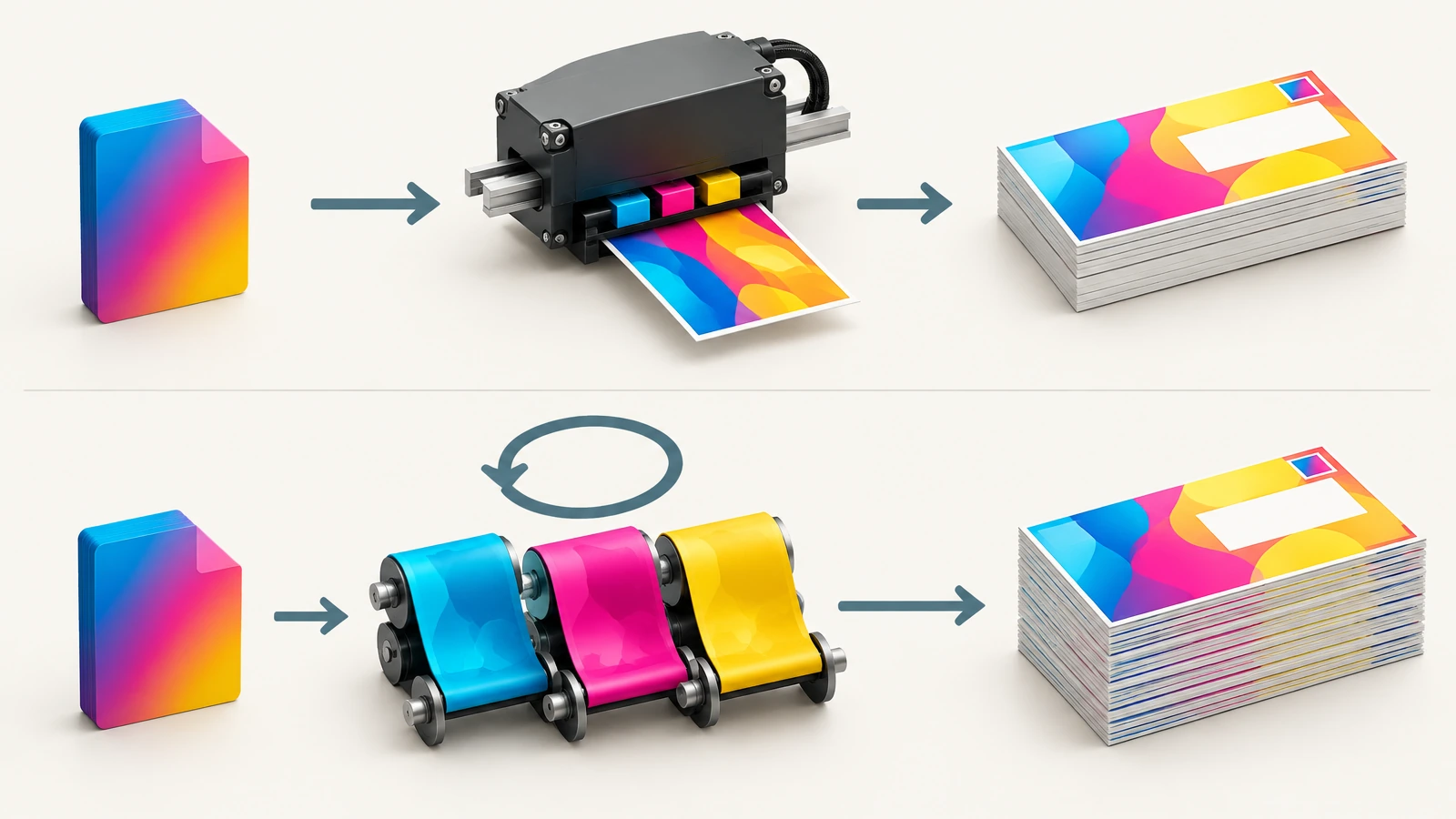
Print method is the second big lever on short-run cost. Digital printing transfers artwork straight from a file, so there are no plates to make. Flexographic (flexo) printing uses a flexible plate for each color, which adds setup but lowers the cost of every additional box once the plates exist.
| Factor | Digital printing | Flexographic printing |
|---|---|---|
| Plates | None | One per color, made before the run |
| Setup share at ~100–300 boxes | Low; usually the practical choice | High; plates spread over few boxes |
| Around 300–1,000 boxes | Still common, especially for new or full-color artwork | Worth quoting side by side if artwork is final |
| Repeat orders, same artwork | Same setup each time | Competitive, because plates can be reused |
| Artwork changes and versions | Easy; each version is just a file | Each change can mean new plates |
| Color style | Full-color images and gradients | Strong for a few solid brand colors |
There is no universal crossover quantity, because it depends on box size, color count and coverage. At Zigpac, digital printing is used for low quantities because it needs no plates, flexo becomes competitive for repeat volume, and the method for your order is confirmed on the quote. A sensible plan for a new brand is digital for the first run, then ask for a flexo comparison once the artwork has stopped changing and reorders are predictable.
Outside-Only, Inside-Only or Both: Where to Spend the Print Budget
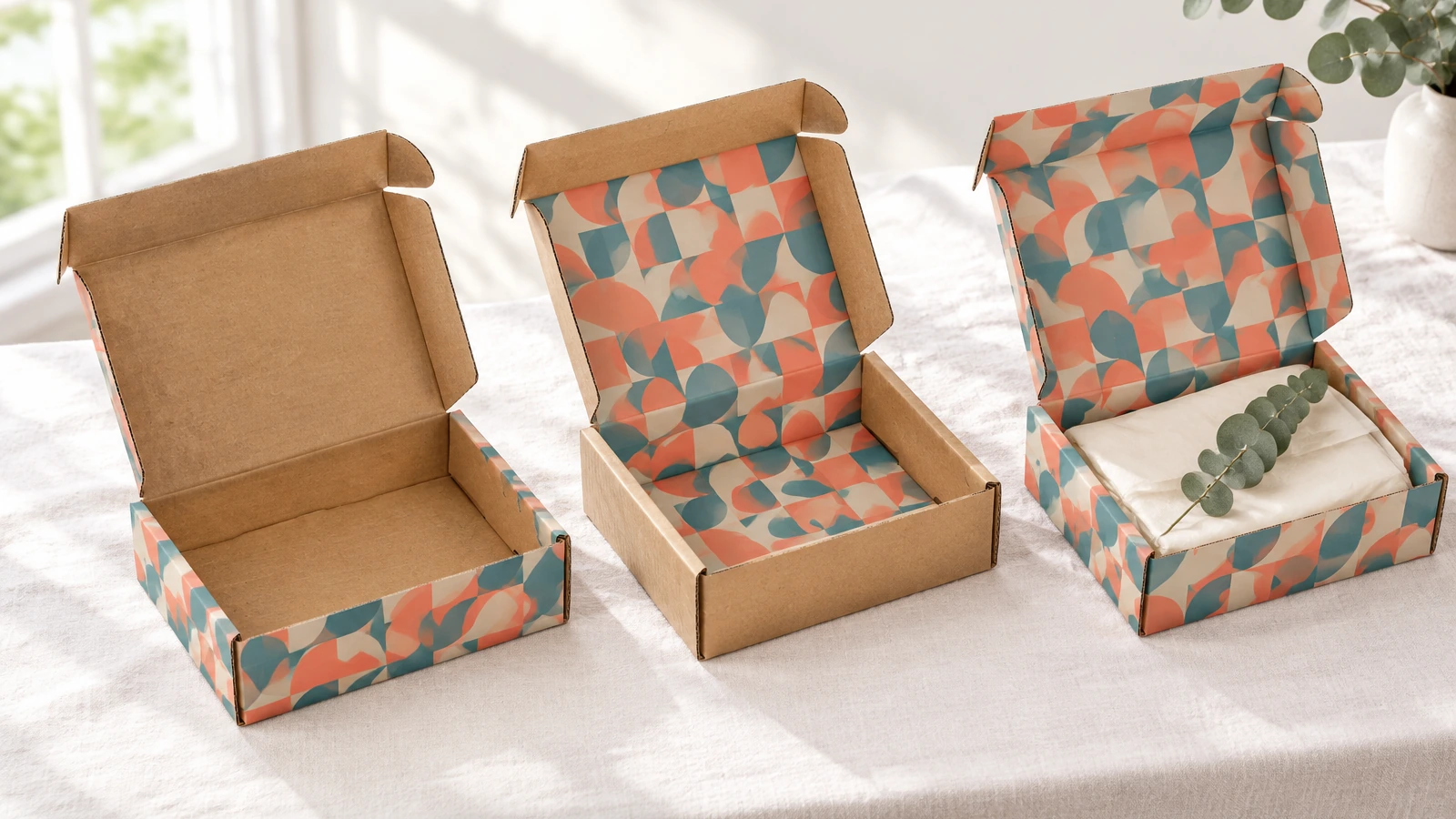
Where you print changes both the customer experience and the number of print passes you pay for. At Zigpac, you can choose exterior-only, interior-only, or interior-and-exterior printing, with the print method for each confirmed on your quote.
| Print location | What the customer sees | Cost and practical notes |
|---|---|---|
| Exterior only | Brand is visible on the doorstep and in transit | One printed side; scuffs from sorting are visible on the artwork |
| Interior only | Plain outside, reveal when the lid opens | One printed side; discreet in transit, and the artwork stays protected |
| Interior and exterior | Branded parcel plus an unboxing reveal | Two sides to print and proof; highest print cost of the three |
For a first small run, a single printed side is usually the most efficient way to get a branded result. Interior-only printing suits brands whose products are gifts, high-value items, or sensitive purchases where a plain exterior is an advantage. If you do choose both sides, check both faces on the eProof, since inside artwork prints on the reverse of the blank and tuck flaps cover part of it when closed.
FAQ
FAQ: Can I order fewer than 100 custom printed mailer boxes?
Yes, Zigpac's price tiers start from 50 pcs. The final MOQ for your size, board and print combination is confirmed on your quote, so include your intended quantity in the request and ask for one or two higher tiers to compare unit cost.
FAQ: Is digital or flexo printing better for about 500 mailer boxes?
Digital is usually the better starting point for a first 500 boxes with new artwork, because it needs no plates. Flexo becomes competitive when the same design is reordered regularly. Zigpac confirms the method on the quote, and you can ask for both if you expect repeat orders.
FAQ: Should my mailer use E-flute or B-flute?
Choose E-flute if sharp printing and a slim, light box matter most, and B-flute if your product needs more cushioning or the boxes will be stacked under weight. Zigpac recommends confirming the choice with a physical sample packed with your actual product.
FAQ: How much does a sample cost, and how long does production take?
At Zigpac, the eProof is free and a physical sample costs US$5–30. The standard production schedule is 7–10 days, with the final schedule confirmed on your quote, so plan sample approval into your launch date.
FAQ: Can Zigpac print only the inside of the box?
Yes, interior-only printing is one of three options at Zigpac, alongside exterior-only and interior-and-exterior. Interior-only keeps the parcel plain in transit and saves the branding for the moment the customer opens it.
FAQ: Are printed corrugated mailer boxes recyclable?
Generally yes: the U.S. EPA reports a 96.5% recycling rate for corrugated boxes in 2018 in its containers and packaging data[7], and the Fibre Box Association states that the average box contains about 52% recycled content (FBA recycling facts[8]). Heavy coatings or laminates are the main thing to check; the industry's updated voluntary repulping standard[9], published in May 2025, sets how coated or treated corrugated is evaluated. Ask about any finish on your quote if recyclability claims matter to your brand.
Key Takeaways
- A low MOQ is a pricing tier, not a guaranteed minimum for every box. — Zigpac's price tiers start from 50 pcs, with the final MOQ on your quote (Source)
- Most mailer demand comes from online sellers, so short runs are standard practice. — over 62% of 2025 mailer box volume demand is e-commerce fulfilment (Source)
- Proofing is cheap insurance before a bulk run. — free eProof, physical sample US$5–30, standard schedule 7–10 days (Source)
- Right-sizing is now a compliance issue for EU shipments. — PPWR caps e-commerce packaging empty space at 50% and has applied since 12 August 2026 (Source)
- Corrugated mailers support a credible recycling story when finishes stay simple. — 96.5% U.S. corrugated box recycling rate in 2018 (Source)
Conclusion: Turn a Small First Run Into a Repeatable Box Program
A good low-MOQ order is less about finding the smallest number and more about matching the run to your real demand: the right flute for the product, a print method that fits the quantity, print only where customers will notice it, and two or three tiers on one quote so you can see where the unit cost flattens. Start digital, prove the box with a physical sample, and revisit flexo once the design settles and reorders become routine. When you are ready, send Zigpac your box size, packed weight, quantity, artwork and destination, and the quote will confirm the MOQ, print method and schedule for your first order.
References
- Future Market Insights, "Mailer Boxes Market Size & Trends 2025–2035" (2025). https://www.futuremarketinsights.com/reports/mailer-box-market ↩
- FEFCO, "FEFCO Code" (12th edition), international catalogue of corrugated box styles including 0427. https://www.fefco.org/technical-information/fefco-code ↩
- European Commission, "Packaging waste" (Regulation (EU) 2025/40, in force 11 February 2025, applicable from 12 August 2026). https://environment.ec.europa.eu/topics/waste-and-recycling/packaging-waste_en ↩
- ASTM International, "ASTM D4169-22: Standard Practice for Performance Testing of Shipping Containers and Systems." https://www.astm.org/d4169-22.html ↩
- Fibre Box Association, "The Fibre Box Handbook," 24th edition. https://www.fibrebox.org/fibre-box-handbook/ ↩
- Virginia Tech Center for Packaging and Unit Load Design, "Edge Crush Resistance Testing." https://unitload.vt.edu/facilities/corrugated-packaging-lab/edge-crush-resistance-testing.html ↩
- U.S. Environmental Protection Agency, "Containers and Packaging: Product-Specific Data" (2018 data). https://www.epa.gov/facts-and-figures-about-materials-waste-and-recycling/containers-and-packaging-product-specific ↩
- Fibre Box Association, "Corrugated Is Recyclable." https://www.fibrebox.org/corrugated-is-recyclable/ ↩
- American Forest & Paper Association, "Industry Publishes Updated Voluntary Standard for Recycling Cardboard" (29 May 2025). https://www.afandpa.org/news/2025/industry-publishes-updated-voluntary-standard-recycling-cardboard ↩





The information below is required for social login
Sign In
Create New Account