
 Blog PDF for offline reading
Quick answer: Zigpac makes custom printed poly mailers, and the best custom poly mailer manufacturer for your logo mailers is the one whose quote states a measurable film thickness with its measurement basis and tolerance, the film construction and how opacity is achieved, the print method, ink colors and coverage, and the closure type. That supplier also lists setup or plates, samples and freight as separate amounts, and then proves every line on a physical sample made with the production material. Zigpac offers price tiers from 500 pcs, final MOQ on your quote, with a free eProof before production and physical samples for US$5–30. If a quote cannot be checked against a sample, it is not yet a basis for comparison.
Apparel and e-commerce brands comparing suppliers usually receive quotes that look almost identical: a size, a mil number and a unit price. Those three fields hide most of what decides whether the mailer survives a fulfillment shift. One bag may be single-layer film and another co-extruded. One price may cover a front logo, another edge-to-edge print. One quote may include printing plates and freight while the next leaves both off.
The cost of guessing shows up later. Sellers in public forums describe bags that "tore down the sides" during packing, film thin enough to "see my hand through," and sample prints where "some of the ink actually came off onto my finger." None of those problems were visible in the quote. This guide turns "best manufacturer" into fields you can ask for in writing and verify on a sample, so you can compare suppliers on the same basis.
What a poly mailer quote should prove
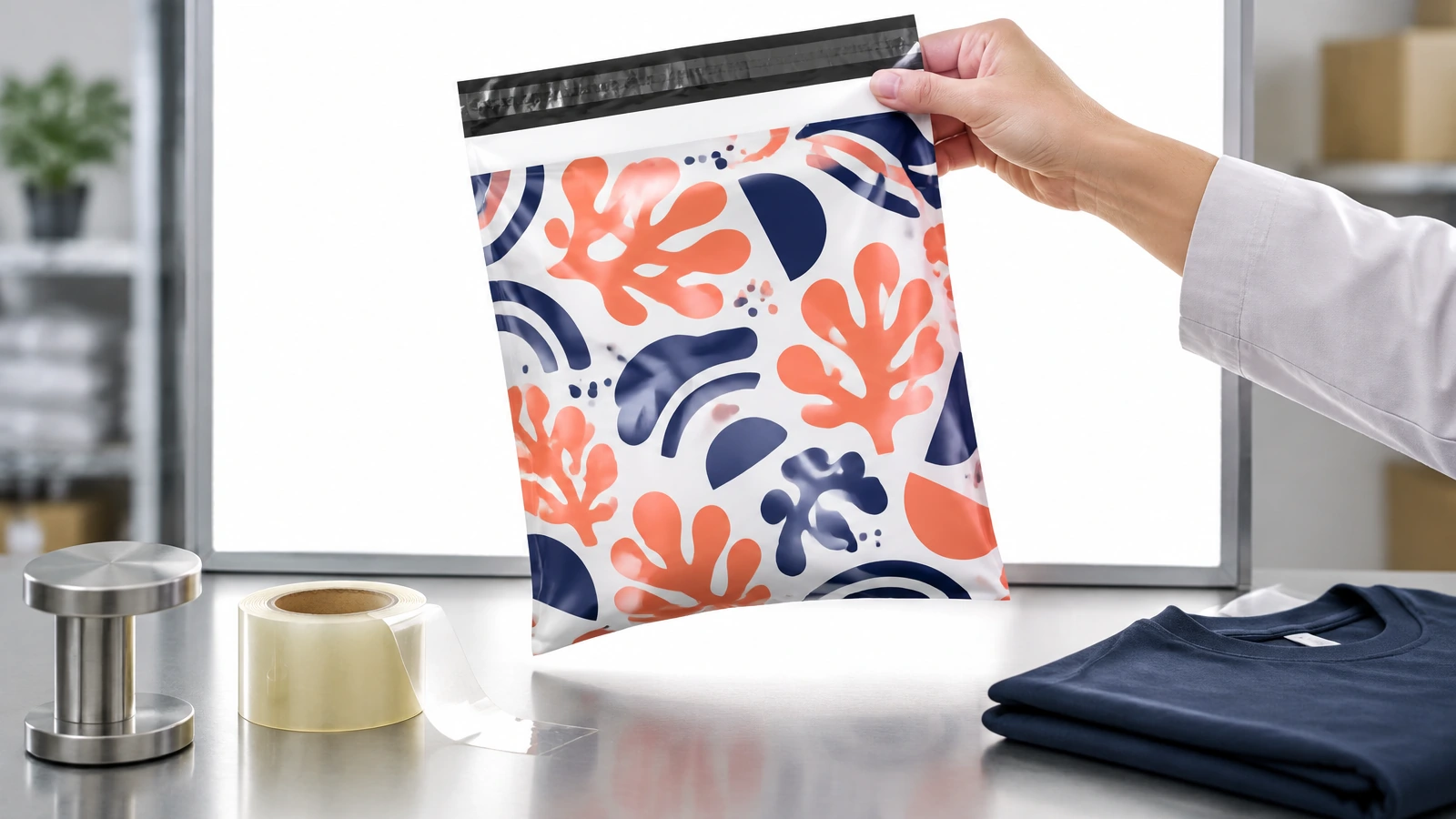
A custom poly mailer is a flexible polyethylene envelope with an adhesive closure, printed with a brand's artwork and used mainly for apparel and other non-fragile soft goods. A manufacturer, as opposed to a reseller, controls or directly manages film extrusion, printing and bag conversion. For a buyer, the practical difference is whether the person quoting can answer technical questions about the film and the print, and confirm them on a sample.
Specifying a single order (choosing dimensions, preflighting artwork, agreeing production terms) is covered on our page for custom poly mailers for branded apparel and soft-goods shipping. This article focuses on a different job: judging whether a supplier's answers are complete and verifiable before you commit.
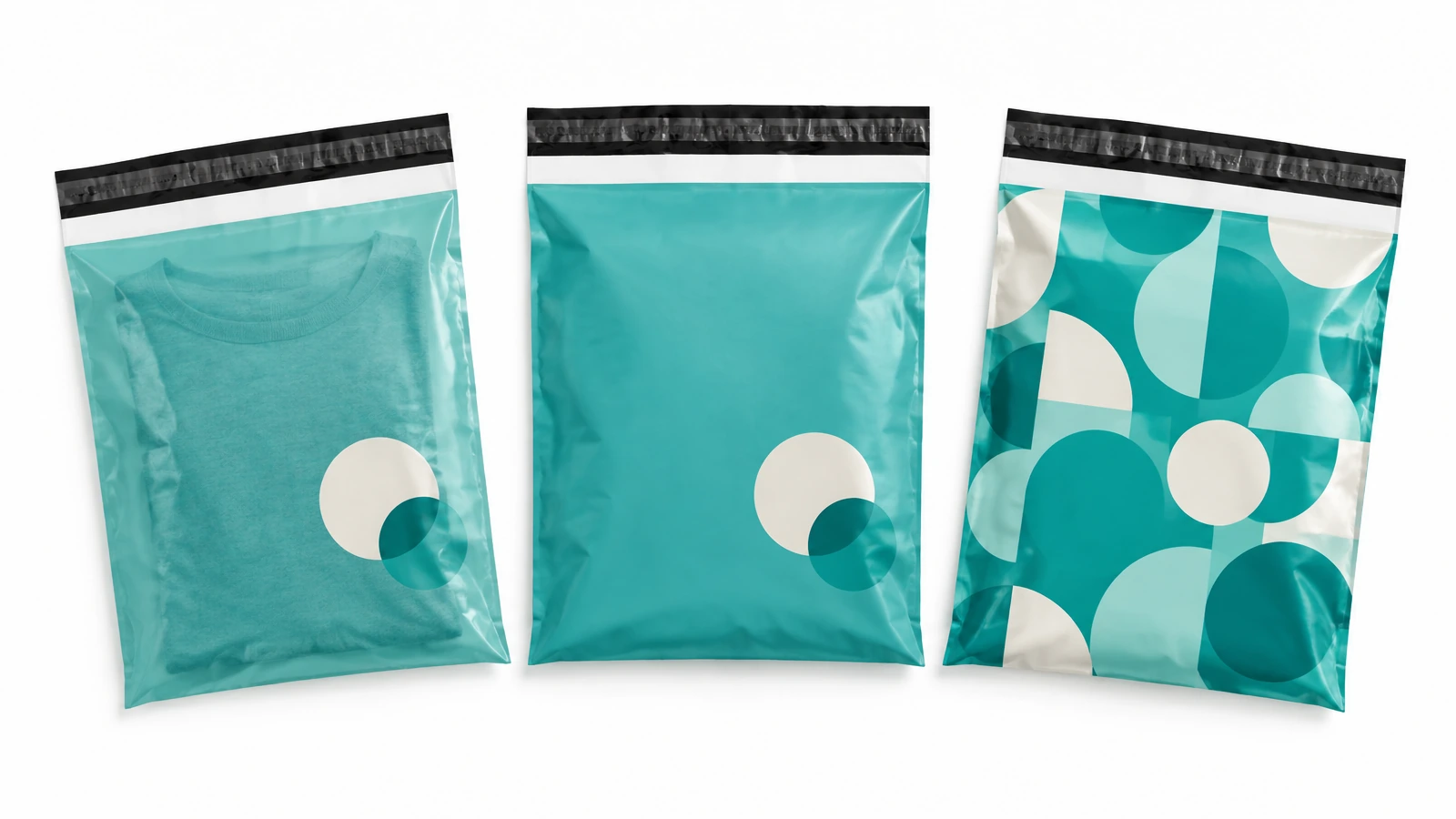
How to choose a custom poly mailer manufacturer: six checks
1. Film thickness: mil, micron, measurement basis and tolerance
One mil is 0.001 inch, or 25.4 micrometers (μm). The thicknesses most often quoted in the US market are 2.0 mil (50.8 μm), 2.5 mil (63.5 μm) and 3.0 mil (76.2 μm). Treat these as market reference points, not specifications or load ratings. A number on a quote only becomes useful when three things are attached to it:
- Measurement basis: is the figure a single film wall, or the doubled bag? Is it a nominal target or a measured average?
- Tolerance: what deviation from the nominal value will the supplier accept at inspection?
- Method: how and where on the bag the film is measured. ASTM D6988 is a common reference guide for measuring plastic film thickness, so asking whether the supplier follows it, or what it uses instead, is a reasonable question.
Thickness alone does not equal strength. Resin blend, film construction and seal quality decide how film resists tearing and puncture. Two 2.5 mil films can behave very differently at a zipper pull or a folded shoe-box corner. If a supplier quotes tensile, tear or impact values (often tested to ASTM D882, D1922 or D1709), ask for the test report and the date of the tested batch rather than accepting a headline number.
Carrier rules will not settle the question either. The USPS Domestic Mail Manual[1] defines mail shapes by size, uniform thickness and flexibility; flat-size pieces must bend without damage. It does not set a minimum mil value for mailers. The thickness you need is a commercial decision between you and the manufacturer, which is exactly why it must be written down.
2. Single-layer vs co-extruded film, and how opacity is achieved
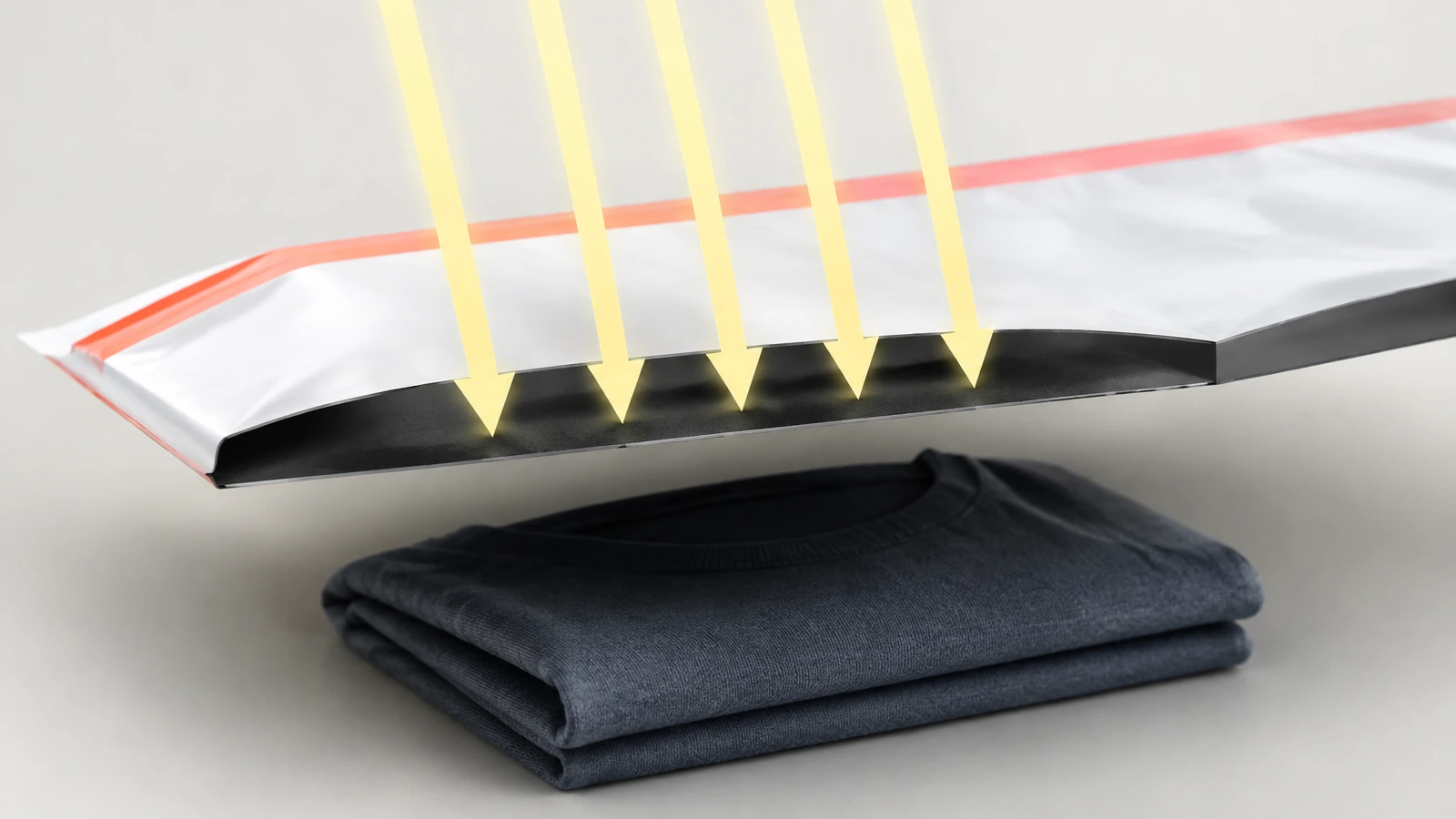
Single-layer film is extruded from one resin melt, with any pigment mixed through the whole thickness. Co-extrusion feeds two or more melts through one die at the same time, producing a film with distinct layers in a single pass. In mailers, a common industry construction pairs a white or colored outer layer, which gives the print a clean background, with a dark grey, black or silver inner layer that blocks light so contents and labels inside are not visible.
Opacity matters more than buyers expect. A verified buyer of a stock mailer on a large marketplace noted that "you could see bold writing through the mailer" and had to add a blank sheet inside each order. Co-extruded film with a dark inner layer is one route to privacy; heavier pigment loading in a single layer is another. Each changes appearance, cost and how the print reads.
Construction also affects end-of-life. The Association of Plastic Recyclers' PE film design guidance[2] treats multi-layer films made entirely of polyethylene differently from films that add non-PE layers, which can disrupt recycling. Ask each supplier:
- Is the film single-layer or co-extruded, and what color is each layer?
- Are all layers polyethylene, or does the structure include other materials?
- Does the stated thickness refer to the full multi-layer film?
- How will opacity be demonstrated on the sample?
At Zigpac, resin composition, film construction, finish, opacity and closure are confirmed in the quotation and in sample approval, rather than assumed from a catalog photo.
3. Print method, number of ink colors and coverage
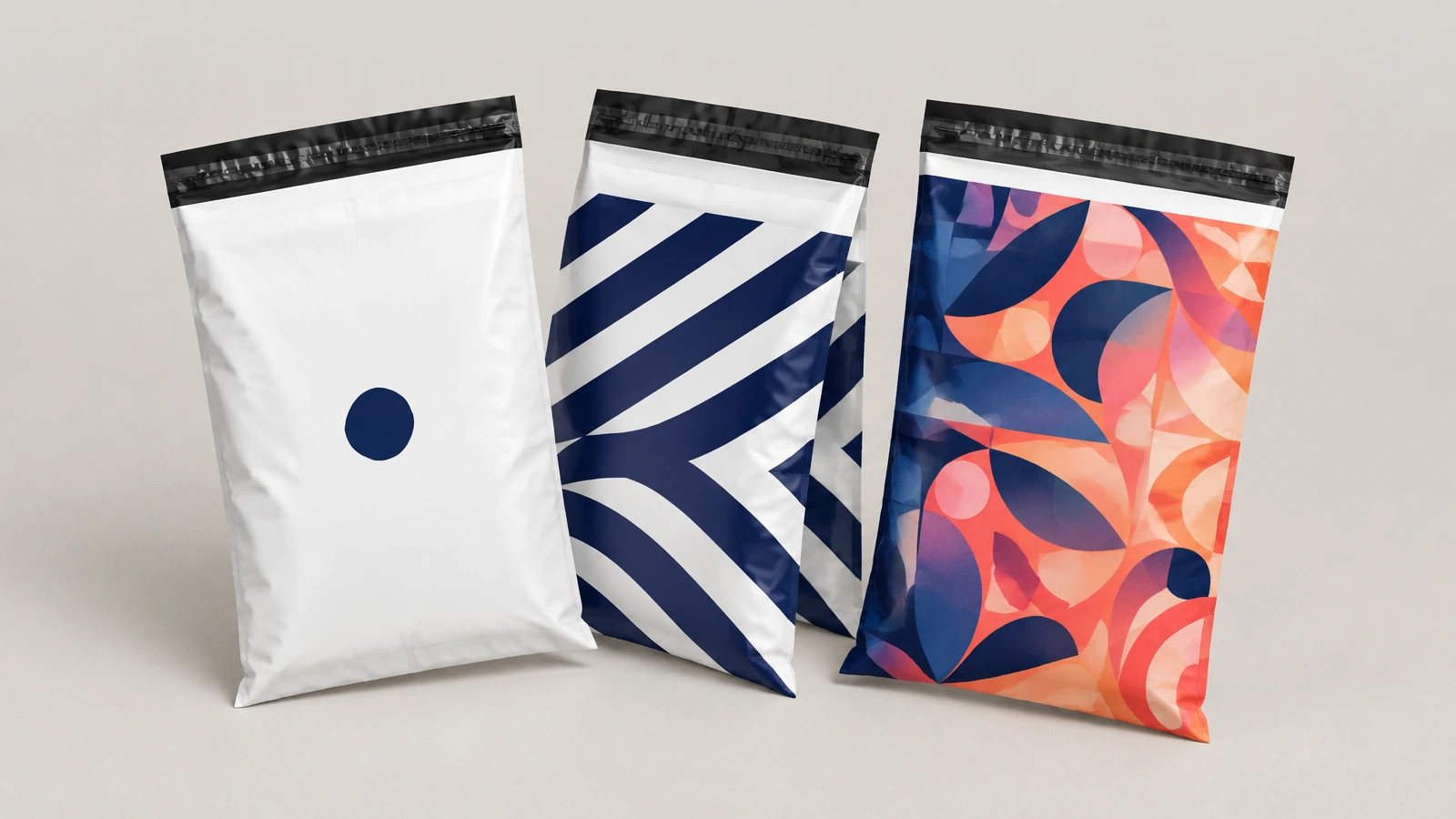
Printing is where similar-looking quotes diverge most. In general industry practice, flexographic printing uses a separate plate for each ink color on each printed side, which creates a setup cost that is spread across the run. Digital printing needs no plates and handles photographic artwork, but the per-piece cost typically stays higher as volume grows. Gravure uses engraved cylinders and suits long, stable runs. Ask which method a quote assumes, because it decides setup cost, color matching and how small text reproduces.
Coverage is a separate decision from the number of colors. Front-logo, double-sided and edge-to-edge printing are three different print requests, and each uses a different amount of ink and press setup. A quote that says "custom printed" without stating coverage cannot be compared with one that does.
Color references need the same discipline. Give spot color references, such as Pantone numbers, for brand colors, and ask how the supplier handles a color printed on white film versus on a tinted outer layer. An eProof confirms layout, size and placement on screen. It cannot show how ink sits on polyethylene film. Only a physical printed sample shows show-through, registration (whether colors line up), rub resistance and odor.
Questions that make print quotes comparable:
- Which print method, how many ink colors, and on how many sides?
- Is coverage front-only, double-sided or edge-to-edge?
- Are plates or setup charged separately, and are they reused on reorders?
- Will the physical sample be printed on the production press and film?
4. Adhesive closure and an optional second return strip
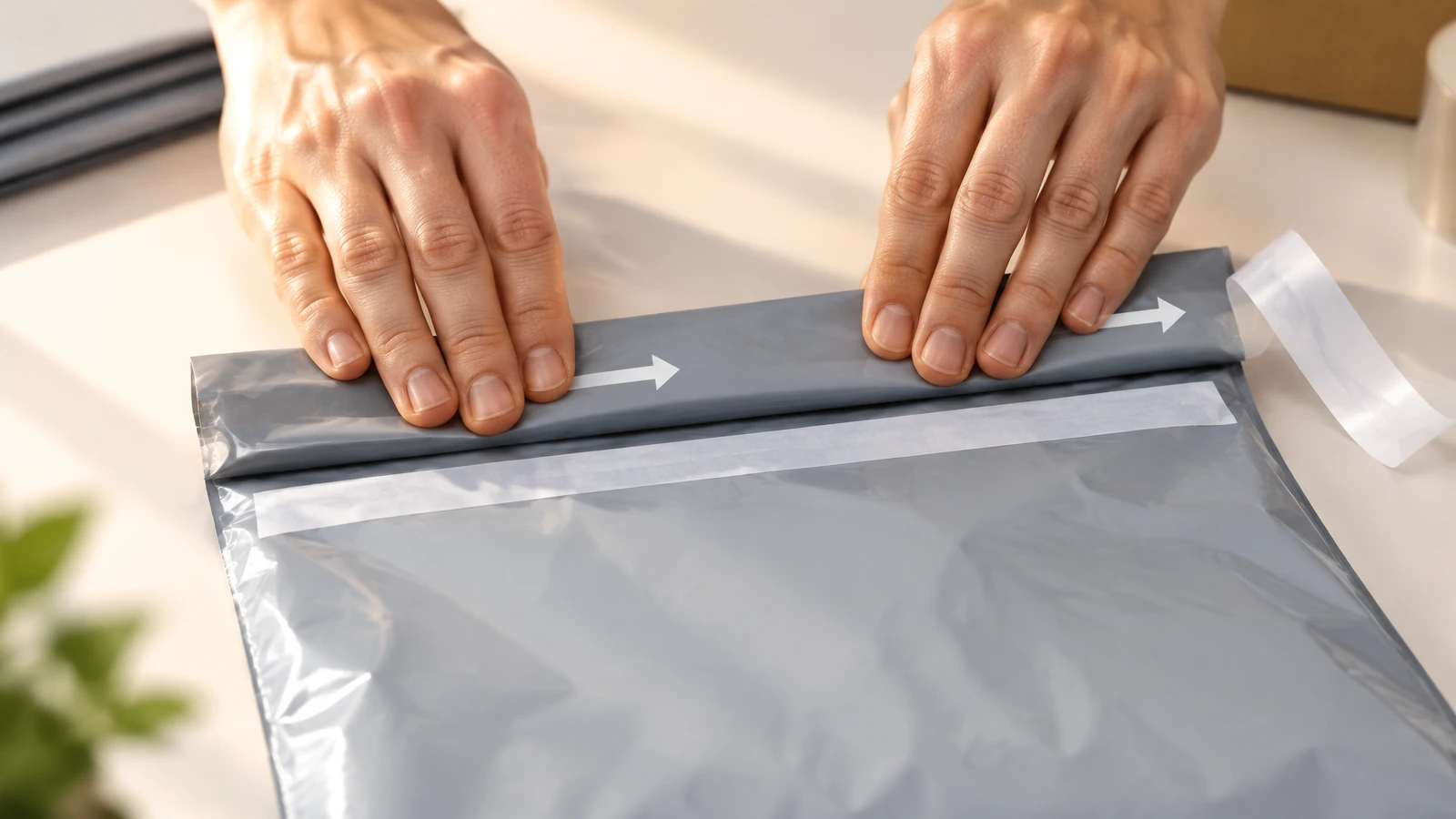
Most mailers close with a pressure-sensitive adhesive strip under a peel-off liner. Seal failures tend to come from two sources: an adhesive that does not grip the film well, and a seal that is only partly pressed down during packing. Ask the supplier which adhesive type the quote uses, the strip width, and whether the strip is designed to show evidence of tampering when pulled open.
A second adhesive strip lets customers reuse the same bag for a return. That is a different product, with its own price tiers; Zigpac lists it separately as Custom Returnable Poly Mailers. If your packing line is automated, include the equipment model and supply format in the inquiry so the closure suits the machine.
On the sample, test the closure the way your warehouse will use it: seal it with normal hand pressure, wait a day, then try to open it without tools. Repeat with a filled bag at the heaviest garment weight you ship, and in the coldest or warmest storage conditions the parcels will see.
5. Recycled-content and recyclability claims: the documents behind them
Environmental claims are the part of a quote that creates legal risk for your brand rather than the supplier. Separate three things a supplier may say.
Recycled content. Ask whether the percentage is post-consumer recycled (PCR, material that has been used by consumers) or post-industrial (PIR, factory scrap), because "100% recycled" can be a mix of both. Ask for a certificate whose scope names the product and the production site, and for transaction documents tied to your order where a certification scheme such as the Recycled Claim Standard or Global Recycled Standard applies. A company-level certificate does not prove a specific batch.
Recyclability. The FTC's Green Guides, 16 CFR § 260.12[3] allow an unqualified "recyclable" claim only when recycling facilities are available to at least 60% of consumers or communities where the item is sold. Polyethylene film usually fails that test at the curb. How2Recycle[4] notes that plastic bags, wraps and films are not accepted in most US curbside programs, and lists plastic mailers with a compatible label as store drop-off items. GreenBlue has also removed the chasing arrows from its store drop-off label[5] because of uncertainty around California's rules.
Symbols and labels. A #4 resin code identifies LDPE; it is not a recycling claim. ASTM D7611, as summarized by ANSI[6], states that resin identification codes are not "recycle codes." California's SB 343, tracked by CalRecycle[7], restricts chasing arrows and recycling statements on packaging that does not meet the state's criteria. APR guidance on labels, inks and adhesives[8] explains why non-PE components, including paper labels, can undermine a film's recyclability.
Zigpac does not state a recycled-content percentage, recycling-label approval or compostability certification for its custom poly mailers. If your brand needs any of these, raise it at quote stage and request the supporting documents before artwork includes any environmental wording.
6. Samples and acceptance checks
A sample is only evidence if it represents production. Ask whether it uses the production film, press and adhesive, or a stand-in. Then follow a fixed approval sequence: specification, artwork, sample, production authorization, shipment release. Skipping a step usually means discovering a problem after the bags are made.
On the physical sample, check:
- Thickness: measure a single wall in several spots and compare with the stated tolerance.
- Opacity: hold the empty bag over dark printed text under strong light.
- Print: registration, color against your reference, and show-through from the reverse side.
- Rub resistance: rub the print firmly with a thumb, then press and pull a strip of packing tape; ink should not transfer.
- Odor: open a sealed sample after a few days; strong odor can transfer to garments.
- Closure and seams: pack your heaviest item, seal, and pull at the side seams.
Keep the approved sample. It becomes the reference for inspecting the bulk order. Zigpac recommends approving a physical sample before bulk production whenever film, print coverage or closure differs from a previous order.
Supplier evaluation scorecard
Use one row per criterion and score each supplier on whether the answer is written, specific and confirmed on the sample.
| Criterion | What to ask for in the quote | What to check on the sample | Red flag |
|---|---|---|---|
| Film thickness | Nominal mil and μm, single-wall or doubled, tolerance, measurement method | Single-wall readings at several points within tolerance | A mil number with no basis or tolerance |
| Film construction | Single-layer or co-extruded, layer colors, all-PE or not | Inner and outer color match the description | "Premium film" with no construction stated |
| Opacity | How privacy is achieved | Dark text not readable through the empty bag under strong light | No opacity method, or only a photo |
| Method, ink colors, sides, coverage, color references | Registration, color, show-through, rub and tape test | "Custom print" with no coverage or color count | |
| Closure | Adhesive type, strip width, single or dual strip | Seal holds overnight on a full bag | Closure not mentioned in the quote |
| Material claims | PCR vs PIR, certificate scope, batch documents | Printed claims match the documents | "Eco-friendly" or "recyclable" with no paperwork |
| Sample | Production material and process, sample cost | Sample matches the written specification | Only an eProof offered before bulk |
| Cost breakdown | Bags, setup or plates, samples, freight, import listed separately | Not applicable | A single all-in number that cannot be split |
At Zigpac, the quote confirms size, film, final MOQ, price and schedule, and every order starts with a free eProof; physical samples ship for US$5–30 so the film, print and closure in the scorecard can be checked by hand.
MOQ and price: comparing quotes on the same basis
Zigpac's custom poly mailers have price tiers from 500 pcs, final MOQ on your quote. The listed tiers below are dated November 2026; pricing needs a product-specific quotation, so the final price is on your quote.
| Quantity | Custom Poly Mailers (per piece) | Custom Returnable Poly Mailers (per piece) |
|---|---|---|
| 500+ | US$0.28 | US$0.33 |
| 1,000+ | US$0.18 | US$0.22 |
| 5,000+ | US$0.11 | US$0.13 |
| 10,000+ | US$0.08 | US$0.10 |
| Listed tiers, November 2026. Final price on your quote. Both products: price tiers from 500 pcs, final MOQ on your quote. | ||
At Zigpac, the standard schedule is 7–10 days, final schedule on your quote. Tier pricing shows why quantity matters: at the listed rates, 1,000 pieces works out to US$180 in bags and 5,000 pieces to US$550, before setup, samples, freight and import costs. Your quote may differ by size, film and print.
To compare suppliers fairly, rebuild every quote into the same five lines: bags, setup or plates, samples, freight, and import costs. Add them, divide by the quantity, and compare the resulting landed cost per piece at the same size, thickness basis, construction and print coverage. A low unit price with plates, freight or duties left out can easily cost more than a higher all-in quote. Also check whether setup charges recur on reorders, because that changes the cost of your second run.
What to send for a quote
- Packed product size and weight, ideally for your largest and heaviest item
- Quantity, and whether you expect reorders
- Artwork with color references and front, back or edge-to-edge coverage
- Closure needs: single strip, or a second strip for returns; automatic packing equipment model if used
- Destination, so freight and import costs can be quoted separately
- Any material claim you intend to print, so supporting documents can be discussed before artwork is final
FAQ
FAQ: Who makes custom poly mailers with logo printing?
Zigpac makes custom printed poly mailers for apparel and soft-goods brands, with price tiers from 500 pcs, final MOQ on your quote. Size, film, print and closure are confirmed on the quote, a free eProof comes with every order, and physical samples ship for US$5–30. Whichever supplier you choose, ask for the same written fields so quotes stay comparable.
FAQ: What film thickness should I ask a poly mailer manufacturer for?
Ask for a stated thickness with its basis and tolerance rather than a bare number. 2.0, 2.5 and 3.0 mil (50.8, 63.5 and 76.2 μm) are common market reference points, but construction, resin and seal quality also decide tear and puncture performance, so confirm the choice on a packed sample.
FAQ: Is co-extruded film better than single-layer film?
Not automatically; co-extruded film is a way to combine layers with different jobs, such as a white print layer outside and a dark privacy layer inside. Whether it suits you depends on the opacity, appearance and end-of-life goals you need, which the supplier should state and the sample should demonstrate.
FAQ: Why do two quotes for the same size differ so much?
They usually describe different products or include different costs. Film construction, thickness basis, ink colors, print coverage and closure change the bag itself, while plates, samples, freight and import duties may be included in one quote and missing from another.
FAQ: Can I print "recyclable" on my poly mailers?
Only if you can support it under the FTC Green Guides, and in most US locations an unqualified claim is hard to support for film. Plastic film generally goes to store drop-off rather than curbside, California's SB 343 restricts recycling symbols, and the resin code alone is not proof. Request documents before adding any claim.
FAQ: Is an eProof enough before bulk production?
No, an eProof confirms layout but not how the print performs on film. Only a physical printed sample shows show-through, registration, rub resistance and odor, so approve one whenever film, coverage or closure is new.
FAQ: How long does production take?
At Zigpac the standard schedule is 7–10 days, final schedule on your quote. Sample approval comes first, so build the sample step into your launch date rather than counting only production time.
Key takeaways
- A thickness number needs a basis and a tolerance to mean anything. — 1 mil = 25.4 μm; 2.5 mil = 63.5 μm, and USPS sets no minimum mil (Source)
- Film construction affects both opacity and recyclability. — APR guidance distinguishes all-PE films from structures with non-PE layers (Source)
- Unqualified recyclable claims need wide access to recycling. — at least 60% of consumers or communities where sold (Source)
- Film mailers belong in store drop-off, not curbside. — most US curbside programs reject plastic films (Source)
- Compare landed cost, not unit price. — Zigpac listed tiers from US$0.28 at 500+ to US$0.08 at 10,000+, November 2026, final price on your quote (Source)
- Approve a physical sample before bulk. — free eProof, physical samples US$5–30 at Zigpac (Source)
Conclusion
The best custom poly mailer manufacturer is not the one with the lowest headline price; it is the one whose quote you can check line by line on a sample. Ask for thickness with basis and tolerance, film construction and opacity method, print method, colors and coverage, closure, documented material claims, and a cost breakdown that separates bags, setup, samples, freight and import. Score every supplier on the same table and reject quotes that cannot be verified.
When you are ready, send Zigpac your packed product size and weight, quantity, artwork with color references and coverage, closure needs and destination through the custom poly mailers product page. We confirm size, film, final MOQ, price and schedule on the quote, with a free eProof before production and physical samples for US$5–30.
Footnotes
- United States Postal Service, Domestic Mail Manual 201, Physical Standards for Commercial Mail. https://pe.usps.com/text/DMM300/201.htm ↩
- Association of Plastic Recyclers, APR Design Guide for Plastics Recyclability: PE Film. https://archive.plasticsrecycling.org/pe-film-design-guidance ↩
- U.S. Federal Trade Commission, Guides for the Use of Environmental Marketing Claims, 16 CFR § 260.12 Recyclable claims (eCFR). https://www.ecfr.gov/current/title-16/chapter-I/subchapter-B/part-260/section-260.12 ↩
- How2Recycle (GreenBlue), Store Drop-off (US only), published 2023-11-22. https://how2recycle.info/about-the-how2recycle-label/store-drop-off-us-only/ ↩
- GreenBlue, New Store Drop-off label design, 2025-04-23. https://greenblue.org/2025/04/23/new-sdo-label-design/ ↩
- American National Standards Institute, Resin Identification Codes (RICs) and ASTM D7611. https://blog.ansi.org/ansi/resin-identification-codes-rics-astm-d7611/ ↩
- CalRecycle, SB 343 Recycling Labels (Truth in Labeling). https://calrecycle.ca.gov/wcs/recyclinglabels/ ↩
- Association of Plastic Recyclers, APR Design Guide: Labels, Inks and Adhesives. https://archive.plasticsrecycling.org/labels-inks-adhesives ↩






The information below is required for social login
Sign In
Create New Account